
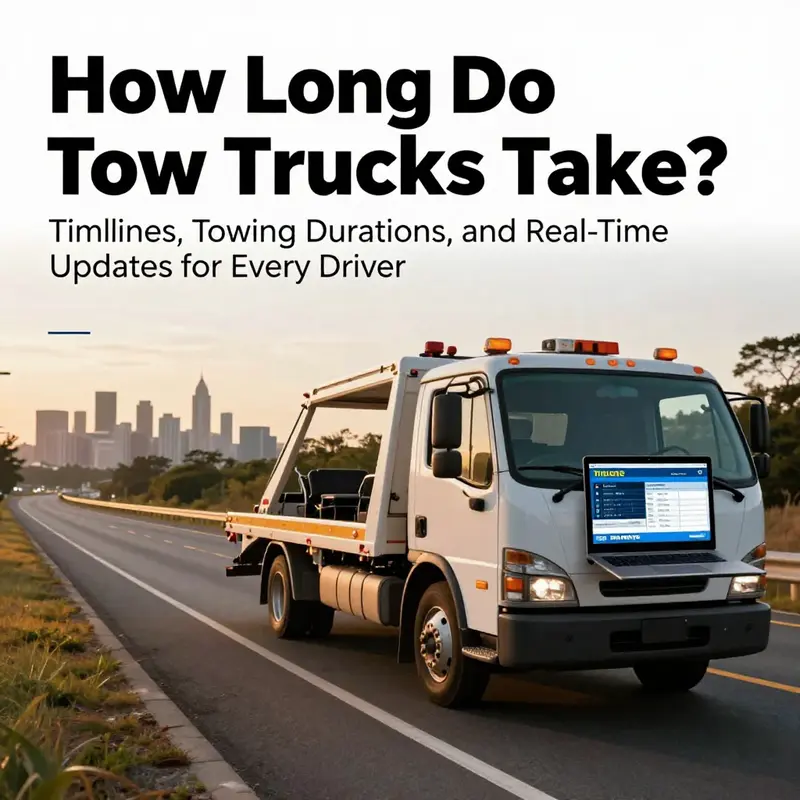
Tow incidents unfold in a spectrum of timeframes that depend on where you are, what happened, and who’s responding. The clock starts when you place the call and ends only when your vehicle is secure and out of danger, but the path between those moments varies widely. In dense urban cores, a tow operator commonly targets a 30–60 minute arrival window and a subsequent 15–30 minute on-site hookup, weather, traffic, and accessibility permitting. In rural or remote areas, those same factors can stretch the timeline dramatically, with arrival times reaching into hours and, in extreme conditions, into multi-hour recoveries. On-site towing time itself depends on how accessible the vehicle is, what equipment is needed, and the vehicle’s condition. Complex recoveries—such as vehicles involved in collisions, stuck in mud or snow, or requiring heavy-duty equipment—can extend the overall duration to several hours from dispatch to completion. For property managers, fleet operators, truck owners, and service providers, aligning expectations with this variability is essential for planning, customer communication, and operational readiness. This article dissects the topic across three focused chapters: arrival times and urban versus rural variability; on-site towing duration and access considerations; and complex recoveries, weather impacts, and the value of real-time updates. Each chapter builds toward a practical, end-to-end understanding of how long tow trucks take, with insights tailored to everyday drivers, residents and commuters, truck owners, auto repair shops and dealerships, and property managers.
Tow Time Realities: Arrival Windows Across Cities and Countryside
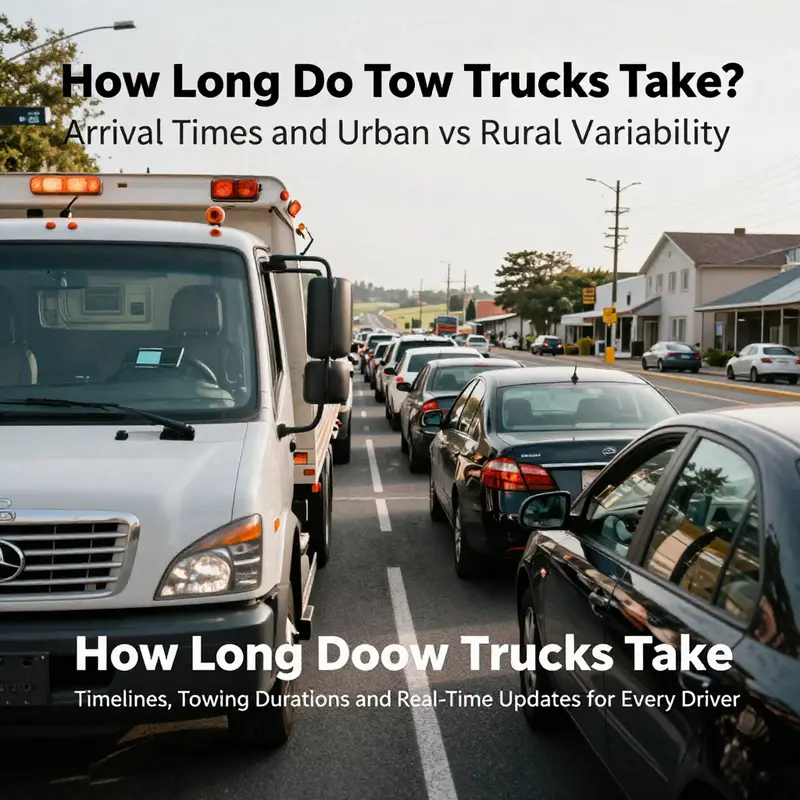
When you dial for a tow, the clock starts ticking in more ways than one. The typical question isn’t just how long it will take the tow truck to arrive, but how the clock ticks differently depending on where you are, what you’re dealing with, and who is answering your call. The broad pattern is clear: in urban areas with dense networks of service providers, a crew can be on the scene in a fraction of an hour. In rural or remote locations, the same request can stretch into hours, sometimes longer than a single commuter’s day. Those differences aren’t mere trivia. They shape a very practical reality for drivers stranded on the shoulder, for families waiting at a highway exit, and for fleets juggling multiple incidents in a single shift. To understand the timing, it helps to unwind the journey from the moment a call is placed to the moment a vehicle is secured and gone from the scene. It is a sequence, not a guess, and it is determined by a mix of geography, logistics, and the nature of the problem at hand. The first cadence to recognize is that arrival time is a moving target driven by where you are and how many other calls the dispatch system is handling at that moment. In crowded urban cores, where dozens of providers may operate within a few miles of each other, the dispatcher can draw on a virtual map of available units, assigning the closest compatible unit and routing it along the fastest path given current traffic. Data from reputable organizations underscore this edge. In metropolitan settings, the average arrival time after a call is placed has historically hovered around a quarter-hour to a third of an hour, a window that feels almost instantaneous when you’re stalled at a busy intersection. This pace arises not only from proximity but from a mature ecosystem of dispatchers, road-ready teams, and standardized procedures that keep a chain of action tight and predictable. The American Automobile Association (AAA) has tracked these trends in urban environments and reports that the typical response time in metropolitan areas tends toward the mid-twenties in minutes. The days when a tow could be counted on to arrive “soon” are waning; today’s urban response is often measured, repeatable, and understood by drivers who’ve learned to anticipate a better-than-average ETA thanks to real-time information. The key here is predictability, because predictability is a safety device unto itself. If you know the clock is likely to show a given range, you can plan for the immediate next steps: moving your vehicle to a safer location, keeping the hazards visible to other drivers, and making space for the tow operator to maneuver. Yet the urban advantage does not erase the need for patience or careful preparation. The actual loading and securing of a vehicle can still stretch the timeline, depending on conditions such as parking, accessibility, and the vehicle’s condition. A standard roadside tow, with a basic light- or medium-duty recovery, typically requires some 15 to 30 minutes on scene after the truck arrives. A lot depends on whether the vehicle can be hooked quickly, whether wheels can be turned or ramps positioned without obstruction, and whether the operator must work around other traffic or weather-related hazards. In a well-equipped urban setting, a flatbed tow might be chosen for its stability and the added protection it provides to the car’s undercarriage, especially if the vehicle has delicate components or is a valet car left in a parking structure. Even then, the on-scene time can stay within a predictable range if the surface is smooth, there is ample space, and there are no special complications. The numbers, when put together, paint a practical picture: in cities with robust towing fleets and frequent, well-coordinated dispatch, a caller can reasonably expect a first-arriving unit within about 15 to 30 minutes, followed by the actual loading and departure within a similar window, particularly for standard passenger vehicles in accessible locations. In some contexts, this is so common that drivers time their errands around the window, knowing that a competent crew is likely to appear within a short, expected interval. Still, even in the heart of a metropolis, the clock can stretch. The reason lies in the variable that shapes every arrival: the interplay between demand and supply. When several dozen calls flood the system within a short period, even nearby units can be placed into a queue, and the dispatch algorithm must balance proximity with vehicle type, equipment needs, and the urgency of the request. Off-peak hours can tilt the odds toward faster arrivals. In the hush of late night or the early morning, when streets are clearer and roads are less congested, a well-managed service can push toward the lower end of the ETA spectrum. This is not a universal truth, but it is a pattern that drivers often observe and that dispatch centers plan around. The rural map looks different. The same concept of dispatching the closest unit still exists, but the physical distances, the density of providers, and the network’s exposure to weather and road conditions all conspire to lengthen the clock. Rural response times, reflecting longer travel distances and fewer nearby fleets, frequently span 45 minutes to more than two hours, especially during peak demand such as severe weather events or major holidays when many people need assistance at once. Here the challenge is not a lack of willing operators but the constraints of geography. Each mile between a town and the next can be a mile where hope and patience coexist, and every mile traveled is a reminder of the magnitude of the service network that stands behind a simple call for help. In such environments, the arrival window may also be shaped by the landscape itself: winding rural roads, slopes, unpaved stretches, or areas with limited cell and GPS signal can complicate the pursuit of a smooth, rapid response. It is not unusual for a tow operator to encounter a scenario where the vehicle is in a tricky location—perhaps parked on a slope, partially obstructed by a guardrail, or on soft ground that risks further immobilization. In these moments, the tow crew’s expertise matters almost as much as speed. They may need to bring specialized equipment, such as a winch or a heavier-duty tow rig, and they might coordinate with other services to secure a safe path for recovery. In such cases, the entire process—from dispatch to completion—can extend into several hours. The eventual task—returning a vehicle to a drivable state or transporting it to a service location—must be factored into the timeline as well. Once the tow truck reaches the vehicle, the on-scene portion of the operation can take roughly 15 to 30 minutes for a straightforward hookup and departure, assuming there are no severe damages, no need for immobilizing equipment, and no extra obstacles. If a car is badly damaged in a collision, or if it’s in mud, snow, or sand, or if the vehicle must be loaded onto a flatbed for stability, the time on scene can rise substantially. The operator must assess the safest method to secure the vehicle and prepare the payload for transport. In these cases, the length of the recovery effort can increase dramatically, turning what begins as a simple roadside request into a careful, sometimes staged operation that ensures the vehicle’s integrity and the crew’s safety. These dynamics reveal something essential: arrival time is only part of the service equation. The duration of the actual towing work, and the total time from call to completed tow, can be equally important for the person waiting. For a typical encounter with a road-shoulder scenario that fits standard safety guidelines, the total window—from call intake to a vehicle departing under tow—often settles in the 30-to-60-minute range in urban settings and often grows beyond two hours in rural contexts when conditions demand more complex recovery. It is also worth noting that mid-shift and peak periods, during storms or after holidays, can display spikes that push average times upward for everyone, regardless of region. The dispatch systems that support these services are designed to adapt to such fluctuations. A modern roadside assistance framework uses real-time GPS data to track fleet movement, assign the closest fit, and deliver updated estimated times to the caller. This is not only about speed; it is also about reliability and clarity. The friction you feel when you’re waiting is real, but that friction is mitigated by information. If a provider can share an ETA that adjusts with traffic, weather, and the evolving status of other calls, the waiting experience becomes more tolerable. It is common for some people to receive a live-update experience through app-based services or by calling the dispatch for a direct, human update. The best advice for someone waiting for a tow is simple: stay in a safe area, keep your hazard lights on if appropriate, and contact the service if you need a revised ETA or to report a change in your situation, such as moving your vehicle to a safer location or encountering a temporary obstruction that could affect the tow’s approach. Real-time tracking and dynamic dispatch are the technologies quietly shaping these moments. They translate a potentially chaotic scene—several cars on a busy highway, a tow truck selecting gear, a driver juggling safety concerns—into a coordinated effort aimed at a safe, timely outcome. For readers curious about the technical and safety dimensions of this evolution, the subject is explored within the broader conversation about tow-truck technology and safety, which you can learn more about here: tow-truck technology and safety. This is not simply a matter of speed. It is a matter of aligning capability with the real-world conditions presented by each incident, ensuring that the right equipment is used, that loads are secured properly, and that everyone on the scene remains safe. When you pull back from the numbers and think about the human element—drivers, dispatchers, and the officers or bystanders who share the road—the timing starts to feel less like a rigid timetable and more like a coordinated dance. The dispatcher, the unit, the safety check, the loading sequence, and the actual transport share a common goal: to restore mobility with care and accountability. That goal holds whether you’re stranded on a broad interstate shoulder under a rainstorm, or miles away from the nearest town on a rural byway where the only sound is wind and the occasional passing vehicle. The timing you experience, then, is a reflection of a broader system designed to respond with speed when possible, with safety as the guiding principle when speed might compromise it. If you want to understand the full scope of standards and practice in the industry, a broader perspective is available through reputable industry analyses that compare response times, equipment types, and performance across different contexts. For readers seeking additional, authoritative context about typical tow-truck response times, the following external resource offers a comprehensive overview: https://www.aaa.com/roadside-assistance/.
On-Site Towing in Real Time: Decoding Arrival, Recovery, and Access Challenges
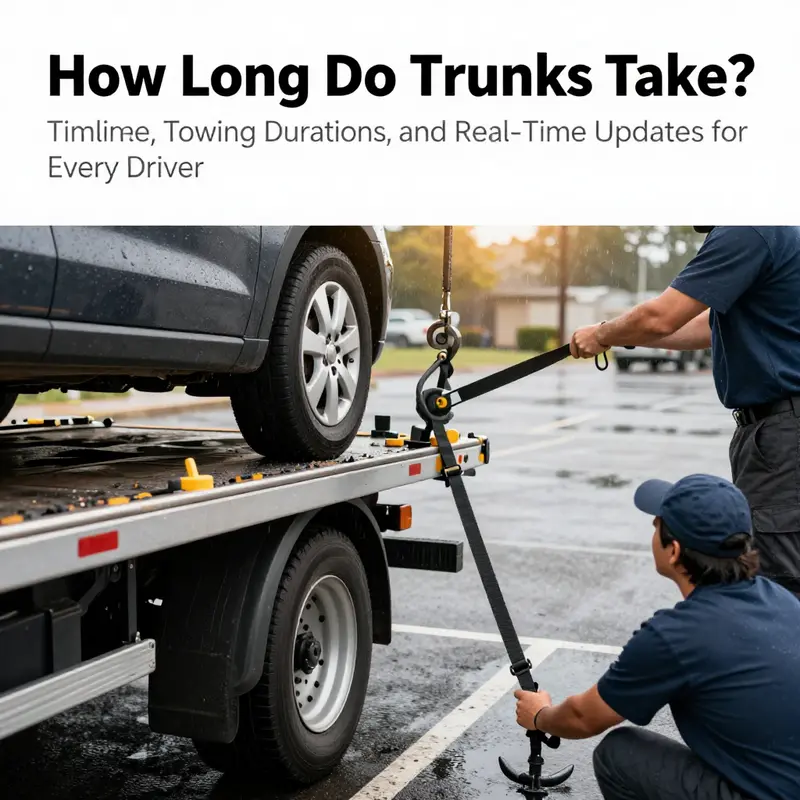
When a vehicle breaks down or becomes immobilized, the clock starts ticking in more ways than one. The time you end up waiting and the minutes it takes to finish a tow are not a single, fixed duration. They are the product of a cascade of decisions, conditions, and capabilities that unfold from the moment dispatch hits the driver’s dashboard to the last hitch lock clicks into place. In practice, two broad phases shape the total time: the journey from the dispatch center to the scene and the on-site recovery itself. Each phase is sensitive to a different mix of variables, and together they map out a landscape where a thirty-minute urban arrival can feel like an eternity if the road to a safe hookup is blocked, narrow, or crowded. The overall picture, then, is a composite of location, urgency, vehicle type, and the efficiency of the managing team behind the tow truck that arrives. The language of time in this field is nuanced: it speaks to the speed of a response and the precision of handling, not merely the minutes counted on a clock face.
In urban settings with dense traffic, strong infrastructure, and robust emergency coordination, the arrival window commonly falls within a broader target of 10 to 30 minutes after dispatch. That range reflects a world where dispatch centers can see real-time traffic conditions, where GPS-enabled fleets can alert the closest appropriately equipped unit, and where drivers can move efficiently through predictable urban corridors. Even within cities, the clock can stretch toward 45 minutes or more during peak congestion, at high-traffic intersections, or when demand outstrips supply. The same urban environment, though, can also shorten the wait when there is a readily available unit with the right capabilities close at hand. Conversely, rural and remote locations pull the clock in the other direction. In those areas, lack of nearby units, longer road distances, and fewer access points can stretch arrival to an hour or more, and during weather events or major incidents, it is not unusual for the window to widen further. The upshot is that the same service can feel dramatically different depending on where you are and what the day has in store.
Once a tow truck is en route and the driver reaches the scene, another dimension of time comes into play: on-site recovery. This segment—often 15 to 45 minutes—depends on how accessible the vehicle is and how smoothly the operation can be executed. A straightforward tow, such as a car that is simply within easy reach and ready to be rolled onto a bed, can be wrapped up quickly. In more complex scenarios, the clock moves slower. A vehicle that is partially off the roadway, up a curb, or involved in a collision requires careful assessment, securing the vehicle, and sometimes additional equipment or Crew involvement. If the car sits in mud, snow, or on uneven terrain, the process may demand extra traction, traction aids, stabilizers, or even a different kind of rig entirely. The timing of on-site work is not merely about strength or speed; it is a careful orchestration of safety, geometry, and the precise sequence of securing, loading, and departing. The difference between a clean, single-hook recovery and a multistage operation can be measured in minutes and, in some cases, hours.
Access is the underappreciated hinge on which many tow operations swing. Tow trucks need space to maneuver into position, deploy their ramps, and secure the vehicle without endangering bystanders or road users. In cramped urban environments, this means negotiating tight streets, parked cars, loading zones, and sometimes pedestrian corridors. A wide, level surface like a parking lot can transform a tricky recovery into a routine one, while a narrow alley or a parking structure with limited clearance can force a more conservative approach or a different truck type. Even when space exists, the surface condition matters: a level, stable ground allows the rollback bed to deploy safely, while soft ground or uneven asphalt can complicate setup and compromise the stability of equipment during loading. Local regulations add another layer of constraint. Some jurisdictions restrict night operations near sensitive facilities or impose quiet hours that influence how and when a tow is arranged, especially in residential zones or near hospitals and schools.
The equipment mix carries a strong influence on both time and feasibility. Rollback tow trucks, wheel-lift configurations, and flatbeds all perform differently depending on the car’s position, weight, and the surrounding traffic. A wheel-lift might suffice for a car that is accessible and on a flat surface, but it can be inadequate for a vehicle with substantial damage or one that sits off the road, requiring a flatbed to winch and secure from a higher clearance. A flatbed, while often slower to position, tends to be gentler on vehicles and can be essential after collisions or when transporting luxury or specialty cars that demand careful handling. The choice among these options is not random; it is a calculated response to a precise incident profile. In practice, dispatch centers aim to assign the most appropriate rig for the scene, not the most capable rig regardless of context. This is where technology and human judgment intersect. Fleet managers increasingly rely on GPS tracking and real-time dispatch data to match the incident with the ideal unit and the shortest possible route, reducing wasted travel and ensuring the right equipment arrives promptly. A well-designed cab also matters. Industry consultants note that better cab design improves visibility and reduces driver fatigue during long shifts, which in turn impacts the driver’s ability to assess access challenges quickly and safely. The net effect is that, even when the distance from dispatch to scene remains constant, the actual time to a successful hookup can be cut by smarter routing, better equipment matching, and more comfortable, alert drivers behind the wheel.
Of course, no chapter about timing would be complete without acknowledging the variability that weather, road conditions, and road regulations inject into the equation. Snow, ice, rain, or high winds can slow both travel and on-site work. Slippery surfaces complicate wheel traction and chain the driver’s movements to a more cautious, methodical pace. Construction zones and detours add cognitive load and travel distance, while road closures can force detours that extend arrival times. Traffic incidents upstream on a corridor can cause spillover from one lane to another, creating bottlenecks that ripple outward. In these moments, the difference between a thirty-minute arrival and a one-hour delay is often the result of a single blocked access point or a minor miscalculation in the route that cascades into a more time-consuming maneuver. The practical reality for motorists is that the best way to set expectations is to recognize that time is dynamic and situational rather than a fixed guarantee.
Against this backdrop, what can people waiting for a tow do to improve their experience and minimize wasted time? The first step is honest, precise situational reporting. Describing the exact location, the nearest cross street, and any landmarks helps the dispatcher locate the scene faster and choose the right approach. If the vehicle is tucked into a driveway, back lot, or a narrow street, noting that information upfront reduces the chance that a crew will have to re-route after arrival. Another practical step is to keep the area around the vehicle clear. Removing debris, ensuring adequate space for the rollback or flatbed to maneuver, and guiding bystanders away from the operation can prevent delays caused by confusion or safety concerns. If a tow is part of a larger plan—say, you’re coordinating with a repair shop or an accident response team—sharing those details early helps align the timing with the broader response. Finally, staying informed matters. Most reputable providers offer real-time updates, so a quick call or text to confirm arrival estimates can give you a sense of how the situation is unfolding. The aim is not to micro-manage the driver but to support a smoother, safer, and quicker hookup by eliminating avoidable snags.
Within this broader landscape, the interplay between cost and time also deserves mention. While pricing is a separate thread from the mechanics of arrival and hookup, it is not wholly divorced from the experience of a delay. Delays can ripple into costs in several ways: additional hours of labor, longer vehicle transport, or the need for more specialized equipment to manage a difficult scene. Understanding these dynamics can help customers negotiate reasonable expectations and avoid surprises. For readers curious about the budgeting side of the service, you can explore how pricing factors into the experience and decision-making process in guides like How Much Is a Tow Truck?, which offers context on the broader economics of towing services without getting lost in the minutiae of each individual call. In practice, the best approach combines clear communication with an informed understanding that time and cost in towing are interconnected but distinct elements.
For readers seeking a broader perspective beyond the immediate scene, the academic and industry analyses that shape standards and practice are invaluable. They offer a framework for understanding why response times vary and what operators do to minimize delays while preserving safety. A recent comprehensive analysis highlights how different types of tow equipment, industry standards, and regional practices influence performance across the board. The takeaway is not a single universal rule but a spectrum where location, equipment, and human factors align in ways that can dramatically alter the pace of a rescue, a recovery, or a simple pull-off to a shoulder. That lens also helps explain why a simple roadside assistance call may feel quick in one town and longer in another, depending on how many moving parts must converge to execute a safe hookup. For a deeper dive into standards and industry performance, see the external resource linked at the end of this chapter.
In sum, the on-site portion of towing time is a dynamic problem rather than a fixed schedule. It is shaped by access, not just distance; by the type of vehicle and the equipment required; by weather and traffic; and by the efficiency of the dispatch system and the crew’s readiness. Understanding this multi-layered reality helps demystify the clock and sets a more grounded expectation for anyone waiting on a tow. The best-informed customers approach the situation with practical steps to ease access, a willingness to adapt to shifting conditions, and a plan to stay informed through real-time updates. As the landscape of towing technology and field operations continues to evolve, the core truth remains steady: every scene is unique, and every minute counted is earned through careful preparation, precise technique, and a commitment to safety on the road.
For readers who want a quick reference to the cost side while they consider timing, there is a practical takeaway: the time you wait and the fee you pay are parts of a larger service equation that depends as much on location and access as on distance traveled. When you think of tow timing, imagine a spectrum rather than a single line. In urban centers, prepared fleets with fast dispatch and agile rigs can compress the window from call to hook-up, while in rural routes, patience and clear communication with the dispatch team become the most valuable tools. The interplay of access, equipment, and environment will continue to be the defining feature of on-site towing duration, and the evolution of fleet management, driver ergonomics, and real-time information systems will push that dial toward greater efficiency without compromising safety. For those curious about the practicalities of pricing alongside the time, consider the internal resource linked earlier, and for a broader, industry-wide understanding of standards and performance, the external reference at the close of the chapter provides a comprehensive perspective on how the field continues to evolve in response to demand, technology, and regulation.
Time on the Road: How Tow Trucks Hit the Clock in Complex Recoveries, Weather, and Real-Time Updates
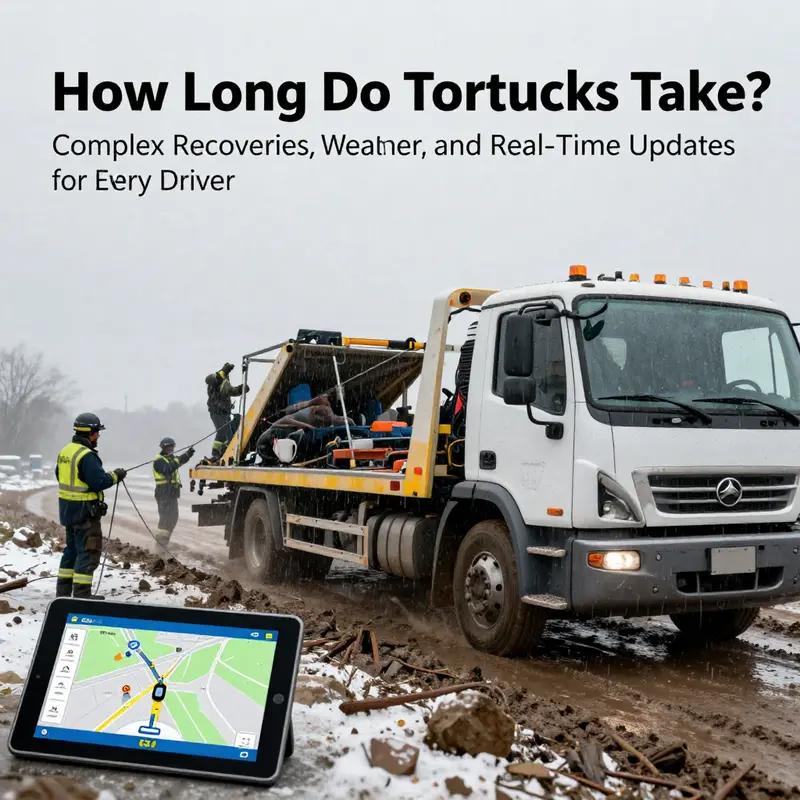
When a vehicle breaks down or slides into trouble, the clock starts ticking the moment the call is placed. The timing of a tow truck’s arrival and the duration of the recovery are hardly fixed constants; they bend to a map of realities on the ground. In dense urban cores, fleets talk in terms of minutes, aiming for a crisp window that keeps traffic moving and motorists from waiting in perilous spots. In those high-demand neighborhoods, the industry standard you’ll hear echoed in dispatch rooms is a rough 30 to 60 minutes for arrival after a call. The goal feels almost musical: a tempo that blends promptness with practical constraints. But when the setting shifts—into rural stretches, during a rush hour surge, or under the shadow of a winter blizzard—the tempo slow dances toward hours. A rural roadside can stretch to two to four hours or more before a wrecker tucks into a lane, especially if the weather gnaws at visibility or road viability. The simple act of arriving, however, is only the first verse; the job’s real length depends on what happens once the tow truck sits at the curb or grass verge, and how easily the vehicle can be accessed for a secure hookup.
The basic choreography of a tow begins with dispatch: the call funnels into a dispatcher who reads a map of the service area and matches it with the nearest available units. The dispatcher also weighs the type of vehicle issue, the location’s accessibility, and the equipment needed. A small passenger car on a clear city street is a far cry from a disabled luxury sedan trapped behind a guardrail, a heavy-duty commercial rig, or a car that has slid into mud or snow. The clock continues ticking while the driver travels, but the on-site clock starts when the truck arrives and the operator starts setting up the recovery. In uncomplicated cases, the actual towing might take roughly 15 to 30 minutes—long enough for a careful hookup, secure loading, and a quick verification that the tow is secured for transport. If there are no surprises, if the vehicle is easily accessible and there is no need for specialized equipment, the on-site portion can feel almost routine, almost procedural, the kind of task you might watch and think, “That was done in a moment.” But the moment can stretch, because the real complexity emerges once you consider the full arc of a tow—from dispatch to transport to delivery at a repair facility or a safe location.
What makes the difference is rarely a single factor. It is a convergence of location, vehicle type, weather, and the availability of the right equipment and personnel. A routine roadside restart or a simple tow on a flatbed might be straightforward in a well-lit urban street, but the same job on a windy mountain road or in a busy industrial park after an accident elevates the challenge. The moment the tow requires a heavy-duty wrecker, the scene shifts to a higher gear. Integrated heavy-duty tow trucks—units that combine a boom, winch, and wheel-lift systems into one robust platform—are designed to handle large, complex recoveries with greater control and precision. They can lift and stabilize multiple points of a vehicle or even alter the dynamics of a rollover scenario. Yet the very power they bring can also demand more setup time, more planning, and more coordination. Operators must align with safety protocols, ensure the scene is controlled, and confirm that the surrounding traffic is managed to prevent further incidents. In short, complexity buys time.
Add weather into the equation, and the clock becomes even less predictable. When snow blankets a highway, or when sleet clings to the asphalt, visibility drops and road friction climbs. Rain, fog, and ice don’t just slow travel; they slow the recovery itself. A tow crew might need to clear a path, set up additional lighting, or wait for a safer window before attempting a difficult maneuver. In adverse conditions, even a well-trained crew can lose precious minutes to rerouting or waiting for roadways to become passable again. The effect of weather is magnified in rural or remote areas where the nearest backup units are farther away, and where detours might involve longer routes through less traveled terrain. The weather’s leverage over time is not merely about the drive minutes; it is about the entire decision cycle—whether to push ahead, wait, or execute a staged recovery once conditions improve. Real-time weather updates and situational awareness become part of the dispatch process, guiding decisions and shaping expectations for drivers and customers alike.
The human factor sits at the center of these calculations. Dispatchers interpret data, weather forecasts, and on-scene reports to forecast ETA and to reallocate resources if needed. Drivers bring skill, experience, and a trained sense of when to push forward and when to yield to safer conditions. A skilled operator can recognize hidden hazards—the thinnest of ice, an uneven shoulder, or a vehicle with compromised structural integrity—that might slow or alter a plan. Their decisions affect the on-scene duration and the total time from the initial call to the final handoff at the repair shop. Even with the most precise dispatch algorithms, live traffic patterns, rush-hour bottlenecks, and on-the-ground obstacles create inevitable variability. The efficiency of the operation hinges on the quality of information reaching the driver, and increasingly, on real-time updates that keep customers informed while the crew works.
This is where modern technology makes a real difference. Real-time tow tracking through GPS devices installed in tow trucks creates a live thread from dispatch to arrival. Fleet operators can monitor location and movement in near real time, sometimes with updates every few seconds, and translate that into more accurate ETAs for customers. For the customer waiting by the roadside, that transparency is not just comforting; it is practical. It helps them make better decisions about whether to wait or arrange alternative transportation, and it helps them coordinate with family, employers, or roadside amenities. On the business side, GPS-enabled tracking improves dispatch efficiency by enabling dynamic rerouting and more precise resource allocation. If a truck is delayed by a traffic jam or a blocked closure, the system can reassign tasks, keep the nearest possible unit available, and minimize further drift in the ETA. The result is not a single moment of arrival but a stream of updates that, while still imperfect, provide a sharper picture of progress than a rough estimate announced early in the call.
Within this ecosystem, certain benchmarks tend to emerge as common reference points. For emergency towing services—those rapid responses needed on highways or accident scenes—dispatch centers often target 30 to 45 minutes in urban or suburban contexts. Rural or remote regions can see longer frames, sometimes 60 to 90 minutes, depending on nearby fleet density and the road network. Some premium fleets serving commercial clients or high-traffic corridors attempt to maintain an average under 30 minutes during peak hours, recognizing the cost of delay in those environments and the value of swift recovery for the customer’s uptime. For non-emergency or scheduled towing—such as vehicle relocation or dealership transfers—the expected window broadens to 2 to 4 hours, reflecting a different set of priorities and the realities of coordination over longer time spans. Yet even within these general guidelines, the actual timing remains a function of how the service area is mapped, how demand fluctuates, and how technology is integrated into dispatch and customer communication.
This is where the realism of timing intersects with the promise of precision. Real-time updates are not simply about telling a customer when a truck will arrive; they are about enabling smoother operations for the fleet and a calmer experience for the motorist. When a user can see the truck’s live location, the ETA fluctuates with traffic patterns and road conditions, not with guesswork. The customer can receive status changes by text or app notification, a feature that reduces anxiety and allows for better planning in the event of delays or the need to arrange alternative transport. The operator benefits too; the on-screen information and integrated routing tools can optimize approach angles, minimize dangerous maneuvers, and harmonize the on-site setup with safety checks. Taken together, these systems translate a highly variable process into a more predictable service, even as the underlying complexity remains high.
The realities of the job also highlight why apparent speed on a single call is not a reliable measure of overall performance. A quick arrival might not guarantee a quick departure if the scene is hazardous or if the vehicle requires off-site equipment or non-standard recovery techniques. Conversely, a longer on-site time does not necessarily reflect inefficiency; it may reflect careful adherence to safety protocols, a meticulous connection process, or the need to coordinate with another vehicle or incident responders. In other words, the clock is not a single reading but a spectrum that extends from the initial dispatch through the completion of the tow and aftercare at the repair facility. For those studying tow-truck service delivery or planning for peak demand, the most meaningful metrics map to this journey, not a solitary moment of arrival.
One might wonder how far fleets have progressed toward reducing the variance in these times. The answer lies in a combination of fleet distribution strategies and data-driven scheduling. Where trucks are stationed matters as much as how they are directed. A well-distributed fleet with knowledge of historical demand patterns can pre-position units in high-probability hotspots and thereby shave minutes off response times when a call comes in. When these systems are paired with real-time tracking and dynamic routing, the difference can be meaningful, especially during weather events or in areas where road conditions change quickly. The goal is not to eliminate variability but to manage it—providing accurate, real-time estimates, ensuring safety, and preserving the reliability that customers have come to expect. In that sense, the industry’s progress is measured less by a fixed number and more by the ability to tell a clear, honest story about how long a tow will take given the specific set of circumstances at hand.
For readers curious about the landscape of tracking and response, the technology that makes these updates possible has broader applications across fleets of all kinds. Real-time truck tracking and the methods used to derive ETA from continuous location data form the backbone of modern dispatching and operations. With GPS-based visibility feeding into route optimization, managers can strike a balance between speed, safety, and reliability. The same principles that help a tow fleet shave minutes off a response can also improve efficiency in other industries that rely on mobile service and rapid on-site action. When you consider the full arc—from the moment a call is logged to the moment the vehicle is secured and delivered—what emerges is a picture of a service that is as capable as it is cautious, as quick as it is measured, and as transparent as it is technically sophisticated. This balance, more than any single number, defines the practical reality of how long tow trucks take.
Throughout this discussion, the thread that holds it together is this: timing in towing is a relational concept. It exists between the speed of a response and the safety and feasibility of the recovery. It is shaped by geography, weather, vehicle complexity, and the accuracy of information shared with the customer. It is enhanced by technologies that provide live visibility and by processes that make dispatch smarter, more responsive, and more predictable. It is not a single moment but a sequence of moments, each one informed by what came before and what will come after. And as fleets continue to invest in better data, better equipment, and better communication with customers, the alignment between expectation and reality becomes more reliable, even as life on the roadside remains inherently unpredictable.
For a concise frame of reference on how weather and complex recoveries intersect with ETA and response times, consider the established guidance from professional roadside organizations: their guidelines acknowledge the range of factors that can shift timing and emphasize the need for transparent communication and adaptive planning. Real-time updates, advanced tracking, and smarter dispatching are not optional thickeners of the process; they are essential tools that shape the customer experience just as much as the technical performance of the tow itself. As the industry continues to evolve, the interplay between the clock, the scene, and the driver remains a compelling study in how modern services turn uncertainty into dependable support for drivers and stranded motorists alike.
Internal link note: For a deeper look at the technology and safety considerations shaping tow operations, see tow-truck-technology-and-safety.
External reference: For a grounded overview of weather-related delays and roadside assistance standards, see https://www.aaa.com/roadside-assistance
Final thoughts
Understanding tow-duration timelines means recognizing a three-phase equation: arrival, on-site hookup, and final recovery, each sensitive to location, vehicle condition, and external factors like weather and traffic. Urban areas typically offer clearer estimates within a 30–60 minute arrival window and 15–30 minutes to secure a vehicle when access is straightforward. Rural and remote settings introduce variance, often extending dispatch-to-scene times into hours, especially under heavy demand or poor road conditions. On-site timing depends on vehicle accessibility and equipment—luxury cars, heavy pickups, or vehicles with damaged frames can complicate hookup or require specialized gear. Complex recoveries—accidents, stuck vehicles, and adverse weather—may require multiple responders and longer confirmations, often spanning several hours from dispatch to completion. Across all scenarios, active communication with the towing provider remains the most reliable way to set expectations and plan alternatives. For Everyday Drivers, Residents & Commuters, Truck Owners, Auto Repair Shops & Dealerships, and Property Managers, having a realistic time framework and real-time updates helps minimize downtime, coordinate with occupants or customers, and allocate resources more efficiently. The core takeaway: time is a spectrum, and proactive information is the best utility for navigating it.