
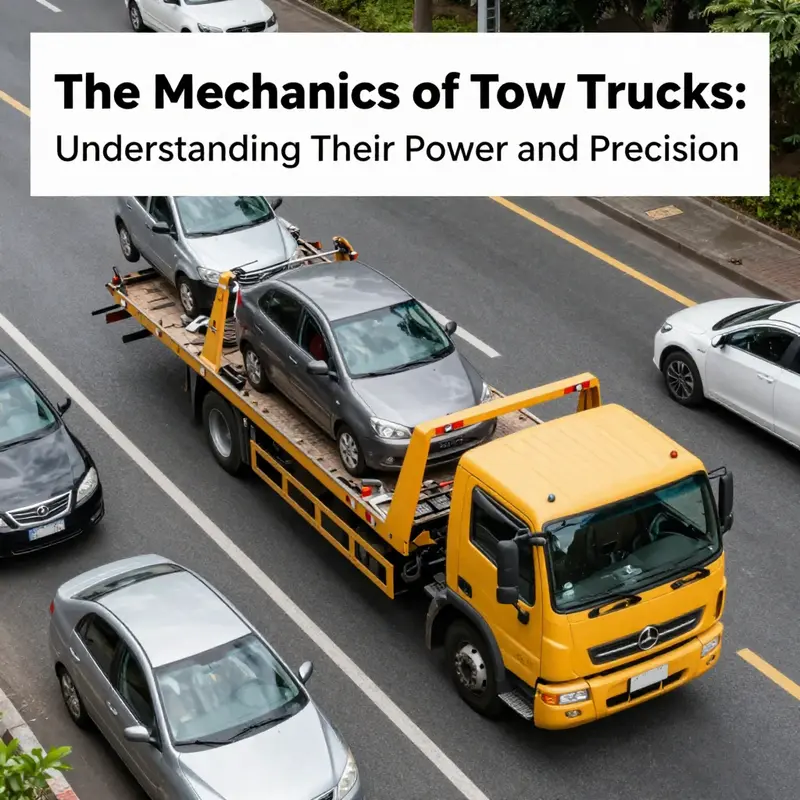
Tow trucks are essential in the world of roadside assistance, providing crucial support during vehicle breakdowns and accidents. Understanding how these powerful machines work enhances the appreciation for the technology and systems they utilize to recover and transport vehicles safely. From the fundamental mechanical and hydraulic systems to the various types of tow trucks available, each aspect plays a significant role in the efficiency of towing operations. Additionally, comprehending how tow trucks function in emergency situations can prepare drivers and property managers alike for unexpected challenges. As the industry evolves, keeping an eye on future innovations and technological advances promises to shape the way tow trucks operate, enhancing both safety and efficiency on the roads. This article will delve into these critical aspects, providing insights into the workings of tow trucks and their growing importance in modern transportation.
Lifting the Road Again: The Hydraulic and Mechanical Mastery Behind Tow Trucks
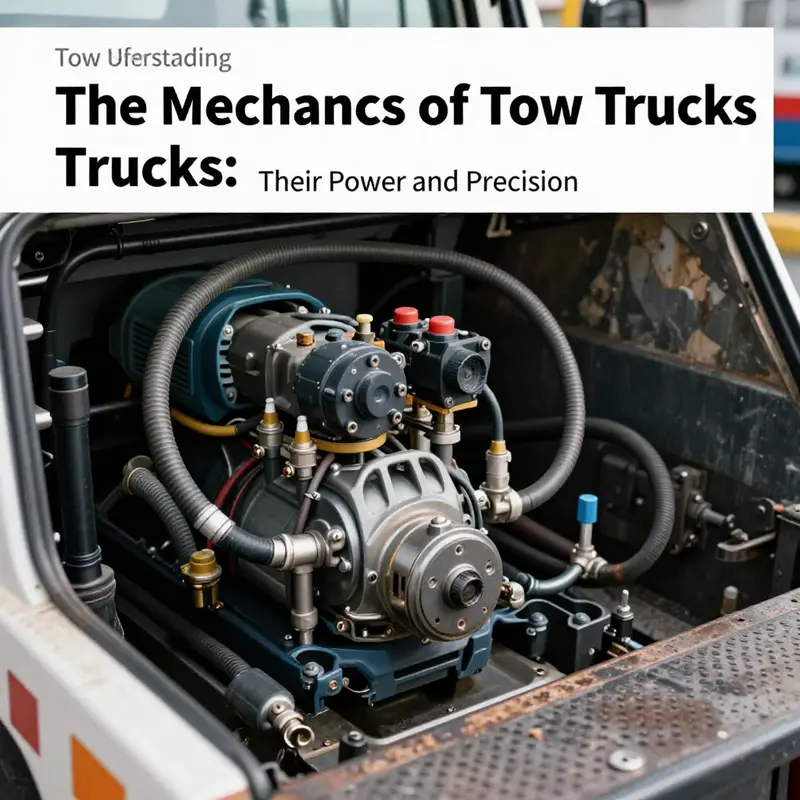
Tow trucks are more than oversized tow ropes and loud winches. They are small, highly tuned recovery labs on wheels, built around an orchestration of mechanical leverage and hydraulic force. At their core lies a simple but powerful idea: fluid pressure, channeled through carefully designed components, can multiply force, control motion with great precision, and keep a heavy machine and its load stable through demanding operations. The result is a vehicle that can reach a wreck site, assess a stalled car, and, with measured steps, return a vehicle to the road. From the quiet hum of the hydraulic pump to the calm steadiness of stabilized outriggers, every element plays a part in transforming a roadside emergency into a controlled, recoverable situation. While many drivers and operators will emphasize the role of the winch or the flatbed, the hydraulic system is the living heart that makes the rest possible. It powers the lift, drives the extension of arms, and enables rotation or translation in ways that plain mechanical gearing could not. Understanding how these systems work helps explain why tow trucks are the robust tools they are and why the safest recoveries depend as much on hydraulics as on steel and steel-wielding skill.
The hydraulic subsystem begins with a power unit—often a diesel engine connected to a hydraulic pump. This pump pushes hydraulic fluid from a reservoir through a closed circuit, delivering pressurized fluid to a network of hoses and valves. The fluid itself is selected for high lubricity and stability under pressure, and the system is designed to maintain a consistent flow even as conditions change. The pump’s output, measured in liters per minute or gallons per minute, determines how quickly a lifting arm can extend, how fast a boom can reach out, and how swiftly a winch can pull a trapped or immobilized vehicle toward the tow truck. But raw pressure is only part of the story. The real power comes from the hydraulic valves—that intricate maze of control devices that translate the driver’s or operator’s inputs into precise, controlled movements. Valves direct flow to different parts of the system, enabling combinations of actions: the boom can extend while a winch tightens, or the platform can lift while stabilizers deploy. In effect, the valves act as the choreography that coordinates hydraulic motion with mechanical action.
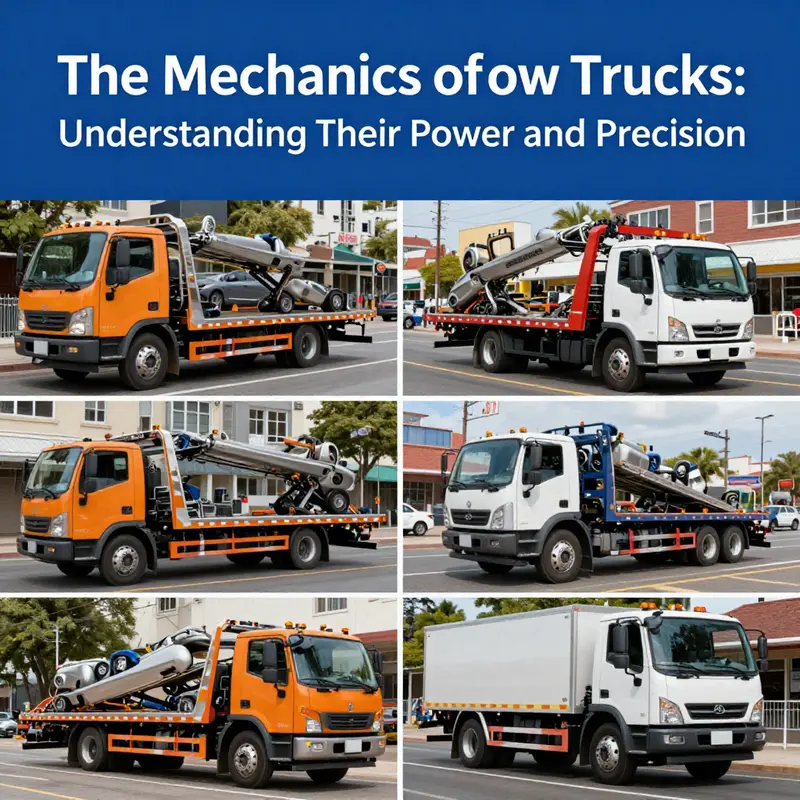
The main hydraulic components interface with several distinct recovery configurations, each tailored to specific tasks and vehicle types. Flatbed tow trucks, the most recognizable shape in roadside recovery, rely on a hydraulically powered deck that lowers to the ground and then rises with the disabled vehicle secured on top. The process begins with stabilizing outriggers or cribbing to spread the load and prevent the chassis from shifting. As the deck lowers, the vehicle is rolled or pulled onto the bed, then secured with chains or straps. When it’s time to transport, the deck rises with the vehicle firmly in place, and the operator can drive away with confidence in the load’s stability. The hydraulic system controlling the deck must deliver smooth, controlled motion across its full range, with quick but safe response to operator input. This is where hydraulic precision shines: even a slight miscue can cause lateral movement or skid, so modern decks rely on feedback from position sensors and electronic controls to maintain exact alignment.
Wheel-lift configurations present a different set of hydraulic challenges. These trucks use arms that engage the wheels, allowing the other two wheels to remain on the ground or spin freely. A front- or rear-wheel lift, driven by hydraulic cylinders, can lift a vehicle just enough to clear the ground while a winch then pulls the vehicle onto the bed or toward the front of the tow truck. The winch itself is often hydraulic rather than purely electric, providing strong, steady pulling force even when loads are high or accessories are engaged. Because wheel-lift operations put unusual stress on the vehicle frame, the hydraulic system must provide not only power but controlled deceleration as the car is coaxed from position to position. In practice this requires calibrated pump speed, valve sequencing, and careful coordination with the driver’s inputs so the vehicle remains stable during the lift and travel phases.
Boom tow trucks add another layer of hydraulic complexity. A long, articulated boom, driven by hydraulics, can reach into tight spots, anchor to a vehicle, and lift or pivot with finesse. Some booms include a secondary ram that allows rotation, enabling the operator to position the load in a more convenient direction for strapping and loading. The hydraulic arm must deliver high lifting capacity while maintaining smooth, predictable motion. Because off-center loads can create dangerous angular forces, the system is designed to limit overshoot and implement slow, steady control in the final stages of placement. Integration with stabilizing outriggers remains critical here as well; the hydraulic control system works in concert with the mechanical stance of the vehicle to resist tipping or swaying during lift and transport.
Integrated tow trucks further refine maneuverability by consolidating multiple recovery functions into a compact hydraulic framework. Their hydraulic systems are designed to deliver high force through a combination of tight geometry and precision valves, allowing for controlled lifting, rotation, and positioning in congested urban environments. These trucks rely on a synergy of hydraulic power with electronic safeguards and driver-assistance features that help the operator maintain stability while negotiating tight corners or uneven surfaces. The result is a highly capable machine that can adapt to a wide range of scenarios—from a narrow alleyway to a broad highway shoulder—without sacrificing control or safety.
In all these configurations, the operator’s inputs translate into hydraulic motion via a cab-mounted control panel or a wireless remote. The modern approach favors flexibility; drivers can monitor and adjust the lift, rotation, and extension from inside the cab or from a perch at the rear, depending on the task. The cab-mounted controls provide tactile feedback through levers and pedals, with hydraulic actuation delivering the measured force behind each input. Wireless controls give an additional dimension of reach, allowing the operator to stand at a safer distance during complex recoveries or to guide the boom from an advantageous angle. The hydraulic system’s behavior is frequently augmented by electronic sensors that report pressure, position, and temperature. The operator can see real-time data about the load being handled, the deployment of stabilizers, and any abnormal readings that might indicate a fault. This feedback loop—not just raw power, but informed power—helps ensure that the lift remains within safe limits and that the vehicle is moved with predictable precision.
The question of safety cannot be separated from the hydraulic narrative. Lifting heavy loads generates substantial forces that can shift a vehicle’s center of gravity and threaten stability. To mitigate this, tow trucks deploy a suite of safety devices governed by the hydraulic system. Outriggers extend like wide feet from the chassis to widen the stance; the hydraulic cylinders push them down with controlled force to resist sway. Some designs incorporate automated stabilization that senses movement and adjusts the outriggers accordingly. Chains, straps, and winch lines must be chosen and tensioned to distribute loads evenly without pinching or bending critical structural members. The operator must also manage fluid temperature; prolonged use of high-pressure hydraulics can heat the fluid, reducing viscosity and, consequently, efficiency and safety. Modern systems incorporate cooling loops and fluid reservoirs sized to maintain performance through successive operations, from a single roadside incident to a multi-vehicle recovery in a remote location.
The practical benefits of hydraulic power extend beyond raw lifting capability. The smoothness of hydraulic motion minimizes jolts that could further damage a stalled vehicle or shift its contents during loading. It enables a controlled ascent of a vehicle onto a flatbed, a measured drag onto a wheel-lift, or a careful pivot of a car in tight quarters. Even small adjustments—incremental extension of a boom, micro-rotations to align a wheel, a gentle winch pull to ease contact points—are possible because hydraulic systems deliver a linear and repeatable force profile. For this reason, the hydraulic core is often paired with robust mechanical linkages and reinforced frames that resist bending moments and fatigue. The engineering goal remains consistent: transform the raw power coming from the engine into dependable, repeatable actions that safeguard people, vehicles, and surroundings during every recovery operation.
To tie these ideas to real-world practice, imagine a highway incident where a damaged truck blocks lanes, and a disabled car needs retrieval without risking further damage. The tow operator deploys stabilizers, checks the payload’s weight, and selects the appropriate configuration—likely a flatbed for a stranded vehicle or a wheel-lift for a rear-end collision. The hydraulic pump engages, pressure builds, and the deck or arm begins to move with deliberate pace. If the lift must be coupled with rotation to align with a narrow exit ramp, the operator uses the rotator feature where available, coordinating with the winch to secure the vehicle into the optimal orientation for transport. Throughout, the system’s sensors monitor load, pressure, and position, and the operator receives feedback that allows precise timing of each phase. The result is not only the safe removal of a vehicle but a steady, efficient transfer of energy from the truck to the road, completed with minimal risk to bystanders or other drivers.
A growing body of knowledge emphasizes that tow trucks are as dependent on safety technology as on raw power. Advanced driver assistance features, stabilized frames, and ergonomic cabins contribute to a safer, more efficient workflow. In modern practice, efficient aftercare and maintenance of hydraulic systems also play a critical role. Regular checks of hydraulic fluid levels, the integrity of hoses and fittings, and the condition of seals prevent leaks and pressure drops that could undermine performance. That attention to detail matters, because a single tiny leak can degrade the entire system’s reliability or lead to a dangerous loss of control during a heavy lift. The synergy between mechanical resilience and hydraulic reliability underpins every successful recovery, and the best operators treat this synergy as a constant discipline rather than a one-time setup.
For readers seeking a deeper dive into the mechanics behind automatic tow trucks and how these systems interact in practice, a comprehensive guide from an industry resource offers detailed explanations of the automatic control sequences, safety interlocks, and the practical nuances of hydraulic actuation. Thislink to a detailed external resource provides additional context on how automatic systems optimize timing, control, and safety in real-world scenarios.
Within the broader landscape of recovery technology, it is also useful to consider the knowledge accumulated by professionals who train for and execute emergency responses. The literature on emergency response training, equipment standardization, and incident command underscores how hydraulic systems enable responders to perform with precision under stress. Operators rely on a shared mental model of how the equipment behaves when hydraulics are engaged, ensuring coordinated actions among team members and other responders at a scene. The combination of hydraulic power, robust mechanical design, and deliberate human judgment makes tow trucks not merely utility vehicles but integral components of the broader safety ecosystem on the road and at incidents. As cities grow, roadways become busier, and the range of vehicles needing recovery expands, the hydraulic and mechanical design principles behind tow trucks will continue to evolve. New materials, improved seals, and smarter control algorithms promise to increase efficiency and safety even further while maintaining the straightforward, reliable behavior that drivers expect when a vehicle needs assistance. The result is a technology that looks simple on the surface—a platform, a hook, a winch—but that rests on a complex, carefully engineered system designed to keep people and property safe as roads keep us moving forward. The more we understand this system, the better we can appreciate the quiet craft of a successful recovery, powered by hydraulics that translate energy into motion with trust and control.
In the end, the appeal of tow trucks lies in their balance of brute capability and refined control. The hydraulic system is the common thread that binds the different configurations—flatbeds, wheel lifts, booms, and integrated bodies—into a family of machines capable of dealing with the unpredictable realities of the road. They must lift heavy loads, reach into awkward angles, and secure vehicles for transport without compromising stability. The operator, guided by real-time feedback from sensors and by the reliability of proven hydraulic design, executes a sequence of precise actions that turn a difficult situation into a manageable one. The result is a recovery that not only gets a vehicle moving again but does so in a way that protects everyone involved and respects the surrounding traffic. This is the hydraulic heart of tow trucking: a disciplined, well-tuned system that transforms power into careful, deliberate movement, and it is the reason why tow trucks remain essential allies for road safety and mobility.
Internal link reference: for additional context on how modern tow-truck technology and safety systems integrate with daily operation, explore the article on tow-truck technology and safety tow-truck-technology-and-safety.
null
null
Lifelines on the Road: The Invisible Mechanics Behind Emergency Tow Recovery and Safe Transport
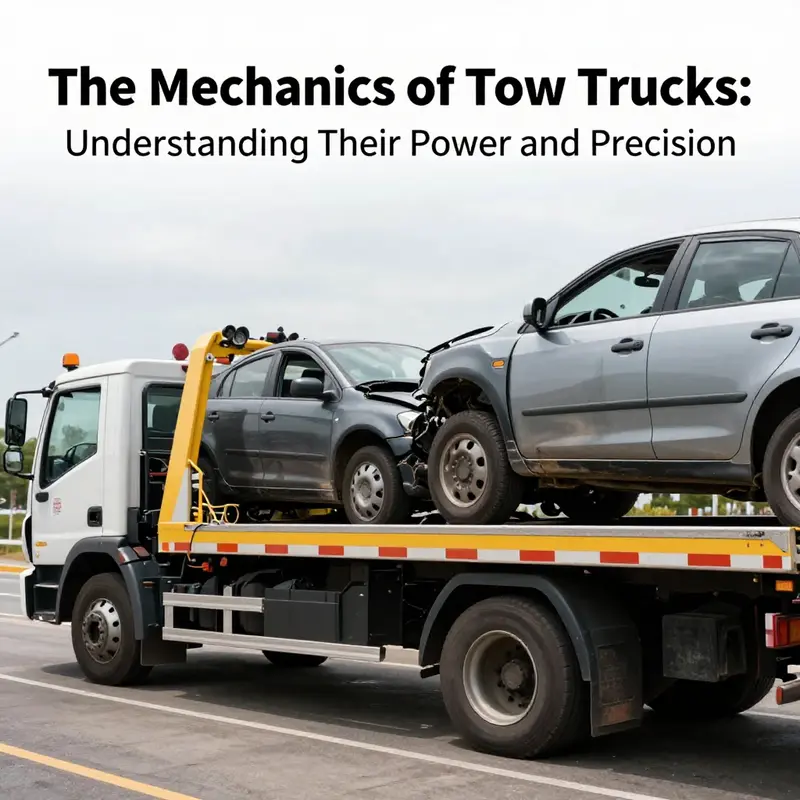
When a roadside emergency requires more than a quick fix, the tow truck operator becomes a careful engineer, a cautious planner, and a steady hand on a shifting load. The chapter that follows moves beyond the surface impression of a tow truck merely dragging a vehicle away. It looks at the specialized machinery, the layered safety systems, and the disciplined decision-making that enable rapid recovery and secure transport in some of the harshest conditions on our roads. In emergencies, every move must be purposeful, every connection intentional, and every moment accounted for by the physics of weight, leverage, and balance. The core truth is simple but profound: tow trucks are not generic tow-instruments. They are purpose-built systems that fuse hydraulic power, mechanical reach, and human judgment into a cohesive method for saving time, reducing damage, and restoring order to a disrupted scene.\n\nHydraulics lie at the heart of most tow trucks’ capabilities. Fluids under pressure drive the truck’s main actions: the flatbed’s tilt and slide, the boom’s reach and curl, the winch’s pull, and, where present, the rotator’s 360-degree control. Hydraulic circuits translate electrical or engine-driven power into smooth, adjustable motion. The precision this delivers matters. A slight adjustment of the bed angle can mean the difference between rolling a stalled sedan onto a level platform without contact to its frame and inviting a costly structural bend or twist. The same hydraulic logic governs a boom that must extend out, hook a vehicle from awkward angles, and lift it without causing further harm. It also governs a rotator’s articulated crane, which many emergency scenes demand because it provides the ability to manipulate vehicles from obstructed viewpoints and to reorient a damaged car so it can be loaded with minimal risk to occupants and responders alike.\n\nAmong the types of tow trucks, the rollback flatbed stands out for its emphasis on vehicle protection. In emergencies, protecting a disabled vehicle is often crucial, not only to preserve the vehicle’s value but also to prevent ancillary damage that could complicate investigations or insurance claims. The rollback uses a hydraulically inclined platform that can be driven or winched back onto a level, secure bed. This method reduces contact with the vehicle’s critical components, such as the drivetrain or suspension, because the entire car travels as a unit on the bed rather than being dragged on rollers or rolled onto a wheeled carrier. Rollback operation tends to demand more space and a carefully choreographed setup, but in urban corridors or at accident scenes where the chassis and integrity of the vehicle matter, the trade-off is well worth it. The ramp-like bed can be lowered to negotiate street angles or curb edges, and once the vehicle is fully on board, the bed returns to level, ready for transport. This approach also increases stability during transport, a factor that matters when a loaded bed must navigate uneven surfaces, potholes, or shifting road shoulders.\n\nWhere the scene demands speed or the vehicle’s driveline is compromised, wheel-lift and boom-based recoveries come into play. Wheel-lift tow trucks leverage a set of arms that cradle one end of the vehicle and lift it by its wheels, leaving the other end on the ground or on a bed. This method is efficient for quick lane clearance when the vehicle can be safely rolled onto the bed or winched onto a platform. A boom-equipped truck, by contrast, uses a long hydraulic arm—the boom—to hook and lift a vehicle off its own tires or off an obstructed position. The boom provides reach, allowing responders to access vehicles that might be wedged in a ditch, pinned against a barrier, or resting at an awkward angle. In a pinch, the combination of a boom and a winch allows operators to lift and maneuver a car with remarkable control, even when space is constrained or when the vehicle sits at an unstable tilt. The versatility of the boom becomes especially valuable on crowded highways or in trickier off-road recoveries, where the bucket or bed alone cannot reach the target without additional rigging.\n\nIn more complex emergencies, rotator tow trucks enter the scene. A rotator carries a rear-mounted crane that can rotate through 360 degrees, a feature that adds a crucial dimension of flexibility during extrication and repositioning. A vehicle that has rolled over or come to rest in a challenging orientation can be tended from multiple angles without additional repositioning of the tow vehicle itself. The operator can lift from a safer quadrant, rotate a damaged car away from dangerous ground, and place it onto a bed or onto stabilizing gear with tighter control of center of gravity. This capability, while extremely powerful, is also demanding. It requires trained personnel who understand load dynamics, rigging safety, and the risk of swinging masses. The ability to move heavy vehicles at awkward angles makes rotators indispensable at major incidents, highway wrecks, and commercial-vehicle recoveries where the damage profile or terrain forces the team to think in three dimensions rather than along a single line of pull.\n\nAnother class of emergency recovery involves high-angle and specialized flatbeds designed for difficult repositioning of large vehicles. When a vehicle sits in a ditch, rests on an embankment, or lies at a steep slope, a high-angle recovery setup provides the necessary angular approach to bring it up and onto the bed. These configurations may involve integrated winches and steep-loading angles that facilitate controlled loading with reduced risk to the vehicle and the operator. While these models carry higher maintenance costs and require careful handling, their strategic value in industrial environments—where buses, semi-trailers, or construction equipment might be involved—means they serve as essential tools in the responder’s kit. Across these typologies, the emphasis remains consistent: the goal is to recover or reposition a vehicle with the least additional damage, the greatest predictability, and the fewest compromises to safety.\n\nBehind the visible mechanics, the safety systems and procedural rigor that govern these operations are the unseen, indispensable elements. Stabilizing outriggers or hydraulically deployed legs anchor the tow truck to the ground so that the platform, boom, or winch does not shift under load. Modern units increasingly integrate load-sensing mechanisms, cameras, and warning systems that help operators monitor line tension, lift rate, and sling position. The hardware is paired with a disciplined operating culture that prioritizes risk assessment, scene sizing, and clear communication with other responders or traffic control. The rules of engagement at an incident scene are as critical as the hydraulics themselves, because a misstep can turn a controlled lift into a dangerous swing, a dropped load, or a secondary collision.\n\nTraining completes the cycle from tool to outcome. Operators learn to read road geometry, surface conditions, and weather factors that influence friction and traction. They learn about load distribution—how weight shifts when a vehicle is partially on the bed, partially supported by a winch, or suspended by a crane. They study the interplay between vehicle appeal to gravity and the stabilizing force of outriggers, ensuring that every rigging point is secure and that chains, straps, or mats protect the vehicle’s surfaces and structural members. The more complex the scenario, the more the operation resembles a carefully choreographed rescue rather than a simple mechanical lift. In practice, this means rehearsing emergency plans, maintaining equipment at peak readiness, and cultivating a communication protocol that allows the team to adapt on the fly without compromising safety.\n\nFrom a logistical perspective, selecting the right configuration hinges on scene assessment. A stable, accessible vehicle with minimal damage may simply be winched onto a rollback bed for quick removal. A heavily damaged car in a compromised position may require a rotator, with the operator carefully coordinating lift angles to avoid contact with barriers, poles, or other vehicles. A long, heavy trailer or a damaged bus may demand a high-angle rollout or a specialized flatbed to accommodate length and weight while preserving the integrity of the vehicle and the roadway. Each choice carries its own set of constraints—space, visibility, traffic, and the requirement to minimize disruption to traffic flow while ensuring responder safety. The decision-making process is dynamic; what begins as a straightforward pull can evolve into a staged sequence of lifts, repositionings, and multiple attachments as the scene clarifies and the vehicle is isolated from hazards.\n\nThe human element remains central throughout. The operator’s experience shapes how quickly a scene is cleared, how smoothly a lift proceeds, and how effectively a delicate vehicle is protected during transfer. The best outcomes arise when the operator blends technical knowledge with situational awareness: reading ground conditions, judging the risk of shifting loads, watching for pedestrians and other motorists, and coordinating with drivers or bystanders with calm, clear directions. This blend of skill and restraint helps ensure that rescue and recovery do not compound the problem by creating additional accidents or injuries. The patient, incremental approach—secure the scene, stabilize the platform, rig the vehicle, execute the lift, and transport with care—reflects a philosophy that prioritizes safety above speed. In emergencies, speed is valuable, but it must be paired with precision to protect lives, property, and the integrity of the vehicles involved.\n\nThe effectiveness of tow trucks in emergency contexts ultimately rests on matching the right vehicle to the incident’s realities. Rollbacks preserve vehicle integrity and minimize frame or drivetrain damage; wheel-lift and boom recoveries offer rapid reach and flexibility; rotators deliver extraordinary lateral and vertical control when angles and orientations defy straightforward handling; high-angle flats fill a specialized niche for large, heavy, or precariously positioned assets. When deployed with trained personnel, these methodologies translate into faster scene clearance, safer extrications, and more reliable transport paths for damaged cars, commercial fleets, and industrial equipment. Each method has its domain of best use, and the decision to deploy one over another is grounded in assessment, experience, and a careful calibration of risk and benefit.\n\nFor readers seeking a broader look at the safety architectures that guide these operations, a deeper dive into the overarching safety and technology framework is available in a dedicated overview of tow-truck technology and safety. This resource integrates the mechanical, systemic, and procedural dimensions that practitioners weigh in the field, underscoring how modern responders balance power and precision with protection and restraint. The aim is not to dramatize the technology but to illuminate how the right combination of hydraulics, rigging, stabilization, and crew leadership makes emergency recovery a disciplined craft rather than a reckless endeavor. To explore these safety features further, see the overview on tow-truck technology and safety.\n\nIn sum, the emergency role of tow trucks is a convergence of engineering, training, and thoughtful practice. The vehicle’s hardware—the bed, the boom, the winch, and, when needed, the rotator—provide the physical means to connect, lift, and move. The safety systems—outriggers, load sensors, communication protocols, and protective gear—provide the guardrails that keep those means from becoming liabilities. And the human factor—experience, judgment, and disciplined execution—binds the machinery and the safety culture into an effective, trustworthy response. When these elements align, a tow truck becomes more than a recovery tool; it becomes a moving shield against further harm, a conductor of complex operations, and a bridge back to normalcy on a road that has suddenly become hazardous for many travelers. The outcome is not merely extraction or transport; it is rapid, careful, and accountable recovery that respects the scene, protects bystanders, and supports the broader mission of roadway safety.\n\nExternal reading: https://www.britishtrucking.com/industry-news/tow-truck-technology-and-emergency-response-2026
Tow Trucks Reimagined: Electrification, Autonomy, and the Road Toward Smarter Recovery
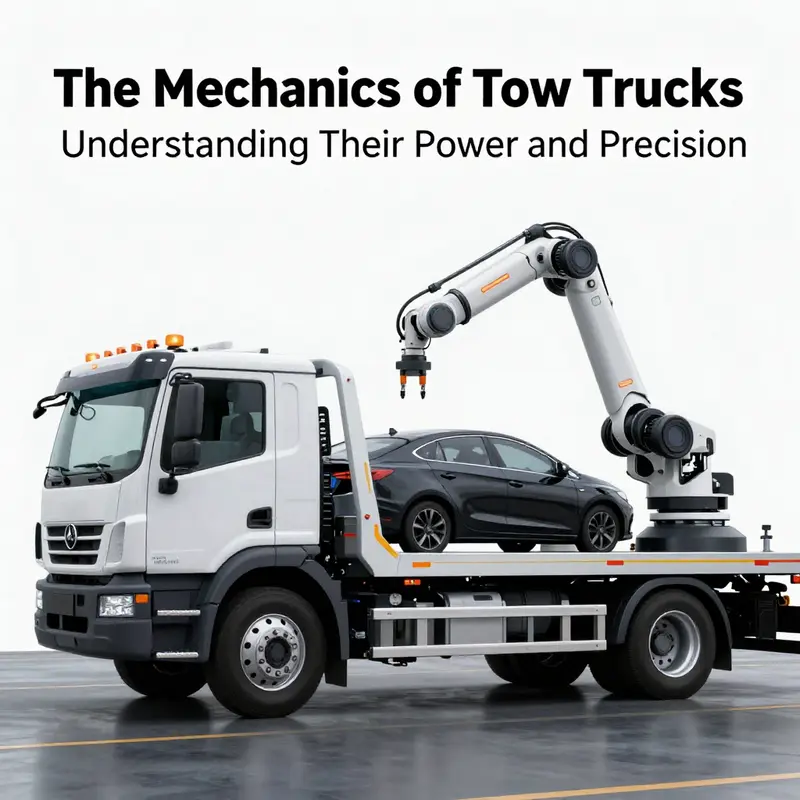
Tow trucks have long stood at the intersection of grit and engineering, their reputation built on the visible heft of a winch line and the steady toil of a skilled operator. Yet behind the familiar silhouette of a flatbed, a wheel-lift arm, or a hydraulic boom lies a network of systems that must harmonize under pressure. The hydraulic core—lifts, pulls, and stabilizes—still drives the primary motions, translating careful operator intent into controlled, repeatable actions. The lever in the technician’s hand is now joined by sensors, controllers, and software that measure line tension, vehicle attitude, and ground conditions in real time. This blend of old power and new intelligence keeps the essential function intact while expanding what recovery teams can safely accomplish on crowded highways, in narrow city corridors, or remote rural accidents.
Electrical propulsion and advanced energy management are redefining the limits of what a tow truck can do. Electrification is not a mere swap of powertrains; it reshapes packaging, thermal design, and maintenance philosophy. Batteries, heat exchangers, and high-efficiency motors must coexist with a hydraulic system that still needs immediate, high-demand bursts of force. The result is a platform that can deliver strong, instant torque, minimize noise and emissions in urban deployments, and reduce the vibration and wear associated with long idling periods. The transition also forces a rethinking of space allocation. Batteries occupy volume that used to house more fuel. Consequently, designers reorganize the chassis to maintain light handling, balance heavy lifting on the load bed, and provide ergonomic operator cabins that remain comfortable after long shifts. This is not only about power; it is about creating a recovery tool that stays reliable when the mission lasts longer or returns to back-to-back calls.
Automation and intelligent systems extend the operator’s reach without replacing the human element. Real-time diagnostics, telematics, and remote monitoring are becoming standard, providing fleets with dashboards that show location, usage patterns, and mechanical health across dozens of trucks. These data streams enable preventive maintenance and faster dispatch decisions, reducing downtime and improving uptime. In some models, semi-autonomous features touch the edge of autonomy: automated winch control that maintains target line speeds and tension, precision alignment systems that nudge a vehicle toward a lift-ready position, and collision avoidance sensors that help keep bystanders and traffic out of harm’s way. Such capabilities lessen the cognitive load on technicians and increase safety margins during high-stakes recoveries, especially in heavy traffic or poor lighting.
A modular, adaptive design philosophy is reshaping how fleets deploy resources. The elderly image of a single-purpose heavy rig is giving way to a versatile platform that can host interchangeable recovery modules—flatbeds, wheel-lift arms, or crane attachments—depending on the incident. This modularity improves utilization, allowing one chassis to respond to a roadside breakdown with minimal downtime between calls. It also lowers long-term costs by enabling incremental upgrades rather than wholesale replacements. The concept extends to software and control systems as well: plug-and-play sensors, standardized interfaces, and updatable control software that can be deployed across a fleet. In practice, this means a city alley that demands rapid repositioning one day and a multi-vehicle wreck on the highway the next can be addressed by the same vehicle in a different configuration, ensuring reliability while minimizing fleet complexity.
Connectivity underpins the entire ecosystem. IoT-enabled platforms link tow operators, dispatchers, insurers, and emergency services in a seamless loop. Real-time location sharing speeds response, while predictive maintenance alerts prevent unexpected outages. Data on load profiles, cycle times, and hydraulic temperatures can be used to optimize routes, plan preventive maintenance, and document service life for regulatory compliance. The operator becomes part of a data-informed network, where decisions emerge from a blend of on-scene judgment and machine feedback. In this sense, the tow truck is transforming from a standalone asset into a mobile node within a broader, interconnected service delivery system that streamlines incident response and stewardship of road safety.
Safety remains the central throughline of all these advances. The newest generations of recovery equipment integrate sensor suites, cameras, and enhanced lighting to create safer work zones in every environment. Active warnings, automated safety interlocks, and load- and position-sensing technologies help prevent missteps during mounting, lifting, and transport. The operator’s cabin is evolving into a command center: better visibility, more natural control layouts, and ergonomically optimized seating that reduces fatigue. As recoveries become more complex—heavy vehicles, multiple units, or tight urban constraints—the ability to anticipate problems and intervene before they escalate is a decisive advantage. The emphasis shifts from improvisation to disciplined, repeatable procedures guided by reliable data.
Sustainability and lifecycle efficiency drive many of the practical choices behind these innovations. Electrification reduces fuel costs and eliminates heat-intensive idling, while modular design trims down the number of specialized rigs a fleet must own. But electricity introduces new considerations: battery durability under peak loads, thermal management during long operations, and the logistics of charging in the field. Engineers respond with modular battery packs, smarter thermal loops, and charging strategies that keep the vehicle productive while other parts of the fleet remain in service. Heavier workloads may push toward hybrid configurations or swappable energy concepts to sustain uptime on long-haul or remote missions. Quiet operation and reduced emissions are not only compliance benefits; they become operational advantages when responding in dense urban centers or quiet suburban neighborhoods where unexpected noise can escalate tension at the scene.
The recovery toolkit itself is evolving in parallel with powertrains. Smart wheel-lift systems, guided winches, and remotely controlled outriggers reduce physical risk for technicians who often work near moving loads, slippery surfaces, or unstable vehicles. Operators can monitor line tension, winch speed, and the status of securing straps from a central console, a tablet, or even a remote operator station, reducing the need to position themselves in the line of fire. In more advanced configurations, semi- or fully autonomous sequences can place, cradle, and secure a vehicle with minimal direct manual intervention, letting personnel remain at a safe distance while the system performs delicate maneuvers. This is not a replacement of skilled practice; it is an expansion of capability that preserves the crucial judgment and situational awareness that skilled technicians bring to every scene.
All of these developments feed into a broader industrial narrative: tow trucks becoming safer, more reliable, and more capable across a wider range of conditions. They do not erase the demands of a roadside operation; they alter how those demands are met. The physics of lifting and stabilizing a loaded vehicle remain constant, but the way those forces are generated, monitored, and controlled is shifting. An electric drivetrain can deliver the instantaneous torque needed to free a jammed vehicle, a smart winch can apply the exact amount of pull required without overshoot, and a modular frame can switch to a configuration that minimizes risk and maximizes control at the scene. The operator’s role endures as the anchor of safety and judgment, yet the surrounding tools multiply the operator’s effectiveness.
To appreciate the practical implications, one can visualize a typical, modern highway recovery evolving through these innovations. The crew arrives and conducts a rapid, data-informed scene assessment. A module appropriate to the vehicle’s condition is selected and attached with precise alignment aided by sensors and cameras. The hydraulic system executes the lift or stabilization with controlled acceleration, while outriggers anchor the platform to avoid any shift in weight. If wheel-lift towing is selected, the system adjusts line length and tension automatically, maintaining stable contact with the wheels while the vehicle is guided toward a secure transport position. In a flatbed scenario, the bed lowers, the vehicle is winched gently onto the platform, and tie-downs are applied with motorized tensioners that ensure uniform restraint. In tomorrow’s concept vehicles, a scripted sequence could integrate all of these steps from initial assessment to final securement, with technicians supervising the process from a safe, remote vantage point. Yet even with automation, the human operator remains essential—the conductor who reads the scene, interprets the data, and validates that every action preserves safety and minimizes damage.
This convergence of electrification, autonomy, modular design, and connectivity is not a purely technical story. It is a story about reliability, about uptime for fleets that must serve the public under pressure, and about stewardship for the roadways that carry everyone’s daily lives. It invites us to rethink what a tow truck is: not just a heavy machine with a hook, but a sophisticated, adaptive platform that can be tuned for the moment’s needs, guided by data, and executed with care by trained professionals. The roadmap ahead is not a single path but a network of choices—powertrain architectures, module configurations, software ecosystems, and human-in-the-loop protocols—that together determine how quickly and safely a disabled vehicle can be returned to the flow of traffic.
For readers seeking a concise synthesis of how these elements connect, consider the broader thread of Tow Truck Technology and Safety, which outlines how control architectures, hydraulic networks, and driver-assistance features cohere into a reliable, safety-first system. This resource helps anchor the future-focused discussion in the practicalities of on-the-ground recovery work and offers a useful reference point as fleets transition to electrified, automated, and modular capabilities.
External reference: https://www.reuters.com/business/autos-and-transportation/electric-tow-trucks-emerge-as-sustainable-solution-2025-11-17/
Final thoughts
Understanding the mechanics and methodologies of tow trucks broadens our appreciation for their capabilities in vehicle recovery and transport. From hydraulic systems that allow for smooth operation to the variety of truck types that serve different needs, tow trucks are crucial in ensuring safety on the roads. Their role in emergency situations highlights their importance, while ongoing innovations promise to streamline operations, improving efficiency and safety even further. As everyday drivers, truck owners, and property managers, recognizing the value and capabilities of tow trucks can prepare us for any roadside eventuality. Service providers and users alike must remain informed and adaptable as new technologies emerge, reinventing how we perceive vehicle recovery.