
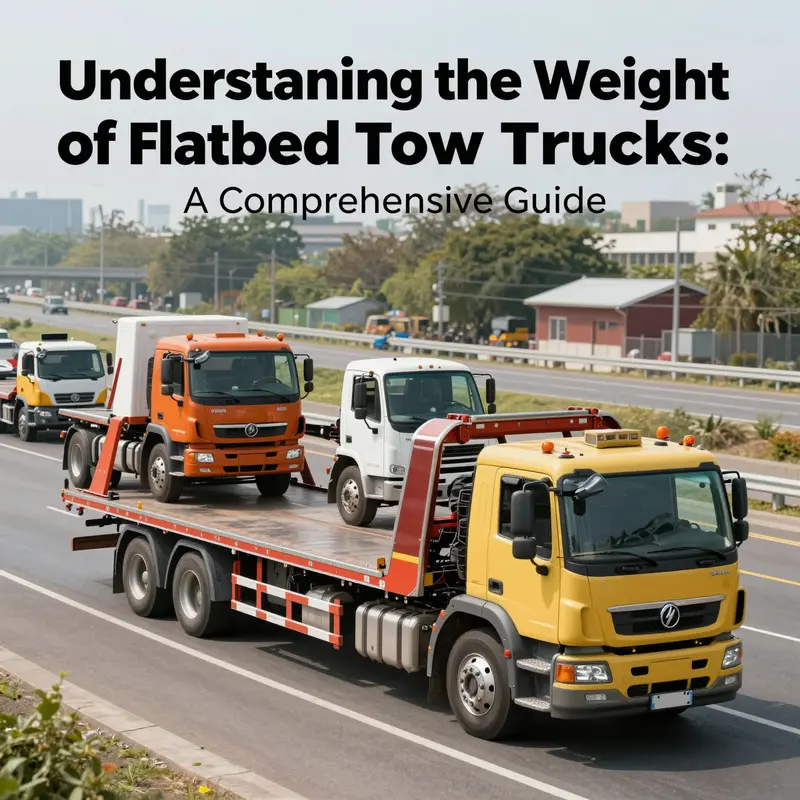
Flatbed tow trucks serve as an essential tool in the automotive recovery and service industry, ferrying everything from broken-down vehicles to heavy machinery. Understanding how much these trucks weigh is crucial, not only from a technical perspective but also for safety and legal compliance. Every stakeholder—from everyday drivers and truck owners to property managers and auto shops—can benefit from mastering this knowledge. This article explores the curb weight of flatbed tow trucks, the concepts surrounding gross vehicle weight, how weight affects truck performance, and the regulatory considerations that govern these robust vehicles. Each chapter will unpack vital weight metrics to enhance your understanding and operational decisions.
Weighing the Load: Curb Weight, GVW, and the Range of Flatbed Tow Trucks
Weight is more than a number on a spec sheet when you’re talking about flatbed tow trucks. It is the linchpin that determines how a wrecker behaves on the road, how much it can lift, and how it must be operated under different conditions. To truly understand how much a flatbed tow truck weighs, one must move beyond simple headlines and acknowledge the two most fundamental measurements: curb weight and gross vehicle weight, or GVW. Curb weight is the truck in its ready-to-operate state, not counting any cargo beyond the fluids needed to run it. GVW, by contrast, is the ceiling—the maximum total weight the vehicle can safely carry, including its own weight, passengers, fuel, payload, and any equipment mounted on the bed. These two metrics aren’t just numbers; they map directly to practical questions fleet operators ask every day: How heavy is this chassis once it’s loaded? How much load can it haul from a scene without breaching limits? And how does that affect brake performance, maneuverability, and tire life on the highway or in a tight urban alleyway?
Market data show a wide spectrum of curb weights for flatbed wreckers, a reflection of the variety in size, purpose, and design philosophy. At the lighter end, a compact or urban-oriented flatbed can sit somewhere around the middle of a two-and-a-half-ton to three-ton class when empty and fully outfitted with fluids. Move up into the more robust, heavy-duty end of the scale, and curb weights stretch toward five tons or more. A typical heavy-duty flatbed in the five-ton to eight-ton range may register roughly 5,250 kg to 5,495 kg as its curb weight. The precise number hinges on the chassis base and the optional equipment that accompanies it—qualities that distinguish a city-focused unit from a rescue-capable platform designed for heavy roadside recovery. In practice, this means that a single model line can present a noticeable spread in curb weight just by selecting a different bed length, a heavier winch system, or a hydraulic crane. The variability is not about aesthetic choices; it’s a reflection of how these machines are deployed.
The bed on a flatbed tow truck is where most of the work happens, and the bed’s own mass is a large portion of the curb weight. A robust hydraulic platform, paired with a dependable winch and a heavy-duty steel frame, adds to the mass that sits on the factory scale. These components are essential for recovery operations that demand force, reach, and durability. The same logic applies to trucks intended for urban rescues: a lighter bed may be adequate when the goal is quick, low-friction recovery of passenger vehicles. But when the job involves large trucks, buses, or heavy equipment, the unit must be built with more substantial structural elements to handle higher dynamic loads. The result is a higher curb weight, especially when the configuration includes additional stabilizers, upgraded hydraulics, or a crane that can swing into action when a flatbed alone isn’t enough.
Design choices also steer the practical weight profile. Chassis architecture matters a great deal. Major regional chassis families can lead to different curb weights even for similar bed configurations. A fundamental takeaway is that the same bed length with two different chassis platforms may yield varying curb weights. Conversely, a lighter chassis with a longer bed may still be within a similar overall curb weight range to a shorter, heavier alternative—an illustration of how weight is distributed across the vehicle while serving distinct operational needs. In addition, the incorporation of specialized features tends to push curb weight upward. A unit equipped with a hydraulic crane, a larger winch, or reinforced axles to accommodate larger loads will naturally sit higher on the weight scale than a more minimalist platform designed for urban roving. It’s the cumulative effect of these choices that creates a spectrum rather than a narrow band on the scale.
When we consider GVW, the conversation shifts from what the truck weighs empty to what it can legally carry while staying within safe operating limits. GVW encompasses the curb weight plus maximum payload, including passengers, fuel, additional tools, and any recovered cargo. For the typical flatbed, GVW tends to cluster around eight thousand kilograms, with practical ranges often cited between roughly 7,995 kg and 8,270 kg. That range is not arbitrary; it reflects regulatory constraints, axle load ratings, and the engineering margin built into the vehicle to absorb dynamic forces during towing and recovery work. Consequently, a heavy-duty unit with a curb weight near five thousand kilograms can deliver a payload space of around three thousand kilograms or a little more, depending on occupant load and fuel. A lighter curb weight, say around 2,500 kg, leaves a more generous delta for payload before the GVW cap is reached. In other words, two trucks that look similar at a glance can offer markedly different payload capabilities once you factor in their curb weights and how much fuel and crew they typically carry.
These weight figures aren’t abstract numbers. They translate into on-the-ground realities that shape how a crew plans a recovery. If a unit with a higher curb weight also has a higher GVW, its payload fraction may still be substantial, but that payload comes with heavier tires, stiffer suspension, and more robust axles that must be managed on the road. In contrast, a lighter curb weight doesn’t automatically mean more payload; the GVW cap constrains what can be carried, and weight distribution becomes a critical factor—especially on multi-axle configurations where load balance across axles influences braking, steering, and overall stability on uneven surfaces.
This variability is why operators often choose based not only on the nominal weight ranges but also on the intended deployment profile. A unit designed for urban street rescues typically prioritizes nimbleness, quick payload turnaround, and ease of maintenance. Its curb weight sits lower, and its GVW cap is tuned to accommodate smaller-to-medium wrecks with reliability and speed. For highway incidents or industrial settings, fleets tend to favor heavier chassis with reinforced frames and additional equipment. These choices push curb weight higher but can preserve a meaningful payload and ensure the vehicle can traverse longer distances with the necessary gear in tow. The trade-off remains: weight influences fuel efficiency, braking performance, tire wear, maintenance costs, and, ultimately, the cost of ownership over the vehicle’s life.
To connect these weight concepts to tangible numbers, consider how a unit in the lower end of the curb-weight spectrum might still reach a GVW near eight metric tons when fully loaded. If curb weight hovers around 2,430 kg for a compact, fully outfitted model and GVW is around 8,000 kg, the implied payload capacity would be approximately 5,570 kg, assuming minimal occupants and fuel. In the real world, fuel, crew, tools, and recovered cargo will subtract from that theoretical payload. Conversely, a heavier base—say 5,250 kg curb weight—with the same GVW ceiling yields a practical payload closer to 2,750 kg. Even within the eight-ton GVW band, the usable payload can swing by thousands of kilograms depending on how the vehicle is equipped and how the load is distributed. This contrast highlights why a single weight figure cannot tell the full story without context: the specific configuration, equipment, and mission profile are essential to understanding what a given flatbed can actually handle.
The practical implications extend beyond payload. Weight affects approach and departure angles, ground clearance, and brake system sizing. Heavier trucks require stronger brakes, and the tire choice must support higher loads without compromising traction or heat dissipation. In addition, the axle configurations common to heavier units come with greater investment in maintenance practices. Fleet managers routinely weigh maintenance costs against operational needs. A unit designed for heavy rescue operations may incur higher upfront and ongoing costs but deliver essential capability that lighter configurations cannot match. For a fleet, this is less about chasing the heaviest possible machine and more about matching weight, payload, and maneuverability to the typical rescue scenarios that appear on its service map.
As with any engineering decision, the end user should consider not just the numbers on the scale but how those numbers translate to real-world performance. The curb weight tells you what the chassis itself demands in terms of fuel, tires, and suspension travel to maintain proper ride height and stability. The GVW cap tells you what you can legally carry without overloading the axles and tires or compromising braking and control. When a unit routinely tows high-murity loads, the difference between a marginally adequate payload and a safely manageable one can be the margin between a successful rescue and a hazardous situation. The weight profile of flatbed tow trucks, therefore, is not simply a matter of capacity. It is a composition of capability, safety, and efficiency that defines how a wrecker performs across a spectrum of environments.
For readers curious about how these weight considerations intersect with procurement, maintenance, and long-term operating costs, a broader view of tow truck economics can be illuminating. how-much-is-a-tow-truck offers context on ownership costs, which, when paired with weight and configuration data, helps fleets optimize their equipment choices. Such a synthesis matters because the cost of ownership scales with weight-related factors: heavier units generally carry higher purchase prices, higher fuel consumption, and potentially greater wear on tires and brakes. Yet the payoff can be substantial if the heavier machine delivers the right mix of reach, lifting capacity, and durability for the most demanding scenes. The key is aligning the weight profile with the operational envelope. A balanced approach considers not just the maximum payload but the typical payload, the frequency of heavy recoveries, and the terrain in which the unit must operate. Only then can a fleet determine whether a given curb weight and GVW combination is the best fit for its mission, safety standards, and budget.
In sum, the weight of a flatbed tow truck is a practical fingerprint of its intended role. The curb weight captures the chassis and bed’s intrinsic mass, shaped by the bed length, hydraulic systems, cranes, and stabilizers. The GVW cap marks the ceiling of what the vehicle can safely carry, governed by axle ratings, braking capacity, and structural limits. Between these two numbers lies the real-world capacity, which is never a single fixed figure but a function of configuration, use-case, and maintenance discipline. While ranges exist—curb weight roughly from about 2,430 kg up to 5,500 kg for more capable units, and GVW commonly around 7,995–8,270 kg—what matters most is how those figures translate into a truck’s ability to respond effectively, safely, and efficiently at the scene of a breakdown or an accident. The weight story of flatbed tow trucks is thus not a straight line but a spectrum that reflects design intent, operational demands, and the daily realities of rescue work.
External resource: https://www.towtrucktechnology.com/flatbed-tow-technical-overview
The Weight You Carry: GVW Realities for Flatbed Tow Trucks

Gross vehicle weight, or GVW, is more than a number on a spec sheet. For flatbed tow trucks, it is the practical cap that governs what the machine can safely carry, how it should be operated, and where it can legally travel. The weight story for these vehicles begins with the truck itself, but it quickly expands to include every person on board, every tool stowed in the cabinet, every drop of fuel sloshing in the tank, and, crucially, the load being carried or towed. GVW is not a static attribute; it is a ceiling that operators must respect on every shift, every call, and every highway mile. Understanding GVW is therefore essential not only for safety but for performance, reliability, and regulatory compliance. It ties together physics, road rules, and the realities of field work in a way that plain horsepower and torque cannot capture alone.
To begin with, GVW is defined as the total weight of the vehicle when it is loaded to its maximum safe point. In practical terms for flatbed tow trucks, this includes the curb weight—the weight of the empty truck with fluids and all standard equipment—plus the weight of the operator, the tools and gear carried onboard, and the weight of the load being transported, which can be another vehicle or a substantial payload placed on the flatbed. In other words, GVW is the composite weight that, at any moment, represents the upper limit of what the chassis, brakes, suspension, and tires are designed to handle. A common way to think about it is that GVW is the sum of what the truck is built to carry and what it actually carries in a given job, with the understanding that the manufacturer’s specification marks the maximum permissible combined mass. This makes GVW a critical gauge for planning and safety: it tells a crew when a given job is within the vehicle’s capability and when it crosses into a zone where special equipment, different vehicle classes, or additional support may be warranted.
The practical implications of GVW become clear the moment a flatbed is asked to lift and haul weight. Brakes must stop not only the empty mass but the mass of the payload and any towing load, when present. Suspension must maintain a stable ride under the combined weight, and tires must sustain the loads transmitted by every axle. If GVW is approached or exceeded, braking distance can lengthen, steering responsiveness can diminish, and the risk of tire failure or suspension fatigue increases. These consequences are particularly consequential on high-speed highway moves, where a heavy flatbed might need to manage the momentum of a towed vehicle, a loaded bed, and the potential inertia of the payload behind the cab. The physics are not abstract; they translate directly into longer stopping distances, more pronounced pitch on braking, and a higher likelihood of component wear when the vehicle routinely operates near or beyond its limits.
To connect weight with regulatory reality, the United States applies a framework through the Federal Motor Carrier Safety Administration and state transportation departments that classifies and controls heavy vehicle operations. A commonly cited threshold is that a GVW exceeding 8,500 pounds, which is about 3,855 kilograms, places a vehicle into a “heavy-duty” category. This classification triggers stricter inspection regimes, licensing requirements, and operational considerations. For flatbed tow trucks, the GVW figure interacts with the class designation to determine what kind of permit, what level of maintenance schedule, and what kind of driver credentialing may be required to operate legally on specific routes or at certain payload levels. These regulatory lines matter because they shape how fleets deploy equipment, how they schedule parking and maintenance, and how they plan routes that avoid bridge and road weight restrictions that could compromise safety or legality.
The chapter of weight continues with the practical spectrum of GVW across flatbed configurations. In standard practice, Class 4 and Class 5 flatbed tow trucks, which are the workhorse sizes for many towing operations, typically have a GVW that lands in the range of roughly 16,000 to 26,000 pounds. That translates to about 7,257 to 11,793 kilograms. These sizes are well suited for pulling passenger cars and light commercial vehicles, with enough reserve in the GVW to accommodate tool assortments, operator weight, and a modest payload on the bed. When operations require heavier recoveries, larger rigs with Class 6 or Class 7 configurations come into play. These machines can push GVWs beyond 30,000 pounds, or more than 13,600 kilograms, bringing into the mix heavier trucks, buses, or construction equipment. The math here reflects a fundamental principle: as the intended load or the towing task grows, so must the weight-bearing capacity and the support systems behind it. The difference between a routine roadside assist and a heavy recovery is precisely the delta in GVW and how it maps onto braking capacity, tire ratings, and suspension stiffness.
Meanwhile, a separate but related set of numbers often appears when discussing what an otherwise empty or lightly equipped truck weighs in curb weight. In current market data, the curb weight of a typical flatbed tow truck can range from about 2,430 kilograms for lighter models to as high as 5,250 kilograms for more robust or larger configurations. Those curb weights, when added to the weight of fuel, fluids, cab occupants, and the typical complement of tools, determine how quickly the truck will reach its GVW ceiling under a given operational scenario. If the curb weight is on the high end, the margin for payload shrinks, and the operator must be mindful of both legal GVW limits and the performance envelope of the unit. Conversely, a lighter curb weight provides room to carry more payload or to tow heavier loads without immediately pressing against the GVW boundary. The takeaway is simple but powerful: knowing the baseline curb weight helps crews anticipate how a given job will alter the vehicle’s total mass and how this mass translates into braking force, acceleration, and handling on the road.
From a day-to-day operational perspective, it is common practice to keep the GVW in sight as part of trip planning. The job of a tow operator is not simply to move a vehicle from point A to point B; it is to do so with controlled acceleration, stable steering, and predictable braking. That means weighing the truck and the load before departure, or at least maintaining a precise estimate when weighing is not possible on site. It also means accounting for fuel burn during the trip, as fuel levels can swing the mass enough to nudge an operation closer to that critical GVW limit. Tools, ancillary equipment, and spare parts routinely carried for field service should also be included in the calculation. In practice, operators often weigh the vehicle on a scale or weigh station, especially when they expect to operate near the upper end of GVW or when the load being moved is itself heavy. A few moments invested in verifying weight before a run can translate into safer braking distances, more stable steering, and a lower risk of tire or suspension failure during the mission.
The interconnection between GVW and real-world weight management becomes even clearer when considering how weight interacts with road infrastructure. Road laws and safety rules are not designed to penalize heavy-duty operations for their very existence; they are designed to ensure that the vehicles in operation on a given highway or bridge are within safe mass limits. For tow trucks, this is not merely academic. Bridges and ramps have weight restrictions, and certain routes may impose axle-based restrictions that complicate how heavy a load can be in a given segment. Therefore, understanding GVW is not only about staying within the manufacturer’s specification; it is about planning routes, selecting appropriate equipment, and ensuring that every shift begins with a clear map of what the truck can carry and what it cannot. The weight mindset informs maintenance planning as well. If a unit frequently operates near its GVW ceiling, the wear and tear on brakes, tires, and suspension accelerates, prompting more aggressive inspection intervals and more proactive component replacement to prevent failures in the field.
For operators who want to connect the weight discussion to broader ownership and fleet management considerations, there is a practical link worth exploring. The weight characteristics of a tow truck influence not just on-road safety but the total cost of ownership, including fuel efficiency, maintenance, insurance, and depreciation. A heavier GVW typically requires more robust braking systems, heavier-duty tires, and stiffer suspension—each of which carries an associated cost and maintenance cycle. In cases where a fleet is asked to perform frequent heavy recoveries, it may be more economical and safer in the long run to select a higher GVW configuration that brings a greater margin of safety and reduces the likelihood of component fatigue. Conversely, for daily operations focused on lighter loads across urban networks, a lighter curb weight and lower GVW offer better fuel economy and easier maneuverability. The decision matrix here is not simply about raw capability; it is about aligning the vehicle’s weight profile with the typical job mix, the regulatory landscape, and the maintenance discipline of the operation. As you weigh your options, consider how the GVW interacts with your standard routes, the typical payload you expect to encounter, and the licensing framework that governs your region. If you are curious about a broader look at the economics and pricing of tow trucks, you can explore resources on the topic at how-much-is-a-tow-truck.
On the regulatory and safety side, one important practical takeaway is the need to perform weight calculations before each trip. That means calculating the sum of curb weight, passenger load, fuel on board, and any equipment, plus the payload on the flatbed. Operators who routinely operate under strict transport laws or on routes with weight-related restrictions should implement a standard procedure: weigh the base vehicle, estimate or measure the current fuel load, tally the number of passengers, add known tool inventory, and then add the expected towed load. After performing this sum, compare it against the GVW rating and the specific route’s restrictions. If the sum approaches or exceeds the GVW, consider routing adjustments, equipment changes, or a different crew assignment. In some jurisdictions, periodic inspections and weigh-bridge checks are part of the regulatory landscape, especially for commercial operations. Compliance is not simply about passing a single checkpoint; it is about sustaining an ongoing practice of weight awareness that protects the driver, the vehicle, and other road users.
The chapter would be incomplete without tying these weight realities to the broader safety culture of emergency and recovery operations. GVW awareness contributes directly to safer braking, steadier handling, and more controlled loading and unloading of vehicles on a flatbed. It reinforces disciplined loading practices, such as securing a load with appropriate restraints and ensuring that the deck surface is clean and ready to accept a payload without surprises. It also supports better coordination with the incident command structure in emergencies, where a heavy flatbed may be required to move multiple assets, sometimes under time pressure. The weight discipline, in other words, becomes a guardrail for the overall effectiveness of response efforts. For readers who want to see how weight considerations sit within the larger framework of vehicle safety and incident response, a broader look at the topic can be found in official guidance from national transportation authorities and safety agencies.
In sum, GVW for flatbed tow trucks is a central, practical concept that links the physics of mass to the realities of road safety, regulatory accountability, and operational readiness. The numbers matter, but what matters more is how those numbers influence decisions: which truck to deploy for a given job, how to load and secure the payload, and how to plan routes that stay within the legal and physical boundaries of the vehicle’s capabilities. The curb weight tells you where you start; the GVW tells you how far you can push your start toward the edge of performance without overreaching. By keeping a clear eye on GVW, operators ensure that every tow is conducted with safety, efficiency, and compliance at the forefront of every decision.
External reference for further context on regulatory standards and weight classifications is available through national transportation authorities, which provide up-to-date guidelines on GVW thresholds, vehicle classifications, and the implications for commercial operation. For readers seeking a direct overview of related regulatory standards, see the official guidance at the U.S. Department of Transportation: https://www.transportation.gov
Heavy Truths: How Weight Shapes the Power, Precision, and Pace of Flatbed Tow Trucks
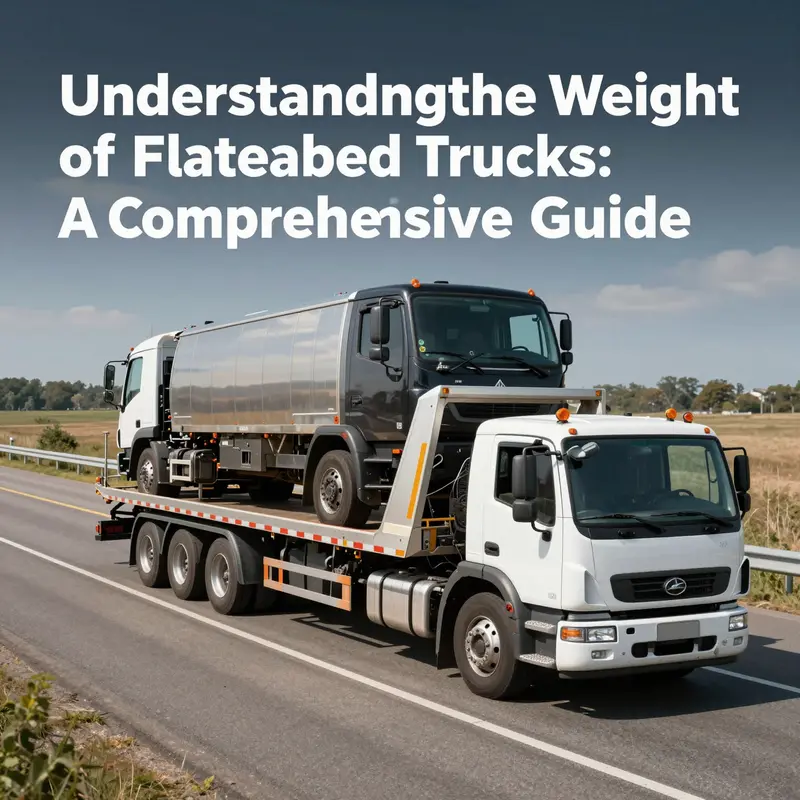
Weight is the quiet parameter that governs almost every decision a tow operator makes, especially with a flatbed designed to haul other machines, vehicles, and gear. In the real world of roadside assistance, yard work, and remote recoveries, knowing how much a flatbed weighs is not trivia—it is a safety, performance, and regulatory imperative. The two fundamental measures—curb weight and gross vehicle weight GVW—frame this understanding and illuminate why different flatbeds react differently to the same task. Curb weight is the truck in its empty but ready-to-work state, fluids included. GVW captures the ceiling: the maximum combined weight the vehicle can safely carry, including its own heft, the bed payload, the towed vehicle, tools, and passengers. Across the market, curb weights for flatbed tow trucks span a broad range, from roughly 2,430 kilograms on the lighter end to about 5,250 kilograms for heftier configurations. GVW figures likewise cluster in a high band, typically between about 7,995 kilograms and 8,270 kilograms. In practical terms, a flatbed that weighs under three tons when empty will, when fully loaded, approach eight tons or more. That delta—nearly a threefold increase from curb to GVW—drives a cascade of considerations for every phase of operation. When a dispatcher asks how much a flatbed weighs, the answer is not a single number but a pair of numbers describing static and dynamic capabilities. The empty ready-to-work state informs what the chassis, frame, and suspension can endure under normal loading cycles; the GVW tells you what the machine is engineered to handle in the field, including the burden of a heavy tow and the tools that keep the operation moving. The dual awareness becomes especially clear in a mid-range scenario. A flatbed with a curb weight around 2,500 kilograms may be designed for lighter tows and quicker urban response, while a model at or above 4,500 kilograms curb weight will carry more gear, lift heavier loads, and demand careful weight management to preserve braking performance, handling, and tire life. The arithmetic is straightforward, but the consequences are nuanced: if total weight—curb, fuel, payload, and equipment—presses toward or beyond the GVW, braking distances lengthen, traction can diminish, and the chance of instability during turns increases. In the real world, weight distribution matters as much as total mass. A truck loaded with most weight toward the bed can feel different from one with heavier ballast toward the cab. Uneven loading shifts the center of gravity and can invite swaying, especially at highway speeds or when navigating tight geometry. Operators learn to plan weight placement with the deck as the loading zone and the hitch area as a counterbalance, ensuring the bed mass stabilizes rather than destabilizes the vehicle. This hinges on disciplined loading: placing the heaviest components in appropriate positions, securing cargo firmly, and avoiding any scenario where a single axle bears disproportionate load. The consequences of misloading extend beyond handling. Excessive or uneven weight accelerates wear on the chassis, suspension, axles, and tires. The life cycles of brakes, steering linkages, and wheel bearings shorten when a vehicle regularly operates near or at its GVW. In some cases, ongoing overloading can stress systems such as hydraulics, transmission coolers, and electronics that monitor weight and balance. The obligation to stay within approved limits is both a safety discipline and a regulatory obligation. Federal and state regulations govern GVW and axle load limits, with violations carrying fines, liability, and sometimes suspension of operating licenses. For operators who move across jurisdictions, this means there is a constant need to compute and reconfirm total weight before loading and before departure. The process begins with a precise accounting of curb weight, a documented baseline that includes fluids and standard equipment. Then every item on the flatbed—chains, hooks, racks, stabilizers, winching apparatus, water, fuel, and spare parts—must be tallied. The heavier the tools and attachments, the higher the empty mass climbs toward the GVW ceiling. A practical rule of thumb is to treat the GVW as a limit, not a target to approach. The margin between curb weight and GVW is the buffer that keeps operations safe and compliant. As payload grows, the bed’s structural elements—reinforced frames and high-strength steels—are deployed to manage the load. These engineering choices are not mere material preferences but a calculated response to heavy-duty towing realities. A robust frame, a chassis designed for dynamic loads, and reinforced axles are essential when the vehicle routinely carries substantial mass on the bed. Yet even the most fortified platform must respect its design envelope. If a flatbed is consistently overburdened, the consequences show up as longer stopping distances, reduced tire grip, and accelerated structural stress that may shorten service life or require costly downtime. In this context, weight management becomes a daily practice rather than a one-time calculation. Operators rely on ratings, loading procedures, and regular inspections to maintain safety and reliability. The bed must be loaded to preserve weight balance, with care taken to secure the load and prevent shifting during transit. This is especially crucial when towing units with sensitive drivetrains, where abrupt mass shifts can pose risks to powertrain integrity and control systems. The broader lesson is that weight is not just a number; it is a dynamic force that informs decisions from route planning to ride quality, maintenance budgets to training programs. A well-informed operator treats GVW not as a ceiling to fear but as a guideline guiding vehicle choice, deck configuration, and tool allocation. The literature on weight emphasizes a simple point: heavier loads require more careful planning. This requires disciplined pre-trip weight checks, securement, and adherence to manufacturer guidelines. It also means recognizing that the same flatbed concept can assume very different capabilities depending on whether it is configured as a lighter urban responder or a heavier off-road unit. In practice, dispatchers and operators must maintain a shared mental map of each vehicle’s curb weight and GVW, then align the task with documented limits. It also means watching the broader ecosystem—regulatory compliance, tire condition, brake performance, suspension health, and powertrain cooling—because weight interacts with all of these factors in real-world use. For readers seeking a practical touchpoint on value and planning, consider how weight information informs decisions about fleet composition, equipment purchases, and maintenance schedules. If a department or company wants to optimize reliability and reduce downtime, it must start with the numbers: the precise curb weight, the labeled GVW, and the known mass of routinely carried tools and payloads. This is not theoretical calculus but a daily workflow that keeps responders ready, safe, and compliant. To connect these principles to real-world expectations, one may explore resources that discuss the economics and logistics of tow operations, including the cost of ownership and the considerations when selecting a vehicle that balances weight, performance, and durability. For instance, a traveler through the market of heavy-duty towing can benefit from a concise resource that translates weight metrics into practical decisions about cost, ownership, and operation. how-much-is-a-tow-truck offers a straightforward entry point for readers who want to anchor weight in broader fleet-management questions. In closing, weight of a flatbed tow truck is not a fixed trait but a spectrum that reveals purpose, capabilities, and limits. The curb weight marks the baseline of strength and efficiency, while the GVW signals the ceiling of what the bed can safely carry. The space between these two numbers is where operators plan, load, and maneuver with confidence. Proper weight management safeguards not only people and cargo but also the integrity of the tow truck and the long-term health of the fleet. The design choices that support heavier loads—stronger frames, reinforced suspensions, and careful balance—are engineered around this idea: weight, when managed correctly, is a tool that sharpens performance rather than a constraint that limits possibility. When weight is understood as a guiding parameter, a flatbed can move with precision, stop with certainty, and operate with reliability across road and terrain. External reference for deeper exploration into the physics and practicalities of weight in flatbed applications can be found at The Science Behind Flatbed Truck Weight, which provides broader context for why these mass considerations matter in real-world operations. https://www.alibaba.com/product-detail/The-Science-Behind-Flatbed-Truck-Weight_1600527944847.html
Weighing the Roadworthy Line: How Regulations Shape the Real-World Weight of Flatbed Tow Trucks
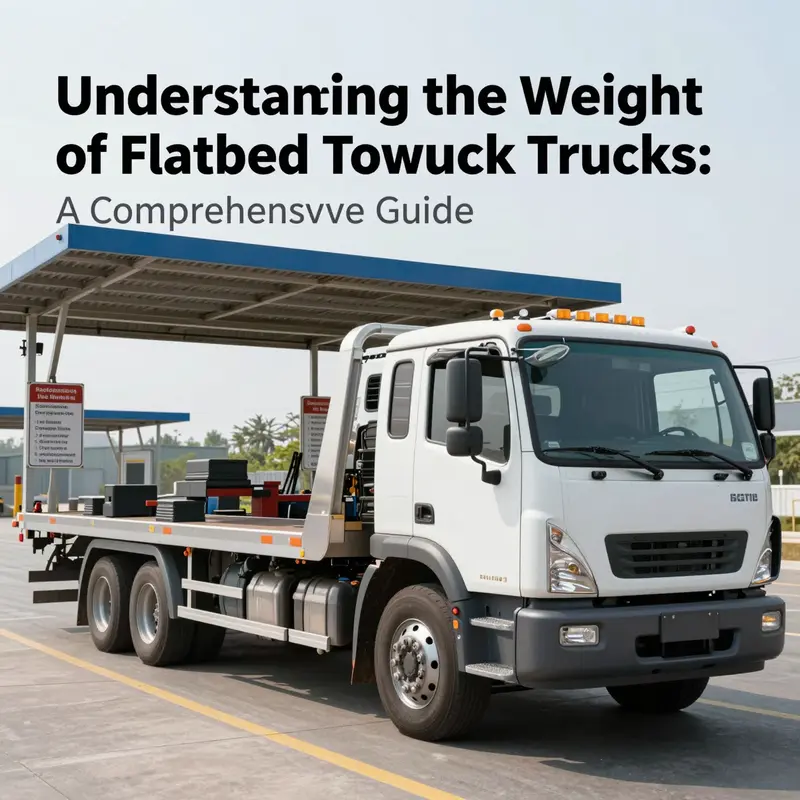
Weights on the road are more than specs on a brochure; they are the living constraints that determine where a flatbed tow truck can operate, how it is loaded, and what infrastructure it can safely share with. For anyone mapping out the practical side of how much a flatbed tow truck weighs, the essential insight is that the vehicle’s weight is a matter of two interlinked figures and a lattice of rules that govern them. On one hand is the curb weight—the empty shell, ready to work after fuel, oil, and other fluids are added. On the other hand is the gross vehicle weight, the ceiling that the law permits the vehicle to reach when it carries passengers, tools, and a towed vehicle. These numbers are not static across the market; they shift with model decisions, chassis choices, bed dimensions, and the intended operating context. Most operators therefore must read weight as a regulatory language as much as a technical specification, because the difference between a model’s capability and what a given jurisdiction will allow can decide whether a truck can legally hit the road with a particular assignment.
Curb weight and GVW are the two anchors most people refer to when they discuss weight. The curb weight is the vehicle’s mass with fluids included and the truck in ready-to-operate condition, but without a load on the bed beyond what is required for operation. In the market data, curb weights for flatbed tow trucks span a broad band. A smaller, more agile model can sit around 2,430 kilograms (about 5,357 pounds), while larger, more robust configurations can push into the range of 5,250 kilograms (approximately 11,584 pounds). Those numbers reflect different chassis frames, bed lengths, and hoisting systems that serve different service profiles, from municipal roadside assistance to heavy recovery in difficult terrain. The GVW, by contrast, represents the maximum total weight permitted when the truck is fully loaded: the curb weight plus passengers, fuel, fluids, equipment, and any towed vehicle or recovery gear that the operator deploys. In current market practice, GVW values cluster roughly between 7,995 kilograms and 8,270 kilograms (about 17,600 to 18,230 pounds). In metric terms, that range translates to roughly 8.0 to 8.3 metric tons, which aligns with the intuitive sense that even a “medium” flatbed can tip toward nine tons when fully loaded with duty gear and a tow in tow.
The distinction matters because weight is not only about payload; it’s also about what the road and the bridge network can endure, and about what the vehicle’s own system—hydraulic bed, winches, outriggers, lighting, and the engine—can safely power and control. The curb weight tells you what the truck itself costs in structure and components; the GVW tells you the ceiling under which everything must stay if the truck is to move without legal or safety risk. The practical implication is that a spec sheet that lists only the curb weight or only the GVW gives an incomplete picture. Operators must understand both values in relation to the load they intend to carry, and in relation to the jurisdiction’s weight limits for the routes they expect to traverse.
Regulatory frameworks add another layer of complexity. Federal guidance in the United States sets the broad context for weights and highway use, while state and local rules tailor those limits to local infrastructure and policy priorities. At the federal level, the weight standard most people encounter is linked to the maximum allowable weight for vehicles on interstate highways. The commonly cited figure for a combination vehicle is 80,000 pounds, which is about 36,287 kilograms. This federal benchmark defines the outer envelope for the heaviest permissible combinations on the major urban-to-rural corridors that form the backbone of interstate commerce. But that limit is not the ceiling for every roadway. States frequently impose tighter constraints on axle loads and total weight—especially where bridges are older or where road way vertical and horizontal clearances are limited. In practice, a flatbed operator must learn both the general rule and the local exceptions so that every job is planned within the legal envelope of the specific route.
Axle load restrictions are a frequent focal point of state rules. Axles distribute weight and become the practical levers for regulating heavy vehicles. Each axle has a maximum load it may bear, and the total of all axles must align with the GVWR. A truck could have a high GVWR yet be restricted in certain contexts if its axle weights exceed local limits when loaded in particular configurations. This is where weight distribution becomes central to safe operation. A flatbed’s design invites careful loading practices: heavier items tend to be centered along the bed to avoid skewing the load toward any single axle, and the towed vehicle must be integrated into the weight plan so that the combined total remains within the permitted range. For flatbeds that routinely carry a weighty tow, the operator must account for the tow’s weight as part of the vehicle’s overall mass, even if that weight is not carried by the truck’s own axles. In other words, GVWR compliance is not a static check at the scale; it is a dynamic calculation performed every time the truck is loaded for a job.
Loading discipline is not merely a matter of avoiding fines. It protects road surfaces and bridges, reduces the risk of axle overloading, and lowers accident risk. When weight distribution skews toward a single axle, the pavement wears unevenly, and braking and steering dynamics can become more challenging. The rules of weight distribution encourage operators to place heavier components toward the center of the-bed area and to ensure an even spread across multiple axles. This kind of careful loading is particularly important when a flatbed is used in tight urban environments or on a long-haul recovery assignment, where the towed vehicle’s weight compounds the bed’s own mass. In jurisdictions where scales and weigh stations routinely check axle-by-axle performance, the operator’s ability to present a compliant load becomes a matter of routine discipline rather than a one-off calculation.
The regulatory landscape also shapes the practical decision-making process around which truck to purchase or lease. Since GVWR is a manufacturer-determined rating, fleets often select a model whose curb weight and payload capacity align with the heaviest loads they expect to carry while staying within the local legal framework. A lighter curb weight can mean more headroom before reaching the GVWR, but it might also correspond to a smaller bed, a lighter hoist system, or fewer attachments. Conversely, a heavier curb weight often accompanies a more robust bed and more capable recovery gear, but it tightens the margin before hitting the GVWR when a full payload is added. For fleets that operate across a mix of routes, the choice is not simply which truck weighs more. It is which balance of curb weight, bed capacity, and axle load ceiling best matches the distribution of typical tasks and the regulatory environment in which the fleet operates.
Compliance is enforced not only through fines, but also through enforcement actions such as vehicle impoundment, which can be especially disruptive for a towing operation that relies on quick deployments and reliable service windows. The consequences of non-compliance extend beyond the vehicle. If a tow truck exceeds GVWR or axle limits on a given job, the operator may shoulder liability in the event of an accident or structural failure. The legal and financial risks underscore the prudence of proactive weight management. This often means precise weight documentation, routine weight checks at loading points, and the use of weight-calculating tools or scales at facilities that handle recovery tasks. It also means training for drivers and crew in loading techniques and weight estimation so that they can anticipate and prevent violations before they occur.
To illuminate the scale of the practical numbers involved, consider a scenario in which a flatbed is prepared for a routine recovery on a mixed-use road network. A truck with a curb weight near the lower end of the spectrum might weigh around 2,430 kilograms, while a larger configuration could exceed 5,000 kilograms when empty. If the operator must bring along a heavy towed vehicle, the combined weight must stay within the GVWR. If the towed vehicle itself weighs around 2,000 kilograms, the total would range from about 4,430 kilograms to 7,000 kilograms just for the active load case. When this is added to the truck’s own mass, the math becomes a clear indicator of whether the intended operation is feasible within local regulations. This kind of calculation demonstrates why a single number—GVWR or GVW—fails to capture the whole truth behind what a flatbed tow truck can and cannot do on any given day.
Within this regulatory lattice, it helps to keep in mind a practical figure often cited by industry insiders: for many mid-size flatbeds, the safe, fully loaded envelope commonly lands around 8 to 8.3 metric tons in terms of GVW, which translates to roughly 17,600 to 18,200 pounds. In everyday terms, that means a fully loaded flatbed tow truck is approaching the upper end of a typical light- to medium-duty payload band, especially when the bed carries heavy recovery gear, heavier tools, and a pinned or loaded towed vehicle in transit. These figures are not universal; they vary with the truck’s particular configuration, the number of axles, bed length, and the specific components installed by the manufacturer. Still, they give operators a reliable frame of reference for planning routes, assigning tasks, and communicating with dispatch. A fleet that understands these weight realities can optimize its operations by aligning each job with a vehicle able to meet both regulatory requirements and the job’s weight demands.
A final note on the regulatory horizon: while federal guidelines establish a broad outer limit for interstate travel, the practical rights-and-duties of flatbed operators are exercised most often at the state and local level. Operators must verify the exact GVWR for their specific truck and ensure that any loaded configuration does not exceed that rating. They must also confirm the per-axle limits and overall weight allowances for the routes on which they intend to operate. These checks are not bureaucratic friction; they are essential for safety, longevity of road infrastructure, and the ability to deliver reliable service without legal or operational interruptions. Informed planning, careful loading, and consistent compliance constitute the backbone of responsible towing operations that weigh every pound—not merely for performance, but for safety and accountability on the nation’s road network.
For readers seeking a quick reference on ownership and cost in this space, a practical entry point is a concise overview that peers at the question, How much is a tow truck. Such a resource provides additional context on the balance between upfront investment and ongoing regulatory compliance, helping fleets align their purchase choices with the weight realities described here. How much is a tow truck.
In sum, understanding how much a flatbed tow truck weighs is a matter of balancing three elements: the curb weight, the GVW, and the regulatory limits that govern the road you intend to travel. The numbers matter, but so do the rules that govern them. The road system is designed to carry weight in certain patterns and limits; operators who plan with those patterns in mind will navigate both safety concerns and legal obligations more smoothly. When a fleet looks at a particular job, it is not simply asking, How heavy is this truck? It is asking, How heavy is this truck in the context of the route, the axle set, and the load it will bear? The answer is a dynamic one—rooted in the truck’s design, the load it carries, and the regulatory frame that defines the boundaries of safe, legal operation.
External resource: For authoritative information on weight regulations, refer to the U.S. Department of Transportation and related federal and state guidelines. https://www.dot.gov
Final thoughts
Understanding the weight of flatbed tow trucks is paramount for ensuring safety, legality, and optimal performance. Curb weight and Gross Vehicle Weight (GVW) are not just numbers; they influence every aspect of operational efficiency and adherence to regulations. The demands placed on these trucks require careful consideration of how their weight impacts their performance and usage on public roads. By being well-versed in these metrics, you empower yourself and your business to make informed decisions that can lead to better management practices and enhanced safety.