
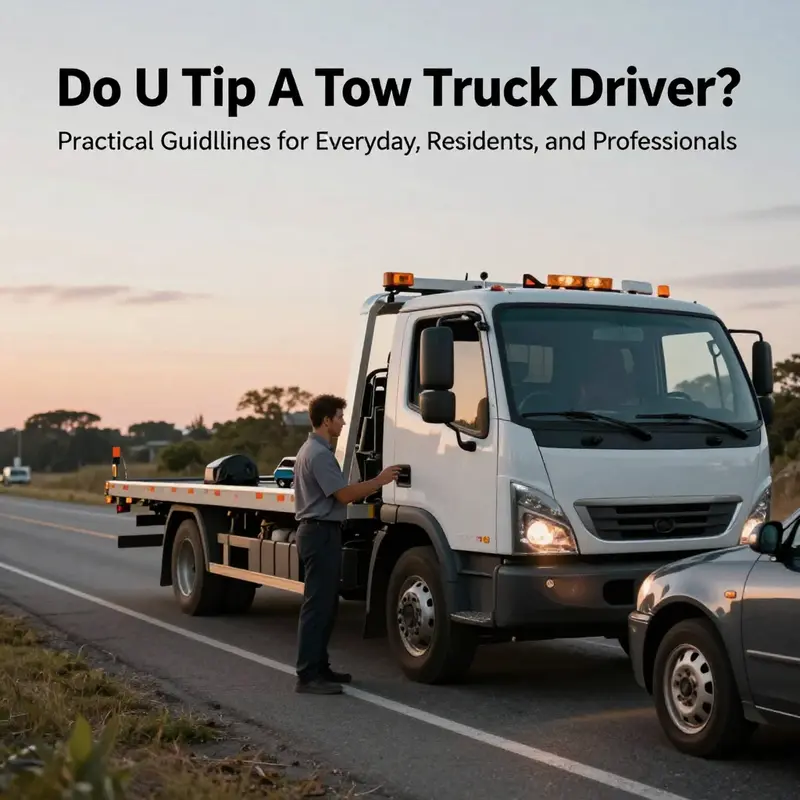
Tow services are a lifeline on highways, in residential areas, and along rural corridors. Everyday drivers, residents and commuters, truck owners, auto repair shops, and property managers rely on professional tow operators to recover, secure, and transport vehicles after breakdowns or accidents. Yet tipping etiquette for tow truck drivers remains a gray area, largely because service charges are often bundled into the bill and regional customs vary. This guide cuts through the uncertainty by outlining when tipping is appropriate, how industry practices work, and how to navigate tipping decisions with confidence. You’ll discover baseline expectations, concrete scenarios where gratitude is warranted, and practical steps for handling tipping consistently across different environments. Each chapter ties back to the core question—do you tip a tow truck driver—by linking norms, exceptional-service moments, economics, geography, and reliable information sources. With everyday drivers in mind and input tailored for residents, commuters, truck owners, auto shops, and property managers, the guidance aims to make roadside assistance fair, transparent, and respectful for all parties involved.
Tow Truck Etiquette: Understanding When a Tip Makes a Difference
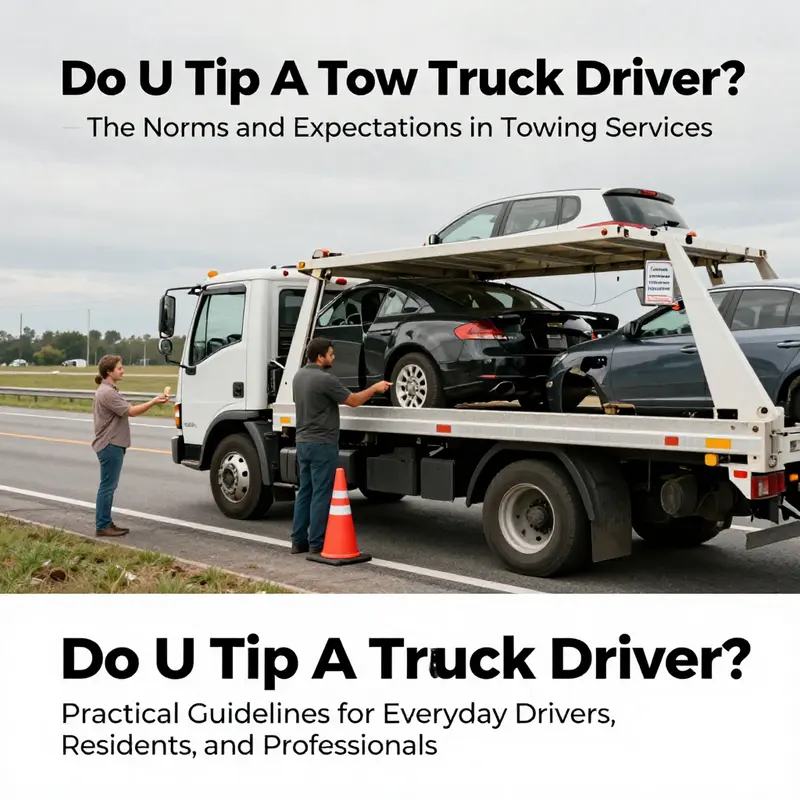
When a tow truck arrives on a stretch of highway that feels endless or a dark, rain-slick street after a breakdown, the immediate concern is safety, speed, and getting you back on the road in the best possible condition. Amid the flashing lights and the hum of the winch, a question often rises in the air: should you tip? The short answer is that tipping is not expected or required for standard towing services. The fee you pay typically covers the service charge, the equipment, and the technician’s labor, and many reputable companies discourage tips to keep pricing simple and fair for all customers. Yet generosity has its own language. A small gesture can acknowledge exceptional help, ease a stressful moment, and reinforce a professional relationship built on trust. That is the core tension driving this chapter: tipping as a voluntary act of appreciation, not a mandate embedded in a service contract.
The practical realities of towing work shape these norms. Tow drivers are skilled technicians who perform a specialized, sometimes hazardous job: recovering a vehicle that is immobile, sometimes damaged, and transporting it to a new location. Their compensation comes through the company and the agreed-upon fee, which is designed to reflect travel time, workload, and equipment usage. In many places, tipping simply does not enter the equation because the price is designed to be clear and complete at the outset. This is especially true in busy urban environments where the cost structure is standardized to ensure quick service for everyone who calls in an emergency or an accident. The absence of a tipping culture in these settings isn’t a moral failing of the customer; it’s a practical feature of how roadside assistance is marketed and priced.
Nevertheless, there are moments when a driver’s actions stray beyond the standard call of duty. Consider a scenario in which a driver arrives promptly, communicates clearly about arrival time, and explains what will happen next in plain language. Or imagine a situation where the driver goes beyond the basics: jump-starting a dependent battery when a vehicle is weak, clearing snow or debris from a car’s doors and pathways, or guiding you through a tricky loading process to avoid further damage. In such instances, a token of appreciation—typically a small tip in the range of five to twenty dollars—can feel like a concrete thank-you for added effort. This is not about owing someone for a service you are entitled to; it’s a personal gesture that recognizes care, initiative, and a job that’s done with extra attention to safety and efficiency.
Cultural and regional nuances also color tipping norms. In the United States, tipping a tow truck driver is not universal practice but is widely understood as a courteous gesture when the service stands out. In the United Kingdom, tipping for tow services tends to be uncommon as well, with emphasis placed on transparent pricing and professional conduct unless exceptional assistance prompts a discretionary acknowledgment. The overarching message remains the same across borders: the service should be paid promptly according to the agreed terms, while any gratuity is optional and situational, not a social imperative.
If you decide that a tip is appropriate, timing matters. The preferred method is cash, offered at the moment service is rendered. Digital tipping options may not be available through the company, and asking to use a card or app can slow things down or complicate billing. A discreet, respectful hand-off is often best—accompanying your thanks with a brief note about what stood out can reinforce the positive behavior without turning the moment into a performance. The amount should reflect your appreciation for the driver’s specific extra efforts, rather than a fixed expectation tied to the service category. A good rule of thumb is to reserve tipping for those moments when the driver has clearly added value beyond the basic service: quick arrival under difficult conditions, precise communication in a stressful situation, or careful handling of your vehicle that minimizes risk.
For some, the decision to tip will hinge on the emotional temperature of the incident. A breakdown on a busy highway at night can be terrifying, and a driver who offers calm, reassuring explanations can help restore a sense of control. In scenarios like that, a small tip can act as a tangible sign of gratitude for a job done with poise and care. The same principle applies when the driver goes the extra mile to locate a traffic-safe unloading point, arranges alternative transport if a vehicle cannot be moved immediately, or takes the trouble to advise you about next steps after the tow. Even when the weather or the traffic is challenging, these acts of empathy and professionalism deserve recognition.
It is also wise to consider non-monetary forms of appreciation when tipping feels inappropriate or impractical. A courteous review of the company’s service can help future customers and support the driver’s reputation. In some cases, a brief note of thanks to the dispatcher can reinforce positive service dynamics and encourage staff to uphold high standards. These gestures, while not as tangible as cash, contribute to a culture that values safety, reliability, and customer care. For readers seeking a quick primer on etiquette tied to tow-truck interactions, a concise guide is available at this resource: do-u-tip-tow-truck-drivers.
As you reflect on whether to tip, keep in mind that tipping is a personal choice grounded in circumstance rather than a universal obligation. The main objective of the encounter should always be safety and resolution: getting your vehicle to a repair location with transparent communication and competent handling. If a driver has made the situation easier—by coordinating a tow with your insurer, arranging a safe arrival at a preferred location, or alleviating a stressful moment with steady professional conduct—your gratitude, expressed through a small tip or a thoughtful comment, can reinforce that standard for others who might be in need of roadside assistance. Tips should be a bright trace of appreciation, not a cushion or compensation for subpar service.
For those seeking broader context on tipping norms in this field, additional perspectives are available from established guidance on service gratuities. This external resource offers a larger framework for evaluating when a tip makes sense and how drivers perceive such recognition, helping readers make informed decisions in real time: https://www.thebalance.com/tip-tow-truck-driver-4176839. In the end, the aim is a fair, respectful exchange that acknowledges genuine extra effort while keeping the core financial arrangement clear and straightforward.
Tipping Tow Truck Drivers: When Gratitude Becomes Meaningful, Not Mandatory
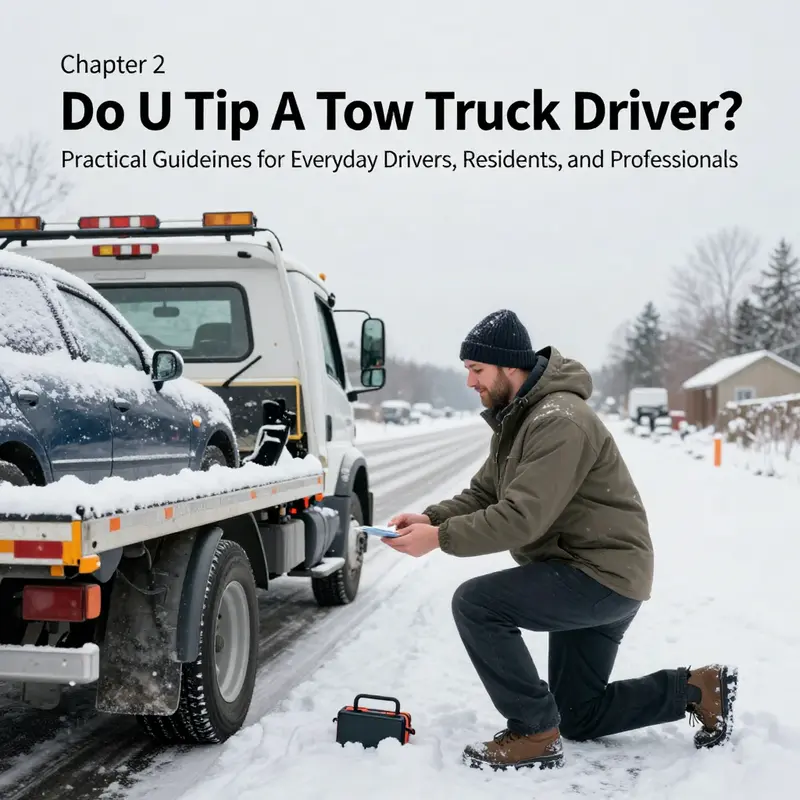
Roadside failures arrive with a blunt knock and a sense of urgency that makes every choice feel consequential. A tow truck arrives, and the scene shifts from the quiet inevitability of a broken car to the active choreography of recovery: the vehicle secured, the wheels stabilized, and the quiet calculus of safety playing out in real time. In that moment, many drivers wonder about tipping. The plain truth is that tipping is not required for standard towing services, and in many cases it runs counter to a company policy. The service charge printed on the bill is meant to cover labor, transport, fuel, and overhead, so the driver’s wage isn’t typically built on tips alone. Yet gratitude is a human impulse, and when a driver goes beyond the basics in a way that reduces stress, increases safety, or demonstrates genuine care, a small gesture can feel right. The distinction between obligation and appreciation matters here, and it matters not just for etiquette but for the experience of being stranded and then helped back onto the road with competence and confidence.
Exceptional moments quietly redefine what counts as meaningful gratitude. When the clock is counting down and weather adds pressure, a driver’s prompt arrival can be a lifeline. If the storm arrives while you watch, the driver’s demeanor often becomes part of the rescue: they communicate clearly about what they can do, what they can’t, and how long it will take to get you back on your way. The same holds when the recovery requires a careful touch—an icy hill, a slick surface, or a vehicle that must be winched from a precarious position. In these circumstances, the extra effort the driver puts into planning the maneuver, checking every safety precaution, and coordinating with you to minimize risk is not just professional; it’s reassuring. The driver’s ability to transform potential anxiety into a manageable sequence of steps matters. In a late-night, low-light situation or a remote roadside, the same careful professionalism gains even more weight. The driver’s presence becomes a anchor of safety at a moment when fear could otherwise surge, and the distinction between a routine tow and an outstanding act of service is rarely large but always meaningful.
The strong tie between exceptional service and a potential tip rests on several observable behaviors. First, there is speed paired with safety: arriving promptly and then proceeding with a plan that protects you and your vehicle. Second, there is communication that goes beyond the bare minimum—explanations of what will be done, how the truck will be positioned, and what you should expect during the transfer. Third, there is empathy: recognizing that you might be stressed, perhaps unfamiliar with the process, and offering reassurance without condescension. A driver who answers questions with patience, who avoids jargon, and who remains courteous even when the situation becomes tense demonstrates a level of care that elevates the entire encounter. These moments—where technical skill meets human sensitivity—are precisely when a small tip feels appropriate, not because the bill demands it, but because the service delivered a tangible uplift in your moment of need.
Where does the tipping amount fit into this? The guidance that has circulated most clearly in consumer contexts suggests a range of roughly five to twenty dollars for exceptional service. The exact amount should reflect your financial ability, the severity of the circumstance, and the degree to which the driver exceeded the ordinary expectations of a tow. For many people, five dollars is the simplest gesture on a quiet stretch of road; twenty dollars marks a more pronounced appreciation for a rescue that involved extra risk or a level of attentiveness that felt rare. Cash traditionally remains the preferred method in the towing context because it is immediate and simple, and some companies or drivers prefer to receive tips that way rather than through a card processor. If cash isn’t convenient, a sincere verbal thank-you, a note of appreciation, or a quick online endorsement can still recognize the effort, but the practical tip itself is generally associated with cash in hand.
To place the idea of timing into context, consider how the tip is delivered. Present the tip after the driver has completed the service and when you feel steady enough to express your thanks without disrupting the ongoing workflow. A tip should never appear as a bribe or as leverage to get preferential treatment in the moment; it is a courtesy that closes the interaction on a note of mutual respect. A specific compliment helps ground the gesture in concrete observations: how the driver maintained safety on a tricky maneuver, how they explained the options clearly, or how they managed the scene with calm authority. In one sense, the tip functions as a small badge of acknowledgment, a public-private nod to the driver’s professional care. In another sense, it is a human acknowledgment that a stressful episode was navigated with skill and decency, not merely a transactional exchange of labor for money.
Even as the gesture can be meaningful, it is essential to respect industry norms and company policies. Not every tow service accepts tips, and not every driver can or will receive tips, especially if the policy is strict or if a large corporate operation disallows tipping at the point of service. When in doubt, you can ask politely about tipping expectations before the service begins. If tipping isn’t appropriate for the situation, there are still valid ways to show appreciation. A moment of genuine thanks, a kind word to the dispatcher, or a brief public commendation can carry weight without complicating the transaction. And if the policy allows, a small gesture is always optional, never obligatory, and always situationally appropriate. In the broader landscape of roadside assistance, tipping etiquette remains a personal decision rooted in the specifics of the encounter and the local customs surrounding service professionals.
For readers seeking a concise anchor on etiquette while they navigate next time, a practical reference on tipping in roadside scenarios is worth exploring. A helpful resource notes when and how to recognize exceptional service, with emphasis on the context of emergency response and manual handling. If you want a quick, digestible overview you can share with friends or family, you can consult the guide on tip-tow-truck-drivers-etiquette, which offers straightforward guidance and concrete examples. This internal resource serves as a practical reminder that the right moment to tip is the moment you feel a genuine sense of gratitude for exceptional care. tip-tow-truck-drivers-etiquette.
Beyond the individual moment, it helps to remember that tipping is not a universal obligation tied to the service charge. Customs can vary by region, company policy can shade or even negate gratuities, and the safety-first focus of roadside work means some drivers prefer simplicity over negotiation. The overarching takeaway is simple: tipping is a personal courtesy, not a requirement, and it should reflect the driver’s performance in a way that aligns with your capacity to express appreciation without pressuring anyone into beyond-ordinary effort. If you do decide to tip, let the amount be a direct response to the quality of service and the discretion you observed in how the driver conducted themselves on scene. If you don’t tip, you can still close the encounter with a sincere thank you and a neutral, respectful note of acknowledgment for the relief the driver provided. Either approach honors the complexity of roadside assistance, treats the professional with dignity, and preserves the focus on safety and service rather than on tipping as a fee adjustment.
External resource: https://www.thebalance.com/tip-tow-truck-driver-4176839
Tow, Tip, and Trust: Tow Truck Etiquette in a Malaysian Context
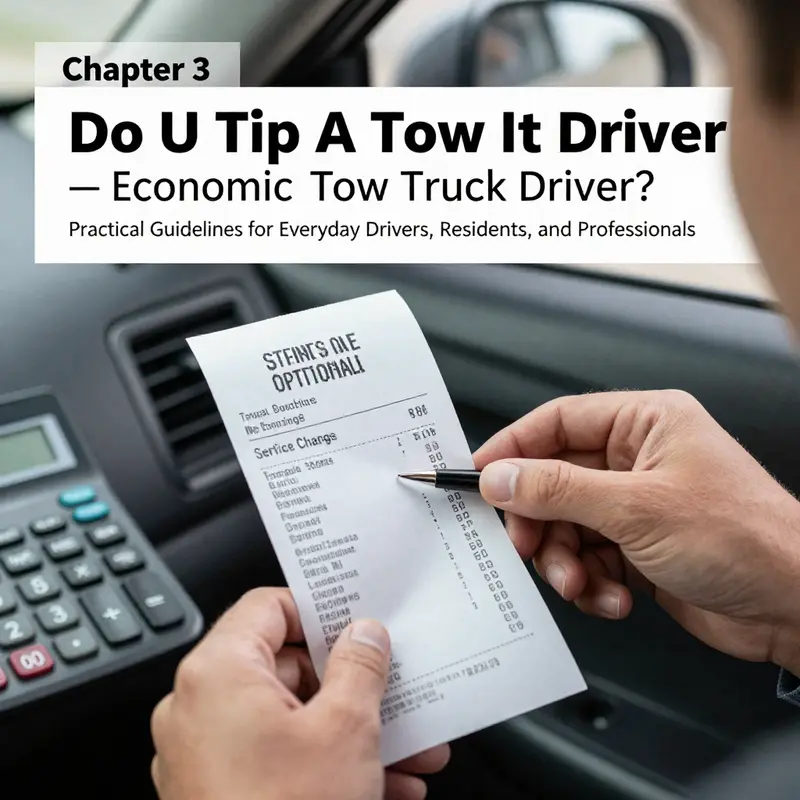
When a roadside crisis lands on your doorstep, the instinct to show appreciation can collide with a practical question: should you tip a tow truck driver? The short answer is that tipping is not required for standard towing services. The longer story is about how pricing, professionalism, and local expectations shape what counts as fair compensation for a job that blends safety, logistics, and instant decision-making. Tow truck work is a specialized service that hinges on the driver’s skill to secure a vehicle safely, navigate traffic and weather, and coordinate with dispatchers and insurance processes. In many markets, the service charge includes labor, equipment usage, and operational costs, so the driver’s compensation arrives through the quoted price rather than through an extra gratuity. This practical model supports transparency: customers know the fee upfront, and drivers are not left to rely on unpredictable tips as a budget cushion. Yet culture and context matter. In some regions, gratuities for drivers and other service professionals are a regular courtesy that signals satisfaction with a job well done. In others, they run counter to established norms or to regulatory expectations that emphasize clear pricing and professional standards over informal rewards. Reading the landscape of tipping requires listening to both the economics of the industry and the ethics of service.
Malaysia, for example, offers a clear case where tipping toward tow services is not customary. The cost of towing in this context tends to be regulated and framed as a fixed price that covers all labor, equipment, and overhead. There is little economic incentive for a driver to expect—and thus not many customers to offer—tips. That said, the professional who delivers exceptional service under pressure can still earn a quiet nod of appreciation from a grateful motorist. If a driver arrives promptly during a roadside emergency, communicates clearly about what will be done, or goes beyond the minimum task—perhaps by arranging a quick jump-start, clearing ice or snow from windows, or offering practical guidance for securing the vehicle—some customers may choose to offer a small token. The gesture should remain optional and proportional to the service rendered, not framed as an obligation. In this sense, tipping becomes a personal courtesy rather than a policy expectation, a small acknowledgement of a job done smoothly under stress.
From an economic perspective, the towing sector tends to operate in a competitive market structure. Transparent pricing, online quotes, and fixed-rate options are increasingly common as providers strive to demonstrate value and reliability in a crowded field. Even as services modernize, the core challenge remains: how to balance fair compensation for skilled labor with accessible, predictable pricing for customers who may be dealing with sudden breakdowns or accidents. In this balancing act, the role of equipment also matters. Integrated tow trucks, which blend wheel-lift and boom (winch) systems, have become more prevalent because they expand the range of recoveries a driver can perform safely and efficiently. While such vehicles carry higher operating costs, they can reduce on-scene time and minimize risk for the vehicle and the driver. In turn, these efficiencies can support a pricing structure that emphasizes value and safety rather than the pressure to generate tips on top of the bill. The moral of the market picture is that tipping should not be the lever by which a service is judged. Instead, the emphasis should be on transparent pricing, professional conduct, and adherence to safety standards that protect everyone involved.
For the consumer, the decision to tip—if you ever choose to do so—should be guided by the service’s exceptional quality rather than by a pressure to conform. If a tow operator communicates clearly from dispatch to delivery, explains the steps required to recover and transport the vehicle, and minimizes additional risk—those are the moments that deserve recognition. A small, discretionary gesture after such service acts as a personal thank-you, not a payment for a job that was already priced. This aligns with the broader notion of professional etiquette, where gratitude is expressed when the service crosses a threshold of extra effort. It can be as simple as presenting a modest amount or even a verbal acknowledgment on the scene. Importantly, it is not a social obligation but a personal choice, one that carries meaning because it reflects a sincere response to quality and care.
Another layer to consider is the trust that builds between a motorist and the towing provider. When a driver arrives promptly, maintains safety precautions, and follows through with transparent communication about what will happen next—these behaviors cultivate a sense of reliability that endures beyond a single incident. In markets where customers interact with tow services repeatedly, trust is a currency as valuable as the fee itself. A reputable company will emphasize fair pricing and safety protocols, and will encourage customers to focus on the service quality rather than on informal gratuities. This culture of reliability helps ensure that the industry can attract skilled professionals, who may otherwise seek compensation through more transparent channels rather than through unpredictable tips.
For readers seeking quick practical guidance, a concise reference can be helpful, especially when the situation is stressful. A straightforward approach is to evaluate the service against a simple criterion: did the driver handle the unusual or difficult parts of the job with competence, restraint, and clear communication? If yes, a small token of appreciation can be considered. If not, the best course is to focus on providing honest feedback to the company and to choose licensed, reputable providers in the future. The emphasis should be on value, safety, and accountability rather than on the expectation of gratuities. When in doubt, remember that tipping is not a standard practice in many contexts, and the absence of a tip does not reflect poorly on the driver’s performance.
To the reader who wants a compact reference, a quick note that many people still seek guidance on etiquette. A resource like Do U Tip Tow Truck Drivers offers a concise framework for thinking about when and how much to tip, rooted in local norms and the specifics of service quality. This kind of guidance can help travelers and locals alike to navigate the moment with clarity and respect. While such resources can be useful, they should not replace the core principle: the fee you pay for the service already covers the work of the operator, and tipping remains a discretionary gesture that should align with the circumstances and your values as a customer.
In closing, the question of tipping a tow truck driver sits at the intersection of economics, culture, and professional ethics. In markets like Malaysia, tipping is not customary, and the price you see is intended to reflect comprehensive service, equipment, and labor. Exceptional service can justify a modest gesture, but it is not a rule or a guaranteed path to better treatment. The focus, instead, should be on choosing licensed providers, recognizing safety and reliability, and understanding that fair pricing and professional conduct create a healthier industry for drivers and customers alike. If you ever feel the urge to show appreciation, do so as a personal thank-you that mirrors the quality of the service, not as a requirement that could distort the value proposition. The outcome of such an approach is a towing landscape that rewards competence and safety, ensures transparency for customers, and sustains a workforce equipped to handle the unpredictable challenges that roadside emergencies inevitably present.
External resource: For a broader consumer perspective on tipping etiquette in service industries, see The Balance’s guide on tipping toward tow truck drivers, which offers additional context and practical considerations. https://www.thebalance.com/tip-tow-truck-driver-4176839
Tow Truck Tipping Etiquette Across Regions: A Practical Guide
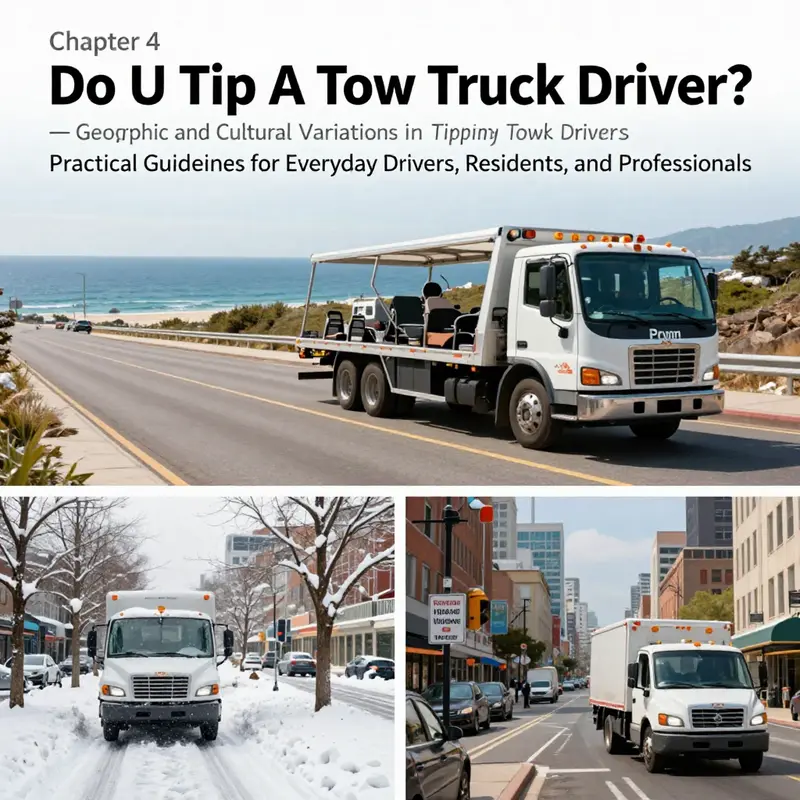
When a vehicle breaks down or is involved in an incident, a tow truck operator steps into a moment of pressure and uncertainty. Tipping is not a universal rule but a gesture of appreciation that depends on service quality, regional norms, and whether the service was prepaid through insurance or roadside assistance. In many Midwest towns and pockets of the South, tipping is common but not mandatory, often expressed as a small amount or a percentage of the towing fee when the work is timely or the hitch is difficult. In contrast, the Northeast and parts of the West Coast tend to regard tipping as optional, especially when the service is covered by a prepaid contract, but exceptional effort or complex recoveries can justify a modest tip or a thank you. If the tow is arranged via an insurance company or roadside program, tipping is usually discouraged, though non monetary appreciation such as feedback or a positive review is encouraged. When you hire directly from a private company or independent operator, there may be more room to show gratitude, such as acknowledging careful handling, offering to leave a positive online review, or giving a brief note of thanks. If you decide to tip, aim for clarity about the amount and consider the policy posted by the company; in many cases a small tip in the range of a few dollars to a modest percentage is appropriate for good service. For quick etiquette, express sincere thanks, avoid negotiating the charges on the spot, and tailor your gesture to the situation. Non monetary appreciation – verbal thanks, respectful conversation about charges, and honest feedback – can be as meaningful as money and help sustain good service. Finally, tipping is not legally required, and regional customs can shift over time, so when in doubt observe local norms and proceed with courtesy.
Gratitude on the Road: Navigating When to Tip Tow Truck Drivers, What Counts, and How to Do It Right
A roadside breakdown or an accident can throw your day into chaos, and the tow truck driver who arrives to stabilize the situation often becomes a quiet anchor in the middle of that disruption. The question of tipping a tow truck driver, which might seem straightforward at first glance, quickly reveals layers of nuance: is tipping expected, do fees already cover the service, and does local culture shape the etiquette at the scene? The practical answer, supported by industry guidance, is that tipping is generally not required. The service fee you pay is designed to compensate the driver for the work of recovery, transport, and the expertise needed to handle its inherent risks. Yet a moment of genuine appreciation can still land at the right time, especially when the driver goes beyond the call of duty. In those moments, a small gratuity becomes a personal acknowledgment of exceptional service rather than a formal obligation.
Picture this: you’re stranded on a cold, busy highway, perhaps dealing with a flat tire, a stalled battery, or a vehicle that won’t respond to routine starts. The driver arrives, assesses the situation with calm efficiency, communicates clearly about the plan, and gets you moving again or safely to a nearby shop. In such scenes, the service fee covers the core task—recovery and transport—but when the driver clears snow from your windshield, helps you jump-start a stubborn battery, or offers practical safety guidance, the gesture of a tip can feel like a natural extension of good manners. It is important to distinguish the difference between a required charge that you already owe and a voluntary expression of gratitude for discretionary extra help. This distinction is not merely academic; it reflects how the towing industry generally views gratuities.
The typical structure of towing charges is straightforward. These services are priced based on location, distance, urgency, and the specific equipment required. The goal is to ensure the operation remains financially sustainable for the company and fair for customers who rely on prompt, professional aid in stressful moments. Because the overarching fee is intended to compensate for the primary tasks, tipping is not a general practice within the industry. Several reputable sources and consumer guides emphasize that tipping tow truck drivers is not expected, and in some cases, company policies may discourage it to preserve transparent compensation for workers. This is not a knock against generosity; it’s a reminder that tipping should be a voluntary response to notable service, not a default expectation.
Still, “exceptional service” is a meaningful umbrella that covers a lot of everyday helpfulness. In emergency settings, a driver who arrives quickly, provides reassurance, and takes extra steps to ensure safety can genuinely alter the course of a stressful moment. If those extra steps, rather than the standard task, leave you feeling grateful, a small gratuity—commonly in the range of five to twenty dollars depending on the circumstances—can be appropriate. The key is to reflect the level of effort and the burden of the situation. A quick departure with a well-handled resolution may not warrant a tip, while a complex tow in adverse conditions, or one that requires the driver to stay late to ensure safety or coordinate with a police or insurance process, could justify a small gesture.
Another layer to this conversation is corporate policy and professional compensation. Tow truck drivers are often salaried or paid per job, with pay structures designed to reflect their specialized training, the hazards of roadside work, and the unpredictable hours. In many cases, company guidelines explicitly state that tipping is not expected, and customers are advised to pay the quoted fee or insurance settlement amount. In practice, some drivers may still receive tips, but the money most often travels through the payment system that the company uses, which can sometimes make tips feel less immediate or less reliable as supplemental income. These realities underscore the distinction between professional norms and personal generosity. When in doubt, a quick check with the service provider about their tipping stance can prevent awkward moments at the scene.
The broader consumer etiquette landscape supports this prudent approach. National guidance and consumer advocacy groups frequently remind customers to prioritize the service charge, insurance payments, or direct invoicing for the agreed-upon amount. If you want to explore this further, credible sources emphasize that tipping should be considered optional, dependent on service quality, and treated as a personal expression rather than a universal rule. The idea is to acknowledge a driver who goes above and beyond while respecting the business norms that guide the workforce and the company’s own policies. In fact, a simple practice recommended by many guides is to focus on the customer experience: if the driver makes you feel heard, explains the process with transparency, and handles the vehicle with care, you’ve already recognized a high standard of service. A tip, when offered, should be discreet and appropriately sized, ensuring it does not feel like a payment for basic competence but rather a token of gratitude for standout assistance.
As you consider whether to tip and how to do it, the practical steps extend beyond the moment of service. If you decide to tip, cash is the most straightforward method, handed directly to the driver at the scene. You might also opt for a tip included in a digital payment if the service provider uses that option, but clarity about acceptance is essential. In cases where tipping is discouraged by policy, or if the amount you can offer feels even slightly awkward, an alternative form of appreciation can be equally meaningful — a positive online review that highlights the driver’s professionalism, punctuality, and courtesy can boost morale and visibility for the company and its staff. Such reviews matter because they reflect the non-monetary labor that goes into roadside assistance: the quiet confidence of a driver who keeps you informed, who prioritizes safety, and who manages a potentially dangerous situation with calm efficiency.
To keep the discussion grounded and practical, consider the information landscape you navigate when you face the question of tipping. The Balance offers a clear framework: tipping is not required, but a modest gratuity can be appropriate for truly exceptional service. The American Automobile Association (AAA) reinforces this stance, advising customers to make payment through the standard fee or insurance claim rather than expecting a tip. These sources help anchor the advice in real-world policy and industry norms, ensuring that guidance remains consistent with what many drivers experience daily. If you’re curious about the nuances or want to hear more perspectives from the field, you can explore discussions on tipping etiquette and the broader context of roadside assistance, which often converge on the same core message: tipping is a voluntary gesture, not a duty. For a concise overview of industry norms and practical expectations, a reliable starting point is the guidance offered by major consumer and industry outlets.
For those seeking a concise primer on etiquette and practical steps, a quick reference often cited in consumer discussions can be helpful. If you want to read a direct conversation about tipping toward tow truck drivers, you can explore a focused discussion such as Do U Tip Tow Truck Drivers?, which outlines when a tip might be appropriate and how to handle the moment gracefully. Do U Tip Tow Truck Drivers?
In the end, the heart of the matter lies in balancing fairness and gratitude. The service is typically prepaid through a contract, an insurance claim, or a transparent fee, and tipping remains a discretionary act that should never be expected or forced. The road can be a rough, unpredictable place, and the driver’s role is to restore safety and mobility with competence and care. When that effort stands out, a small tip can feel fitting and sincere, but the broader takeaway is simple: don’t feel obliged to tip, and don’t let etiquette impede good judgment. Rely on the pre-agreed terms for payment, weigh the extra human touch against the policy, and let your gesture reflect genuine appreciation rather than obligation.
External resource: https://www.aaa.com/automotive/towing-services/
Final thoughts
The central takeaway is simple: tipping a tow truck driver is not required, but a modest gesture can be appropriate when service goes beyond the expected. Baseline practice is that most tow services include a service charge, and tipping is discretionary. Use your judgment based on the driver’s actions, the local climate, and the context of the service. For emergency or extra-help scenarios, a $5 to $20 tip can convey appreciation without implying a standard obligation. When in doubt, ask or observe local norms, reference credible sources, and document your own policy if you manage fleets or property services. This approach respects both the professional effort involved and the diverse expectations across regions and situations.