
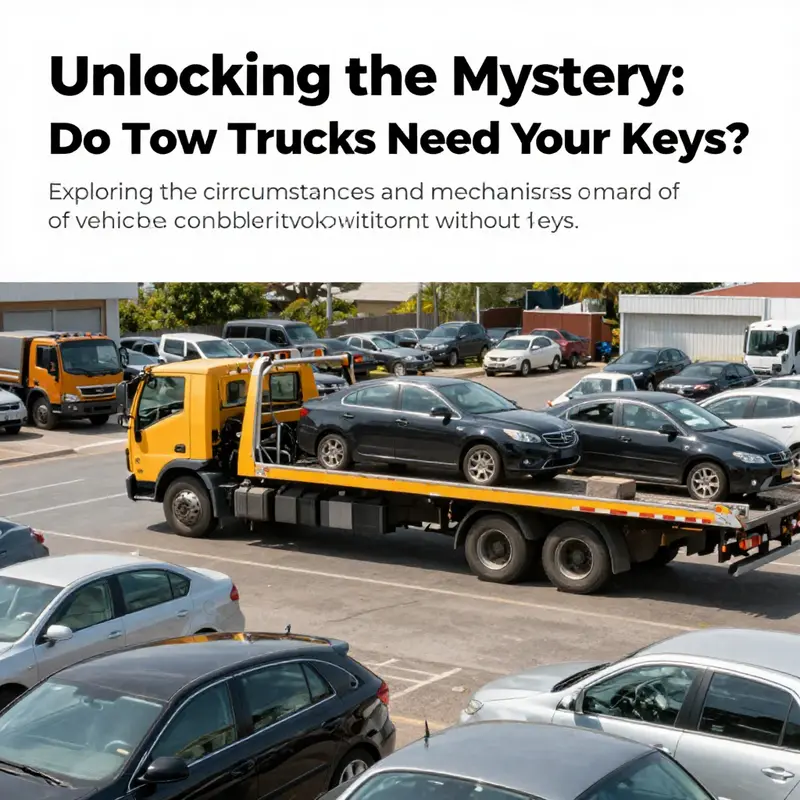
Understanding when and why tow trucks might need your vehicle keys is essential for every driver, commuter, and vehicle owner. While many standard towing services allow for vehicles to be moved without keys due to specialized towing mechanisms, there are circumstances where having the keys can be crucial. Whether you’re a resident managing parking issues, a truck owner concerned about towing logistics, or an auto repair shop needing to coordinate services, knowing the nuances of this topic will empower you. This article will delve into three main areas: the necessity of keys in towing, specific exceptions to this general rule, and the operational mechanisms of tow trucks that enable them to function even when keys aren’t present.
Keys at the Gate: Tow Trucks, Locking Hitches, and the Real Requirements Behind Getting Your Vehicle Moved
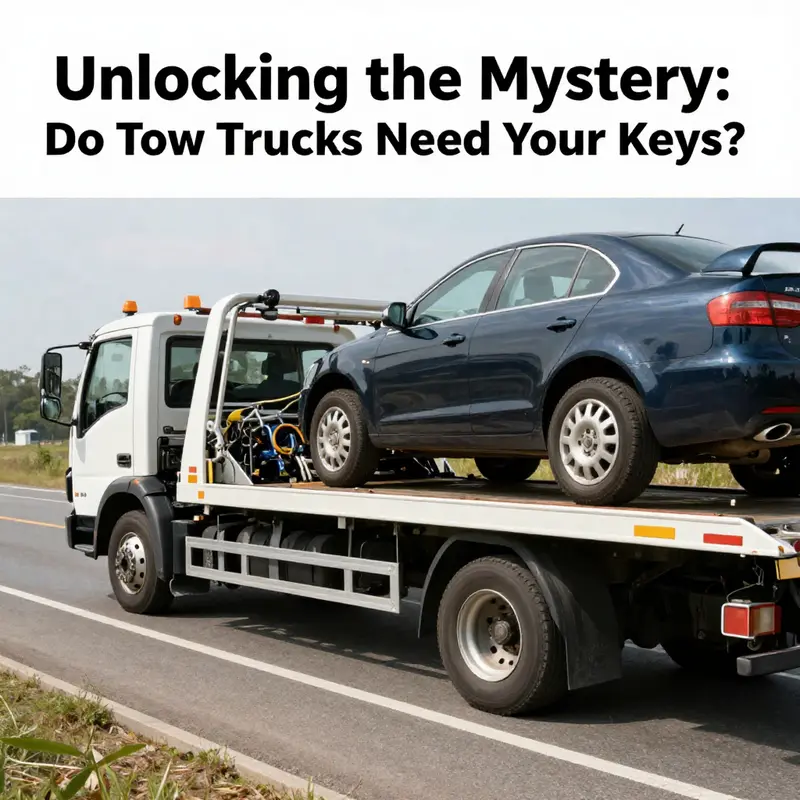
When people ask whether a tow truck needs the keys to their car, the answer often hinges on what part of the operation you’re thinking about. In the day-to-day world of towing, the ignition key is not a mandatory tool for most tasks. Tow trucks are built around systems that can move and secure vehicles without turning the ignition. A winch, a flatbed bed, or wheel-lift arms can cradle a disabled or non-operational vehicle and haul it to safety or service without the owner handing over their keys. Yet the simple, common-sense certainty that “the tow truck doesn’t need my keys” is tempered by a cluster of specific situations where keys do matter. These are not arbitrary complications; they arise from how the vehicle is to be moved, the vehicle’s condition, and the safety and regulatory frameworks that govern towing. The result is a nuanced landscape in which keys are neither universally essential nor universally irrelevant, but are instead one tool among many that a skilled tow operator weighs against the particular demands of each job.
To understand where keys fit into towing, it helps to look at the core methods tow operators use to relocate vehicles. Flatbed towing, for example, epitomizes the approach of moving a vehicle without dragging it on its wheels. A flatbed truck lowers a long platform to the ground, the vehicle is driven or winched onto the bed, and the bed retracts, carrying the car away with little to no interaction with the car’s drivetrain or ignition. This method minimizes stress on the vehicle’s steering, suspension, and undercarriage, and it also reduces the risk of accidental transmission or exhaust contact during transit. In such cases, the security of the vehicle during loading, transport, and unloading relies on the physical securing mechanisms and the vehicle’s own wheel restraints rather than on the ignition key. A similar logic governs wheel-lift and dolly setups, which elevate one or more axles and force the vehicle to ride on secured points rather than slide against asphalt. In these configurations, the operator’s attention is focused on balance, lashings, and the reliability of the lift arms. If the vehicle is properly tied down and the stake points are secured, the absence of the owner’s keys does not impede the core function of moving the vehicle from point A to point B.
Yet the yard of exceptions is not empty. First, there are operational realities tied to the type of towing required. For wheel-lift operations, where one axle is lifted and the other remains on the ground, there is a heightened emphasis on securing the vehicle against movement during transport. While the key itself does not drive the tow, the secure engagement of restraints, the proper engagement of the wheel nets, and the stability of the lifted axle all interact with the vehicle’s weight distribution and braking behavior. Any looseness or misalignment can produce dangerous sway, especially at highway speeds. In such contexts, the operator may request the keys not to access the vehicle’s controls, but to verify that the vehicle is in a state that won’t shift or roll unexpectedly during transport. It is in this space that a driver’s familiarity with the vehicle’s construction and the towing equipment’s safety features becomes essential, and the keys serve as a practical indicator that the securement process has been completed and validated before movement begins.
Secondly, some towing scenarios involve a direct legal or contractual framework that governs how a vehicle is removed from property, repossessed, or relocated for enforcement purposes. In such cases, the presence or absence of keys is not a mere convenience but a matter of compliance and process. A private-property tow may require documentation, authorization, and specific steps that the towing operator must follow to ensure the action is lawful and traceable. Here, the keys can play a role not in enabling the vehicle to start, but in confirming that the vehicle’s location, condition, and immobilization have been properly managed in the context of a contract or court order. In these environments, the interaction between keys, locks, and immobilization systems becomes a procedural part of the operation rather than a routine step in the move itself.
A separate, highly practical consideration involves anti-theft systems and immobilizers. Modern vehicles increasingly rely on electronic protections that respond to tampering, unauthorized ignition attempts, or attempts to defeat the alarm system. In a towing scenario, the operator may be required to navigate these protections to avoid triggering alarms or damaging immobilizer circuitry, especially in situations where the vehicle is being moved without being started. In certain instances, access to the vehicle’s ignition or security system could be needed to disengage or reset these protections so that the vehicle can be moved safely and without incident. The decision to request keys in these circumstances is not about enabling ignition but about ensuring that the immobilizer and alarm systems will not be activated in a way that could create a hazard or cause collateral damage during loading or transportation.
The centerpiece of the formal guideline around locking hitch connections—often overlooked by casual observers—gives a clearer, practical framework for when keys actually become a safety-critical element. Locking hitches are a standard feature on many towing setups, and their secure engagement is essential for a safe tow. The hitch must be securely locked into its housing to ensure the towing connection won’t detach or loosen under load. If the hitch does not lock properly, the connection can fail as the vehicle is pulled, with potentially catastrophic consequences. The process to lock the hitch is precise: the key must be turned so that the arrows on the key align with the Lock icon on the locking cylinder. This alignment serves as a visible, functional confirmation that the locking mechanism has engaged, securing the hitch to the towing apparatus. The safety emphasis is explicit: the key can only be removed when the hitch is securely locked. Attempting to remove the key when the hitch is not properly secured can be a warning sign that the system is unsafe to use in its current state. In short, the hitch, not the ignition, is the primary linkage that holds the vehicle to the tow. If the key has been removed before the hitch is locked, or if the hitch cannot be locked, towing should not proceed.
Within this framework, the practical takeaway for vehicle owners is clear. For standard towing operations—where a vehicle is simply disabled and requires transport to a repair facility or impound lot—the tow operator’s need for the owner’s keys is minimal to nonexistent. The mechanical systems of tow trucks can grip, lift, and move a vehicle without access to the ignition switch. The critical factor is the securement and the integrity of the towing connection. The key’s fleeting role becomes meaningful only when a lock, a hitch, or an immobilizer conversation intersects with the safety requirements of the operation. In those moments, the key becomes a tool in ensuring that the vehicle remains motionless and stationary until it is fully secured for transport, and only then is it a matter of releasing a mechanism to allow the safe commencement of the move. This nuanced view helps demystify the question: keys are not universally necessary for towing, but in certain hitch-based and security-sensitive contexts, they are an essential procedural element that supports a safe and compliant operation.
To better frame these ideas, it is useful to connect the discussion to the broader body of guidance that governs towing safety and hitch usage. Official documentation and checklists emphasize two intertwined priorities: a secure, verifiable connection between the tow vehicle and the towed vehicle, and a thorough, site-specific assessment of each vehicle’s particular locking mechanisms and safety features. When these priorities are met, the operator can proceed with confidence that the vehicle will remain in place and that the risk of accidental detachment or movement is minimized. This is not about a simple preference for keeping or relinquishing keys; it is about a disciplined approach to securing the hitch, evaluating the vehicle’s security features, and applying the appropriate method of transport for the specific scenario at hand. The result is a towing operation that is as safe as possible for everyone involved—drivers, passengers, bystanders, and the vehicles themselves.
For readers seeking a structured, check-list approach to hitch and towing safety that mirrors professional practice, a widely used reference emphasizes the practical steps in hitch engagement, locking verification, and post-load checks. The emphasis is on what you can see and confirm—the lock alignment, the stability of the load, and the absence of any movement when the vehicle is thrust into motion. While the technicalities can vary by vehicle and equipment, the governing principle remains constant: establish a secure physical connection, verify it with the locking mechanism, and only then proceed. In a world where the line between a routine tow and an unsafe tow can hinge on a single unsecured connection, this principle is not merely academic. It is a core safety discipline that operators rely on every day.
If you are curious about how these safety principles integrate with the broader design and operation of tow equipment, you can explore the related topic of tow-truck technology and safety. The discussion there expands on the ways modern tow systems balance mechanical securement with electronic protections, ensuring you understand why certain steps—like locking the hitch and confirming that the key is in the correct position—are not about driving the vehicle’s engine, but about ensuring that the mechanism doing the moving remains locked, stable, and predictable throughout the journey. This integration of mechanical and procedural safeguards helps explain why keys can be situationally necessary and why, in many cases, a tow operator can complete the job without requiring the vehicle owner’s ignition keys.
In close, the essential message for vehicle owners is practical and nuanced. While tow trucks do not typically require car keys to perform standard towing, there are clear circumstances in which access to locking mechanisms, immobilizers, or hitch integrity becomes a gating factor for safety and compliance. The owner’s keys may appear to be a mere convenience in some situations, but in cases involving locking hitches and secure connections, they become part of the verified process that ensures the tow can proceed without risk. The conversation about keys, therefore, moves beyond a binary yes-or-no question. It becomes a layered discussion about how towing safety is achieved in practice, how different vehicle configurations dictate the need for keys, and how the towing industry applies a disciplined sequence of checks to protect people, property, and vehicles alike.
To learn more about the practical integration of technology and safety in modern tow operations, see the discussion on tow-truck technology and safety. This resource provides broader context on how locking mechanisms, sensor feedback, and procedural checks are combined to deliver secure and reliable towing outcomes. For readers who want a deeper dive into safety protocols and the specific steps that professional operators follow, the linked material offers a detailed walk-through that complements the chapter’s focus on keys and locking mechanisms. tow-truck-technology-and-safety
External Resource for Further Reading: For a standards-focused look at hitch safety and the steps that support secure towing, refer to the hitch safety checklist provided by industry guidance. This external resource outlines best practices for hitch engagement, locking verification, and post-load checks that help ensure a safe tow from start to finish. https://www.towinginfo.com/hitch-safety-checklist/
Key Moments in Tow: When a Tow Truck Still Needs Your Keys
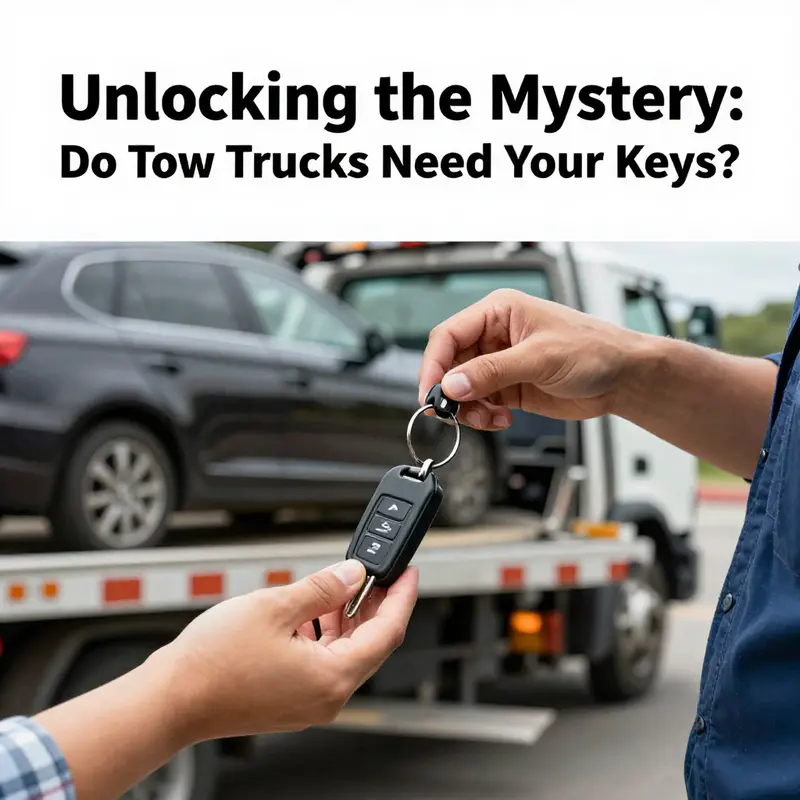
Tow trucks are built to resolve a simple, stubborn problem: a vehicle that can’t move on its own. The common image is straightforward—wheels on the road, a big truck behind, a plan to haul the problem to a shop or to a safer location. Most people assume the tow operator can get the job done without the ignition key at all. Yet reality is more nuanced. The question “do tow trucks need your keys?” crops up in every circle of drivers, property managers, and roadside responders. The truth is not a flat yes or no. It depends on the combination of the vehicle’s design, the towing method, the electrical systems that govern safety and control, and the legal or contractual context surrounding the tow. To understand when keys are essential, we need to look beyond the mechanics of lifting a car and into the circuitry that keeps modern vehicles safe, secure, and trackable even while they are being moved. The answer emerges from a careful balance of engineering, manufacturer guidance, and the practical realities of the roadside environment.
First, consider the core purpose of a tow. A tow truck is designed to move a disabled or non-operational vehicle from point A to point B with minimal risk to the vehicle and to the surrounding public. The primary tools are mechanical: winches, wheel-lift arms, flatbeds, or combinations thereof. A winch can pull a car onto a bed or onto a trailer; a wheel-lift can lift two wheels and drag the rest; a flatbed personnel can strap or chain the vehicle securely and transport it with the entire mass on the bed. In most of these configurations, the engine doesn’t need to run for the vehicle to be moved. Yet the absence of ignition is not a blanket exemption from the constraints that protect a car’s life, the safety of the operator, and the legal boundaries around vehicle possession and movement.
A critical thread running through the exceptions is the vehicle’s electronic architecture. Modern cars are dense with embedded control units, immobilizers, steering systems, and security networks. If the ignition key is not present, the car’s immobilizer may still act as a gatekeeper. Immobilizers are designed to prevent theft by verifying a transponder in the key with the car’s computer. When the key is missing, some vehicles will block certain electrical pathways or even lock the steering or transmission to prevent movement. That means the presence of the key isn’t merely about enabling the engine; it can be about ensuring the car’s security systems don’t misinterpret a move as a theft attempt or cause a mechanical fault during transport. In these environments, a key becomes a crucial conduit for the proper sequencing of power that keeps the vehicle operable in a controlled way, even if the engine stays off.
Then there is the matter of the transmission and lubrication. For automatic transmissions, many manufacturers specify a particular procedure for towing. In enough cases, the owner’s manual or the manufacturer’s towing guide instructs that the ignition should be put into a certain position to maintain the power to the transmission oil pump and related circuits. If the key is left out, certain electrical stages won’t receive the necessary power, and what might start as a minor risk—carried out for a short distance—could bend toward long-term harm to the transmission. The wording in several consumer-facing manuals is unequivocal: not only can towing without the key be frowned upon, it can be presented as a risk of permanent damage. The consequence of disregarding this guidance is not solely mechanical. It can void warranties, invite liability for the towing company, and expose the owner to costly repairs that could have been avoided with a simple key insertion and a correct shift into the appropriate tow mode.
Four-wheel drive and all-wheel drive systems introduce another layer of nuance. Not every vehicle is a candidate for the same towing approach. For many AWD/4WD vehicles, towing long distances with the drivetrain connected can create severe wear on the differential and driveshaft. In practice, the vehicle owner or the tow operator must often engage a specialized “tow mode” or disconnect a portion of the drivetrain to protect the vehicle during transport. Embedded in these instructions is a practical rule: if you want to tow an AWD/4WD safely, you may need to access a control menu that is typically reached via the ignition or a remote. No key means no access to these configurations, and that limitation becomes a real risk factor for the operator and the vehicle alike. The result is a scenario where the key is not a luxury but a tool that unlocks safe, vehicle-specific towing protocols.
Another layer to consider is the position of the vehicle’s steering and the potential for lockout devices. Some cars forwardly lock steering columns when the key is removed. In those cases, attempting to tow without unlocking can put damage on the steering system as the wheels swing or the tires drag. A tow operator who encounters a steering lock or a transmission lock has essentially a choice between risking damage or delaying the move while the owner or authorized agent provides access to the key. For many drivers, this means that the process, while technically possible without the ignition, becomes impractical or unsafe without the key. The human element—the ability to confirm owner authorization, to verify the vehicle’s status, and to implement the correct sequence of steps—becomes as critical as any mechanical constraint.
Beyond the hardware and the mechanics, there are contexts where keys are either legally or contractually required. In some repossession or private-property removal situations, the tow company operates under a specific set of rules that govern access to the vehicle. Contracts may specify that certain vehicles can be moved only when keys are present, or under the supervision of a licensed agent who can program or reset certain security features after loading the car. This is not merely bureaucratic theater. It is a framework designed to prevent accidental or intentional unauthorized removal, protect lender interests, and ensure that the vehicle can be recovered without triggering alarms or immobilizers at the critical moment of transfer. The presence of keys in these situations is not about the convenience of the tow company; it is about maintaining lawful control over the vehicle’s custody and the property rights of others involved in the transaction.
Another factor that often gets overlooked is the function and behavior of anti-theft and telematics systems. Modern vehicles talk to the world. Connected car services, remote diagnostics, and security networks can influence whether a car will accept being moved. If a vehicle’s remote or mobile app systems detect an imminent tow without the owner’s authorization, they may trigger a sequence of responses, from alerting the owner to enabling remote lockdown commands. Inroads into this digital ecosystem can complicate a tow operation. A tow crew might need the keys not merely to unlock a door but to silence or adjust the car’s telematics so the vehicle can be safely manipulated without triggering alarms or criminal-facing flags. Here, the key is a stand-in for an authorization token that keeps the vehicle in a known, safe state while it is being relocated.
For all these reasons, most professional tow operators approach the task with both mechanical awareness and compliance-first thinking. The job is not simply to drag a car from one place to another; it is to relocate a potentially hazardous object without creating new hazards. The operator must assess whether the tow can be performed with the engine off, whether the vehicle’s electronics will permit safe movement, and whether the necessary safeguards—such as wheel restraints, anchor points, and the correct towing configuration—are in place. If any of these conditions are compromised, the presence of the keys becomes a practical necessity. Not because the engine needs to run, but because the keys represent access to the vehicle’s internal safety logic, the ability to unlock protective measures, and the authorization to perform the task within legal and ethical boundaries.
It is worth pausing to acknowledge a common caveat that often travels with these discussions. In an emergency or a strictly constrained scenario—say, a car is stranded in a dangerous location, or the only safe path involves moving it in a short, controlled distance—towing may still proceed without the key, particularly if a flatbed can be positioned with all wheels on the bed and the vehicle secured against movement. In such cases, the risk of triggering a security system is mitigated by design. The broader point remains true, though: this is not a universal exemption. It is a set of conditions under which the standard rule may be bent while preserving safety and compliance. The manufacturer’s guidance, along with the tow operator’s professional judgment, will typically determine whether a key is needed, and if so, how the key should be used to fulfill the operation’s safety and legal requirements.
The balance of these factors helps explain why the research consensus emphasizes context. The crew’s assessment begins with the vehicle’s make and model and extends to the specific towing method being employed. A wheel-lift tow, for example, has a different set of constraints than a full flatbed. In wheel-lift, only one axle might be engaged, and proper securing becomes critical to prevent the vehicle from rolling or shifting during transport. In a flatbed, the vehicle may be immobilized on the bed, but even then, securing straps and brake release procedures may rely on electrical assistance that the key can help provide. In repossession or property-removal scenarios, the legal backstage matters—the contract, the permissible methods, and the required paperwork—often tilt the decision toward key access as a safety and compliance measure. And where immobilizers and telematics are in play, the key’s status is less about convenience and more about unlocking a chain of protections designed to prevent both theft and accidental damage during a seamless, careful move.
What this means for vehicle owners and drivers is clarity about preparation and communication. If you anticipate needing a tow, the best practice is to provide the tow operator with access to the keys, or at least confirm where the keys are and how they will be used if the vehicle must be moved under tricky conditions. If your vehicle is in a location with a high risk of triggering alarms or if it is a model known for complex immobilizers, store the keys in a secure, accessible place and inform the dispatcher or the tow operator about any security features that might influence the procedure. In cases where you are the owner but not physically present, a durable, documented authorization can help the operator proceed in a timely, legal manner while ensuring the vehicle’s safety. The ultimate objective is to minimize the chance that an immobilizer, a steering lock, or an electronic safety feature becomes an obstacle rather than a safeguard. The key, in this light, is not a mere ignition tool but a representative token of access to the vehicle’s protective and control systems.
In conversations about how tow services operate, it becomes evident that the idea of “no keys required” is a convenient shorthand that glosses over a lot of practical nuance. The reality is a spectrum, where some situations are indeed possible without keys, and others are safer and more responsible with keys or a verified replacement. This spectrum is shaped by the vehicle’s architecture, the tow method, the owner’s authorization, and the legal framework guiding the tow. The values at stake include preventing damage to the vehicle, protecting the owner’s property rights, and ensuring the safety of the operator and bystanders. The most reliable guidance to navigate this spectrum starts with manufacturer instructions and ends with professional judgment on the ground.
For readers who want to explore how modern tow operations integrate these considerations into real-world practice, a broader perspective on tow truck technology and safety can illuminate the mechanics behind the scenes. This area shows how a tow company calibrates its approach to each vehicle, balancing mechanical capabilities with electronic realities. It also underscores the importance of ongoing training and adherence to safety standards, ensuring that the decision to request or forego the key is made with confidence and accountability. As with many specialized trades, success hinges on a combination of tools, knowledge, and regulatory clarity. The key, quite literally in some cases, is a small but critical element of a much larger system that keeps roads, vehicles, and people safer when a breakdown or a disappearance of movement occurs at inconvenient moments.
The practical takeaway is straightforward, even if the underlying reasons are complex. Keys are not universally required for towing, but they are often indispensable in practice. They unlock safety features, ensure proper lubrication and transmission handling during tow, and enable certain drivetrain configurations for AWD/4WD vehicles. They help prevent unauthorized movement in repossession and enforcement scenarios and assist in quieting or disabling telematics or alarms that might otherwise complicate a tow. Tow operators weigh these factors with professional discipline, following the manufacturer’s guidelines and the law, to decide whether the key should be used, kept in view, or provided to the operator before the vehicle is moved. In other words, the answer to “do tow trucks need your keys?” is not a single word. It is a careful, case-by-case judgment that respects the vehicle’s design, the method of transport, and the rights and safety of everyone involved.
Embedded in this discussion is a larger reflection on how modernization has altered even everyday tasks like vehicle recovery. The presence of immobilizers, telematics, and advanced transmission controls means that a tow is not just a physical act of pulling but an interaction with a complex, living system. The key serves as a bridge between the mechanical world of the tow and the electronic world inside the car. When this bridge is present, it can reduce risk, speed up the operation, and prevent missteps. When it is absent, the tow operator must find alternate routes that still honor safety and legal boundaries—routes that may involve different equipment, different procedures, or different approvals. Either way, the goal remains constant: to return the vehicle to a safe state, move it to a place where it can be repaired, and do so with the least possible disruption and the least possible chance of damage to the vehicle or to the people nearby.
In closing, the simple question opens a window into the broader craft of towing in the modern era. Keys matter not primarily because they start an engine, but because they unlock a network of protections and functions that govern how a vehicle can be handled when it is most vulnerable. They enable the operator to respect the car’s security, to comply with the relevant rules, and to perform the job without turning a repair task into a liability. So, do tow trucks need your keys? The honest answer is: sometimes, yes; often, yes in practice when safety and compliance require it; and sometimes, not immediately if a safe, lawful alternative approach can be taken. The best approach for owners is to be proactive: know your vehicle’s requirements, communicate clearly with the towing service, and provide the necessary access when asked. In doing so, you help ensure that the tow is not only swift but safe, respectful of property rights, and aligned with the best professional standards in the field. For those who want a deeper dive into how these considerations play out in the broader landscape of towing technology and safety, exploring that topic can enrich understanding of every tow from a roadside assist to a full recovery operation. tow truck technology and safety.
External reading on the nuances of towing without keys provides additional perspective on how manufacturers’ guidance translates into practice. For a detailed discussion, see the AutoCar UK analysis on whether a car can be towed without keys and what to know before attempting such a move. This resource highlights the real-world implications of immobilizers, transmission concerns, and safety protocols as they unfold across different makes and models: https://www.autocar.co.uk/road-test/towing/can-you-tow-car-without-keys-yes-heres-what-know.
Keys Not Required: How Tow Trucks Move Cars Without the Ignition
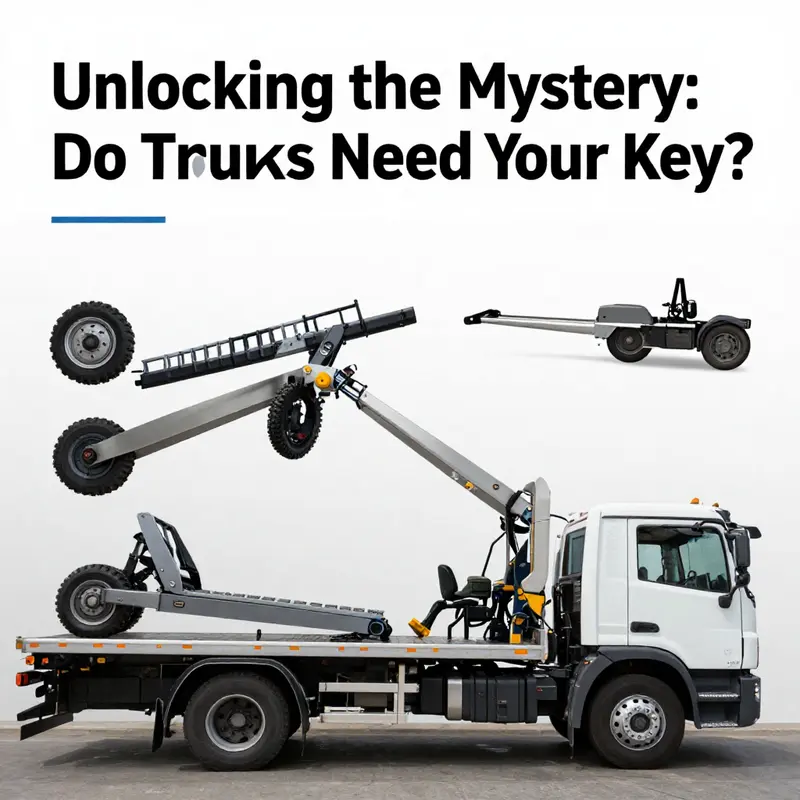
When a car breaks down or ends up in a tow yard, the natural question is often whether the tow operator needs the keys. The short answer, in most standard towing scenarios, is no. Tow trucks are built to move disabled or non-operational vehicles using their own mechanical, hydraulic, and, in some cases, electronic systems. The ignition key isn’t the power source for the tow itself. Instead, the operator relies on a carefully orchestrated set of mechanisms that grab, lift, secure, and pull or carry a vehicle to its destination. This distinction matters because it reveals the difference between what a car can do on its own and what a tow truck can force to happen through sheer mechanical advantage and precise handling. Understanding this difference also helps demystify some common situations people encounter on the roadside or at a repair shop where the keys seem to matter more than they do in practice.
At the heart of every tow is a power system that is separate from the car’s ignition. When the tow truck’s engine runs, it creates the power necessary to operate the vehicle’s own stabilization and hoisting systems through belts, gears, and hydraulic pressure. Some operations run off the truck’s own engine, some run off dedicated hydraulic pumps, and others rely on electric motors coupled with hydraulic circuits. In any case, the key does not directly trigger the movement of the vehicle being towed. The job of moving a car with a tow truck is achieved by the tow truck’s own energy and control systems, tuned specifically to avoid damaging the vehicle being transported. This separation between the ignition and the towing functions is what makes towing possible even when the keys are unavailable or when a vehicle cannot be driven to a shop on its own.
There are several core towing mechanisms that illustrate how this works in practice. The wheel-lift approach, the flatbed, and the integrated tow configurations each have their own method for gripping and moving a vehicle. Wheel-lift tow trucks use a hydraulic-powered yoke that slides beneath the vehicle and lifts one end off the ground. In this configuration, the operator carefully secures and positions the lifted end, and then the other axle is rolled onto the ground to free up the vehicle to be towed. The wheels on the ground are secured with straps or chains, and the vehicle is anchored so it cannot shift or slide during transit. This method emphasizes stability; lifting one end helps distribute weight, but it also demands precise control to prevent the towed car from tipping or sliding while the truck moves. In contrast, flatbed or rollback tow trucks place the entire vehicle on a flatbed platform. A bed raises, tilts, or slides back to accept the car, and the vehicle is strapped down securely before the bed lowers into place. The entire process relies on the truck’s hydraulic system and winches to pull, lift, and secure the vehicle, not on the ignition.
Integrated tow trucks offer a slightly different flavor of control. They utilize built-in hydraulic booms and winches that can reach the vehicle and secure it with a combination of straps, chains, and clamps. Operators can engage and disengage these towing functions from within the cab or on the boom arm without turning the towed vehicle’s ignition. The safety implications here are notable because integrated systems must manage multiple points of contact with the car—the front and rear ends must be immobilized in tandem for a move that remains smooth and controlled. The operator’s ability to manage the pressures, angles, and forces of the hydraulic system is what makes the process reliable and safe, especially when dealing with vehicles that are damaged, broken down, or otherwise immobile.
Keyless operation is not universal, but it is increasingly common in modern tow work. Some sophisticated tow setups may interface with a vehicle’s keyless entry or push-button start systems in specific, controlled ways. Yet the actual mechanics of towing—lifting, pulling, winching, and securing—are engineered to function largely independently of the ignition state of the towed vehicle. This separation matters for safety and efficiency. If a vehicle lacks a working ignition, the tow crew can still manipulate the vehicle’s weight, gravity, and inertia to position it for transport. If the vehicle does have a working ignition, the operator can still proceed with the tow even if the keys are not present, because the lifting and securing sequence has its own power source and control logic.
The decision to request keys from a vehicle owner or call for the keys themselves often comes down to situational nuances rather than a universal rule. There are exceptions where the presence of keys can simplify or even necessitate certain steps. In some wheel-lift operations, for instance, the operator must ensure that the secured end of the vehicle is immobilized before lifting. If the vehicle could shift unexpectedly because of a faulty parking brake or damaged wheel, a set of keys that can help disengage or reset certain controls may be requested to reduce risk. In this context, having access to the ignition or to the interior controls could help the operator confirm that the vehicle is in a safe mode for transport. However, even in those cases, the operator is not relying on the vehicle’s ignition to perform the move itself; the key’s role is about enabling or confirming a safe stowage rather than powering the hoist.
Repossession presents another nuanced scenario where keys can come into play. Legal contracts, property access rules, and regulatory guidelines surrounding the removal of vehicles from private property can sometimes create a demand for the keys. A repossession agent may need to verify access, or to re-secure a vehicle after it has been positioned for transport. In such circumstances, the chain of custody, legal authorization, and verification steps become essential considerations that extend beyond the physical act of towing. The operator’s primary concern remains the secure, safe, and lawful movement of the vehicle, but the keys may be part of the chain of custody or licensing compliance that governs the process.
Anti-theft systems add another layer of complexity that can influence whether keys are necessary. Cars equipped with immobilizers, alarms, or other security features may require some interaction with the vehicle to ensure that the immobilizer is not triggered during movement or that alarms are not inadvertently activated while the car is being hooked up and removed. In many cases, the tow operator can bypass or work around these systems without the keys, or coordinate with the vehicle owner to deactivate a temporary alarm while the vehicle is being towed. There are also cases where the service provider will request the keys for diagnostic or security-related reasons, especially if there is a risk that the immobilizer could interpret the tow as a theft attempt and engage protective measures. Even here, the purpose is not to power the tow itself, but to ensure the vehicle’s own security features do not conflict with the transport.
In practice, if a vehicle owner arrives at the scene and asks whether they need to hand over the keys, the honest answer is: it depends. For many routine towing jobs—when a car is disabled, parked illegally, or involved in a minor collision—the operators can complete the task without the ignition key. They rely on the truck’s own hydraulic power, the leverage of the wheel-lift, the reach of the boom, and the stability provided by strap-downs to move the vehicle to a tow truck or a nearby facility. The power that powers the towing mechanism does not come from the car’s key; it comes from the tow truck itself. The operator’s training, the vehicle’s condition, and the environment—level ground, slope, weather, traffic—will determine exactly how the towing sequence unfolds. The end goal remains the same: to relocate the vehicle safely, quickly, and with as little risk to bystanders or other vehicles as possible.
Sometimes the explanation helps to visualize the difference between a vehicle that can move a little under its own power and a vehicle that needs to be repositioned and carried. Even when a vehicle is immobile due to mechanical failure, a dead battery, or a damaged transmission, the tow truck can still generate movement by way of the truck’s own engine and hydraulic systems. This is not magic; it is the result of decades of mechanical engineering that separates the job of moving a car from the job of starting or using the car’s own ignition. The tow operator’s skill set is a blend of mechanical know-how, safety protocols, and an understanding of vehicle dynamics. They must know how to align the vehicle, how to strap it down securely, how to monitor hydraulic pressures, how to manage brake resistance, and how to navigate the vehicle through tight spaces without scratching paint or compromising structural integrity.
An important aspect of this work is safety and compliance. The National Transportation Safety Board has published comprehensive guidelines and safety protocols for tow truck mechanics and operators. These guidelines emphasize the importance of standardized procedures, equipment checks, and ongoing training to minimize the risk of injury to operators and damage to vehicles. The document highlights how proper control of hydraulic systems, correct attachment methods, and systematic checks before, during, and after a tow are essential for safe operations. For readers who want to explore these safety standards in more depth, a reliable overview and guidance can be found in the official NTSB report, which details operational best practices and lessons learned from real-world incidents. This resource underscores that a well-trained operator can perform towing tasks confidently without relying on the vehicle’s keys, while still respecting security concerns and the vehicle owner’s rights.
From a vehicle owner’s perspective, understanding this dynamic can ease anxiety during a tow. If you are confronted with a tow and you don’t have the keys, you can still rest assured that your vehicle can be moved safely. It’s normal for the operator to request identification, proof of ownership, or authorization when needed. If there is a legitimate security concern—such as a vehicle with a functioning immobilizer or a car that is part of a repossession process—the operator will explain what steps are necessary to continue the transport within legal and safety parameters. In most other cases, however, the tow can proceed without the keys, and the vehicle will be secured and transported using the truck’s own systems.
This approach aligns with what many drivers experience at the roadside or during a shift in a repair facility where a vehicle arrives with a flatbed or a wheel-lift unit. The operator will methodically perform the lift, secure the vehicle, test that it is immobilized, and then begin the transport. The chain of actions is choreographed to minimize risk: the bed is supported, the hooks and straps are tightened to the manufacturer’s load ratings, and the driver checks the stability of the load before the trip begins. The result is a move that looks simple in retrospect but is the product of careful planning, precise control of hydraulic pressures, and the operator’s experience.
For those curious about the technical side of these operations, a closer look at the control mechanisms reveals why this work can proceed without the ignition. The controls for the towing mechanisms are typically located within the cab or on the boom arm, allowing operators to engage and disengage the towing functions without touching the car’s ignition. In many systems, a combination of manual valves and electronic switches governs the lifter, stabilizer, and winch. When the engine is running, hydraulic pressure is abundant; when it is not, stored pressure in capacitors or accumulators can maintain a safe, controlled state long enough to position and secure a vehicle. This is a delicate balance, and it is why proper training and adherence to safety protocols matter as much as raw power does.
The practical message for readers is straightforward. You do not need the keys for most towing tasks, and the keyless reality of many modern incidents does not compromise the operator’s ability to move or secure a vehicle safely. Yet there are legitimate exceptions where keys matter, and a tow operator may request them to ensure that the vehicle’s security, immobilizer, or internal systems do not complicate transport. If a car is equipped with anti-theft devices that could be triggered by movement, the operator may coordinate with the vehicle owner to deactivate or bypass those features in a controlled manner. Regardless, the key itself is not the actuating power for the tow; it is a potential tool for optimizing safety, security, and process depending on the specific circumstances of the vehicle and the scene.
In the end, the core takeaway is a practical one: tow trucks function independently of the car’s ignition in most everyday towing scenarios. Their power, control, and safety mechanisms are designed to secure and relocate vehicles that cannot move under their own power. The keys may surface in certain contexts—security, legality, or specific repossession procedures—but they are not a prerequisite for the actual movement. The operator’s expertise, the vehicle’s condition, and the environment all determine how the tow is executed and how the vehicle is placed in safe, transport-ready condition. And as technology evolves, the line between key dependence and keyless operation will continue to shift, with improved safety features, smarter control interfaces, and more nuanced protocols that keep both people and vehicles out of harm’s way. For a practical window into how these systems interlock in live operations, readers can explore the broader discussion of tow-truck technology and safety, a resource that captures the balance of hydraulic power, mechanical leverage, and vigilant safety culture that makes towing possible without keys in most everyday scenarios.
External reference: NTSB Report on Tow Truck Operations, detailing safety standards and practical guidelines for tow operators. https://www.ntsb.gov/investigations/accident_reports/2023/AAR2301/
Internal reference for further reading: For an overview of how advanced equipment and safety considerations shape real-world towing, see the discussion on tow-truck technology and safety. tow-truck technology and safety.
Final thoughts
In summary, while tow trucks primarily operate without the need for vehicle keys, understanding the specific situations where keys may be necessary equips drivers and vehicle owners with valuable insights. Depending on the towing method, the type of vehicle, or the specific circumstances—such as repossession or anti-theft considerations—keys may play an essential role. Being informed enhances your preparedness as a vehicle owner or property manager and ensures smoother interactions with towing services when the need arises.