

When a semi truck breaks down on the road, understanding the costs associated with towing can make a significant difference for truck owners and operators. The towing process is not just about getting a vehicle from point A to point B; it involves various fees, specialized equipment, and expertise due to the truck’s size and weight. This article delves into the complexities of towing semi trucks, exploring the factors influencing costs, pricing models used by towing companies, average cost estimations across different regions, and how specific vehicle specifications contribute to the overall price. Understanding these dynamics can help everyday drivers, truck owners, auto repair shops, property managers, and commuters make informed decisions when facing the unexpected challenge of a breakdown.
The Price of a Heavy Haul: Decoding What Really Drives Semi Truck Tow Costs

When a semi truck breaks down or ends up stranded, the immediate question isn’t just “Will they tow it?” but rather “How much will it cost, and why does the bill look so variable?” The answer is that towing a tractor-trailer is a complex service that hinges on a handful of interacting factors. Each tow is a small logistics project: a calculation of weight, distance, location, timing, and the specifics of the truck’s condition. Together, these elements create a cost tapestry that can swing widely from one incident to the next. Understanding this tapestry helps fleet managers, owner-operators, and roadside helpers anticipate expenses, negotiate fair quotes, and avoid surprise charges when every mile and minute matters.
At the core, weight and size matter more than most laypeople expect. A semi truck is not simply a larger vehicle; it is a coordinated system of axles, tires, braking components, and a heavy powertrain that demands specialized equipment. A standard passenger car can be lifted and rolled with a relatively compact wrecker, but a semi requires a heavy-duty configuration with high lifting capacity and careful rigging. The sheer mass of a full-length tractor with a loaded trailer means the tow operators must deploy equipment that can distribute force safely, maintain control, and prevent damage to the truck or road. This isn’t a cosmetic difference; it is a core driver of labor, fuel, and equipment costs. Extra long vehicles may need longer flatbeds, more crew, or staged loading, all of which add time and expense. In practical terms, heavier rigs demand more fuel, more skilled operators, and more expensive gear, which translates into higher hourly rates and elevated per-mile charges.
Distance, inevitably, sits at the center of most tow invoices. Distance is frequently the largest lever in the pricing model. Tow companies typically structure charges with a base fee plus a per-mile rate, or they may set a flat rate per mile with a separate dispatch or mobilization charge. Short tows across town can be surprisingly costly if the base fee is steep enough, while longer hauls tend to multiply the per-mile component and the time spent en route. The miles traveled also determine how much fuel the tow rig consumes, how many hours the driver logs, and whether additional crew or backup equipment is required to maintain safety and compliance. Overnight or multi-day tows add another layer of complexity, as drivers may need lodging, truck parking, or secure storage for the recovered vehicle. In rural regions where shops sit far apart and impound lots are scarce, the mileage can become a meaningful portion of the total, even when the base fee is relatively modest.
The location where the tow starts and ends also reshapes the final bill. Urban areas offer a different calculus than rural belts. In busy cities, the density of vendors can create a more competitive market, yet the urban terrain introduces traffic, zoning rules, and parking constraints that slow operations and raise labor costs. Narrow streets, steep grades, or tight pull-throughs require more precise rigging and sometimes a larger crew to manage safety concerns. On the flip side, rural or remote locations might feature higher mileage charges because reaching the scene requires longer travel, greater fuel burn, and fewer nearby service providers to share resources. In some cases, a lack of nearby heavy-duty tow options forces longer contingency plans, multiple trips, or temporary storage arrangements, each with its own price tag.
Time of day, urgency, and the speed with which a tow is needed can dramatically tilt the price. After-hours, weekends, and holidays carry a premium, reflecting the emergency nature of the request and the overtime work involved. When a truck breaks down on an expressway, responders must react quickly to protect other road users, which may keep crews on-site longer and necessitate more expensive, expedited parts and equipment. Emergency protocols sometimes require additional personnel or safety measures, and those overheads show up as higher hourly rates or standby fees. Conversely, planned tows or non-urgent recoveries may fall during regular hours, when rates tend to be more predictable and aligned with standard operating costs.
The truck’s condition is another big piece of the puzzle. If a tractor or trailer has sustained damage or fails in a way that complicates loading—for example, a transmission issue that prevents drive wheels from engaging, brake problems, or severe frame damage—the operation can require alternative methods. A simple winch-and-roll may give way to flatbed loading, specialized rigging, or even partial disassembly. Each step adds manpower, time, and sometimes additional equipment. Even the same vehicle type can present different challenges depending on the wheelbase, fifth wheel height, and whether the trailer is loaded or empty. Some situations may require securing the load to prevent movement during transport, which in turn demands more careful strapwork, decking, and tie-downs that extend the duration of the job and inflate the price.
Insurance coverage and regulatory compliance also shape the bottom line. For fleets, certain policies may reimburse or offset towing expenses, especially if the breakdown occurred during a documented trip or involved a covered incident. Other policies provide limited coverage or require prior authorization, delaying the recovery and introducing administrative costs. Regulatory requirements—such as weight permits, escort vehicles for oversized loads, or mandated inspections before and after transport—can require extra steps, paperwork, or specialized units, all of which carry fees. In some regions, the need for permits to traverse certain corridors or to move an overweight load adds a discrete line item to the final invoice. It’s not merely the mechanical work; it’s the compliance and risk management that often trail behind a tow.
Beyond the obvious charges, there are often additional fees that catch the unwary. Wait time on scene, the need for multiple pickups, or the storage of the vehicle at an impound facility can all appear as supplementary line items. Some providers levy a diagnostic or assessment fee if mechanics or operators inspect the truck on-site to determine the safest recovery method. And there are costs associated with disconnecting and reconnecting trailer electrical systems, verifying that brake lines and lights function correctly after loading, and performing post-tow safety checks before the rig can leave the scene. While these charges are legitimate, they can be surprising if they aren’t disclosed upfront. A well-informed consumer should request a detailed, itemized estimate that lists the base fee, mileage, labor, equipment, and any potential ancillary costs so there are no awkward conversations once the service is completed.
To put it in practical terms, the spectrum of possible totals can be wide. A quick, short-distance tow might hover around a few hundred dollars if the truck is easy to access and the operator can complete the job within regular hours. A longer urban maneuver with challenging rigging, nighttime response, and a loaded trailer can push the bill well into the mid-to-upper hundreds, and in some cases, exceed a thousand dollars. Rural long-haul moves, where travel to and from the site stretches across many miles and may require overnight accommodations or staging, can also approach or surpass the higher end of the range. The variability is not arbitrary; it’s a reflection of the real-world constraints of heavy-duty recovery work, where every mile, every minute, and every safety precaution multiplies the cost.
A sense of prudent budgeting comes from knowing how quotes are structured. Most professionals will start with a base dispatch or mobilization fee, designed to cover the cost of bringing the crew and equipment to the scene. From there, a per-mile rate accrues for the actual transport distance. If the tow involves more than one segment—such as a recovery from a remote location to a staging point, followed by a transfer to a repair facility—the quote may itemize each leg separately to reflect the operational realities. For certain tasks, a flat-rate approach can be used for specific scenarios, but more often the model combines base fees with mileage, fuel surcharges, and labor time. It’s also common for providers to apply a wait-time charge if they arrive and must remain idle on site for any length of time, especially when traffic or safety concerns slow progress.
For fleet operators and independent operators alike, there is real value in understanding the decision tree behind these quotes. If a shop is a significant distance away, the priority becomes safe transport with adequate weight distribution to avoid damage. If time is not critical, scheduling during normal business hours can reduce costs. If a truck has a straightforward mechanical failure, it may be more cost-effective to arrange for a quick onsite repair or a temporary fix that allows the vehicle to be moved to a nearby facility rather than a full tow. Conversely, when the problem is severe or spread across multiple subsystems, a full, careful, and properly rigged tow becomes the safest option, despite higher upfront costs. The key is transparency and planning: engaging with the provider early, providing clear information about the vehicle’s weight, dimensions, and current condition, and asking for an itemized estimate that includes a plain-language explanation of any unusual line items.
To support readers in making informed decisions, it helps to look at practical pricing frameworks and to seek clarity on what is included in a quote. One reliable way to compare is to request a standardized breakdown that mirrors how most providers invoice: base dispatch fee, per-mile rate for the distance traveled, labor time, and any equipment-specific surcharges. If the truck is unusually heavy or has special needs, ask whether there is a separate heavy-duty surcharge or a rigging fee, and whether the quote anticipates the use of a flatbed vs. a wheel-lift rig. A transparent provider will also spell out potential additional charges for delays, multiple pickups, or required storage, and will confirm whether storage fees accrue daily if the delivery site can’t receive the vehicle immediately. This approach helps prevent sticker shock and makes it possible to align expectations with the actual recovery operation.
In the spirit of empowering readers to make practical choices, consider consulting a pricing reference that compiles common scenarios and ranges. For a practical pricing breakdown, see tow-truck-costs-pricing. It’s not a substitute for a precise quote, but it provides a contextual framework that many operators use when discussing cost with customers. While individual quotes will still reflect the unique circumstances of each tow, having a baseline helps owners gauge whether a quoted figure falls within a reasonable band. And beyond the numbers, there is value in working with a provider that prioritizes safety and compliance. A firm that emphasizes proper rigging, verified weight distribution, and careful route planning tends to deliver a more predictable outcome, reducing the risk of incidental damage or delays that could inflate the cost later on.
Finally, for readers seeking broader context about industry standards, regulatory considerations, and best practices in commercial vehicle operations, the American Trucking Associations offers extensive resources that can inform pricing conversations and decision-making. Their guidance helps frame the expectations around heavy-duty transport, safety requirements, and compliance obligations that can indirectly influence towing costs. For those who want to explore these standards, a visit to their official site provides a structured overview of how the trucking industry manages risk, efficiency, and reliability in daily operations: https://www.trucking.org.
In sum, the price of towing a semi truck is not a single number but a calculated outcome of multiple intertwined factors. Weight and size dictate the technical footprint of the recovery, distance drives fuel and labor costs, location shapes market dynamics, and timing can tilt the balance between a routine tow and an emergency, high-pressure response. The vehicle’s condition, the legal and insurance context, and the small but meaningful add-ons—such as wait time, storage, or multiple pickups—round out the final figure. The prudent path is to gather a detailed, line-item estimate before any work begins, understand what is included and what might be charged later, and choose a provider who communicates clearly, values safety, and is equipped to handle the heavy-duty realities of heavy-haul recovery. With those guardrails in place, a tow can be managed in a way that protects the truck, the driver, and the bottom line, even when the miles stretch long and the clock runs loud on the night shift.
Counting Every Mile: Understanding the Real Cost of Towing a Semi Truck
When a semi breaks down or ends up in an awkward spot on a highway or at a freight yard, the first question that lingers after safety is, how much will this tow cost? The short answer is: it depends. The long answer unfolds through a careful look at several intertwined factors that shape the final bill. Distance is the most obvious driver, but the weight and configuration of the truck, the type of service required, the geographic setting, and even the time of day can shift the price in meaningful ways. The pricing ecosystem for heavy-duty towing is built to reflect the realities of moving a vehicle that dwarfs a typical passenger car, requiring specialized equipment, highly trained operators, and a higher level of safety planning at every step. As with many complex logistics tasks, the numbers you see on a quote come from a combination of a base framework and variable add-ons that mirror how the work will actually be performed on the ground.
At the center of most pricing structures is a simple but powerful distinction: the type of towing service. An emergency roadside tow, a long-distance transport, and an accident recovery each come with their own expectations for time, risk, and resource use. Emergency roadside assistance often entails rapid response, traffic management, and the potential for extra complexity if the vehicle is in a tight or hazardous position. Long-distance towing emphasizes the need to secure the load, maintain stability over miles, and manage fuel and wear on the towing equipment across larger geographic spans. Recovery from an accident introduces another layer of demand: documenting safety, securing the scene, and sometimes coordinating with law enforcement or insurance processes. Each scenario relies on different equipment configurations, response timelines, and regulatory considerations, all of which feed into the ultimate price.
The equipment itself is never far from the price calculation. Heavy-duty tow trucks, sometimes configured as 30-ton wreckers or other high-capacity units, are designed to lift and move commercial vehicles with the kind of precision that keeps drivers and bystanders safe. The core cost drivers center on the capability required to perform the move without compromising the truck’s integrity or the road’s safety. A typical semi move may involve heavy-duty tow bars rated for tens of thousands of pounds, rolling dollies to protect the drivetrain on longer moves, and large recovery winches that can pull through challenging terrain or awkward angles. The combination of equipment, fuel burn, and the expertise needed to operate these machines at the limits of their design is what makes heavy-duty towing more expensive than light-vehicle towing. In practical terms, the presence of a 10-ton or higher lifting capacity, the need for specialized attachments, and the potential for a longer on-site engagement translate into noticeable differences in the rate structure.
Distance traveled winds up as the primary variable in most quotes. For a relatively short move, a base fee plus a per-mile rate is the common recipe. What looks like a modest per-mile fee multiplies quickly when the distance stretches into tens of miles, and even more so across long hauls where the transport time is extended and the equipment remains deployed for longer periods. A five-mile tow may land somewhere around a modest mid-figure, while a fifty-mile haul can push past several hundred dollars depending on additional factors. Rural routes, which require more mileage to reach repair facilities or yards, can compound the cost even further because miles accumulate while the same on-site labor and equipment are required. In short, distance is the variable that most directly scales the bill, but it does not travel alone; it carries with it fuel consumption, operator time, and wear-and-tear on the gear, all of which the service provider must cover.
Time and location further color the pricing picture. Towing during late-night hours or on weekends often carries an implicit premium or a different rate structure because it involves reduced staffing and more complex traffic management. Urban settings bring their own challenges: tighter spaces, higher risk of delay, and the need for more maneuvering time in environments with congestion, barriers, and tighter access points. Conversely, more rural scenes may reduce some on-site labor costs but increase the mileage fee and travel time, potentially inflating the overall price when the journey to service or a yard is lengthy. The on-site time itself counts toward the bill. If the operator must linger due to a difficult extraction, maneuvering around trailers, or securing the vehicle in a way that complies with safety guidelines, that additional labor is reflected in the final tally. In practice, the charge often packages a baseline hourly or fractional-hour rate with a minimum call-out, meaning some jobs start with a set fee and then increment with time spent and distance covered.
Beyond the basic framework of base fees, per-mile charges, and time-based rates, there are several ancillary costs that can appear on the invoice. A few of these are straightforward and predictable, while others depend on the specifics of the job. For instance, a basic hook-up may incur a standard fee, then there can be a fuel surcharge to reflect fluctuations in fuel costs that occur between dispatch and arrival. If the tow requires multiple pickups, such as collecting a trailer from one location and the tractor from another, multiple hook-up charges may apply. If the truck is immobilized for an extended period at a repair facility, storage fees can accrue. Complex recoveries—where the tractor is off-axle, entangled in terrain, or requires special rigging to prevent damage to the truck or the surrounding environment—tend to elevate both labor and equipment costs, sometimes substantially. In these cases, the safety standards that govern the operation also demand more skilled personnel, more precise handling, and often a longer duration on site, all of which show up as higher prices.
A final piece of the pricing mosaic lies in the weight class and the configuration of the vehicle being moved. A semi tractor-trailer is not just heavier; it is wider, taller, and more awkward to secure than the typical passenger vehicle. The weight and the number of axles influence the choice of equipment and the approach to extraction or loading. A heavier load may require not just a heavier wrecker but also additional attachments, extended rigging, and sometimes specialized traffic control measures, if the move occurs in dense traffic or near infrastructure that demands extra caution. Each of these considerations adds to the day rate for the operator and, by extension, to the overall charge. In many markets, the price applied for weight-adjusted or complexity-adjusted work reflects the reality that the crew must allocate more time, more fuel, and more safety resources to complete the job without incident.
All of these factors converge to produce a price range that can feel wide to someone new to the process. In general terms, a standard semi tow is likely to land in a mid-to-upper range when compared with light-vehicle towing, with the total price commonly fluctuating based on distance, service type, and the on-site complexity. A rough frame of reference suggests that a short, straightforward tow may be priced around a few hundred dollars, while longer distances or more complex recoveries can push well into the higher hundreds or even beyond a thousand dollars in some cases. Those are not universal numbers, and they do not replace a direct quote, but they help set expectations for what goes into the calculation. The exact figure will always be a product of the specific job details and regional market dynamics, which means the most reliable way to understand what a particular tow will cost is to obtain a detailed estimate that itemizes the potential charges and the rationale behind them.
This is precisely why most reputable towing providers insist on a direct quote before work begins. A good quote will spell out the base fee, the per-mile or per-hour structure, any weight-related surcharges, and the anticipated on-site time. It should also itemize ancillary fees such as after-hours charges, storage if the vehicle can’t be moved immediately, multiple pickup charges, and any equipment rental or specialized rigging. In some cases, the quote will call out regulatory requirements relevant to a long-distance move, such as permits for oversize loads, escort requirements, or route-specific restrictions. If you are coordinating the tow for a fleet, a stable practice is to provide as much information as possible up front—the vehicle’s weight and axle configuration, the distance to the nearest suitable recovery yard, whether a trailer will be involved, and any constraints on access to the site. The more complete the initial data, the more accurate the projection and the less likely a surprise adjustment later on.
To gain a clearer sense of how these pieces fit together in real-world pricing, consult a detailed breakdown of the pricing models used by heavy-duty towing operations. The core takeaway is that cost is not a single rate but a matrix of interacting components. A base call-out, a per-mile or per-hour rate, and a set of surcharges all contribute to the final price. The exact mix is what distinguishes a straightforward short tow from a long-haul transport or an intricate recovery operation. In practical terms, it means that two jobs that appear similar at first glance can yield very different totals once the service type, distance, equipment, and on-site requirements are fully accounted for. If you are managing a fleet or preparing for a tricky roadside event, investing a little time in understanding the pricing matrix pays off in more accurate budgeting and faster decision-making when a tow becomes necessary.
For readers who want a formal, model-based view of these pricing dynamics, the service type, equipment requirements, and distance traveled combine into a price that can be captured with a simple framework. The price can be thought of as a base charge plus a variable component tied to distance and time, with additional line items for equipment, complexity, and regulatory compliance. This framework is not merely academic; it translates directly into practical planning. If you know the typical per-mile rate in your region and the standard base fee charged by your preferred providers, you can generate a rough estimate for the next anticipated event. You can also prepare your team or your insurer to evaluate quotes quickly when the need arises, ensuring that the numbers you review reflect the full scope of the operation rather than a simplified or incomplete subtotal. A more formal breakdown of pricing models and typical charges can be found in resources dedicated to the topic: tow truck costs and pricing.
As with any complex service, the actual cost you pay will be a function of the particular circumstances and the region in which the tow occurs. The variability is not a sign of mispricing but a reflection of the real-world dynamics that govern heavy-duty towing. The best approach when you face a tow is to seek a detailed quote that includes both the predictable elements and the potential edge cases—such as extended wait times, multiple pick-ups, or the need for extra equipment—so you have a transparent understanding of how each line item is justified. Keeping a simple mental model in mind can help as well: base fee plus distance-driven costs, augmented by time-based charges and any necessary add-ons. This mental model serves as a practical heuristic during an urgent moment when every minute and mile matters.
If you are reading this in the context of broader logistics planning, it can also be useful to view the tow as part of a larger ecosystem of heavy-vehicle recovery and transport. The same principles that apply to a single tow apply across fleets and across routes: the cost is a function of the service type, the weight and configuration of the vehicle, the distance to a suitable facility, and the availability of the right equipment at the right time. The result is a pricing landscape that rewards planning and precision but remains flexible enough to accommodate the unpredictable realities of the road. In practice, this means that a well-prepared dispatcher who can provide accurate vehicle details, a precise location, and a realistic route plan is more likely to receive a quote that is fair, comprehensive, and less prone to unexpected add-ons the day of the tow.
For readers seeking to anchor these ideas in a practical budgeting exercise, a simple estimation approach can be useful. Start with a base fee that covers dispatch and hookup. Add a per-mile amount multiplied by the estimated distance to the destination yard or repair facility. If the move is expected to last several hours due to difficult terrain or tight access, factor in a time-based component. Then consider any weight-related surcharges, storage or waiting charges, and the possibility of multiple pickups or special equipment rental. While this method won’t capture every possible nuance, it provides a credible forecast that can guide decisions and help mitigate sticker shock when the final invoice arrives.
The reality is that pricing for towing a semi truck sits at the intersection of physics, logistics, and human judgment. Heavy-duty operators must balance safety considerations, regulatory constraints, and the practicalities of moving a vehicle that is both large and heavy. The cost reflects the resources required to perform that balance correctly: the power to lift and stabilize, the expertise to maneuver in often constrained spaces, and the readiness to adapt to the unknowns of a roadside incident. By understanding the key levers—service type, distance, equipment, and on-site complexity—you can better anticipate what a tow will cost and avoid surprises once the process is underway. And while the numbers will always be contingent on the specifics of each job, the underlying principle remains constant: the price is a careful accounting of effort, risk, and capability applied to move a machine that keeps supply chains running.
External Resource: For further reading on the equipment and practical applications that enable safe and efficient heavy-duty towing, see the resource dedicated to heavy-duty tooling and integration into towing operations: heavy-duty tow bars and their applications.
null
null
Weight, Footprint, and Recovery: How Vehicle Specs Shape the Price Tag When Towers Move a Semi
Towing a semi truck is not simply a matter of loading a single vehicle onto a carrier and driving away. The cost structure unfolds from the vehicle’s specifications—the weight it must bear, its overall length, and the mechanical configuration that defines how it moves, steers, and stops. In practice, these factors steer every decision in the field, from the choice of recovery equipment to the crew’s training requirements, from the route planners who estimate miles to the insurance riders that cover potential damage in transit. The result is a dynamic cost landscape in which the same tow job can swing widely depending on the truck’s physical and mechanical profile, not merely on the distance it must travel. When you step back and map the terrain of towing costs against vehicle specs, a clear pattern emerges: the heavier and more complex the semi, the more the operation leans on specialized gear, longer recovery times, and higher risk management, all of which translate into higher price tags for fleets and drivers alike.
Weight is the most conspicuous driver of cost. A semi truck carries a gross vehicle weight rating that can approach or exceed 82,000 pounds, a ceiling that instantly narrows the pool of suitable tow rigs and necessitates a higher-capacity drivetrain and lifting system. Heavy-duty wreckers, often rated at 10 tons or more, become the baseline for safe recovery of such mass. The heavier the load, the more fuel those recovery units burn, the more maintenance their hydraulics demand, and the more skilled the operator must be to execute lifts without compromising the truck being towed or the tow vehicle itself. In this light, weight inflates not only the upfront cost of equipment selection but also the ongoing cost of training, insurance, and the potential for additional wear on tow trucks when heavy payloads are handled repeatedly.
Length compounds the equation. Beyond weight, the truck’s physical footprint influences how much space a wrecker must maneuver, how angles must be negotiated to attach lines without damage, and how the loaded trailer will sit during transport. A long wheelbase combined with a tall, rigid frame may require a flatter, more robust platform to ensure stability and minimize the risk of undercarriage contact or tire pinch. The longer the job lasts—whether due to difficult access, tight urban streets, or remote rural detours—the more labor hours accrue, and with labor hours come labor costs, insurance exposures, and the potential for additional idle time charges that some providers pass through to the customer.
The mechanical configuration matters just as much as weight and length. A conventional diesel semi shares many characteristics with other heavy vehicles, but a leading-edge electric heavy-duty model introduces distinct cost drivers that have no direct parallel in traditional powertrains. An electric semi with an extended range offers the promise of lower energy costs per mile because electricity can be cheaper per mile than diesel and because regenerative systems recover some energy under certain driving conditions. Yet these advantages come with a premium: advanced propulsion systems, sophisticated battery packs, and high-demand charging infrastructure push the upfront price and the complexity of maintenance higher. In practice, the ultimate effect on towing costs depends on a balance sheet of savings and outlays. The higher initial price of an electric model can be offset over time by reduced fuel and, in some cases, fewer or lower-cost maintenance cycles. Still, for a towing operation, the key takeaway remains that more advanced specifications can tilt both the method of recovery and the value of the work being performed.
To illustrate these dynamics without naming specific models, consider a leading-edge electric heavy-duty semi that might offer a standard range around a few hundred miles and a long-range option extending well beyond that. Its efficiency, measured in energy use per mile, can be striking: a light-to-moderate consumption figure on the order of a few kilowatt-hours per mile, with large-scale charging capable of delivering power at very high rates. Such efficiency translates into a lower fuel-related cost of operation for the trucking fleet, potentially reducing the per-mile cost of the overall transport in normal service. But the same vehicle’s specifications also demand specialized charging readiness and a support network that can handle the higher energy throughput. In a towing scenario, those needs filter into the cost through several channels: the type of recovery equipment, the time and effort required to secure a vehicle that may be heavier due to the weight of batteries, and the insurance and permitting requirements tied to advanced powertrains with unique safety considerations.
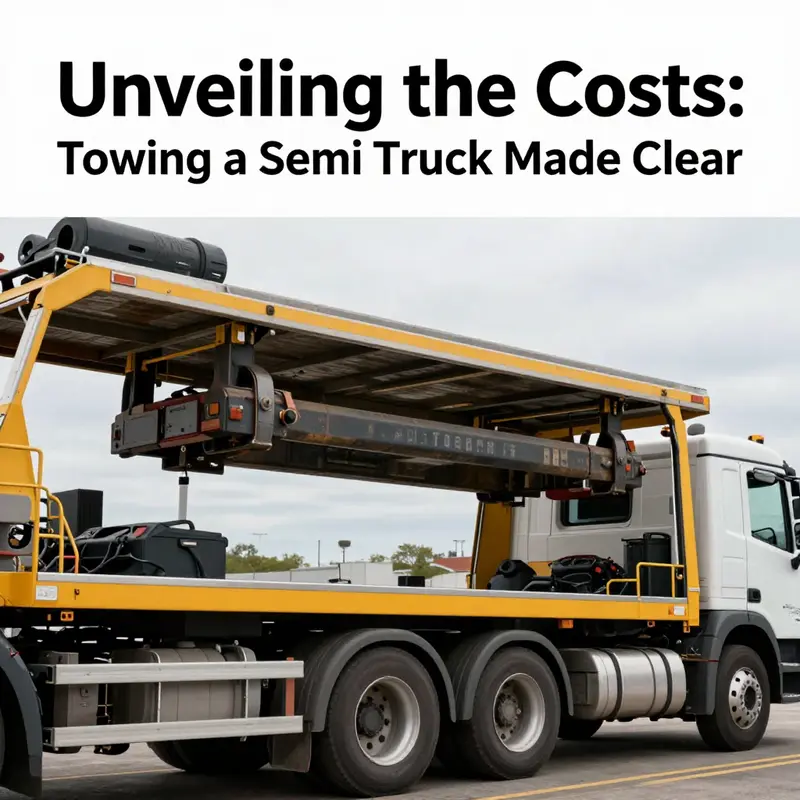
Equipment choice is the most immediate lever in the cost equation. Flatbed tow trucks, with hydraulically tilting beds and modern tie-down systems, are often preferred for semi recoveries when minimizing damage is the priority. They provide a stable platform for transporting the vehicle with all wheels off the surface, reducing the risk of underbody damage and easing insurance considerations. On the other hand, rotator tow trucks—those with 360-degree rotating booms—are indispensable in more challenging recoveries, such as overturned or otherwise inaccessible trucks. The cost delta here is large: rotators can carry upfront price tags well into the six-figure range, and they add complexity to every tow operation, from vehicle assessment to maneuver planning to the actual lift and securement. The arithmetic is straightforward: when the operation reveals the need for a rotator, the per-tow cost climbs not just due to the device’s rental or amortization but because the crew must be highly specialized, the safety protocols more rigorous, and the potential risk management costs higher.
Beyond the equipment, the procedural realities of moving a heavy semi inform the price tag. The tow crew may need to bring additional personnel, extra lighting or winching capacity, and more robust securing hardware to withstand highway speeds and varied terrains. Insurance considerations expand with vehicle size and complexity, and the potential for extended wait times—whether awaiting a heavy-duty wrecker or a rotator after-hours—can multiply the charges that arrive on the final bill. These factors interact with distance in a compounding way: a long-distance tow with a heavy, complex vehicle can trigger higher hourly rates, longer mobilization times, and a more exhaustive on-site assessment, all of which can push a job from a modest figure into the higher end of the price spectrum.
Distance remains a primary driver, even as weight and configuration shape the recovery approach. Short tows—just a few miles to a repair facility or a safe staging area—can hover in a mid-range band, perhaps a couple of hundred dollars, particularly if the operation employs a flatbed and quick securing procedures. As the distance grows, the economics shift. Base fees plus per-mile charges dominate the pricing, with longer hauls amplifying fuel, wear, and time costs. Rural routes complicate the math further. When repair shops or impound lots are farther away, longer distances are paired with potential delays and more extensive planning, increasing both the likelihood and magnitude of those mile-based charges. Urban environments, in contrast, tend to drive up hourly rates due to traffic, tighter maneuvering space, and added safety overhead. The interaction of distance with location produces a cost surface that can vary dramatically even among similar trucks, depending on the route and the day’s operational realities.
Time of day and availability also shape the final numbers. Off-peak towing, such as late-night or early-morning services, may carry lower rates in some markets, reflecting reduced demand or simpler on-site logistics. Conversely, peak times—weekends, holidays, or periods of inclement weather—can trigger premium pricing tied to urgency and constrained capacity. In urban settings, the inevitability of traffic congestion and the need for real-time coordination can push costs higher still, particularly if an expedited recovery is necessary to clear a lane, secure a hazardous cargo area, or restore throughput on a critical corridor. These timing dynamics intersect with the vehicle’s technical profile: a heavier, more complex semi often requires more meticulous planning and longer operation windows, translating into greater exposure to the time-based components of the bill.
The practical takeaway for fleet managers and operators is that specification-driven costs are not theoretical; they translate into real-world budgeting and risk management decisions. A fleet moving a heavy, long, technologically advanced semi can reduce some long-term operating costs by adopting energy-efficient powertrains, but those gains may be offset by the higher upfront investment in equipment, higher maintenance complexity, and the premium charged for specialized recovery work. The decision calculus must therefore balance upfront capital expenditure against lifecycle operating costs, and it should factor in the full spectrum of recovery scenarios a fleet could encounter—from routine breakouts to severe incidents requiring rotator capabilities. The forward-looking view is that as vehicle technology evolves, the efficiency gains on the road could eventually outpace the added cost of complexity in recovery. Yet the on-the-ground economics of towing will continue to hinge on the same core variables: weight, length, and mechanical configuration, all of which determine the required recovery method, the crew’s skill set, and the scale of insurance and safety commitments needed to complete the job.
To put these ideas into perspective for practitioners, a practical reference point exists in the broader discussion of tow costs and pricing. For a concise overview of how these figures are assembled in typical operations, see the article on Tow Truck Costs and Pricing. The resource provides a grounded sense of how base fees, per-mile rates, and hourly labor charges interact with distance and complexity—and how the kind of equipment used can push a single job into a different pricing tier. This chapter has aimed to connect those financial mechanics directly to the vehicle specifications at play, so that fleet planners can appreciate why the bill for a heavy semi tow can look so different from one scenario to the next, even when the distance traveled is similar. In the end, the cost of moving a heavy, elaborate machine is less a fixed price and more a function of its design and the recovery optics required to transport it safely and efficiently.
As the industry evolves, the trend is toward more energy-efficient vehicles and more capable, safer recovery methods. The ability to reduce fuel use on the road may be counterbalanced by the higher costs of advanced tow equipment and more stringent safety requirements, especially for very heavy or highly technical vehicles. The most successful fleets, then, are those that model total cost of ownership not only in miles and hours but in the full spectrum of specifications—weight, length, and drivetrain architecture—while maintaining robust planning, skilled crews, and a network of reliable recovery partners. The result is a more predictable and potentially more economical approach to towing semis, even when the trucks themselves embody some of the most demanding engineering challenges on the road today.
External resource for additional context on energy efficiency and its effect on operating costs: https://www.energy.gov/eere/vehicles/articles/fleet-energy-efficiency
Final thoughts
Towing a semi truck involves a range of costs influenced by several critical factors including distance, vehicle weight, pricing models, and geographical location. By understanding these aspects, truck owners and operators can better prepare for the costs associated with potential breakdowns. Being informed allows for smarter decisions and potentially significant savings in unexpected situations. Whether you’re a truck owner or an everyday driver, recognizing the intricacies of towing can facilitate smoother transactions and peace of mind when the need arises.