
Towing demands are evolving with 2024–2025 model-year updates, lifting the bar on how we choose a pickup. For everyday drivers, managing a trailer for a home project or a weekend boat; for residents and commuters who juggle cargo and family duties; for truck owners who rely on dependable capability; for auto repair shops and dealerships that need accurate guidance for customers; and for property managers who move equipment and long hauls alike—finding the best truck for towing means balancing official numbers with real-world performance. This article distills the latest market data and authoritative reviews into a clear framework: how tow ratings and payload set the baseline, how torque and powertrains shape driveability and efficiency, how leading models stack up against one another, and what operational considerations matter for long-haul and heavy-duty use. Each chapter builds toward practical recommendations that help you pick a truck that meets your towing needs without compromising reliability or daily usability. We’ll reference top contenders like Ford F-150, Chevrolet Silverado, GMC Sierra, Ram 1500, and Toyota Tundra, and translate their specs into actionable insights for various use cases.
Tow Power in 2024–2025: Reading Ratings and Payload to Make Real-World Hauling Decisions
When people ask what makes the best truck for towing, they are often chasing a single number. Yet the best choice for a given job is a balance among tow rating, payload capacity, torque delivery, fuel type, and the truck’s overall performance in real-world conditions. In 2024 and 2025, the landscape is shaped by two broad classes of workhorse pickups: those built to haul the heaviest trailers on demanding days, and those that pair strong pulling power with efficiency and comfort for the long road. To read the field accurately, it helps to anchor the discussion in the scales of capability each truck offers, from extreme pulling power to practical daily towing. The top end of the spectrum showcases a subset of trucks designed for commercial-grade duty, where towing figures can approach forty thousand pounds and the chassis, transmission, and suspension are tuned for stability under extreme loads. In this tier, torque emerges as the decisive factor, delivering the grunt at low speeds when a heavy trailer is moving off the line or negotiating steep grades. Engines in this class tend to be turbocharged and tuned for high output, with torque figures that dwarf those of ordinary half-ton pickups. The result is a towing experience that remains controllable at very high weights, but it comes with a trade-off in payload and efficiency that is only sound if the job regularly requires heavy pulls.
Beyond that extreme tier lie the lighter end of the heavy-duty spectrum and the mid-range diesel and hybrid offerings that broaden the appeal for builders, contractors, and daily drivers who still tow frequently. In this middle ground, the maximum towed weight often sits in the range of thirteen thousand pounds to a bit over sixteen thousand pounds, with payloads typically in the two-thousand-plus pounds. The hidden dynamics here are crucial: a robust diesel or hybrid setup can deliver substantial torque across a wide RPM band, improving both the ease of hooking up and the stability of a loaded trailer on the highway. The diesel option consistently shines in long-haul scenarios thanks to its high torque at low engine speeds and its ability to maintain strong pull with better fuel economy. For many buyers, a modern turbodiesel paired with a capable automatic transmission provides the most reassuring blend of towed weight, daily usability, and maintenance costs over time.
A careful reading of 2024–2025 market data reveals several patterns worth internalizing. First, the most extreme towing capability sits in commercial-grade, heavy-duty platforms that dominate when every trailer weight counts. These trucks can push toward forty thousand pounds with the right configurations, and their torque figures—often well over a thousand pound-feet in the right setup—are tuned to move massive loads with confidence. Second, in the next tier down, a heavy-duty design with a large-displacement diesel engine can still pull well into the upper thirty-thousand-pound range, while delivering payload capacities that make them versatile for both towing and daily work. Third, among the mid-range pickups, the diesel option commonly achieves towing figures around thirteen thousand pounds, with payloads near two thousand pounds, supported by a 10-speed or similarly advanced transmission and a low-rev torque curve that helps trailer control at highway speeds. The evolution in gasoline engines—particularly turbocharged, high-displacement V6s—has narrowed the gap in peak torque compared to diesel, while offering smoother operation, lower emissions for some configurations, and, in many cases, lower maintenance cost and simpler service networks.
If you want to translate these numbers into a practical decision, it helps to connect the capability metrics with how you actually use your truck. The highest tow ratings matter most when you regularly haul the heaviest equipment, large campers, or giant flatbeds that tax every component. In that world, a robust drivetrain, heavy-duty framing, and advanced suspension systems become as important as the raw pulling power. But for the majority of towing tasks—pulling a mid-size gooseneck trailer, a sizable travel trailer, or a heavy utility trailer on mixed terrain—a diesel or hybrid powertrain on a mid-range platform can deliver a compelling mix of towed weight, payload, and efficiency. The torque delivered at low revs translates into smoother starts when the trailer is still attached, and a capable transmission helps maintain a stable speed on grades without bouncing between gears. For drivers who spend long days on highways with a heavy load behind them, fuel economy matters not just for the vehicle but for the overall cost of operation, including fuel stops, maintenance cycles, and tire wear.
The practical takeaway is simple: start with the trailer’s weight, then map it to the towing and payload figures of candidate trucks. This mapping reveals the margin of safety you’ll have in everyday use. It also clarifies how much headroom you gain from features like integrated trailer brake controllers, advanced stability systems, and adjustable suspension. A trailer that weighs more than your truck’s rated tow capacity is never a good match, no matter how impressive the horsepower number looks on paper. And while maximum ratings are a useful compass, the real-world experience often depends on how your configuration matches your job—whether you are frequently hooking up large gear, performing frequent long hauls, or traveling through hilly or icy terrain where stability and smooth power delivery are more important than raw peak torque.
For those curious about the practical anchors, a quick orientation helps. In the extreme end, a heavy-duty platform designed for commercial use can tow up to about forty thousand pounds when equipped with the correct packages and drivetrain, with a turbo-diesel V8 delivering substantial torque to get a heavy load moving and to maintain momentum on grades. Just below that, a heavy-duty setup with a turbo-diesel or a large gasoline V8 offers a towing ceiling in the mid-thirties of thousands of pounds, along with payload well into the seven-thousand-pound range in proper configurations. In the mid-range, diesel options often reach around thirteen thousand pounds of towing capacity and carry roughly two-thousand to two-thousand four hundred pounds of payload, depending on cab size, bed length, and axle ratio. In this tier, the best overall choice often balances a high-torque diesel with an efficient transmission, delivering consistent performance without sacrificing daily usability.
All of this points toward a simple decision framework you can apply as you shop. If your goal is the maximum possible towing capacity for frequent, heavy loads, you’ll want to explore the upper end of the heavy-duty class, paying careful attention to the availability of commercial-grade packages, axle ratios optimized for towing, and the reliability of the heavy-duty suspension. If your work is a blend of towing and everyday driving, focus on diesel or hybrid powertrains that can deliver strong torque at low speeds, a calm highway demeanor, and good fuel economy when the trailer is rolling along. If your use leans toward light-to-mid-range towing with some occasional heavy loads, a modern gasoline turbocharged engine paired with a high-capacity transmission can offer an attractive mix of capability, cost, and refinement.
To connect this discussion to a practical resource you can consult as you assess your own situation, consider how much your own trailer weighs and how often you will haul it. A dedicated guide on trailer-to-truck matching can help you translate the numbers into real choices. For a straightforward inquiry into your own towing limits, you can explore the practical framework at how much can my truck tow.
Moreover, the broader context for 2024–2025 shows that the best overall approach to towing is not to chase the highest number in isolation, but to align the truck’s powertrain, chassis, and payload with the specific demands of your typical trailer and route. A high-tayload, extreme-tow setup will be most beneficial for professional operators moving heavy industrial equipment or large commercial trailers. A diesel or hybrid setup in a mid-range pickup, paired with a smart axle ratio and a robust transmission, is often the most sensible choice for long highway drives carrying substantial loads, where fuel economy and engine response at highway speeds become important. And for those who want steady performance with comfort and refinement, the right balance of torque, weight, and suspension tuning across a mid-range platform can make a meaningful difference in how enjoyable and practical towing can be on a daily basis.
For readers who want a broader, external perspective on how these evaluations translate into real-world testing, a detailed review resource from a respected publication offers a comprehensive side-by-side comparison of popular models and their towing and efficiency figures. You can find that evaluation here: https://www.motortrend.com/cars/ford/f-150/2025/ .
Tow Power Unveiled: Torque, Powertrains, and the Diesel-vs-Gas Debate in the Quest for the Best Towing Truck
Choosing the best truck for towing is not a simple equation of the biggest numbers. Across 2024–2025 models, the strongest choices emerge from a careful balance of tow rating, payload, torque, and the realities of fuel type and daily usability. The act of towing a heavy trailer demands more than raw pulling power; it requires controlled acceleration from a standstill, stable highway performance, precise braking, and graceful handling of the load on grades or in crosswinds. The most capable trucks achieve this through an integrated package: a robust engine, a transmission that keeps the engine in its sweet spot, a drivetrain that delivers predictable traction, and technology that helps the driver manage weight without guessing every constraint along the way. In this sense, the debate over the “best” truck for towing isn’t about a single metric; it’s about a holistic capability that translates into real-world confidence on the road and at the job site.
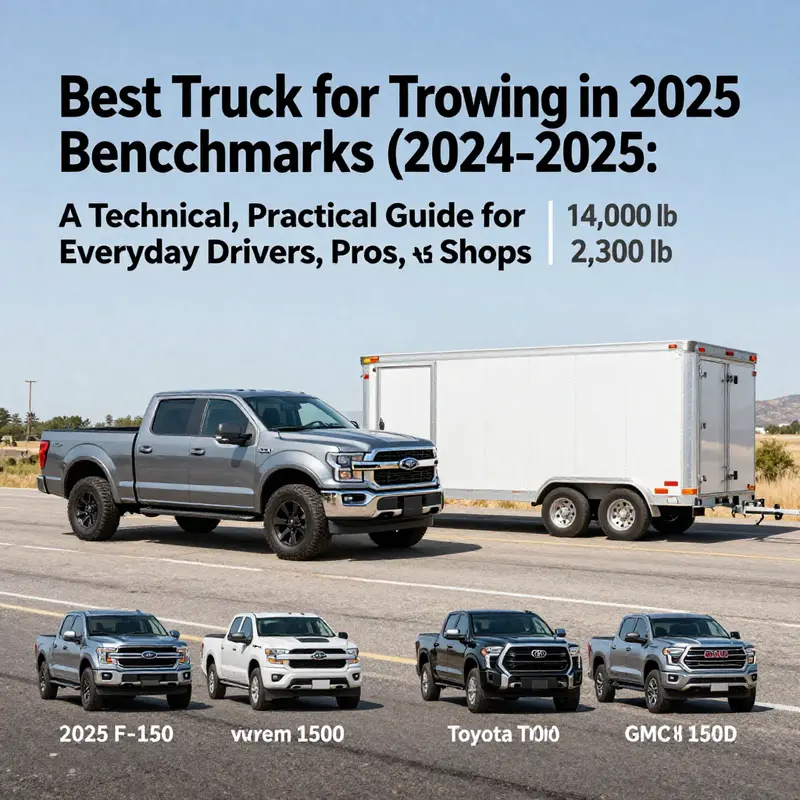
From a data standpoint, the field converges on a band of numbers that tell a clear story. Light‑to‑mid‑duty pickups equipped with high-torque configurations commonly reach maximum towing capacities in the neighborhood of 12,000 to 14,000 pounds, coupled with payloads around 2,000 to 2,300 pounds. These figures matter because trailer weight and payload interact: the heavier the trailer, the lower the practical payload available for ballast, tools, or cargo. In other words, you don’t simply want the highest tow rating; you want a package that preserves usable payload while delivering reliable, repeatable performance mile after mile.
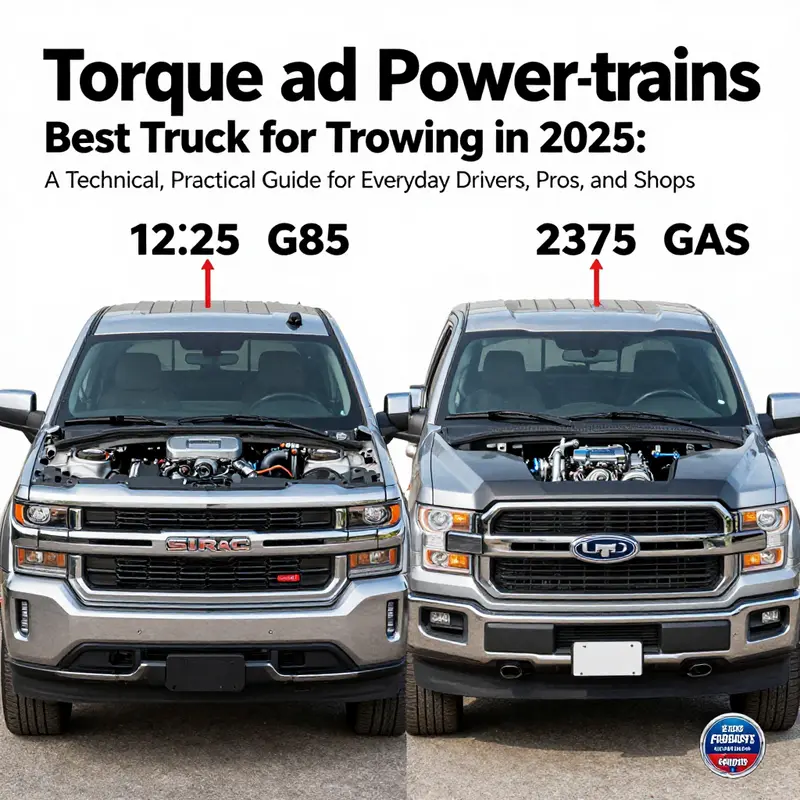
Torque is the secret sauce most people overlook when they fixate on a single number. Torque is what pushes a heavy trailer off the line and keeps it moving up a grade. In the modern landscape, diesel engines have traditionally carried the torch for high-torque output. A turbocharged diesel inline-six, for example, can deliver torque in the range of roughly 445 pound-feet, providing the steady pulling power needed for long, loaded hauls and confident grade work. Yet the gap between diesel and gasoline has narrowed as gasoline engines gain sophisticated turbocharging and advanced fuel management. A high-torque gasoline configuration—often a turbocharged V6—can approach or surpass diesel torque in certain load conditions, while also offering lower upfront maintenance costs and broader fueling flexibility. The upshot is that torque alone cannot decide the winner; you must consider how that torque is delivered through the drivetrain and how that power translates into controllable, predictable towing in varied conditions.
Powertrains today are more than a set of gears; they are an ecosystem designed to keep torque in a usable band and to extract efficiency during long hauls. Modern trucks frequently pair high-torque engines with multi‑speed automatic transmissions that routinely reach ten gears or more, ensuring that the engine operates in its optimal range no matter the speed or load. The transmission is paired with advanced four‑wheel‑drive systems that modulate torque between axles, improve steering feel, and reduce wheel spin on slick surfaces. When you hook a heavy trailer to a capable truck, integrated trailer brake controllers become essential, keeping trailer momentum aligned with the vehicle’s braking action and reducing the risk of dangerous sway. Hill descent control, trailer sway mitigation, and smart towing modes further shield the driver from surprises, translating raw power into steady progress over long, challenging stretches.
Diesel versus gasoline powertrains remains the most persistent axis of comparison. Diesel engines typically produce higher peak torque and sustain it as load increases, which translates to strong launch performance and confident braking when towing substantial weight. They also tend to deliver better fuel economy under load, helping to lower operating costs for frequent or long-distance towing. On the other hand, gasoline engines—especially modern turbocharged designs—have closed much of the torque gap, offering brisk acceleration, lower upfront costs, and easier access to refueling networks. Hybrids and plug-in hybrids add another layer to the choice, delivering strong torque with a unique efficiency profile. The best decision hinges on your typical towing profile: are most trips long and heavy, demanding steady torque and high mileage per gallon, or are trips mixed with urban daily driving where a flexible fueling plan and a refined, quiet cabin matter just as much as peak tow numbers?
In practice, most buyers find themselves weighing three broad scenarios. First, if your workload centers on maximum towing capacity for lengthy highway pulls—such as caravans, large equipment trailers, or heavy stock trailers—the diesel-torque advantage shines. A diesel powertrain delivers robust, predictable pulling power at low engine speeds, making hill climbs and long grade-downs less taxing on the engine and transmission. The second scenario values a balanced, all-around package: strong thrust for heavy loads, a refined ride for daily driving, and a suite of smart technologies that simplify towing in traffic or on winding routes. Here, a modern turbocharged gasoline powertrain paired with a capable automatic transmission and adaptive suspension often provides the best blend of performance and comfort. The third scenario is budget-conscious reliability: a practical gasoline setup with a robust, proven automatic and a manual approach to payload can deliver dependable towing without some of the higher maintenance or cost considerations associated with alternative powertrains.
For readers who want a concrete starting point without wading through every spec sheet, consider the practical baseline of towing capability and how it translates to real-world use. The numbers tell a story about what to expect when you hitch up a trailer and head out on a highway or a back road. But the story does not end there. A capable truck must also deliver control in the moment, with stable acceleration, quick response to throttle input when it matters, and predictable braking response as weight increases. That is where the transmission strategy, the steering and suspension tuning, and the vehicle’s electronic safety nets come into play. A well‑tuned system keeps the load from becoming a test of nerve, turning what could be a stressful job into a confident routine.
When assembling a plan for the best towing truck, a careful assessment of your typical loads is essential. For example, if you regularly tow near the upper end of the rating, you must pay close attention to payload. Every trailer weight subtracts from payload capacity, and losing too much payload can compromise payload-related tasks such as transporting tools, spare parts, or ballast that improve stability. Conversely, if your average load sits in the mid‑range, you can enjoy a generous margin between payload and tow rating, which translates into more predictable stability and fewer compromises on daily usability. The interplay of tow and payload, underpinned by torque, is what ultimately determines how satisfied you will be with a given powertrain and chassis setup.
For a practical baseline on how these dynamics work in a real-world framework, see How much can my truck tow. This resource helps translate the theoretical numbers into usable, everyday expectations and can guide a shopper as they weigh whether to favor diesel torque or gasoline versatility. How much can my truck tow.
The broader landscape in credible automotive coverage agrees with this balance. When you widen the lens beyond a single configuration, you see that the most compelling options combine high torque with intelligent transmission strategy and capable chassis dynamics. In this light, the best overall choice for someone who wants maximum towing performance often hinges on a diesel setup capable of delivering sustained torque, paired with an efficient, well-mated automatic box and a drivetrain that maintains control under load. Yet for many buyers, the equation is not about the absolute peak but about the reliability of performance across a broad spectrum of duties—pulling a heavy load up a hill, navigating long highway drives, or maneuvering through a job-site environment where trailers must be started, stopped, and redirected with precision.
Ultimately, the best truck for towing is the one that aligns with your typical loads, routes, and maintenance expectations. The numbers provide a compass, but real-world experience must fill in the map. If your priority is long-haul stability and sustained pulling power, a diesel‑based setup remains a compelling option. If you value quick throttle response, a smoother everyday ride, and easier fuel access, a modern gasoline turbo configuration—perhaps with a hybrid that preserves efficiency—can offer a truly satisfying blend of strength and practicality. Either way, the modern towing chassis—transmission architecture, intelligent drive modes, trailer braking integration, and driver-assistance features—helps transform the act of towing from a challenge into a controlled, confident routine. For the deeper, data-driven contrasts that outline how these factors play out across the market, consult a comprehensive guide such as the MotorTrend comparison of the best trucks for towing. https://www.motortrend.com/cars/trucks/best-trucks-for-towing/
Tow Power in Perspective: Navigating the Spectrum of Heavy-Duty and Half-Ton Trucks for Real-World Towing

Tow power does not reside in a single number alone. Across the 2024–2025 landscape, towing capacity sits beside payload, torque, drive configuration, and even the way a truck feels when a heavy trailer is pressed into service. The most capable machines sit at the top of a spectrum: a few giants that redefine what “towing” means, and a cluster of half-ton pickups that balance daily practicality with respectable pull. Reading the market as a whole reveals that the best tow truck for any given task is the one whose strengths align with the demands of the job, the length of the road, and the type of trailer being hauled. In practical terms, the conversation branches into two main branches: the heavy-duty segment, where capability is king, and the half-ton or light-heavy segment, where refinement, stability, and efficiency tilt the scales. The numbers are compelling, and they tell a story about how manufacturers engineer for different use cases, from commercial haulers to family-worthy tow rigs that still pull heavy loads with poise.
The heavyweight champions sit in the uppermost tier of the market. When you look at raw payload and towing muscle, the field expands beyond the familiar light- and half-ton pickups. The F-450 Super Duty stands as a benchmark for sheer towing power. With a 6.7-liter high-output turbo diesel under the hood, it can tow as much as forty thousand pounds in the right configuration. That level of capability translates into an engine that delivers a staggering amount of torque—around 1,200 pound-feet—enabling a sustained pull that can move enormous trailers and fifth wheels with authority. This is not a vehicle built for everyday driving; it is engineered for worksite logistics and long-haul deployments where the payload is substantial and the road is long. Its drive configurations typically include rear-wheel drive as standard with a robust option for four-wheel drive, reflecting the need for traction in varied terrains and weather conditions. The chassis and braking systems are sized to withstand repeated, extreme loads, making it a dependable choice for commercial fleets and professionals who routinely haul at the upper end of the rating.
Close on its heels in terms of sheer towing numbers is the Ram 3500 HD. This one-ton class heavyweight blends power with a more driver-centric experience. With the right diesel, notably the 6.7-liter Cummins Turbo Diesel, towing ratings can climb into the mid-thirties-thousand range when properly configured. Torque here is also formidable, providing the low-end grunt that helps the truck come off a ramp with a heavy trailer in tow and hold steady at highway speeds while negotiating hills. The Ram 3500’s payload figures are impressive for a one-ton truck, giving it an edge in scenarios where the trailer and cargo must share the load. Its engineering often emphasizes stability under load, with suspension tuning and brakes designed to maintain calm control as the weight increases. The Ram 3500 is a tool for specialists—people who need to move heavy gear or livestock trailers with confidence, and who value that sense of control as loads grow beyond ordinary thresholds.
Beyond the extremes of the heavy-duty class, the half-ton league houses several models that define the everyday towing experience. The Chevrolet Silverado 1500 and the GMC Sierra 1500, when paired with a 3.0-liter Duramax diesel, enter the upper echelon of light- to mid-weight towing. These trucks deliver towing capacities in the neighborhood of thirteen thousand pounds, with payloads around two thousand pounds and torque figures that keep the engine in a favorable power band for highway hauling and city maneuvering alike. The Duramax diesel is noted for delivering high torque at relatively low RPMs, a trait that translates into stable, predictable pulls, improved braking stability under load, and a smoother ride when towing compared with some gas-powered rivals. The chassis architecture on these rigs often includes a more sophisticated rear suspension, such as multi-link setups, which helps absorb road irregularities and maintain trailer alignment. The result is a truck that tows confidently without the ceaselessly busy ride some users associate with absent-mindedly heavy trailers.
The Ford F-150 EcoBoost lineup, particularly in the 3.5-liter configuration, represents the other end of the spectrum—where diesel-like torque is achieved through advanced turbocharging and efficient cylinders. With torque figures that rival traditional diesel offerings, the EcoBoost-equipped F-150 excels in scenarios that require brisk acceleration when towing, plus practical on-road economy. It is the archetype of the modern, versatile tow vehicle: strong enough to pull sizable loads, refined enough to feel less like a workhorse and more like a passenger car on daily commutes. This is the kind of powertrain pairing that broadens the appeal of towing trucks to families, contractors, and recreational enthusiasts who need reliable towing without sacrificing everyday comfort.
Turning to the Toyota Tundra, the brand’s hybrid option adds a distinctive dimension to the towing dialogue. The non-hybrid i-Force V6 delivers solid towing figures, and its hybrid variant introduces an efficiency edge that can translate into meaningful long-term cost savings during frequent towing. The Tundra’s payload sits in a respectable range for a full-size pickup, and its drive configurations—from rear-wheel drive to four-wheel drive—offer flexibility for work sites or remote roads. The hybrid option introduces a nuance in torque delivery, leveraging electric assist to maintain steady pulling power without an undue spike in fuel consumption. In all, the Tundra remains a compelling choice for buyers who want reliability with a forward-looking powertrain strategy.
As one weighs these options, practical decision-making emerges from a few guiding questions. How heavy is the trailer you intend to tow most of the time? If the trailer and its cargo push toward the upper limits of a vehicle’s rating, the heavy-duty segment becomes the natural choice. The F-450 and Ram 3500 HD stand out when the mission calls for long hauls with substantial weight, and when the work demands a fifth-wheel or gooseneck setup. For those who regularly tow campers, boats, or mid-size utility trailers, the half-ton rigs with diesel power—especially the Silverado 1500 or Sierra 1500—offer an enviable blend of capability and everyday practicality. If fuel economy over long distances is a priority, the Ford EcoBoost option and the Toyota Tundra hybrid strategy deserve particular attention, as they demonstrate how modern powertrains can deliver respectable towing performance without ballooning operating costs.
The reliability of a given choice also hinges on the suspension and braking architecture. The heavy-duty models often feature reinforced braking systems and chassis components designed to resist heat buildup under sustained loads. The light-to-midweight models lean toward sophisticated suspensions that smooth out road irregularities while keeping the trailer tracking true behind the vehicle. In practice, the best truck for towing is as much about ride quality and driver confidence as it is about the raw numbers. A truck that can pull a monster trailer but feels unsettled in the cab is unlikely to be the preferred long-term solution. Conversely, a tonneau-friendly light-duty truck that tows with superior stability can outpace a more powerful rival when the trailer weight is moderate and the route is varied.
For readers seeking a quick, practical reference on how much a given vehicle can tow, there is value in a concise calculator approach. A dedicated resource that walks through there-and-back scenarios—checking trailer weight, tongue weight, and the combined gross vehicle weight rating—helps translate official ratings into real-world expectations. If you want to explore that type of computation, see how much can my truck tow. It’s a reminder that the numbers are a starting point, not the final arbiter of suitability, and that the best choice often emerges from aligning power, stability, and payload with the specific job at hand.
In sum, the market in early 2025 presents a spectrum rather than a single winner. For applications that demand the ability to haul extreme loads over long distances with minimal compromise, the heavy-duty leaders—especially when configured for fifth-wheel or gooseneck towing—set the standard for maximum capability. In the everyday-to-semi-heavy range, the half-ton diesel twins from the GM group deliver a compelling balance of torque, payload, and ride refinement that makes them formidable contenders for the majority of towing tasks. The EcoBoost-equipped Ford and the Tundra’s hybrid outlook add a layer of versatility that broadens the appeal to buyers who value efficiency as part of their towing calculus. The overarching takeaway is clear: the best truck for towing is the one whose capabilities match the trailer’s demands, the trip’s length, and the driver’s expectations for comfort and cost of ownership.
For authoritative performance data on specific models and configurations, consult the broader market analyses that compare towing, torque, and efficiency across competing pickups. The Ford F-150’s latest iteration, for example, continues to illustrate how best-in-class towing can be paired with thoughtful technology and ride comfort, reinforcing that the right truck is the one that fits the task, not merely the one with the highest published number. For the most up-to-date context and a deeper dive into the performance envelopes across 2024–2025 models, refer to trusted automotive testing sources and ongoing market reviews. External reference: https://www.motortrend.com/cars/ford/f-150/2025/.
Tow-Ready for the Long Haul: Operational Realities in Choosing the Best Truck for Heavy-Duty Towing
Choosing the best truck for towing is less about chasing a single magic number and more about sizing a vehicle to the realities of the work you actually do on the road. For long-haul, heavy-duty towing, the question becomes a conversation between the trailer you pull, the terrain you encounter, and the daily miles you cover. A truck that excels in a showroom pull or a short highway sprint may falter after hours in the heat, slogging up steep grades with a heavily loaded gooseneck. The true answer emerges when you balance the basic physics of towing—weight, momentum, and control—with the practicalities of maintenance, comfort, and cost over a vehicle’s lifetime. In this frame, a few core considerations stand out and guide a reader toward a configuration that stays reliable, predictable, and economical in the long run.
The first layer of this decision lies in the fundamental metrics that govern any tow operation. GVWR, which marks the maximum permissible weight of the vehicle when fully loaded, and GCWR, the ceiling for the combined weight of the vehicle and trailer, form the backbone of safety and performance. Payload capacity reveals how much cargo you can carry inside the cab and bed beyond the curb weight without crossing limits that affect handling. Tongue weight—how much of the trailer’s weight sits on the hitch—plays a critical role in stability and steering response. Together, these numbers shape how much trailer you can pull safely and how much of that load you can carry in the truck itself. It’s easy to fixate on the top tow rating, but stability and control hinge on correct tongue weight, weight distribution, and the interaction between axle, frame, and suspension.
The configuration you choose for the trailer matters almost as much as the truck you pick. Fifth-wheel and gooseneck trailers deliver greater stability and higher towing capacities, especially when moving very heavy, overhung loads. They also shift more weight onto the rear axle of the tow vehicle, which can calm sway and improve steering feel. Bumper-pull arrangements, by contrast, offer versatility in urban environments and in mixed-use trips. Each setup imposes different demands on the truck’s frame, suspension, and braking system. A key companion to the hitch choice is a capable weight-distribution system and a trailer brake controller. In long hauls, these devices help manage the train’s dynamics, maintain comfortable braking distances, and reduce driver fatigue. When the road pitches upward or the wind tears across an exposed pass, an appropriate hitch configuration and a robust brake setup can be the difference between a smooth cruise and an anxious white-knuckle drive.
Powertrain dynamics are the second axis in the towing equation. Diesel engines are favored in heavy, sustained towing for their high torque at low revs and their ability to hold steady pull over long grades. They also tend to pair with transmissions that optimize torque delivery through steep climbs, keeping the engine in a zone where efficiency and power align. Gasoline engines can still perform well in moderately heavy towing, especially when paired with turbocharging and modern fuel-management strategies, but they usually deliver peak torque at higher RPMs and may demand more thoughtful gearing and cooling to maintain performance on long climbs. The transmission, cooling system, and cooling capacity of the powertrain are equally vital. A heavy-duty automatic with multiple gears, an efficient transmission oil cooling package, and an engine oil cooler are not luxuries but necessities for sustained highway work in hot weather or mountainous terrain. A well-matched drivetrain ensures the torque curve remains accessible across varying road grades, while the cooling systems keep temperatures in check under load. The takeaway is simple: the best setup balances torque availability with reliable heat management so that the engine and transmission do not surrender performance to heat buildup or gear hunting during lengthy ascents.
Beyond raw power, handling and stability are shaped by the chassis, suspension, and suspension tuning designed for heavy-tow work. Heavy-duty suspensions, reinforced frames, and, in some configurations, air-assisted or progressively damped springs help the tow vehicle maintain a composed ride with fewer pitch and roll motions when the trailer exerts sway forces. While comfort might seem secondary to capability, it affects driver alertness and fatigue over long days on the road. A truck engineered for towing often includes adaptive suspension features, enhanced damping, and upgraded tires with proper load ratings. These systems contribute not only to ride quality but also to predictable steering response when pulling a heavy, awkwardly loaded trailer across long stretches of highway or over rugged segments of a route. In this light, the best choice blends a robust, purpose-built chassis with a suspension setup that communicates clearly with the driver about weight transfer, trailer sway tendencies, and braking stability.
Safety and driver-assistance systems tailored for towing are not cosmetic add-ons. Trailer sway control, integrated stability systems in tow mode, adaptive cruise with towing capability, and a reliable trailer brake controller become part of the core toolkit for any long-haul, heavy-tow operation. These features help prevent loss-of-control scenarios that can arise from gusty crosswinds, lane changes at high speed with a heavy train, or downhill descents where braking force must be carefully modulated. The most enduring advantage, however, lies in the driver’s ability to anticipate and react with confidence. A cabin that offers ample space, supportive seating, low noise levels, and intuitive controls reduces fatigue and improves focus on road conditions and trailer behavior alike. The operational benefit of such design is not merely comfort; it is safer, more economical, and more predictable in the long run.
From a practical perspective, a step-by-step approach to evaluating a towing platform is often most effective when it remains tightly integrated with one’s actual work patterns. Start by defining the working envelope: the typical trailer weight, tongue weight, and the weekly or monthly drive distance. Then specify the trailer configuration you are likely to encounter—whether fifth-wheel or bumper-pull matters for both stability and the required capacity margins. Next, align powertrain expectations with the terrain you face; diesel-driven platforms tend to hold up better under repeated heavy loads, especially on grades where heat management is critical. Consider cooling packages for the transmission and engine, and assess whether the truck’s cooling capacity keeps pace with sustained high-load operation. Finally, evaluate the aftersales ecosystem—the availability of service, parts, and warranted support that reduces downtime when miles accumulate and routes change.
Operational guidance also benefits from acknowledging distinct use-cases. For frequent long-haul work with very heavy trailers, prioritizing high-torque, well-cooled diesel powertrains paired with heavy-duty transmissions and robust braking systems can reduce the likelihood of performance drops on steep grades. For urban corridors and mixed-use trips, stability control, hitch compatibility, and a balanced ride become equally important to maneuvering and safety. Fleet operators, in particular, should value modular configurations with ample GCWR headroom and service network breadth, ensuring maintenance cycles align with miles and routes. In contrast, private owners who occasionally tow large trailers will gain more value from a cab that emphasizes comfort, visibility, and reliability over sheer peak capability.
Ultimately, the notion of a single “best” truck for towing dissolves when confronted with the diversity of real-world tasks. The right choice hinges on trailer type, weight, distance, and terrain, as well as the owner’s tolerance for maintenance complexity and operating costs. The best solution offers a well-rounded package: strong, sustained pulling power; sound heat management; a torsionally stiff chassis and capable suspension; and a thoughtful array of safety options that stay effective without overwhelming the driver with complexity. It is this convergence of power, stability, and reliability that makes a truck genuinely suited for long-haul and heavy-duty towing, rather than any one metric in isolation.
If you would like, I can assemble model-specific data sheets using publicly available specifications to compare how different platforms handle GCWR, payload, and towing in realistic configurations. I can also provide an annotated bibliography of accessible sources and a practical decision worksheet tailored to your trailer weights and typical routes. For readers seeking an external benchmark on towing performance and testing, see the detailed evaluation and class-leading results in independent testing coverage that examines how torque, cooling, and drivetrain behavior translate to real-world towing capability: https://www.motortrend.com/cars/ford/f-150/2025/. This resource offers insights into how one leading model’s towing performance stacks up against peers under controlled testing, reinforcing the importance of looking beyond nominal tow ratings when selecting the right truck for long-haul, heavy-duty use.
Tow-Ready Choices: Matching Torque, Capacity, and Value to Your Hauling Needs

When you set out to choose the best truck for towing, you quickly realize that the decision rests on a blend of numbers and practical sense. Tow rating, payload, torque, fuel type, and the overall capability of the vehicle must be weighed against your real-world tasks. The landscape for newer models shows a clear division: versatile light-duty pickups that can haul moderate loads with high tech and comfort, and heavy-duty rigs built to endure long days of hard work. The art of selecting the right one is less about chasing the highest number and more about aligning the truck’s strengths with how you actually tow. For most people, that means a careful look at how much you’ll carry, how you’ll distribute weight, and how the powertrain behaves from the moment you pull away until the haul is complete.
In the realm of practical towing, the best all-around performers in recent years come from the light-duty segment. These trucks often top the charts with a combination of turbocharged gasoline engines and sophisticated towing tech. They can reach impressive maximum tow ratings, especially when configured with the right drivetrain, hitch setup, and cooling systems. Yet the true value lies not in a single peak number but in how the configuration feels in everyday use: the ease of hitching, the quietness of the cabin at highway speeds, the stability of the trailer during a turn, and the way the engine responds when the load shifts on rough roads. A high tow rating is attractive, but it should be paired with robust payload to keep the hitch load within the truck’s intended balance. Heavier payload capacity helps keep the trailer level and distributes weight more evenly between the front axle and the rear, which translates into better steering feel, braking control, and overall confidence behind the wheel.
Torque is the invisible thread through all these considerations. In the past, diesel power typically carried the torch for high torque at low rpm, delivering usable force for slow pulls and long hauls. Today, several gasoline engines, especially turbocharged V6 configurations, have closed much of that gap. They deliver strong torque numbers while offering smoother operation and higher peak horsepower for highway passing and acceleration with a trailer in tow. The result is a towing experience that feels less like a compromise and more like a combination of throttle response, transmission calibration, and chassis stability that works in harmony with the trailer’s inertia. For the driver, the distinction often shows up in how quickly you reach a steady, safe pace on grades, how well the truck maintains speed when the grade steepens, and how predictable the shift logic is when you need to climb or descend with a heavy load. These are not mere details; they determine how long your tow trips will feel comfortable and how much fatigue you’ll carry from start to finish.
If you set your sights on the biggest, most demanding jobs, the conversation shifts toward heavy-duty trucks designed for constant torque and reinforced construction. In this end of the market, the figures balloon beyond the 18,000-pound range, and the chassis, suspension, and braking systems are engineered to handle repetitive, high-demand towing. These rigs are built with stronger frames, heavier axles, and tuned suspensions that keep the trailer planted even under challenging conditions. The trade-off, of course, is ride quality, fuel efficiency, and cost. A heavy-duty truck can feel like a different class of tool—more purpose-built for frequent, long-haul work than for weekend trailering. If your schedule involves regular heavy trailers, require long idle times in rugged environments, or pull frequent large equipment, this category makes sense. For occasional or mixed use, it’s prudent to weigh the true frequency of heavy towing against the total cost of ownership, including maintenance and depreciation.
In this framework, the question of fuel type matters, too. Diesel power has long been associated with high available torque and better fuel efficiency for long distances under load. The tradeoffs include higher initial cost, more complex maintenance, and sometimes longer warm-up times in cold conditions. Modern turbocharged gasoline engines have narrowed the gap by delivering substantial low-end torque while offering lower maintenance complexity and broader refinement. The choice becomes less about diesel versus gas as a duel and more about the task at hand and the preferred ownership experience. If your work involves frequent long trips with heavy trailers, a diesel-powered setup can be advantageous for its economy and sustained torque. If your use is mixed—short trips, urban hauls, occasional long trips—a high-tech gasoline setup with a robust towing package may deliver a more satisfying, cost-effective ownership story over the life of the truck.
Beyond the engine and the trailer hitch, modern towing demands attention to the whole system. Transmission tuning is critical: a smooth, predictable shift pattern reduces trailer sway and helps keep acceleration steady when the load is high. A capable cooling system prevents heat soak in the transmission and engine during long pulls, maintaining performance and protecting components. A stable chassis and confident braking are essential; the best rigs in this tier integrate electronic stability programs, trailer sway control, hill-start assist, and integrated trailer brake controllers that communicate directly with the tow unit. These technologies do not merely offer convenience; they enhance safety, reduce the risk of runaway trailers, and help you maintain control in adverse weather or uneven road surfaces. Comfort features—sufficient cabin insulation, quiet powertrains, supportive seating, and a well-tuned suspension—make long towing sessions tolerable and even enjoyable, provided you are using a setup designed with the tow in mind.
As you weigh a purchase, consider the full package—the truck’s payload capacity alongside its tow rating, the engine’s torque curve, and the availability of towing-specific technology. A high tow rating is best when it is matched by a healthy payload, because the trailer’s tongue weight should not be allowed to overwhelm the rear axle. A well-engineered towing package will ensure that safety-critical systems—brakes, steering, stability control—operate in concert with the trailer, rather than fighting against it. And because value is a major part of the decision, factor in resale value, warranty coverage, and the anticipated maintenance costs. A truck that excels in towing but proves costly to service or prone to expensive repairs is rarely the best long-term choice, especially for daily or frequent use.
In practice, the landscape suggests a practical hierarchy. For those who need extreme towing with strong reliability and long-haul capability, a heavy-duty model with reinforced structure and a diesel option often stands out as the most sensible choice. For most owners who seek a blend of strong towing and everyday usability, a modern light-duty pickup with a turbocharged gasoline engine and a comprehensive towing tech suite tends to deliver the best mix of capability, comfort, and value. And for anyone who prioritizes luxury, ride quality, and a refined interior while still handling meaningful tows, the top-tier light-duty trucks offer a compelling proposition that translates to lower stress on the road and at the ramp when you’re hauling a trailer, a boat, or a sizable equipment load.
If you want to explore practical guidance on how much a truck can tow in real-world scenarios, a concise resource that breaks down the dynamics and helps you size your setup can be very useful. A practical resource on tow capacity can help you translate the numbers into a plan you can act on, while broader industry reviews and field data provide context on how these trucks perform in towing and daily driving. Look for sources that compare not only the maximum tow rating but the actual usable performance under typical work conditions. This broader lens can illuminate tradeoffs you’ll face when selecting a tow vehicle that meets your needs without overcommitting to capability you may not use every day.
Final thoughts
Choosing the best truck for towing in 2025 is about pairing the strongest baseline capabilities with real-world usability. Tow ratings and payload establish the upper ceiling, but torque, drivetrain technology, and fuel type determine how that capability feels on the road and at the job site. For heavy, sustained towing, diesel options like the 3.0L Duramax offer high torque with improved fuel economy, while modern gas-turbocharged engines close the gap on performance with lower maintenance complexity. Model-by-model differences matter, but so do your specific use cases: daily commutes with occasional heavy trailers, long-haul fleet duties, or off-road-tuned payloads. Finally, plan for longevity—maintenance, integrated trailer systems, and dealership support all influence total cost of ownership. Armed with benchmark data and practical realities, you can pick a truck that not only meets a towing quota but also fits your lifestyle and business needs.