
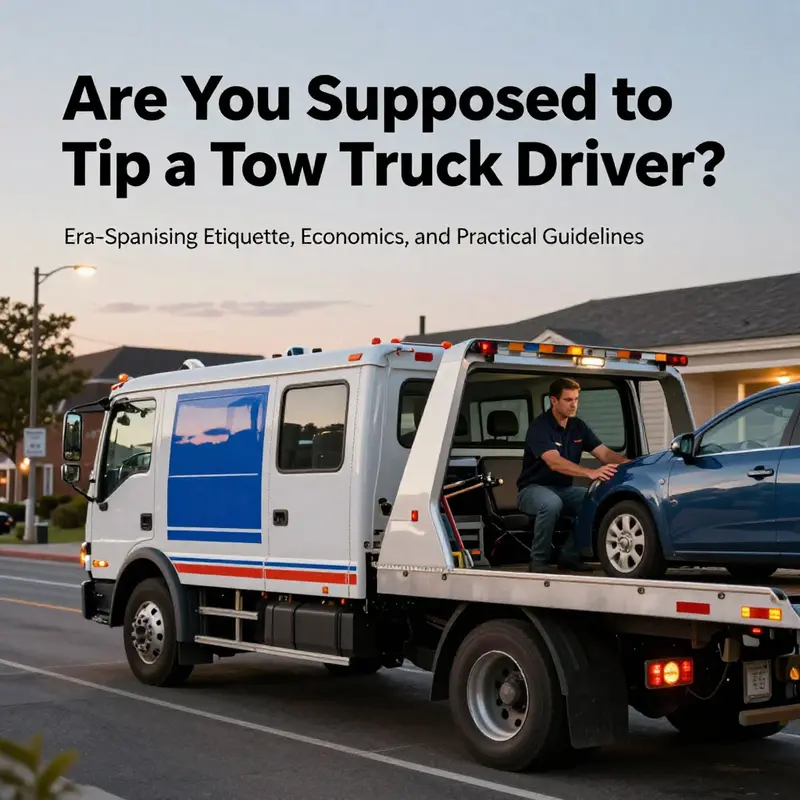
Towing services play a crucial role in keeping vehicles mobile and roadways functional, yet the question of tipping a tow truck driver often sparks uncertainty. Fees for towing are typically set by the service provider and local regulations, not by customer generosity. In practice, tipping remains optional and situational, influenced by local norms, company policies, and the quality of service delivered—especially in emergencies or high-stress scenarios. This piece examines tipping from three connected angles: how society views tipping in towing contexts, the economic and regulatory framework that shapes towing fees and gratuities, and concrete guidelines for recognizing exceptional service without complicating the billing process. Together, these sections aim to provide a holistic understanding for Everyday Drivers, Residents & Commuters, Truck Owners, Auto Repair Shops & Dealerships, and Property Managers, enabling informed decisions in the moment and clear policy choices off the clock.
Tow-Top Etiquette: Tipping Tow-Truck Drivers with Regional Sense
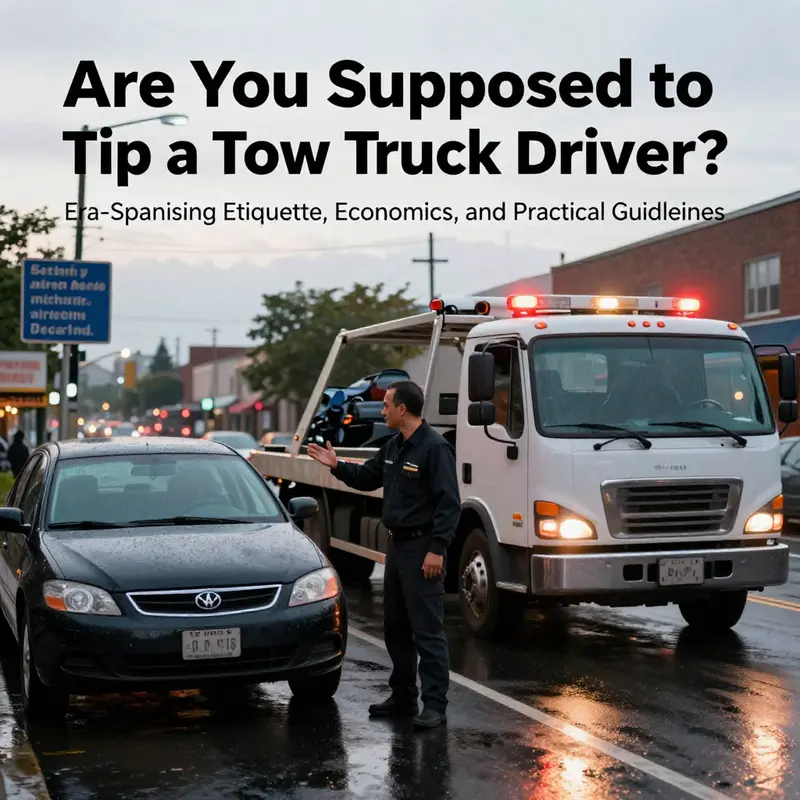
Stranded by the roadside, you want help and clarity more than a ritual of gratitude. Tipping in towing is not universal, and policies vary by company and region. In many places, the tow fee is presented as a fixed charge or regulated price, and tipping is optional rather than required. If a policy discourages tips, honor it and show appreciation through a positive review or a simple thank you note.
Consider tipping when the driver has gone beyond the basic service: extra safety checks, unlocking a difficult lock, jump-starts in cold weather, or navigating hazardous locations. A practical guideline is about 10% to 20% of the tow cost, or a flat five to twenty dollars if the amount is unclear. Adjust up or down based on effort, risk, and the quality of service, not as a pressure point or obligation.
Present the tip respectfully: hand it directly with eye contact and a brief line of thanks. If you pay by card, use the tipping option described on the receipt; cash is often preferred by drivers. Before arrival, ask the dispatcher whether tipping is welcome or prohibited to avoid awkwardness. If a policy prohibits tipping, follow it and express appreciation in other ways, such as a positive online review or a kind note to the company.
Remember that tipping is a personal gesture, not a sales lever. It should reflect gratitude for competence and care while preserving safety and professional boundaries. The goal is to acknowledge good service without creating pressure, and to support drivers who may work in challenging conditions.
Tow Fees, Tipping, and the Fine Print: Understanding When to Tip Tow Truck Drivers within Regulated Pricing
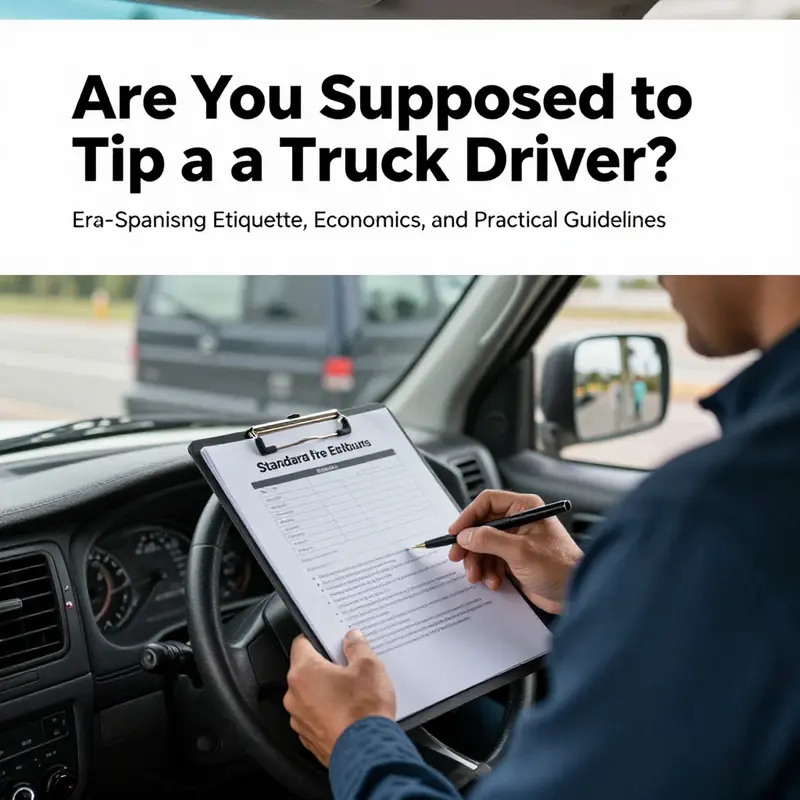
Roadside situations put urgency, uncertainty, and pricing into sharp relief. When a vehicle breaks down on a highway shoulder, the tow arrives as a lifeline, and the question of tipping surfaces with the bill. The answer is that tipping is optional; the standard price is set by the service provider and regulated where applicable. Tipping may reflect appreciation for clear communication, safe handling, or speed in a difficult moment, but it is not a requirement nor a substitute for transparent pricing.
To understand tipping, it helps to look at how tow pricing is typically constructed. Most invoices consist of a base fee, mileage charges, and possibly equipment use, emergency dispatch surcharges, or other line items. The mix varies by location, distance, vehicle type, and the company’s policies. In many places, pricing is subject to consumer protections that require disclosure, so you can compare options and verify what you are paying for.
The role of regulation is to prevent price gouging and to promote clarity. Some jurisdictions require itemized bills and public pricing rules; others rely on competitive market forces. Consumers benefit when the invoice breaks down the base service, the distance traveled, any specialized equipment, and any urgent-dispatch surcharge. Clear disclosure reduces the impulse to treat a tip as a way to negotiate fairness.
What about tipping itself? A tip can acknowledge good service in a high-stress moment, but it should reflect only genuine appreciation and not a demand for better treatment in the future. A gratuity is most defensible when the driver demonstrates exceptional professionalism, safety, or problem-solving under pressure. It should not be seen as a fix for poor pricing or opaque contracts.
A practical approach for consumers is straightforward. Review the bill for base fee, mileage, equipment use, and any surcharges. If the invoice isn’t itemized, request details before authorizing service. Check local rules and the service contract. Consider whether the driver met reasonable expectations for punctuality, communication, and safety. If so, a modest tip may be appropriate; if not, focus on feedback or complaint channels rather than tipping.
If you decide not to tip, there are other ways to show appreciation that won’t obscure pricing. A positive online review, a note of thanks to the company, or a formal compliment to the supervisor can influence future service quality. If you do tip, do so discreetly and only if it aligns with your comfort and the company’s policies.
The broader economics of the tow industry matter too. Wages for drivers typically cover base labor, with tips acting as potential supplemental income rather than a core component of earnings. This distinction matters for consumers who want predictable pricing and for companies balancing risk, overtime, and safety requirements. When tipping is common but not guaranteed, it can complicate perceptions of fairness and pricing discipline.
Finally, keep in mind three guiding ideas: transparency, restraint, and discretion. Transparency in pricing reduces pressure to rely on tips as a workaround. Restraint keeps gratuities from becoming a de facto performance metric. And discretion means tipping remains a personal choice, not a contractual obligation. In moments of stress, focus first on understanding the bill and validating the service against your expectations, then decide whether a tip is appropriate.
For readers seeking more practical context, consider reputable sources that summarize typical towing costs and regional variations. Use itemized invoices to inform your judgments, and rely on official disclosures rather than anecdotes about what others tip. The core message remains simple: tipping is optional and context-dependent, not a substitute for fair pricing or clear contracts.
null

null
Final thoughts
Across motorist profiles—from daily commuters to fleet managers and shop owners—the central takeaway is consistent: tipping a tow truck driver is not a universal expectation, but a considerate gesture when service exceeds standard expectations. Towing fees remain the primary price driver, driven by base charges, mileage, and regulatory factors. When exceptional service—clear safety guidance, patience, and proactive problem-solving—occurs, a small gratuity (for example, $5–$10) is a polite acknowledgment. Always verify local norms and company policies, and consider alternatives such as a sincere compliment or written feedback if tipping isn’t customary or feasible. This nuanced approach protects pricing integrity, respects policy, and supports courteous, professional roadside assistance.