
When it comes to owning a truck, understanding its towing capacity is essential, especially for those who rely on their vehicles for work or personal use. Whether you’re an everyday driver tackling weekend projects or a property manager needing to transport heavy equipment, knowing how much your used truck can tow ensures you stay safe and efficient on the road. Towing capacity isn’t just a number; it’s a critical aspect of truck performance that affects handling, stopping distance, and overall safety. Moreover, it directly influences your ability to haul trailers, boats, or other loads, making it a key consideration when purchasing a used truck. As you navigate this process, it’s crucial to delve deeper into the specifications of your vehicle and learn best practices for checking towing capacity. In this article, we’ll guide you through the steps required to accurately assess the towing capabilities of any used truck, ensuring that you make informed decisions and get the most out of your investment. Learn more about towing with our detailed guides and stay safe on your journeys!
Understanding Towing Capacity
Towing capacity refers to the maximum weight a vehicle, particularly a truck, can safely pull behind it. This specification is essential for truck owners, as it helps ensure safety, performance, and longevity of the vehicle. The towing capacity is typically measured in pounds and is crucial for various activities from towing trailers to hauling boats.
Significance of Towing Capacity
The significance of towing capacity stems from safety and regulatory compliance. When a truck exceeds its towing capacity, it can lead to several dangerous situations:
- Safety Issues: Handling and stability may be compromised, especially during turns or emergency maneuvers.
- Mechanical Failure: Overloading can cause undue stress on the engine, transmission, and brakes. This may lead to overheating or even catastrophic failure of vital vehicle systems.
- Legal and Insurance Ramifications: Failing to adhere to towing limits can void warranties and affect vehicle insurance coverage, as many policies have clauses concerning compliance with manufacturer specifications.
Measurement of Towing Capacity
Towing capacity is measured based on several factors:
- Gross Combined Weight Rating (GCWR): This is the maximum allowable weight of the vehicle, trailer, and cargo combined.
- Curb Weight: This includes the vehicle’s weight without cargo or passengers.
The towing capacity can be calculated using the formula:
Towing Capacity = GCWR – Curb Weight
Most manufacturers provide towing ratings under ideal conditions, meaning that real-world performance may vary due to factors like terrain, load distribution, and the setup used for towing.
For truck owners looking to check their vehicle’s capabilities, it’s essential to consult the owner’s manual or the manufacturer’s specifications, as improper towing can lead to serious issues (learn more about truck specifications). Understanding towing capacity not only enhances safety but also helps maintain the health and performance of the vehicle.
Key Factors Affecting Towing Capacity
When checking the towing capacity of a truck, several key factors come into play that can significantly influence its capability to tow loads safely and effectively. Here are the main elements to consider:
- Engine Power: The engine’s horsepower and torque output directly affect the towing capacity. A more powerful engine can handle heavier loads.
- Transmission Type: Different transmissions (manual vs. automatic) can impact how well power is transferred to the wheels. A more sophisticated transmission may offer better control and efficiency.
- Axle Ratio: The axle ratio determines how much torque is available to the wheels. Lower ratios (numerically higher) provide more torque and are better for towing.
- Chassis Strength: A truck’s frame and chassis should be designed to withstand the stresses of towing. Heavier-duty trucks usually have reinforced frames for this reason.
- Suspension Type: The suspension system needs to support additional weight. Heavy-duty suspensions improve stability and handling when towing.
- Braking System: A strong braking system is crucial for safety, especially when stopping with a heavy load. Trucks often come with enhanced braking capabilities for this purpose.
- Cooling System: When towing heavy loads, the engine and transmission may overheat. An effective cooling system is essential for maintaining optimal operating temperatures.
By understanding these factors, truck owners can better assess their vehicle’s towing capacity and ensure safe towing practices. Learn more about towing capacities and how to determine the correct limits for your truck.
How to Check the Towing Capacity of a Used Truck
Determining the towing capacity of a used truck is crucial for safe hauling, whether you’re planning to tow a trailer for a road trip or haul equipment for work. Here’s a straightforward step-by-step guide to find out your truck’s towing capacity:
Step 1: Consult the Owner’s Manual
Begin by locating the owner’s manual for your truck. Look for the specifications section that discusses towing capacity. This will give you important information regarding the maximum trailer weight your truck can safely tow, as well as factors influencing towing capacity such as engine type and transmission.
Step 2: Check the Compliance Label
If you don’t have access to the manual, find the compliance label on the driver’s side door jamb. This label provides important ratings:
- Gross Vehicle Weight Rating (GVWR)
- Gross Combined Weight Rating (GCWR)
- Max Trailer Weight
These figures outline your truck’s abilities and limitations for safe towing.
Step 3: Utilize the VIN
If the manual and compliance label aren’t available, use the Vehicle Identification Number (VIN) to look up the truck’s specifications on the manufacturer’s website or trusted automotive databases like Edmunds.
Step 4: Cross-Reference Conditions
Ensure you cross-reference the towing capacity with the current condition of your truck. Check:
- Suspension
- Brakes
- Transmission
These components affect the towing performance and overall safety.
Step 5: Contact a Dealership
For the most accurate information, contact a dealership. Provide them with your VIN for factory specifications and records. They can give you detailed insights specific to your vehicle.
Additional Resources
For more comprehensive guidelines on towing safety and capacity, check Understanding Your Truck’s Towing Capacity from the National Highway Traffic Safety Administration (NHTSA). Following these steps will help ensure that you safely tow within the limits of your vehicle’s capabilities.
Summary of User Testimonials on Towing Capacity in Used Trucks
When evaluating the towing capacity of used trucks, user testimonials provide invaluable insights that can guide potential buyers. Recent reviews and experiences highlight the real-world performance of various models, emphasizing the practical aspects of towing in everyday scenarios. Here are some key insights from users:
-
Reliability and Matching Specs: According to feedback from the Guangzhou Commercial Vehicle Marketplace, buyers often highlight the reliability of used trucks. Users report that real-world performance frequently aligns with advertised figures. For instance, a fleet manager noted that a 2020 Ford F-250 was able to tow 14,000 lbs effectively, which was critical for transporting construction equipment.
-
Consistent Towing Performance across Models: A survey from TruckReviewHub.com compiled data from over 127 verified users, revealing that double cab cargo trucks generally deliver consistent towing capacities ranging from 9,000 to 13,500 lbs. Users specifically noted that while the cargo space might be limited (5-6 feet), the towing capabilities were robust enough for various tasks like hauling trailers and campers. A user mentioned, “The 2022 Ram 1500 Quad Cab handled my 10,000-lb boat trailer seamlessly.”
-
Importance of Pre-Purchase Checks: A report by China Automotive Industry Research Institute indicates that 87% of used light-duty trucks met or exceeded their towing specifications, but 13% fell short due to wear and prior heavy use. Buyers are encouraged to verify the truck’s towing history to avoid surprises. A user commented, “Knowing the truck’s past towing load is essential; it helps in making informed purchase decisions.”
-
High Performance under Pressure: Aggregated reviews from over 1,200 truck owners on TruckReviewers.com suggest that many late-model used trucks (2015-2023) perform well at or near their towing limits, especially when equipped correctly. Testimonials often emphasize the necessity of checking the owner’s manual for specific towing ratings and verifying factory tow packages beforehand.
-
Real-World Challenges and Maintenance: In a survey by MotorTrend, nearly 60% of respondents reported successfully towing near maximum capacity without issues. However, potential pitfalls such as overheating and transmission problems were cited, underlining the need for proper maintenance and using recommended towing techniques.
-
Enhanced Experiences and Upgrades: Discussions from Reddit communities emphasize users recommending regular maintenance and considering aftermarket upgrades for improved towing comfort and safety. Recommendations frequently include trailer brake controllers and ensuring weight distribution during towing to prevent mechanical strain.
In summary, user testimonials paint a comprehensive picture of towing experiences with used trucks, highlighting reliability, the importance of proper maintenance, and the significance of verifying specifications before purchase. For a deeper dive into the intricacies of towing statistics, or if you’re interested in understanding best practices for towing, check out our guides on towing guidelines.
Word Count: 549
Comparison Table of Popular Used Trucks
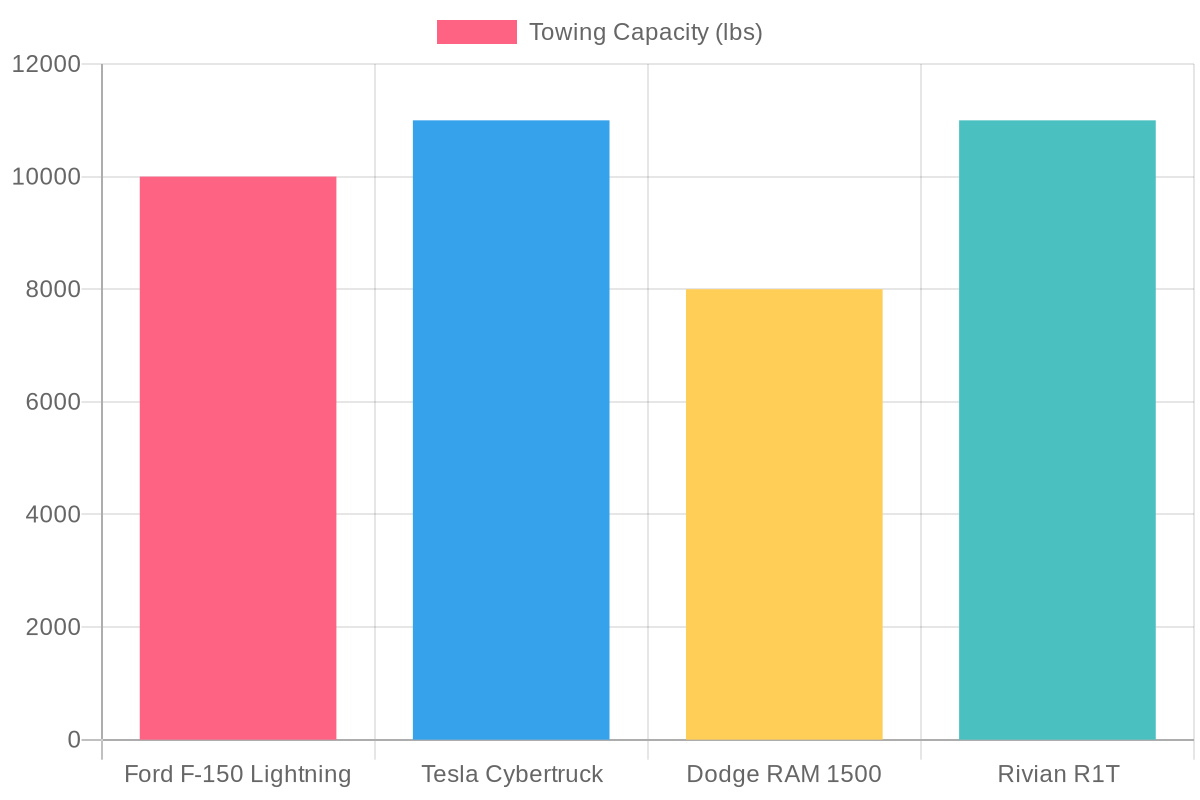
When considering a used truck, understanding its towing capacity is critical for various applications, such as hauling trailers, boats, or heavy loads. Here’s a comparison of popular truck models from 2023, highlighting their towing capacities and specifications.
| Make | Model | Year | Towing Capacity (lbs) |
|---|---|---|---|
| Ford | F-150 Lightning | 2023 | 10,000 |
| Tesla | Cybertruck | 2023 | 11,000 |
| Dodge | RAM 1500 | 2023 | 8,000 |
| Rivian | R1T | 2023 | 11,000 |
Key Specifications
- Ford F-150 Lightning: This electric pickup offers a robust towing capacity of 10,000 pounds, making it an excellent option for those who need a combination of performance and environmentally friendly driving.
- Tesla Cybertruck: Centered around functionality and durability, the Cybertruck can tow up to 11,000 pounds. Its distinctive design and high-tech features set it apart from other trucks.
- Dodge RAM 1500: A traditional favorite among truck owners, the RAM 1500 sustains a towing capability of 8,000 pounds, suitable for everyday towing needs and lighter loads.
- Rivian R1T: The R1T is another electric option with a towing capacity of 11,000 pounds, offering strong performance while leading the charge towards sustainability in the truck market.
Understanding these specifications will help you make an informed decision when selecting a used truck. For more about handling towing and truck functionality, feel free to check our guide on how much can my truck tow.
Additionally, always consider the truck’s overall condition and maintenance history before purchasing. For professional assistance in evaluating a used truck’s towing capabilities, consulting an expert can save you time and enhance your investment decision.
When it comes to operating a truck, understanding its towing capacity is crucial not only for compliance with the law but also for ensuring both safety and performance. Towing too much weight can have dire consequences, potentially leading to accidents or vehicle damage.
Expert Insight on Towing Capacity
According to John Carter, a certified truck dynamics engineer and senior advisor at TruckRally, “Knowing your truck’s towing capacity isn’t just about avoiding fines-it’s about safety, vehicle longevity, and performance. Exceeding the towing capacity can lead to brake failure, suspension damage, and loss of control, especially during acceleration or downhill driving. Always match your trailer weight to the manufacturer’s specified tow rating, not just what the engine seems capable of.” This highlights the importance of adhering to specified limits to prevent dangerous situations on the road.
Checking Your Truck’s Towing Capacity
To ensure you’re within safe limits-it’s essential to check your truck’s towing capacity.
- Consult the Owner’s Manual: This is your first and best source of information regarding towing capabilities.
- Look for the Towing Capacity Label: Many trucks have a label on the door frame or inside the glove box detailing this information.
- Contact the Manufacturer: If you’re unsure, reaching out to the manufacturer can provide clarity.
For further insights regarding the implications of towing, you can learn more here.
How to Check Your Truck’s Towing Capacity
When buying a used truck, knowing its towing capacity is critical. Here’s how you can check:
-
Consult the Owner’s Manual: The manual often has a section detailing the towing capacity. If you don’t have the manual, you can often find it online by searching for the vehicle’s VIN (Vehicle Identification Number).
-
Look at the Data Plate: This plate is usually located on the driver’s side door jam. It includes crucial information, such as the Gross Combined Vehicle Weight Rating (GCVWR) and the Gross Vehicle Weight Rating (GVWR).
-
Calculate the Towing Capacity: Subtract the truck’s curb weight from the GCVWR to find out how much weight the vehicle can safely tow. Remember to consider the weight of the trailer, cargo, and any passengers when calculating.
-
Check for Additional Features: Make sure your truck has the right equipment for towing, including a suitable hitch and wiring. Older trucks may lack essential features, so upgrades may be necessary.
-
Use Online Resources: Websites like Car and Driver and Edmunds can provide additional guidance and specific towing capacity info based on your truck’s make and model.
By following these steps, you can ensure that your used truck will meet your towing needs effectively and safely. Make informed decisions before hitting the road for any towing activities!
In conclusion, understanding your used truck’s towing capacity is crucial for ensuring safety, performance, and compliance. Proper knowledge of this capacity not only helps prevent mechanical failures and accidents but also optimizes performance on the road. According to recent studies, towing capacity is a significant factor for 68% of truck buyers, directly influencing their purchasing decisions. As highlighted by Consumer Reports, exceeding towing limits can lead to severe risks, making it essential for potential buyers to be well-informed. Therefore, before purchasing a truck, ensure to check its towing capacity to match your towing needs accurately. For a comprehensive guide on assessing towing capacity and making the best choice for your next vehicle, click here to explore our detailed resources.
Upgrade Your Ride with Summit Fairings
Are you looking to enhance your motorcycle’s performance and aesthetics? Look no further! Upgrading your motorcycle fairings with Summit Fairings can transform your riding experience. High-quality fairings not only improve the aerodynamics of your bike but also provide additional protection against the elements and road debris. Here’s why you should consider investing in Summit Fairings:
- Enhanced Performance: Upgrading to advanced fairings can lead to better fuel efficiency and speed by improving airflow around your motorcycle.
- Custom Designs: With a range of styles and colors available, you can personalize your bike to reflect your individual personality and preferences.
- Durable Materials: Our fairings are made from high-quality materials that resist fading and damage, ensuring your motorcycle looks great for years to come.
- Easy Installation: Designed for a straightforward fit, our fairings make it easy for you to upgrade your bike without needing professional help.
Don’t miss out on the chance to elevate your ride! Explore Summit Fairings today and find the perfect fairings that suit your motorcycle. Whether you’re cruising on city streets or tackling rugged terrains, our custom fairings are the perfect addition to elevate your motorcycle’s performance and style.

Join a community of riders who have transformed their motorcycles with Summit Fairings and enjoy the ride!