
Understanding how long it takes for a tow truck to arrive can make a significant difference when faced with a roadside emergency. The time of arrival varies widely based on numerous factors including location, type of service requested, and traffic conditions. This comprehensive guide aims to equip everyday drivers, residents, commuters, truck owners, auto repair shops, dealerships, and property managers with valuable insights into what affects towing times. Each chapter delves into different elements, from urban areas’ response dynamics to the impacts of weather or rural locations, ensuring that readers are prepared for every scenario. Additionally, we will explore cutting-edge technology that enhances dispatching and tracking processes, ushering in a new era of towing efficiency. Join us as we unpack these critical aspects of towing services.
Tow Truck Arrival Times: What Impacts ETA and How to Help It Help You
Waiting for a tow can feel like watching the clock, but the ETA is not a fixed promise. It is a live estimate built from distance, traffic, and the availability of the right equipment. After you request help, you’ll often see an ETA that updates in real time as drivers move toward you. This transparency helps you plan your next steps and reduces uncertainty, even when a delay is unavoidable. The goal is to provide the closest, safest, and fastest unit to your location, while keeping you informed as conditions change.
The factors that shape arrival times include distance, road conditions, and the vehicle type needing service. Urban areas tend to have more providers and shorter travel distances, while rural regions may see longer waits due to fewer nearby units. Time of day and demand patterns also play a role: peak hours can stretch the ETA as dispatchers juggle multiple requests. Availability of the right equipment—such as heavy-duty rigs or specific tow configurations—can add a few minutes if the closest unit lacks what is needed.
What you can do to help: provide clear location information, enable live location sharing if possible, keep your phone accessible for quick questions, and move to a safe, visible spot when practical. These steps can help cut unnecessary back-and-forth and get help on the road more smoothly.
In short, the ETA is a dynamic forecast rather than a promise: it updates as conditions change, and it aims to balance speed with safety.
City Arrival Windows: Reading How Long a Tow Truck Takes to Reach You in Urban Areas
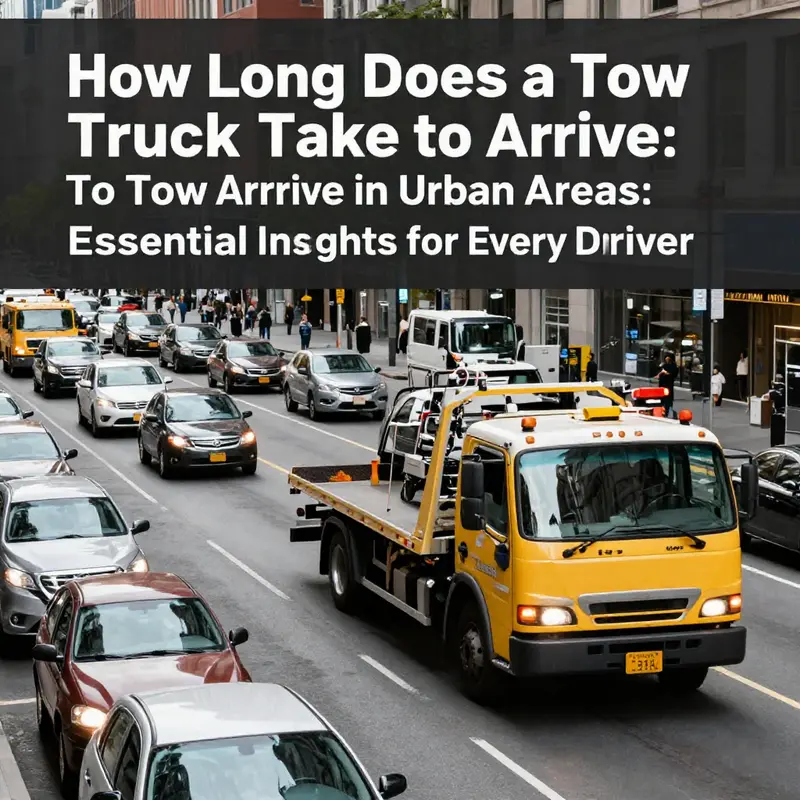
Waiting on the curb after a breakdown in a busy city street can feel like watching minutes stretch into hours. In those moments, the clock starts not when you sit down to think about it, but the moment you request help. The arrival time you’re given is more than a guess; it’s a practical projection based on where you are, who’s available nearby, and the traffic that threads through the city’s arteries. Understanding what shapes that ETA helps you plan, stay safe, and minimize disruption to your day. In urban environments, the timing of a tow is less about a fixed promise and more about a live calculation that adapts as conditions shift around you. The result is a window that, while it can feel uncertain, is grounded in real-world constraints and aided by modern tools that illuminate the path from dispatch to curbside assistance.
Across most cities, reputable towing services aim for a core window of roughly 30 to 60 minutes for standard requests during regular business hours. But urban life isn’t static. Rush-hour density, late-night demand, sudden weather events, or a vehicle tucked into a tight parking structure can extend that window. The exact location within the city matters as well: a tow truck stationed near a busy downtown corridor may arrive sooner than one dispatched from a distant suburb, and a car parked inside a garage or behind a barrier may require extra minutes to be reached. Even the minute of day can tilt the odds, because certain roads, lanes, and access points are easier for heavy vehicles to traverse during daylight compared with late night or early morning when staffing and visibility shift. In short, the urban clock is a living measure that reflects both the city’s rhythm and the fleet’s current availability.
The arrival window is made visible by the technology that underpins modern roadside assistance. After you request help, the system immediately presents an estimated arrival time based on the vehicle’s location, its equipment, and the route it will likely take. As the tow moves toward you, live tracking updates show its progress in real time. You can watch the beacon move along a map, gauge when it will reach your side of the curb, and adjust your expectations as new information comes in. This transparency matters. It reduces the guesswork that used to come with a simple phone call and a rough approximation. If traffic snarls or an unexpected obstacle arises, the ETA can shift, and you’ll see that shift reflected on your screen without needing to call for an update. In practice, the real-time view turns waiting into a dynamic process rather than a passive pause.
Several forces shape that ETA inside a city. Fleet density plays a central role: more units nearby mean a higher likelihood that the closest eligible truck can be assigned quickly. In neighborhoods with fewer service providers, the window can grow simply because all available trucks are already engaged with other calls. Traffic patterns adjust the plan as well; a jam on a main artery can ripple through the route and slow the response, even if a unit is resting just a few blocks away. Time of day matters too—mid-morning quiet can feel very different from the hustle of late afternoon rush, and the same request can result in a different ETA on different days depending on incidents, roadwork, or weather. Access logistics add another layer: a vehicle in a secured lot, a car in a tight alley, or one parked in a multi-story garage may require the driver to negotiate gates, call for assistance, or switch equipment on site, all of which adds minutes to the clock. These elements aren’t just numbers; they’re practical realities of bringing heavy equipment to a precise curbside point in a crowded urban landscape.
From the dispatcher’s perspective, the process blends GPS intelligence with ground-level awareness and the fleet’s practical limits. A caller who provides clear cross streets, a landmark, and a reliable contact number makes it easier to locate the vehicle quickly and direct it along the fastest feasible path. The plan balances speed with safety: it aims to minimize risk to both the operator and the vehicle being towed, while respecting the surrounding infrastructure. When a call is tagged as high priority—due to safety concerns, traffic constraints, or a lane blockage—the system can quickly reallocate resources, but the city’s grid remains a constraint. The result is a dynamic ETA that reflects not a fixed promise but a responsive estimate that improves as the truck moves closer and as conditions shift. The more information you provide up front, the more accurate the plan becomes, and the less room there is for uncertainty when the driver is en route.
What you can do, as a motorist waiting in an urban setting, matters a great deal. Preparation and awareness can shave precious minutes from the delays that accumulate when you’re stranded near traffic or in a crowded parking area. If it’s safe to do so, move to a well-lit, open space away from active lanes and other pedestrians. Clear the immediate curb so the driver can access your vehicle without maneuvering through a crowd. If you’re inside a garage or a narrow alley, share precise instructions or a cross-street cue that will help the driver locate you quickly, and be ready to provide gate codes or access instructions if needed. Have your license, registration, and proof of insurance at hand, along with any notes about the vehicle’s condition or the reason for the tow. Clear communication with the dispatcher reduces miscommunication on arrival and helps ensure the correct equipment is ready when the tow arrives. If you’re able, confirm what kind of setup the tow truck will need—whether a wheel lift, a dolly, or another specialized configuration—so the on-site prep work can occur smoothly, avoiding last-minute changes that can add minutes to the scenario. While waiting, resist the urge to crowd around the work area. A calm, safe distance keeps both you and the crew out of harm’s way and lets the driver operate with the room necessary for safe handling.
In urban contexts, timing and control often feel like competing priorities. The practical reality is that ETAs are not guarantees but best-available estimates that reflect current fleet positions, road conditions, and access realities. The ability to monitor progress in real time—an almost seamless blend of software view and street-level action—offers a valuable form of reassurance. It enables you to adjust your plans with information rather than anxiety. You may still need to wait, but you’ll know why the wait is happening and how it’s being addressed. And because pricing in many services is published alongside ETA data, you can make informed trade-offs between the desire for speed and the cost implications of faster arrival times. If you want to explore the cost side in more detail, you can read about the underlying factors of tow-truck pricing on this resource: how-much-is-a-tow-truck.
Ultimately, the urban tow experience is a study in orchestration. Dispatchers, drivers, road conditions, and the person waiting along a curb all play a role in delivering help where it’s needed, when it’s needed, and with the least possible disruption to the city around them. The arrival window in a city isn’t a fixed deadline but part of a living system that aims to convert a moment of breakdown into a safe, efficient transition back to mobility. As cities evolve with smarter routing, real-time data sharing, and larger fleets capable of operating in tighter spaces, these ETAs will continue to tighten, and waiting will increasingly feel like a manageable, predictable part of urban life. For readers seeking broader context on industry standards and approaches, see a general industry overview of tow services at this external resource: https://www.towtruck.com/.
Weather on the Road: Reading Tow Truck Arrival Times When the Sky Closes In
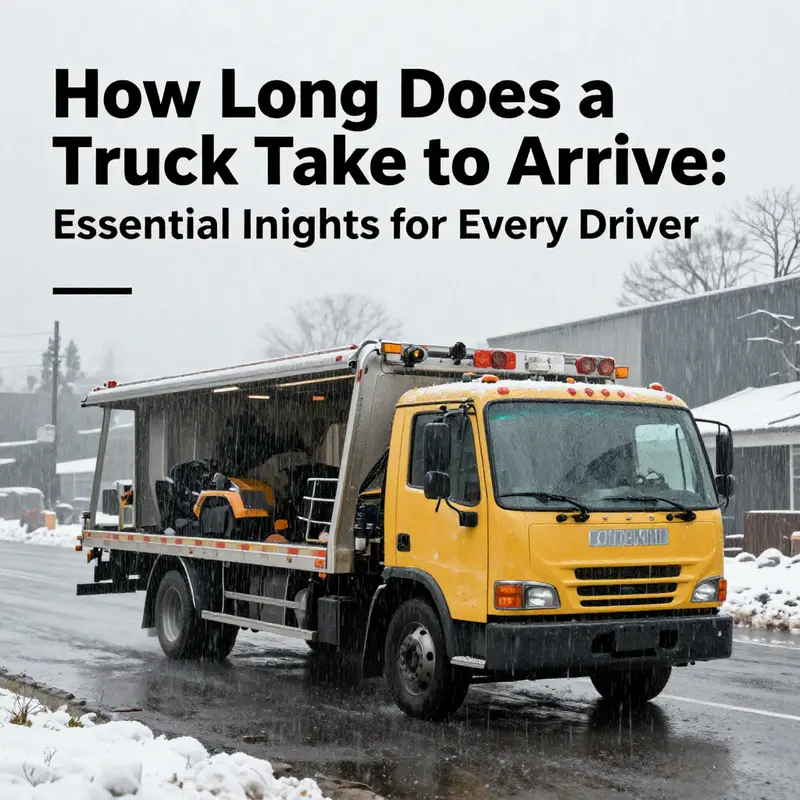
When your car stalls or your tire blows out in bad weather, the clock starts the moment you reach out for help. The weather you face can warp the arrival time in ways that few other factors do. While dispatch centers and roadside networks can give you a solid sense of the likely window, storm-driven conditions turn that window into a moving target. Understanding how weather interacts with tow truck arrivals helps you set expectations, stay safer, and make smarter decisions as you wait on the shoulder or beside a rain-slicked highway.
In the most favorable conditions, a tow operator can be dispatched within a short span. In clear skies and dry roads, the average dispatch time often falls in the 15- to 30-minute range after you place the request. That means a tow can be on the way with minimal delay, and the window you’re given is typically reliable for planning a quick relocation to a nearby shop or a safe pull-off. This scenario depends on the density of service providers nearby, the availability of drivers, and the efficiency of the dispatch system. Urban centers tend to have more options within driving distance, which can shorten the initial wait. Yet even in the best of times, weather can tighten this window in an instant.
Weather is one of the most influential forces on arrival time. Severe weather—heavy snow, torrential rain, sleet, or icy roadways—alters drivers’ ability to reach you in two ways: it slows the physical act of driving and it constrains the operational environment in which tow companies work. Roads become hazardous or impassable, vehicle and equipment performance can be stressed by cold and moisture, and the risk management calculus tightens to protect you, the operator, and other road users. In a blizzard, for instance, some routes may be blocked entirely, or the combination of road closures and low visibility makes a routine assist not just slower, but sometimes impossible within a practical timeframe. The narrative of a weather-impacted arrival is less a single data point and more a spectrum of convergence between road conditions, visibility, and the availability of skilled drivers willing or able to navigate treacherous terrain.
The location of the breakdown also matters more when the weather deteriorates. In urban corridors, the sheer density of service providers means more nearby options and a higher likelihood that at least one will operate under challenging conditions. Rural or remote locations, by contrast, often depend on a smaller pool of drivers, fewer maintenance bases, and longer travel distances. When a storm is running, those gaps widen markedly. In such settings, even a truck that is dispatched promptly may take longer to reach you simply because the roads beyond the city limits become unreliable or impassable. Industry benchmarks note that adverse weather can push response times well beyond ordinary expectations, sometimes stretching into hours rather than minutes. For example, there are scenarios where response times can increase by up to two hours or more in bad weather, especially if the incident happens on highways or remote stretches where resources are thinner. This reality underscores a truth that remains stubbornly consistent: weather does not just slow travel; it reshapes the entire response landscape.
Technology and transparency have begun to temper the uncertainty that weather introduces. Modern on-demand roadside platforms provide an estimated time of arrival immediately after you book, and many offer live tracking so you can watch the tow truck’s progress in real time. This capability is transformative in a storm, when conditions are changing by the minute and visibility is compromised. Rather than waiting in a static window, you gain a dynamic sense of whether conditions are improving, deteriorating, or holding steady. The real-time update cycle also helps you manage safety more effectively. If the forecast suggests a worsening window, you can move to a safer location or prepare for a potential extension of the wait. In harsher weather, even a few extra steps toward a protected shelter can make a meaningful difference to your comfort and safety while you wait.
This real-time visibility is not only about speed; it also has a practical price-sense component. When you see the ETA’s tighten or widen, you are better positioned to decide how to allocate time, fuel, and your own energy. The pricing and ETA transparency that come with modern dispatch tools often connect to a broader ecosystem of service parameters, including the types of roads being navigated, accessibility for the tow vehicle, and the feasibility of a safe pickup in inclement conditions. If you’re curious about typical costs and how pricing is framed during an urgent call, there are resources that discuss tow-truck cost structures and pricing in general terms. For a practical sense of typical costs and pricing transparency, see tow-truck-costs-pricing.
Beyond the numbers, weather changes the human element of roadside assistance. Drivers must evaluate the risk of attempting a tow in a given weather scenario, balance the urgency of your situation against personal safety, and decide whether a waypoint stop is prudent to get a better angle or to wait for road conditions to improve. You may notice that during heavy rain or snow, the crew’s approach becomes more deliberate. They may opt for slower speeds, more careful maneuvering, or the choice to stage a pickup rather than attempt a rushed retrieval. These adjustments are not signs of inefficiency; they are signals of responsible service in conditions that demand additional caution.
For many people, the practical takeaway is simple: expect variability, stay informed, and use the tools at hand to mitigate the stress of uncertainty. If you’re regularly traveling through areas with variable weather, you can maximize your readiness by keeping your phone charged, staying in a well-lit and safe location, and having a plan for where you’ll be picked up once the tow arrives. The live-tracking feature that accompanies contemporary dispatch systems provides a window into the journey, but it is not a promise that the truck will arrive at a precise minute. It is, instead, a continuously updated trajectory that reflects weather, traffic, and road conditions as they evolve. In the moment when the sky darkens and the wind picks up, that trajectory becomes the most valuable compass you have for navigating a stressful situation with poise.
Ultimately, weather magnifies the true variability of tow arrivals, yet it also highlights the value of real-time information. The better you understand the way weather shapes the window, the more you can use the arrival time as a practical planning tool rather than a source of anxiety. If you find yourself in a situation where the forecast is unfavorable, remember that the dispatcher is balancing many variables: road safety, vehicle capability, and the needs of drivers already en route to other calls. The result is a system designed to protect lives and property first, while still delivering a dependable service where feasible. In this sense, the arrival time is less about a fixed deadline and more about a carefully managed response that adapts to nature’s weather pattern. External factors will always tug at the clock, but informed waiting—supported by real-time updates and prudent safety choices—keeps you oriented until help finally arrives.
External resource: https://www.aaa.com/roadside-assistance/
Arrival in Real Time: Reading Tow Truck ETAs Across Urban Hubs and Rural Roads
When a breakdown or a stalled vehicle interrupts the flow of a day, the clock becomes a silent witness. In the past, the wait for a tow could feel like a test of endurance, but today’s roadside networks turn arrival times into a dynamic, data-driven tale. The moment you request help, the system often generates an estimated time of arrival that is shown on your screen and refreshed as the situation evolves. This isn’t guesswork; it’s a live readout that combines your location, service availability, current traffic patterns, and the truck’s actual position. Real-time tracking means you can watch a blue dot inch along the roads, validating that the plan you discussed over the phone is now executing in real life. The transparency is deliberate. It reduces uncertainty, helps you decide what to do next, and changes how you respond to a delay. In this way, the ETA becomes less about a stopwatch and more about situational awareness—you know what to expect and when to expect it, and you can adjust your actions accordingly.
The urban-rural divide in tow-truck arrival times is rooted in structure as much as in demand. In bustling city centers, the web of roads, density of service providers, and proximity of depots translate into faster, more reliable response times. An arrival window of roughly 15 to 30 minutes is common for standard requests in many metropolitan zones, with times occasionally stretching during peak commuting hours or unusual traffic patterns. The sheer number of vehicles, the ability to route around congestion, and the presence of multiple dispatch hubs create a kind of traffic-sculpting ecosystem where a unit can be assigned, re-routed, and dispatched with a clarity that feels almost surgical. The effect is tangible: people waiting by the roadside can anticipate nearly a real-time fix, even when the exact path is being recalculated in the background.
Far from the urban pulse, rural landscapes present a very different tempo. The same factors that grant speed in cities—coordinated fleets, dense networks, and short distances—recede into the background. In these areas, the number of towing units is smaller, depots are farther apart, and the road network often involves longer stretches of highway mixed with winding back roads. The result is an arrival time that can span from about 60 minutes to 120 minutes, and in some cases longer, especially when weather, seasonal demand, or simultaneous incidents pull the few available units in multiple directions. Remote pockets may lack immediate coverage, prompting dispatch from distant towns or regional hubs. The ETA, while still displayed, carries with it a quiet acknowledgment of distance and resource limitations. The gap between urban and rural timing isn’t just about speed; it’s about access to a network that can absorb a call and translate it into a concrete plan that respects geography, time, and safety.
What makes these numbers move is less a single variable and more a tapestry of interlocking factors. Traffic conditions on a city’s arterial routes and the likelihood of gridlock during morning and evening rushes can tighten the window in unpredictable ways. In rural areas, the presence or absence of a nearby yard becomes a critical driver of ETA. Weather plays a starring role in both contexts; rain, snow, fog, or ice can slow a driver’s route planning, complicate navigation, and require safer, slower travel speeds that ripple through arrival estimates. Time of day matters as well. Night shifts, holiday periods, or events that draw crowds can surge demand for on-call fleets, nudging ETAs up even in places that normally enjoy quick responses. Additionally, the probability of multiple incidents occurring simultaneously can force dispatchers to juggle units across several locations. Each of these elements—distance, demand, weather, and operational constraints—adds a layer to the ETA that goes beyond a single number.
Technology has shifted this landscape in profound ways. Modern on-demand roadside assistance systems incorporate positioning data, route optimization, and live status updates to present a transparent picture of what’s happening. After you submit a request, the system assembles a plan that balances proximity and availability, then presents an ETA that is not static but fluid. As the tow progresses toward you, the ETA is recalculated and updated in real time, giving you a moving forecast rather than a single checkpoint. This capability is especially valuable in urban areas, where dozens of variables can change within minutes: a sudden detour, a lane closure, or a busier-than-expected corridor. In rural settings, live tracking remains useful for confidence, even if the forecast includes longer travel times. It helps you stay prepared, locate a safe waiting spot, and understand when a unit is entering your area. The upside is clear: better information reduces stress and improves decision-making at a moment when every second matters.
Beyond the numbers, there is a practical rhythm to managing an ETA. When you’re in an urban setting, it helps to provide precise location details from the outset: street names, cross streets, landmarks, or notable buildings can cut seconds off a dispatchers’ task and minimize the risk of confusion. In rural zones, where cell coverage can be spotty and road signs scarce, being able to share a landmark or a mile marker can be equally valuable. If you’re using a roadside service app, keep your phone charged, enable location sharing, and stay near the vehicle if it’s safe to do so. The more you contribute to the accuracy of the location and the more you participate in the process, the closer the ETA becomes to the actual arrival time. These steps marry the tool’s capability with your on-the-ground context, producing a smoother, more predictable experience.
For readers curious about the cost side of faster service, the question of price naturally arises. Faster service can entail higher costs, a trade-off that varies by provider, distance, and demand. If you’re weighing options, it helps to understand the relationship between speed and pricing, and to weigh what you value most in a roadside emergency—speed, reliability, or a transparent, upfront quote. A practical way to anchor that decision is to explore general pricing insights to gauge how much a tow might cost in your region, recognizing that actual fees will reflect your specific circumstances. how-much-is-a-tow-truck offers a snapshot of the kind of information that informs these choices, without tying you to a particular brand or service.
As you navigate these realities, the chapter of your experience is written not just in the ETA itself but in how you respond to it. If the system shows a longer wait in a city corridor, you can reposition yourself to a safer waiting area, keep the engine off to save fuel and reduce risk, and monitor the live tracker for any shift in the plan. If you’re stranded on a rural highway and the ETA stretches, you’ll want to stay visible, protect yourself from the elements, and maintain a communication loop with the dispatch team to receive updates as the situation evolves. The aim is not to wring every minute from the clock but to transform the wait into a manageable, informed, and safe process. In this sense, the ETA becomes a cooperative forecast—a projection you influence by providing clear information and by staying engaged with the vehicle, the driver, and the system that binds them.
The interplay between urban speed and rural patience does not imply that one setting is superior to the other. It reflects a tapestry of infrastructure, demand patterns, and resource distribution. The real value lies in understanding that ETAs are living estimates. They respond to changing realities on the ground and are designed to empower you with information so you can act decisively and safely. As you move from one chapter to the next, you’ll see how these dynamics interact with other factors—weather, time, and terrain—and how, in practice, you can use real-time data to reduce stress and improve outcomes when help is on the way. For readers who want to explore corroborating perspectives on urban versus rural response times, see a broader external resource on tow-truck response times, which provides additional context about the timing realities across different geographies: https://www.roadside.com/faq/tow-truck-response-times/#:~:text=In%20urban%20areas%2C%20response%20times%20are%20typically%20within%2015%20to%2030%20minutes
From ETA to Real-Time Tracking: How Dispatch Technology Shortens Tow Truck Arrivals
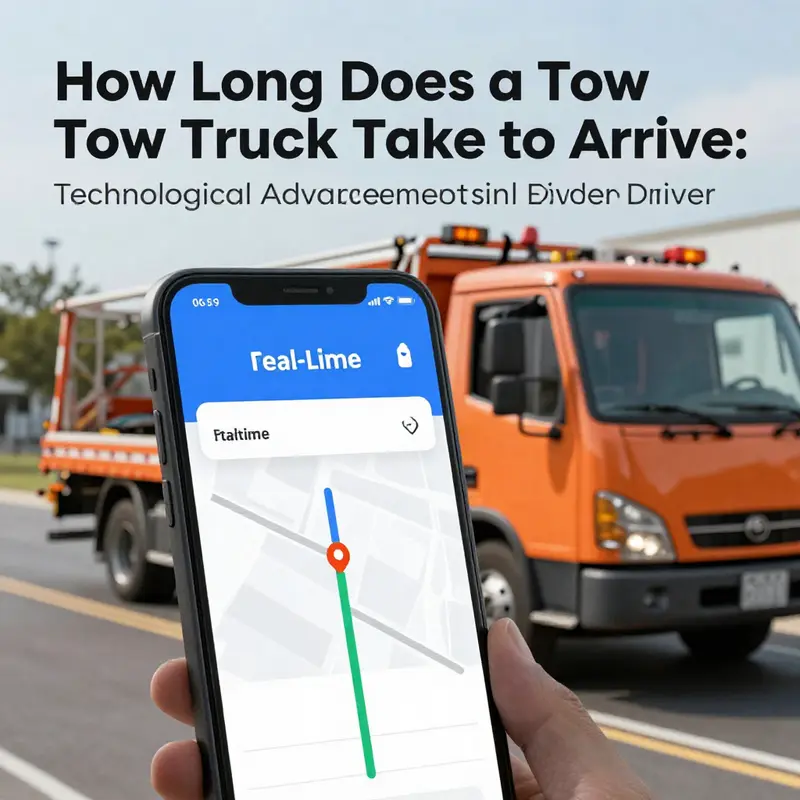
When a vehicle leaves you stranded on a roadside shoulder, the wait for help often feels longer than it actually is. Yet the time it takes for a tow truck to arrive is rarely a fixed, universal number. It shifts with where you are, the weather, the hour of the day, and how busy the network of responders happens to be. What has changed in the last few years—and what continues to reshape every rescue call—is how dispatching technology translates those variables into a live ETA and a confident path to arrival. The latest systems integrate location data, traffic intelligence, and smart routing to shorten the distance between the moment you request assistance and the moment a tow truck reaches you. Instead of a static promise, you get a dynamic plan that adapts as conditions change, and you can watch that plan unfold in real time. In practical terms, this means the window of expected arrival has become more precise and more accountable for customers who want certainty in a moment of uncertainty. After you tap to request aid on a user app, you are presented with an ETA that is no longer a vague estimate but a real-time projection that updates as the scene evolves. The approach rests on several pillars that modern fleets have adopted to improve speed and reliability, and each pillar contributes to a more reliable experience, whether you are downtown in a dense metro area or miles from the nearest service center in a rural corridor. GPS tracking is the heartbeat of the system. Across reputable fleets, the location of every available tow truck is continuously monitored, creating a live map of which units are closest to your position and capable of handling the incident. This visibility allows dispatchers to pluck the nearest suitable vehicle rather than sending the first available unit without regard to proximity or equipment. The effect is not just faster response times; it also reduces the fuel burn and wear on vehicles by limiting unnecessary deadhead miles. Real-time traffic data then becomes the conscience of the route. Dispatchers strip away guesswork by analyzing the current speed on major arterials, construction zones, and secondary streets. They can reroute mid-call if a better corridor appears, or if a detour opens up due to an incident that slows a planned path. The decision to alter the route can be automatic, guided by an intelligent logic layer that weighs travel time against the risk of delays, road closures, or adverse weather conditions. Intelligent dispatch algorithms tie the elements together. These are not mere calculators but systems that factor the truck’s actual location, the vehicle’s payload capabilities, the driver’s status, and the evolving traffic picture. The result is an assignment that balances speed with serviceability, ensuring that the most efficient vehicle is dispatched for each call. In practice, this means the algorithm might assign a truck with heavier recovery gear if the incident requires it, or switch to a lighter unit if the tow needs are straightforward. The choice is made with a level of nuance that human operators once had to negotiate in real time but can now be executed with more data and fewer bottlenecks. The customer-facing layer has evolved in tandem. Mobile apps and online platforms now offer customers the opportunity to track progress almost as if they were following a ride-share vehicle. The live-tracking feature is not a novelty; it is a reassurance that turns anxiety into anticipation. You can see when the assigned unit departed, where it is along its route, and even how long it might take to arrive given current conditions. This transparency is reinforced by the immediate display of ETA after booking, which sets the expectation and reduces the frantic guessing that often accompanies a roadside emergency. In urban environments, this combination of precise ETAs and steady updates has proven particularly effective. The density of traffic, the concentration of incidents, and the tight timing windows created by peak commuting hours magnify the benefits of real-time information. In rural settings, the same technologies still matter, though the challenges differ. Sparse road networks mean longer travel times are possible simply due to distances, but real-time routing and continuous status updates keep drivers informed and customers engaged in the process. The final piece of the loop is the communication and telematics backbone that ties dispatch centers to the road. Modern fleets rely on robust two-way communication channels that deliver instant updates to drivers and, just as importantly, push fresh information back to the customer app. When road conditions shift or a unit encounters a delay, notifications roll out with revised ETAs, keeping expectations aligned with reality. This synchronized flow matters not only for speed but for safety. Drivers receive the latest guidance as on-scene conditions change, while customers remain apprised of what to expect next. The cumulative impact of these technologies is measurable. Industry analyses conducted in the mid-2020s show that dispatch improvements can deliver faster response times, especially in high-demand urban zones where congestion is the norm. A 2026 industry report notes a substantial acceleration in arrival speed, driven by the combined effect of GPS-enabled routing, live traffic feeds, and smarter unit allocation. The precise numbers vary by market, yet the trend is clear: dispatch systems that weave data into decision making consistently cut delays and improve reliability. For readers curious about the broader implications, the point remains practical for the moment you need help: the ETA you see after you request aid is not a guess but a projection that incorporates where responders are, how fast they can move under current conditions, and how the route may change as the situation unfolds. To reflect this reality, consider how you can position yourself to maximize the efficiency of the service. First, be as precise as possible about your location. If you are pulled to the side of a highway, identify a safe landmark or mile marker when you call or request assistance. This information helps the dispatching system lock onto your spot and assign the nearest viable unit. Second, enable location sharing and keep your phone within reach. Real-time updates depend on a stable connection, and a missed ping can delay a notification or force a longer wait. Third, if you can move to a safer spot—such as a shoulder or a well-lit area away from traffic—do so, while still remaining in a position where you can be seen and reached by responders. The modern dispatch workflow thrives on collaboration between customers and responders. Even though the system determines the quickest path and the best vehicle, human judgment remains essential. Dispatchers monitor the call, adjust ETAs as new data arrives, and sometimes coordinate additional resources such as a secondary responder for longer recoveries or for securing a scene. The practical outcome for customers is a more predictable, more transparent experience that reduces the stress of the unknown. If you want to explore a broader view of the technology shaping these outcomes, you can learn more about the underlying concepts in the discussion on tow-truck technology and safety. This reference reflects how data, devices, and decision logic come together to shorten wait times without compromising safety or service quality. While the specifics of every dispatch center will differ, the shared trajectory across the industry is clear: real-time data, intelligent routing, and continuous communication are the new baseline for how long a tow truck takes to arrive. The ETA is no longer a single number painted on a wall; it is a dynamic forecast that updates with every mile covered and every turn navigated. In the end, the goal is straightforward. The closer the dispatcher can align the truck’s path with your location, the shorter the journey from distress to resolution. That alignment is made possible by the convergence of GPS, traffic intelligence, automated decision logic, and open lines of communication. As technology continues to mature, expect these systems to become even more granular, offering earlier warnings of potential delays and progressively tighter ETAs. The promise is not just speed but reliability you can count on at a moment when every minute matters. External resource: https://www.equipmentworld.com/
Final thoughts
In conclusion, the time it takes for a tow truck to arrive varies significantly based on several unpredictable elements such as location, traffic conditions, and environmental factors. By understanding these influences, drivers can better prepare for emergencies. With advances in technology, such as real-time tracking through dedicated apps, roadside assistance has become more reliable and efficient than ever before. Equipped with this knowledge, you’re not just prepared for a breakdown; you’re empowered to handle it smartly and efficiently.