
For drivers, residents, and businesses alike, knowing how long it takes for a tow truck to arrive can significantly impact how we manage roadside emergencies. It’s a common scenario—your vehicle breaks down, and now you need reliable assistance. Yet, response times can vary widely based on several factors, including the nature of the emergency, geographic location, and current traffic conditions. This article delves into the dynamics of tow truck arrivals, breaking it down into five comprehensive chapters. Each section will explore crucial elements: situational variances in response times, influential factors that can accelerate or delay service, regional differences, the role of technology in enhancing service efficiency, and finally, the stark contrast in response times in urban versus rural settings. By providing a holistic view, we aim to equip you with the knowledge needed to navigate roadside emergencies more effectively.
The Clock on the Road: Reading Tow Truck Arrival Times Across Urban, Rural, and Challenging Scenarios
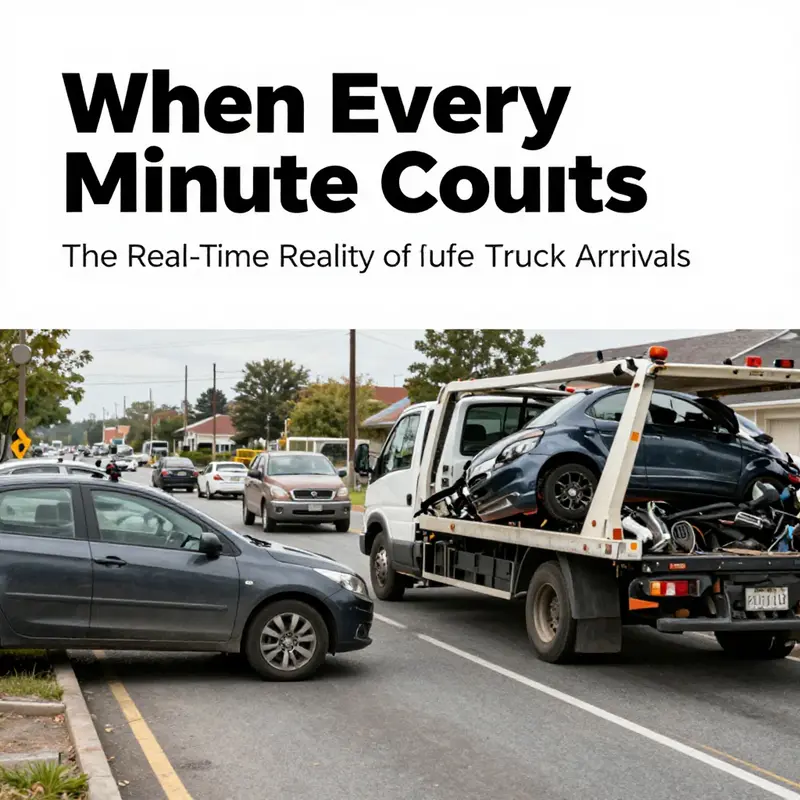
When a vehicle stalls, breaks down, or ends up in a spot that makes driving unsafe, the first question in most minds is not how it happened, but how soon help will arrive. Arrival times for tow trucks are not a single number but a moving target shaped by location, the nature of the incident, and the kind of equipment needed to recover the vehicle without causing further damage. In practical terms, the ETA you see after you request roadside assistance is a forecast built from the closest available responders, their current status, and the dynamic reality of the road network. The model is simple in theory: locate the nearest suitable tow team, dispatch, and monitor until the vehicle is under tow or safely retrieved. In practice, it is layered with real-time traffic conditions, demand spikes, weather, and the complexity of the rescue operation. The result is a spectrum of possible wait times rather than a single clock tick, and that spectrum shifts with every mile and every obstacle along the route to your location.
In dense urban corridors, the window often narrows. The system nudges toward a fast response—typically within 15 to 30 minutes for a straightforward recovery on a major road or highway. The reason is straightforward: urban centers concentrate service providers and there is a higher density of flatbed and standard tow trucks ready to roll. The closer a disabled vehicle sits to a service hub, the less distance a responder must traverse, and the less time traffic itself will steal away from the dispatch. Yet, it is not merely proximity that dictates speed. The traffic climate matters as much as the distance. A gridlocked boulevard can slow a near-by unit even if it is heading in your direction. Conversely, a vehicle parked just off an arterial road during off-peak hours can be reached quickly, yielding the 15-minute range that often feels almost miraculous when a driver is stranded with a hot engine or a flat tire.
Beyond the city lights, the narrative changes. When a situation demands more than a quick winch from a curb, or when the vehicle is in a precarious position—say, on an embankment, in a ditch, or where water intrusion is possible—the response time tends to extend. Rotator tow trucks, which are equipped for complex lifts and heavy-duty recoveries, are frequently deployed in these scenarios. Their arrival may take longer initially, as dispatchers allocate specialized resources and ensure safety protocols are met before attempting the lift. The delay is not hesitation; it is a precaution that reduces the risk of further damage and protects the people involved. In such contexts, a typical ETA might extend into the 30- to 60-minute range, with additional minutes added if the terrain requires meticulous rigging, multiple winch lines, or coordination with emergency responders. The blend of equipment and expertise creates a more deliberate tempo, but it remains the safer, more effective path to a successful recovery.
Rural and remote locations carry their own rhythm. The distance to the nearest available service provider becomes a defining constraint. In these landscapes, the ETA can stretch to 60 minutes or more, especially when a single tow team serves a wide geographic area or when road infrastructure is limited. The wait may feel longer, but the reason is not only distance. Rural drivers often encounter longer initial dispatch times because the system must account for the most efficient allocation of scarce resources across a large footprint. A flatbed may be ideal for a vehicle that needs careful loading, but if the nearest flatbed unit is miles away and a lighter, winch-based approach can handle the situation safely, the dispatcher may opt for the quickest viable solution rather than the one that would minimize the number of trips. In these stretches, the combination of a longer travel distance and the need for precise, secure recovery expands the timeline, though the end result remains a careful, damage-free return to the road.
The type of tow truck is a key variable in both arrival time and the overall recovery duration. A flatbed tow truck is often the preferred instrument for long-distance moves or for vehicles that require careful loading to avoid further damage. Its arrival may be slightly slower in some cases because the operator must position the bed, align the vehicle, and secure it with multiple tie-downs. The benefit, however, is the stability and protection it offers during transport. A rotator tow truck, by contrast, is a powerhouse for challenging recoveries, such as vehicles in precarious positions or situations requiring complex lifting maneuvers. While rotators may take longer to arrive in the first place due to their specialized nature and the higher level of coordination needed, they reduce the number of separate actions required on-site and minimize the risk of additional damage when gravity and angles come into play. The difference between immediate response and immediate, safe recovery often boils down to this choice: speed versus capability, or more precisely speed multiplied by the likelihood of a successful, damage-free outcome. In practical terms, the ETA may hover around 15 to 30 minutes for a straightforward urban recovery with a nearby standard tow truck, but in a difficult, off-road, or remote situation with complex equipment, the ETA can drift toward 60 minutes or longer as the plan evolves from a dispatch to a deliberate, staged operation.
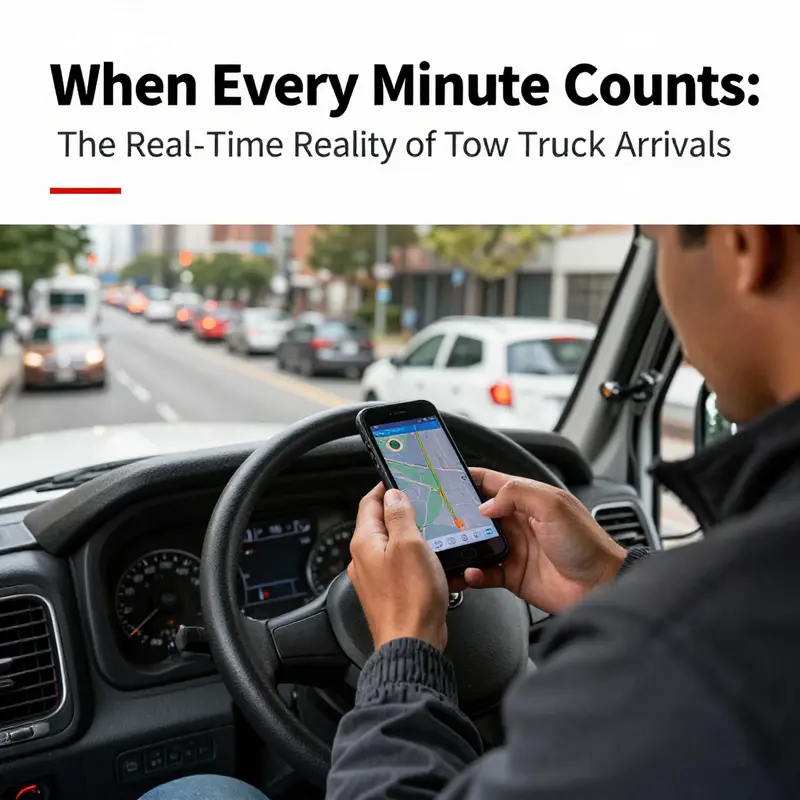
A crucial element shaping all these numbers is the mechanism by which arrival times are communicated. Modern roadside services increasingly offer real-time tracking, giving drivers visibility into the truck’s progress and a notification when the unit is approaching. This feature reduces the anxiety that often accompanies a long wait by turning a vague sense of waiting into a precise, living update. It also helps people plan steps around the arrival—moving to a safer location, clearing the vehicle’s path, or arranging alternative transportation if the wait stretches. Importantly, the ETA provided after booking is not a fixed promise but a live estimate that accounts for the evolving road conditions, the current load on nearby responders, and any new information about the incident. The most reliable providers are transparent about updates, allowing the consumer to see how far the tow is and how quickly it is closing the distance. In the broader discourse of tow operations, this live-tracking capability has become a defining feature of customer trust. It transforms a moment of vulnerability into a sequence of informed choices, one turn of the highway at a time.
To illustrate, imagine a driver stranded on a busy urban street during the morning commute. The earliest responders might still be clearing the previous call, and the next available unit could be a few blocks away, already en route. The final ETA is a composite of the delivery path, the unit’s current speed, traffic signals, and the time needed to safely secure the vehicle once it is in reach. In a second scenario, a vehicle slid into a ditch in a rural corridor after a rainstorm. Here the dispatcher is weighing the availability of a rotator, the safest approach to lift without causing further harm, and the potential need to coordinate with local authorities or water rescue teams. The ETA thus becomes a staged plan: a fast arrival of the right equipment, followed by a sequence of precise steps that secure, lift, and tow. The same logic applies to a vehicle in a precarious off-road situation, where the terrain dictates the rigging configuration and the number of operators required. In all cases, the calendar of arrival is not a single minute but a dynamic timetable shaped by circumstance, equipment, and safety first.
With this understanding comes a practical set of guidelines for anyone awaiting a tow. First, be proactive with location details. Clear landmarks, gate codes, and the precise spot among obstacles like parked cars or construction zones help the dispatcher and the operator find a way in without delay. Second, recognize that an ETA is most useful when it is paired with updates. A simple notification when the tow is in your vicinity or when the operator is approaching can dramatically reduce anxiety and improve coordination. Third, consider your own safety and that of others. If you can, move to a safe area away from traffic, switch on hazards, and keep a clear path for the tow truck to maneuver. Fourth, understand the tradeoffs between speed and suitability. A nearby unit may arrive quickly but might require a more involved loading process to prevent damage. In some cases, waiting a few extra minutes for the right equipment can save damage to the vehicle and reduce the risk of secondary incidents on the road. Finally, remember that the system works best when there is honest, up-to-date communication between you and the dispatcher. Real-time updates, precise location information, and a calm, informed approach all contribute to a smoother, faster resolution.
For readers who want a deeper technical perspective on how fleets balance speed and safety, the broader literature on modern tow operations points to a growing alignment between response time metrics and mechanical capability. The fleet often relies on a blend of proximity, availability, and the capacity to tailor the recovery method to the vehicle’s condition. This is why a one-size-fits-all ETA never truly captures the reality on the ground. It is also why many dispatch systems reserve a portion of their bandwidth to urgent, on-demand calls that demand immediate attention, even if those calls compete with scheduled dispatches. In practice, the outcome you experience—the arrival time—reflects a complex choreography rather than a single lever pulled by a single operator. It is a balance of geography, gear, and governance, the last of which ensures that even when the clock is ticking, safety remains the central command.
To connect these ideas with the evolving landscape of roadside assistance, consider this: the ETA you receive is the headline of a longer story about how a fleet coordinates resources to meet real-time needs. It is the result of a system designed to adapt to the road’s unpredictable nature, from urban gridlock to rural stretches and from the simplest recovery to the most intricate rigging job. If you ever wonder why two callouts in the same area can yield different wait times, you now know the answer lies in the specifics of the situation—what the vehicle has endured, what equipment is required, and how the road itself shapes every step of the rescue. If you want to explore the technology and safety that underpins these operations, see the resource on tow-truck technology and safety for a closer look at how teams approach risk, rigging, and reliable performance on every call. tow-truck technology and safety.
In closing, the numbers on ETA are a practical tool, not a prophecy. They guide expectations, help plan safer responses, and empower drivers to make informed choices while waiting. The real value lies in the transparency of updates, the ability to track progress, and the confidence that a trained team is applying the right mix of speed and care to bring you back on the move. When you understand the forces at play—the density of services, the terrain, the equipment in use, and the real-time conditions—arrivals become less a mystery and more a predictable function of context. That context matters because every delay has a cost: it can extend exposure to hazards, complicate a repair plan, or force a driver to forego a crucial appointment. The more accurately a system reflects the ground truth, the more reliable its ETA becomes as a compass through the uncertainty of roadside emergencies.
External resource: For readers seeking a broader overview of how fleets optimize performance across diverse scenarios, the following guide offers a comprehensive view of modern tow truck design and application: New Tow Trucks Guide: Performance, Technical Features, and Applications Explained.
null
null
Bringing Help Fast: Regional Realities of Tow Truck Arrival Times
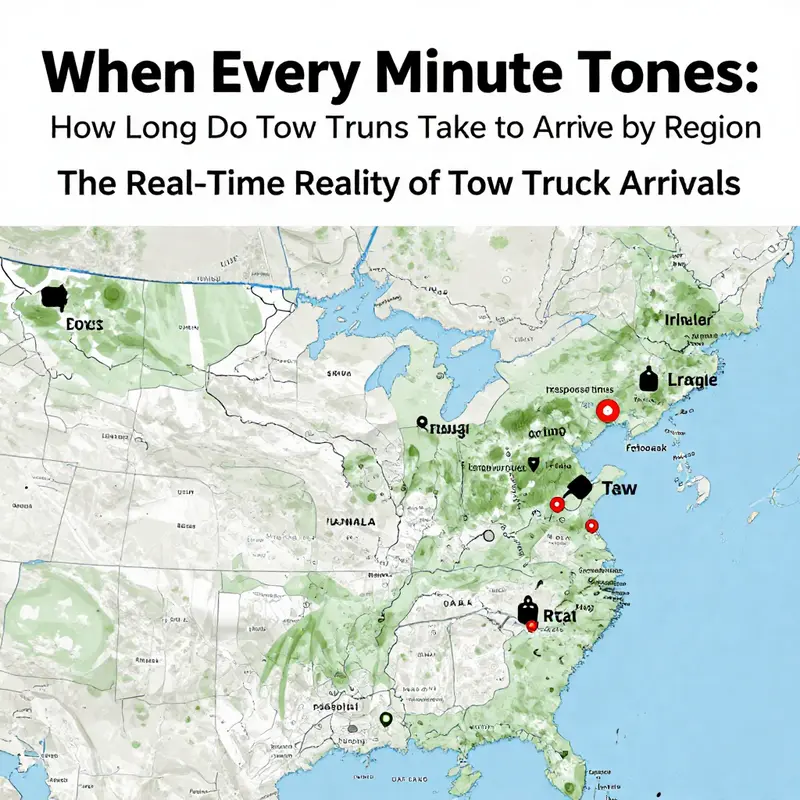
Urban centers tend to shorten the window after dispatch thanks to dense provider networks and better access to nearby units. In many markets, a typical ETA after a booking sits in the 15 to 30 minute range, though weather, traffic, and demand can widen that window. Rural and fringe areas face longer drives, winding routes, and fewer nearby providers, which can push the wait to an hour or more. The result is a regional mosaic rather than a single national number.
To help manage expectations, many towing services now present an ETA right after booking and offer live tracking where available. The ETA is a snapshot that reflects proximity, current traffic, and fleet status, not a guaranteed arrival time. Real time updates and route visualization can reduce anxiety by letting you see the truck approach and anticipate when help will arrive. But the underlying math is probabilistic, and conditions can shift quickly.
Practical advice for customers is to share precise location details, stay near the vehicle, and prepare for a longer wait in rural areas or during bad weather. Consider proximity as a primary driver of speed, and weigh price versus speed when choosing a provider. Understanding regional differences helps you respond calmly and make informed decisions when a breakdown happens.
Time on Call: How Technology Slashes Tow Truck Arrival Times
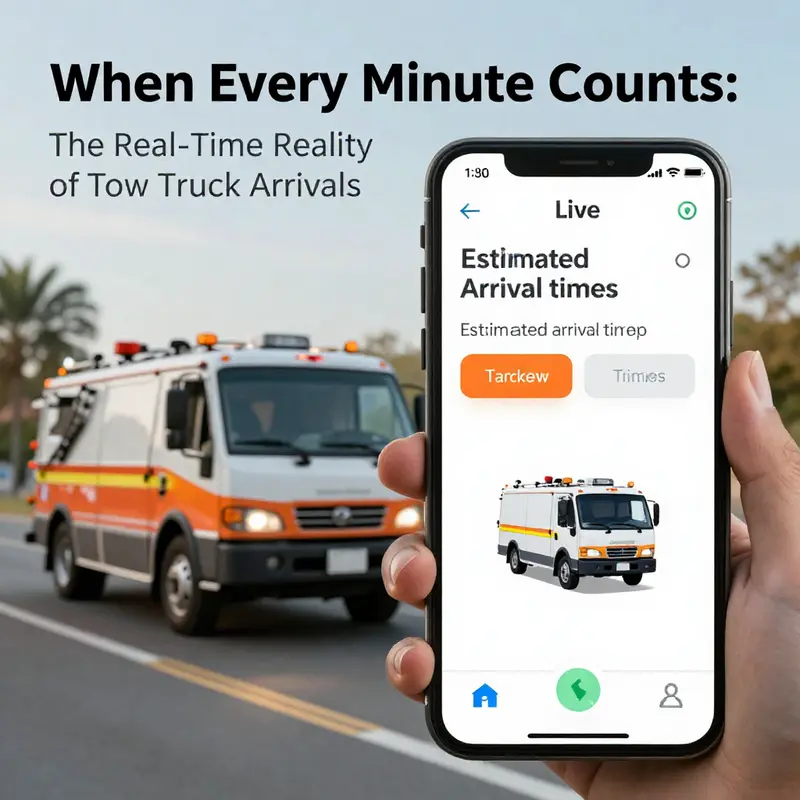
On the roadside, a single question hangs in the air: how long will it take for help to arrive? The answer used to feel like a guess, shaped by the dispatcher’s memory and the day’s traffic patterns. Today, that question is increasingly answered by a web of technology that links dispatch, vehicles, road networks, and the people who respond to a breakdown or collision. In the broadest sense, tow truck arrival times exist on a spectrum. They are always influenced by where you are—the dense, gridlike streets of a city differ markedly from rural stretches where a service truck must travel longer distances. They are also shaped by the moment: during a sudden snowstorm, a major accident, or a holiday weekend, even the best-positioned fleets must contend with congestion and limited idle time. Yet the core shift is that the wait is no longer a lottery; it is a result of intentional design within the dispatch ecosystem, a design that relies on real-time data, digital coordination, and a clear, live signal of where a vehicle is and when it will reach you.
When you request roadside assistance through a digital platform, you typically receive an estimated time of arrival right away. The ETA is not a guess but a calculation based on the location of the nearest available service provider, current traffic conditions, road permissions, and the status of other units. The precise moment you initiate the request triggers a process that queries fleets equipped with telematics, checks for availability, and builds a route that minimizes drive time while preserving safety margins. In practice, this means the ETA can reflect a fast response in an emergency but may stretch a little longer in places with fewer trucks or in dense urban cores where every maneuver must avoid queued delays. The type of request matters as well: an urgent breakdown or an accident may pull higher-priority resources, while a scheduled or on-demand pickup at a less critical moment may yield a longer, more predictable window.
As soon as dispatches are issued, the map of movement becomes a living thing. Drivers report their status through mobile interfaces, sending updates that refresh the ETA and allow the caller to track progress in real time. The visualization does more than appease impatience. It converts uncertainty into shared awareness. Even if you cannot control the traffic around you, you can understand why a delay happens and how the system is choosing a path that balances speed with safety. Real-time tracking also creates a feedback loop for the dispatcher. If a truck is held up by a slow merge or a traffic snag, the system can reassign a closer unit or reroute remaining assets to the sequence that preserves the quickest overall arrival time. The outcome is a network that responds like a living organism, rearranging itself in response to conditions, rather than a static plan that becomes outdated the moment the siren sounds.
The reach of this network extends beyond a single trip. In many regions, the availability of a tow truck is not uniform through the day. Peak hours, weather disruptions, or large-scale events can compress the usual margins, yet the technology layer mitigates those compression effects by leveraging data across time and space. A platform can forecast demand surges, allocate additional units to high-risk corridors, and position resources at strategic waypoints before a problem even arises. This predictive logic matters a great deal for long-haul operations, where delays can cascade through supply chains and delay critical timelines for goods movement. In those contexts, the ability to anticipate where help might be needed and to position a unit accordingly reduces not only the wait for a single vehicle but also the downstream impact on fleets and partners that rely on timely recoveries and quick turnover of assets.
The numbers behind this shift are not merely anecdotal. A 2024 industry study highlighted by a major automotive association showed that fleets using integrated telematics and AI-driven dispatch systems experienced an average reduction of about thirty percent in tow truck arrival times compared with traditional, non-integrated methods. The improvement is not simply a matter of speed; it reflects a more coherent orchestration of assets, better routing choices, and smarter queuing at the level of the fleet. In practical terms, a driver may reach a caller in a city corridor well within the lower end of the usual range, while a rural request might still be fulfilled within a predictable window—often within fifteen to sixty minutes for on-demand or scheduled help, though exact figures always depend on local conditions and demand patterns. This variance exists because the same technology is optimizing multiple simultaneous requests at once, not just a single encounter between a truck and a roadside location.
If you consider what makes this possible, the technology stack behind the scenes matters almost as much as the trucks themselves. Global positioning, live traffic feeds, digital job boards, and automated prioritization algorithms work together to trim idle time and shorten the actual driving distance required to reach a caller. In a quiet but powerful way, the fleet is learning from every mile traveled and every handoff between units, continually refining routes, priorities, and assignments to shave minutes from the ETA. This is not a single invention but a convergence of capabilities that turns a potentially lengthy misadventure into a manageable, predictable sequence of steps. The result is a more trustworthy promise to the person waiting by the roadside, a promise that the system does its best to make good on, even when the road is not cooperating.
An important facet of this evolution is safety. When dispatch relies on precise location data, it can route drivers away from risky maneuvers, ensure they follow safer road choices, and provide timely guidance about where to stop for protection and visibility. The safety dimension also translates into better coordination with other emergency responders when accidents occur. Clear, fast communication channels between drivers, responders, and dispatch reduce miscommunications that used to slow down the arrival process. The net effect is a system in which speed and safety advance in tandem rather than at odds with each other. For those curious about the concrete safety and technology aspects of tow-truck operations, this broader framework is discussed in detail here: tow-truck-technology-and-safety.
Of course, all technology rests on the human side of the operation. Behind every ETA there is a human dispatcher making judgment calls, a driver navigating traffic, and a caller who is seeking reassurance. The best digital tools do not replace these human elements; they amplify them. They provide better information for decision-making, smoother communication for anxious callers, and clearer expectations for customers who want to plan their moments on a stressful day. The result is a service experience that feels less like a blind rescue and more like a guided convergence of effort: a coordinated response in which the arriving truck is not merely a chance visitor but the outcome of a tightly tuned, data-informed process. In that sense, the question “how long will it take?” becomes part of a larger conversation about reliability, resilience, and the thoughtful use of technology to keep people moving when their own plans have gone off track.
For readers who seek a wider view of the industry’s progress, the data point from the broader study provides important context. It confirms that when fleets combine telematics, real-time routing, and AI-based dispatch, the benefits extend beyond a single incident. They improve the consistency of service across different geographies and operating conditions, creating a more predictable experience for customers who rely on tow services in urban centers, along rural lanes, or during transit-heavy periods. The convergence of these technologies remains dynamic and regionally variable, yet the trajectory is clear: more accurate ETAs, quicker arrivals, and a heightened sense of control for people awaiting help. As digital platforms continue to evolve, the line between waiting and knowing continues to blur, and the wait itself becomes a transparent, manageable part of the roadside experience.
External resource: For a broader industry perspective on how technology is changing tow truck response times, see the following study: AAA study on tow truck response times improving with technology.
The Clock on the Road: Tow Truck Arrivals in Urban Hubs and Rural Backroads
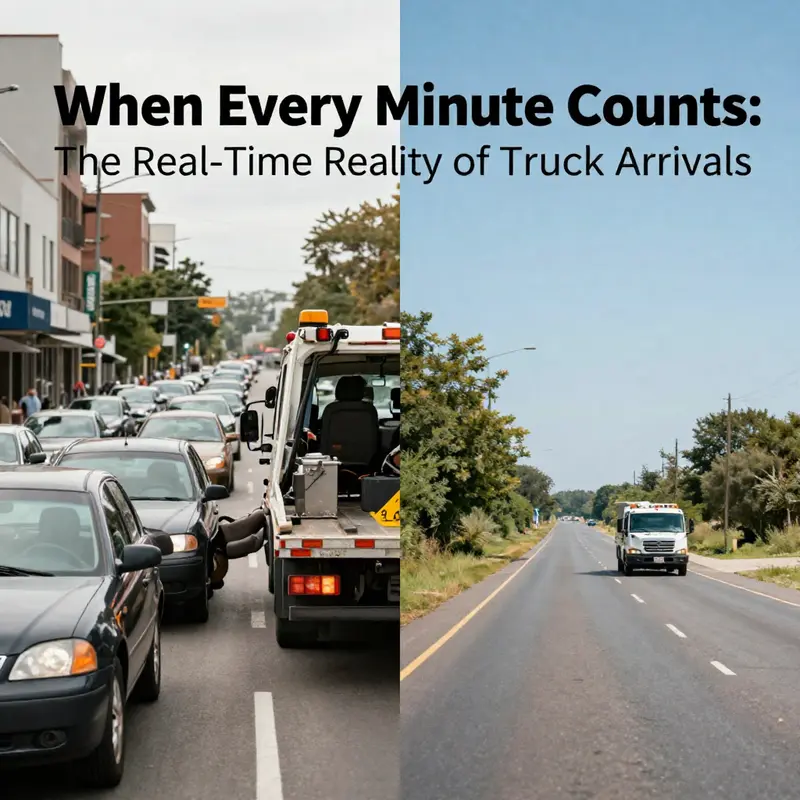
When you find yourself stranded, the first thing you notice is the clock looming over the minutes since you called for help. The arrival of a tow truck is not a single, fixed event but a dynamic moment shaped by place, time, and the hidden geometry of the road network. In cities, the clock tends to run faster, but urban roads also complicate the trajectory with traffic lights, detours, and a dense tapestry of other responders. In rural areas, the clock can stretch into hours, not because drivers lack willingness, but because the service map narrows and the distance to reach you increases. Understanding these patterns helps set expectations and reduces the anxiety that often accompanies a roadside setback. At the heart of this discussion lies a straightforward truth: tow truck arrival times are best understood as estimates grounded in geography, current demand, and the practical realities of dispatching a vehicle to a moving target—your exact location on the map.
In most places, the process begins the moment you press the call button or tap a request within a roadside assistance app. An estimate appears almost immediately, derived from the location of the nearest available service provider and the road network that will ferry the tow to you. This ETA is more than a guess; it is a calculated projection that accounts for distance, current traffic conditions, and the typical pace of a tow crew once they’re in motion. In practical terms, two broad patterns emerge: urban convergence and rural dispersion. In cities, the sheer number of available units and the density of service providers create a speed-forward dynamic. Dispatch centers can allocate one of many nearby trucks to your location, often computed in real time as you move through the booking screens. The result is a relatively tight ETA, frequently in the 15 to 30-minute range, even when the underlying traffic is at a standstill or slowly crawling.
Real-time tracking has become a core feature of modern roadside services. It is not only about an ETA on a screen but about a moving beacon you can follow with your eyes. If you’ve ever watched a delivery person approach your address, you know what it feels like to narrate the journey as it unfolds in front of you. In urban contexts, this tracking can be surprisingly precise. A driver’s location, the route chosen, and the approaching landmarks are visible in near real time. You might receive notifications that the tow truck is approaching from a specific street, turning onto your block, and then parking in a nearby curbside lane. The visibility does more than soothe nerves; it helps you coordinate with the driver for safe handoffs, clearing a path, or guiding the truck through a tight urban turn, especially if you are in a construction corridor or a high-traffic zone where space is at a premium.
Yet the same urban environment can also impose friction. Traffic congestion, accidents ahead, or roadwork can temporarily pause or slow the journey. Even so, the high density of tow units means the system rebalance quickly, and another nearby unit can take up the slack so that the overall ETA remains within a predictable window. In city centers and commercial districts where large vehicles must navigate narrow lanes or curbside parking regulations, crews frequently adapt by deploying specialized equipment designed to maximize visibility and safety. In some cases, you may see trucks equipped with high-visibility strobes and safety gear that stands out in a sea of urban textures, a reminder that speed here is often a matter of safe, deliberate maneuvering as much as it is about distance.
Across the country’s vast rural stretches, the pattern shifts. The wait for help can extend from tens of minutes to several hours, depending on where you are and what the local service network looks like. Rural arrival times of one to four hours are not uncommon, and they reflect a constellation of factors that are less prominent in urban cores. Fewer towing companies operate in sparsely populated areas, and a single truck may have to cross long segments of highway, secondary roads, and rural byways to reach the incident. The remoteness compounds logistics: trucks may be stationed far from your location, and the terrain—gravel roads, sudden dips, or muddy lanes after a storm—adds to the time the crew spends maneuvering into position and securing a safe tow.
In these environments, the types of tow vehicles in use also diverge. Wheel-lift or sling-style tow trucks, which are compact and maneuverable, are often favored in rural settings for their ability to access tighter spots and lighter vehicles without causing additional damage. The trade-off is that their reach and payload are different from larger, heavier-duty units found in urban fleets. The practical takeaway is simple: in rural areas, the absence of a dense network of nearby providers means longer distances and a higher likelihood that a single unit will cover multiple calls before it can reach you. When a breakdown happens in a remote region, the coordination required to bring in the right equipment—sometimes even involving a secondary transport plan for the vehicle once it’s loaded onto the tow bed—adds a layer of complexity that can push wait times upward.
These regional patterns do not exist in a vacuum. They are shaped by time of day, weather, seasonality, and even local emergencies. A sudden winter storm can transform a brief ETA into a longer buffer as roads grit and plows move through the area. A multi-vehicle collision on a major highway can pull additional tow crews into service lanes, temporarily diverting units away from nearby incidents and altering arrival windows for everyone else. Conversely, a routine weekday afternoon may present a pool of nearby, readily available units in urban settings, compressing ETAs into the shorter end of the range. In rural zones, a holiday weekend may disrupt the usual cadence as travelers push through the countryside, scattering demand in ways that ripple through dispatch calculations. The common thread across these fluctuations is the reliance on live data and adaptive routing: the system strives to keep you informed and, when possible, to shorten the path between your location and assistance through smart dispatch and real-time adjustments.
What can you do to align expectations with reality while you wait? The first is to book through a trusted roadside service that provides an ETA and continuous updates. Even when the distance is longer than you’d like, an accurate ETA is valuable because it sets the pace for what comes next—whether you’ll be asked to move to a safer spot, whether you should prepare to share access with a driver, or whether emergency services may need to be contacted if your safety is in question. If you are in a position to plan, share your precise location and any landmarks that can help the driver find you quickly. In many cases, providing a clear, unobstructed approach to the scene reduces the time the driver spends corralling the vehicle and setting up the tow. For those curious about the practical costs of towing in addition to arrival times, a commonly consulted resource provides a snapshot of pricing trends and typical fees. This information can be found here: how-much-is-a-tow-truck.
Another practical consideration is the quality of information you receive after booking. A lot of the value in modern tow services comes from transparency: you are told when the driver is dispatched, you can see an updated ETA if conditions change, and you can watch the progress of the unit as it moves toward your location. Real-time tracking is not merely a gimmick; it is a tool that helps you manage the situation. If you face a long wait in a rural setting, you can use the extra time to prepare the vehicle for recovery, locate your keys, and gather any documents or items you’ll need once the tow arrives. This proactive stance helps reduce stress and ensures that the moment the truck arrives, the transfer of control is as smooth as possible.
It is also worth acknowledging the role of safety and common sense in shaping the experience. In busy urban areas, consider stepping back from the curb to allow the tow truck to pull in safely. If you are on a busy street, turning on hazard lights and, if possible, maneuvering behind protective barriers or into a designated pull-off provides a safer staging area for the driver. In rural regions, where shoulder space might be narrow and roadside hazards more pronounced, it can be wise to have reflective gear or bright markers on hand to guide the crew and other motorists. These small actions can shave minutes off the process by eliminating last-minute improvisations that slow the handoff.
Ultimately, the question of how long a tow truck takes to arrive is reframed from a single moment to a lived experience shaped by geography, timing, and people working to solve a problem under pressure. Urban environments produce quicker arrival windows on average due to dense provider networks and more predictable routing, while rural settings produce longer waits driven by distance, fewer service points, and the realities of countryside travel. Yet even within those general patterns, the exact ETA remains a useful, evolving figure—one that can be refined as the dispatcher, the driver, and you communicate in real time. The most reliable approach is to treat the ETA as a live guide rather than a fixed deadline, staying in touch with updates, keeping the area accessible, and preparing for the possible need for alternative arrangements if conditions shift unexpectedly. By embracing the rhythm of the road—where speed, safety, and connectivity intertwine—you can navigate the waiting period with greater calm and clarity, knowing that help is on the way, even if the clock marks minutes that stretch longer than you expect in the moment.
Final thoughts
Understanding the factors that determine how long it takes for a tow truck to arrive can significantly improve your response during roadside emergencies. Each situation presents its own challenges, influenced by geographical regions, traffic conditions, and technology. Whether you’re in a bustling city or a quiet country road, knowing what to expect can ease the anxiety associated with vehicle trouble and enhance your overall preparedness. Cultivating awareness around these dynamics not only empowers you but ensures you’ll be better equipped to handle these inconvenient yet common occurrences.