
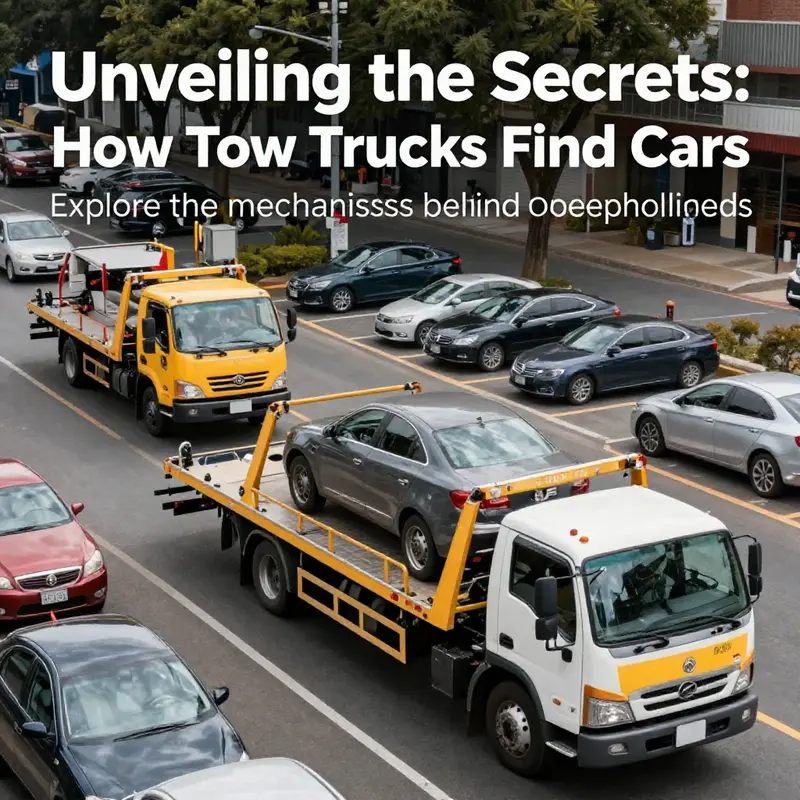
Tow trucks play a vital role in maintaining order on the roads, serving both private property owners and communities by enforcing parking rules, assisting drivers in need, and recovering vehicles. As everyday drivers, residents, truck owners, auto repair shops, dealerships, and property managers encounter tow trucks in various capacities, understanding how these operations work becomes essential. This article delves into the intricate procedures of vehicle location, breaking it down into four comprehensive chapters. We’ll first examine the repossession services that form an integral part of how tow trucks operate. Then, we’ll uncover the advanced technologies revolutionizing vehicle tracking, including GPS and License Plate Recognition systems. Next, we’ll discuss the critical legal authority surrounding parking violations and how tow companies enforce it. Finally, we will address the challenges tow truck services face, particularly concerning unauthorized towing and the public’s perception, providing a holistic view of the industry.
Tracing the Line: How Tow Trucks Locate Repossessed Cars Through Authority, Evidence, and Logistics
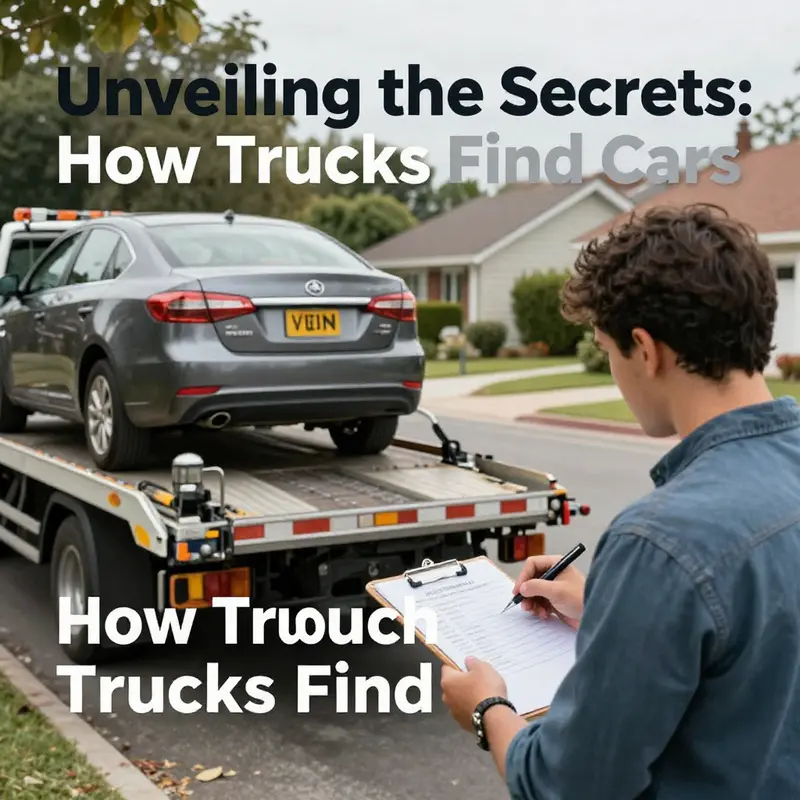
When a lender initiates a repossession, the recovery process opens a carefully choreographed sequence that blends legal authority with investigative discipline and logistics. It is not a single action but a sequence of steps designed to minimize risk, protect the rights of all parties, and return the vehicle to the rightful owner’s creditor. The heart of the operation lies in locating the car with accuracy and speed, but what seems straightforward on the surface rests on a web of rules, records, and real-time decision making that unfolds behind the scenes of everyday towing.
The journey begins with formal authorization. A notice of default or equivalent legal directive places the lender or leasing company on firm footing to pursue recovery. This authorization is more than a bureaucratic checkbox; it marks the point at which the burden shifts from finance to enforcement, and it sets the boundaries for how the repo team may proceed. In jurisdictions across the country, agents must operate within state laws that govern trespass, entry, and the permissible use of force. Those rules are not mere technicalities; they determine whether a location is accessible by conventional towing methods, whether surveillance techniques are lawful, and when a private party may engage in activities that resemble investigative work. The responsible repossession professional understands that legality is the backbone of every move, because an improper action can unravel a recovery in court or invite civil liability that costs more than the vehicle’s value.
From that authorization, the repo agent—often called a recovery specialist—begins the practical hunt. The methods are a mix of traditional sleuthing and modern data access, all aimed at converging on one or more likely locations without creating unnecessary disturbance. Public records are a staple. A variety of datasets, accessible through proper channels, can reveal ownership records, last known addresses, and sometimes employment or residency changes that give a direction for surveillance. In many cases, the agent will cross-check the borrower’s address history, the vehicle’s registration status, and any court orders that may affect removal. This is not about invading privacy so much as establishing a factual trail that can be legally pursued, a trail that often intersects with the borrower’s own public footprints.
Another pillar of the search is license plate information. Plate data can surface in a variety of lawful contexts, including law enforcement records and, where permitted, private databases that analyze plate activity. A matching plate provides a strong signal about the vehicle’s location—particularly when it appears at a home, office, or a frequently visited site. The challenge, of course, lies in the dynamic reality of a vehicle: it moves, is parked in a multi-use lot, or may be off the radar for a time. When a plate comes back hot in a particular area, the recovery team can focus surveillance efforts on potential locations, noting patterns such as typical parking spots, routes the borrower might use, and times when the vehicle is most likely to be left unattended.
GPS tracking data, if installed by the owner or the lender, becomes the most direct map to a car’s whereabouts. A GPS beacon provides precise coordinates, sometimes with historical breadcrumbs that show where the vehicle has rested. Where the owner has consented to a tracking device—or where the lender has installed one as a contractual safeguard—the recovery specialist can use those coordinates to guide a tow. In practice, the GPS signal is just another tool in a broader toolkit. It helps reduce the guesswork but does not replace the need for on-the-ground verification and lawful execution. Even with a reliable GPS readout, the agent will still consider the practicality of the location, the accessibility of the vehicle, and surrounding risks before attempting a recovery.
Surveillance is another traditional instrument in the repossession repertoire. The agent may conduct discreet observation at homes, workplaces, or other sites where the borrower is known to frequent. The goal is not to intrude unnecessarily but to corroborate the most probable location when records and tracking data disagree or where conditions on the ground require confirmation. Surveillance demands patience, discipline, and a strict adherence to the law. Poorly reasoned surveillance can escalate tensions, endanger the agent, or expose the operation to legal challenge. The most effective repossession teams blend observation with intelligence—knowing when to stay in the background and when to act decisively based on credible, verifiable information.
In some cases, the search extends beyond straightforward records and conventional data streams. Borrowers may relocate, or a vehicle may be left in a less obvious place, such as rural properties, remote storage facilities, or mixed-use lots. Here, the recovery professional may extend the search to social cues that are publicly observable but not private—such as defused or ambiguous online activity that hints at a new address or a change in daily patterns. In certain more elusive recoveries, private investigators may be engaged to pursue leads that public data cannot resolve. The use of such resources underscores a core principle of repossession: thoroughness must be balanced with respect for legal boundaries and the borrower’s privacy. Any escalation—like a broader canvassing of a neighborhood or a potential entry point—must be justified by lawful authorization and the expected yield in recoverable value.
Once the likely location is established, the actual recovery begins. The tools of the operation are the tow trucks themselves, chosen based on the vehicle’s condition, size, and how it is parked or blocked. A flatbed tow is often preferred for high-value cars or models that require careful handling to avoid damage. A wheel-lift tow can be more versatile in constrained spaces or when the vehicle is in a tight spot. The choice is not merely about speed; it is about preserving the asset and reducing the risk of further loss or liability. The recovery team also weighs the environment: a driveway, a curbside strip near a busy street, or a rural lane each presents unique challenges. Terrain, lighting, weather, and traffic all factor into the plan, and the operator must adapt with skill and restraint.
Cooperation from the vehicle’s owner or occupant can transform a tense situation into a smoother recovery. A cooperative scene minimizes property damage and the potential for conflict, while also speeding the handover of the vehicle to the lender’s control. The ideal repossession is a quiet operation, conducted with clarity and professionalism, that leaves both parties with minimal disruption and a clear record of what transpired. When the owner resists, the process becomes legally sensitive and more complex. In those moments, the recovery team relies on documented authorization, precise identification of the vehicle, and a careful, measured approach to removal. The risk calculus shifts: safety, legality, and the integrity of the vehicle become paramount, and the team may need to coordinate with law enforcement or other authorities to ensure compliance while preserving the lender’s rights.
The financial calculus of repossession is inseparable from the mechanics of the locate-and-recover sequence. Repossession towing is often more costly than standard roadside services, reflecting the risk profile of the operation and the specialized skills involved. The equipment, fuel, insurance, and labor required to locate a vehicle in a potentially dispersed or difficult location all contribute to higher costs. In rural areas or terrain that demands off-road recoveries, the premium rises further. The industry recognizes that the cost of retrieval affects the borrower’s overall exposure, the lender’s recovery rate, and the willingness of parties to negotiate settlements before a full-blown repossession becomes necessary. These economic realities shape the planning stage, prompting investigators and recovery teams to focus on efficient routes, optimal dispatch times, and coordination with lenders to ensure that every move adds value rather than expense.
Beyond the mechanics of locate and recover, the chapter must acknowledge the ethics and accountability that anchor responsible practice. Repossession is a legal process that, if mishandled, can lead to civil complaints, allegations of unlawful entry, or questions about civil rights protections. The most reputable recovery operations operate with a transparent chain of custody: every step—from the initial authorization to the final transfer of the vehicle—is documented, timestamped, and stored for review. This documentation is crucial not only for legal compliance but also for post-recovery accountability. When a vehicle is recovered, the team records its condition, any notable incidents, and the precise handover details. These records help lenders verify that the vehicle’s value has been preserved and that the borrower’s property was treated fairly throughout the process. The discipline of meticulous recordkeeping and lawful conduct protects the broader industry from accusations of coercion or exploitation and helps build trust with borrowers, law enforcement, and the public.
The repossession landscape is not without risk or controversy. In some instances, reported concerns about unauthorized or suspicious towing have circulated in public discourse, underscoring the need for verification and vigilance. A recent cluster of incidents in a particular locale reminded the public that legitimate tow providers must carry clear identification, official markings, and verifiable contact channels to distinguish themselves from potential abuse. This cautions both the industry and consumers to verify credentials, request proper documentation, and contact local authorities if something feels off. The overarching message is simple: legitimacy protects everyone and preserves the integrity of the process.
As readers consider the actual steps of locate and recover, it helps to reflect on the broader ecosystem that supports repossession work. The interplay between lenders, recovery professionals, law enforcement, and regulatory frameworks creates a system that aims to balance efficient asset recovery with respect for legal rights. This balance is not abstract; it shapes the design of procedures, the way dispatch centers operate, and the practices that determine whether a car is found quickly, removed safely, and returned to the lender with a complete and accurate record. In many ways, the art of finding a car in repossession is less about a single clever trick and more about a disciplined blend of authority, information, and careful execution.
For readers who want to explore the practical dimensions of towing beyond repossession, there is a broader conversation about the economics and logistics of tow services. If you are curious about the costs and trade-offs involved in towing, you can explore a concise overview at How Much Is a Tow Truck? This resource offers context for the broader towing landscape, including the ways in which the costs of locating and recovering a vehicle feed into overall service pricing. How Much Is a Tow Truck?
The field also benefits from a growing body of analytical work that examines the standards, types, and industry performance of repossession towing. Professionals, lenders, and regulators alike look to comprehensive analyses to understand best practices, identify gaps, and improve procedures across jurisdictions. One such analysis provides a wide lens on the repo-towing landscape, offering insights into how the industry adapts to changing laws, technology, and market demand. For a broader overview, see the industry analysis at RepoTowingSolutions. This external resource contextualizes the practical realities described above within a larger framework of standards and performance metrics: https://www.repotowingsolutions.com/industry-analysis
In closing, locating a repossessed car is a convergence of authority, evidence, and disciplined logistics. It is a field where data becomes direction, where legality frames action, and where a well-planned operation yields results that protect assets, rights, and reputations. The chains of information that guide a recovery—from public records to GPS beacons to careful, on-the-ground observation—reflect a profession that is as much about responsible practice as it is about decisive action. When executed properly, the repossession process demonstrates a careful balance: the lender’s interest is safeguarded, the vehicle is retrieved with minimal damage, and the borrower’s and the public’s rights are respected. It is a testament to how a modern towing operation can combine traditional problem-solving with contemporary data stewardship to locate, recover, and document vehicle recoveries with integrity.
Following the Signal: How GPS, LPR, and Fleet Systems Guide Tow Trucks to the Right Car
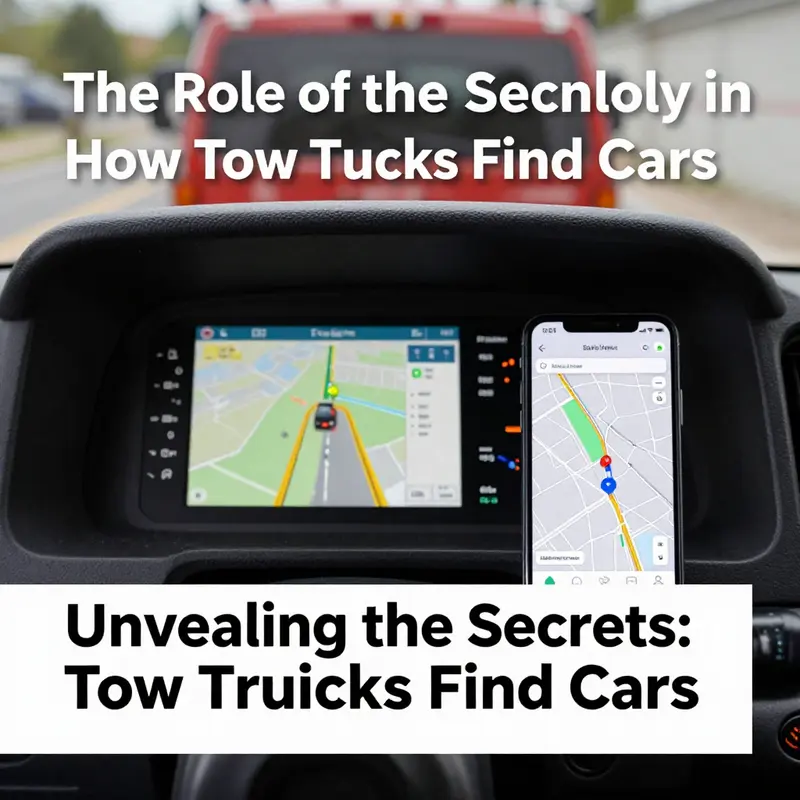
Every tow involves more than strength and speed; it hinges on a quiet, precise network of data that points a truck to the right vehicle in seconds. The question of how tow trucks find cars, at first glance, might seem straightforward, but the practice rests on an integrated stack of location information, identity verification, and workflow software that connects lenders, fleets, law enforcement, and roadside responders into a responsive chain. The result is a system where a digital signal—an address, a plate, a GPS coordinate—sets a motion plan in motion and the tow truck becomes a mobile node in a larger operation. The core technologies—GPS and license plate recognition—do not merely speed up the process; they render it safer, more accountable, and scalable across repossessions, roadside assistance, parking enforcement, and crime recovery. In this chapter we explore how those technologies function, how they interact with human judgment, and how they shape the everyday realities of a tow operator in the field.
At the heart of most towing operations lies GPS, the technology that translates a driver’s position into a precise, navigable dot on a map. When a vehicle is repossessed because a loan falls into default, the lender’s information package often includes the car’s VIN and last known location. But next to that data sits another critical piece: a set of coordinates that guide the tow truck to the car’s resting place. A dispatcher can feed the driver a location with meters or even sub-meter precision, and the driver uses a mobile device or in-cab terminal to follow the on-screen route. In many cases, the location isn’t just a static address; it can be a parcel, a garage, or a curbside spot where the vehicle has lingered for days or weeks. GPS makes the difference between a long search and a precise arrival, dramatically reducing downtime and the risk that a vehicle is moved before capture.
Beyond the initial guidance, modern systems diffuse real-time location data into the decision-making loop. A fleet management platform can monitor dozens or hundreds of vehicles, offering geofencing, proximity alerts, and dynamic routing. This isn’t surveillance for its own sake; it’s accountability and safety. If a vehicle deviates from its plan or enters a restricted area, the system flags the event for supervisor review. In repossession, GPS coordinates can be cross-checked with the lender’s instructions to confirm a target is where the system says it is. In breakdowns or emergencies, fleets can coordinate multiple units and synchronize routing so that time on scene is minimized and safety remains paramount.
A parallel, equally transformative technology is license plate recognition, or LPR. LPR systems scan passing plates and compare them against watchlists, impound databases, or private records. In practice, a truck can pass a street, a lot, or a parking structure and have the system automatically identify the vehicle it must recover. The intelligence layer is not merely about locating a car; it’s about validating identity in real time. Many programs emphasize cross-checking plate data with VINs and lender authorizations to confirm that the correct vehicle is targeted, which helps prevent misidentification and protects owner rights. The data from LPR is part of a broader verification flow that combines plate data with service records and contextual signals gathered by the dispatcher and the driver.
The synergy between GPS and LPR is what makes modern towing both faster and more responsible. GPS gives the where; LPR provides the who. When a car is flagged for repossession, the system can confirm that a plate on file matches the VIN and the lender’s authorization, then route the tow truck to the location while the driver’s device cross-checks the vehicle’s identity in real time. In parking enforcement or breakdown contexts, LPR enables rapid triage: if a vehicle is flagged for illegal parking, the system can trigger a dispatch with a location already verified by GPS. This alignment reduces cognitive load on the driver, who would otherwise need to repeatedly confirm identity, location, and authority in a dynamic street environment.
It is essential to recognize that technology does not replace professional judgment; it augments it. The most reliable operators use GPS and LPR as decision-support tools rather than sole determinants of action. A driver still receives the directive that defines the scope and legitimacy of the tow through the dispatcher’s instruction, the lender’s authorization, and appropriate regulatory checks. In practice, this means a sequence of verifications at the outset: the system confirms the vehicle’s identity against a record, the location matches the coordinates or the GPS lock on the site, and the operator’s safety checks are completed before any contact is made with the vehicle. In many jurisdictions, digital signatures or time stamps tie the tow to a precise case file, which helps prevent disputes about what was towed, when, and from where.
The technical landscape also reflects a broader trend toward mobile, app-enabled field operations. A driver can pull up the case in a mobile app, see a live map of nearby tow opportunities, and pick the most urgent or geographically efficient job. The same apps feed back location data once the vehicle is recovered, updating lenders or agencies that the tow is complete and stored or en route. These workflows create a chain of custody that is auditable and traceable, which matters not only for operators but for vehicle owners and for any authorities involved in a legal process.
Of course, technology does not exist in a vacuum. The effectiveness of GPS and LPR depends on the underlying infrastructure—the accuracy of satellite signals, camera angles, and network reliability in the field. In dense urban canyons or rural areas with weak signal, the systems degrade gracefully but still provide value: a confident location, a suggested route, or a confirmation that the vehicle is within a permissible area. In the field, drivers learn to trust the technology but also to verify with their eyes, listen to the map’s narrative about a vehicle’s whereabouts, and cross-check with physical clues. A plate may be obscured or hard to read in low light; a GPS coordinate may point to a driveway rather than a parked car; in these moments, human judgment remains essential. Yet even in uncertainty, GPS and LPR give the operator a starting point, a trajectory, and a record of the steps taken to reach the vehicle.
When one looks beyond the mechanics of how a single tow truck finds a car, the broader ecosystem reveals itself. Repossession workflows feed into lenders’ risk management: the speed and accuracy of recovery can influence loan terms, collateral disposition, and portfolio performance. For roadside assistance, the emphasis shifts toward minimizing detention time and ensuring safety for all involved, including occupants and responders. In parking enforcement, map-based visibility from GPS and identity checks from LPR support municipal traffic management and curbside operations, helping cities maintain order without relying on blunt, one-off actions. In all cases, technology creates a kinetic map of movement that can be read by different actors with different needs, but that shares the same purpose: to connect the right tow truck to the right vehicle at the right time with the right authority behind it.
The practical day-to-day reality of a tow operator is a story of workflow: a dispatch message with plate and VIN, a precise location, and a note about the reason for recovery; a driver’s device that shows a live route, a safety checklist, and the case status; arrival that triggers LPR capture and cross-checks with VIN; GPS tracking continuing to monitor location and flag movement; and a final update that completes the chain of custody with lenders, police, and property managers. The human and technological threads together create a robust, auditable record of every tow, which is increasingly valued by lenders, regulators, and the public.
As technology matures, expect greater integration and smarter assistive tools: more precise targeting, faster recoveries, and richer documentation. For vehicle owners, it should translate into clearer explanations of why a car was towed and where it is located, supported by a transparent case file. For cities, the evolution promises easier management of curb space and safer streets. The signal matters as much as the muscle, and data drives the right truck to the right car at the right time, with proper authority guiding every step.
External reference for broader context on tow operations can be found here: https://www.tiktok.com/@towtruckexpert/video/7234567890123456789
Under the Law’s Watchful Eye: How Parking Violations and Official Authority Guide Tow Trucks to Cars

When people wonder how tow trucks find cars, the answer is rarely simple. It hinges on a structured convergence of parking enforcement, legal authority, and digital dispatch that turns a moving target into a process with clear steps and accountable outcomes. In cities with dense traffic and tight curbspace, the system relies on a balance between policing rules and pragmatic, on-the-ground operations. The result is not just a brute force search for a car but a carefully choreographed sequence that respects property rights, public safety, and the city’s administrative framework. This chapter follows that logic, grounding it in how parking violations become the trigger for towing, how the location of the vehicle is identified and confirmed, and how owners retrieve their cars once the paperwork is complete. It is a story of mechanism and law, of devices and humans, of rules that keep the process fair even as it moves swiftly through crowded streets and borough lines.
In the core of the system is a simple, often overlooked fact: a parked car becomes a target only after a violation has been recognized and documented. In cities like New York, enforcement can begin from multiple touchpoints. A parking officer might observe a vehicle that blocks a driveway, impedes a fire hydrant, or sits in a no-parking zone. The officer documents the violation, which could be a formal citation, a warning, or both. In some cases, automated systems assist the process. License plate readers sweep the streets, scanning plates and flags for noncompliance. Residents or business operators can also report suspected violations through official channels, and those reports are verified by enforcement agents before any action is taken. The common thread is that towing is not an impulsive act; it is the culmination of a verified violation, a formal notice, and a dispatch that follows strict jurisdictional rules.
From a distance, the journey of a towed car might look like a random swerve of luck toward a corporate yard or a distant tow pound. In reality, the path is tightly regulated to ensure efficiency and accountability. The city assigns responsibility for towing to agencies and contracted operators who work within borough lines. In New York City, the procedure is designed to keep the process local: if a car is seized for a violation in the Bronx, for example, the vehicle is typically taken to a tow pound within that borough or a nearby facility under local jurisdiction. This proximity is not mere convenience. It is central to how quickly owners can recover their vehicles and how the city maintains a clear chain of custody. It also minimizes the risk of misrouting or misidentification that could complicate retrieval later on.
The identification of violations and the decision to tow are accomplished through a combination of manual reporting and automated tools. Police officers may input violations directly into a centralized dispatch system from the scene, often using mobile devices that connect with the city’s enforcement network. In parallel, automated license plate recognition (ALPR) systems can help flag vehicles that are parked illegally or have outstanding violations. The data from these sources are reconciled with the vehicle’s registration and the owner’s information held by the city. This convergence of data points—the observed violation, the vehicle’s plate data, and the owner’s records—reduces the chance of erroneous tows and ensures that the legal basis for removal is solid.
When a violation is confirmed and a towing order is issued, the next step is dispatch. A tow truck, under contract with the city or the relevant municipal authority, is sent to the specific location where the vehicle was parked. The dispatch relies on precise location data and the enforcement record. A decisive factor is the vehicle’s actual spot at the time the violator is identified. If the car is on a street with multiple lanes or in a lot, the operator uses the information supplied by enforcement to navigate accurately. The aim is not to surprise the owner but to remove a vehicle that poses a hazard or blocks critical space—such as a hydrant, a crosswalk, or a bus stop—while keeping the process orderly and transparent for the public.
A key element of this system is the maintainable separation between the moment a vehicle is towed and the moment it is released back to the owner. Once a tow truck arrives and secures the vehicle, it’s standard procedure to move it to a nearby tow pound located within the same borough or jurisdiction. This local placement is intentional. It preserves jurisdictional control, helps authorities verify the car’s ownership, and reduces transit time for both enforcement and retrieval. The tow pound is not a generic holding area; it is a regulated facility where the vehicle’s custody is documented, its condition is checked, and its storage is tracked. In the case of the New York City framework, the process helps ensure that a car towed for a violation lands in the correct borough facility, where the owner can later verify the towing record and begin the retrieval procedure with minimal friction.
To understand why the process is so tightly wound, it helps to consider the human elements that anchor it. A tow operator is more than a driver; the operator acts as an extension of enforcement and a custodian of the vehicle’s legal status. Before the vehicle is released to the owner, the operator verifies ownership through documents such as the registration or title and confirms the person presenting the vehicle has the right to reclaim it. In addition to ownership, a payment method is required. In many jurisdictions, including the context described here, owners must provide a debit card that allows withdrawals from checking accounts. This financial verification is part of the secure chain that prevents unauthorized releases and ensures that the owner meets the city’s charges, including the basic storage fee that accrues for each night the car remains in custody. In New York City’s system, an overnight storage fee is part of the prescribed costs, making it clear that retrieval is not simply a matter of presenting a piece of paper but also settling the logistical and financial responsibilities tied to the tow.
The retrieval process is straightforward but precise. An owner approaching a tow pound must present proof of ownership—such as the vehicle’s registration or title—and the payment method. The staff at the pound verify the documentation against the tow record, confirm that the vehicle was towed for a legitimate violation, and ensure that the vehicle is being released to the rightful owner. The process is designed to prevent misdelivery and confusion, which can arise when vehicles are moved between facilities or when multiple violations exist on a single account. The end result is clarity: a car is returned to the person who owns it, after the necessary checks have confirmed the legitimacy of the claim and the payment has been completed. However, the system also remains vigilant for scenarios in which a vehicle has been stolen or relocated for reasons unrelated to a parking violation.
This vigilance is not hypothetical. The broader landscape includes cases where vehicles are stolen or misappropriated, sometimes in coordinated schemes that exploit gaps in the process. The reporting and verification steps are designed to mitigate such risks. Law enforcement agencies may issue alerts, and tow operators work with police in securing the vehicle when suspicion arises. The public practice of towing under legitimate authority carries with it the expectation of safety and accountability. The risk of fraudulent tows or theft underscores a larger point: legitimacy is reinforced by visible markings, official documentation, and a clear chain of communication between enforcement, dispatch, and the towing facility. In such a framework, a car found in a parking violation scenario is not simply removed; it is handled with procedural integrity that helps the owner navigate from violation to retrieval with minimal disruption.
The technology that wires this entire sequence together deserves attention, even if the day-to-day experience of a car owner is primarily concerned with pickup and payment. Dispatch centers rely on digital records that tie a specific vehicle to a set of enforcement actions: the violation, the citation number, and the associated storage details. Mobile devices used by officers and dispatchers feed directly into a centralized system that tracks every step: the reported violation, the tow order, the location of the tow, the transfer to the tow pound, and the eventual release to the owner. This digital backbone is essential for timeliness, accuracy, and accountability. It also allows the public to observe the status of a vehicle through official channels, a transparency that reassures residents that the system is functioning under strict public oversight. The evolution of dispatch technology, real-time data sharing, and safety protocols is ongoing, and it shapes how quickly a car can be located and returned to its owner while preserving the integrity of the enforcement framework. For readers interested in the broader mechanics of how tow operations synchronize with safety standards and advanced equipment, the topic of tow-truck technology and safety offers an accessible lens into the ongoing modernization of the field. tow-truck technology and safety.
In considering the practical reality of these procedures, one might wonder about the day-to-day experiences of owners who confront the towing process. The first step after learning that a car has been towed is to check whether the vehicle was indeed towed and to understand the exact location of the tow pound. A person who has lost a car can contact the local precinct or the towing office for real-time updates, and the city’s official portals often provide the status of tow locations and other relevant information. If the car was moved due to a city event or a special circumstance, it is possible that the vehicle was relocated, and the owner would need to consult the appropriate department to determine the current 위치. In other words, the missing-vehicle question is not simply about where a car ended up; it is about whether the vehicle was towed, moved for a temporary event, or stolen. The clarity of the system is designed to resolve such questions with official data, rather than relying on memory or rumor.
The overall logic at work here is not just about removing a car from a curb; it is about a chain of responsibility. The enforcement step is a public service decision aimed at safety and order. The towing step is a practical mechanism to move a vehicle out of a place where it poses a hazard. The storage and retrieval steps are about protecting the owner’s rights, ensuring that the vehicle is returned to the rightful owner, and making sure that fees and obligations are transparent and enforceable. The system is designed so that a resident who encounters a towed car can reconstruct what happened by examining the citation record, the location of the tow pound, and the terms of storage. This is not a vague or arbitrary process; it is anchored in the lawful authority granted to city agencies and the contractual responsibilities assigned to tow operators. The public-facing component—clear signage, visible enforcement, and accessible retrieval processes—ensures that residents understand why a tow happened and how to recover their property when the rules have been followed.
In framing this discussion, it is also important to acknowledge the potential for missteps and the importance of verification. There have been reports of unauthorized or suspicious towing activities in various regions. Such incidents emphasize the need for verification of legitimacy: official markings on tow trucks, proper identification, and the ability for citizens to contact the local police if they suspect foul play. While the NYC framework described here is designed to minimize such risks through rigorous verification, the broader cautionary note remains relevant: any time a vehicle is towed, a resident should confirm that the action is supported by verified enforcement data and that the car is being handled by an authorized operator working under city authority. This vigilance protects vehicle owners and reinforces the legitimacy of the system as a whole, showing that the rule of law governs not only the act of towing but the entire journey from curb to custody and back to ownership.
In sum, the way tow trucks find cars through parking violations and legal authority is a process built on layered checks and deliberate, jurisdictional design. It begins with a recognized violation, moves through a documented enforcement action, and ends with a controlled removal and a regulated retrieval. The path is mapped by technology, reinforced by human oversight, and sustained by the public’s understanding of their rights and responsibilities. The result is a system that serves the city’s safety needs while maintaining fairness and transparency for car owners. For those seeking a broader sense of how modern tow operations are evolving, and how the equipment and safety standards that guide those operations shape daily practice, the discussion around tow-truck technology and safety remains a useful entry point to understand the infrastructure behind the scenes. The legal backbone—parking citations, ALPR, municipal authority, and local tow pounds—provides the scaffolding that makes such a complex yet orderly undertaking possible. For official procedures and updates on how tow pounds operate in a major city, see the relevant municipal guidance and departments that oversee towing operations. External resources can provide additional context on how registries, fines, and storage fees are managed in practice, reinforcing the point that towing is not merely a service but a structured element of urban governance.
External resource: For official guidance and procedural details, consult the NYC Department of Finance – Towing and Tow Pounds page: https://www.nyc.gov/site/finance/towing-and-tow-pounds.page
Tracing the Path: How Tow Trucks Find Cars Through Authorization, Technology, and Public Awareness
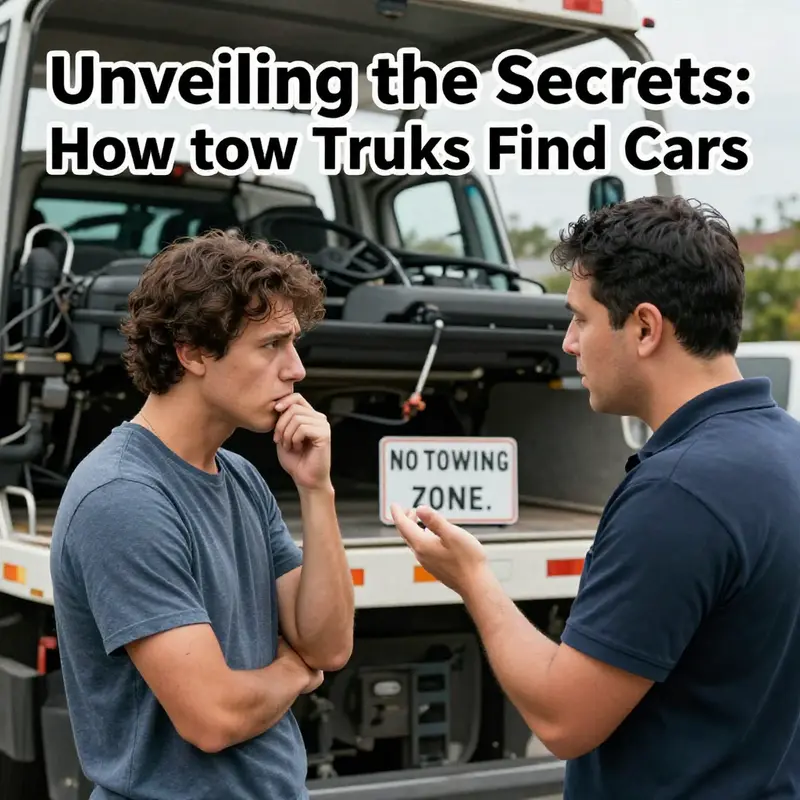
Tow work begins long before a tow truck arrives on scene. In many cases, locating a vehicle is less about a distant search and more about an intricate relay of information that travels from lenders, law enforcement, and municipal systems to the driver who straps on the hook and goes to work. The path a tow truck follows to find a car is shaped by three core forces: legal authority, accurate targeting data, and the everyday dynamics of city streets where parking rules, weather, and human behavior constantly shift the landscape. When these forces align, a tow operator can zero in on a vehicle with speed and precision. When they don’t, the result is confusion, delays, and a sense that the system has failed the very person it is meant to serve. Understanding how tow trucks locate cars requires tracing the flow of information through repossession, breakdown assistance, parking enforcement, and, when necessary, recovery of stolen vehicles. It also demands attention to the wider social context: why unauthorized towing and gaps in public awareness persist, and what steps can strengthen legitimacy and trust in these essential services.
In repossession scenarios, the chain of information is explicit and formal. A lender or leasing company initiates the process when a borrower defaults on a loan or lease. The tow contractor receives a bundle of data that usually includes the vehicle’s make, model, VIN, license plate number, and, crucially, a likely location. That last item can be built from multiple sources: GPS traces from the lender’s own fleet management systems, location entries from the borrower’s last known address or workplace, or even a previous parking pattern that the lender has tracked during the loan term. The operator does not set out blindly to find the car; they navigate with a precise set of coordinates and identifiers. The driver’s tasks are then twofold: verify the vehicle’s identity on arrival, ensuring that the VIN on the paperwork matches the vehicle in the lot or on the street, and confirm that the location truly corresponds to the debtor’s property or a legally designated towing site. In this world, accuracy is not optional; it is a matter of legality and accountability. Any misstep can trigger disputes that escalate into civil actions, complicate the repossession process, and erode trust in the entire system.
Breakdown assistance operates on a slightly different cadence, but the precision requirement remains high. A motorist in distress calls a roadside service or a towing company directly. The dispatcher captures the exact location provided by the caller—sometimes a GPS coordinate, sometimes a street intersection, sometimes a place name. The tow truck is then sent with that address, cross-checked by the dispatcher against street signage and known hazards. When a technician arrives, the vehicle must be identified not by a lender’s paperwork but by a plate, VIN, or other distinctive identifiers that confirm the vehicle is indeed the caller’s. The process emphasizes speed and accuracy but also relies on the integrity of the information supplied by the customer. In this context, technology is a bridge—between the person who needs help and the vehicle that must be recovered—with safety and efficiency tethered to the reliability of the data transmitted.
Parking enforcement introduces a third dynamic. Municipalities and private operators deploy automated tools such as license plate recognition cameras to identify vehicles that are illegally parked, have expired meters, or occupy restricted zones. When a vehicle is flagged by the system, a tow is dispatched with instructions that often specify the towing location, required notice, and the period allowed for compliance before removal. The success of this model rests on a public-facing cycle of notification and transparency: signs that clearly communicate where a vehicle may be towed, the existence of posted notices, and the ability for owners to understand where their car has been towed and under what authority. In many cases, the tow operator arrives after a formal signal from a municipal system, not by chance. Yet the reality on the ground can diverge from the ideal. Signage may be obscured, notices may fail to reach the owner in time, and a vehicle may disappear into a yard or impound lot with little immediate explanation. These frictions underscore that the technology and the paperwork behind tow operations are inherently social processes, dependent on trust between city agencies, private contractors, and the public they serve.
Stolen vehicle recovery adds another layer of complexity. When law enforcement identifies a suspected stolen vehicle, an alert is issued to eligible tow companies and dispatch centers. The police may also track the car with GPS or surveillance, and tow trucks come into play to secure the vehicle once located. In these cases, the driver’s role sits at the intersection of public safety and property protection. The protocol emphasizes caution, chain-of-custody, and proper documentation. A tow operator cannot simply trailer away a vehicle because it is found; they must confirm ownership, liaise with law enforcement, and comply with legal requirements that govern the handling and release of a recovered asset. The tension between speed and compliance is palpable here. The operator must be swift enough to prevent further harm or loss but deliberate enough to prevent misappropriation or wrongful seizure.
Beyond these well-defined channels, there exists a troubling edge case that has drawn heightened attention in recent years: unauthorized or suspicious towing. Reports of cars being removed without proper authorization or signage have surfaced in various jurisdictions, including high-profile incidents in certain counties. In January 2026, for example, media coverage highlighted cases where tow trucks—appearing with generic markings—were implicated in activities that raised serious questions about legitimacy and oversight. The moral of these episodes is not simply that wrongdoing happens; it is that people feel disempowered when they cannot verify who is authorized to tow and who is not. In such situations, the driver on the street is left with a dual task: to perform the job and to protect the vehicle owner from potential harm caused by illegitimate operators. The public’s perception of towing quality, safety, and accountability becomes a live factor in how effectively legitimate operators can do their work.
The core issues here converge on visibility and verification. A vehicle owner may never see a notice before their car is towed, or they may arrive at a lot to find the vehicle missing with no clear explanation of who issued the authorization. This is not merely a bureaucratic nuisance; it is a breach of trust that can have immediate financial consequences for the owner and operational consequences for the towing company, including disputes over fees, storage, and entitlement to release the vehicle. The practical challenge for legitimate tow operations is to minimize opportunities for ambiguity. Signage must be clear; dispatch data must be accurate; and there must be a reliable, publicly accessible trail that lets owners check whether a tow was authorized, by whom, and under what conditions. The social contract depends on that trail being not only rigorous but also accessible. If a person cannot determine the legitimacy of a tow, they are less likely to engage with legitimate services in the future, increasing the chance of a dispute or a confrontation on the curb.
Public awareness sits at the heart of this challenge. A well-informed public can distinguish between authorized towing and illegitimate practices, ask the right questions, and demand accountability. Yet knowledge is uneven, and gaps in information persist. Most people cannot easily distinguish by sight whether a tow truck is operating under proper authorization. Visible permits, official markings on the vehicle, and clear notice procedures are the most basic signals of legitimacy, yet these signals are not universal across jurisdictions or across private and municipal operations. The result is a landscape where confusion breeds mistrust. Owners may delay calling authorities, or they may assume the worst and assume wrongdoing, which can degrade the relationship between the public and those who perform critical recovery work. The impact extends beyond individual incidents; public skepticism can reduce the willingness of communities to rely on lawful towing systems during emergencies and routine parking enforcement alike.
If there is a path forward, it lies in a combination of education, enforcement, and information design. Education campaigns can explain the signs of authorized towing and outline the steps an owner should take if a car disappears. They can also clarify the roles of different agencies and the responsibilities of towing contractors, so people understand where to turn for verification and recourse. Stricter regulatory enforcement can deter unauthorized operators by requiring rigorous licensing, verifiable identification, and routine audits of trucks and paperwork. Real-time information accessibility could be a powerful sanitizer of the process: public databases that list current tow locations and procedures, as well as a straightforward way for owners to check whether their car has been removed under the proper authority. The challenge is not only to collect data but to present it in user-friendly formats—signage people can read and online tools that are simple to navigate even in the stress of a lost vehicle. In this area, technology plays a supportive role, but its effectiveness depends on the human factors that govern how people interpret and act on information.
The literature on tow operations emphasizes that legitimacy emerges when three pillars align: clear legal authority, transparent procedures, and accessible information. In practice, this means the system must be auditable in real time. A piece of paper attached to a tow truck is not enough; a transparent, verifiable chain of custody must be visible to the owner who sees their car disappear, to the judge who weighs a dispute, and to the officer who ensures compliance with the local code. Tow operators can enhance legitimacy by documenting every step: authorization codes, exact time stamps, the names of the agents who ordered the tow, the notice given to the vehicle owner, and the post-tow processes, including storage location and release criteria. When these records exist and are easy to access, the probability of疑 ambiguous outcomes drops. The public can observe that every towed vehicle has a defined path from street to impound lot, with a clear, enforceable record of who authorized the tow and why. This record, in turn, can reduce the fear that towing is a back-channel activity driven by opportunism rather than public interest.
In thinking about solutions, one can imagine an ecosystem where tow operators are integrated into a broader information network. A city might provide standardized signage that makes it obvious when a vehicle is subject to towing, supplemented by digital alerts that owners can access from a mobile device. Lenders could transmit not only VINs and location data but also predictable timelines for when a car might be reclaimed, minimizing the waiting and anxiety owners experience. Law enforcement could provide rapid verification tools, enabling owners to confirm a tow is legitimate without needing a lengthy wait at the impound yard. The notion of real-time accessibility is not a fantasy; it is a practical policy objective that aligns incentives for both the public and the private sector. In the end, the objective is simple: when a tow truck arrives, it should be arriving with purpose, authorization, and a path for owners to verify that purpose without fear of a scam or a misstep.
Within the practicalities of day-to-day operations, an important thread is the role of professional standards and public-facing communication. Tow operators themselves must adhere to ethical guidelines that emphasize transparency and safety, including the clear display of official markings and identification. Dispatchers must avoid ambiguous language that could be misinterpreted by a layperson as a guarantee of authority. Municipalities must enforce licensing, signage, and notification requirements consistently across both public and private operators. Public campaigns can teach residents how to recognize legitimate towing and what steps to take if their vehicle disappears. These changes may seem incremental, but they create a culture of accountability that reduces the space for unauthorized activity to take root. The more visible and verifiable the towing process becomes, the more likely car owners are to trust legitimate services, and the more efficiently law-abiding operators can perform their essential work.
For readers who want to explore the broader context of how tow operations balance safety, technology, and accountability, there is a useful exploration of the underlying technical and safety considerations in the field. Learn more about how modern tow operations balance safety and efficiency in tow-truck-technology-and-safety. This resource, while not a substitute for local regulations, offers a grounded look at the tools and practices that support legitimate towing work while helping the public recognize the signals that indicate proper procedure. As the chapter’s examples show, the success of locating and recovering a vehicle hinges on the integrity of information flows as much as on the physical act of hitching a chain or pulling a cable.
Ultimately, the central question—how do tow trucks find cars?—unfolds as a narrative about trust and procedure. It is about the deliberate coordination of data, authority, and transparency that makes recovery possible, even under pressure. It is about building a public culture in which owners know what to expect when their car disappears, where to go for accurate information, and how to evaluate the legitimacy of the people who show up with a tow truck. It is about ensuring that the people who perform towing carry not only tools and credentials but also a shared commitment to safety, legality, and respectful service. As communities continue to refine their rules and as technology evolves, the practice of locating cars will become more streamlined and accountable, delivering not just a faster response but a more trustworthy one.
External resource: For more details on authorized towing procedures and public safety guidelines, see the National Highway Traffic Safety Administration website at https://www.nhtsa.gov
Final thoughts
Understanding how tow trucks find cars sheds light on a critical aspect of urban mobility and property management. From the procedural intricacies of repossession to the technological advances like GPS and license plate recognition, each facet enhances efficiency in vehicle recovery. The legal framework guiding these operations ensures compliance while addressing parking violations. However, ongoing challenges, such as unauthorized towing and public perception, demand attention to build trust in towing practices. By fostering greater awareness and understanding, drivers and property managers can navigate the intricacies of tow technology and enforcement effectively, enhancing their own experience on the road.