
Towing a truck with another truck involves careful planning, proper equipment, and an understanding of safety protocols. Whether you’re a resident, commuter, property manager, or truck owner, knowing how to perform this task effectively and safely can save you time and avoid costly damages. This guide provides a step-by-step approach that covers everything from checking vehicle compatibility and preparing both vehicles, to selecting the right towing equipment, securing the towing system, and driving safely while maintaining communication. Each chapter builds upon the last, ensuring that you have a comprehensive understanding of the entire towing process.
Tow Between Giants: Verifying Vehicle Compatibility and Towing Capacity Before Moving a Truck With Another Truck
When the moment arrives to move a disabled or stranded truck with another, the scene often looks straightforward: two trucks, a plan, and a driver ready to make it happen. But the real work begins long before the first wheel separates from the ground. This chapter focuses on a single, crucial idea that governs every safe and lawful tow: compatibility and capacity. The towing truck must be able to bear the weight of the vehicle being moved, plus any cargo it carries, without compromising steering, braking, or structural integrity. That requires a careful check of GVWR, weight ratings, hitch compatibility, and the towing setup as a system—not as a collection of parts assembled in a hurry.
First comes the simple, essential question: how much can the towing truck safely haul? This is not a guess or a rough estimate. It is a calculation you must confirm from the manuals of both vehicles and from the hitch system you intend to use. The towing truck’s Gross Vehicle Weight Rating (GVWR) defines the maximum combined weight it is designed to handle, including fuel, passengers, cargo, and the act of towing another vehicle. The towed truck contributes its own weight and any cargo on board. Add in potential fuel, tools, and accessories, and you arrive at a total that may exceed the towing truck’s safe operating limit if you’re not precise. The weight of the towed vehicle is not a fixed number; it shifts with fuel level, cargo, and even fuel in its own tank, so a real-world calculation often ends up with a margin of safety rather than a single figure.
To translate those numbers into a practical plan, you must also verify that the hitch system matches the weight the pair will impose. The size of the hitch ball—commonly 2 inches or 3 inches—must align with the towing configuration and the coupler on the towed vehicle. A mismatch can create dangerous play in the connection, increasing the risk of disconnects or sudden disengagements at speed. Beyond the ball size, the hitch itself, the frame mounting, and the overall integrity of the mounting points on both vehicles must be rated for the load. This is why owner’s manuals, service notes, and, if available, official towing standards form the backbone of your pre-tow checklist. The system needs to feel solid under a firm pull, not loose or shimmying with a gentle tug.
A critical but sometimes overlooked factor is the driver’s licensing and the legal allowance for a vehicle combination of this size and weight. Different regions regulate what you can legally tow and what kind of license or endorsement is required for moving a heavy towed load. The safest path is to confirm that your license class permits operating a tow configuration of this scale and to be aware of any regional permits or insurance adjustments that may apply. These legal considerations are not mere paperwork; they define the boundaries within which you can operate, and crossing them can invite penalties, liability, and unsafe driving conditions.
Beyond numbers, several safety features act as the guardrails of a successful tow. The presence and condition of a functional braking system on the towed vehicle is non-negotiable. If the towed vehicle cannot brake independently in a controlled fashion, the risk of a collision or a runaway situation rises sharply. Likewise, secure tie-downs and dependable restraint points are mandatory. These prevent the towed vehicle from shifting or detaching during movement. With a properly secured setup, the towed vehicle remains aligned with the towing truck rather than pivoting or pulling away during turns or deceleration. The role of the hitch and the connection hardware—bolts, pins, and locking mechanisms—cannot be overstated. A double-check, a firm tug on the connection, and a test of the braking function while stationary are simple steps that pay off many times over once you’re underway.
For most everyday-toyota pickups and similar mid-size work trucks, the physically robust way to connect is through a tow bar or a dedicated hitch system designed to provide a rigid link. A tow bar offers stability and predictable behavior during steering, acceleration, and braking. In contrast, a heavy-duty tow rope or chain is rarely the preferred solution except for very short, controlled movements at very low speeds. If a rope is used, it must be rated for at least twice the weight of the towed vehicle and always accompanied by safety chains and a secure routing path to avoid contact with hot components or moving parts. For long-distance or high-value scenarios, the flatbed approach becomes the safer alternative because it eliminates drivetrain and steering concerns altogether by removing the towed vehicle from the drive system. The key is to choose the equipment that matches the task’s scale, not the vehicle’s appearance.
With the right equipment in place, the connection must be secured with care. Attach the towing device to designated tow points on both vehicles, normally reinforced areas near the bumper or frame where the load is supported. Then run safety chains in an X pattern behind the hitch. The cross pattern is a small detail with a big impact: if the hitch fails, the chains snag and catch the towed vehicle, preventing it from dragging on the ground. After securing, inspect every fastener and lock, and give the connection a deliberate, steady pull to verify stability before you roll. This is a moment when confidence is earned and doubt is set aside; a quiet, controlled test negates many risks that might otherwise reveal themselves in a dynamic situation on the road.
As you prepare to move, the driving discipline becomes part of the safety equipment. Speed should stay deliberately low, typically well under the posted limits and certainly under 20 mph (about 30 km/h) in most towing scenarios. The distance between vehicles deserves equal attention: a generous buffer—roughly four to six meters—gives you room to brake early and avoid abrupt deceleration that could cause the towed vehicle to jackknife. Braking, like acceleration, should be gradual and smooth, with no sudden pulses that could unsettle the coupling or transfer weight improperly to the towed unit. Turns demand extra caution; take wider curves to maintain alignment and avoid snagging on curbs or barriers. Clear communication between drivers in the cab is essential, whether through hand signals, radios, or cellular devices. And keep the hazard lights on throughout the maneuver so following traffic has a clear warning that a towing operation is in progress. Weather is a blunt reminder of risk; rain, snow, or fog markedly increases stopping distances and reduces grip, so postponing the tow in such conditions is prudent.
If the plan calls for longer transport or heavier payload, a rollback or integrated heavy-duty solution may be a more appropriate approach. While it deviates from the traditional two-truck towing scenario, a rollback-equipped unit is designed to minimize drivetrain exposure by handling the load with precision and reducing the need for dragging or unprotected connections. This kind of choice often reduces maintenance costs and downtime, a factor that fleets weigh heavily when assessing routes, service windows, and responder availability. The broader takeaway is that equipment selection should reflect not only the immediate maneuver but the broader pattern of usage, maintenance, and reliability—especially for urban recovery fleets or rural contractors who rely on consistent service and predictable turnaround times.
As you weigh these considerations, a practical resource to frame capacity questions is to explore how much a given truck can tow. The exercise of translating GVWR, payload, and hitch ratings into a real-world capability can be eye-opening and helps prevent overreaching safety margins. For readers who want a quick, straightforward reference, a detailed thread on towing capacity can provide a useful starting point. If you’d like to explore that practical benchmark, see how much can my truck tow.
The moment you begin to pull a truck with another truck, you step into a shared responsibility: to protect people, property, and the vehicles involved. Compatibility is not simply about matching weights; it is about ensuring the entire system—the vehicle on the tow, the vehicle doing the towing, the hitch, the braking, the suspension, the tires, and the connections—works as a coherent, tested whole. Confirming GVWR values, cross-checking ballast and cargo, validating braking capabilities, and selecting the right equipment all take time, discipline, and a careful eye. This is how a straightforward task becomes a safe, efficient operation that minimizes risk and preserves the condition of both vehicles. And when the situation does demand more than a simple two-vehicle tow, remember that alternatives like rollback configurations exist and are designed to reduce exposure and complexity while maximizing control and reliability.
In the larger arc of operations, the lesson echoes beyond a single tow. The best practice is to treat every vehicle combination as a bespoke load with its own constraints, then design the setup accordingly. That means leaning on manuals, established standards, and professional guidance, and not assuming that a single approach fits all. After all, the road is full of variables: load distribution, tire health, road grade, weather, and human factors all interact in real time. By anchoring your plan in measured capacity, clear equipment, and deliberate driving, you turn a potentially risky maneuver into a predictable and recoverable operation. And when in doubt, the prudent choice is to call in professional help rather than risk a preventable accident.
External resource: For official safety standards and guidelines related to towing, consult the National Highway Traffic Safety Administration’s hitch and safety chain guidance: https://www.nhtsa.gov
null
null
Choosing the Right Towing Equipment: The Gear That Guides a Truck-to-Truck Tow
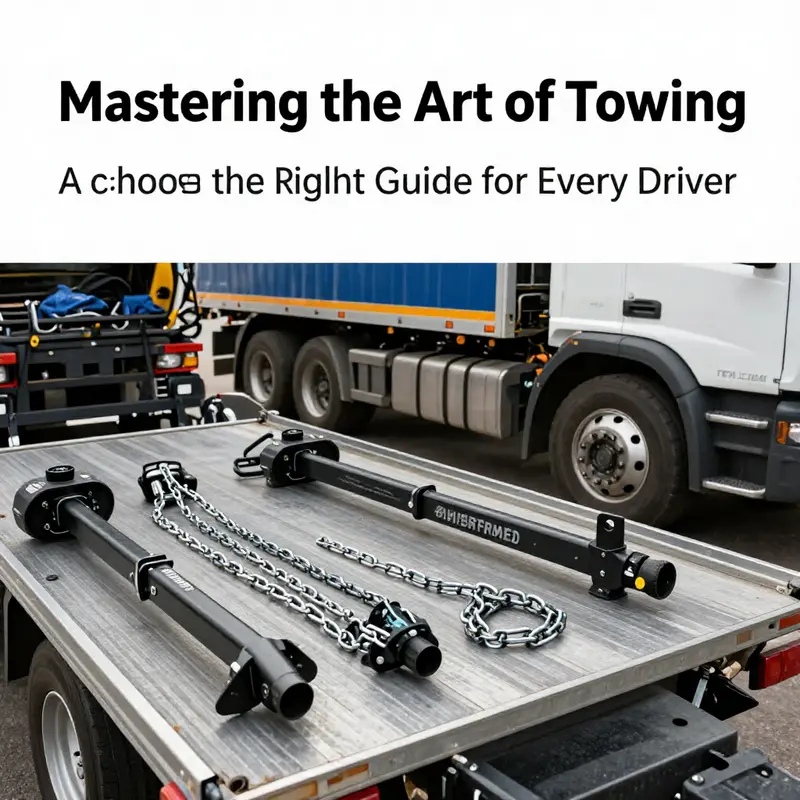
When you set out to tow a truck with another truck, the equipment you choose becomes the first and most crucial decision you make. It frames every other step, from connections to on-road conduct, and it largely determines whether the tow ends safely and smoothly or ends in damage, fright, or legal trouble. The guiding principle is simple: match the towing method to the weight, drive layout, and condition of the towed vehicle while ensuring the towing vehicle has the capacity to handle the load. This is not a one-size-fits-all situation. Heavier, more complex vehicles demand a more substantial, stable setup, while lighter, short-distance tows can be accomplished with simpler gear. The best path often blends a clear understanding of the vehicle’s weight and drivetrain with a disciplined approach to connection and control. In practical terms, that means choosing among several core options and then validating each element against the vehicle’s specifications and the environment you’ll be in. For a broader perspective on standards governing these systems, see the Tow Truck Technology and Safety resource, which provides context on how equipment quality and installation influence reliability and safety. Tow Truck Technology and Safety.
The most reliable rule of thumb starts with weight and drivetrain. If the towed truck is heavy or has a complex configuration, a dedicated tow bar system—often described in the industry as a tow dolly or a flatbed trailer—tends to offer the best stability and control. These rigid connections minimize sway and angle changes during acceleration, braking, and turns. A rigid connection also helps maintain alignment between the two trucks, reducing the chance that one vehicle will snap out of formation during a maneuver. In the context of safety standards, the superiority of a solid connection is reflected in the way it preserves steering control on the towed vehicle and minimizes unintended torque transfer. For vehicles with four-wheel drive or all-wheel drive, a flatbed or tow dolly remains the preferred option because it keeps the towed vehicle’s drive wheels off the ground. This approach guards the drivetrain from damage that can occur when a vehicle’s powered wheels are rotating while being pulled. The underlying logic is straightforward: if the drivetrain can be protected, the tow becomes more controllable and less costly in the long run.
Beyond the rigid tow bar, a second vehicle category—heavy-duty towing ropes or chains—exists for very short, low-speed moves. These are not intended for regular use or long distances. A properly rated tow rope must be free of frays, knots, or wear and should be rated for at least twice the combined weight of both vehicles. In practice, this means a rope that’s robust enough to absorb some energy without snapping. The stability of a rope tow is inherently less than that of a rigid connection; the rope can oscillate, twist, and sway, which amplifies the risk of jackknifing or losing control during quick maneuvers. For that reason, rope towing is generally reserved for brief repositioning tasks in controlled environments, performed at very slow speeds, and with a disciplined line of communication between drivers. If a rope is the chosen method, it should be used with caution, and the other safety measures—extensive checks of attachment points, test braking, and clear signaling—must be in place.
The third and often most prudent option for many towing scenarios is a flatbed trailer or a tow dolly, especially when you anticipate longer distances or variable road conditions. A flatbed trailer elevates the risk profile of drivetrain damage entirely by keeping the towed vehicle’s wheels off the road. It also provides a stable base for the towed truck, allowing you to control load distribution and braking in a manner that is much harder to achieve with a rope or bar alone. This option shines when the towed vehicle has known mechanical issues, is valuable or high-cost, or when the trip covers longer distances or highways where stability matters more than speed. In all these cases, verifying the compatibility of the equipment with both trucks is essential. The hitch and ball size must match, the frame and suspension must be rated for the load, and the overall setup must comply with the vehicle manuals and local regulations. This is where the practical knowledge of towing standards and manufacturer specifications becomes the backbone of safe operation.
Matching the gear to the task also means understanding capacity. The towing vehicle must have sufficient capacity to handle the weight of the towed vehicle, plus any dynamic forces generated by motion, braking, and steering. The GVWR and the max tongue weight or hitch rating guide these calculations, and miscalculations can lead to transmission stress, brake overheating, or loss of control. The equipment you install should align with these limits. An improperly sized hitch, a weak connection point, or an improperly rated tow bar can all become failures that escalate into emergencies. This emphasis on capacity and compatibility is less about theoretical caution and more about recognizing that a tow is a dynamic, high-stakes maneuver where even small miscalculations multiply quickly on the road.
When you’re weighing options, consider the concrete mechanics of each method. A rigid tow bar offers predictable behavior and immediate feedback; if you tug or pull, the towed vehicle responds in a controlled, linear fashion. That linear response is why many operators choose it for routine, short-distance maneuvers. A rope or chain, while less expensive and lighter to deploy, demands heightened attention to attachment integrity and has a narrower operating envelope. It is not forgiving of jerky motions, sudden accelerations, or abrupt wheel lockups. A flatbed trailer, while more complex to transport and legally regulated in many jurisdictions, provides the cleanest handling scenario for heavy or drivetrain-sensitive vehicles. It also opens the door to greater load distribution and easier inspection of both vehicles during and after the tow. The challenge with any approach lies in ensuring that the connection points—front bumper or frame anchors, hitch receivers, and safety chains—are solid, secure, and correctly configured. The difference between a secure setup and a loose one may be measured in inches and milliseconds under pressure.
No matter which method you favor, the preparation stage is where the plan hardens into action. Before you move, verify that the towed vehicle’s parking brake is released, that the transmission is in Neutral, and that all tires are in good condition with proper pressure. For any four-wheel-drive or all-wheel-drive vehicle, err on the side of caution: do not rely on wheels turning under load, or you risk drivetrain damage. The towing vehicle should have the hitch, ball, and safety chains installed and secured, and you should test the lighting system if the setup includes tail lights or indicators for the towed vehicle. Mirrors should be adjusted to give a complete view of the towed unit, and both drivers should confirm each other’s intentions through clear, agreed-upon signals. The human factor—communication, subtlety of action, and mutual trust—often defines the difference between a smooth tow and a hazardous one.
As you begin the actual pull, the choice of speed and the way you manage braking become the controlling variables. A common rule of thumb is to keep speeds modest—generally well under highway rates for most two-truck tows. Reduced speed minimizes the energy transferred through the connection, and it makes any possible hitch movement more manageable. A steady, moderate pace helps the towed vehicle avoid sudden jolt reactions if the driver needs to brake or if the road surface changes suddenly. The distance you maintain between trucks matters as well. A longer following distance gives you more time to react and lessens the likelihood that the towed unit will push into the towing vehicle during slow or emergency braking. When it comes to turns, taking wide, gradual arcs preserves alignment and reduces the risk of the towed vehicle shifting sideways or curving into the towing vehicle. Communication remains essential here; use agreed signals or a simple radio channel to stay synchronized. And throughout the process, keep the hazard lights on to maximize visibility for other road users. Weather and road conditions can quickly change the risk profile. If rain, ice, or fog complicates visibility or traction, postponing the tow may be the wisest course of action.
After the tow, the post-check is as important as the pre-check. Stop in a safe, flat area, disconnect the tow gear, and inspect both vehicles for any signs of damage, loose components, or fluid leaks. Reapply parking brakes as needed and ensure the towed vehicle is secure before moving on. Documentation and compliance should not be neglected, either. If your local rules require permits or insurance modifications for towing operations, verify that your paperwork matches the actual setup you used. The aim throughout is a seamless sequence from preparation to disconnection, with a consistent emphasis on safety and accountability.
In sum, choosing the right towing equipment for a truck-to-truck tow is a decision layered with engineering and practical judgment. Weight, drivetrain, and intended distance define the category of gear you should select. A rigid tow bar or flatbed system often offers the most dependable control, while heavy-duty ropes remain a niche option for very short moves under controlled conditions. Whatever you choose, the key is compatibility, secure connections, and disciplined, clear communication between drivers. This approach, grounded in the core principles of safety standards and manufacturer guidance, makes the difference between a routine repositioning and a risky engagement on the road. For a broader context on standards and safety considerations in towing, consult the National Highway Traffic Safety Administration (NHTSA) resources on hitch safety and related topics. https://www.nhtsa.gov/.
Between Two Trucks: Building a Secure Connection to Tow with Confidence
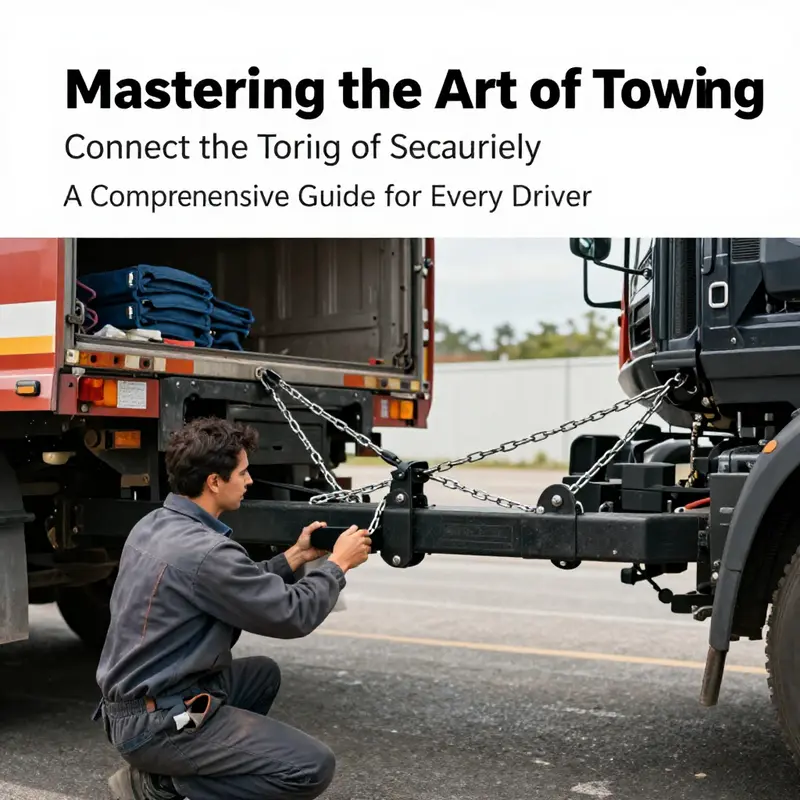
When the choice to move a disabled or stranded truck with another truck becomes necessary, the moment you decide to engage the tow is not the moment to improvise. The entire operation hinges on one thread: a secure, correctly configured connection between the two vehicles. A failure at the connection point can multiply risk in seconds, turning a manageable roadside scenario into a costly and dangerous situation. The chapter that follows is not about flashy gear or dramatic feats; it is about a quiet, disciplined process that prioritizes the integrity of the hitch, the suitability of the equipment, and the clarity of the people involved. In the end, a secure connection creates predictable dynamics on the road, which means safer moving of the towed vehicle, fewer surprises, and less anxiety for everyone in the vicinity. It is the foundation on which the rest of the tow rests, and it deserves meticulous attention before any wheels turn.
The first step in building that foundation is to acknowledge the need for compatibility and capacity. Even before you choose a tow method or lay eyes on the pins and hooks, you should verify that the towing vehicle can handle the combined weight of both trucks. This means checking the towing capacity, the GVWR of both vehicles, and the ratings of the hitch, the ball size, and the overall structural integrity of the frame and suspension. You will consult owner’s manuals and cross-check the information with the guidance provided by recognized safety standards organizations. This is not a mere formality; it is the cognitive choke point where safe operation becomes possible. The towing truck must not be asked to bear more than its designed capability, or the consequences can echo through the driveline, brakes, and steering. When the numbers align, you gain the confidence needed to move forward with a measured plan rather than a gamble with the undercarriage of both machines.
Once you have established capacity, the choice of towing method becomes a natural progression from the numbers to the road. For short distances or urgent situations, a tow rope might seem expedient. Yet the rope’s simplicity carries a correspondingly narrow safety envelope. A high-quality rope or chain can be effective only when it is rated for the combined weight and kept free from wear, fraying, or damage. The moment a fray appears, or a knot is tied improperly, the system can fail at the worst possible instant. For longer distances, or for vehicles that carry significant drivetrain components, a tow bar or a flatbed trailer is the wiser choice. A tow bar provides a rigid, stable connection that translates better control and predictability into the towed vehicle’s motion. A flatbed eliminates contact between the driveline and any towing load altogether, which is the safest option for 4WD and AWD survivors or vehicles with high-value components. The key is to select the method that matches the distance, the load, and the risk profile of the specific situation. In this context, the method is not about popularity or custom preference; it is about the stability and reliability it can deliver under real-world conditions. For a broader understanding of how towing systems integrate with vehicle technology and safety considerations, you can refer to resources that delve into the technical standards and load testing that back these practices. Tow Truck Technology and Safety.
Connecting the system securely is the heart of the chapter—where theory becomes practice and the towed truck remains anchored to the literal path forward. If you are using a tow rope or chain, the process begins with a visual and tactile inspection: check the rope for any signs of wear, kinks, or damage. A rope cannot be trusted if it appears worn; a chain cannot be trusted if links are compromised. Attach one end of the rope or chain to the towing vehicle’s designated tow point, ensuring that the connection is locked and stable. The other end must then be affixed to the towing point on the towed vehicle, again with a secure lock. When a tow bar is the chosen method, you follow the manufacturer’s instructions with precision: align the bar with the tow hooks on both vehicles, insert the bolts or pins, and tighten every fastener to the specified torque. The safety chains, arranged in an X pattern beneath the connection, provide a crucial backup if the primary link fails. The X pattern is not decorative; it guides any potential slack into a controlled angle that can arrest an accidental detachment and keep the towed vehicle from scraping or drifting. After assembly, you should gently test the connection by pulling on the bar or rope with steady, deliberate force, ensuring there is no unexpected movement, binding, or unusual sounds. This is the moment to catch misalignment or looseness before any road travel begins. The aim is to have a system that remains stable under modest weight shifts and braking inputs rather than something that merely looks secure on the driveway.
A careful pre-tow checklist is essential. Before you release the parking brake on the towed vehicle, make sure the transmission in the automatic is in Neutral and that the manual remains in Neutral as well. If the steering wheel was locked during the stop, unlock it to permit the driver of the towed truck to steer in an emergency, even though the driver should remain inside and keep the brakes applied until the tow actually begins. This combination of steps keeps the towed vehicle in a known state and reduces the risk of sudden, jarring actions once momentum starts to move. The towed driver’s inside presence is more than a comfort measure; it is a safety strategy to avoid miscommunications or delayed reactions from a hidden or obstructed view of the tow. In addition, all external lighting should be checked, and hazard lights should stay on throughout the tow, ensuring other road users understand the slow, controlled movement and the unusual configuration ahead.
With the hardware secured and the pre-tow checks complete, the towing procedure itself demands disciplined, deliberate behavior. The recommended maximum travel speed in this setup is modest, emphasizing control over speed. You should maintain a speed near 30 km/h (roughly 18 mph) and avoid sudden acceleration, heavy braking, or aggressive steering inputs. The relationship between the two vehicles in a tow is a dynamic one, and it requires both drivers to communicate clearly to maintain alignment and predictability. Hand signals are useful, but two-way radios or mobile phones can offer a more reliable channel in noisy or windy environments. The distance between the two vehicles is equally critical; four to six meters gives both drivers enough reaction time if the towed vehicle begins to lag or if a need to slow arises. When turning, you should take wider, more gradual arcs to prevent the towed vehicle from clipping curbs or mounting the shoulder. If the weather turns foul, the margin of safety narrows quickly. Rain, snow, or fog reduces traction and visibility, increasing the risk of skidding or miscommunication. In heavy weather the prudent choice is to pause and reassess or call for professional assistance rather than risk a hazardous move.
Communication and continuous monitoring anchor the entire operation. The two drivers must maintain a steady dialogue about how the load feels, whether the towed vehicle shows any unusual drag, and whether the restraint system shows any signs of fatigue over time. If you notice any motion that seems off—an unusual sway, a drift, or a change in the towing angle—you must stop and inspect the connection and the anchor points before resuming. It is not unusual for a line to loosen a fraction of an inch during the first few minutes of movement; a careful check will confirm that everything remains within safe tolerances. Because the towed vehicle’s lights are often obscured or less visible to others on the road, maintaining the hazard light system is a constant reminder to nearby drivers that a slower, unusual configuration is in effect. The ultimate goal of this phase is to achieve a smooth, controlled transfer of energy from the towing vehicle to the towed vehicle, rather than a rapid, uncontrolled tug that could generate a jackknife event or a collision behind you.
Even when everything seems to be going well, routine inspection remains essential. You should schedule periodic checks of the connection points during the journey and promptly assess both vehicles upon arrival. If any damage or looseness is detected, stop safely, detach the towing system, and reassess the repair or replacement of any compromised hardware. For longer tows or more demanding conditions, it is prudent to consider the services of a professional towing operation with certified equipment and trained personnel. The value of professional assistance increases with distance, unfamiliar terrain, or the presence of high-value vehicles where the margin for error is smaller and the consequences of a failure are greater. While the steps outlined here provide a robust framework for safe towing, the complexity of real-world scenarios means that professional guidance should still play a role when conditions exceed your comfort or experience.
Finally, the legal and regulatory context is not an afterthought. Towing vehicles between two trucks is legal in many regions but may require permits, insurance adjustments, or specific equipment standards depending on local laws. It is wise to consult the relevant motor vehicle department or regulatory body to confirm the rules that apply to your location. The overarching principle is simple: safety comes first, and compliance with established standards reduces risk for the operators and bystanders alike. For readers seeking more practical, rule-based guidance on towing operations, consider official resources that address hitch safety and load testing as part of a broader safety framework. As you plan, remember that secure connection is not a single action but a chain of deliberate decisions that culminate in a controlled, safe move from one vehicle to the next. If you want to explore more about the technical underpinnings of towing systems and how they relate to safety, refer to the resource noted above for a deeper dive into the evolving standards and best practices in the field.
In closing, the ability to tow a truck with another truck rests on one clear principle: the connection must be secure, understood, and trusted by both operators. The process—from capacity verification to the final arrival inspection—builds a line of safety that keeps every movement predictable. When in doubt, slow down, double-check, and consider professional assistance. The road is forgiving to careful preparation, and the vehicle connection is where that forgiveness begins.
For additional guidance, consult the National Highway Traffic Safety Administration’s towing safety guidelines. https://www.nhtsa.gov
Tow Like a Pro: Safe, Secure, and Communicative Truck-to-Truck Towing
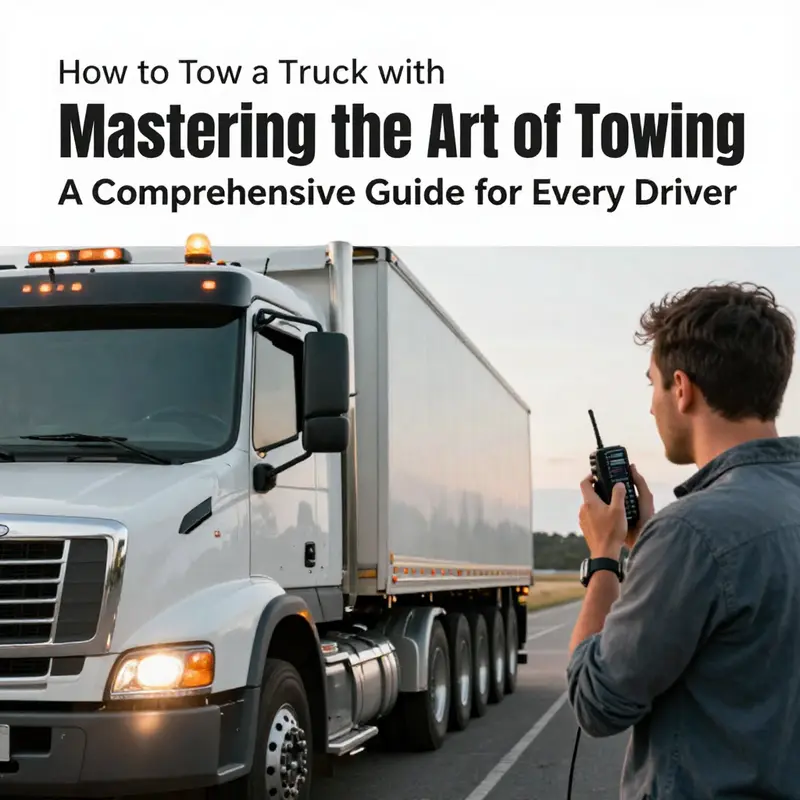
When two trucks share a common goal on a quiet highway shoulder, the moment demands calm, competence, and clear teamwork. Towing a truck with another truck is seldom a casual maneuver; it is a physical and logistical act that tests every decision from the first inspection to the final disconnect. The primary aim is stability—through careful preparation, appropriate equipment, and strict adherence to safety protocols. The goal is not merely to move a vehicle from point A to point B but to keep both vehicles and their occupants intact along the way. Across the practice, a steady mindset matters as much as the mechanical setup. A good tow begins with a plan that respects the capacities of both vehicles, then proceeds through a sequence of checks, connections, and controlled motions that minimize risk. In that spirit, the process can be understood as a continuum rather than a list of discrete steps. It is a choreography in which the towing truck provides traction and control, while the towed truck remains, effectively, a passive traveler that must not undermine the maneuver with unexpected resistance or drift.
First comes compatibility. Before any hook or bar is engaged, the towing truck must be appropriate for the job. The technician should consult the owner’s manuals for each vehicle to confirm maximum towing weight, the correct hitch and ball size, and the integrity of the frame, suspension, brakes, and transmission under load. The mathematics of towing is unforgiving: a mismatch in capacity can transform a simple pull into a dangerous failure. If either vehicle exceeds its design limits, even a short distance can exhaust critical components or trigger a loss of control. As part of this assessment, ensure that the ball size, hitch configuration, and mounting points align with the towing system chosen. The safety philosophy here is straightforward: operate within the ratings, not at the edge of them. The line is thin, and crossing it invites unintended consequences.
With compatibility verified, preparation becomes the practical art. The towed truck should have the parking brake released and the transmission placed in neutral, with one important caveat for automatic transmissions: the electronic stability systems, if present, should be deactivated for the towing operation. This helps ensure predictable behavior, but it also imposes a responsibility to monitor the drive system and to be ready to intervene if anything feels off. Tire pressure and tread on both vehicles deserve attention; underinflated tires or damaged treads can compromise grip and steering in ways that are hard to reverse once movement begins. If the towed vehicle is a four-wheel-drive or all-wheel-drive model, caution is even more pronounced. Towing a 4WD or AWD vehicle by its drive wheels can invite drivetrain damage unless a flatbed or specialist arrangement is used. In those cases, the best practice is to treat the towed vehicle as a non-operational load and plan for a flatbed relocation if the distance and conditions permit. Turning on the ignition of the towed vehicle, so that hazards lights operate and steering remains possible, is a small but meaningful detail that helps maintain visibility and control during the approach to the tow point.
On the towing side, the equipment selection shapes the entire experience. For most everyday truck-to-truck towing, a rigid tow bar provides a stable, direct connection that translates into predictable handling, especially during turns and deceleration. A heavy-duty tow rope or chain is suited only for very short, controlled relays and must be rated for at least twice the weight of the towed vehicle with regular inspections for wear and fraying. The flatbed trailer remains the premier option for high-value vehicles or when careful drivetrain preservation is paramount, particularly for 4WD or AWD trucks. The rule of thumb is simple: prefer mechanisms that minimize drivetrain engagement in the towed unit and maximize control for the operator. The “never” options are equally important to remember: never tow with a rope or chain as the sole connection for medium- to long-distance moves, and never bypass safety features or lack proper locking mechanisms in tow bars or hitch points. In the context of professional guidelines, these cautions are not mere preferences but essential safety prescriptions.
Connection—the moment when all the planning becomes physical reality—deserves careful attention. Attach the towing apparatus to designated tow points, then secure with safety chains in an X-pattern behind the hitch. The crisscross arrangement helps prevent the towed vehicle from dropping if the primary connection fails. Once secured, tighten bolts, pins, and locking mechanisms, and then give the system a firm test by pulling lightly to verify there is no unexpected slack or movement. The friction of metal against metal, the weight of the towed vehicle, and the pull of gravity all combine to demand deliberate action. At this stage, visibility matters as much as strength: both drivers should confirm alignment and ensure that mirrors provide unobstructed views of the coupling and the path ahead. The aim is a stable, communicative link that communicates its own status through the feel of the connection—no creaks, no give, no sag.
Driving with another truck is a study in controlled restraint. The practical speed limit is conservative: around 30 kilometers per hour (roughly 20 miles per hour). This is not merely a suggestion but a design principle based on the behavior of tow systems under load. Gentle, progressive acceleration avoids jarring the towed vehicle into unnecessary wheel spin and helps keep the coupling from loosening. Braking should be smooth and gradual, with plenty of warning so the towed driver can anticipate a slow deceleration. The distance between vehicles—4 to 6 meters in standard conditions—provides a buffer for reaction time and system response. Turning requires extra space. Take wider arcs to avoid scraping the towed vehicle on tight corners, and plan the path with anticipation of any obstacles or irregular surfaces. Communication between drivers is non-negotiable: a shared language, whether through two-way radios, cell phones, or agreed hand signals, is the ongoing thread that threads through every decision, from lane changes to emergency maneuvers. Hazard lights remain on throughout the tow as a constant signal to others on the road, underscoring the need for visibility when following or passing traffic. And an important caveat remains in place: bad weather—rain, snow, fog, or ice—significantly escalates risk. If conditions deteriorate, the operation should be halted, reassessed, or postponed until a safer window arises. The road becomes a test of restraint, not bravado, when a system is under load.
Beyond the mechanics and the moment, there are special considerations that derail caution when ignored. Automatic transmissions in particular deserve attention for long or heavy tows; the guidance from experienced operators is to limit towing distance and schedule regular cooling breaks, to give the transmission a chance to shed heat and maintain flexibility in the gears. For most four-wheel-drive platforms, towing with a rope or rigid bar is not recommended unless the manufacturer explicitly allows it; a flatbed transport often becomes the preferred option for preserving the drivetrain’s integrity. Electric and hybrid vehicles introduce a different set of rules altogether: high-voltage components require careful handling, and when feasible a disconnect of the high-voltage battery during transport reduces the risk of electrical faults or unintended activation. The modern towing scenario thus requires not only mechanical alignment but also a readiness to adapt to the type of powertrain under tow and the potential vulnerabilities of that propulsion system. Weather remains a universal factor; adverse conditions magnify every risk, from reduced traction to degraded visibility, so the pause button should be considered a legitimate option whenever conditions threaten control.
As the tow concludes, attention shifts to post-tow procedures. The vehicles should be parked in a safe, flat area where disconnecting the towing equipment can be performed with minimal risk. After disconnection, a thorough inspection of both vehicles is warranted. Look for damaged mounts, loose bolts, fluid leaks, or signs of abnormal wear on the braking system and suspension. Re-engage the parking brake and return the towed vehicle to park or neutral as appropriate. If the towed truck cannot be powered, consider the manual braking approach as a contingency, ensuring the wheels do not drag and that the vehicle remains stable until it is secured elsewhere. The entire process—from pre-tow checks through post-tow inspection—demands a vigilant, methodical temperament. A well-executed tow is rarely dramatic; it is a quiet demonstration of competence, teamwork, and adherence to safety norms that protect people and machinery alike.
In discussing legal and regulatory frameworks, it is important to recognize that towing a truck with another truck is legal in many jurisdictions but may require permits, insurance adjustments, or specific equipment standards. Regional authorities often specify what constitutes appropriate equipment, how to document the operation, and what licenses might be necessary for professional practice. A prudent approach is to consult the relevant motor vehicle department for guidance in your locale and to verify any regional nuances before engaging in a tow that could draw regulatory scrutiny. For readers seeking a broader technical background on towing systems, a deeper dive into the technology and safety considerations can be found in the related resource that examines towing systems and their safety specifications. This background reinforces the practical steps described here and highlights why attention to detail matters at every stage of the operation.
For a robust understanding of the broader safety standards and the kinds of checks that undergird responsible towing practice, see the comprehensive overview of tow-truck technology and safety. This resource complements the field-tested steps outlined above and helps frame the towing operation as part of a larger discipline of vehicle recovery and road-safety engineering. As you study, remember that the most important element of any tow is not the distance traveled but the assurance that both vehicles arrive safely and without damage. If in doubt, pause, reassess, and, if necessary, call in a professional towing service. The intent is protection: of people, of vehicles, and of the integrity of the road system itself.
Internal link: for a deeper look at the technology and safety standards that govern towing equipment, see the discussion on tow-truck technology and safety. tow-truck-technology-and-safety
External reference: authoritative guidance on towing safety and best practices can be found through national transportation safety guidelines, including detailed sections on capacity, equipment, and procedural standards. https://www.bts.gov/publications/transportationstatisticsannualreport/2023/section4.html
Final thoughts
Successfully towing a truck with another truck is a blend of preparation, careful driving, and proper equipment use. By checking vehicle compatibility, preparing both trucks adequately, choosing the right towing equipment, securely connecting the towing system, and maintaining effective communication while driving, you minimize risks and enhance safety. Always remember that safety should come first in every towing operation to protect both vehicles and ensure a smooth towing experience.