
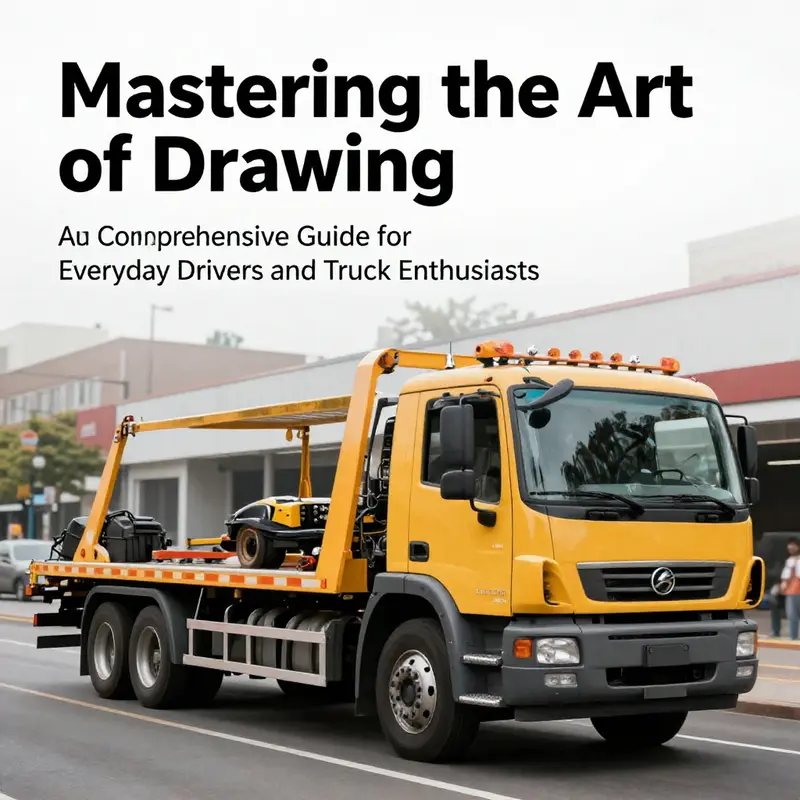
Drawing a tow truck can be a fulfilling activity that combines creativity with an appreciation for intricate vehicle design. Whether you’re an everyday driver, a truck owner, or simply someone fascinated by automotive art, this guide aims to hone your drawing skills while focusing on the unique characteristics of tow trucks. Each chapter presents a step-by-step approach, starting from establishing the basic outline and proportions, moving through key features, refining your shape, adding depth, and offering final tips for mastery. By the end, you’ll be equipped with the knowledge to capture the rugged essence of these essential vehicles on paper.
null
null
null
null
From Silhouette to Steel: The Refinement and Detailing Journey of a Tow Truck
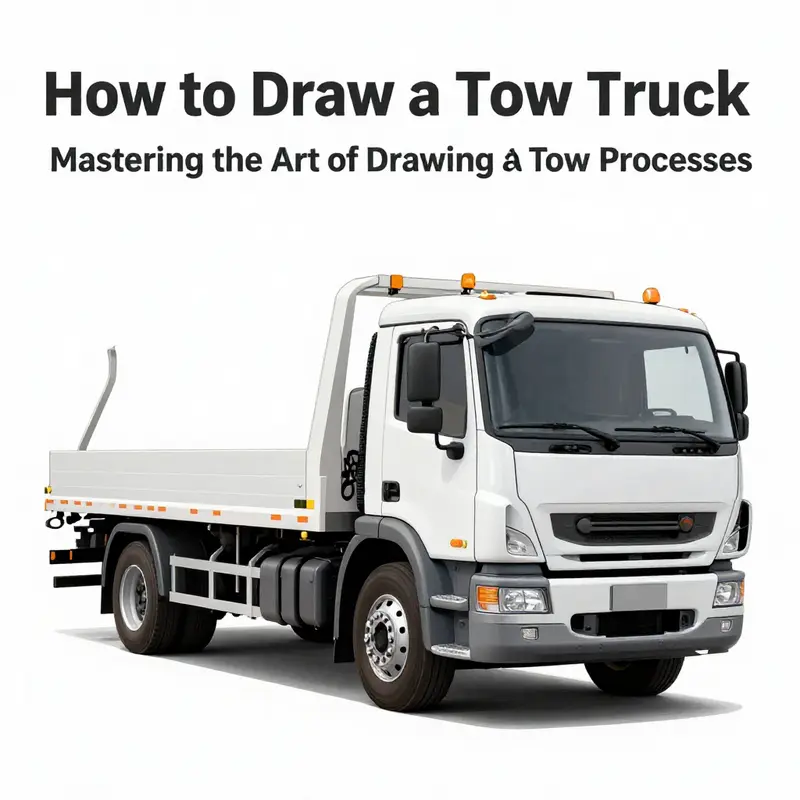
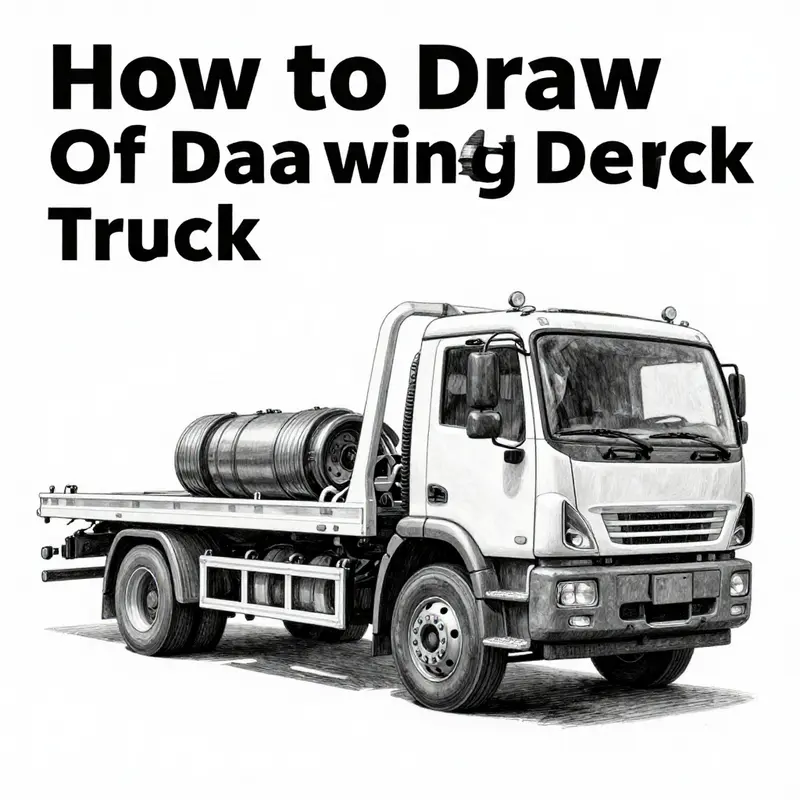
Refining a tow truck drawing is less about inventing a fantasy machine and more about translating the solid logic of a real vehicle into a fluent sequence of lines. The shift from a rough silhouette to a faithful rendering happens as you test the tension between mass and space, the way the cab rises above the frame, and how the heavy equipment sits and moves. In practice, refinement begins where abstraction ends: you keep the overall shape but open it to the textures, the hardware, and the tiny tells that make a tow truck feel credible. The process invites you to think like an engineer as much as an artist.
Start by reviewing the basic proportions you established in your initial sketch. The cab should read as a compact command center perched on a longer chassis. The winch sits forward, projecting its cable and drum into the space ahead of the bumper. The wheels should feel robust, with the front pair carrying more height due to the cab’s elevated stance. If the rear is lower, that contrast should be deliberate, emphasizing the heavy storage and the pull of the tow apparatus. A quick silhouette check can reveal if the lines communicate the machine’s purpose rather than mere shape.
Details begin to accumulate when you move past the broad blocks and start to populate the surface. The grille patterns suggest the underlying cooling system; lines can hint at mesh or bars without becoming a maze. Headlights and taillights should catch light in a way that reads as glass and plastic, not chalk. Hubcaps can be given a sense of depth with subtle circular grooves. Tire treads, though simplified, should juxtapose the tire’s curvature with patterns that hint at traction. These elements anchor the truck in reality and prevent the drawing from feeling stiff or toy-like.
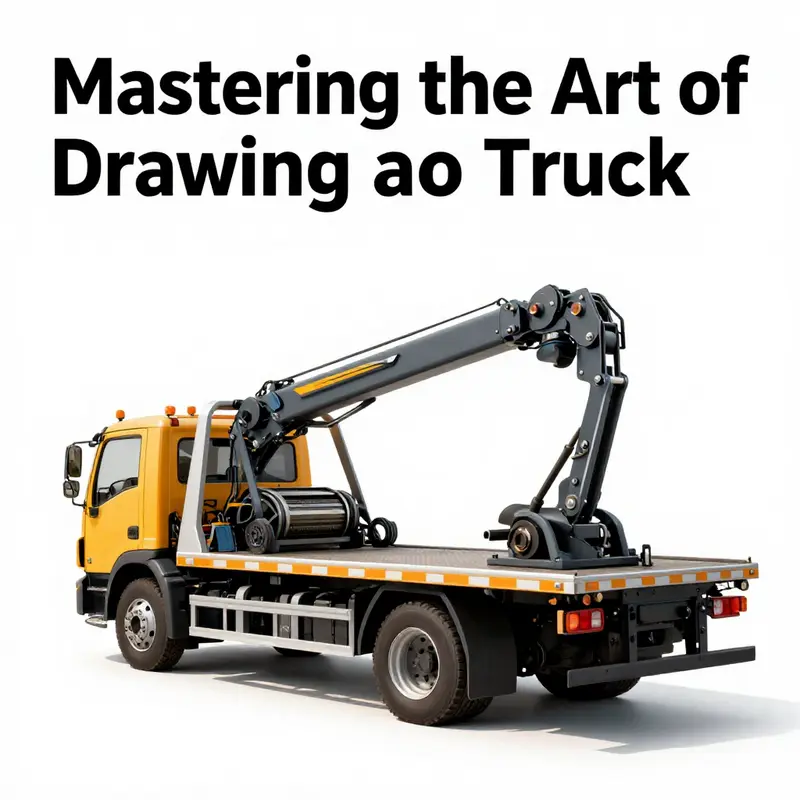
With proportion stable, the winch mechanism becomes the heart of the composition. Draw the drum as a cylinder that the cable wraps around, and place control knobs where a driver could reasonably reach them. Your tension lines should bend with the direction of the pull, especially if the vehicle is in motion or preparing to haul. If you want to show the pulley system, sketch circular wheels joined by thin lines, exaggerating their geometry to convey strength. The winch is not just ornament; it communicates the work the tow truck is built to perform.
Next comes the boom, which often takes an A-shape or a straight beam rising from the middle of the truck bed. The engineering logic of an A-frame is its triangulation; lines should converge at sturdy joints and resist the temptation to over-smooth every angle. Make sure the boom’s base anchors into the chassis, with brackets that imply welding and metal plates. The structural members should read as equal parts rigidity and reach, able to lift a vehicle without buckling the drawing’s weight. If you choose to show movement, a slight lean of the boom can hint at operation without over-dramatizing the pose.
At the rear, the platform or tray is more than a flat surface. Include a shallow edge, toolboxes, and perhaps a small wheel that props the vehicle during loading. A tow hook or ring should hang from the end of the boom or aft, sewn into the metallic texture. Cables and chains connect these hooks to the winch, and their thickness variations help differentiate metal from rope. Remember that visibility matters; some lines should recede with perspective while others stay crisp to communicate strength. The rake of the bed and the stance of the wheels work together to create credibility.
Shading and texture turn the drawing from a flat schematic into something that breathes. Use hatching and cross-hatching to evoke metal, rubber, and glass. Where chrome catches light, a crisp highlight along the edge can imply a polished surface. The tires deserve a heavier, darker surround to emphasize their bulk and rugged texture. In the cab, glass should reflect a world outside, so a few bright strokes can simulate glare. The body panels benefit from a subtle paneled rhythm, with thin lines suggesting rivets or seam stamps. The overall balance of light and shadow should feel deliberate, not accidental.
Dynamic effects can transform a static sketch into a moment of action. A soft puff of dust beneath the tires can imply a recent stop or a momentary pause during retrieval. Tire marks behind the rear wheels lend narrative weight, almost telling a story of a careful pull out of a shoulder or onto a highway. You can also introduce motion lines along the cable or around the winch to suggest tension, but use them sparingly to avoid clutter. The goal is to capture energy without compromising legibility.
Background context grounds the drawing in a scene. A roadside with a few traffic cones or a signage motif can imply a rescue scenario without naming a specific place. If you want a busier setting, sketch a distant line of streetlights or a hint of passing traffic as soft silhouettes. The environment should complement the tow truck, not overwhelm it. This approach helps viewers read the vehicle as the protagonist of the moment, rather than just a stored mechanism.
Beyond the pencil or charcoal, many artists reach for layers and digital brushes to refine textures. In digital workflows, layering allows you to separate line work, shading, and highlights so you can adjust one element without disturbing others. A pencil-like brush can preserve a hand-drawn feel, while an ink brush can sharpen edges. For metallic surfaces, a soft airbrush can create gradual reflections, and a textured brush can simulate the grain of steel. The layering mindset mirrors the real assembly of a tow truck—many components work in harmony to produce a single function—and it translates well to concept art that needs final polish.
Refinement also means looking beyond your own lines and considering how real tow trucks are built. This is where a broader understanding of mechanical design helps. Check your proportions one last time and compare your drawing to photographs or technical schematics to ensure your cab, chassis, and winch align correctly. After all, cohesion is what separates a practiced sketch from a convincing study. If you want to explore the structural side more deeply, there is a wealth of guidance about the technology and safety aspects of modern tow vehicles, such as the intricacies of the boom, winch control, and load distribution here: Tow Truck Technology and Safety.
Finally, when you feel the image embodies the vehicle’s purpose, add your signature moment—a touch of motion, a hint of grit, or a small reflection that suggests a damp or sunlit day. When you approach this scene, accept that every line is a decision about weight, mass, and function. If you’re working digitally, save layered files so you can revisit and revise details without re-drawing the whole truck. If you’re drawing by hand, the discipline of erasing and redrawing is your ally; it teaches you where the eye expects to see a hinge, a weld, or a bolt. For readers who want a structured, visual companion, a step-by-step illustrated guide can offer a practical roadmap, such as the one at this external reference: https://www.artforkids.com/draw-a-tow-truck-step-by-step
null
null
Tow Truck in Focus: Final Tips, Deliberate Practice, and Realistic Rendering
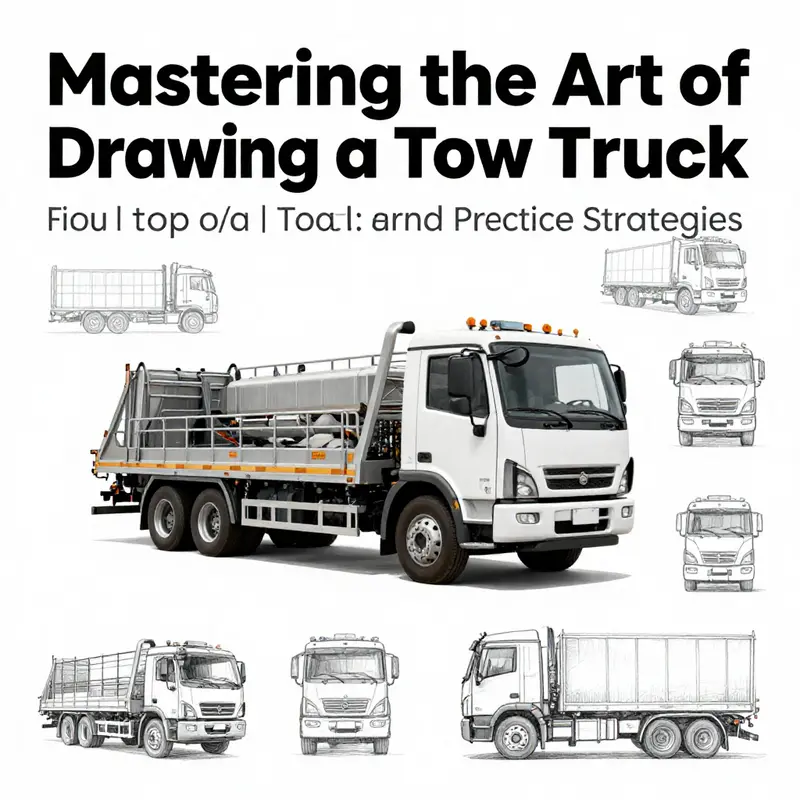
Drawing a tow truck is more than tracing a shape; it’s a study in sturdy proportions, practical engineering, and the quiet drama of a machine built to move other machines. The courage of a tow truck drawing lies in translating weight, balance, and purpose onto a page, letting the vehicle’s rugged silhouette convey its function before a single line is shaded. You begin with calm, measured steps, almost like you are sketching a blueprint rather than a cartoon. The goal is clarity: the cab perched confidently above a long chassis, the wheels grounded and wide, the winch and boom read as tools forged for resilience. When you approach the task this way, the drawing holds together not merely as a likeness but as a believable machine with a story behind its metal skin.
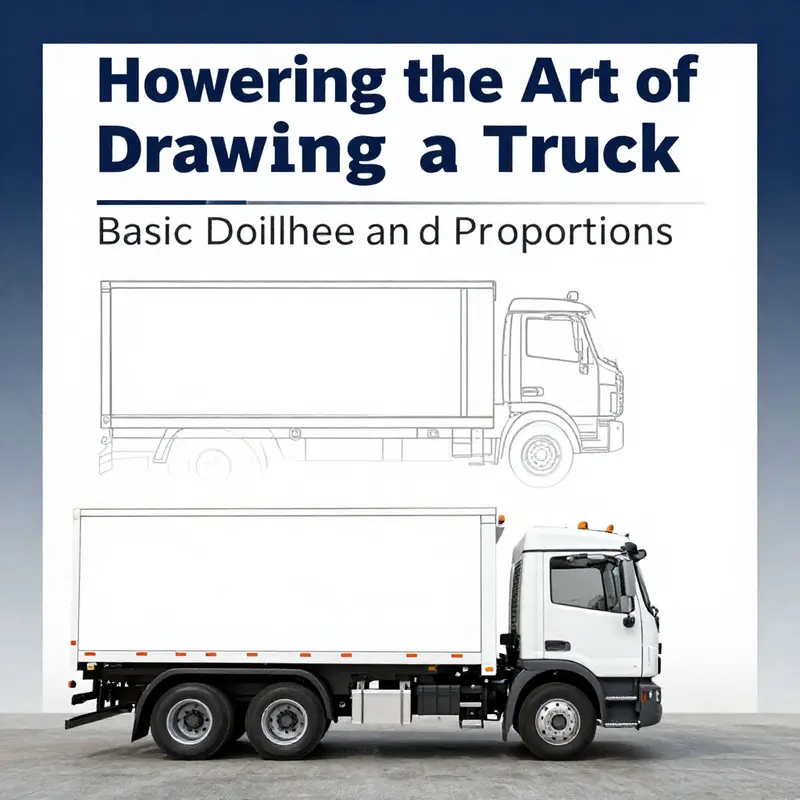
In the first moments, you anchor the composition with simple geometry. Picture the tow truck as a combination of a large rectangle for the cab and a slightly longer rectangle for the bed or trailer. This foundational rhythm gives you a scaffold to tune proportions as you progress. The cab sits higher, a visual cue of the driver’s vantage point and the vehicle’s commanding presence on the road. The two front wheels often appear larger and closer to the viewer, while the rear wheels provide a counterweight to the heavy front end. Keeping this balance is essential; a tow truck must look capable of withstanding stress, and that confidence should read in the angles and mass you set down on the page.
From these shapes, you begin to define the features that distinguish a tow truck from other trucks. The winch is a centerpiece near the front bumper—a cylindrical hub with a cable that seems ready to coil out toward an unseen rescue. If you study real examples, you’ll notice the housing often carries a sheen that hints at steel under stress, with bolts and rivets catching light at unexpected angles. The boom, whether mounted in a straight beam or an A-frame, rises from the bed’s center or rear with a purposeful incline. It is the tool that turns the vehicle into a rescue machine, so its geometry should feel tight and precise. Draw the hooks and chains as small, sturdy silhouettes at the end of the boom—a reminder that the machine’s most dramatic action is tethered to the end of a line.
Detailing continues with the cab and the functional rear platform. Windows, headlights, a bold grille, and side mirrors give the tow truck its personality, while the rear deck or flatbed establishes the space where a car might rest or be strapped for transport. Each of these elements has to sit in harmony with the broader mass you’ve already laid out. A useful technique is to sketch very light, then darken only after you’re sure the proportions and placements align. If something feels off, it’s often because the relationship between the cab and the bed is skewed, or the wheelbase reads as too short or too long for the vehicle’s stance. A modest nudge with the pencil can restore balance without destroying the confidence of your initial lines.
Texture and surface treatment finally come into play when you begin shading. Metal surfaces respond with crisp highlights and strong reflections, especially on the winch housing, the chrome grille, and the edges of the boom. The tires in particular deserve attention: the tread pattern, the depth of the rubber, and the subtle shadows where the tire meets the ground establish a believable anchor for the truck. Remember that light travels differently across polished metal and dull paint; your shading should cue these differences, reinforcing the industrial character of the machine. In practice, it helps to build shading in layers, starting with broad areas of value and gradually refining the edges where light catches the most. A few well-placed cross-hatches or short strokes along the underside of the chassis will deepen the sense of shadow and weight without making the sketch look busy.
The anatomy of a tow truck rewards deliberate study. The winch is not simply a round device; it’s a compact system of gears and cables, often protected by a sleek housing. The boom or A-frame is a critical line of action in the composition, so its angle should feel deliberate and robust, reinforcing the truck’s ability to pull and lift. Hooks and chains are not decorative; they’re the narrative device that tells us a tow truck will face the unknown, winching a vehicle out of a roadside nudge or toward a safer recovery. When you render these parts, keep edges clean and lines bold enough to suggest metal construction while retaining enough softness to imply curvature where needed. The cab is the human face of the machine in a drawing. You’ll want the windows to read as glass with a suggestion of the interior, the mirrors catching a vaguer reflection, and the grille asserting a sturdy, protective front. In short, the truck’s personality emerges not from a single flamboyant stroke but from a coherent dialogue between light, shadow, and geometry across the whole form.
A central challenge is perspective. The three-quarter view often yields the most convincing sense of mass and space; it allows you to show the front, side, and part of the top in a single, readable frame. However, the basic approach can be scaled to front or side views when you want to emphasize a particular feature—the winch, the boom, or the rear platform. Practicing multiple angles is essential for mastery, not as a mere repetition, but as a way to internalize the truck’s consistent proportions across viewpoints. As you rotate the subject in your mind, you refine the relative sizing of the cab, the length of the bed, and the height-to-length ratio of the overall silhouette. Your hand learns to anticipate where lines should bend, where shadows should fall, and how the tow truck’s geometry should respond to a change in vantage point.
The practice strategies you bring to this project compound your success. Start with a routine of loose, exploratory sketches. Let the lines be uncertain at first; the objective is to map out the idea, not to finalize it. Then gradually build confidence into your drawing by emphasizing the core silhouette—where the chassis meets the cab, where the winch sits in relation to the bumper, and how the boom rises from the deck. Repetition matters here, but repetition with intention. Draw several variations of the same basic form, shifting the boom’s angle, the cab’s height, or the wheelbase. Each variation teaches you something about proportion and stance. Over time, your muscle memory will begin to recognize what feels right for a tow truck and what looks off, even at a glance.
Another pillar is reference study. Look at different tow trucks—the heavy wreckers with extended booms and the flatbeds that cradle vehicles for transport. Compare proportions and observe how color, lighting, and surface texture change with angle. This is not about copying a single image; it is building a mental catalog of features you can pull into your own drawing. For those who want a more structured route, a guided tutorial can be a valuable companion to free-hand practice. To deepen accuracy in engineering details, exploring related resources on tow-truck technology and safety can enrich your understanding of the machine’s real-world form and function. tow-truck-technology-and-safety
As you advance, consider how you’ll present the final piece. A clean, confident inky line work often makes the strongest impact, but a well-chosen set of shading techniques can bring your tow truck to life. For digital artists, layering remains a powerful ally: start with a rough color layer that captures the base tones, then add shading on a separate layer to preserve your refinements. For traditional artists, a light pencil can be followed by ink or charcoal, with careful blending to preserve the hardness of metal edges and the softness of tire treads. The goal is not just a faithful replication but a convincing rendering that communicates the vehicle’s purpose: resilience, utility, and the quiet, steadfast presence of a recovery machine at work.
In the end, the value of final tips lies in consistency, not speed. Practice isn’t about finishing a drawing in one session; it’s about layering skills—proportion, perspective, and texture—until you can summon them intuitively. Begin with what is most essential: a sturdy framework, a believable wheelbase, and the defining features of the winch and boom. Then, as you fill in the details, allow yourself the room to refine the shapes, deepen the shadows, and adjust the highlights to suggest polished metal and rugged rubber. The result should feel like a real tow truck drawn with care, a balance of precision and energy that invites the viewer to imagine the scene of a roadside rescue beneath an open sky.
For readers who want to extend their exploration beyond pure mechanics and into practical exercise, keep the momentum by sketching variations—the long-trailer model, the compact flatbed, or a wreck-assist configuration. Each variant trains your eye to understand how proportion shifts with purpose, while maintaining the core identity of the tow truck. If you’re using a digital workflow, leverage layers to experiment with color schemes and lighting without losing the underlying structure. If you’re working on paper, use erasable pencils so you can test different layouts without leaving heavy marks that obscure your final lines. The trick is to keep your lines clean and your construction lines light while you chase the strongest, most confident rendition of the machine.
As you move through these practices, you’ll notice a quiet transformation. The tow truck that once felt like a complex assembly of parts becomes a coherent, dynamic organism on the page. The winch no longer looks like a gadget but as a tool that promises action; the boom becomes an extension of the chassis’ will; the cab gains a personality that hints at the driver’s control and steadiness under pressure. Your drawing will carry with it a sense of purpose, a tactile feel of metal and rope, and the careful geometry that makes it read as a real-world machine. The chapter on final tips and practice strategies is, at its core, about setting a calm, productive rhythm—beginning with simple shapes, embracing careful refinement, and letting practice reveal the subtleties that lift a tow truck from mere outline to believable rendering. The more you draw with intention, the closer you come to capturing not just the form, but the spirit of the vehicle.
External reference: https://www.drawwithjenny.com/tow-truck-drawing-tutorial
Final thoughts
By following this guide, you’ve embarked on a structured journey to learn how to draw a tow truck effectively. From understanding the basic shapes to incorporating intricate details and depth, each step builds your confidence and artistic ability. Remember, practice is key to mastery, so continue experimenting with different angles and styles. Your own unique interpretation of a tow truck is just a sketch away. Keep honing those skills, and enjoy the creative process!