
Tow truck drivers play an essential role in road safety and recovery, often working under challenging conditions. As the demand for roadside assistance fluctuates with economic conditions, understanding how much these vital professionals earn can clarify the landscape of the towing industry. This overview explores salary variations by region, the economic factors at play, how their earnings compare to other driving professions, and future trends in their compensation. Each chapter aims to provide a holistic view of the financial implications involved in being a tow truck driver, ensuring residents, commuters, truck owners, auto repair shops, dealerships, and property managers grasp this essential aspect of their operations and engagements.
Tow Salaries in Motion: How Much Tow Truck Drivers Earn Across Regions
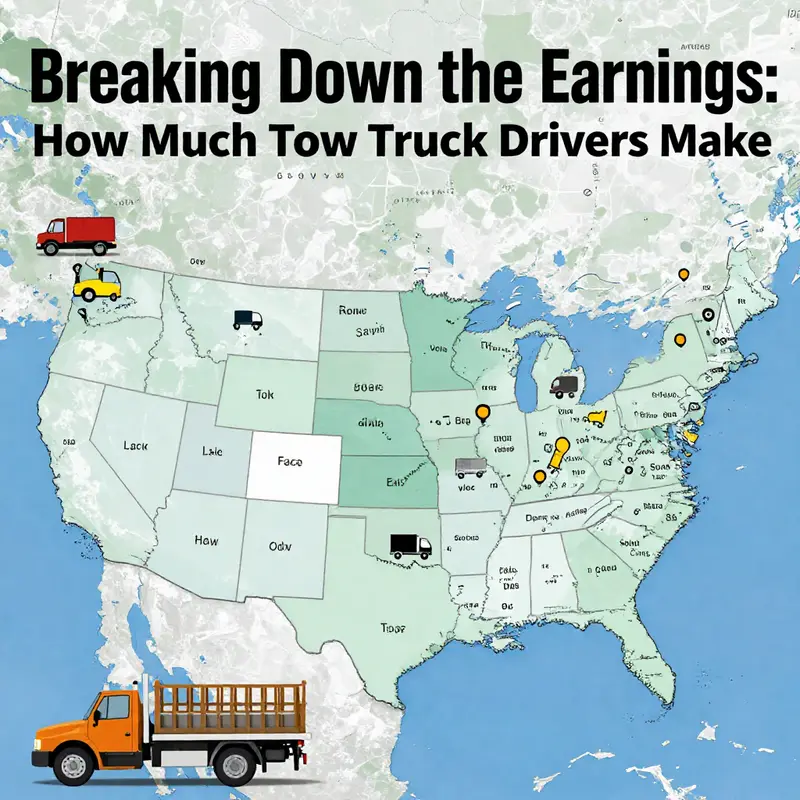
Across regions and borders, the pay for tow truck drivers illustrates a broader truth about skilled, on-demand transportation work: the value placed on rapid, reliable roadside service shifts with local demand, on-call expectations, cost of living, and the broader economy. The numbers, while helpful, tell only part of the story. They unfold differently depending on where a driver works, the hours they keep, and the types of towing and recovery tasks that fill their days. In many markets, the difference between a steady, comfortable wage and a top-tier income hinges on a mix of night shifts, weekend calls, weather, and the density of roads and hazards that keep a driver in motion for long stretches of the day.
In the United States, data place the average hourly wage for tow truck drivers around 21.46 dollars, roughly eight percent above the national median for many blue-collar occupations. That figure sits within a broader ecosystem where some states and cities pay noticeably more due to higher living costs or greater demand for fast, mobile recovery services. The pay scale here tends to reflect a balance between base pay and the value of overtime, on-call time, and incentive pay offered by some employers who need to ensure quick responses to accidents, stalled vehicles, and heavy-duty recoveries. For a reader trying to translate that hourly figure into a yearly picture, a standard full-time schedule can push annual earnings into the mid-40s thousands of dollars when overtime and on-call premiums are regular features of a driver’s routine. Yet this is not a flat landscape; regional variations shape the experience of work, stability, and opportunity.
Turning northward into Canada, the picture shifts again, framed by a national average and a string of regional exceptions that underscore how local economics can stretch or compress a driver’s earnings. The national average hourly wage for tow truck drivers in Canada hovers around 17.75 Canadian dollars, a benchmark that translates to about 36,500 CAD per year for full-time work at typical hours. This baseline hides a broader spread when one looks at metro areas versus smaller communities. In British Columbia, the provincial average is modest, but some cities stand out. Richmond, for example, reports an hourly wage near 24.06 CAD, which is roughly one-third higher than the provincial norm and points to a market where dense urban demand, high traffic volumes, and the need for rapid response converge to raise pay. The province’s other major centers—Vancouver, Victoria, North Vancouver, Kelowna, Delta, Vernon, and Surrey—tend to align with the provincial average, underscoring that the premium in Richmond is more about local demand and cost of living than a universal provincial uplift.
Ontario tells a somewhat different story. Thunder Bay tops Ontario’s league tables with about 26.53 CAD per hour, reflecting a blend of regional demand and the kinds of towing services that are more common in northern cities, where long distances and varied weather patterns shape a driver’s day. Ottawa comes in around 25.19 CAD per hour, Edmonton around 24.05 CAD, and Winnipeg around 23.11 CAD. These figures illustrate how a large, sparsely populated province can still offer robust hourly rates in communities that require consistent on-call coverage. In practice, the highest-paying postings often appear not as a standard rate but as opportunities tied to specialized on-call shifts, after-hours work, or endorsements that enable towing heavy vehicles or handling complex recoveries. That is consistent with the wider market, where the top-tier hourly pay can exceed provincial norms when a role requires additional certifications or the ability to respond outside typical business hours.
Job listings and regional studies sometimes reveal even more variation. For instance, some postings in Alberta and Ontario have historically shown hourly wages near or above 30 CAD, with anecdotes of exceptional postings north of the tableland where the premium for faster response and heavier equipment use can push pay higher still. While those are not the everyday baseline, they signal a market that rewards reliability, expertise, and the stamina to operate through lengthy shifts or harsh weather. It is also useful to note that some regions show a big pay-to-work-time split: strong hourly rates that are complemented by overtime opportunities and substantial on-call time, which can contribute significantly to annual earnings. In this sense, the Canadian landscape resembles a mosaic, where urban cores with dense traffic demand high coverage, and remote locales demand long hours with commensurate compensation.
On the other side of the Atlantic, the United Kingdom presents a different scale entirely. Truck drivers in the UK typically report gross annual ranges of around 48,000 to 60,000 pounds. That figure reflects a robust demand for mobility and a professional standard of vehicle recovery, but it also sits atop tax regimes with substantial deductions that shrink take-home pay. After tax, many drivers in the UK can see net figures that settle closer to the mid-30s thousands of pounds, depending on the exact tax code, pension contributions, and any overtime or bonus schemes. The UK market, like others, rewards experience and reliability; those who combine strong navigation skills, safe operation, and efficient recovery can maximize earnings through overtime pay or on-call premiums, particularly in regions with congested roads, high accident rates, or a culture of rapid response for commercial fleets.
Crossing the globe to Australia, the pay landscape can be striking in its scale. In Sunbury, Victoria, tow truck drivers earn an average annual salary around 122,535 Australian dollars, a figure that runs roughly 56 percent above the national average. This elevated level of pay is a reflection of several converging factors: a high demand for on-road recovery services in busy urban corridors, the prevalence of long shifts that align with weekend or after-hours work, and a market that supports specialized towing tasks, including heavy-duty and accident scene management. The Australian market’s premium is often tied to the broader economy’s health and the regulatory environment that invests in road safety and rapid incident response—factors that support a greater willingness to compensate skilled drivers for the unpredictable, high-stakes nature of the work.
In Asia, the picture changes again with regional diversity shaping earnings in a different way. In China, monthly earnings vary widely by city and vehicle type. In major metropolises like Beijing and Shanghai, drivers commonly earn between 8,000 and 15,000 yuan per month, while smaller cities may range from 5,000 to 10,000 yuan per month. A 2023 report placed the average monthly income for truck drivers in China at about 7,641 yuan, a figure that positions the profession among the better-compensated blue-collar sectors in the country, but still subject to significant regional disparity. These differences are not mere curiosities; they reflect the scale of urbanization, the density of traffic, and the way the labor market values specialized roadside assistance alongside long-haul and local distribution work.
The numbers across regions also invite a reminder about currency and cost-of-living differences. A wage that looks excellent in one country may carry different purchasing power once translated into local prices for housing, food, and transportation. Conversely, a seemingly modest hourly rate in a high-cost city may still offer a comfortable living if paired with reasonable hours and predictable on-call patterns. This is why many drivers consider not just the raw wage, but the structure of the job: how much of the pay comes from base hourly rates, how much from overtime and on-call shifts, whether there are bonuses for rapid response, and how much time a driver can expect to spend behind the wheel versus at a yard waiting for another call. The stability of income matters too, because tow work inherently involves variability: a bad weather week can dampen demand in some markets while others see a spike in accidents or vehicle recoveries that tests the endurance of even the most seasoned driver.
To readers seeking a practical lens for comparison, one useful approach is to view pay not as a single number, but as a spectrum anchored by regional demand, cost of living, and the willingness of employers to compensate for after-hours coverage. Regions with dense traffic, longer average response times, and more complex recovery tasks tend to offer higher pay to attract and retain experienced drivers. Yet the same regions can present higher living costs, which erodes real take-home value unless overtime or premium on-call compensation is substantial. The data here, though not perfect, illustrate the core dynamic: pay follows demand, and demand follows the need to keep roads running smoothly in moments of disruption.
For readers who want a practical snapshot of how these dynamics translate into pay, consider that the U.S. average sits in the low-to-mid twenty-dollar range per hour, with substantial room for higher earnings through overtime and on-call work in busy states. Canada presents a similar story but with a pronounced regional lift in metropolitan areas and in provinces where urban density and seasonality drive the need for rapid recovery services. Australia, with its large geographic footprint and consistent demand for rapid incident response, delivers a strong premium in certain regions. The United Kingdom’s structure rewards experience and the ability to work longer hours, especially where taxi-like values and commercial fleet support align with the role. China offers a very different pattern, where city scale and the mix of long-haul versus local towing influence monthly earnings, and thus annual income in a way that varies far more by locale than in many Western markets.
To dig deeper into how pay translates into daily life and career progression, you can explore further details about tow truck driver compensation through dedicated industry resources. For a practical sense of how pay translates to daily life, see this explainer on how much tow-truck drivers make: how-much-do-tow-truck-drivers-make.
The story behind these numbers also points to a broader reality: compensation in tow work is as much about career development as it is about hourly rates. A driver who invests in safety training, efficient route planning, and equipment maintenance can extend their earning potential by reducing downtime and taking on more complex tasks. Demonstrating proficiency in heavy-duty recovery, winching techniques, and incident command can unlock roles that pay a premium for specialized skills. The path to higher pay is often a path through certification, experience, and the reputation one builds for reliability on the road. And while the regional lens matters, the overarching trend is clear: as long as the roads need clearing, there will be people ready to answer the call, and employers willing to reward the most capable among them with wages that reflect the value of a rapid, dependable response to every roadside emergency.
In sum, regional variation in tow truck driver pay is both a map and a mirror. It maps where demand meets supply in real time and mirrors the broader economic forces shaping the transportation sector. For readers evaluating career options, it highlights that the road to a strong income is as much about where you work as how you work—whether you prefer the steady rhythm of a rural route, the high-stakes tempo of an urban corridor, or the specialized demands of a heavy-recovery operation. In every market, the core factors remain consistent: speed, safety, reliability, and the willingness to respond when others cannot. The pay, accordingly, follows the value that these factors create in the eyes of employers and customers alike.
External resource: https://www.indeed.com/career/tow-truck-driver/salaries
Tow Line, Pay Line: How Economic Forces Shape Tow Truck Driver Wages Across Regions
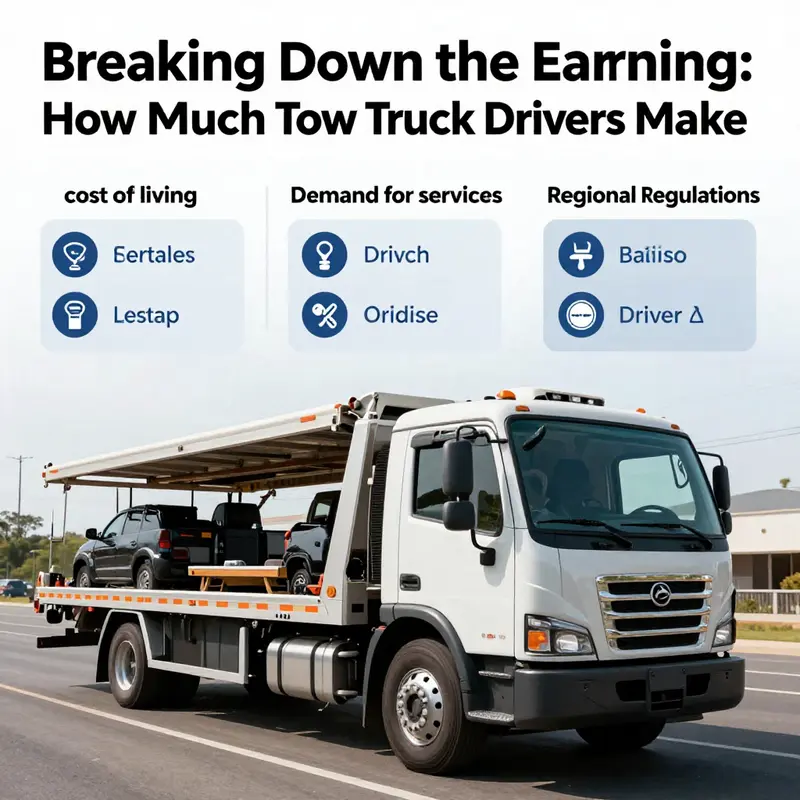
Pay in the tow industry is rarely a fixed number. It is a moving target shaped by the same forces that drive markets for any hands-on, on-call service: risk, demand, and the cost of living in a given place. What a tow truck driver earns is not simply a function of hours worked or a single rate card. It emerges from a complex interaction of experience and specialization, the local economy, and the operational realities of the work. The same driver who can extract higher earnings in a crowded city will face very different dynamics in a rural corridor where demand is steadier but volume is lower. The core idea is simple: earnings are a reflection of the balance between the need for rapid, effective response and the density of opportunities that make those responses possible. This balance shifts with the place, with the kind of towing being performed, and with how a company structures compensation to align incentives with performance and safety.
Experience matters, but not in isolation. A driver who has logged years handling hazardous environments, heavy commercial wrecks, or remote recoveries brings a portfolio of skills that reduces risk for the employer and increases the speed and effectiveness of every call. Specialized training translates into higher rates of competence, which in turn translates into higher pay, especially in markets where there is a premium on minimizing downtime and risk at the roadside. The value of experience compounds in emergency settings where every minute counts and the stakes are elevated. In many jurisdictions, this translates into a higher baseline wage or better access to high-visibility, high-stakes assignments. Yet experience alone does not guarantee superior earnings. It must be paired with the right local demand signals and with opportunities that reward efficiency and reliability.
Geographic location is a powerful determinant of pay, and the pattern holds across countries and continents. Urban centers with heavy traffic, dense vehicle density, and a constant churn of incidents naturally sustain a higher demand for towing services. The equations of supply and demand tilt toward more competitive compensation where operators can reasonably expect a steady stream of calls, including emergencies. In more rural or smaller urban areas, demand exists but is less predictable, and the same fleet or operator may be called upon to cover larger geographic footprints with longer travel times. In those contexts, pay may be steadier in terms of hourly terms but lower on a per-hour basis when measured against urban market benchmarks. Carriers sometimes compensate for that by offering higher per-call or per-mile incentives, or by guaranteeing a baseline shift that helps offset longer travel and downtime between calls.
The type of towing work also steers wages in meaningful ways. Routine vehicle moves—such as tire changes, jump starts, or non-urgent transports—turn into regular, predictable tasks that tend to yield modest, steady earnings. Emergency roadside assistance, accident scene management, and long-haul or heavy-duty recoveries carry greater risk and greater complexity, and the pay structure often reflects those differences. Hazardous conditions, high-stakes recoveries, or the need to use specialized equipment can justify premium rates, particularly when the operator routinely brings the job to a safe conclusion with minimal secondary damage and with a rapid turnaround that keeps downstream costs low for the customer, the insurer, and the service provider. In markets that prize speed and reliability, pay can be success-based or incentive-driven, rewarding crews who consistently outperform in response time, damage control, and incident management. In other systems, compensation remains more fixed, with benefits and guarantees that smooth out fluctuations in daily volume but can cap upside if the market tightens.
Compensation structures themselves vary widely, and this elasticity is a major reason for the perceived and real differences in earnings across regions. Some employers lean toward fixed hourly rates, with deterministic earnings that help drivers budget but may limit the upside in peak demand periods. Others combine base pay with performance-based elements—bonuses for rapid response, increments tied to volume, or tiers based on the complexity and duration of calls. The presence or absence of benefits, such as health coverage, paid time off, or retirement contributions, also colors the effective value of the paycheck. In places where labor markets are more competitive or where drivers must shoulder greater risk, you may see more aggressive incentive schemes. Conversely, in markets that struggle with cost pressure, employers might rely on steadier base rates with limited upside but higher job security.
Against this backdrop, regional data illuminates how these forces play out in real numbers. In Canada, for example, the national average hourly wage for tow truck drivers sits around $17.75, with annual full-time earnings near $36,500 based on December 2025 figures. But this national average hides a mosaic of local realities. Richmond, British Columbia, stands out as one of the higher-paying locales, averaging roughly $24.06 per hour—an amount about 36 percent above the national mean. In Ontario, Thunder Bay tops the provincial scale at about $26.53 per hour, with Ottawa around $25.19 and Edmonton near $24.05. Winnipeg sits a touch lower at $23.11 per hour. These figures are not mere curiosities; they reflect the pull of urban density, the presence of larger fleets, and the ability of operators to command premium for rapid, high-volume responses in metropolitan or high-need corridors. When it comes to job postings, the market offers a snapshot of what employers are willing to pay for particular capabilities: exemptions or demands are reflected in positions such as $36.10 per hour at Champion Towing in Chestermere, Alberta; $36 per hour at Professional Towing Services in Guelph, Ontario; $39.50 per hour at Brown Boys Transport in Surrey, British Columbia; and a broad range of annual earnings from $50,000 to $80,000 at Duffs Towing in Whitby, Ontario. The dispersion is telling: even within one country, pay can swing widely depending on location, company, and the scope of work.
In the United States, the data landscape is less explicit in the sources at hand, but established salary research aligns tow truck work with broader heavy-truck or commercial-vehicle driving roles. Payscale and related salary aggregators show that experienced truck drivers often earn anywhere from roughly $42,000 to $63,000 per year. Tow truck drivers may fall within this band or push slightly above it depending on locale, employer expectations, and the mix of on-call or emergency assignments. The key takeaway is that the U.S. market follows a similar logic to Canada: urban concentrations and high-demand corridors tend to lift earnings, while regions with ample but less frequent call volume offer more modest base pay complemented by incentives or longer downtime between calls.
Across oceans, the picture shifts again. In Australia, Sunbury, Victoria, provides a striking example of regional variance in the pay landscape. The average annual salary for tow truck drivers there is about AUD 122,535, which represents roughly a 56 percent premium over the national average. This suggests a labor market with strong demand, possibly linked to remote or difficult-to-service routes, the prevalence of heavy-duty recovery work, or the presence of specialized towing fleets that command higher rates. The Australian data underscores a broader truth: when the work involves challenging conditions, significant risk, or specialized equipment, earnings can rise sharply—provided the demand exists and operators can secure the right contracts.
The United Kingdom offers a different cadence. Truck drivers in the UK typically earn between £4,000 and £5,000 per month, translating to roughly £48,000–£60,000 annually. However, the after-tax reality can substantially reduce take-home pay, with high tax and national insurance deductions eroding the gross figure. In other words, the headline monthly figure may overstate direct disposable income for many drivers, a reminder that taxes, benefits, and cost of living are integral to understanding true earnings. The UK market thus demonstrates a contrast: solid nominal salaries on paper, but significant variance in net pay depending on tax status and deductions.
In China, the pay spectrum is even more complex, reflecting large regional disparities. In major cities such as Beijing and Shanghai, monthly earnings typically range from ¥8,000 to ¥15,000. Smaller cities tend to fall between ¥5,000 and ¥10,000. A 2023 report placed the national average monthly income for truck drivers at about ¥7,641, placing the occupation among the higher earners in the blue-collar sector in many urban centers. These figures illuminate a market where the same occupation can be highly remunerative in one city and comparatively modest in another, driven by urban growth, logistics intensity, and the structure of local industries.
These regional narratives do not exist in isolation. They reflect core economic dynamics: the value of speed and reliability in service delivery; the premium employers are willing to pay to minimize downtime for customers; and the way markets balance risk against potential upside. A 2026 TikTok analysis highlighted that these pay variations are not only about hourly rates but about the broader risk-reward calculus that operators navigate daily. The reality is that earnings potential tightens or loosens with market conditions, the regulatory environment, and the competitive intensity of the towing landscape. For a concise exploration of the economic dynamics behind tow-truck compensation, many readers find it helpful to consult diversified sources. A detailed cross-check of earnings and risks in heavy-duty tow driving can be found in the TikTok overview linked in recent industry discussions: https://www.tiktok.com/@towtrucklife/video/7289456732109875457.
The numbers above are not a recipe for a universal rule but a map of the terrain. For those considering a career in towing, the most practical approach is to gauge the local market: what is the typical base pay for an on-call driver, what incentives exist for rapid response, and how do those incentives align with the actual call volume and average distance traveled per job? A driver contemplating movement between regions should weigh not only the hourly rate but also the expected on-call time, travel between jobs, and the cost of living in that region. A high hourly rate in a city where fuel, insurance, and housing costs are also high may still translate into a modest real income after expenses. Conversely, a lower nominal rate in a low-cost area can yield strong purchasing power if downtime is limited and the volume of calls remains consistently high.
The question of how to optimize earnings in tow work is therefore not merely a calculation of hours but a strategic assessment of where and how to work. The best outcomes often come from building a portfolio that blends experiences—emergency response, safe management of hazardous scenes, and efficient recovery operations—with a compensation structure that rewards the most valuable work. It also helps to stay attuned to market signals: regional pay trends shift with changes in regulation, insurance practices, fleet composition, and the emergence of new logistics patterns that can alter demand surges or quiet periods. As markets evolve, so too does the calculus of risk versus reward for drivers who aim to maximize earnings without compromising safety or customer service.
For readers who want a targeted look at how earnings translate into career planning and daily life, a dedicated resource on driver earnings can provide deeper benchmarks and practical guidance. See the Tow Truck Driver Earnings page for a focused examination of pay scales, incentive structures, and regional differences in a practical, career-oriented context. The link is provided here as a concrete reference to help translate these macro patterns into individual planning: Tow Truck Driver Earnings.
In sum, the wage story for tow truck drivers is built on a matrix of factors that vary by country, city, and job type. Experience, location, service complexity, and compensation design all interact to shape take-home pay. The result is a field where earnings can be substantial in the right market and for the right mix of skills, while remaining conservative in markets with slower demand or tighter cost structures. Understanding these dynamics helps current and aspiring drivers anticipate how pay may shift as markets evolve and as fleets adapt to new logistical realities. It also highlights the importance of continuous training, strategic location planning, and an appreciation for the broader economic context in which towing services operate.
External context reference: For a broader perspective on how market forces and policy environments intersect with trucking and related services, see ongoing discussions and analyses in industry conversations and video explainers, such as the TikTok overview linked earlier. This external resource provides an anecdotal lens on earnings risk and opportunity, complementing the regional data and normative ranges discussed above.
Tow Truck Pay in the Driving Landscape: How Much Tow Truck Drivers Make Compared to Other Driving Professions
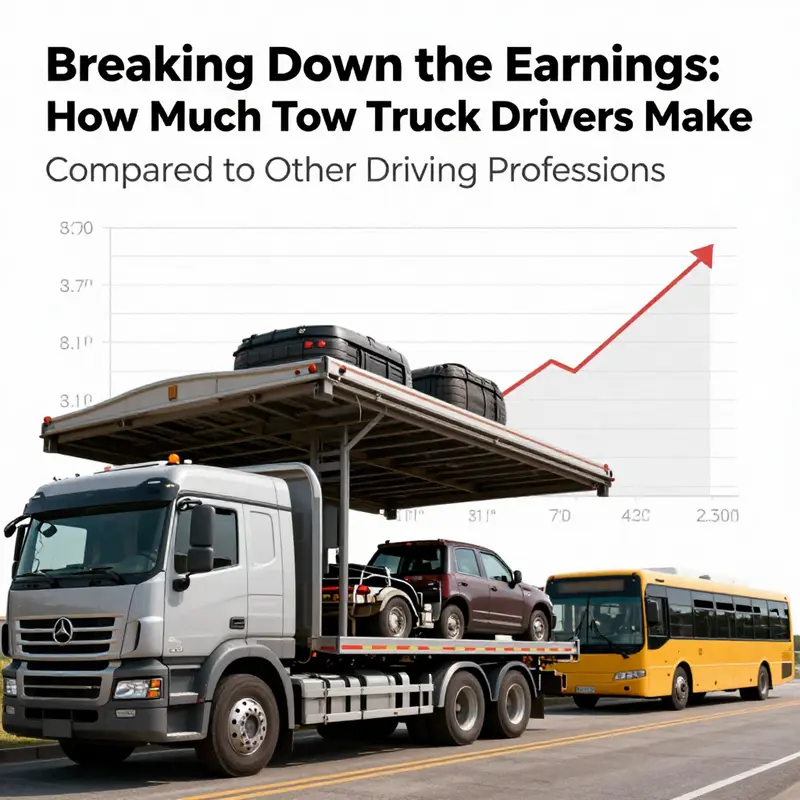
When readers ask how much tow truck drivers make, they’re really asking how a very particular kind of driving fits into the broader ecosystem of transportation work. The short answer is that tow truck pay sits in the middle of the pack among driving roles, but the longer answer reveals a landscape shaped by location, experience, schedule intensity, and the kind of towing or roadside work a driver handles. It’s a job built on availability and timing as much as it is on miles driven, so pay fluctuates with demand, geography, and the on-call expectations that come with being first on the scene at odd hours or during emergencies. In this sense, earnings are not just a number on a paycheck; they reflect a blend of lifestyle choices, risks, and the ability to respond quickly when a vehicle breaks down or an accident blocks a lane. Across the United States, Canada, and other parts of the world, tow truck pay can be surprisingly variable, yet certain patterns persist that help a worker gauge what to expect and how to maximize the value of the work they perform.
In the United States, the baseline impression one encounters in salary aggregators and labor market trackers is strikingly modest at first glance. The national average wage for tow truck drivers sits around the mid-teens per hour. A commonly cited figure is about $15.51 per hour, which translates to roughly $32,000 a year for a full-time schedule of 40 hours per week. That puts tow truck driving in the middle tier among driving occupations. It’s not at the top, and it’s certainly not at the bottom. This baseline is the result of a mix of part-time shifts, on-call stints, and full-time roles, many of which involve irregular hours that push average earnings upward for those who consistently work overtime or respond to high-demand periods. The contrast with other driving specialties becomes clear when one looks at the numbers for more specialized or higher-demand segments of the trucking industry.
For context, the gulf between tow work and more specialized driving is substantial. Van drivers, often employed in delivery or airport shuttle roles, tend to pull higher annual figures because their routes are more predictable, the hours more stable, and the miles often accumulate in dense urban corridors or busy commercial lanes. Truck drivers who haul longer hauls or operate specialized equipment typically earn more due to the increased skill, longer hours, and greater regulatory requirements. In many surveys, truck drivers average around the low to mid $70,000s in annual earnings, and tanker drivers frequently top the list because of the hazardous materials handling and extended driving that their work entails. Owner-operator drivers sit at the far end of the spectrum, where the combination of business ownership and the capital and risk involved can yield six-figure personal earnings if the business remains constant and efficient. The stark reality is that tow truck drivers, while respectable in many markets, rarely reach the six-figure threshold from wage income alone unless they blend overtime, bonuses, and tips with a longer workweek or cultivate high-demand urban routes.
These contrasts aren’t just abstract numbers. They illuminate the practical choices a prospective driver faces. If a person prioritizes a set schedule, predictable routes, and the comfort of steady hours, a traditional van or city-delivery role might seem more attractive. If, however, someone values autonomy, immediate problem-solving, and the potential for rapid earnings during busy periods, towing offers a pathway that can pay handsomely when the right conditions align. The on-call nature of tow work, the ability to tag onto emergency callouts, and the potential for tips in certain urban contexts all append to the base wage, creating a total compensation picture that can top the simple hourly rate when conditions are favorable.
The regional dimension adds another layer. In Canada, for example, wage data show wide regional variation that mirrors the breadth of the country. The national average for tow drivers sits around $17.75 per hour, with some locales well above that mark. In high-demand urban pockets, wages can rise sharply; one region in British Columbia reports hourly wages that hover in the mid- to upper-$20s, and Ontario shows pockets where pay exceeds the mid-$20s per hour as well. The pay structure often reflects a mix of full-time shifts, on-call expectations, and the local cost of living that drives demand for roadside assistance. Even within a country, a driver’s location matters just as much as their experience. In practice, a tow operator who works in a sprawling metro area during peak hours may accumulate more hours and more on-call opportunities than a counterpart in a smaller town where incidents are less frequent.
The international comparison underscores how distinct drivers’ pay can feel when you cross borders. In the United Kingdom, truck-related roles typically report monthly earnings that translate into a substantial annual package, but tax and deductions slice into net take-home pay. Australia’s market, by contrast, has shown some of the highest reported annual figures for tow-related work in certain regions, driven by demand, specialty skills, and the premium placed on rapid response in a sparsely populated but geographically challenging landscape. In China, average monthly incomes for truck drivers vary by city and specialization, but the blue-collar sector remains competitive in several urban centers. These cross-border snapshots remind us that “typical” is a moving target in a field shaped by local economies, regulatory environments, and the scale of road incidents that require tow services.
Within the United States, beyond the broad pay bands, the day-to-day ramp of earnings for tow truck drivers often rests on a few practical levers. Overtime adds a steady lift in any 40-hour model where dispatch centers expect coverage beyond normal business hours. Emergency callouts, a core element of the job, can bring premium rates in busy urban corridors or during severe weather when incident rates spike. Tips, though not universal, can meaningfully augment a driver’s income in scenarios where drivers assist stranded motorists with not just a tow but a helping hand, a moment of reassurance, and prompt, courteous service during stressful circumstances. The ability to work additional shifts—particularly weekends and nights—also matters, because demand tends to swell when most people would prefer to be home yet cannot due to a breakdown or accident.
The data you’ll see cited in salary roundups reflect this blend of structured wages and ancillary income. For instance, the spectrum of regional pay in Canada highlights how a driver’s location can pull the overall average up or down. In Ontario, wages hover in the mid- to upper-$20s per hour in several stable markets, while some Canadian centers report even higher figures as fleets recruit aggressively to handle peak demand. The job market for tow drivers also features a practical reality: the role is often entry accessible, requiring licensed driving credentials and the ability to operate a variety of equipment in a range of weather conditions. Yet the very traits that make the job appealing—flexible hours, frontline problem-solving, and the immediate impact of helping people in their moments of need—can also cap or boost earnings depending on how a driver leverages those traits in their local market.
A useful way to interpret the numbers is to separate the headline hourly rate from the full compensation picture. The hourly wage provides a baseline, but the true earnings depend on how many hours a driver works, how often they take on emergency or after-hours shifts, and what kind of tips or bonuses are available in a given area. In high-demand urban markets, a tow driver who stacks overtime with daytime shifts can surpass the national average with relative ease. Conversely, in regions with lower incident rates, or where the industry is more fragmented among smaller operators, the same driver might see a flatter pay trajectory. The variability is not a flaw; it reflects a market that rewards responsiveness, reliability, and the capacity to move quickly from one assignment to the next.
For readers exploring a potential career in towing or considering a change in their driving career, the question of pay should be paired with practical planning. It is worth noting that the Bureau of Labor Statistics projects a notable growth rate for tow truck drivers over the coming decade. A projected 5.5 percent growth from 2024 to 2034 corresponds to roughly 98,700 new jobs, suggesting a healthy demand trajectory even as technology and automation evolve transport and logistics. This growth is not merely a function of more vehicles on the road but also of the continuing need for immediate, on-site assistance that tow services provide—an area where human judgment, situational awareness, and hands-on handling remain crucial.
To connect these dots with a more tangible sense of earnings, consider how the numbers look when framed against other driving tracks. A typical van driver might earn substantially more on an annual basis due to higher average hourly rates compounded by steady, predictable routes. A long-haul truck driver commonly earns more still, given the extensive mileage and often longer shifts that push annual gross pay into a higher bracket. In this landscape, tow truck driving sits in a solid middle space—adequate to attract workers looking for meaningful, hands-on work with the potential for overtime and tips, yet not necessarily the path for someone chasing six-figure wage goals purely from base wages.
One practical implication for aspiring tow drivers is the power of location and market choice. Moving to a city with a higher demand for roadside assistance, or aligning with a fleet that prioritizes emergency coverage during peak hours, can meaningfully shift earnings. Likewise, gaining experience that opens access to premium callouts, or specializing in certain kinds of tows—such as heavy-duty recoveries or accident scene management—can lift the wage floor. The professional choices extend to scheduling: those who can work when the demand is highest, such as nights, weekends, and holidays, may unlock the opportunity to earn more in a given week, even if the base hourly rate remains relatively modest. The net effect is that pay is not a single dial you turn up or down; it’s a mosaic created by hours worked, the rhythm of dispatcher demands, and the capacity to deliver prompt, dependable service in high-pressure situations.
For readers who want a quick reference that distills the data into a practical takeaway, the gist is this: if your goal is a steady, predictable paycheck, tow work may feel modest in headline wages but can be financially solid when combined with overtime and tips in busy markets. If your aim is to maximize earnings, your path lies in choosing high-demand locations, pursuing shifts with longer coverage, and building a reputation for efficiency and safety in challenging conditions. The numbers from Indeed and other sources give a snapshot, but the real story is in the daily rhythms—how many calls come in, how quickly you can respond, and how effectively you balance speed with safety on every roadside scene. For a more detailed breakdown of typical pay ranges and what factors push those numbers higher or lower, you can explore a focused discussion that aligns with the broader topic of this chapter at how-much-do-tow-truck-drivers-make.
As the chapter closes, it’s worth keeping an eye on the trend lines. The transportation sector’s ongoing evolution, including regulatory changes and the rise of automation in certain tasks, will influence how much tow truck drivers make in the coming years. Yet the core reality remains: towing is a people-first, problem-solving role that delivers essential service and, for many, a viable and rewarding career path within the broader driving economy. The pay, influenced by geographic and market-specific factors, reflects the complexity of the work and the value communities place on rapid, reliable roadside assistance. For those weighing a career switch or choosing a specialty within driving, the central question remains not just how much the job pays, but how well it aligns with personal priorities—steady earnings, flexibility, meaningful impact, or the satisfaction of keeping roads clear and people safe when emergencies strike.
External resource: Indeed Salary Page
Pay on the Open Road: Navigating Tow Truck Driver Wages in a Growing, Tech-Driven Market
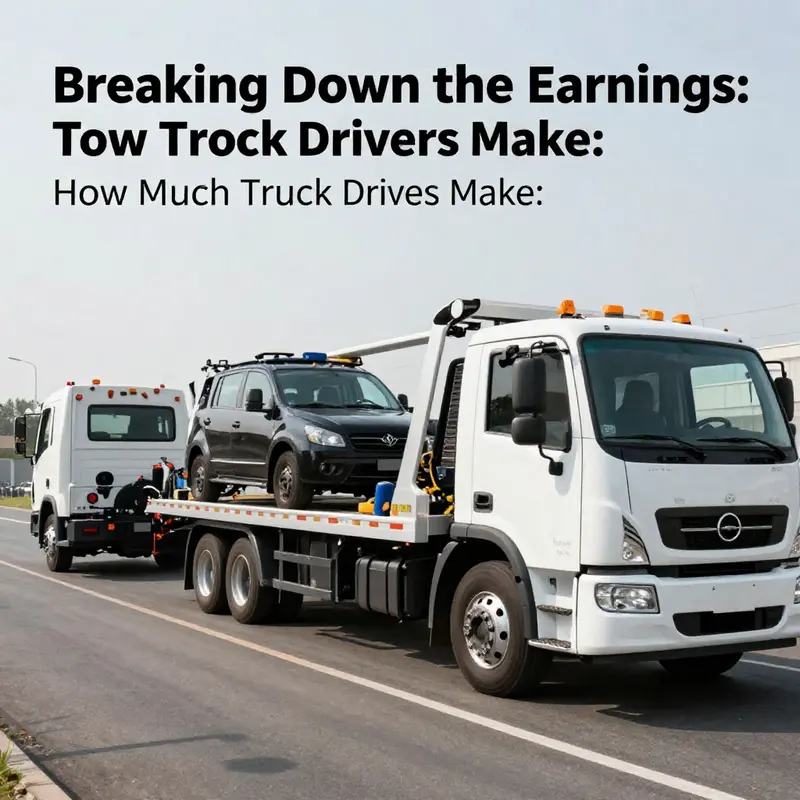
Wage trends for tow truck drivers unfold along the same roads they patrol—gradually, with occasional sharp bends, and always in response to the conditions of the industry, the economy, and the communities they serve. The current moment sits at an intersection of growth and complexity. On one hand, the global tow truck market is expanding at a steady pace, fueled by more vehicles on the road, a rising demand for roadside assistance, and the adoption of smarter fleet-management technologies. On the other hand, wages do not rise in a straight line; they diverge by country, by city, by employer model, and by the skill set a driver brings to the work. The overarching arc, however, is clear: as demand grows and technology reshapes dispatch, safety, and service delivery, compensation structures are evolving to reward reliability, efficiency, and the ability to navigate risk on call, day or night. That evolution is not just a count of dollars per hour; it is a reflection of how the work is valued in different regional economies and how individual drivers can position themselves for longer, steadier earnings as the industry matures.
At the global level, industry analyses project a compound annual growth rate of about 7% from 2025 to 2032 in the tow truck sector. This expansion is not merely a headline statistic; it translates into more jobs, more opportunities for advancement, and more demands on the people who do the work. Vehicle ownership remains on the rise in many parts of the world, and with it comes more incidents where a tow is necessary—whether it’s a breakdown on a highway, a vehicle stuck in difficult terrain, or a fleet needing to relocate assets for strategic reasons. Across this expanding landscape, the drivers who can couple strong mechanical knowledge with prudent risk management, customer service, and tech fluency will be those most likely to see wage growth that outpaces inflation and the broader economy. The message for anyone charting a course into this field is that the lane of opportunity is widening, but not all lanes lead to the same exit.
The United States offers a particularly telling example of how wages can regionally diverge even within a single national market. Industry analysis places the typical hourly range for tow truck drivers around $18 to $25, with the higher end reserved for those who work in large metropolitan areas, take on overtime, or operate in high-demand windows like late nights or weekends. The combination of on-call requirements and hazards—driving in adverse weather, navigating congested roads, or securing a vehicle in precarious locations—can command premium pay in many markets. Yet even within the same city, pay scales can vary widely depending on whether a driver is employed by a traditional towing company, a private fleet, or an independent operator with the overheads and risks that accompany ownership. This nuance matters because the base hourly rate is only part of the total earnings picture; overtime, bonuses, and the incidence of occasional pay for on-call availability can push weekly and annual take-home significantly higher than the base rate would suggest.
The Canadian experience mirrors this regional mosaic, though with its own rhythms shaped by provincial regulation, urban density, and cost of living. The national average hovers around $17.75 per hour, translating to roughly $36,500 per year for full-time work. But there is a genuine premium in certain contingencies and locales. In Richmond, British Columbia, for instance, wages run above the national average at about $24.06 per hour, a figure that signals strong demand for skilled drivers in that market. In Ontario, Thunder Bay leads in the province with wages that reflect a combination of higher demand and geographic-specific costs, followed closely by Ottawa and Edmonton in the low-to-mid $20s per hour. And there are real job postings that illustrate the spread: a shop in Surrey, British Columbia listing as high as $39.50 per hour; another in Guelph, Ontario offering around $36 per hour; and roles in Whitby, Ontario advertising annual salaries in the $50,000–$80,000 range for experienced drivers. Taken together, these snapshots indicate that a Canadian driver’s earnings potential is tightly linked to location, workload, and the ability to secure steady, quality dispatches.
Across the Atlantic, the United Kingdom presents another variation in the wage structure, where gross salaries commonly fall in the £48,000–£60,000 range per year for truck drivers in general, with take-home pay being notably less after taxes and national insurance. The UK market illustrates how regulatory burden and cost of living shape the real value of wages. Drivers may see similar gross earnings to continental Europe, but deductions and benefits practices produce different take-home outcomes, underscoring the need for workers to assess total compensation, not just headline numbers.
In Australia, the picture can be even more striking in certain regions. Take Sunbury, Victoria, for example, where the average annual salary for tow truck drivers is reported at about AUD 122,535, which sits roughly 56% above the national average. This premium points to a regional scenario where demand, competitive labor markets, and perhaps specialized service requirements converge to raise earnings. For drivers contemplating mobility or relocation, these locale-based differentials are a practical reminder that a good wage offer often comes with the trade-offs of longer commutes, different regulatory landscapes, and variations in job stability.
In contrast, other large economies present broader spreads. In China, monthly earnings for truck drivers vary widely by city and vehicle type. In top-tier cities like Beijing and Shanghai, monthly wages can range from roughly ¥8,000 to ¥15,000, with smaller cities typically offering lower figures. A 2023 snapshot noted an average monthly income around ¥7,641, which still ranks competitively within the blue-collar sector in many urban centers. And while the absolute numbers may look smaller when converted to some currencies, the relative purchasing power, work hours, and social benefits can present a different perspective on overall compensation that must be weighed by the local cost of living and career opportunities there.
This mosaic of pay scales around the world emphasizes a core truth: wages for tow truck drivers are not just a function of time spent behind the wheel. They reflect the structure of the job, including whether a driver is operating as a company employee, a contractor, or an owner-operator. The smaller, higher-variance pay often associated with independent ownership carries its own risks and rewards, with potential for higher earnings in good markets but the need to manage taxes, maintenance, insurance, and downtime. Conversely, company-based roles may offer steadier base pay, benefits, and predictable hours, but with less upside during peak demand times. The financial reality is nuanced, and drivers who plan their careers should weigh base pay, overtime, reliability of dispatch, access to a steady stream of calls, and the cost of keeping a vehicle on the road.
The forward-looking aspect of wages centers on the integration of technology into towing operations. Modern dispatch systems, GPS tracking, digital invoicing, and analytics-driven performance metrics are increasingly standard. For drivers who embrace these tools, there is an argument to be made that technology earns a wage premium through efficiency, quicker response times, higher job throughput, and better customer service. A driver who can demonstrate safe driving records, quick response, and precise on-site work is more likely to command higher rates or access to overtime opportunities. In regions where fleets implement data-driven dispatch and transparent performance dashboards, pay structures may tilt toward performance-based compensation or bonuses tied to reliability and customer satisfaction. This shift is not theoretical: as more operators adopt automated dispatch, real-time mileage logging, and digital invoicing, the administrative portion of the job becomes easier to standardize, making it feasible to tie pay more directly to measurable outcomes.
For those who are evaluating whether the tow-truck career path is the right fit, the earnings picture becomes a matter of aligning personal strengths with market realities. The safest bet for maximizing earnings is to build a portfolio of skills that increases value in multiple dimensions: mechanical know-how, strong driving and safety records, outstanding customer service, and fluency with the digital tools that fleets now rely on. A driver who can diagnose basic vehicle issues on-site and then coordinate a rapid, smooth handoff of a vehicle to a service bay is delivering a service that reduces downtime for clients and fleets alike. In such cases, the job becomes more than long hours spent waiting on calls; it becomes a role that requires situational judgment, problem-solving, and reliability—traits that employers and customers increasingly reward with better pay, priority scheduling, or enhanced benefits.
For readers seeking a more granular understanding of how pay stacks up in different scenarios, there is a broader salary landscape worth exploring. The salary dynamics discussed here are complemented by the fact that the towing industry is expanding, and that expansion is linked to greater demand for skilled, adaptable drivers. The likelihood of wage growth is higher in markets experiencing driver shortages, elevated incident rates, or regulatory environments that raise the cost and risk of towing operations. In those contexts, employers may offer better base rates, overtime opportunities, and additional incentives to attract and retain talent. This is not a universal uplift, but it is a trend that aligns with the general principle that scarcity of skilled labor tends to push compensation upward.
Those considering a career path in tow trucking should also factor in the potential for growth beyond the driving role. Some drivers transition into supervisory roles, dispatch, or fleet management positions that leverage their on-road experience into higher pay brackets. For some, owning a towing business can be a path to earnings that surpass standard employee wages, provided they manage the business aspect well and navigate the overhead and regulatory requirements. The essential point remains: wages are highly context-dependent, and the most resilient earnings strategies blend continuous skill development with strategic employment decisions.
As part of ongoing learning and planning, it is useful to connect with available data sources that periodically update wage figures by country, region, and market segment. The most accurate approach is to consult official labor statistics or job platforms for the latest figures, and to triangulate those figures with local job postings to gauge current demand and compensation. For an accessible snapshot of the broader salary landscape across the chapter’s scope, readers may refer to a detailed salary overview here: how-much-do-tow-truck-drivers-make. This resource helps translate regional numbers into a practical sense of what a driver can expect in a given market, and how those expectations might shift as the industry grows.
The future outlook remains hopeful for those who prepare. The combination of a growing market, the adoption of safer and more efficient technologies, and the pressing need for skilled drivers in many regions creates a favorable backdrop for wage growth. Yet the story will differ by locale and by the type of employment arrangement one pursues. Wages will rise where demand is high and supply is tight, and they will stabilize or grow more slowly where competition remains intense and the regulatory environment or operating costs are heavier. For drivers and prospective entrants, the takeaway is to cultivate a mix of practical skills and digital fluency, seek opportunities in markets with higher demand, and negotiate compensation with a clear understanding of both base pay and the value of overtime, on-call commitments, and performance-based rewards. The road ahead is unlikely to be a straight highway; it will be a route shaped by market forces, technological adoption, and the ongoing balancing act between risk, service quality, and earnings potential.
External resource for broader market context: https://www.marketresearchfuture.com/reports/tow-truck-market-4926
Final thoughts
Understanding the earnings of tow truck drivers is crucial for various stakeholders in the transportation and automotive sectors, from everyday motorists to commercial businesses. The diverse salary landscape reflects regional variations, economic factors, and industry comparisons, providing insights for those considering a career in towing or needing towing services. As the industry evolves with advancements in technology and shifting economic tides, remaining informed about these trends will benefit all stakeholders involved.