
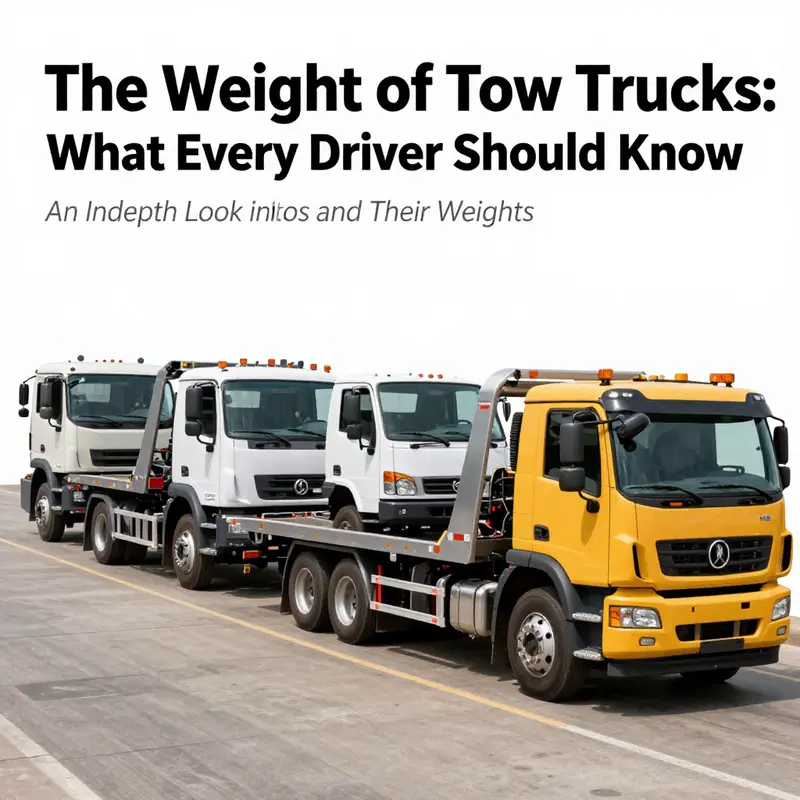
Tow trucks play a vital role in managing roadside emergencies and vehicle recoveries. Understanding how much these trucks weigh is crucial for everyday drivers, residents, truck owners, and auto repair professionals. Knowing the different classifications of tow trucks—light-duty, medium-duty, and heavy-duty—serves not only to clarify towing capacities but also to improve awareness around vehicle safety and operational capabilities. Each chapter will explore the weights of these various tow truck categories, providing a comprehensive insight into their structures, uses, and weight limits that can affect placement in both urban and rural settings.
Weighing the Workhorse: The Real Weight of Light-Duty Tow Trucks and Why It Matters
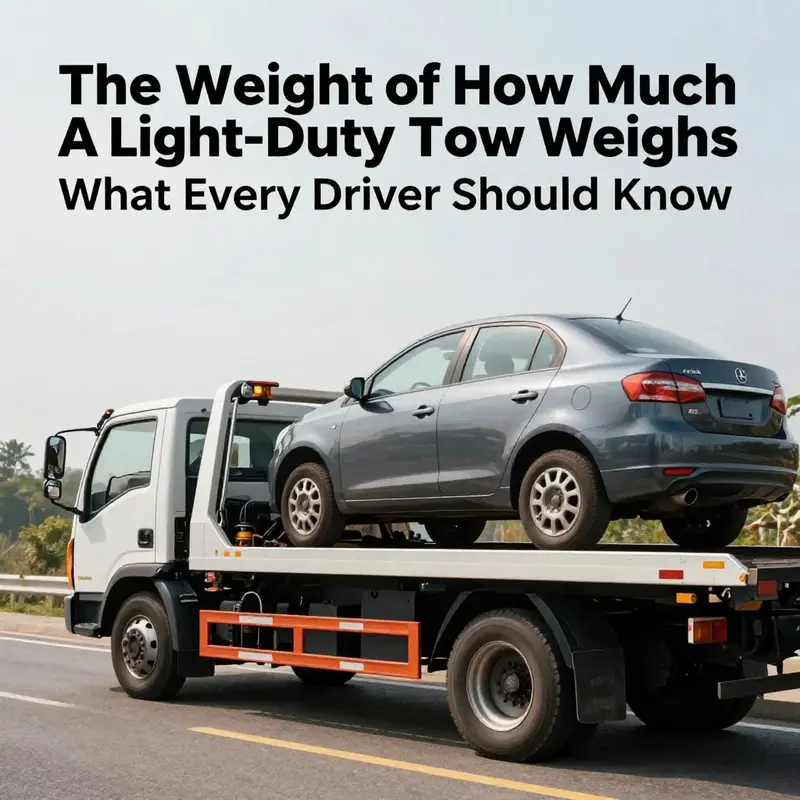
When people ask how much a tow truck weighs, they often imagine a single number that applies to all models. In truth, weight is a carefully chosen balance. For light-duty tow trucks, which are designed to recover passenger cars, small SUVs, and light vans, the curb weight can vary widely depending on the chassis, drivetrain, equipment, and how the vehicle is configured for a given fleet. The weight you see on a spec sheet is more than a static figure; it’s a signal about payload, handling, and the kind of tasks the truck can perform safely and efficiently. In practical terms, the curb weight of a typical light-duty tow truck sits roughly between five thousand and eight thousand pounds, which translates to about 2,268 to 3,629 kilograms. This range captures the common spectrums manufacturers deploy to meet varied regional requirements, regulatory standards, and operator needs. It’s a reminder that two light-duty tow trucks can look similar in form yet weigh quite differently because one might be oriented toward compact cars while another carries heavier tools, a larger winch, or a robust hydraulic lift system.
The curb weight, by definition, is the weight of the vehicle with standard equipment, a full tank of fuel, and all fluids, but without a towed vehicle and without any optional gear beyond the base configuration. It sets the baseline on which the vehicle’s overall performance is built. The capacity for payload—the weight that can be added while remaining within safe limits—depends on the vehicle’s gross vehicle weight rating (GVWR). GVWR is the maximum legal weight of the vehicle when fully loaded with passengers, fuel, cargo, fluids, and mounted equipment. Subtract the curb weight from the GVWR, and you get the payload capacity. A light-duty tow truck with a curb weight of 6,500 pounds and a GVWR of 12,000 pounds, for instance, would have a payload capacity of about 5,500 pounds. This simple arithmetic matters on the road and in the shop because payload determines how much or how heavy the towed vehicle can be before you reach the weight limit that the chassis and suspension can safely carry.
The reasons behind the weight spread among light-duty tow trucks are practical and predictable. The drivetrain configuration—whether the vehicle is front-wheel drive, rear-wheel drive, or all-wheel drive—plays a role, but it is only part of the story. Beyond the powertrain, the size and strength of the winch, the lift system, and the length and thickness of the tow arm add significant mass. If a truck carries a crane or a more extensive toolbox and mounting hardware for recovery equipment, those elements push curb weight upward. Manufacturers also choose materials and construction approaches to optimize durability while controlling weight. A lighter chassis can improve fuel economy and maneuverability, but a heavier one may better absorb the shock and stress of towing larger loads or operating in rough terrain. In short, the same category of vehicle can be configured to emphasize nimbleness or rugged capability, and that choice directly influences curb weight.
The equipment that distinguishes a light-duty tow truck is part of what pushes weight up or down. A robust, high-capacity winch—designed to pull a stubborn vehicle out of a ditch or onto the bed—often comes with its own motor and gearing. That powertrain adds mass, but it also expands the truck’s effective payload by enabling more efficient recoveries. A hydraulic lift system, which raises the towed vehicle for loading and secure transport, likewise contributes to curb weight and affects the geometry of the vehicle. The length and strength of the tow arm are not cosmetic choices; they determine leverage and reach. A longer arm can increase the weight you carry on the hook while keeping the bed stable, but it also adds to the vehicle’s overall mass and wind resistance at speed. Tools and storage—blade knives, wheel dollies, hydraulic jacks, and extra lighting—are essential for operations but also part of the weight equation. If a fleet prioritizes compact urban recovery, it may favor a lighter configuration with smaller components. If the mission calls for more demanding roadside operations or rural recoveries, a heavier, more capable setup is often justified.
Within this spectrum of configuration, there are also distinct design approaches that influence weight. Some light-duty tow trucks rely on a traditional flatbed or rollback bed, where the bed itself is integrated with the chassis to provide a stable platform for loading vehicles. Others use a wheel-lift system, which combines a winch with a set of wheels that cradle the towed vehicle. A bed-and-welted body with added reinforcements will weigh more than a leaner design that emphasizes compactness. Additionally, the choice of engine and transmission, fuel capacity, and aerodynamic treatment—all of which affect curb weight—matters for daily operations and fuel efficiency. Fleet managers weigh these factors against the typical job mix in their area. If most recoveries involve light cars and compact SUVs, a lighter configuration may yield speed and efficiency. If a fleet frequently handles heavier vans or sport utilities in adverse conditions, the extra mass may be an essential trade-off for reliability and control.
A concrete way to grasp how weight interacts with capability is to consider lift and load limits that pertain specifically to light-duty configurations. Some modern light-duty tow vehicles incorporate multi-purpose lifting equipment that can perform multiple functions, such as lifting, winching, and stabilizing a vehicle during a recovery. It is not unusual for a lighter configuration to include lifting devices with capacities in the 1,000 to 1,500 kilogram range, depending on the design. This lifting capacity is a crucial factor in how a tow truck handles real-world recoveries. Even if the curb weight remains within a modest band, a higher lifting capability changes the way a crew approaches a scene. The structural design must accommodate the lifting load without compromising safety or the integrity of the mounting points. In this sense, weight and lifting capacity are interdependent features that fleets weigh together when evaluating a model. A newer generation of breakdown and recovery lorries, for example, might offer a lifting capacity up to about 1,510 kilograms (roughly 3,329 pounds). That kind of capability, while not directly equating to the tow truck’s own weight, influences how the vehicle is built and how much mass it carries in daily use. It also shapes the vehicle’s balance and the forces at work during loading and transport, which in turn feed back into the design choices that determine curb weight.
For readers seeking a precise, model-specific understanding, the best source is the manufacturer’s official specifications. Those documents lay out the exact curb weight, GVWR, axle ratings, and the weights of standard equipment for the exact configuration a fleet or individual buyer plans to use. It is common for there to be several permissible configurations within a single model line, each with its own weight footprint. The variability inherent in light-duty tow trucks means that a quick memory of a single weight figure is of limited value. If you’re comparing two vehicles that look nearly identical on the lot, a careful read of the spec sheet will reveal the real reason one weighs more or less: whether it’s carrying heavier equipment, using a different drivetrain layout, or employing a beefier bed or crane arrangement.
An important idea to carry through the weight discussion is that, while weight matters, it is not the only determinant of performance. A heavier tow truck with a stronger winch and robust mounting can outperform a lighter one in demanding terrains or heavier recoveries. Conversely, a lighter configuration can deliver better handling, sharper braking, and improved maneuverability in city settings where tight turns and quick responses matter. The relationship between weight, power, and handling is iterative: changes in lifting capacity, bed design, or equipment can shift weight distribution and affect how the vehicle behaves on the road. This is why fleet managers frequently model loading scenarios, including the towed vehicle’s weight and distribution, to ensure that the entire system remains within safe operating parameters.
For readers who want to explore the broader context of tow-truck economics and ownership, a related discussion is available at how-much-is-a-tow-truck. That resource helps connect weight decisions with cost considerations, maintenance implications, and lifecycle planning, illustrating that weight is part of a larger calculus about reliability and total cost of ownership.
As you move from theory to practice, the practical steps for anyone assessing light-duty tow trucks begin with a careful review of the model-specific spec sheet. Look for: curb weight, GVWR, axle ratings, and the weight of standard recovery equipment included in the base configuration. Then compare those figures against the operating reality you expect—how heavy are the typical towed vehicles in your area, how many payloads you anticipate in a shift, and what kind of road and weather conditions are common where you work. Remember that weight is a constraint that interacts with your recovery strategy, the crew’s technique, and the safety protocols that govern every operation.
If you’re calculating whether a particular light-duty tow truck can handle a specific recovery scenario, start with the payload concept. Subtract the curb weight from the GVWR to determine the maximum payload. Then factor in any additional equipment you plan to add—the crane, extra lighting, a larger winch, or an extended bed. Each addition shifts the weight balance and may reduce the payload you can carry. In a field where the demand for rapid responses is high and every second counts, the ability to balance speed, reach, and capacity often wins over outright maximum payload in a single job. The best choice, therefore, is a configuration that aligns with the typical job profile while leaving a comfortable margin for safety margins on the road.
For those who want to review a concrete model in a real-world context, it’s useful to consult the official product manuals or the manufacturer’s detailed data sheets. These documents typically present the curb weight, GVWR, and the precise equipment mass for each configuration. They also provide maintenance notes related to weight distribution, which can help technicians ensure the vehicle remains within safe operating limits after upgrades or replacements.
In sum, the weight of a light-duty tow truck is not a single fixed value but a spectrum shaped by design choices and intended use. The five-thousand-to-eight-thousand-pound range captures the practical spread that fleets encounter most often, reflecting the demand for nimble efficiency on urban streets and the need for robust capability when the recovery region stretches beyond paved roads. The subtleties of weight—how it interacts with lift capacity, bed design, and the weight of recovery tools—are what transform a vehicle into a dependable workhorse. If readers want to drill deeper into how those decisions affect a specific model, they can consult the external specification resources for precise numbers. For a concrete external reference, see the EQ1090GLJ specifications: https://www.example.com/eq1090glj-specs. This external data helps ground the conversation in real-world measurements and emphasizes the importance of model-specific information when evaluating light-duty tow trucks for a given fleet or scenario.
The Middle Ground of Mass: Unpacking the Weight of Medium-Duty Tow Trucks
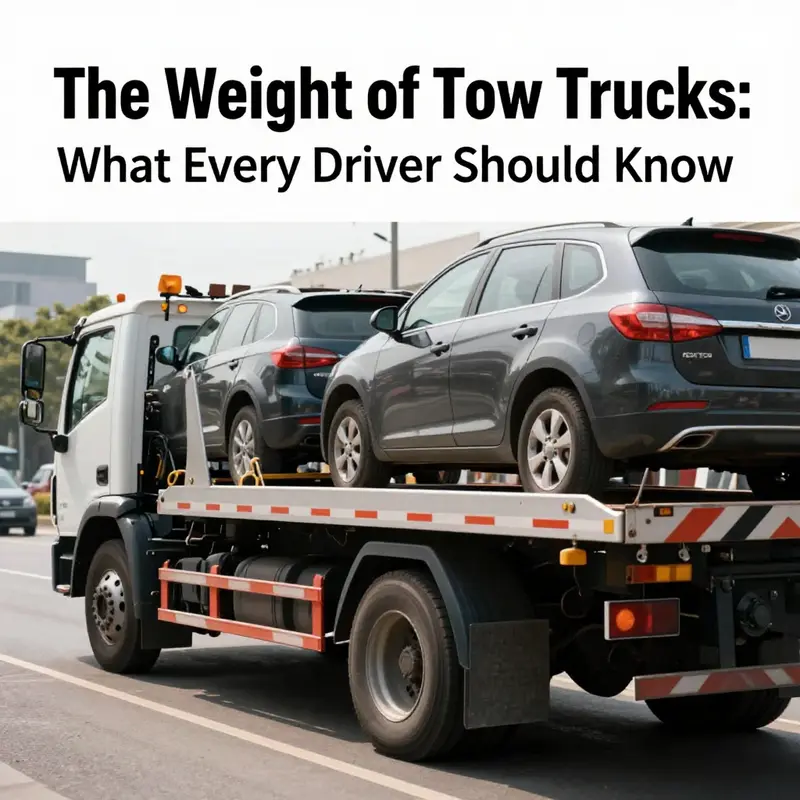
Weight is not a single numeral when you talk about medium‑duty tow trucks. It is a measure that reveals the engineering choices behind a vehicle designed to bridge everyday roadside recovery with serious heavy lifting. In this middle tier, builders balance strength with mobility, capacity with fuel efficiency, and the ability to haul a disabled or damaged vehicle with the practical realities of operating in urban streets, rural roads, and busy industrial yards. The result is a curb weight that sits comfortably between lighter, city-focused flats and the behemoths built for nationwide heavy recovery. For operators, this mass matters because it directly shapes performance, safety, and the economics of every tow. The typical curb weight for these machines falls in a clear band, but it is not a fixed value. Rather, it is the product of design intent, material choices, and the specific gear chosen to meet a mission profile that can vary from tandem‑axle flatbeds to tilt‑tray configurations, each with its own mass profile.
In practical terms, medium‑duty tow trucks usually weigh between 12,000 and 20,000 pounds when empty. That translates to roughly 6 to 9 metric tons of curb weight. This range is not arbitrary. It reflects the common construction patterns of mid-size recovery equipment: a robust steel frame and chassis, a hydraulic or electric winch system, a lifting or loading bed, and a set of stabilizing features that keep the truck steady when lifting or winching heavy loads. Each component adds mass, and small choices accumulate. A longer wheelbase, a heavier bed option, or a more powerful winch all push the scale upward by a few hundred to a few thousand pounds. The end result is a spectrum rather than a single datum: a family of medium‑duty tow trucks designed to cover a broad set of tasks without locking operators into the weight penalties of larger, heavy‑duty rigs.
A crucial point often misunderstood by newcomers is that the label a truck carries on its side—such as a “4‑ton” or “10‑ton” capacity—refers to towing or lifting capability, not to the truck’s own weight. A machine might advertise the ability to lift or tow several tons while its own curb weight remains well within the 12,000–20,000 pound band. This distinction is important for dispatch decisions, road travel, and regulatory compliance. Heavier lifting capability typically demands a stronger structure, thicker steel framing, and more substantial hydraulic systems. Those features add mass, which pushes the base weight up even as the payload capacity increases. The design tension is clear: you want enough heft to handle demanding recoveries without turning the vehicle into a road‑tax of its own.
The configurations that sit in this middle ground—tilt‑tray (or tilt‑bed) and flatbed variants—illustrate the mass dynamic vividly. A tilt‑tray platform emphasizes speed and versatility: it can slide a vehicle onto the service bed, tilt for gravity‑assisted offloading, and then secure the load with a combination of straps and chains. Flatbeds, by contrast, often emphasize static strength and longer service life, with rugged decks and heavier rails. Each configuration has its own mass implications. The bed itself is among the most conspicuous mass contributors, and the winch system, whether hydraulic or electric, adds both mass and performance potential. Heavier winches provide more pulling power, but they also increase the curb weight and may alter the vehicle’s handling characteristics when it is empty.
Another significant influence on curb weight is the choice of tires and suspension. Heavy‑duty tires capable of supporting large loads and resisting punctures accompany reinforced suspensions. These elements are essential for stable towing operations, especially on uneven surfaces or on the shoulder of a highway. The tradeoff is straightforward: stronger suspension and larger tires improve control when lifting or dragging a heavy load, but they also add rolling resistance and mass. Even seemingly minor choices, like wheel size, influence the wattage of efficiency and the probability of timelier service deliveries. In practice, a medium‑duty tow truck sits at a compromise point where the weight of the platform, winching systems, stabilizers, and tooling is balanced against the need for mobility and speed of response.
From a systems perspective, curb weight interacts with the vehicle’s gross vehicle weight rating (GVWR) to define usable payload. A heavier empty weight reduces the amount of cargo or towed mass a truck can legally carry while remaining within its maximum weight limit. This matters on the road. In some urban environments, payload capacity translates into the difference between a single recovery and a breakdown that requires a second vehicle to assist. Operators must consider not just the towed vehicle’s weight, but also the additional personnel, hydraulic fluid, spare parts, and safety gear carried on board in a typical call. The result is a loading portrait that can vary by job, season, and region. In this sense, understanding weight is not a matter of curiosity alone; it is a practical tool for planning and reliability.
The broader context helps to explain why this weight range persists across many manufacturers and configurations. The middle tier is large enough to accommodate a wide spectrum of use cases—from routine roadside recoveries to more demanding on‑site loads in commercial operations—yet it remains manageable for fleets that must maneuver through tight spaces, pick up a variety of vehicles, and operate on fluctuating budgets. The aim is to deliver a vehicle that can lift and haul with confidence while keeping the operating costs and turnover times favorable. Heavier machines offer direct advantages in raw lifting power and durability, but the cost, weight, and complexity rise with every incremental gain. In many settings, the goal is not to chase the maximum possible capacity but to achieve a dependable, scalable solution that remains nimble enough to respond quickly and safely to everyday incidents.
One practical way to frame this topic is to consider how weight translates into performance on the job. A lighter medium‑duty machine will be more agile on city streets, accelerate more readily, and consume less fuel when not loaded. It can be easier to park, stage, and deploy at busy service sites. On the other hand, a heavier medium‑duty unit will perform better on demanding calls, wire up larger vehicles, and hold up more robust stabilizing gear. The result is a spectrum of capability where weight is a lever operators use to tailor a vehicle to the expected mix of duties. In other words, the mass of a medium‑duty tow truck is not a fixed obstacle but a strategic parameter that operators adjust through configuration choices, equipment packages, and maintenance practices.
To connect these ideas to real‑world practice, consider the typical job profile for many mid‑range tow trucks. A crew might arrive on a scene with a vehicle on a flatbed or tilted bed, secure it with chains and straps, and then winch it onto the deck for transport. In such operations, the truck’s curb weight and its payload capacity determine how many crew members, tools, and support equipment can be carried at once. If the weight of the empty vehicle is toward the higher end of the spectrum, there is less margin for payload until the GVWR is exceeded. This reality underscores why weight data matters not only for the vehicle’s performance, but also for safety, insurance, route planning, and cost calculations. Fleet managers quantify these variables to ensure that every call is met with an asset that can perform without compromising safety, compliance, or efficiency.
For readers who want a concrete sense of scale, consider the mass implications across the common medium‑duty family. The empty mass of these trucks most often lands in a tight range, a few thousand pounds spread across the two extremes of the spectrum. In markets with strict weight limits, these numbers become especially meaningful, guiding decisions about whether to choose a lighter, more agile model for routine recovery or a heavier, more capable configuration for heavy or unusual payloads. The balance point is reached when the bed, winch, chassis, and stabilizers are tuned to the most probable mix of operations, steadily supporting predictability in service times and outcomes. This is how weight becomes a practical ally rather than a hurdle.
For readers seeking a broader frame of reference, the landscape of medium‑duty weight aligns with the way equipment is described and sold. In some listings, the capacity or “ton” rating can mislead if interpreted as the weight of the vehicle itself. A 4‑ton tag may reflect the capacity to lift or tow, not the truck’s own mass. The truth is that the average curb weight for a mid‑range wrecker or tow setup typically sits between 12,000 and 20,000 pounds in empty condition. When crews consider a specific build, they weigh how much extra mass will come from the bed, the winch, the outriggers or stabilizers, and the tool storage that keeps a crew ready for action. This calculus is essential for budgeting, maintenance planning, and ensuring the vehicle can operate safely within the rules of the road.
For further reading on price and ownership considerations, a straightforward overview can be found here: How much is a tow truck. This resource helps place the weight discussion within the broader context of market options, financing, and the practical realities of owning a mid‑duty recovery asset. While specific figures vary by region and configuration, the core principle remains constant: weight is a guide, not a verdict. It shapes where a medium‑duty tow truck sits in the stack of available equipment and how it performs on typical assignments.
In sum, the weight of a medium‑duty tow truck is a defining feature of its versatility. The mass of the chassis, bed, and powertrain, plus the mass of the recovery gear mounted on board, creates a collaborative system that determines how much can be carried, how quickly it can respond, and how safely it can operate under load. The figure—commonly within 12,000 to 20,000 pounds empty—reflects decades of design thinking aimed at giving responders and fleets a reliable, adaptable tool for a wide range of tasks. As technology and materials evolve, weight will continue to shift, but the fundamental tradeoffs will remain the same: strength and reliability versus nimbleness and efficiency. The middle ground will always be the practical heart of standard roadside recovery work, where most of the action occurs and where the balance between weight and capability translates directly into faster, safer, and more cost-effective service.
External reference: https://www.china-yellowpages.com/vehicles/tow-trucks/medium-duty/
The Weight Behind the Wrecker: Decoding How Heavy-Duty Tow Trucks Hit the Road and Lift the Load
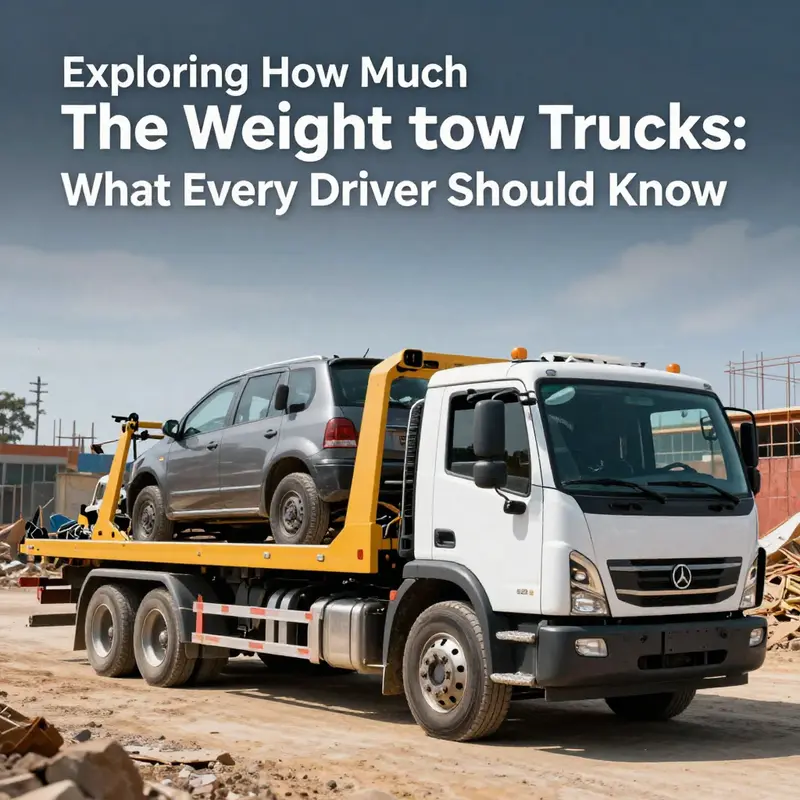
When you watch a heavy-duty tow truck work its quiet, calculated magic, the first thing you notice is not the winch or the boom, but the sheer scale of the machine itself. Weight is not merely a matter of curb presence or the ability to haul a vehicle from a roadside shoulder. It is a fundamental design constraint that governs everything from stability and braking to payload, lift capacity, and even the Licensing and permitting required to operate on public roads. In the world of heavy-duty recovery, weight is at once a practical limit and a built-in capability. To understand how much a tow truck weighs, we must look beyond the numbers that sit on a spec sheet and into the engineering logic that makes those numbers meaningful on the highway and in the field.
At its core, the weight of a tow truck is usually described in terms of tare weight or curb weight, and this figure sits alongside gross vehicle weight rating or GVWR. Tare weight is the vehicle’s own mass without cargo, fuel beyond a nominal reserve, or payload. GVWR, by contrast, is the maximum permissible combined weight of the vehicle and its payload when fully loaded. For a light-duty unit, tare weight might be around five tons, but as you scale up to heavy-duty configurations designed to lift tens of tons, tare weight climbs into the tens of thousands of kilograms. The reason is straightforward: heavier-duty builds need a stronger frame, more robust axles, bigger hydraulic systems, and larger booms and winches. Each of these elements adds mass, and together they push the vehicle’s own weight higher as capacity grows.
A useful way to visualize this is to compare two ends of the heavy-duty spectrum. On one end, a heavy off-road recovery vehicle built to handle 20 to 30 tons might be configured as a 6×6 or 6×4 chassis. Its tare weight can be relatively modest compared with the largest rotators and wrecker configurations, because it emphasizes mobility and traction over sheer lifting capacity. In a documented case, a 6×6 off-road recovery vehicle designed for 20 to 30 tons of capacity weighs about 4,325 kilograms, or roughly 9,535 pounds. This lighter end of the heavy-duty class shows how a chassis optimized for rugged terrain and high mobility can still remain within a reasonable mass while delivering substantial towing power.
But shift to an 8×4 rotator intended for 30-ton and even 50-ton recovery operations, and the story changes dramatically. The same family of trucks can present tare weights of twenty-six thousand kilograms (about 57,320 pounds) for a 30-ton version, and as much as fifty thousand kilograms (roughly 110,231 pounds) for a 50-ton version. The delta between these two configurations illustrates a core design principle: to achieve higher lifting and recovery capacities, the vehicle must pack more metal, larger hydraulics, and reinforced structural members into the same basic platform. The heft is not merely a byproduct of scale; it is a deliberate engineering choice that directly supports the job at hand. A rotator’s weight is the price paid for the ability to lift, rotate, and stabilise heavy loads with precision in the toughest conditions.
It is worth noting that not all heavy-duty tow trucks share the same weight profile, even within the same nominal capacity class. The weight gap between an 8×4 rotator and a 6×6 off-road recovery vehicle with similar lifting targets reveals the impact of design priorities. The rotator prioritizes high straight-line lifting, extensive hydraulic reach, and a stable, rigid frame capable of handling dynamic loads with the boom extended. Those features demand mass: a strong subframe, a heavy winch drum assembly, and a long, reinforced lifting arm. Off-road recovery models, while powerful, place greater emphasis on traction, height clearance, and maneuverability in uneven terrain; their frames and powertrains may be lighter, but still robust enough to reach recovery points that are inaccessible to road-bound operations. The practical upshot is that two trucks with the same nominal capacity can differ by tens of thousands of kilograms in tare weight depending on whether their design priorities center on pure lifting power or cross-terrain versatility.
Weight is not simply about raw mass; it is also a matter of how that mass is distributed and how it interacts with the road surface. Axle arrangement, wheelbase, and the positions of outriggers and stabilising legs all shape the dynamic profile of the vehicle when it is loaded for a recovery operation. A longer wheelbase can improve stability under load but may reduce maneuverability in tight spaces. More axles spread the load, enabling higher gross vehicle weight ratings while distributing weight more evenly across the road. Yet adding axles and extending the frame adds still more weight to the tare figure. This is part of the reason why heavy-duty rotators, especially those configured for the upper end of the capacity spectrum, sit at a much heavier baseline than their lighter colleagues.
The weight of a tow truck, however, is only half the story once the operation begins. The total mass on the roadway during towing is the sum of the tow vehicle’s own weight plus the weight of the vehicle being recovered, plus any stabilising equipment and ballast that might be deployed. In practice, heavy-duty operators plan for this combined mass well in advance of a recovery, ensuring that the route and roadway can safely accommodate the resulting load. The stability of a heavy rotator during a lift, particularly when the boom is extended and the load is near the vehicle’s maximum rated capacity, depends as much on weight distribution as on the hydraulic reach. That is why manufacturers specify not only the lifting limits but also recommended stance, outriggers engagement, and ballast configurations. The presence of a ballast option, when used, is another factor that contributes to the tare weight in a way that directly influences the machine’s capability to manage error margins during a lift.
From a practical standpoint, weight has real consequences for road use, licensing, and regulatory compliance. Road authorities often regulate weight by axle and total mass to protect road surfaces and to manage safety risk. A heavy-duty tow truck—especially a rotator on a multi-axle chassis—operates in a space where the line between a permitted heavy vehicle and a prohibited overweight truck can be thin. Operators must ensure that the vehicle’s GVWR aligns with the combined mass of the empty vehicle plus the range of payloads it is likely to encounter. A unit designed for 30 tons of lifting capacity might carry a GVWR well above that number, enabling it to respond to heavier loads without breaching the vehicle’s legal weight limits when fully equipped. In practice, the regimens for weight management are not merely bureaucratic hurdles; they are essential for safe operation, particularly in urban settings where bridges and overpasses have fixed weight limits and where weight interacts with center of gravity during lifts.
The numbers that appear in supplier catalogs can be eye catching, and they sometimes tempt readers to think of weight as a simple barrier that must be overcome. In truth, weight is a feature that enables capability. The same mass that makes a rotator formidable also imposes limits on fuel consumption, acceleration, braking distance, and even tire wear. A 50-ton class rotator will inherently require more energy to accelerate and decelerate, more sophisticated braking systems, and reinforced suspension to maintain control when it is carrying heavy loads. These design realities reinforce a broader lesson: the weight of heavy-duty tow trucks is not a drawback to be managed but an integrated element of performance that supports a vehicle’s purpose in the field. This is why buyers assess weight not in isolation but in the context of the operator’s daily tasks, the typical recovery scenarios, and the environmental and regulatory settings in which the truck will operate.
For readers seeking a deeper understanding of how these weights translate into real-world capabilities, consider a closer look at a few concrete configurations. The rotator model with a 30-ton capacity carries a tare that sits in the upper range for road-legal, high-capacity recovery units, a reflection of its robust frame and extended hydraulic systems. In contrast, a 6×6 off-road recovery vehicle built for similar force application but with greater emphasis on traction and off-road reach often demonstrates a lighter tare, allowing it to navigate difficult terrain without compromising its lifting potential. The numbers reveal a design ethic: weight is coordinated with function, and function dictates weight. This reciprocal relationship ensures that heavy-duty tow trucks can perform under challenging conditions while complying with the safety standards that protect both operators and the public.
If you want to explore more about how these machines balance weight with other performance metrics, see the broader guide on tow truck specifications and price considerations. Internal links to a detailed discussion on the cost and utility of tow trucks can provide additional context about how weight influences not just capability but also ownership decisions. For a quick reference, you can review more in the internal guide here: how-much-is-a-tow-truck.
All these factors—frame mass, hydraulic power, ballast needs, axle configuration, outriggers, and the sheer scale of lifting gear—cohere into an answer to the central question of weight in heavy-duty tow trucks. The weight is not a single number to be minimized but a spectrum that reflects the balance between capability and predictability, maximum lift and roadability, raw mass and controlled maneuvering. In the end, the heft of a heavy-duty wrecker is a story of engineering intent: the truck is built heavy because the work it is built to do is heavy, complex, and unforgiving. The best practice for operators and buyers is to honor that relationship, selecting a machine whose tare weight aligns with the lifting mission, the working environment, and the regulatory framework in which the truck will operate. Only by appreciating weight in this integrated way can a fleet prepare for the unexpected and ensure that every lift is performed with the safety and confidence that the job demands.
To carry this understanding forward into the next phase of the article, consider how weight interacts with energy efficiency, maintenance schedules, and the evolving technology in hydraulic systems and chassis materials. A higher tare weight often accompanies more demanding maintenance planning, as heavier systems stress components differently. The conversation expands beyond the raw numbers to encompass the lifecycle costs of operating a high-capacity recovery unit, from tire wear and fuel consumption to downtime for servicing and inspections. The weight story thus becomes a gateway to a broader dialogue about how to equip responders with machines that are not only capable but reliable under pressure. In the chapters that follow, we will turn to practical scenarios, examining how weight considerations shape response times, deployment tactics, and the safety protocols that govern heavy-duty recovery work in urban and rural environments alike.
External references offer additional texture to this discussion. For a detailed specification snapshot of a heavy-duty rotator, including the dramatic tare weight range observed in the market, see the external listing for Sinotruk HOWO 8X4 heavy-duty rotator wrecker. This source demonstrates how the naming of a vehicle’s capacity—30-ton versus 50-ton—correlates with large leaps in tare weight, underscoring that the weight story is inseparable from lifting ambitions. External reference: https://www.alibaba.com/product-detail/Sinotruk-HOWO-8X4-Heavy-Duty-30tons_1600755214658.html
Weight in Motion: Tow Truck Classifications and the Spectrum of Mass
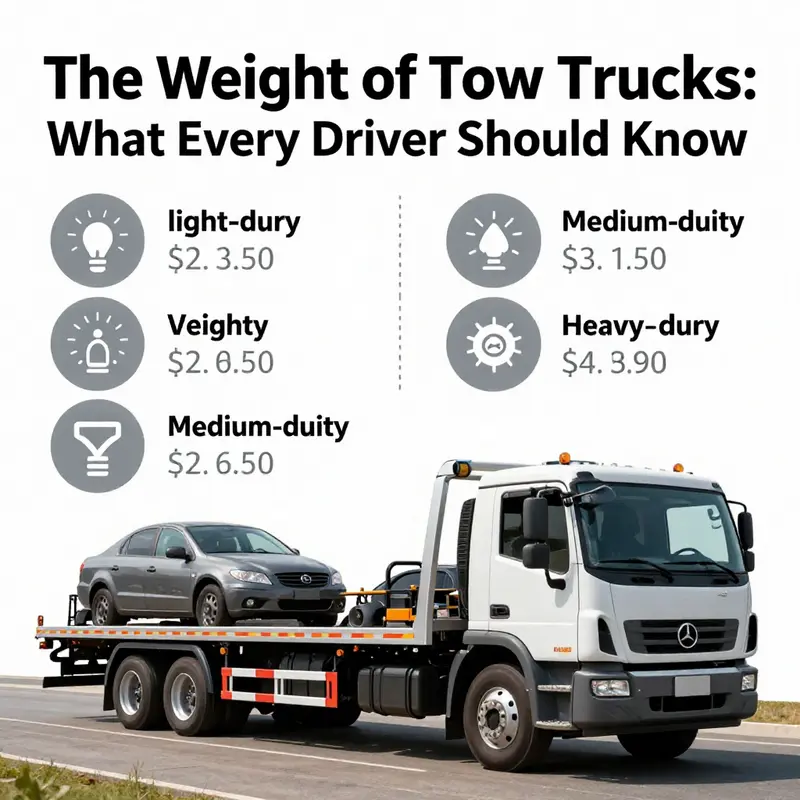
Weight is more than a number on a spec sheet. In tow truck design, weight defines capability, handling, and what state authorities permit on the road. Across industries, from city streets to recovery yards, mass influences every lift, every wheel lift, and every twist of a boom. To understand what a tow truck weighs is to glimpse how its purpose shapes its steel and hydraulics, how it negotiates balance between power and safety, and how it fits into the logistical ecosystems that keep traffic moving and accidents from compounding.
Light-duty tow trucks, often described as Class 1 or Class 2 in catalogs, are the nimble workhorses of urban towing. They are designed for roadside assistance, small-car recoveries, and everyday nuisance calls that pepper city streets. These machines carry a Gross Vehicle Weight Rating, or GVWR, that typically falls in a range roughly between 4,000 and 8,000 pounds—about 1,814 to 3,629 kilograms. That GVWR is the ceiling for the vehicle’s total weight when loaded, including passengers, fuel, tools, and any mounted equipment. The numbers tell a story: these trucks are built to be maneuverable enough to weave through traffic, yet strong enough to lift and tow smaller passenger cars without overstressing frames and suspensions. In practice, the balance is between a compact footprint and a surprising reserve of lifting capability. Among the practicalities is payload capacity—the extra weight the truck can carry beyond its own mass. For light-duty units, payload typically sits in a range that makes it feasible to lift common sedans and compact SUVs without resorting to more complex gear. On the road, that balance translates into a vehicle that can respond quickly, park in tight spaces, and recover vehicles without creating additional risk for damage to the vehicle being towed or to bystanders.
Moving up in capacity to the medium-duty category changes the calculus without abandoning the fundamental principles. Medium-duty tow trucks, often described as Class 3 through Class 5, are the workhorses of municipal fleets, private towing companies, and service providers that routinely handle larger vehicles. The GVWR for this tier stretches from about 8,001 to 16,000 pounds, which is roughly 3,629 to 7,257 kilograms. The margin above light-duty is not merely a matter of heft; it reflects a tougher frame, a higher-torque winch or hydraulic-lift system, and often a choice between a wheel-lift configuration, a tilt-bed, or a flatbed cradle. The curb weight for these machines tends to be heavier than their light-duty kin, generally placing between six and nine metric tons, depending on the chassis and the specific equipment installed. The extra mass translates into substantial towing capacity: many medium-duty units can haul larger SUVs, full-size vans, and some light commercial trucks, with towing capacities commonly in the ten-thousand-to-twenty-five-thousand-pound range (approximately 4,500 to 11,340 kilograms). In practical terms, fleets select these machines when the vehicles involved are bigger, the recovery scenarios riskier, or a one-vehicle solution must cover both lifting and transporting duties. Some medium-duty configurations provide versatile equipment options, including flatbeds for vehicles that require controlled loading, or wheel-lift systems designed to minimize contact with a damaged frame.
Beyond the medium tier lie heavy-duty tow trucks, Class 6 through Class 8, engineered for the most demanding recovery tasks. These are the giants of the field, deployed in construction, mining, and commercial transport sectors where the loads can be truly monumental. Heavy-duty tow trucks typically carry a GVWR that exceeds 16,000 pounds (7,257 kilograms), and many models push well beyond that threshold. Some variations are designed for 20-ton to 100-ton towing capacities, which situates them in the realm of large commercial fleets and specialized operations. The curb weight of these behemoths follows suit: they tend to exceed 10,000 kilograms and can easily rise further depending on the addition of robust lifting booms, heavy-duty winches, reinforced axles, and a suite of hydraulics capable of moving loads that would overwhelm lighter configurations. The payload capacity—the amount the truck can carry beyond its own mass, including fuel, personnel, and equipment—also scales upward, often exceeding 20,000 pounds (9,072 kilograms) in the most capable setups. In other words, the shift from light to heavy duty is not just more weight; it is an architectural change in the vehicle’s purpose and the physical realities it must manage in the field.
A further dimension emerges with flatbed tow trucks, a specialized subset that tilts the balance toward controlled loading and minimized risk to the towed vehicle. The flatbed bed itself adds significant weight and affects weight distribution, because the platform must bear and transfer vehicle mass along its length while engaging hydraulic mechanisms to incline and slide the bed. Flatbeds are favored when damage must be avoided during loading or when transporting non-mobile or severely damaged vehicles that cannot be safely hoisted. The design considerations extend beyond mere weight: the bed’s strength, the mechanism that moves it, and the distribution of mass across the chassis all influence stability and stopping distance. In some parts of the world, particularly under Oversize Overmass regulations, flatbed operations require specialized licensing and operator training due to the combined mass and the potential for long overhangs and complex routing. Although precise curb weights and GVWRs for flatbeds vary with the model and the equipment package, the overarching pattern is clear: the bed, hydraulics, and any ancillary gear add substantial mass that the rest of the truck must carry and manage.
The conversation about weight also takes on a broader, cross-industry perspective when we compare land-based tow trucks with their maritime counterparts. In the marine world, tugboats perform a crucial, parallel function on the water: they push, tow, and maneuver vessels that cannot rely on their own propulsion in critical moments. Tugboats come in classes that span hundreds to thousands of tons of displacement, and their weight and power are tuned to the tasks of harbor docking, offshore platform positioning, and large-scale platform towing. The physics of mass interacts with water as it does with asphalt, but the consequences differ. Water provides buoyancy and resistance, yet the core idea remains the same: heavier, more powerful machines enable safer, more controlled movements of other mass-bearing entities. For tow truck operators and fleet managers, this cross-industry perspective reinforces a practical truth: weight and balance are not abstractions or marketing terms; they are core variables that govern stability, traction, and the ability to achieve a recoveries without causing further damage.
Understanding these classifications also clarifies the regulatory framework that governs operation on real-world roads. In the light-to-heavy progression, fleets must consider not only the GVWR, which marks the safe ceiling for the vehicle’s own mass plus payload, but also the GCWR—gross combined weight rating—which accounts for the trailer if one is used. Payload, by contrast, represents the actual load the truck can carry in addition to its own weight. The relationships among GVWR, GCWR, and payload are essential for safe and legal operation, particularly when a heavy-duty unit meets a large disabled vehicle, or when a flatbed encounters a substantial payload that must be loaded without exceeding the truck’s designed limits. The careful management of these numbers translates to safer lifts, more predictable handling, and compliance with road rules that vary by jurisdiction. In practice, a fleet manager may rely on precise manufacturer specifications for a given model to determine what kind of operation a specific tow truck can responsibly support, how it should be loaded, and what restrictions apply to travel on highways or city streets during peak hours.
To connect these considerations with a practical touchstone for readers exploring the broader landscape, a quick reference point can be helpful. For readers curious about price, a straightforward overview is available at https://winchestertowtruck.com/how-much-is-a-tow-truck/. This link provides a sense of how mass, equipment packages, and the intended use influence overall cost, complementing the technical weight discussions with real-world budgeting context. While cost is not the same as weight, the two are often intertwined: heavier trucks with more capable hydraulics and larger beds command higher price points, and the decision to invest in heavier equipment is typically driven by the scale and frequency of the tasks a fleet expects to tackle. Keeping weight in view helps buyers strike a balance between capability, efficiency, and the operational realities of their service territories.
In sum, the spectrum of tow truck weights reflects a spectrum of tasks. Light-duty units emphasize agility and efficiency for routine roadside work; medium-duty trucks extend reach to larger passenger vehicles and some light commercial work; heavy-duty units bring the power to move and recover substantial mass, including large commercial trucks and industrial equipment. Flatbeds add another axis—the controlled, low-damage loading path—while OSOM and regulatory frameworks remind us that mass, like speed, has a price and a protocol. Across all categories, the thread that ties weight to purpose is the same: the design and mass of a tow truck are the practical consequences of the jobs it is meant to do. The more demanding the job, the heavier and more robust the truck must be, and with that mass comes an increased responsibility to manage it safely on public roads and in the critical recovery environments where it operates. External studies and industry analyses illuminate the engineering decisions behind these choices, underscoring how material strength, lift systems, and chassis design converge to deliver reliable performance when it matters most. For readers seeking a technical deep dive into flatbed design and materials, a rigorous external source is available at https://www.sciencedirect.com/science/article/pii/S258953782500003X.
Final thoughts
Understanding the weight of tow trucks is essential for both everyday drivers and professionals in the automotive industry. These weights inform decisions about which truck is most suitable for specific towing tasks and ensure safety during operations. Knowing whether a light-duty truck can handle your vehicle or if a heavy-duty model is required for larger operations can save time and resources. Awareness of these factors leads to better choices when engaging towing services and understanding road regulations.