
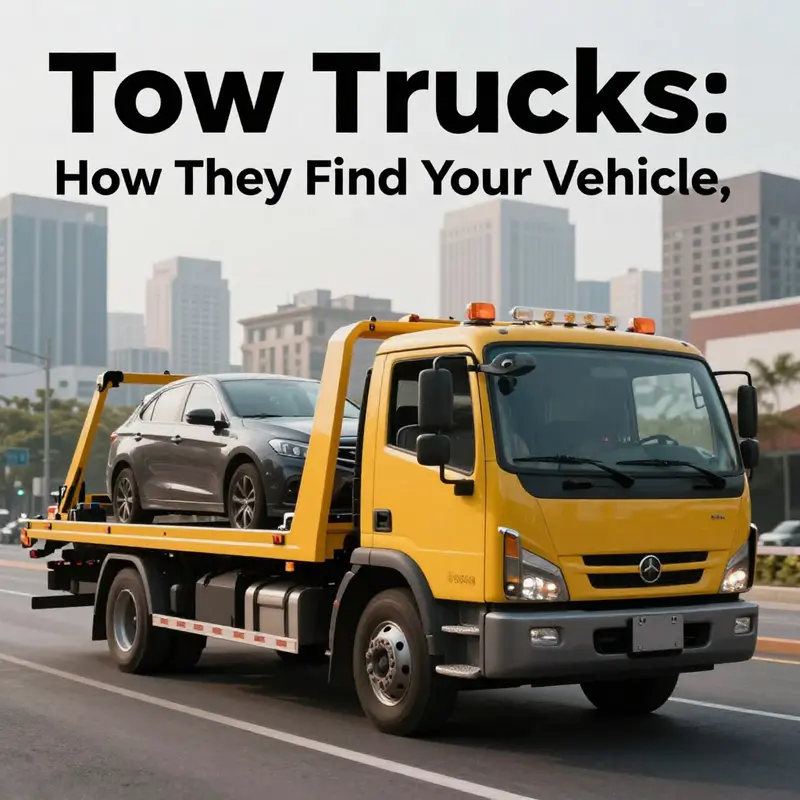
Understanding how tow trucks find your car is essential for drivers, residents, truck owners, auto repair shops, dealerships, and property managers alike. General knowledge of parking violations and road emergencies can save time, money, and headaches. The towing process is not a random act; it follows specific procedures based on legal guidelines, emergencies, and advancements in technology. Each chapter will delve into various aspects of this topic, starting with how vehicles get towed for parking violations, moving on to how tow trucks respond to roadside breakdowns, and exploring the role of technology and apps that aid in these situations.
Tracing the Legal Footpath: How Illegal Parking Violations Trigger Tow Trucks to Reach Your Car
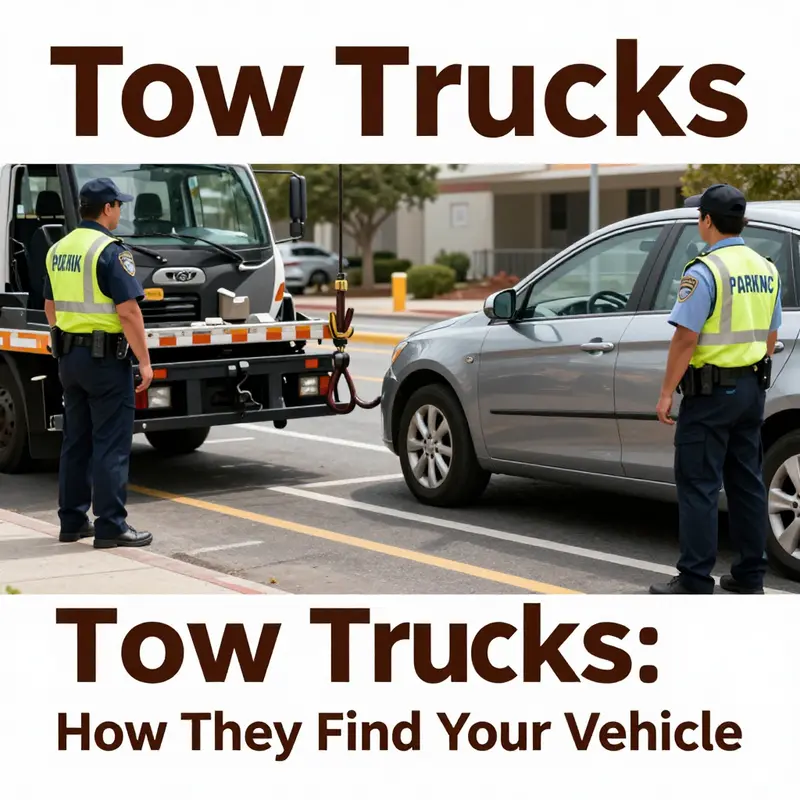
A car sitting in a no-parking zone, blocking a driveway, or overstaying a meter does not vanish into a secret radius where tow trucks roam searching for violators. The reality is more procedural and disciplined, a sequence that starts with observation or notice and ends with a vehicle being removed by a trained operator who follows a dispatch order. This chapter follows that thread, not as a flashy drama of pursuit but as a careful map of how the system works when a parking violation becomes a tow, and how that system moves a vehicle from street to container, from curb to carrier, and finally toward a staged return to lawful use or, in some unfortunate cases, a bill that reflects the experience of being scooped up in the act of breaking the rules.
The most important point to hold onto is that tow trucks do not actively roam looking for illegal parking. They do not maintain a fleet of phantom cars, scanning every curb with a flashlight and a radio. Instead, the process is initiated by the city or a property manager, sometimes by private security, when a violation is observed or recorded. In the urban and suburban landscapes where parking rules are a constant interplay between residents, business owners, and city agencies, the regular cadence of enforcement ensures that illegally parked vehicles are identified, documented, and, if necessary, removed. A typical scenario begins with an officer or authorized staff noticing a vehicle in violation. The officer documents the infraction, which might involve noting the exact location, the time, and the specifics of the violation—no parking in a fire lane, blocking a driveway, or an expired meter in a zone with strict timing limits. This is not simply about catching someone; it is about maintaining access, safety, and predictable commerce in a space used by many.
From that point, the path to a tow often moves through a dispatch system. The officer or security personnel may issue a tow notice or a tow request, a formal cue that the vehicle should be removed if the owner does not respond or rectify the situation within the allowed window. The tow notice is usually routed to the city’s licensed towing service provider or to the property’s contracted towing company. The key mechanism here is documentation plus a verified request for removal. The driver who ultimately arrives with the tow equipment is not acting on impulse but on a verified dispatch order that typically includes the vehicle’s license plate number, the location, and sometimes a brief description of the violation. In this way, the tow truck’s arrival at your car is the result of a chain of custody that starts with a recorded violation and travels through a dispatcher’s screen and a driver’s hands.
An essential element of this process is the role of license plate information. In many jurisdictions, the plate is the primary identifier used by the dispatcher to assemble records for the vehicle and to cross-check the status of the violation. When a tow is authorized, the dispatcher can pin the vehicle to a current, specific location, which is particularly important in busy areas where multiple cars may be parked in a dense block. The license plate acts as the anchor that connects the violation to the vehicle and, just as importantly, to the tow company’s assigned device or vehicle manifest. The driver on scene will use this data to verify that the vehicle in front of them matches the record they received, reducing the risk of towing the wrong car, a mistake that would create immediate complications for law enforcement and for the vehicle’s owner.
In some places, automated systems lightly sprinkled with human oversight play a growing role. License plate recognition cameras can flag vehicles for violations, providing a digital nudge to the system that a car has overstayed or violated a sign. But even in those cases, no tow is authorized without a human check or a system that confirms the infraction fits the local rules and the property’s rights. The camera can alert a monitoring team, but the final decision rests with a person who can interpret the nuance of the signage, the location, and the enforcement policy in effect. This is not a magical whisper of data; it is a careful, auditable sequence that keeps the process accountable and transparent for those who are being towed and for those who are paying the bill.
The actual arrival of the tow truck hinges on a dispatch order. When the order comes through, the operator aligns the vehicle with the location, often guided by GPS coordinates or precise address data. The driver follows the route provided by the dispatcher, a route that may factor in traffic conditions, the time of day, and any access limitations around the site. The driver does not improvise a path through the street; the path is laid out for efficiency and to minimize disruption to other drivers and pedestrians. The moment the tow truck arrives, the tow operator will verify the vehicle’s identity again, usually by checking the license plate and sometimes by cross-referencing the VIN or a visible part of the car’s description with the dispatch notes. Once verified, the removal steps begin: the car is chained, hooked, and prepared for transport, with the surety that the vehicle will be safely loaded without damage to the roadside environment or to nearby parked cars.
This measured choreography emphasizes a couple of critical realities. First, the enforcement process relies on clear signage and documented violations. A no-parking sign in a well-marked location is not a rumor; it is a legal boundary that the city enforces through consistent procedure. Time-limited zones operate in a similar fashion; meters expire, and the enforcement system flags the violation, often automatically tracking how long a vehicle has remained in a space beyond the permitted window. The second reality is that the tow is the result of a chain of permissions rather than a rogue operator’s discovery mission. A tow truck on a random hunt for violators would be a symptom of misaligned incentives and potential risk to legitimate parkers. By contrast, a dispatch-based approach reduces the likelihood of error and ensures that the tow, when it happens, is a measured response to a documented breach of the rules.
The role of property management and private enforcement further thickens the plot. In places like apartment complexes, office campuses, or gated communities, security staff or contracted enforcement teams can issue warnings or notices to violators who linger in restricted areas. If a vehicle remains beyond the allowed window or if the violation is severe enough to threaten the flow of access for others, they may escalate to calling a licensed towing service. In private-property tow scenarios, the chain of authority remains similar, but the legal basis is anchored in the property’s own rules and the contract with the towing provider. This is an important distinction because it helps explain why a tow might occur in a private lot even if the street outside has no municipal enforcement record. The authority for towing on private property often rests on a lease or an enforcement agreement rather than on city ordinance, yet it still travels through a structured process that includes documentation, a dispatch order, and a vehicle-specific verification before the car is removed.
All of this helps explain why your car might disappear in a way that feels sudden but is, in truth, a response to a string of documented events. If you question how such a situation comes to be, you can trace the steps backward: a violation is observed, a notice is issued, a tow is authorized, a dispatcher assigns the lift to a truck, and the driver arrives with the right credentials to perform the operation. The care in this process is precisely why tow operators train for this work, not merely to remove a vehicle but to perform it with minimal risk of damage and with regard for the surrounding traffic and pedestrians. The result is a regulated, auditable system that prioritizes safety and accountability over speed. This is how the legal path to a tow is laid down—the quiet, practical road that connects a street sign to a tow truck’s hook and a vehicle’s move from curb to carrier.
For those who want to know where this information intersects with everyday behavior, consider the simple act of paying attention to signage and time limits. If you park in a spot with a posted rule, you should expect that city or property enforcement might scrutinize that space. If you do receive a ticket or a notice, and you do not move the car promptly, a tow may follow as a consequence of that inaction. It is not a personal judgment against you, nor a narrative about criminal behavior. It is a mechanical, rule-based response designed to keep access open for everyone and to maintain order in shared spaces. The system relies on clear signals—the signs, the notices, the dispatches, and the on-site verifications—that together determine whether a vehicle must be moved. The objective here is not to demonize the vehicle or the driver but to illustrate how the legal framework translates a curbside violation into a tow operation.
When we widen the lens beyond illegal parking to the broader ecosystem of roadway safety, the tow process likewise becomes a part of a larger choreography. Roadside assistance for breakdowns or accidents shares some structural similarities but remains distinct in intent and execution. In those cases, the driver or the emergency call initiator provides precise location data, often through GPS coordinates or location services, and the dispatcher responds with a service vehicle that is intended to arrive quickly and with the right equipment for the situation. The emphasis shifts from enforcing a rule to restoring function—getting a stalled vehicle out of a lane, freeing a blocked roadway, or transporting a car that cannot be moved under its own power. The core mechanism—dispatch driven by a known location—bridges both contexts, reminding us that location data and professional authorization are the engines that power modern towing operations.
This is where the modern debate about data, privacy, and efficiency from a practical user perspective matters. The notion that a tow truck is tracking you because you parked somewhere it should not be might feel invasive, but the actual practice rests on a formal process. The information that is used to locate your car—your license plate, the space’s location, the recorded time, the officer’s notes—exists in a chain that can be audited. The dispatch log, the citation, and the tow ticket function as a paper trail that explains why the car was removed and who authorized it. In many jurisdictions, this chain is accessible to the owner of the vehicle through an official notice or a retrieval process. The goal is transparency and accountability, so that the system can be reviewed if a car is towed in error or if the owner wishes to contest a citation or a tow.
For drivers who want to minimize the chance of an unwanted tow, the practical upshot is straightforward: stay aware of posted rules, avoid parking in restricted areas, and move your vehicle before the time limit expires. When you do receive a citation, address it promptly. If you’re navigating a private lot, understand the property’s rules about towing and the timelines for moving a vehicle when a warning or note is posted. If you are unsure about the status of a space, ask the property management or the enforcement officer for clarification before leaving your car. The more you understand the procedural texture of the system, the less you will experience the sense of surprise or frustration that can accompany a tow.
There is also value in knowing that not every tow is a warning. Some violations involve immediate risk—vehicular blocking of emergency access, for instance, or a persistent violation in a critical zone. In such cases, a tow may be pursued more quickly, and the vehicle may be removed even if the owner has not yet left a note or paid a fine. The rules vary by jurisdiction and by property agreement, but the overarching principle remains the same: a documented violation plus a formal authorization equals the removal of a vehicle. The operator’s job is to perform that removal safely, efficiently, and within the boundaries of the law and the property’s policies. The public-facing result is straightforward: a car vanishes from the curb, an owner receives notice, and a billing record is created that reflects the costs associated with the tow and the storage.
All of this helps answer the central question of how tow trucks reach your car in the context of illegal parking. The answer is not a mystery or a chase; it is a chain of verified actions that begins with an observation and ends with a carefully controlled removal. It is a system designed to protect access, safety, and orderly use of shared spaces. It is also worth noting that information about tow procedures can vary by city, county, or private property, so checking local government or property-specific guidance can offer the most accurate picture for a given situation. A practical reference for anyone who wants a more procedural understanding of tow procedures is a broad, accessible overview that explains how to get a car towed for illegal parking, a resource that aligns with the practical realities described here and helps illuminate the steps from violation to tow in a jurisdiction where you may be parked. In short, the tow truck’s destination is fixed not by a random search but by a documented sequence, a legal map that leads from a curb to a certificate of removal.
As you consider your own daily routines in places where parking is contested—urban cores, campus areas, or crowded storefront districts—the takeaways become a simple guide: know the rules, respect the posted times, and treat any warning or citation as the first step in a process rather than a conclusion. If you ever find yourself facing a tow, remember that the operator’s arrival is not a personal verdict but a consequence of documented enforcement. The vehicle you see being loaded onto the tow truck is the result of a deliberate, auditable workflow designed to preserve access and safety for everyone on the street. This understanding can make the experience less bewildering and, ideally, less costly.
For further practical context on how this process can intersect with everyday behavior, you might explore a concise field guide that explains typical street-to-tow workflows and the questions you should ask when your vehicle is being towed. Tow Car Truck Guide
External resource for further reading: https://www.alibaba.com/news/how-to-get-a-car-towed-for-illegal-parking-20260213.html
null
null
Tow Trucks and the Map of a Modern Tow
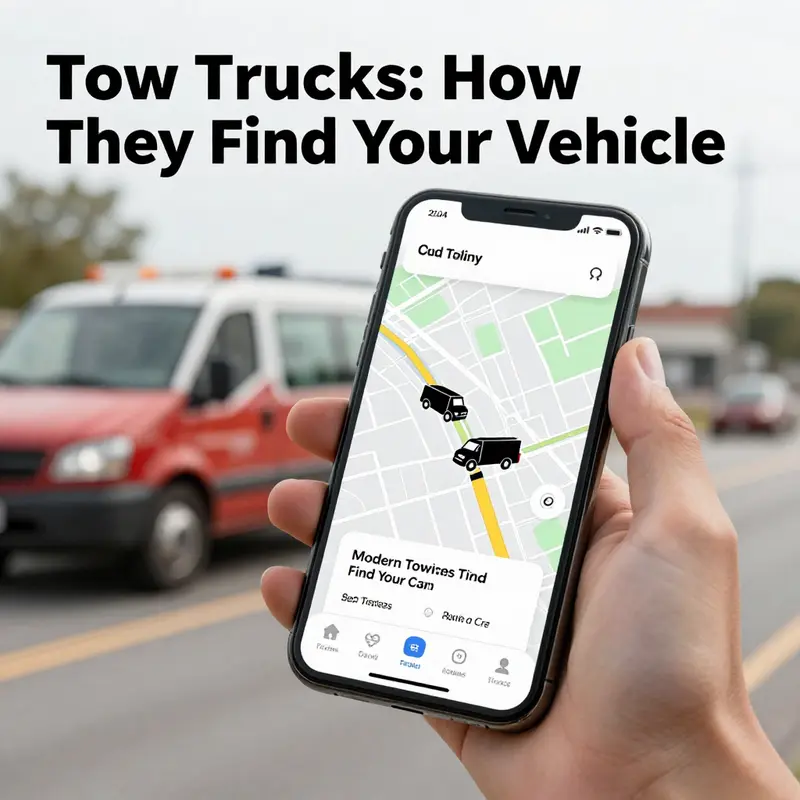
Tow trucks locate a car not by wandering the streets, but by following a data-driven sequence of notices, calls, and coordinates. The process begins with a dispatcher or enforcement notice that specifies the vehicle’s location and identity. A licensed towing company receives the directive, verifies the plate, and uses the provided location to approach the vehicle. In roadside cases, the dispatcher supplies the car’s position through GPS data or coordinates, guiding the tow truck to the precise location. In large lots or garages, additional cues such as bay numbers or parking levels help crews navigate to the target vehicle. Modern tools like GPS, license-plate checks, and mapping software augment but do not replace the formal workflow that links a vehicle to a specific tow. The system emphasizes accuracy, accountability, and traceability to protect owners and ensure proper recovery.
Final thoughts
In summary, tow trucks rely on legal guidelines, emergency situations, and innovative technology to efficiently locate vehicles for towing. Understanding these processes can empower drivers to avoid potential towing situations, seek help during breakdowns, and utilize technology to stay informed. Knowledge is your best tool in navigating the world of towing—stay aware of your parking, know how to reach assistance, and embrace the technologies available to you.