
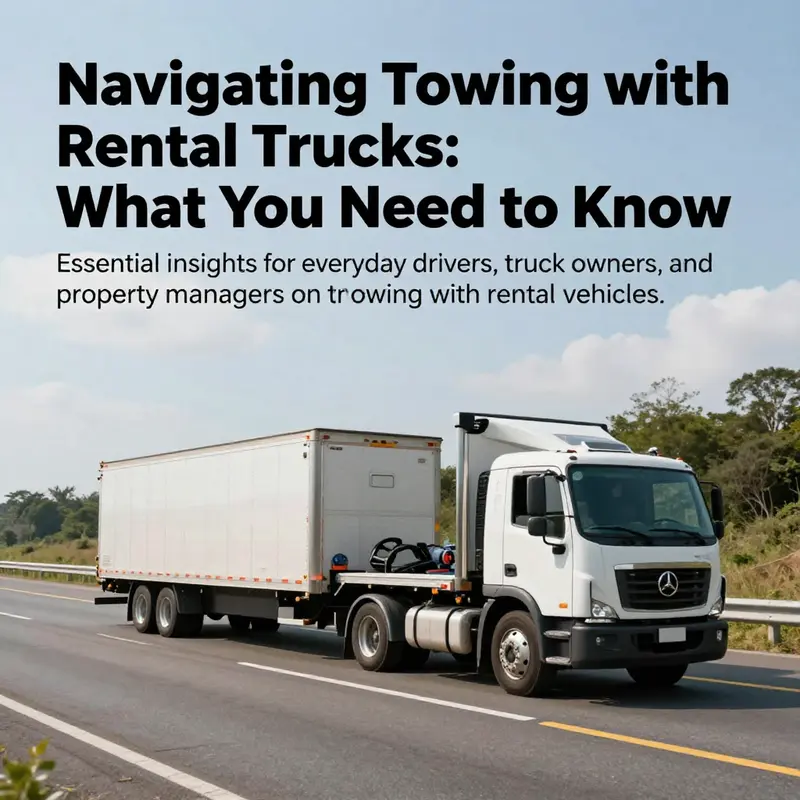
Towing with a rental truck can be a practical solution for various needs, from moving furniture to transporting equipment. However, it requires understanding several key aspects, including towing capacity, rental terms, trailer compatibility, insurance considerations, and legal regulations. This article dives into each of these critical areas to help you make informed decisions when selecting a rental truck for towing.
Towing Capacity: The Keystone of Safe, Legal Hauling with a Rental Truck
Towing a trailer or another load behind a rental truck can seem like a straightforward solution when you’re moving, transporting equipment, or shuttling hobby gear from one place to another. Yet the first and most important rule is purposefully simple: stay within the truck’s towing capacity. This capacity is not an abstract number or a marketing gimmick; it is the practical limit set by the vehicle’s design. It represents the maximum weight the engine, transmission, brakes, suspension, and chassis can safely manage when a trailer is attached and a load is behind it. The weight to consider is not only the trailer’s empty weight but also the weight of the cargo inside the trailer and any additional gear that sits on the hitch or in the truck bed. When that combined load pushes past the rated limit, the risk calculus shifts from “manageable” to “unsafe” with every mile driven. The consequences are more than just a rough ride. Overloading taxes the powertrain, accelerates wear on the brakes and tires, and can reduce steering control at critical moments. Insurance coverage, too, often hinges on adherence to the vehicle’s specifications, so exceeding the capacity can complicate or even void protection when something goes wrong. To move with confidence, the capacity must be known, respected, and embedded in every planning decision preceding a tow.
When you rent, the towing capacity is not hidden. It appears in the truck’s specifications and is echoed in the rental agreement. The number is typically expressed in pounds and includes the combined weight of the trailer and its cargo. A rental truck that lists a 5,000-pound capacity, for example, requires you to keep the total weight inside that ceiling. If your trailer weighs 2,500 pounds and you anticipate 2,000 pounds of cargo, you’re already at 4,500 pounds—well within the limit, but you’d be dangerously close if you added any extra gear or a larger trailer. This is where careful calculation matters. A quick, practical approach is to weigh the trailer empty, estimate the cargo, and then add a safety margin. That margin can be crucial, because real-world factors like uneven terrain, wind resistance, and dynamic braking demand extra headroom. And don’t forget to factor in tongue weight—the portion of the trailer’s weight that rests on the hitch—which effectively becomes part of the vehicle’s payload on the scale.
Alongside the numeric capacity, rental terms shape what you can tow and how. Many rental companies impose restrictions on towing certain types of trailers or loads, and some may require additional insurance or a permit for legal operation. Others may forbid towing at all under certain rental rates or geographic constraints. The safest path is to contact the rental provider directly and confirm two things: first, that your intended trailer and load are permitted within the stated towing capacity, and second, that your insurance coverage will extend to towing incidents. Even when a truck seems physically capable, contractual limits can override your plans, and failing to observe them can invalidate warranties or coverage in the event of an accident. In practice, the conversation is best conducted before you sign the rental agreement and accept the keys.
There’s also the matter of trailer compatibility. A hitch is not just a hitch; it has a rating that must align with the truck’s towing capacity. Most rental trucks are equipped to tow standard utility trailers or small boat trailers, but some trailers—such as heavy gooseneck or fifth-wheel configurations—assume a different towing architecture. Those types typically require a higher-rated chassis and hitch arrangement than what a standard rental truck provides, and attempting to use them can compromise steering, braking, and control. If your plan involves an unconventional trailer, discuss it early with the rental agency and ask about compatible hitch receivers, weight ratings, and any required brake controllers. The hitch’s tongue weight rating, the overall gross vehicle weight rating (GVWR), and the Gross Combined Weight Rating (GCWR) should all be in harmony with the trailer’s weight and the payload you intend to carry. Without that harmony, you may be navigating with an invisible safety margin that has evaporated.
Another layer to consider is liability and legal compliance. Insurance coverage for towing is not universal across all rental policies. Some policies explicitly exclude towing-related incidents, while others require an add-on or a separate policy. Local laws can also govern how much you can tow and under what conditions. In some jurisdictions, a heavier trailer or certain trailer configurations may require additional licensing, equipment like brake controllers, or specific lighting setups. Before you hit the road, it’s essential to verify the regulatory landscape for your route and ensure your driver’s license class aligns with the trailer type you plan to tow. This isn’t merely bureaucratic caution; it’s about ensuring that if an incident occurs, the legal framework and safety equipment are in place to protect you and others on the road.
Beyond the paperwork, there are practical, real-world steps that turn a potentially risky plan into a smooth operation. Start with a thorough load assessment. Weigh the empty trailer, estimate the cargo weight, and add a buffer for misc. items such as tie-downs, ropes, and protective materials. Then verify the trailer’s gross weight and tongue weight, and compare those figures to the truck’s stated capacity. If you’re unsure about any weight concept, seek clarification from the rental agent or consult the vehicle’s owner’s manual, which contains the manufacturer’s explicit guidance on towing limits, hitch types, and braking requirements. Empty lanes and open stretches may seem forgiving, but hills, curves, and highway speeds expose any mismatch between trailer weight and towing capacity far more quickly than a flat, quiet street does. A small misjudgment in weight or balance can magnify into a steering tug, wheel wobble, or brake fade that feels unmistakably unsafe as traffic closes in around you.
As you assemble the chain of checks, remember the human factor—the driver’s preparation is as decisive as the hardware. Ensure the truck’s tires are inflated to the recommended pressures, which differs when a trailer is hitched. Check all lights, brake lights, and turn signals on both the truck and the trailer, and verify that safety chains are correctly arranged. Secure every item inside the trailer so that nothing shifts during transit, and distribute the load to avoid sway. If wind gusts or sudden maneuvers threaten stability, you’ll want responsive steering and effective braking rather than a surprise loss of control. It’s also wise to plan for contingencies: know where you can stop for a quick check, and have a plan for increased stopping distances and slower acceleration when towing. In short, the decision to tow with a rental truck rests on a single, clear premise: you must maintain the vehicle within its rated capacity and operate under conditions that respect both safety and law.
If you’re seeking a quick reality check before renting, you can refer to a concise guide that emphasizes the exact question of towing with rental equipment. This resource provides practical pointers for confirming capacity, terms, and compatibility before you commit to a rental agreement. May this serve as a reminder that capability without compliance is not a safeguard, but a liability waiting to happen. And as you navigate toward a decision, keep in mind that a well-planned tow—anchored in capacity, contract, and careful loading—offers a reliable path to achieving your moving or hauling goals without compromising safety or peace of mind. For definitions of towing capacity and related terms, see Cambridge English Dictionary.
For further contextual reading and practical examples inspired by ongoing discussions about towing logistics and capacity, you can also explore related industry discussions and practical insights in this resource: Can you tow with a rental truck?. This short guide reinforces the core idea that the decision to tow must be grounded in a precise understanding of weight limits and contractual boundaries, rather than in assumptions about what a rental truck can do. By anchoring your planning to those specifications, you reduce risk and enhance the likelihood of a successful, uneventful haul.
Tow Ready or Not: Decoding Rental-Truck Towability, Capacity, and Safe Hauling
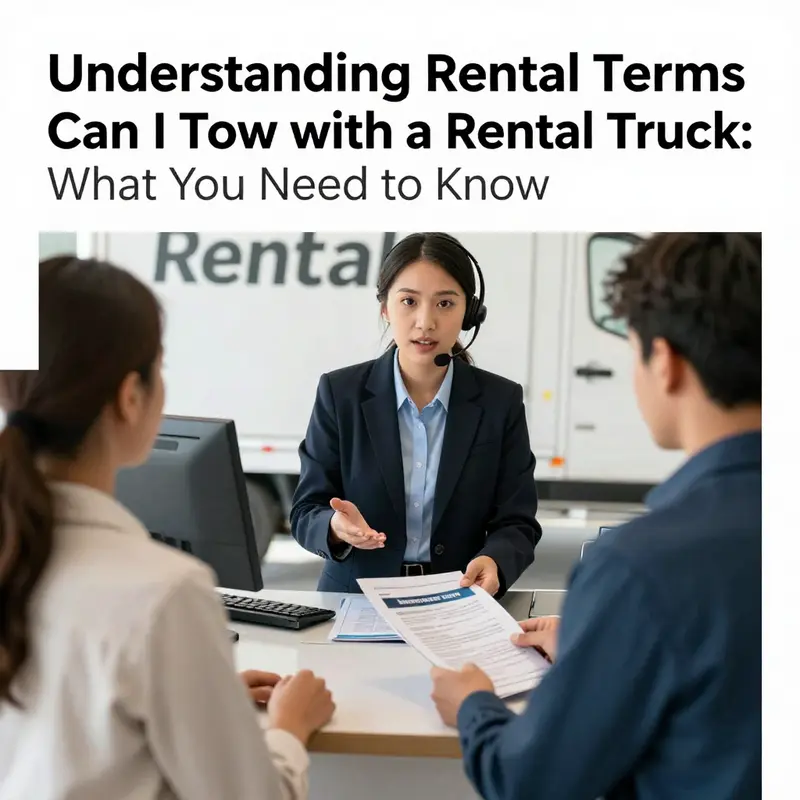
When you’re planning a move or a quick haul, the question often shifts from can I use a rental truck to can I tow with it—and under what terms. The short answer is yes, you can tow with a rental truck in many cases, but the details matter just as much as the distance you intend to travel. The decision hinges on three pillars: the vehicle’s actual towing capacity, the rental agreement’s terms, and the compatibility of the trailer you plan to haul. This chapter follows a practical, integrated path through those layers, weaving safety, legality, and peace of mind into a single, working guide. It’s not about a universal rule but about making an informed choice tailored to the model you’re renting, the load you carry, and the laws you’ll meet on the road. As you read, imagine dialing into a local rental counter and asking the right questions, then applying the answers with careful preparation before you ever pull out of the lot.
First, the towing capacity. The truck you rent is a tool with a rating—often engraved in the owner’s manual, on a placard inside the door pillar, or on a sticker near the glove box. The capacity tells you how heavy a trailer you can safely tow and how much extra weight the truck can handle while pulling. It’s common to find ¾-ton and 1-ton models among rental fleets, and these are typically the models that can handle trailers to a useful extent. But not every truck in the fleet is tow-ready. Some configurations may be geared for hauling perishables or equipment within a yard rather than for hitting the highway with a trailer behind. Because fleet inventory changes and specifications vary by location, the most reliable step is to pick up the phone or stop by the rental counter and explicitly request a tow-rated model for the exact weight range you anticipate. A quick call to the local location to confirm a tow-rated option keeps you within legal and safety standards and prevents an awkward, if not dangerous, last-minute swap.
Second, the rental agreement itself. Towing provisions are not universal across rental companies or locations. Some contracts will clearly state that towing is permitted only with certain trailer types—typically open or enclosed utility trailers, and sometimes with restrictions on flatbeds or gooseneck configurations. Other contracts may require an additional insurance endorsement or impose weight limits based on the truck’s gross vehicle weight rating (GVWR) and tow rating. These terms matter because they affect coverage in the event of an accident, which in turn can determine how a claim is processed. Reading the fine print is not pedantry; it’s practical risk management. If a policy or fee structure seems unclear, ask for written confirmation before you reserve. A moment spent clarifying can save hours of dispute and hundreds of dollars in unexpected charges if something goes awry on the road.
Third, trailer compatibility. Even with a tow-rated truck, the trailer must be compatible with the truck’s hitch and electrical system. Most rental trucks come equipped with a receiver hitch, but the hitch size—commonly 2 inches or 2 1/2 inches—and the availability of a compatible wiring harness for trailer brake lights and signals are critical. If your trailer uses electric braking or has a separate brake controller, you’ll want to verify that the truck’s harness and control wiring are up to the task. If you’re unsure, bring the trailer to the rental center in advance for a quick compatibility check or request a demonstration of how the wiring and braking lights work. A simple mismatch between hitch size and ball size or an absent electrical harness can render a tow unsafe or illegal on public roads.
Beyond the hitch and harness, the type of trailer you’ll use can influence the feasibility of towing with a rental truck. A standard open trailer or a tilt-bed utility trailer may suit a move or a light load, but a heavier load or a fragile item calls for different arrangements. Some travelers find that a flatbed trailer offers a smoother ride for long hauls or delicate contents, reducing drivetrain stress and tire wear on valuable or sensitive cargo. This approach may require the rental truck to be specifically rated for the tongue weight and weight distribution of a flatbed and to have appropriate attachment points and tie-downs. The broader takeaway is simple: the safest path for longer hauls or high-value cargo is to align the trailer type with the truck’s rating and to ensure the pairing is within the stated limits of both vehicle and trailer.
Insurance and liability are the other strands that weave into the decision to tow with a rental truck. Some rental policies exclude liability for towing incidents or require an additional endorsement to cover trailer-related risks. If you’re planning to tow, secure confirmation in writing that your policy covers towing incidents and the particular trailer type you’ll use. The absence of coverage can transform a mishap into a financial burden that eclipses the cost of the rental itself. Likewise, local laws can differ in notable ways. Some jurisdictions regulate trailer length, weight, or the need for special permits when transporting heavy or oversized loads, or when a trailer is attached to a rental vehicle. A few minutes spent understanding the local rules where you’ll drive can avert fines and unsafe situations.
For those considering heavier or more specialized towing needs, it’s worth recognizing that rental fleets and logistics providers sometimes segment their offerings to distinguish routine moves from heavier equipment transport. If your plan involves moving machinery or large construction equipment, you may be better served by speaking with a fleet that regularly handles these scenarios, or by using a dedicated heavy-haul option. The underlying principle remains constant: confirm that the vehicle, the trailer, and the plan all align—and then verify in writing the conditions under which towing is allowed.
As you proceed, one practical approach is to treat the process as a checklist rather than a guesswork negotiation. Start with the specific truck model you’re considering, not a generic category. Contact the local rental location to confirm tow capacity for that exact model, and ask whether a ¾-ton or 1-ton configuration is available for your dates. Then request the exact trailer type you plan to use and confirm hitch size, wiring harness compatibility, and any required attachments or endorsements. If your payload includes a high-value or fragile cargo, explore the option of a flatbed trailer and discuss any implications for vehicle wear, insurance, and road-ready tie-downs. Finally, review the contract terms and confirm the allowed trailer types, any extra insurance endorsements, and the weight limits in writing. In this way, you’ll walk away with a clear, enforceable plan rather than a vague hope that everything will fit on the back of a rental truck.
There is value in keeping a single, central reference in mind as you weigh your options. If you want a concise overview that mirrors the approach outlined here and ties directly to the question of can you tow with a rental truck, you can explore the dedicated guidance provided on related pages that address tow-rated models and the steps needed to prepare a rental truck for towing. For readers who want to see how the policy is expressed publicly and to get a sense of the standards used by providers, this resource offers clear direction on which trucks are suitable for towing, how to prepare for a tow, and the essential roadside support available when towing a trailer with a rental vehicle. This kind of page helps you translate the above practical steps into an actionable plan you can implement at the counter.
To connect your understanding with a concrete, user-friendly reference, you can visit the internal resource that discusses tow-ready options and how to verify them for your reservation. The anchor you can use in this chapter is a direct link to the detailed guidance on tow-rated models and how to prepare for towing with a rental truck: Can you tow with a rental truck? towing information. This internal resource provides step-by-step clarity on what questions to ask and what confirmations to obtain before you rent, helping ensure your plan aligns with the equipment’s capabilities and your local regulations.
In closing, towing with a rental truck is not a universal yes or no. It is a conditional yes that depends on a clear understanding of the truck’s towing capacity, the terms of the rental agreement, and the trailer’s compatibility with the vehicle. When you approach the process with a cautious, informed mindset, you minimize risk, stay compliant, and preserve the vehicle’s warranty and your own safety. If your haul requires more than a routine tow, consider alternatives that match the scale of the job—options that may involve specialized equipment or a different kind of transport arrangement. The key is preparation: know the numbers, confirm the terms, and match your trailer to the truck’s capabilities before you sign anything or hitch up.
Tow Ready on a Rental: Navigating Capacity, Terms, and Safety When Pulling a Trailer
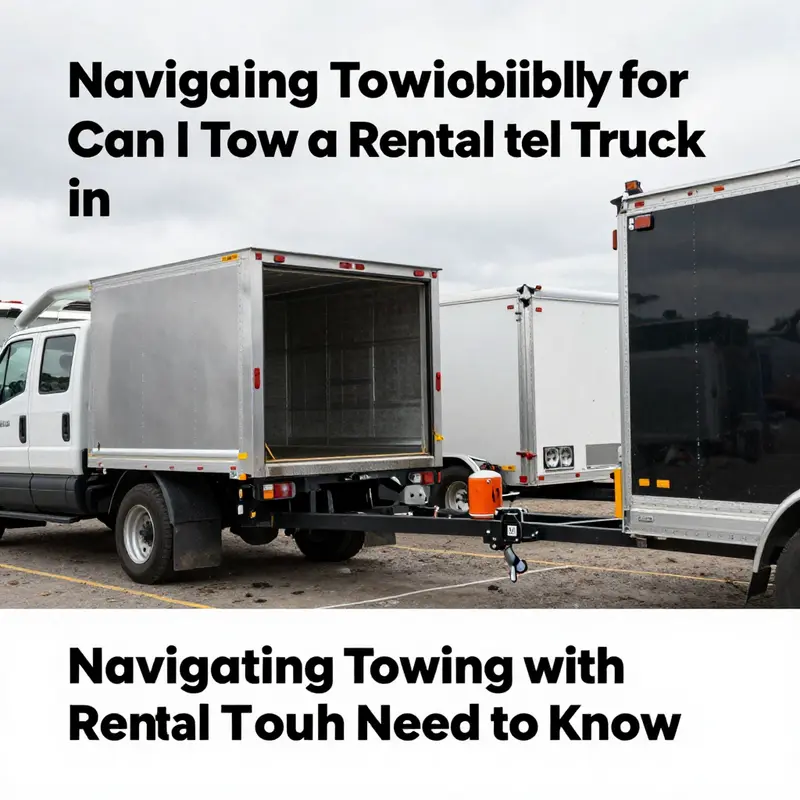
Towing with a rental truck can be a practical solution for moving a trailer, hauling gear, or vacuuming up a quick load on the way to a project site. It can save time and money when you don’t own a dedicated tow vehicle. Yet the appeal rests on understanding the limits and the rules that govern each rental agreement. The idea of simply hitching a trailer to a rental truck is compelling, but it demands a careful, detail-minded approach. The key is to balance what the truck can safely carry with what the trailer demands, and to keep the whole operation within legal and policy boundaries. When you start with that mindset, towing with a rental truck becomes less a gamble and more a calculated move that protects the vehicle, the load, and your peace of mind.
First and foremost, know the towing capacity. The capacity is not a vague target; it is a precise limit defined by the truck’s design, engine, transmission, braking system, suspension, and overall weight. It is typically listed in the owner’s manual and on a placard in the cabin or near the driver’s door. Exceeding this rating risks mechanical damage, dangerous handling, and the voiding of warranties. The weight you intend to tow must be compared against both the trailer’s gross vehicle weight rating (GVWR) and the tongue weight, the latter being the downward force the trailer exerts on the hitch. A trailer with a high GVWR or a heavy tongue weight can overwhelm a rental truck that seems capable at first glance. A careful calculation—trailer weight, cargo inside the trailer, and any attached accessories—helps determine whether the load sits within safe bounds. It is not enough to rely on a general sense of “it should be fine.” The difference between acceptable and dangerous can be a few hundred pounds and a matter of a few seconds of misjudgment on the road.
Beyond the truck’s rated capacity, the rental terms matter just as much. Many rental providers place explicit restrictions on towing in their standard agreements. Some may permit towing only with certain models or configurations, and others may require added insurance, a special permit, or even a separate hitch and mounting hardware for the journey. The safest practice is to contact the rental location directly before you reserve a vehicle. A quick conversation can uncover whether a given truck is rated for towing, what equipment is included or required, and whether there are any fees for towing-related add-ons. In some cases, even when the truck is tow-rated, you might need to request a specific tow-equipped model or opt into a tow-package option that includes the hitch, wiring, and brake controls needed for safer operation. This is not a hurdle to frustrate your plans; it is a safeguard that ensures you know what you are getting and what you are responsible for.
Trailer compatibility is another essential thread in the towing tapestry. The trailer’s hitch type, ball size, and weight distribution all interact with the truck’s hitch receiver and payload. A standard 2-inch or 3-inch ball mount is common, but compatibility depends on the drawbar and coupling assembly already installed on the trailer. If the trailer uses a heavy-duty hitch or unconventional mounting, you may need to verify that the rental truck can accommodate it without modifications. The hitch receiver’s size on the truck—whether it is a light-duty, mid-range, or heavy-duty setup—dictates what you can safely attach. If a trailer requires brakes, wiring, or lighting that the truck’s electrical system cannot support, those gaps must be addressed before you depart. It is also worth checking whether the rental includes a basic hitch or if you will be asked to bring your own equipment. A minimal hitch without the right wiring and brake controls can create unsafe conditions, especially on longer trips or in traffic with varying road grades.
Insurance and liability form another layer of complexity. Some rental policies cover towing incidents only if you meet certain criteria, while others exclude towing altogether from standard liability. If your policy has gaps, you may be exposed to financial risk for damage to the trailer, cargo, or other road users. It is wise to confirm coverage in advance, request any rider or rider-equivalent endorsements if available, and understand what acts might void coverage. In practice, this means reading the policy language carefully and asking for written confirmation from the rental company. The goal is a clear understanding of what is and isn’t protected, and under what circumstances you may need to assume responsibility.
Local laws and regulations frame the practical side of towing as well. Some jurisdictions regulate the permissible trailer weight relative to the vehicle’s gross combined weight, set requirements for brake systems, lighting, and visibility, and impose rules for commercial versus personal use. You may need permits for heavier trailers or for certain routes, especially if you are moving equipment or operating in a nearby commercial corridor. The broader message is simple: know the rules of the road where you will drive, and ensure your vehicle and trailer configuration comply. The last thing you want is a costly citation or a failed inspection that disrupts a planned move.
To plan your tow with confidence, approach the rental process as a collaboratively engineered task rather than a quick grab-and-go errand. Start by identifying the load you intend to carry and the trailer’s weight characteristics. Then map your route, noting road grades, rest stops, and any areas with height restrictions or long tunnel passages. With this information in hand, call the rental location and discuss three core questions: Does the truck have a confirmed tow-rating, and what is the exact maximum trailer weight and tongue load for that model? Is there a hitch, wiring, and any required safety equipment included, or will I need to arrange them separately? What insurance or additional coverage is needed for towing, and are there any fees or permits required? A straight answer to these questions is more valuable than a week’s worth of uncertainty.
If you are curious about the core question itself, you can explore the direct guidance on whether towing with a rental truck is feasible and what to check beforehand by visiting a dedicated resource that consolidates policy clarity and practical steps. This reference can help you frame the conversation with the rental location and avoid missteps.
As you integrate these considerations, it becomes clear that towing with a rental truck is not about pushing the vehicle beyond its limits. It is about choosing a tow-capable model, confirming the apparatus is compatible, and ensuring that insurance, local regulations, and the planned route align with safe operation. When all these elements come together, towing with a rental truck emerges as a practical, efficient option for the right job—one that can take the edge off a move, support a temporary hauling need, or enable a rapid response to a project timeline without requiring a dedicated tow vehicle. The experience then becomes a matter of precise preparation, clear communication with the rental provider, and a respect for the mechanical laws that govern pulling weight on public roads.
For additional context and practical guidance, you can consult external resources that discuss towing considerations and policy frameworks in more detail. These sources underscore the importance of matching equipment to task and of verifying that every piece of the towing chain—from hitch to brakes to insurance—works together harmoniously. As you plan, remember the core message: verify, verify again, and document the specifics so your towing with a rental truck remains a safe, legal, and productive option. And if you want a quick reference point directly related to this topic, you can read more about the core question here: Can you tow with a rental truck?.
External reference: official towing guidance from a major rental provider can be useful when planning trips that involve trailers. See: official towing information.
Beyond the Tow: Protecting Yourself When Towing with a Rental Truck
When you rent a moving truck, the plan usually includes a flurry of small decisions that either smooth the ride or trip you up later. You may need to choose a hitch, decide what to tow, map routes, and coordinate timing. Towing with a rental truck is indeed possible, but it hinges on several layers of protection, legality, and practical know-how. The core of the matter is simple and often overlooked: insurance. Understanding how coverage works when you attach a trailer or tow a vehicle behind a rental truck can save you not just money, but peace of mind on a long drive or a short haul. If you’re unsure about the insurance landscape, a practical starting point is to explore a straightforward explainer that speaks directly to the question of towing with a rental truck. Can you tow with a rental truck?. This question is leavened with the technicalities of liability, cargo, and the particular risk profile that comes with rental equipment, yet the answer remains grounded in how coverage is applied and where gaps commonly appear in real-world scenarios.
A useful frame for thinking about insurance begins with the blunt fact that standard auto insurance policies almost never extend to rental trucks or to the trailers you might tow behind them. This may feel like a surprising gap, especially if you’ve come to rely on your everyday car’s coverage for a broad range of driving needs. The consequence is straightforward: if something goes wrong—a collision, a trailer detaching, or cargo that shifts and causes damage—the protection you expect may not be there unless you explicitly add it. This isn’t merely a theoretical concern. It translates into the practical risk of paying out of pocket for repairs, medical costs, or damages to a third party, even when you thought you were simply moving your belongings from one place to another.
Rental companies are well aware of this complexity. They typically offer supplemental liability insurance (SLI) or other add-on coverages designed specifically for rentals. These options are valuable, but they aren’t a blanket fix. They can be expensive, may come with limitations, and sometimes exclude certain uses or types of cargo. The additional protection should be weighed against your existing policy, the value of what you’re moving, and how much risk you’re willing to shoulder by proceeding without a fully integrated plan. In short, rental insurance is a piece of the puzzle, not the entire picture. It’s a reminder that coverage on a moving truck and its trailer is a distinct risk category from a standard personal auto policy.
To gauge your actual protection, start by reviewing your current auto policy with a careful eye on endorsements, exclusions, and limits related to nonstandard vehicles and towing. Some personal policies extend limited coverage to things that look like regular cars, but they often exclude larger, commercial, or heavy-duty trucks. The difference may seem subtle in a driveway, but it becomes decisive on the highway or when you’re hauling a heavy load. If your policy doesn’t clearly cover rental trucks or towing scenarios, you face a high likelihood that any incident could fall outside your protection. It’s not enough to assume coverage sits in the background; you want written confirmation from your insurer before you rent.
Even when your policy seems to offer some form of protection, towing a trailer introduces a separate risk profile. Liability coverage can cover injuries and property damage to others, but it may not automatically extend to the rental truck when it’s used in a towing capacity. Physical damage coverage for the truck itself becomes a different calculation once you engage in towing activities. Cargo coverage for the items you’re moving—furniture, boxes, or a boat or motorcycle on a trailer—adds another layer that isn’t guaranteed to ride along with the standard policy. In practice, you may find that the moment you attach a trailer, your existing coverage can vanish or shrink, leaving you exposed to a host of liabilities that you hadn’t anticipated.
This is where the risk-profile concept becomes especially important. A moving or hauling scenario typically involves longer distances, potentially unfamiliar equipment, and the added complexity of braking, turning, and weight distribution with a trailer. The insurance world treats these as a different class of risk from the everyday driving you do in a passenger car. That distinction matters not just for the cost of premiums, but for the validity of any claims you file after an mishap. If you intend to use a rental truck for long moves or to tow heavy equipment, the risk calculus changes again because many policies exclude commercial or heavy-duty use. The result is a practical gap between what you expect to be covered and what is actually protected once you start towing.
So how do you bridge that gap? The answer lies in a proactive, written approach. Begin by contacting your current insurer with a clear description of your plan: you intend to rent a moving truck and tow a trailer or another vehicle. Ask explicitly about endorsements or specialized policies that cover rental trucks and towing, including the extent of liability, cargo protection, and any exclusions related to the trailer type or to commercial use. If your insurer can issue a rider or endorsement that expands coverage to rental trucks and towing, obtain it in writing and confirm the precise terms, including limits and any deductibles. If no endorsement exists or the cost is prohibitive, you’ll want to pursue an alternative path.
A practical alternative is to arrange standalone coverage through a third-party insurer that specializes in vehicle rentals or towing operations. This route can offer more tailored protection for your particular use case, but it requires careful comparison shopping. You’ll want to verify that the policy is valid for the specific truck model you’re renting, that it covers towing, and that it remains effective for the distances and durations you have planned. In any case, insist on a written policy document that confirms what is and isn’t covered, along with the process for filing a claim if something goes wrong. It’s also wise to confirm any overlap or conflict between the rental company’s insurance and third-party coverage, so you don’t end up with duplicate coverage gaps or conflicting terms at the moment you need to file a claim.
Meanwhile, the rental terms themselves deserve careful attention. The rental agreement may specify which types of trailers or loads are permissible, what hitch configurations are required, how cargo must be secured, and whether the rental company itself provides any towing endorsements. The overlap between the rental agreement and insurance is not incidental; misread terms can leave you legally liable for violations or unsafe practices, especially when you’re hauling heavy or oversized loads. If a potential tow involves a heavy trailer or specialized equipment, the agreement might even require a permit, staging, or additional safety measures before you’re allowed to proceed. These details matter because they dictate not only legal compliance but also the circumstances under which a claim could be denied if something goes wrong.
The practical take-away here is simple: you can tow with a rental truck, but you should not move forward without confirming coverage across multiple layers—your personal policy, rental insurance add-ons, and any third-party options you might consider. The goal is a clear, written understanding that protects you in the event of an accident, damage to the truck, or damage to the trailer or cargo. If you’re unsure where you stand, treat this as a certainty check rather than a future regret. It’s worth the time to ask questions, obtain documentation, and verify terms before you sign the rental agreement. After all, the road you choose to travel with a rental truck should be protected by a plan that travels with you as far as your journey does.
For a quick, practical reference to whether you can tow with a rental truck and what to verify before you commit, see the linked explainer above. And for those seeking a broader contextual reference on how standard auto policies interact with moving-truck rentals, a trusted consumer resource emphasizes that rental-truck insurance is a crucial part of the moving process. External resource: https://www.bankrate.com/insurance/car-insurance/does-car-insurance-cover-a-moving-truck-rental/
null
null
Final thoughts
In summary, towing with a rental truck can be a convenient and flexible option, provided you carefully consider towing capacity, rental terms, trailer compatibility, insurance, and legal regulations. By understanding these components, you can ensure that your towing experience is not only efficient but also safe and compliant. Empower yourself with the knowledge to make the best decision for your needs.