
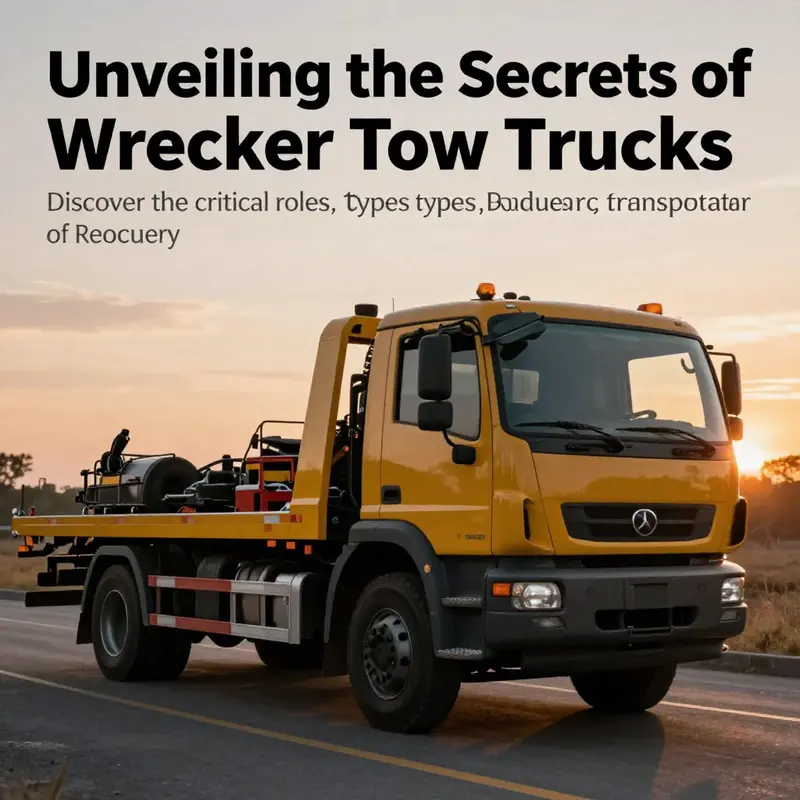
Wrecker tow trucks are often seen on roads, quietly playing a vital role in ensuring the smooth flow of traffic and providing crucial aid in emergencies. These specialized vehicles, equipped with mechanical apparatuses like winches and cranes, are not just utilitarian; they help us in times of need, ensuring that disabled or wrecked vehicles are safely towed away. As we explore the definition and functionality of a wrecker tow truck, we’ll delve into its various types and variations, technical features, and its indispensable role in roadside assistance and safety. By the end, everyday drivers, property managers, truck owners, and auto repair professionals will have a clearer understanding of why wrecker tow trucks are crucial in our daily lives.
Wrecker Tow Trucks Explained: What They Do and How They Work on the Road
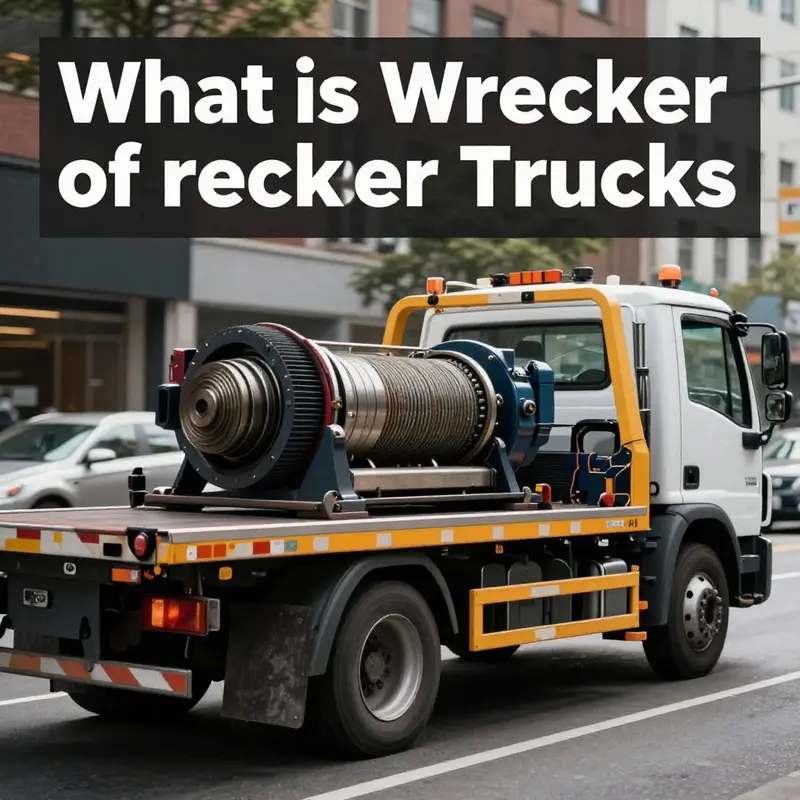
What a wrecker tow truck is and how it functions
A wrecker tow truck is a purpose-built vehicle that moves disabled, stalled, or damaged cars from where they cannot safely travel. The phrase wrecker is commonly used in North America as a synonym for tow truck. These vehicles combine a heavy chassis with specialized lifting and recovery equipment. That combination lets operators pull, lift, and carry vehicles from accident scenes, breakdowns, and obstructed lanes.
Beyond the simple idea of “towing,” a wrecker’s role is practical and technical. It stabilizes damaged vehicles, prevents further road hazards, and expedites traffic flow. A wrecker can secure a car that sits at awkward angles, recover a vehicle from soft ground, and load a wreck for transport. The equipment it carries determines how it performs each task.
Most wreckers fall into light, medium, and heavy-duty categories. Light-duty wreckers handle compact passenger cars. Medium-duty trucks serve larger SUVs and small commercial vans. Heavy-duty wreckers recover commercial trucks, buses, and heavily damaged vehicles. Each class uses different winches, booms, and bed designs. Operators choose the right truck for the job to avoid further damage.
A wrecker’s core mechanical systems include winches, booms, wheel lifts, and flatbeds. Winches provide pulling power with high-strength cable or synthetic rope. Booms are hydraulic arms that lift or support vehicles during recovery. Wheel lifts engage a vehicle’s tires to lift one end off the ground. Flatbeds let operators carry an entire vehicle on a level platform. Modern wreckers may combine two or more of these systems for flexibility.
Functionality varies by configuration and scenario. Flatbed towing is ideal when towing without extra wear is required. Trucks with wheel lifts are faster for short hauls. Side-mount booms handle complicated recoveries where the vehicle must be lifted from an angle. Recovery operations include winching vehicles from ditches, stabilizing overturned cars, and removing vehicles from confined spaces. Each operation requires knowledge of leverage, weight distribution, and mechanical advantage.
Safety and control shape every recovery. A stable base is essential during lift and pull operations. Operators deploy outriggers or position the truck to resist tipping forces. They assess the scene for hazards such as traffic, fuel leaks, and unstable ground. Rigging a vehicle correctly prevents slippage. Proper rigging uses rated hooks, slings, and chains sized to the vehicle’s weight. Modern wreckers incorporate hydraulic controls that let operators make fine adjustments safely.
A wrecker’s success depends on operator skill as much as on hardware. Experienced operators read a scene quickly. They select anchor points and plan the pull sequence. They adjust winch speed, boom angle, and tension to avoid sudden shifts. Training covers mechanical systems, rescue safety, and traffic control. Licensing and certifications vary by region, and many operators hold commercial driver’s licenses for heavy trucks.
Tow trucks play a vital role in emergency services and traffic management. When accidents block lanes, wreckers remove vehicles and restore flow. Rapid removal reduces crash risk and helps emergency responders access the scene. Police, fire, and towing units often coordinate on-site. In major incidents, specialized heavy wreckers clear large vehicles and complex wreckage. Wreckers also support roadside assistance companies by relocating vehicles to repair shops.
Technology has improved both safety and capability. Remote controls allow operators to position booms and winches from a safer distance. Cameras and sensors help with alignment when visibility is poor. Load-monitoring systems show real-time strain on cables and booms. These tools reduce the chance of equipment failure during heavy pulls. For a deeper look at how technology influences safety and operation, see this overview of tow truck technology and safety.
Design details matter. Chassis selection affects towing capacity, stability, and maneuverability. Hydraulic systems require careful routing and maintenance. Winch drum sizes, cable types, and braking systems determine pulling power and control. Flatbed decks come in steel or aluminum, each with trade-offs in weight and durability. Wheel-lift designs vary in reach and load rating. Manufacturers publish specifications such as gross vehicle weight rating and hydraulic pressure limits. Operators match those specs to the vehicle and task.
Wrecker operations also involve legal and regulatory considerations. Local laws may restrict towing practices, control titling, and outline impound procedures. Towing rates and release rules differ by jurisdiction. Operators must often display clear identification and follow signage requirements when storing towed vehicles. Insurance coverage for towing businesses includes liability for damage, recovery operations, and general vehicle coverage.
Common misconceptions persist. One is that any truck can tow a vehicle safely. In reality, towing requires purpose-built equipment and trained operators. Another misconception is that a wheel-lift always damages a vehicle. When used correctly, wheel-lifts safely carry many cars for short distances. The choice between a flatbed and wheel-lift depends on the vehicle’s condition and the trip length.
Environmental and recovery challenges add complexity. Soft ground, steep slopes, and waterlogged banks change anchor strategies. In these conditions, operators may use additional equipment like snatch blocks and pulleys to alter pull angle. They may also call for heavy-duty wreckers to reduce risk. When hazardous fluids are present, operators follow spill containment procedures. Environmental safety protects workers and the site.
Wrecker tow trucks are part of a broader roadside assistance ecosystem. Dispatchers prioritize calls based on danger and disruption. On arrival, operators quickly assess, stabilize, and plan. Communication with emergency services ensures coordinated actions. That coordination helps clear scenes efficiently and safely.
The term “wrecker” traces back to the vehicle’s role in removing wreckage. Definitions in established dictionaries reflect this history and support the common understanding of the term. For a concise definition and its usage, see the Free Dictionary entry for “wrecker”: https://www.thefreedictionary.com/wrecker
Understanding what a wrecker tow truck does clarifies why specialized equipment and trained operators matter. Wreckers combine mechanical advantage, safety systems, and operator judgment to restore order after breakdowns and collisions. Their presence keeps roads clearer, speeds emergency response, and prevents secondary incidents.
Operators and fleet managers choose the right wrecker by weighing capacity, equipment needs, and regulatory factors. Training and maintenance keep wreckers reliable under stress. When a vehicle must be moved from a dangerous or obstructive position, a properly equipped wrecker is the industry-standard solution.
In practice, a wrecker tow truck is more than a towing rig. It is a mobile workshop, a lifting platform, and a rescue tool. Its design and operation reflect practical engineering, safety protocols, and experienced judgment. That combination makes wreckers essential on modern roads.
Beyond the Hook: A Practical Guide to Wrecker Tow Truck Types and Capabilities
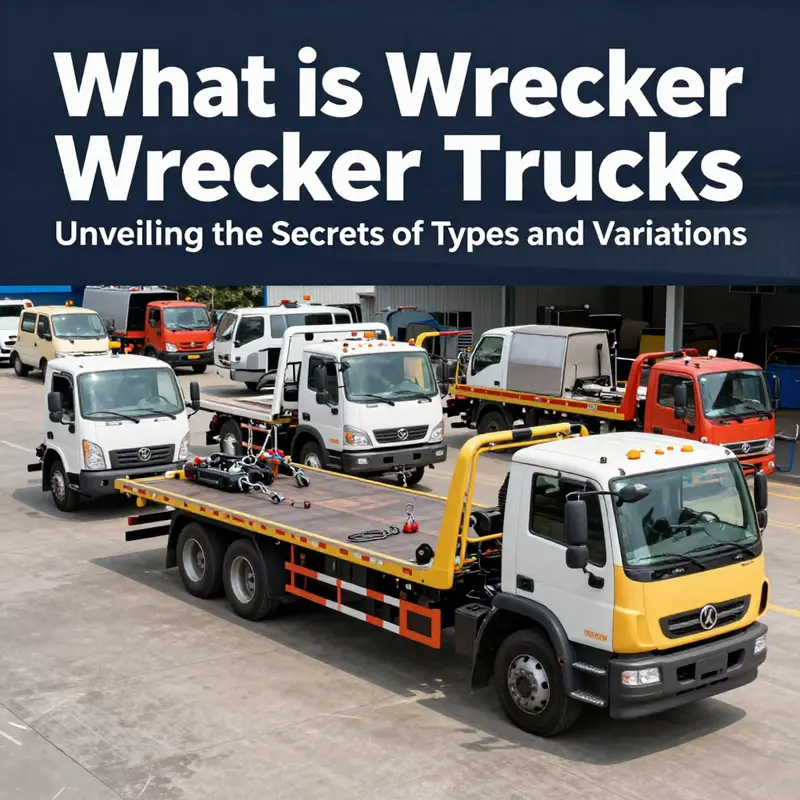
Wrecker tow trucks are more than a single machine with a hook. They are a family of purpose-built vehicles, each engineered for specific recovery tasks. Understanding the types and variations helps fleet managers, emergency responders, and motorists know what to expect at the scene, which unit to dispatch, and why some recoveries take longer or cost more. This chapter walks through the main configurations, contrasts their strengths and limits, and ties those differences to real-world decisions about deployment, safety, and ownership.
At the simplest level, wreckers are categorized by how they lift and transport a disabled vehicle. That choice drives the truck’s mechanical layout, the operator’s skill needs, and the kinds of situations the truck can handle. Wheel-lift units use a metal yoke that slides under wheels to lift an axle end. Flatbeds, or rollbacks, carry the entire vehicle on a hydraulically tilting bed. Rotator wreckers add a powerful, 360-degree turntable boom that lifts from multiple angles. Heavy-capacity units — often described by their tonnage like 50-ton wreckers — bring multi-speed winches, stabilizers, and reinforced frames for large commercial equipment. Self-loaders combine automation and compactness, allowing single operators to load vehicles without manual pushing or winching.
Wheel-lift trucks are common because they are versatile and efficient for everyday jobs. They work well for stalled cars, illegal parking removals, and lighter accident recoveries. The yoke supports the vehicle by the axle or frame and keeps the other end on its tires, reducing friction during transport. This makes wheel-lifts fast to deploy and easier on the driver’s back than some alternatives. Their typical limitations are stability and safety when a vehicle is badly damaged, carrying vehicles long distances, or moving all-wheel-drive cars that can be harmed by towing with one axle raised. Operators of these units need basic training in secure attachment, weight distribution, and legal requirements about towing connected axles.
Flatbed, or rollback, trucks excel when avoiding further damage matters. Their beds tilt and slide, letting vehicles be winched or driven up so nothing touches the road during transit. This is the preferred method for high-value cars, motorcycles, and vehicles with severe undercarriage damage. Flatbeds also shine for transporting multiple vehicles or for long-distance moves because they keep every wheel off the pavement. Mechanically, these trucks rely on robust hydraulic systems and winches. They require more time to load than a wheel-lift in some scenarios, but they greatly reduce liability from damage claims. Flatbeds come in light, medium, and heavy-duty variants; a 20-ton rollback can move even bulky commercial units without contact with the ground, making it useful at accident scenes involving heavy work vehicles.
Rotator wreckers represent the top end of recovery versatility. A rotator has a boom mounted on a turntable that rotates 360 degrees and often telescopes or extends. This configuration allows lifting from difficult angles. Rotators can pull vehicles from ditches, right-wreck overturned tractor-trailers, and handle complex extractions where positioning options are limited. Their hydraulic complexity and specialized chassis mean they are expensive to buy and operate. But their value surfaces in incidents where other methods would be unsafe or impossible. Rotators also reduce the need for multiple support trucks on big recoveries, saving time on scene and lowering traffic disruption.
High-capacity wreckers — those rated by tonnage — are tailored for heavy trucks, buses, and industrial equipment. A 50-ton wrecker, for example, is not simply a larger tow truck; it combines multi-speed winches, heavy-duty booms, and stabilization struts to control very large loads. These units often have outriggers or stabilizers to resist tipping during a lift. They are essential on highways for commercial vehicle recoveries and at industrial facilities where forklifts, tractors, or construction machines fail. Because they handle extreme loads, these trucks require experienced operators and regular heavy-equipment maintenance protocols.
Self-loader tow trucks merge automation with a smaller footprint. Often favored by private garages and quick-response services, a self-loader can lift a vehicle onto a bed using a hydraulic arm or sliding frame with minimal manual effort. They are efficient for repossessions, roadside assistance, and urban tasks where tight spaces limit maneuvering. Self-loaders are produced across different gross vehicle weight ratings (GVWRs), from light-duty pickup-based units to medium-duty chassis. Their cost-effectiveness and speed make them attractive where heavy recovery capability isn’t needed.
Beyond these primary categories, variations appear in chassis choice, drivetrain, and accessory packages. Light-duty wreckers are typically built on commercial pickup frames. Medium-duty units use Class 5–7 chassis for higher GVWR and better cooling. Heavy-duty and extra-heavy trucks require Class 8 frames and powerful diesel engines to power winches and hydraulics. Transmission choices, axle ratios, and suspension setups influence towing performance, especially on steep grades or when hauling heavy loads.
Winches, booms, and hydraulic systems are the mechanical heart of any wrecker. Winch line pull ratings, cable length, and the presence of multiple winch speeds determine how effectively operators can extract vehicles. Boom design affects lifting angle, reach, and the ability to apply load from off-center positions. Stabilization systems such as outriggers or hydraulic jacks let the truck counteract torque during heavy lifts. Operators must understand equipment limits, including safe working loads and the need to use rated rigging gear. Safety chains, wheel straps, and proper chocking are not optional; they prevent secondary incidents during transport.
Operational considerations often decide which type to dispatch. For a simple roadside battery failure, a wheel-lift or self-loader may be fastest. For a crushed car at the roadside, a flatbed minimizes further damage. For an overturned tractor-trailer, a rotator or a heavy 50-ton unit is the right call. Weather and terrain matter too. Soft ground, steep slopes, and confined right-of-ways demand outriggers, low ground pressure tires, and optionally, tracked or specialty recovery frames.
Purchasing and ownership decisions reflect these trade-offs. Entry costs vary widely. Light-duty units are affordable for small operators, while rotators and heavy wreckers are significant capital investments. Maintenance needs scale too. Heavy hydromechanical systems require scheduled fluid changes, boom inspection, cable replacement, and chassis service. Insurance, licensing, and sometimes special permits add recurring costs. For organizations deciding whether to own or contract towing services, calculating total cost of ownership means factoring in call volume, typical incident types, storage needs, and the availability of trained operators.
Training and regulation are inseparable from capability. Many jurisdictions require a commercial driver’s license (CDL) for heavy wreckers. Operators must also learn safe rigging, vehicle stabilization, and traffic control techniques. Emergency scene management often involves coordinating with police, fire, and highway maintenance. On multi-vehicle incidents, the wrong equipment or an inexperienced operator can increase danger and prolong lane closures.
Finally, choosing the right wrecker is a matter of matching capacity to mission. Versatility is valuable, but it comes at a price and sometimes at the expense of specialization. A mixed fleet often offers the best operational balance: a set of wheel-lifts and flatbeds for routine work, with heavy wreckers and a rotator held for major incidents. Fleet planners should model local incident types, response time goals, and long-term maintenance budgets before committing to a configuration.
For anyone weighing purchase or fleet composition, cost is a common concern. If you need a baseline for budgeting or comparison shopping, see the guide on how much does a towing truck cost for practical pricing and ownership pointers. For a technical exploration of the industry’s classifications, equipment choices, and contemporary trends, equipment suppliers and industry analyses provide detailed specifications and use-case scenarios, such as the overview at Equipment World: https://www.equipmentworld.com/industry-insights/wrecker-tow-trucks-types-variations-2026/
Understanding the types and variations of wrecker tow trucks changes how you approach recovery problems. It clarifies why some calls need a heavy unit, why others take a few minutes, and why safety and training are non-negotiable. The right truck in the right hands restores traffic flow, protects property, and maintains safety for everyone on scene.
What a Wrecker Tow Truck Really Does: The Art and Engineering of Vehicle Recovery
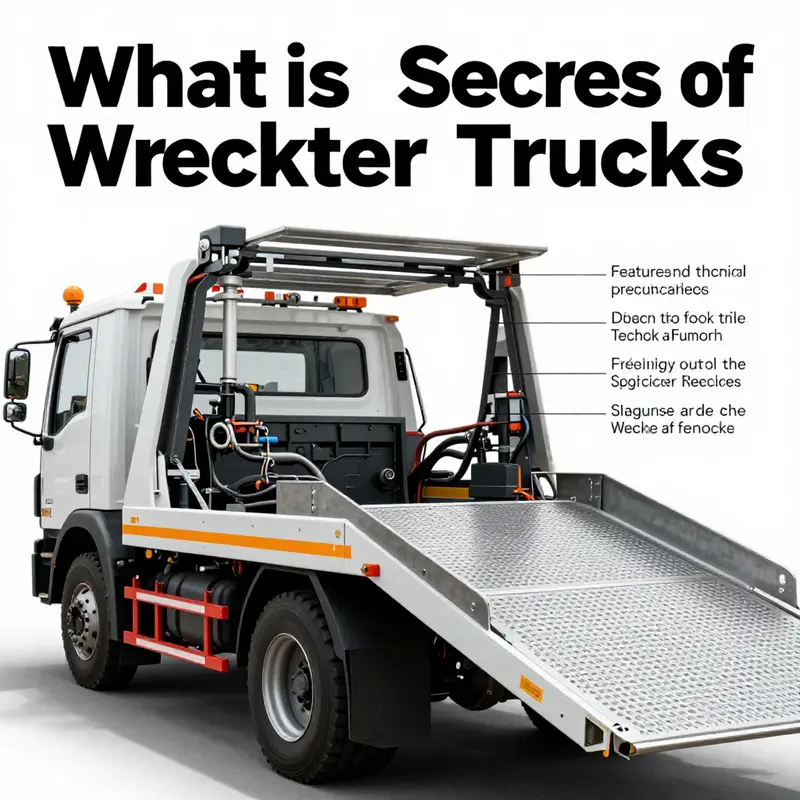
A wrecker tow truck is more than a vehicle that hitches and pulls. It is a mobile recovery unit, a carefully engineered system designed to restore order on crowded streets and busy highways when a car is disabled, wrecked, or blocking traffic. In urban centers and rural stretches alike, these trucks operate as the lifelines of road safety, blending mechanical competence with situational judgment. When a breakdown or crash happens, the wrecker is summoned not merely to move a car but to manage the scene, protect other road users, minimize further damage, and return streets to normal as quickly and safely as possible. The work demands a balance of strength, precision, and control that few other machines can claim. Every recovery scenario—whether a compact sedan on a slick road, a luxury SUV with delicate undercarriage, or a severely damaged vehicle on uneven ground—tests the design choices behind the wrecker, shaping how the operator approaches the incident, what equipment is deployed, and how distances, angles, and loads are managed in real time.
The machinery behind a wrecker tow truck centers on three core capabilities: lifting and winching, positioning and stabilizing, and transporting with minimal risk to the vehicle and to bystanders. The lifting and winching apparatus can be integrated into the chassis, a flatbed, or a rotating crane, each configuration offering distinct advantages for different recoveries. In a compact urban setting, an integrated design that blends the winch, boom, and wheel-lift into a single, stable structure helps the operator maneuver within tight spaces. The winch provides controlled force to bring a vehicle onto a platform or onto a flatbed, while the wheel-lift system can cradle the wheels and transfer a vehicle’s weight to the tow vehicle. The operator’s choices are guided by the vehicle’s position, weight distribution, and the surface underfoot. A smooth, well-calibrated hydraulic system translates control lever movements into predictable, precise motion, reducing the risk of jolts that might cascade into damage to recovered vehicles or nearby objects. For readers seeking a broad sense of the technological landscape around tow truck systems, the general discussion of tow truck technology and safety offers a complementary lens into how these controls are designed and tested, and it is linked here for convenience: tow-truck-technology-and-safety.
When the recovery is straightforward, a wheel-lift or integrated setup can be deployed quickly. The wheel-lift uses steel yokes that engage the wheels rather than the undercarriage, reducing toeing damage to certain wheel configurations and allowing quicker, more compact operations in congested streets. The integrated approach places more components within the chassis or the immediate structure of the vehicle, which often yields a lower center of gravity and tighter turning dynamics. Both methods emphasize stability, because a wrecker plunges into role-recovery work that requires patience and balance as much as raw pull strength. Stability is achieved not merely by mass but by the thoughtful distribution of weight and the use of stabilizing mechanisms such as outriggers that extend to contact the ground and prevent a sudden shift in load during winching or lifting. In practice, the operator communicates with the vehicle’s position, watching how heavy the load is and how the ground responds to torque and pressure. The goal is to move a damaged vehicle off the road with the least vibration, the most control, and the lowest risk to the surroundings.
Alongside lifting and stabilizing, the choice between a flatbed and a conventional tow approach marks a crucial strategic decision. A flatbed, or roll-back, provides a hydraulically tilted deck that slides under a vehicle and then lays flat to support the entire chassis during transport. This method minimizes risk to sensitive components and is often the preferred choice for high-end cars, lower clearance vehicles, or those with all-wheel drive that might sustain damage if towed by the wheels alone. The flatbed’s ramp-like action and secure tie-downs ensure that the vehicle rides as a unit during transport, eliminating further movement and reducing scrub on the tires and suspension. Yet the flatbed’s footprint and deployment time can be longer, and the initial cost is higher, so fleets evaluate not only the vehicle types they encounter but the space they operate in and the typical turnaround times demanded by customers. The other end of the spectrum is the traditional tow approach, which uses a hook or a push-pull mechanism to lift the vehicle’s front or rear, allowing rapid removal from the scene and efficient short-haul transport. This method can be ideal for quicker turnarounds, smaller garages, or scenarios where a flatbed would be impractical due to space limitations or vehicle types.
In the realm of capacity and reach, a wrecker may also feature a rotating crane, or rotator, designed for heavy-range recoveries and the most awkward scenarios. A 360-degree rotating boom mounted on a turntable delivers unmatched flexibility, enabling the operator to lift and position a vehicle from almost any angle. The crane becomes especially valuable on highways or in off-road environments where the incident may involve a vehicle resting on unstable terrain, overturned, or partially submerged. The rotational capability reduces the need to reposition the towing vehicle extensively, which can be risky when traffic is moving or the site has limited space. The crane’s reach and lift capacity must be matched to the typical loads encountered in the fleet’s service area, and operators must be skilled in applying the right angle, brake control, and line tension to avoid toppling a vehicle during hoisting. In the broader industry context, rotator configurations exemplify the trend toward multipurpose recovery units capable of addressing the most challenging scenes, a trend that continues to push manufacturers toward stronger hydraulic systems and more robust frames while simultaneously prioritizing operator training and on-board safety protocols.
A self-loader or quick-loader variant represents another facet of modern wrecker design. These units allow the operator to load a vehicle directly from the cab, often using a hydraulic mechanism to roll the vehicle onto the deck without the driver leaving the vehicle. The speed of this method suits urban environments and routine repossessions where time is of the essence. The self-loader approach, however, tends to be better suited for lighter loads and situations where the risk of damage to the recovered vehicle must be minimized through controlled, driver-guided loading. The trade-offs here revolve around the types of vehicles most commonly encountered by a given service, the operating environment, and the fleet’s long-term maintenance plan. It is this blend of choices that underpins the diversity of the market, where fleets tailor the equipment to their local needs and the typical incidents they respond to.
A key element that threads through all these configurations is the chassis and the drivetrain that power the recovery process. The wrecker must combine adequate engine torque, appropriate transmission gearing, and reliable hydraulics to deliver steady performance without sacrificing maneuverability or fuel efficiency. In markets across Europe and beyond, the emission standards that govern heavy equipment shape the engineering decisions behind these trucks. The evolution from earlier Euro 3 to more stringent Euro 5 mandates, for example, has driven the adoption of cleaner propulsion technology and tighter integration of exhaust aftertreatment with the hydraulic and electrical systems that operate the recovery gear. These considerations matter not only to regulatory compliance but to the long-term air quality in urban settings where the feedback loop between vehicle emissions and road safety is increasingly recognized as part of the overall mission of roadside assistance services.
Right-hand drive variants illuminate the geographic diversity of the field. In regions where driving is on the left, the operator’s cab layout, mirror placement, and control ergonomics are adapted to maximize visibility and reaction time. The essential design principle remains the same: create a tool that is intuitive, responsive, and safe to operate under the stress of an incident. The operator’s ability to control the winching, lifting, and loading sequences with confidence is the hinge on which successful recoveries turn. The quiet but persistent thread through this architecture is the emphasis on safety: not merely the safety of the operator, but the safety of the vehicle being recovered and that of other road users who share the scene. To sustain high safety standards, fleets invest in training, in routine inspections of hydraulic lines and winch drums, and in a careful balance between speed and control that reduces the likelihood of secondary incidents.
Operational realities shape how these machines function day to day. The most effective wrecker fleet understands the variability of road conditions, the different vehicle architectures, and the times of day when incidents are most likely to occur. They plan with an eye on efficiency and cost, yet never sacrifice the essential guardrails: correct tie-down procedures, redundant braking on the towed vehicle, and a disciplined approach to scene management. The operator must read a scene as a dynamic puzzle, where traffic flow, weather, and the vehicle’s condition change how the recovery is executed. In this sense, the wrecker is a blend of craft and machine, a field tool that requires both hands-on skill and the knowledge embedded in its mechanical design. As technology advances, telematics and diagnostic interfaces increasingly help crews monitor winch load, hydraulic temperatures, and battery health in real time, enabling safer and more reliable operations across varied environments. The integration of such systems continues to evolve, promising even smoother coordination with police, fire, and medical teams during complex incidents.
The work of a wrecker tow truck, then, is a study in purposeful engineering aimed at preserving life and order on the road. It is not simply a matter of connecting a chain, pulling a vehicle, and driving away. It is a choreography: assessing a scene, selecting the appropriate recovery approach, deploying the right combination of gear, and executing a precise, controlled maneuver that respects the vehicle and the surrounding community. When the street returns to traffic, the wrecker records its role in a larger story about mobility, safety, and resilience. Looking ahead, the field is likely to see even greater emphasis on modular systems, smarter control interfaces, and more robust safety features that anticipate the evolving patterns of urban transit and the growing variety of vehicles on the road. For readers who want a broader sense of the market’s breadth and the types of equipment in play across different operators, an external resource provides a broader industry snapshot that complements this chapter. External reference: https://www.alibaba.com/product-detail/7800kg-GVW-4×2-EQ1090GLJ-Wrecker-Truck_1600723471575.html
Wrecker Tow Trucks: The Quiet First Responders Keeping Roads Clear and Safe
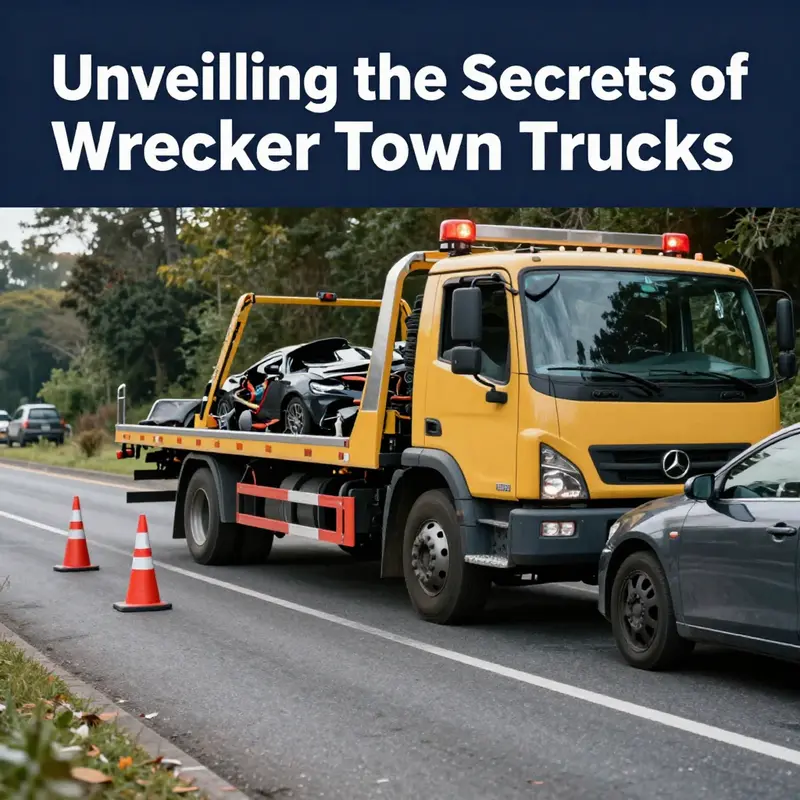
A wrecker tow truck is more than a vehicle with a hook and a winch. It is a purpose-built recovery unit designed to rescue, lift, pull, and transport vehicles that are disabled, damaged, or obstructing traffic. In the moments after a breakdown or an accident, the wrecker becomes a mobile anchor of safety, stability, and order. Its job begins at the edge of a hazard, where careful positioning and precise control prevent a cascade of secondary incidents. The aim is straightforward but hard won: restore forward movement to a congested road and reduce the risk that stranded drivers face in traffic, bad weather, or poor lighting. This mission has grown over decades into a system that supports not just motorists in distress but the broader choreography of road safety, incident management, and recovery services. A wrecker tow truck is not simply a helper; it is a mobile, mechanical solution that translates trained operator judgment into safe and reliable vehicle recovery under often challenging conditions.
Tow trucks come in a spectrum of forms, and each design responds to different recovery scenarios. The flatbed, sometimes called a slide bed or rollback, offers the gentlest touch on the vehicle it carries. By transferring the entirety of the vehicle onto a stationary bed, it avoids contact with the road and eliminates tire scrubbing or frame bending that could worsen a vehicle’s condition. Flatbeds shine in urban settings where curb space is tight and the risk of further damage must be minimized. They are the preferred option when the objective is to deliver a car to a shop or impound lot with the utmost regard for its condition, whether the vehicle is a classic sedan or a compact electric car, both of which demand careful handling to protect sensitive components.
The hydraulic lift truck represents a different philosophy. These machines excel when the goal is to tow a vehicle that is still operable or nearly so, but needs a secure, fast hook-up that won’t expose the operator to extra manual effort. A hydraulic lifting system can tilt or raise a vehicle into position with the push of a button, enabling quick removal from a shoulder or a sloped roadway. This approach reduces on-scene time and can be instrumental when traffic is heavy or when responders are coordinating a scene across multiple lanes. Yet hydraulic lifts come with their own considerations: the load path must be controlled, the vehicle’s weight must be within the machine’s capacity, and the operator must maintain balance to keep the tow from shifting unexpectedly as the vehicle travels.
Articulating boom models take a different route altogether. They are built to reach vehicles that lie in difficult spots—ditches, embankments, or areas where the recovery point is not readily accessible from a traditional approach. The boom can extend, angle, and lock into place, giving technicians a way to stabilize and recover with precision where simpler systems would struggle. This versatility makes the articulating boom a critical tool for complex recoveries, including incidents where a vehicle has crossed a barrier or slid into a confined space. Each configuration—flatbed, hydraulic lift, or boom—embodies a strategic choice: prioritize safety, speed, or access depending on the scene, the vehicle’s condition, and the surrounding environment.
Alongside these primary formats, the operational toolkit of a wrecker includes stabilization struts, outriggers, winches, chains, hooks, binders, and a careful balance of leverage and restraint. Stabilization is not a luxury but a necessity; without it, the moving mass of a car can shift, slide, or topple, turning a recoverable situation into an prolonged hazard. Modern wreckers deploy multi-speed winches and heavy-duty stabilization systems to manage the inertia of a damaged vehicle, while anti-sway features help keep the load aligned with the truck’s centerline. The winch isn’t just a pulling device; it is a lifeline that keeps control firm and predictable, even when road surfaces are slick or uneven. The choice of equipment is guided by weight ratings, the vehicle’s dimensions, and the particular risks presented by the scene.
The spectrum of wrecker sizes mirrors the diversity of roads and vehicles they encounter. In urban settings, smaller wreckers offer excellent maneuverability and stability, handling light- to medium-duty tasks such as towing passenger cars after minor fender-benders or removing small vans that are blocking a lane. In contrast, highway incidents or industrial sites may demand larger, heavier units—sometimes described in industry discussions as high-capacity or heavy-duty wreckers. These behemoths can manage heavier payloads, stabilize rapidly on uneven ground, and deploy advanced tools that can handle larger trucks, buses, or equipment that has sustained significant damage. The technological and mechanical push behind these machines is directed by one goal: maximize the recovery’s predictability and safety while minimizing the time a lane remains blocked.
Safety at the scene is the core of every recovery. The operator must read the traffic, assess lighting, weather, and surface conditions, and then translate those observations into a plan. The safest plans begin with traffic control: flashing anticipatory lighting, cone lines, and the careful positioning of the wrecker at a distance that shields both responders and drivers. Once the scene is under control, stabilization outriggers are extended to anchor the vehicle and prevent any roll, drift, or tip. Then the chosen recovery method is engaged, whether that means coaxing a vehicle onto a flatbed, lifting it with hydraulic gear, or guiding it from a precarious position with a boom. Throughout, the operator keeps proximity to the vehicle to a minimum, uses protective gear, and communicates clearly with any passengers or drivers who may be present. This choreography—assessment, stabilization, secure loading, transport, and hand-off—happens quickly but with a discipline that has grown through training and experience.
The role of these trucks extends beyond the moment of towing. By removing disabled vehicles promptly, wreckers reduce the risk of additional collisions and clear lanes for emergency responders who might be en route to a scene. Their work intersects with traffic management strategies, road maintenance calendars, and the broader safety culture of a region. In disaster scenarios, wreckers become essential assets for rapid scene clearing, allowing hospitals, supply chains, and essential services to resume functioning with greater speed and efficiency. At the same time, the presence of a wrecker gives drivers a concrete path to safety: a dedicated vehicle that will take responsibility for a problem, load it, and remove it from the flow of traffic. This reduction in uncertainty is itself a form of risk mitigation, one that reduces the cognitive load on drivers who may already be stressed by a breakdown or a collision.
The language around these machines sometimes spills into everyday speech. In some places, the term wrecker is used interchangeably with tow truck, a shorthand that can blur the distinction between a recovery specialist and a casual helper. Yet within professional circles, the distinction matters because it signals the scope of responsibility and the level of equipment involved. The wrecker is defined not by a moment of service but by a design that anticipates complex recoveries, emphasizes safety, and coordinates with other responders and agencies. This nuance reflects the maturity of the field and the ongoing evolution of standards in equipment, training, and on-scene procedures.
To understand the full texture of this world, one must consider the human factor. The operator who stands behind the controls embodies a blend of technical know-how, situational awareness, and steady composure. Training covers mechanical proficiency, load dynamics, and the physics of lifting and winching, but it also emphasizes communication, scene management, and the ethics of assisting distressed drivers. A skilled operator can read a curve of a highway shoulder as effectively as a pilot reads a flight path, adjusting the approach as conditions shift—from a slick morning drizzle to a crowded urban evening. The job demands continuous learning: new stabilization technologies, improved winching systems, and updated safety protocols that reflect changes in vehicle design and road environments. In this sense, the wrecker tow truck is as much a platform for human judgment as it is a set of mechanical tools.
For readers who want to explore the broader technology and safety framework that governs modern wreckers, resources on Tow Truck Technology and Safety offer deeper insights into how these machines are designed to perform while keeping operators and the public safe. Tow Truck Technology and Safety provides a useful orientation to the principles behind these recovery platforms and their evolving capabilities. In practice, every on-scene decision merges mechanical possibility with human prudence, resulting in a recovery that honors both the vehicle and the roadway upon which it rests.
As a closing thought, the wrecker tow truck emerges not merely as a piece of equipment but as a critical hinge in the daily functioning of modern mobility. It is the quiet partner that allows a car to become a patient in a garage, a road to become clear for the next trip, and a highway to return to its rhythm with as little disruption as possible. The next time a roadside emergency is resolved and traffic resumes its flow, a wrecker may be the unseen hand that kept the system intact, turning crisis into safety and silence into movement. For those seeking more granular, field-facing details about the mechanics and configurations that enable these capabilities, external technical literature offers comprehensive guidance on right-hand wrecker tow trucks, their structure, composition, and applications: https://www.towtrucks.com/technical-guide-right-hand-wrecker-tow-trucks
Final thoughts
Understanding the wrecker tow truck not only illuminates its critical functions and types but also emphasizes its indispensable role in roadside assistance and vehicle safety. As vehicles become more complex and the need for timely interventions increases, these trucks are more than just towing vehicles—they are lifelines on the road. Their ability to safely transport disabled or damaged cars helps keep roads clear and enhances overall safety for drivers and pedestrians alike. With a solid grasp of wrecker tow trucks featured in this article, you can better appreciate the vital services provided by these specialized vehicles and their significance in everyday driving and traffic management.