
When the unexpected happens on the road, knowing the costs associated with tow truck services becomes critical for every driver. Whether you’re a seasoned commuter, a truck owner, or someone navigating the world of roadside assistance for the first time, understanding how much tow trucks charge can save you time and money. This guide delves into the essential aspects of tow truck pricing, from base charges that set the initial cost to per-mile rates that add up with distance. We will also explore additional fees that can be tacked on based on specific circumstances and provide a comparative analysis of rates across different regions to give you a clear perspective. By the end of this guide, you’ll be better equipped to make informed decisions about the services you might need in times of trouble.
How Base Fees and Per-Mile Rates Create Your Final Tow Truck Bill
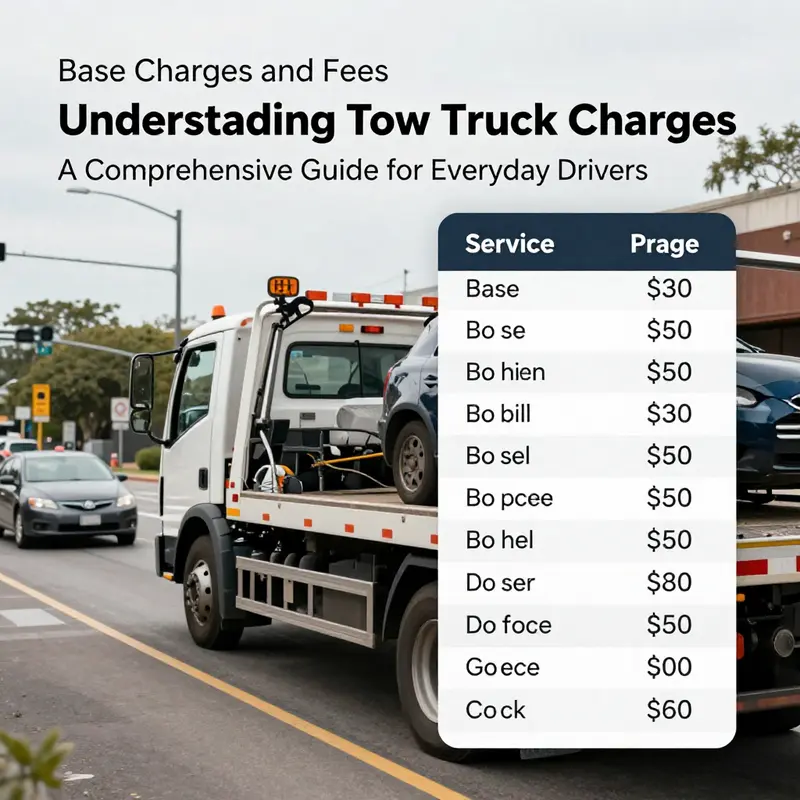
Understanding how a tow company arrives at a price starts with two figures: the base service fee and the per-mile rate. These are the anchors of nearly every tow estimate you will receive. The base fee, sometimes called a dispatch or hook-up fee, covers the immediate cost of sending a truck to your location. The per-mile rate covers the distance your vehicle travels while attached to the truck. Together they form the predictable backbone of a charge, but the final total rarely stops there. A handful of common add-ons, situational variables, and vehicle characteristics almost always influence the invoice you get at the end of a tow.
A typical base fee ranges from roughly $50 to $150. That spread reflects regional costs, company policies, time of day, and the complexity of the call. For example, a daytime, urban tow might sit near the low end. A late-night call, a remote roadside recovery, or a request for specialized equipment can push that number higher. The base fee is not a flat profit. It compensates for driver time, fuel, the cost of operating and maintaining equipment, and the administrative work needed to log and dispatch the job.
Once the truck is on scene and the vehicle is secured, the per-mile charge begins. Per-mile fees vary by market and truck type. You may see rates from about $1.75 per mile in some areas to $6 or more in others. Heavy-duty towing, such as for buses or tractor-trailers, can command double or triple the per-mile rate of a standard passenger car. The per-mile portion usually applies from the pickup point to the delivery point, which might be a repair shop, impound lot, or your home. Some companies calculate distance based on odometer miles, while others use mapping software or tow company GPS, which can cause minor differences in the final number.
Additional fees are where surprises commonly occur. These extras are legitimate in many circumstances, but they are also where customers can save money by asking the right questions. Common surcharges include after-hours or emergency fees, fuel surcharges, winch or recovery charges, storage fees for vehicles left at the yard, and extra labor charges when a tow requires more than one technician. After-hours premiums are typical because the towing company covers higher labor costs for nights, weekends, and holidays. Winch or recovery fees apply when a vehicle is off the road and needs pulling out of mud, a ditch, or similar obstruction. These operations take time and might require extra personnel or specialized equipment.
Vehicle type also matters. An SUV, hybrid, low-clearance sports car, or light truck can increase both the base fee and the per-mile charge. Low-clearance vehicles often require a flatbed. Flatbed tows are safer for many vehicles but cost more because they take longer to load and require a different truck class. Heavy-duty towing involves visibly larger rigs and different pricing tiers. If your vehicle is unusually heavy or wide, expect the company to quote a higher rate before committing to the tow.
Long-distance tows are another special case. A short local tow of a few miles might cost less than $100. A long-distance tow across town, to another city, or across state lines can become expensive quickly because the per-mile tally accumulates. Some operators set discounted per-mile rates for very long hauls, while others charge premiums for the same. Always ask whether the rate changes for long-distance jobs and whether the base fee covers only the dispatch or also part of the drive time.
Understanding the invoice layout helps you avoid surprises. A clear bill lists a base fee, per-mile charge with distance shown, and any additional fees, each spelled out. If an item looks ambiguous, request clarification. Ask whether the per-mile rate started at pickup or after hookup. Ask if waiting time is billed hourly and whether storage begins at drop-off or at the yard’s close of business. A transparent company will explain how they calculate each line.
Insurance and membership plans can change how much you pay at the scene. Many auto insurance policies include towing coverage that pays for a set dollar amount or a certain number of miles. Roadside assistance memberships often negotiate lower rates with providers or reimburse you based on a prearranged schedule. If you call a tow and then have your insurer or membership arrange payment, the company might still require a card on file or a signature. Always tell the dispatcher about your coverage before the tow begins. That prevents confusion and can direct the driver to bill the insurer or membership network rather than you directly.
There are practical steps to lower a tow bill. First, compare prices when possible. If you are in a safe, public area and not in an emergency, call a couple of local providers for estimates. Second, request a detailed verbal quote before the truck arrives. Ask explicitly about base fees, per-mile rates, and common surcharges. Third, consider where you want the vehicle delivered. A nearby repair shop may cost less in miles than a dealership farther away. Fourth, join or maintain a roadside assistance membership if you frequently travel. These programs often reduce out-of-pocket costs for towing and can provide faster service.
When a tow is unavoidable at odd hours, prepare to accept higher costs but still ask questions. Confirm whether the company charges an after-hours fee. Ask for a realistic time estimate for arrival to avoid unnecessary waiting charges. If the vehicle can be moved onto a flat area safely, mention that to the dispatcher; this can reduce the need for a winch or recovery team.
Fraudulent or predatory practices exist. Tow operators working with an impound lot might pressure you to accept an immediate tow to a specific yard with high storage fees. If you feel pressured, ask for the driver’s company name, a written estimate, and whether you can call your insurer or a second tow company. In many regions, laws regulate towing practices near accident scenes and parking lots. Knowing local limits on fees and storage can protect you. If you suspect illegal behavior, record details and contact local authorities later.
A few real-world examples make the math clear. If a company charges a $75 base fee and $2.50 per mile, a 20-mile tow will cost $125. Add a $50 winch charge and a $35 after-hours fee, and the total climbs to $210. For long-distance tows, a $100 base fee plus $3 per mile for 100 miles becomes $400. Heavy-duty moves can be even higher; some calls for commercial vehicles include a higher base fee and per-mile rate, plus escort vehicles for oversized loads.
The type of truck used affects cost and safety. A wheel-lift tow is often quicker and cheaper for routine, short moves. Flatbeds increase safety and prevent transmission or frame damage for many vehicles, but they cost more because they require additional labor and equipment. Heavy-duty wreckers are necessary for commercial rigs and large SUVs. Ask which truck type the company plans to use and why. If your vehicle needs a flatbed, the dispatcher should say so and explain any added cost.
Communication is key. Describe the vehicle condition and location precisely when you call. Tell the dispatcher if the car is in gear, on an incline, or in an awkward position. Mention any aftermarket modifications, spare tires, or trailer hitches. Clear information helps the company send the right truck and crew, avoiding surprise charges and delays.
A tow is rarely just a single price. The base fee and per-mile rate provide structure, but timing, vehicle type, required equipment, and additional services shape the final bill. Asking targeted questions, seeking a detailed quote, and knowing common surcharges will keep your costs lower and your expectations realistic. For a practical breakdown of how these elements might combine in real-world scenarios, see this guide on understanding car towing costs: https://www.aaacarassistance.com/blog/understanding-car-towing-costs/.
For a local perspective on pricing and typical charges, review resources that explain regional tow pricing and average per-mile rates. One helpful internal resource is this overview of tow truck costs and pricing, which outlines common fee structures and what those fees cover: Tow truck costs and pricing.
Towage by the Mile: Unraveling the Real Costs Behind Tow Truck Charges
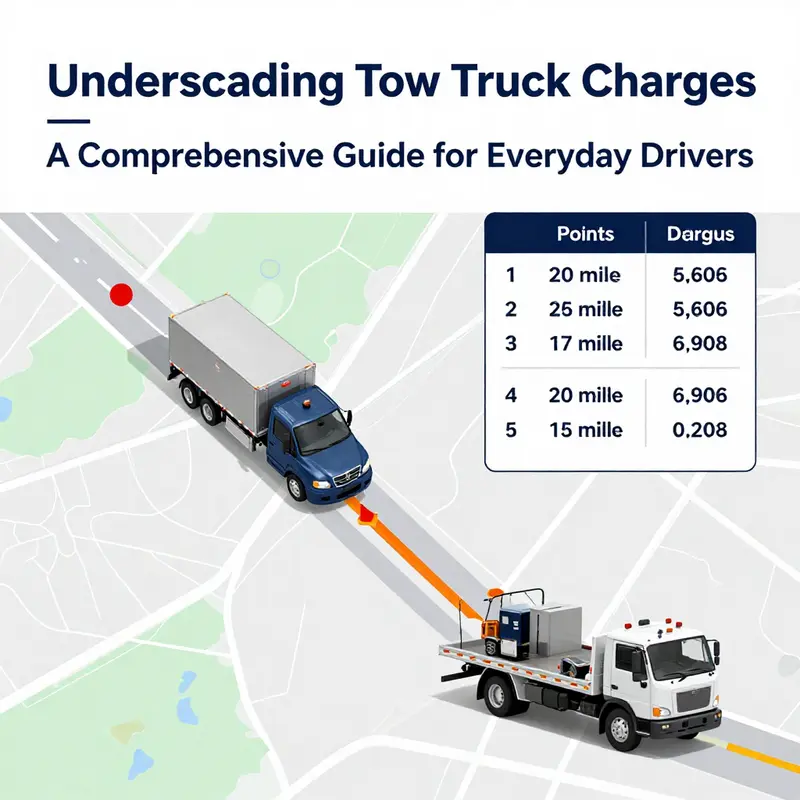
On the roadside, price is often the last thing you want to worry about when the engine sputters and you realize you need help now. Yet the moment a tow truck is dispatched, price becomes a practical, unavoidable part of the equation. The core framework for most tow services rests on two familiar elements: a base service fee and a per-mile charge. These two components structure the bill in a way that captures both the cost of rapid arrival and the distance the vehicle must travel to reach safety or a repair facility. The numbers behind them can shift from one town to the next, from daytime to middle of the night, and from a compact sedan to a heavier vehicle, but the underlying logic remains consistent enough to give consumers a reliable mental model. In practice, the base fee acts as the entry ticket to service. It compensates the operator for travel to your location, initial assessment, and the administrative tasks needed to initiate a tow. For many providers, that base fee sits somewhere in the broad spectrum of fifty to one hundred fifty dollars. The variation captures local market conditions, the typical response time in a given area, and the type of equipment that a particular job demands. In high-demand urban centers, the base fee can push toward the higher end of the range, reflecting the greater volume of tow requests, traffic challenges, and the need for more frequent dispatches. In smaller towns or markets with more competition, the base fee may trend lower. The important takeaway is that this fee is not a mere tip for a driver; it is a cost cushion that covers the initial mobilization, the crew, and the overhead tied to arriving on scene promptly. Once the operator has arrived and the vehicle is hooked or positioned for transport, the distance to be covered becomes the next price driver. The per-mile rate is the common method for compensating the crew for the actual towing distance. A typical figure you will encounter is around 1.75 dollars per mile for the towing portion. Applying this rate to a hypothetical scenario—say you are charged a 50 dollar base fee and the tow distance is 20 miles—yields a total near 85 dollars before any extras. That simple arithmetic can be surprisingly helpful in demystifying the quote you receive, especially when you are in a distressed state and need to compare options quickly. Yet in the real world, the mile count is not the only factor; how the miles are counted and over what radius the base fee applies can make a meaningful difference. Some providers fold the first several miles into the base fee, so the per-mile charge only begins after you’ve traveled beyond a defined radius, commonly five or ten miles. In other instances, the base fee is specifically designed to cover a set distance, and every mile beyond that is billed at the stated rate. The practical implication for you as a consumer is a clear reminder to ask for a detailed, line-by-line estimate before you authorize service. A quote that simply lists base fee plus mileage can mask additional charges that accompany the job. In many markets, the price is not a single figure but a composite that reflects several moving parts. Vehicle type matters. Heavier vehicles such as SUVs, trucks, or vehicles with specialized equipment in the undercarriage can push the price higher because they require more effort, more fuel, and sometimes more crew time. The type of tow truck used also matters. The two most common tow configurations are flatbed and wheel-lift. Flatbed tow trucks carry the vehicle fully on a platform, which is ideal for luxury, low-slung, or seriously damaged cars because it minimizes the risk of further damage during transport. Because of the extra equipment, labor, and potential handling considerations involved, flatbeds can command higher rates in some markets. Wheel-lift tow trucks, which secure the vehicle by lifting either the front or rear wheels, are typically less expensive to operate and are adequate for the majority of standard cars. For many drivers, the choice between a flatbed and a wheel-lift is driven not only by price but by the need to protect the vehicle and the specific circumstances on scene. If you are dealing with a classic car with a delicate body line, or a vehicle with aftermarket modifications that make loading tricky, a flatbed might be worth the premium for the peace of mind it offers. On the other hand, for everyday transportation of a routine sedan, a wheel-lift tow often provides a cost-efficient path with dependable results. The type of vehicle also intersects with the need for extra equipment. Some tow jobs require dollies, winching, or straps, and those tools can add to the final bill. Special equipment is not rare in roadside recovery, especially when the vehicle is stuck, in a ditch, or on uneven terrain. A line item for equipment can show up alongside the base and mileage charges, and it is reasonable for a customer to ask what specific items are needed and why they are necessary for a given tow. Beyond the vehicle and equipment, there are other charges that creep into the final tally. After-hours or emergency service is a well-known pricing lever. The demand for service during the night, on weekends, or during holidays creates a premium in most markets. This reflects the realities of staffing, the need for rapid deployment, and the preference of many operators to incentivize response during non-peak times. The amount added can be a fixed fee or a percentage of the total, but either form effectively raises the final bill when you need care most. Another factor to track is the vehicle weight class. Heavier occupants of the vehicle category—such as large SUVs, pickup trucks, or work vans—often incur higher charges. This is not merely about sheer weight; it encompasses the broader labor and fuel consumption required to move a heavier load. Placing your tow scenario into long-distance terms can illuminate the cost structure further. When a vehicle needs to be moved across state lines or into a distant region, per-mile costs gain significance. In long hauls, the additional miles beyond the initial base coverage can quickly accumulate, sometimes ranging from roughly two to five dollars per mile for the miles beyond what the base fee anticipates. In rural or remote areas where access to roads, staging points, or repair shops is more limited, these rates may be higher due to longer travel times and greater fuel use. For businesses that manage fleets or need regular towing support, pricing structures can become more nuanced. Some operators develop flexible arrangements with adjustable equipment, allowing for multi-purpose use and predictable scheduling for large partners. This flexibility is a valuable asset but can carry a trade-off in terms of per-mile efficiency when the same vehicle is performing multiple tasks in a single run. As a consumer, your best strategy is pragmatic and proactive. Start with a budget anchored by the two core concepts: base fee and per-mile charges. Then factor in probable extras, and insist on a written, itemized estimate so you can see what is included and what is not. A well-constructed quote should clarify whether the base fee includes any mileage within a certain radius. It should also specify whether there are after-hours surcharges, whether heavy vehicles incur a different rate, and whether any equipment or fuel surcharges apply and how they are calculated. Having this level of detail on paper makes it far easier to compare several local options without getting blindsided by a last-minute adjustment when the tow arrives. The real-world takeaway is straightforward: base fees anchor the price, per-mile charges add the traveling distance, and extras can push the total upward in ways that are not always obvious at first glance. If you want a quick baseline reference, see how-much-is-a-tow-truck. Understanding the role of each component helps you evaluate quotes with clarity and confidence, especially in the high-pressure moment when you need help most. Moving beyond the basics, it is useful to consider how pricing shapes decisions in practice. When a driver arrives, you may discover that the distance appears deceptively small on the map but involves tricky access—tight streets, steep driveways, or a vehicle that sits awkwardly in a cul-de-sac. In those cases, the operator’s ability to maneuver safely can influence the final cost, not just the logistical difficulty. The operator may need to deploy additional personnel or specialized techniques, which can translate into extra charges or higher hourly rates. Conversely, if you are in a location with easy access and clear roads, you might experience a smoother drop-off and a more predictable bill. The ultimate effect of all these factors is that tow pricing becomes a balance between speed, safety, weight, distance, and the local market. The consumer’s job is to gather information, ask precise questions, and compare like with like. A transparent estimate that itemizes the base, mileage, and any extras is a powerful tool for avoiding sticker shock. It also helps you weigh the value of a more protective transport option, such as a flatbed, against a more economical choice, like a wheel-lift, in the context of the specific vehicle you need moved. For those who want to explore the price landscape further, a broader context exists beyond the immediate quote. A comprehensive external analysis of tow pricing factors, including fuel costs, demand-based pricing, and regional variation, can offer additional insights into why quotes look the way they do and how different markets respond to the same service needs. You can read a detailed external discussion of these dynamics here: https://www.towingservice.com/understanding-towing-costs-factors-affecting-prices. By approaching tow pricing with this blend of practical calculation, inquiry, and situational awareness, you can navigate roadside challenges with greater assurance. The price you pay reflects not only distance but the broader infrastructure of service delivery: response times, equipment reliability, driver training, and the ability to adapt to a vehicle’s specific circumstances. In the end, the goal is not simply to minimize the ticket price, but to secure a safe, reliable tow that protects your vehicle and gets you back on the road as quickly as possible. The math behind tow charges is approachable, and with a few questions and a written estimate, you can bring clarity to the moment when you need help most. The road to understanding tow costs is navigable, and a clear, written estimate sets the course.
Beyond the Hook: How Additional Tow Truck Fees Drive Your Final Bill
Understanding the true cost of a tow requires looking past the base rate. Many drivers assume a single number will cover the whole job. In reality, the base fee often covers little more than the truck rolling up to your location. The rest of the bill can include a series of predictable and surprising charges. Knowing them helps you plan, compare, and, when possible, reduce what you pay.
A towing company typically starts with a service or dispatch fee. That fee pays the driver’s time and the truck’s movement to you. After that, mileage charges usually add up. But the list does not stop there. Late-night calls, specialized equipment, heavy vehicles, and storage all add layers. Each layer reflects real costs for the towing business. Awareness gives you leverage. It also lowers the chance you will face a sticker shock when you see the final invoice.
Common extra charges and how to limit them
After-hours surcharges are some of the most common additions. Many providers add a percentage when service is requested outside normal business hours. That percentage often ranges from 25% to 50% of the base rate. The reason is simple: drivers earn more for emergency shifts, and fewer technicians are available. If you can wait until normal hours, you may avoid this extra cost. If you cannot wait, ask the dispatcher about the exact after-hours percentage before you agree.
Fuel surcharges appear frequently, especially when the tow will travel a long distance. Prices at the pump change fast. Tow companies often add a small flat fee or a variable surcharge tied to fuel prices. Ask whether the quoted mileage rate already accounts for fuel. If it does not, request a line-item estimate for any fuel-related fee.
Mileage fees are usually charged after an initial free distance, often the first five to ten miles. After that, a per-mile rate applies. Rates vary widely. Some operators charge less than two dollars per mile. Others charge three to five dollars, especially for long hauls or rural routes. The key is to confirm the free-mileage allowance and the per-mile rate. Ask if the company bills round-trip miles or one-way only. Round-trip billing can increase costs significantly if the truck must return to base.
Special equipment fees apply when a standard hook-and-chain or wheel-lift is insufficient. Flatbeds, winches, and heavy-duty rigs cost more to operate. A flatbed is often necessary for expensive sports cars, all-wheel-drive vehicles, or badly damaged cars. Winching is required if a car is stuck in a ditch or on soft ground. These tasks take more time and specialized gear. If your vehicle type or situation might require special equipment, ask upfront which method the company will use and what that will add to the price.
Vehicle type and weight influence the final bill. A compact car is usually cheaper to tow than an SUV, pickup, or RV. Heavy-duty tow trucks are required for larger vehicles. They use more fuel and place greater wear on equipment. For large vehicles, expect a steeper base fee and higher per-mile charges. If you drive a larger vehicle, seek a company that lists rates specifically for heavy-duty towing.
Storage and impound fees can outpace the tow itself. When you cannot immediately retrieve your car, it may sit in a tow yard. Storage fees are commonly charged daily and often range from twenty-five to seventy-five dollars per day. If an impound process requires paperwork or a release form, you may face administrative release fees as well. These charges accumulate quickly. If possible, retrieve your vehicle the same day. If you cannot, plan for daily storage costs and ask about any late-release penalties.
Service call or hook-up fees are sometimes separate from the base dispatch charge. A company might charge for the effort to secure the vehicle to the tow truck, even if you decide not to proceed. These fees compensate the technician’s time on site. Before the dispatcher sends a truck, ask whether a service call fee applies only after the tow, or immediately upon arrival.
Administrative and environmental fees sometimes appear as small lines on an invoice. They may include credit card convenience fees, processing charges, or environmental disposal fees for fluids leaked from a damaged car. These lines often look minor. Together, though, they can add ten to twenty percent to the total bill. Ask for a full, itemized estimate to reveal these charges before work begins.
Towing for accidents can include additional costs. Police reports, scene cleanup, or coordination with an insurer may add time and chargeable labor. If the vehicle is moved at the request of law enforcement, different rules and tow rates may apply. In such cases, ask the officer who authorizes the tow about the impound policies and any expected fees.
Abandoned or repossessed vehicles bring unique charges. If a vehicle is unauthorised to be on private property, the towing company may charge higher rates. Authorization and documentation processes often add administrative fees. If a tow is initiated by property management or a private property owner, request a written estimate before the tow occurs.
Insurance and roadside assistance alter the financial picture. If you have roadside coverage through an auto insurer, credit card, or membership club, it may cover some or all towing fees. Understand your coverage limits, service area, and the list of approved providers. Some plans cap tow mileage or limit service to certain emergency types. If you call a non-approved company, you may need to pay up front and file for reimbursement. Always verify coverage and preferred vendors before authorizing a tow.
Transparency matters. Reputable towing companies will provide a written estimate when possible. They should list base fees, estimated mileage, potential surcharges, equipment fees, and storage rates. If a dispatcher gives only a vague number, request specifics. Insist on written confirmation when the estimated cost exceeds a simple trip across town.
Practical tactics reduce costs. If the situation is non-emergency, wait for daytime service. Choose a provider close to your location to lower travel miles. Ask about flat-rate options when transporting a car between two known points. Fixed-price hauls sometimes beat per-mile billing, especially on longer trips. If multiple companies are available, compare their quotes quickly. A five to ten minute comparison can save you a significant sum.
Document the process to protect yourself. Photograph your vehicle before it is loaded. Note the tow truck’s identification and the driver’s name. Keep the dispatch number and any written estimates. These records are useful if you need to contest charges with the company, your insurer, or a consumer protection agency.
Disputes happen. If an invoice seems wrong, ask for a clear explanation. Request reference to the original estimate. If the company cannot explain a charge, ask to speak to a manager. Many disputes resolve with a short conversation and additional documentation. If you cannot resolve the matter directly, collect your written records and escalate the claim to your insurer or local consumer protection office.
Safety should never be traded for savings. A low quote may come from an unlicensed or poorly insured operator. Verify the company’s licensing and insurance status when you can. Confirm whether the operator uses appropriate equipment for your vehicle type. Paying a little more for a reputable, insured tow reduces your risk of damage and subsequent costs.
Finally, know the alternatives. Some situations do not need a tow truck. A lockout, jump-start, or minor mechanical adjustment may be handled by mobile services. These options often cost less than a full tow. A quick call to a roadside assistance program can point you to the right solution.
For a consolidated breakdown of common towing fees and strategies to avoid unexpected charges, consult this industry overview from a trusted authority on towing charges: https://www.aaa.com/automotive/towing-charge-explained/. For local pricing specifics and deeper rate comparisons, review a detailed guide to tow truck costs and pricing from a regional operator: tow truck costs and pricing.
Tow Truck Charges Across Regions: A Practical Comparative Analysis of Regional Pricing Dynamics
When a vehicle breaks down or is stranded, the price of a tow becomes more than a simple numeric question. It is a reflection of where you are, when you call for help, and what your vehicle requires to be moved safely. This chapter follows a practical thread through regional differences in tow truck pricing, but it also threads together the underlying structure that most providers use: a base service fee, a per-mile charge, and a set of variable add-ons that can shift the final bill in ways a driver or a quick quote may not immediately reveal. To understand why region matters, it helps to start with the basics that haunt almost every towing call: the base fee that greets you at the curb, the distance you need to be moved, and the kind of vehicle you own. In many markets, the base service fee is the entry price, designed to cover the time and equipment it takes for a tow truck to reach you. This fee commonly ranges from around fifty dollars to well over a hundred fifty dollars depending on the company and the local cost of doing business. Once the truck is on the road, the per-mile rate picks up the tab for the actual transporting distance. A commonly cited figure is about $1.75 per mile for the towing distance, a figure that aligns with the typical two-part pricing structure seen in many regions. The math is straightforward: a short tow of a few miles may stay close to the base fee, while longer distances will be charged primarily on the mileage, sometimes producing a total that feels surprisingly high to someone who expected a flat, simple quote. The simplicity of two numbers—base fee and per-mile rate—can be alluring, but the story does not end there. Most towing scenarios incorporate a menu of additional charges that can swell the final ticket. After-hours or emergency service is a frequent culprit: calls that occur late at night, on weekends, or during holidays can attract a sizable surcharge. Vehicle type matters, too. A compact sedan is generally less expensive to tow than a larger SUV, a pickup, or a full-size truck; motorhomes and trailers often require more specialized equipment and thus higher fees. Some jobs demand flatbed transport or recovery work, which may incur extra charges for the equipment and crew involved. And then there are the operational realities that can inflate costs beyond the headline numbers: waiting time, access limitations, and location-based fees. The waiting time charge is a common feature in the industry. If a tow truck arrives and must wait at a location—whether a congested curb, a busy highway shoulder, or a port facility—the clock keeps ticking and so does the bill. The typical waiting-time range, when charged by the hour, can run from about eighty-five to one hundred fifty dollars per hour, depending on the market and the level of demand. The exact rate can be a moving target in high-traffic hubs where trucks have to queue for access, a reality many drivers experience when their car ends up blocked by others in busy city centers or freight facilities.
The diversity of charges does not end with time and distance. Some services impose what might seem like outlandish add-ons when the destination is a residential street or a private drive. Residential delivery or dwelling-area access can add a couple of hundred dollars to the bill, especially when the tow involves maneuvering in tight spaces, avoiding obstacles, or dealing with stairs, gates, or uneven terrain. In some regions, there are also vehicle-specific fees—larger or heavier vehicles require heavier equipment and trained personnel, which translates to higher base fees and specialized loading costs. A two-wheel-drive compact car can be a straightforward tow, but a high-profile SUV, a full-size pickup, or a low-clearance sports car may demand a different rig and different safety protocols, both of which influence pricing.
This pricing mosaic is not identical everywhere. Regional factors weave through every component of the bill, and the effects are sometimes stark. A broad way to think about regional variation is to consider the market’s structure, including the density of service providers, the level of competition, and the cost of doing business in that area. In markets with many tow providers, competition can temper base fees and per-mile charges, with price transparency and itemized quotes helping consumers compare offers more easily. In markets with fewer providers or higher barriers to entry, the same structural costs can translate into higher base fees and larger add-ons. In some high-demand coastal markets, the price can also reflect the logistics realities tied to port operations and traffic patterns, where limited access, long wait times, and the need for specialized equipment can push the values upward. A practical example from the broader literature notes that port-area pricing in major West Coast hubs tends to be higher than in inland markets, reflecting congestion, access restrictions, and the sheer volume of shipments that must move through crowded corridors. While port-specific fees are often discussed in the context of cargo movement rather than general consumer towing, the ripple effect is a cautionary tale about how local infrastructure and demand stress can steer towing costs in subtle ways.
For consumers trying to navigate these waters, the key is to anchor expectations in regional reality while protecting themselves with clear, itemized quotes. The common blueprint—a base fee, a per-mile rate, and a set of add-ons—still applies; what shifts is how big those numbers can be in a given region and under certain conditions. In some regions the base fee may cluster toward the lower end of the spectrum because of a crowded market and competitive pricing, while in others, especially those serving high-demand corridors or specialized fleets, the base fee can comfortably sit at the higher end. Similarly, the per-mile charge can be a function of road conditions, average speeds, and the relative commonality of long-distance tows in the area. A longer-haul tow may operate under a slightly different pricing logic when the market expects these runs to extend beyond ordinary local coverage, and some providers may offer a reduced per-mile rate for multi-mile tows as a way to secure the job in a competitive market.
To illustrate the regional dynamics a bit more concretely, consider the case-study style narrative that many customers lean on when evaluating their own charges. In coastal California, for instance, several cost factors align to push overall pricing higher. First, fuel-related surcharges are a familiar feature for many transport services in high-price energy environments. Fuel prices are inherently volatile, and as a result, providers may layer in a surcharge that fluctuates with the market. Second, after-hours and emergency calls are particularly common and economically rational in a dense, highly mobile region where breakdowns can occur on busy freeways and alongside ports with heavy traffic. Third, the logistics of moving cars in multi-family residential districts, or in areas with limited street access, can drive up costs due to longer loading times, additional hazards, and the need for more hands-on maneuvering. Finally, the presence of large vehicles in the fleet or the need for specialty equipment can introduce another layer of expense, even when the incident begins as a routine tow.
The analytics emerging from the broader industry narrative point to a consistent pattern: regions that wrestle with congestion, restricted access, and a dense concentration of high-value infrastructure tend to carry higher towing costs. Conversely, midwestern and some southern markets, which often feature a more competitive provider landscape and shorter average tow distances, tend to present lower base fees and per-mile charges. But even within these broad regional tendencies, the variability in pricing is real and often unpredictable. Weather conditions, local regulations, and the idiosyncrasies of a particular towing contractor can produce price spikes that customers may not anticipate until a formal quote lands on their doorstep.
As with any service that comes to you in a moment of need, the best protection against sticker shock is knowledge and preparation. Start with understanding the likely price architecture: ask for a written quote that discloses the base fee, per-mile rate, and any potential surcharges. Inquire specifically about after-hours rates, wait-time charges, and any location-based fees, including restrictions that might apply if you are in a residential area, or if a property requires special access procedures. If possible, request an itemized estimate that shows the base fee, the distance charged, the line items for each add-on, and the estimated total. This makes it much easier to compare quotes from different providers and to spot if a cost is being added for a factor you did not anticipate, such as a port-area wait or a residential delivery surcharge.
The regional dimension also suggests a practical approach to obtaining fair value: shop around, but do so with an eye toward the type of tow you actually need. If your vehicle can be moved with a standard tow and local streets are accessible, a simple local tow may be the most cost-efficient path. If your car requires a flatbed because of transmission damage or a vehicle that cannot be towed on a traditional sling, the pricing will reflect that equipment and the specialized team behind it. In markets where fleets are larger and more varied, you may find a wider range of pricing, but you can also locate providers who will be more transparent about the factors driving the quote. When you compare, look beyond the headline price and examine the service-level expectations—estimated arrival times, the ability to handle your vehicle’s specific needs, and policies regarding storage, if the vehicle must wait for pickup.
This is where the consumer’s practical decision-making intersects with regional pricing realities. A well-informed customer can negotiate more effectively and may avoid surprises by asking for a clearly itemized invoice that spells out each component of the charge. In this sense, the regional analysis translates into everyday guidance: understand that a high quote on the West Coast may reflect legitimate operational costs, while a lower quote inland does not necessarily indicate poor service; it may simply reflect different market dynamics and the absence of certain add-ons that are common elsewhere. The right approach is to treat pricing as a function of context, distance, and the specific service required, and to anchor decisions in transparent, written quotes rather than verbal assurances.
In considering this landscape, it is also helpful to anchor the discussion in a broader pricing framework that many providers use globally. A two-part fee structure—a base service charge plus a per-mile rate—appears widely across markets, including regions outside the United States. While the exact numbers shift, the logic remains consistent: your initial fee covers the response and readiness, and the mileage fee covers the transportation distance. Understanding this helps you parse the quote more effectively and assess whether any premium applies due to time of day, vehicle type, or special equipment. For readers seeking a concise, practical breakdown of the pricing architecture commonly encountered in tow services, there is a dedicated resource that outlines these components in plain terms. It is worth reviewing for a quick refresher when you face a tow estimate, especially if you are navigating an unfamiliar region.
Internal link for quick reference on pricing structure: Tow Truck Costs and Pricing.
Ultimately, the core message across regions is that price is a bundled signal. In a single call, a provider signals travel effort, equipment readiness, time constraints, and the level of expertise required to move your vehicle safely. The better you understand the factors that feed into that signal, the better equipped you are to judge whether the final number on your bill aligns with the work performed. To truly navigate regional differences in tow pricing, you need to blend practical quotes with a grounded sense of local market forces—distance, demand, equipment needs, and time-sensitive constraints that shape every tow assignment.
External reference: For a broader regional baseline on cost factors tied to tow operations, see the Los Angeles Port official materials that discuss congestion and related fees that influence heavy transportation costs in coastal hubs: https://www.portoflosangeles.org
Final thoughts
Understanding how tow truck charges are structured is essential for drivers of all backgrounds, from everyday commuters to vehicle owners seeking roadside assistance. Knowing about base fees, per-mile charges, and additional costs ensures that you’re never caught off-guard when you need help most. A little knowledge can empower you to make the right choices and reduce unforeseen expenses related to towing services. Always remember to check local rates and consult with reliable tow truck services to get the best deal when you’re in a bind.