
The role of tow truck drivers is often underestimated, but they play a vital part in ensuring our vehicles are secure and accessible. Understanding how much tow truck drivers earn per car encompasses various compensation structures, geographic variations, and employment types. Factors such as hourly rates versus job-based payment, the experience of drivers, and whether one operates independently or with a company significantly influence earnings. This article delves into these essential elements, providing valuable insights for everyday drivers, truck owners, and industry stakeholders alike.
Beyond Per-Car Pay: Unraveling How Tow Truck Drivers Really Earn Their Wages
When people ask how much tow truck drivers make per car, the instinct is to look for a single fixed rate, a neat number assigned to each tow. In practice, the business of towing aligns more with a spectrum of compensation models than with a simple per-car fee. Tow operators typically pay by the hour, by the shift, or by job, and even when a flat tow fee exists, it often comes with caveats like distance, time of day, or the complexity of the scene. This means the “per car” idea is more of a byproduct than a formal structure. The chapter that follows peels back the layers of this system, showing how a driver’s earnings emerge from a mix of location, job type, employer arrangement, and personal choices about work time and autonomy. The result is a picture of pay that is both highly contextual and surprisingly systematic, once you step away from the fantasy of a uniform rate for every tow. If you want a reference point for the broader landscape of earnings, you can check how much tow-truck drivers make, which surveys and postings help illuminate the range of real-world figures across markets. how-much-do-tow-truck-drivers-make.
Across borders, the most consistent thread is that compensation hinges on hourly or per-job structures rather than a fixed number per car. In the United States, the national average hovers around the low twenties per hour. Specifically, Indeed’s aggregated data from thousands of postings over three years places the average at about $21.16 per hour. That figure is a compass, not a ceiling: regions with higher living costs, larger urban centers, or specialized towing work push averages upward, while rural areas or less-expensive markets pull the figure down. The national average is not a revelation of universal pay; it’s a baseline, useful for comparing opportunities, negotiating wages, and setting expectations when you survey job postings in a given locale. A driver’s income is not a single dot on a map but a range shaped by the employer’s pay philosophy, the driver’s experience, and the nature of the work.
Canada shows a similar pattern but with local scale. In British Columbia, the typical hourly wage is around $17.85, with real postings showing a wider ladder up to nearly $40 per hour in certain circumstances. In Alberta, the baseline is a touch lower on average—about $16.01 per hour—yet specialized roles can command notably higher rates, with Class 3 licensed drivers sometimes earning as much as $45 per hour. The contrast within a single country underscores a second reality: the type of tow work matters almost as much as geographic location. A flatbed operator handling heavy or delicate recoveries may face different pay dynamics than a light-duty driver who handles jump starts and roadside assistance. In this sense, the job title is less predictive of earnings than the job’s demands, the time spent on the road, and the specific company’s compensation approach.
Even more variation appears when we cross the ocean to markets like Australia. In Queensland, the average hourly wage for tow operators is about $37.53, with top earners in mid-sized regional hubs surpassing $44 per hour. In urban centers such as North Melbourne in Victoria, pay commonly sits around $37.50 per hour, reflecting the density of demand and the premium placed on rapid response in city settings. These figures illuminate a crucial reality: in higher-demand markets with acute service needs, the base hourly rate tends to rise, even if the job mix remains comparable in other regions. The narrative of pay in these markets reinforces that location and demand are powerful levers in a driver’s earnings, often dwarfing any superficial notion of a universal per-car price tag.
The data also draw attention to the value of the employer model and the driver’s employment status. In many shops, drivers are paid hourly or on a shift basis, with overtime, weekend differentials, and on-call bonuses layering on top. In some cases, independent operators bill customers directly and report income according to hours worked or total jobs completed. This structure can create a wide spread of effective earnings, even within the same city and the same kind of tow truck. It is not unusual to find a scenario where a driver in a regulated urban corridor finishes a month with earnings that reflect steady hourly pay, supplemental overtime, and occasionally a performance-based incentive for meeting a target number of tows. By contrast, a contractor who handles fewer, larger jobs might post a similar hourly rate but with a different actual take-home due to the mix of jobs and the absence of benefits that traditional employment provides.
The practical upshot is that there is no fixed rate per car and no universal formula for converting a car to a wage. A tow can be one of several things: a short-distance roadside assistance call, a complex recovery from an accident scene, or a long-haul relocation of a disabled vehicle. Each mode bears its own time commitment and risk, and each is priced accordingly by the employer or the contractor. Where some operators may publish a flat fee for a tow—commonly in the neighborhood of $100 to $200—this figure often reflects a bundle of constraints: distance, regional pricing norms, and the time spent on the site. It may also be augmented by an hourly component or by additional charges for after-hours service, storage, or extra equipment. The more distance, the more complex the recovery, and the more time the job consumes, the more the pay shifts away from a strict per-car calculation toward a blended rate that rewards both speed and technical expertise.
To understand why this blended approach makes sense, consider the day-to-day realities of a tow driver. A driver who works in a high-demand urban market faces frequent calls, tight time windows, and the need to stay ahead of traffic and logistical challenges. Their earnings accumulate not just through the number of tows but through the variety of work: light-duty roadside assistance, flatbed recoveries, winching in tight spaces, or securing loads for long-distance transport. An experienced driver with a specialist license may earn more per hour because the job requires a higher skill ceiling and can reduce risk for the employer. Conversely, a novice in a smaller market might find more opportunities to accumulate hours but at a lower rate. Both scenarios illustrate that experience and location are not mere footnotes; they are central to the arithmetic of a tow truck driver’s life.
The reader will notice that the numbers cited above are best interpreted as directional indicators rather than precise tallies. They reflect aggregated postings, market surveys, and public salary disclosures that capture wide dispersion. They also point to a third, often overlooked factor: the variability introduced by overtime, shift differentials, and the operational model of the employer. Overtime rules can stretch a standard 40-hour week into something more lucrative, especially when weekend or late-night work is involved. Shift differentials may apply during off-hours when demand spikes but the competition for work is lower, which paradoxically sometimes raises the effective hourly rate for those willing to work less convenient hours. Independent operators face additional variables, including insurance, fuel, maintenance, and vehicle depreciation, all of which must be accounted for when translating gross income into net earnings. In sum, the same nominal hourly rate can translate into very different real-world outcomes depending on how many hours are worked, how many tows are completed, and the mix of job types that fill a driver’s calendar.
If you want to anchor this discussion in practical expectations, it helps to look at the broader wage landscape across markets and employers rather than fixating on a single line item. Job postings often present a picture of a living wage in which base pay is just one piece of the overall compensation puzzle. Real-world earnings are shaped by a few constants: the driver’s skill set, the local demand curve for emergency and recovery services, and the structure the employer chooses to deploy. The broader takeaway is that the perception of pay per car tends to overstate the predictability of income for most drivers. Instead, most drivers earn through a combination of hourly wages, shift premiums, overtime, and, in some arrangements, incentive pay or per-job bonuses for volume or efficiency. This multi-layered approach explains why two drivers in the same city, performing similar tow tasks, can have noticeably different total monthly earnings.
For readers seeking a broader frame of reference, the landscape is accessible through widely used wage data sources, which aggregate salaries across thousands of postings and reflect how the market values different skill levels and job types. These sources confirm that there is a spectrum rather than a single price tag attached to towing work. The practical implication for aspiring drivers, fleet managers, or policy observers is straightforward: when evaluating compensation, look beyond the headline hourly figure and consider the full structure—base pay, overtime, location, licensing requirements, and the specific mix of duties that each job entails. That broader view is essential to understanding the true economics of towing labor and why the per-car question, while intuitive, rarely captures the real earning potential of the trade.
External resource: https://www.indeed.com/career/tow-truck-driver/salaries
Tow Time, Not Per-Car Pay: How Geography Shapes Tow Truck Driver Earnings Across Borders
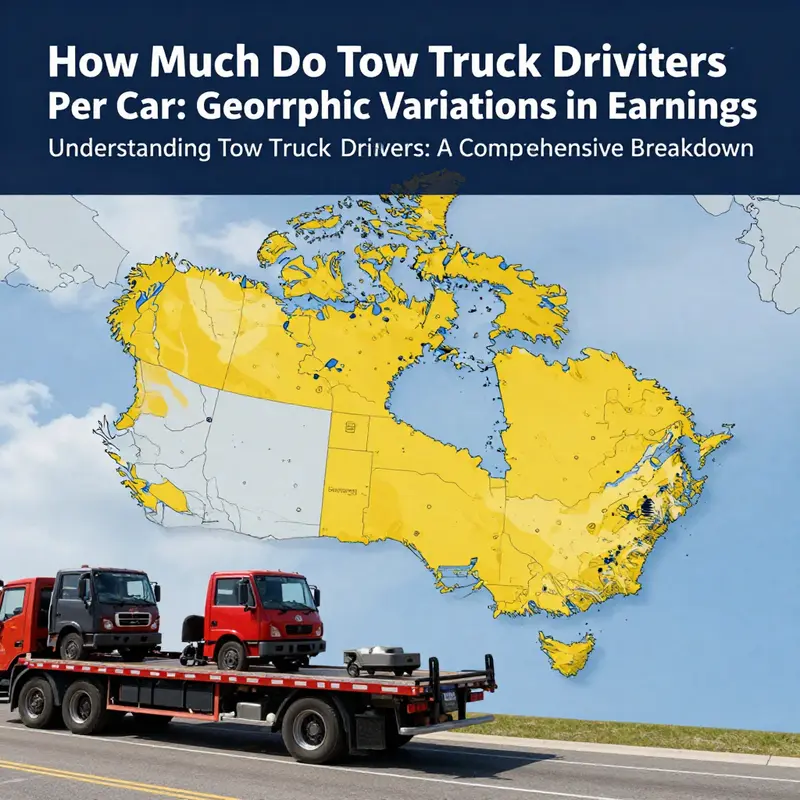
When people ask how much a tow truck driver makes per car, the instinct is to look for a simple price tag attached to each vehicle. Yet the towing industry rarely works on a straight per-car model. The more accurate picture is a braid of pay structures aligned with location, demand, licensing, and the type of employer. In practice, most drivers earn by the hour, by shift, or by the job, while the act of towing a single car becomes the variable that sits inside a larger calculation of time, risk, and market conditions. The result is a landscape where the same roadside tow can generate very different incomes depending on where you operate and who you work for. That geographic variation matters not only for a driver’s paycheck, but also for the value proposition presented to customers who see prices that reflect local labor markets as much as the length of the tow or the distance involved.
To understand the reality, it helps to look at the numbers from different regions. In the United States, the typical tow driver earns around the low twenties per hour on average. A representative figure sits near $21.16 per hour, with some drivers reporting weekly earnings that can climb to about $1,226. Translating that weekly figure into an hourly picture generally lands in a range of roughly $30 to $35 per hour, depending on how many hours a driver logs in a given week and how the company structures overtime or premiums. These numbers reflect a market where urban demand, fleet size, and operating costs push toward higher end pay in metropolitan centers and with employers who value night shifts, weekend duties, or critical-response roles.
In Canada, geography channels pay in similar but distinct ways. British Columbia, which hosts dense urban hubs and challenging driving conditions, shows a broad hourly window. For tow drivers in this province, wages commonly fall between about $22 and $39.50 per hour, with higher rates tied to specific employers, job complexity, or urgent on-call requirements. For instance, a shop in the Vancouver area may offer around $39.50 per hour, while another operator in a neighboring city might hover closer to $37. The near-term takeaway is clear: dense urban markets with high living costs and fierce competition for skilled drivers tend to deliver higher hourly rates, even if the work remains largely unknown in advance. The per-car dimension does not dictate pay; the per-hour reality does, and the job mix can tilt the scales toward greater or lesser earnings on any given shift.
Across the Pacific in Australia, the pay picture mirrors the same structural logic but with regional quirks that reflect licensing regimes and wage scales in different states. In Queensland, the typical hourly wage for tow truck drivers sits around $37.53, with top earners in central hubs like Mackay approaching or surpassing $44 per hour. In another urban market such as North Melbourne, Victoria, drivers commonly earn about $37.51 per hour, underscoring that even in markets with high service demand, the wage floor is shaped by local cost structures, competition, and the value placed on rapid response. These Australian figures reinforce a broader pattern: the hub of activity—city centers with dense fleets and a high volume of emergency calls—tends to support higher hourly rates, while more remote or variable-demand areas can yield a softer pay envelope. The common thread remains: there is no universal per-car price tag; pay tends to reflect the economics of time rather than the tally of cars.
Slicing through these regional averages is the reality of pay structures. The most common framework remains hourly wages, with additional layers that can alter take-home pay. Shift premiums are typical—drivers who work overnight, on weekends, or during holidays may see a premium attached to those hours. Some jobs feature flat fees for certain tasks, such as long-distance towing, but such flat rates often sit on top of an underlying hourly or shift-based compensation. A tow driver might receive a standard hourly wage plus time-and-a-half or double-time for late-night calls, which can push earnings up in high-demand periods or in markets with dense 24/7 service ecosystems. There are even pockets of the industry where a flat fee per tow exists, especially for longer or more technically demanding recoveries, but those fees do not substitute a predictable per-car pay framework. Instead, they anchor a portion of earnings to job type and distance, while the core compensation remains time-based.
The geographic variability also interacts with the type of employer. Large fleets and municipal or municipal-adjacent operations in urban centers can offer more structured pay scales, predictable shift schedules, and comprehensive benefits, all of which contribute to steadier earnings and better retirement planning. Smaller shops or independent operators may lean more on the flexibility of job-based income, with drivers potentially picking up more calls during peak times and negotiating direct customer charges for certain services. Independent operators, in particular, often report income that aligns with hours worked and total jobs completed, rather than a fixed rate per vehicle. They may also face more variability in demand or seasonal fluctuations, but they can also capture premium pricing on high-demand days or in response to weather events and incidents that cluster calls in short time windows.
This mosaic of pay structures holds important implications for drivers and for the customers who rely on tow services. For drivers, the absence of a universal per-car rate means earnings can rise or fall with the growing or shrinking appetite for roadside assistance in their market. It also means the skill set and the licensing requirements in a given region influence compensation. In some locales, specialized licenses—such as those enabling heavier tows or hazardous material responses—unlock higher hourly rates or premium shifts. For customers, the variability translates into pricing that can feel opaque if one expects a simple “how much per tow” rule. In reality, a tow’s price is a function of distance, time, server demand, the complexity of the tow, the vehicle type, and the driver’s shift premium. This complexity is why price quotes for towing often come with a breakdown: base service fee, mileage, possible overnight or remote surcharges, and the hourly labor rate after the initial dispatch window.
Into this mix, the concept of real-time wage data—through industry job postings and salary aggregators—provides a snapshot of where the market stands today. Resources like Indeed and Glassdoor usually offer a window into live postings and reported wages, helping job seekers gauge what they might expect to earn in a given city. For readers who want a practical sense of the current landscape, it can be illuminating to compare a Toronto shift with a Seattle night shift or a Brisbane daytime schedule, recognizing that even within the same country or state, the numbers can swing by tens of dollars per hour based on demand, clientele, and the employer’s pay philosophy. The takeaway is not a fixed sum per car but a dynamic equation where geography, shift timing, and job type drive the final compensation.
For readers who want to anchor these ideas to a concrete figure and a cautionary note about expectations, consider the broader takeaway: pay is heavily tied to location and structure, not to the vehicle count. If you assume a per-car price, you risk misunderstanding the economics that keep tow teams rolling. The most reliable way to estimate earnings is to map out the local market, identify the common pay structures—hourly wages, shift premiums, and occasional flat fees for specific jobs—and then factor in your own availability, licensing level, and tolerance for on-call demands. In markets with high demand and a dense fleet, a driver who can work nights and weekends may find that the premium dollars accumulate quickly, even if the per-car count remains variable. Conversely, in quieter regions, the same job load might translate into fewer hours and tighter earnings, even though the service remains essential and the value proposition remains clear for customers.
If you want to explore how these ideas translate into real-world expectations and to see how a driver’s pay stacks up against your own plans, a deeper dive into pay trends and how pay is negotiated in different markets can be worth the effort. For a broader perspective on pay across the industry and to compare the mechanics of earnings, see the detailed discussion on How Much Do Tow Truck Drivers Make. This resource helps illuminate how the per-hour and per-job pay models operate side by side with the occasional flat-rate tow, and why geography remains the most influential factor in a tow operator’s income. While the numbers here sketch a geographic map of earnings, the practice on the ground remains highly variable, nuanced, and often shaped by the local competitive landscape and regulatory framework that governs towing in each jurisdiction.
For those seeking the most current and granular data beyond the compiled regional snapshots, real-time salary data is available through established employment platforms. These sources offer monthly and quarterly updates that reflect shifts in demand, licensing requirements, and changes in market conditions. In practice, a prospective driver or a business owner should view these numbers as dynamic benchmarks rather than fixed truths. A careful analysis of local competition, the cost of living, and the structure of the employer’s compensation plan can reveal the true driving forces behind a driver’s take-home pay. In this sense, the question shifts from a single figure per car to a nuanced understanding of how geography and structure shape what a tow truck driver earns over the course of a year.
External resource: Indeed Tow Truck Driver Salaries provide current wage data and illustrations of how pay varies by region and job type, helping readers calibrate expectations against live postings. https://www.indeed.com/career/tow-truck-driver/salaries
Tow by Tow: How Experience and Employment Type Shape Earnings Per Car in the Towing Industry
When people ask how much tow truck drivers make per car, they arrive at a question that sounds simple but is, in practice, laced with nuance. The short answer is: there is no universal per-car rate. Towing earnings hinge on how the job is structured, where the work is done, and who is paying the freight of the service. This is not a single, uniform market. It is a patchwork of pay schemes that reflect local demand, regulatory environments, and the business models of towing outfits and independent operators. To understand per-car earnings, it helps to trace how pay is built up in real-world terms. A tow might be billed as a flat fee, or it might be paid out as an hourly wage, or it could be earned as part of a per-job commission. Each model comes with its own arithmetic, its own risks, and its own financial incentives that, in aggregate, determine what a driver takes home for each vehicle they mobilize.
Geography sets the baseline. In rural settings, a tow may carry a smaller front-end fee or a lower hourly rate, but the work is steadier and the trips tend to be shorter. Take a midwestern example where a tow might bring in roughly $35 per simple roadside assistance job. The math is straightforward: fewer variables, more predictability in the per-job payout. Move into a dense urban center, and the calculus shifts dramatically. In a bustling metro such as Atlanta, the same roadside service can translate into as much as $120 per tow, depending on traffic conditions, call volume, and the urgency of the assistance. These figures illustrate a fundamental truth: location is a primary driver of per-car earnings. Demand spikes, tolls and time constraints tighten, and drivers can command higher fees for faster or more specialized assistance.
Experience matters in equally tangible ways. More seasoned tow truck operators bring efficiency, a deeper knowledge of how to navigate congested streets, and a reputation for reliability. Experience can unlock bonuses, performance-based incentives, or higher base rates when drivers are employed by private tow companies or when they operate independently with a proven track record. In many pay configurations, the value of experience compounds: faster response times, reduced vehicle wear and tear, better customer reviews, and the potential to command higher hourly wages or per-job rates. The net effect is that an experienced driver, all else equal, can earn more per shift and more per tow than a novice. That incremental gain compounds over time, especially in markets where urgent, high-traffic incidents create premium opportunities.
Employment type creates a second axis of variation. Company-employed drivers typically receive a fixed hourly wage or salary. A commonly cited benchmark, drawn from employment platforms, places the average annual pay around $62,055, or about $21.16 per hour. This structure offers stability and benefits that independent contractors often forego. The downside for the driver is exposure to wage ceilings and fewer opportunities to scale earnings through the sheer volume of tows. Independent operators, by contrast, may be paid more per tow, but they shoulder the costs of vehicle maintenance, fuel, insurance, licensing, and all the administrative duties that accompany self-employment. The higher per-tow rate can be enticing, yet it comes with a thinner margin for error when demand slumps or when operating expenses surge. The decision to work as a contractor versus as a company employee is not merely about taking home a bigger check per tow; it is about ecosystem risk, tax management, and the degree of control a driver wants over their schedule and pricing.
The structure of pay—per car, per hour, or per job—depends heavily on the business model and on local market norms. Some firms insist on a flat towing fee for each car, commonly ranging from $100 to $200, which sets a predictable price floor for the customer and a clear target for the driver’s earnings per job. Other outfits lean on hourly wage scales or shift rates, tying earnings to time on the clock rather than the vehicle count. In all cases, the per-car figure becomes a function of the base rate plus any surcharges, call-out fees, distance traveled, and the complexity of the tow. A tow that involves heavy vehicle recovery or long-distance transport can push the total payment higher, but those surcharges may be offset by longer response times or higher fuel costs. The variability is not a bug; it is a feature of how towing services are priced in different markets and under different contract structures.
Beyond the basic pay framework, specialized roles can also push per-car earnings upward. For example, in jurisdictions that require advanced licensing, such as a Class 3 driver’s license, the pay can rise notably for operators who handle heavy-duty equipment or specialized recovery operations. In some regions, specialized drivers can earn as much as $45 per hour, reflecting the added risk, skill, and equipment cost associated with those duties. Across international lines, comparisons reveal similar patterns. In Queensland, Australia, tow truck drivers enjoy an average hourly wage around $37.53, with top earners over $44 per hour in places like Mackay. In North Melbourne, Victoria, the rate hovers near $37.51 per hour, consistent with high urban demand. Even when the currency unit shifts, the arc remains recognizable: urban centers with high call volumes tend to reward drivers with higher per-hour or per-job pay, while rural areas present more modest rates that may be balanced by steadier volume or fewer competing drivers.
Another layer to consider is how customers are billed and how drivers report income. Independent operators typically bill customers directly, then report income based on hours worked or total jobs completed. This direct-to-consumer model offers the potential for higher net earnings per tow but requires rigorous financial discipline and the ability to manage business overheads. Company-employed drivers, by contrast, typically receive a fixed wage or salary and may not see the immediate upside of larger per-tow fees. In markets where flat-rate tows are common, a driver’s daily income can become a function of how many tows are completed, how quickly they can be completed, and how many long or complex recoveries occur. The spectrum—from a predictable wage to variable, profit-driven pay—defines the day-to-day lived experience of tow drivers and shapes the incentives that guide their choices about what jobs to take and how to approach each call.
The market realities that shape per-car earnings also extend to the availability of information. For drivers weighing career paths, the practical question becomes not only how much they could earn in a given week, but how stable those earnings are across the seasons. Data from wage aggregators and job postings can offer real-time snapshots: what a typical shift pays, what bonuses are on the table, and how much a driver can expect to earn with different employers or in different regions. For readers seeking a clearer view, those resources provide benchmarks that help translate the vagaries of per-car pay into a more concrete financial plan. And while those numbers are instructive, they do not replace the need to account for personal costs—vehicle depreciation, insurance, fuel, maintenance, and any regulatory fees—that reduce gross earnings to take-home pay. In the end, the calculation is more about net outcomes than headline per-car figures.
From the perspective of someone evaluating a career in towing, the prudent approach is to map out possible scenarios rather than chase a single, mythical “average per tow.” A driver starting in a rural zone with a standard company wage might earn a comfortable baseline that grows through seniority and steadier hours. A driver choosing independence in a metropolitan market could chase higher per-tow payouts, but only if they manage the volatility of demand and the overhead of running a small business. A technician with specialized training and licensing can leverage higher rates and smaller, more predictable windows of downtime. Each path offers a distinctive rhythm of work, risk, and reward, and each path ultimately feeds into the same core question: what does a car tow contribute to the paycheck, and how does the surrounding business structure magnify or diminish that contribution?
For readers who want to explore the wider ecosystem beyond the numbers, it is useful to look at how the field is evolving. Industry tendencies point toward a continued blend of pay models, with some regions leaning into higher per-tow fees for urgent or complex tows, while others emphasize wage stability and benefits through employer-based roles. The diversity of pay structures mirrors the diversity of geographies—from the expansive rural stretches of the heartland to the high-demand urban corridors where every minute counts. In the end, the per-car pay is less a fixed price and more a reflection of the intricate balance between location, experience, and employment type. This means that anyone asking how much a tow truck driver makes per car is really asking about a living ecosystem—one that rewards speed and skill in some markets while privileging consistency and security in others.
For readers seeking a clearer arithmetic, consider the broader wage landscape as a starting point. The number that matters in practice is the driver’s ability to convert time, effort, and risk into value for the customer and profit for the business. The same tow in a city center can deliver a drastically different payout depending on who pays, how the job is structured, and what the driver brings to the table in terms of experience and licensing. In this way, the question of per-car earnings becomes a lens on the industry’s economics, revealing how to plan a career, how to price services, and how to navigate the shifting tides of demand that define a tow truck driver’s day.
As you continue reading, you can explore additional context about pricing structures and the costs that influence earnings by visiting a resource on tow-truck pricing. For example, you can learn more about the factors that affect the base cost and how drivers and companies determine what a tow should charge in a given market by examining detailed discussions of tow-truck pricing. How Much Do Tow Trucks Cost. This can help demystify the lines between a fair per-car rate and the broader financial realities of owning or operating a tow business.
External data can also provide a broader frame of reference. Industry salary aggregators and job postings offer snapshots of pay ranges in different regions and at different employment levels. For those looking to anchor expectations in a broader labor market, a representative external resource tracks tow-truck driver salaries and provides a comparative view across roles and regions. It is useful to consult such sources to gauge where a given market sits on the spectrum of pay models, while recognizing that local conditions will still determine actual take-home figures for each car towed.
Tow-by-Tow Economics: Why Earning Really Isn’t Fixed Per Car and How Pay Belongs to the Bigger Picture
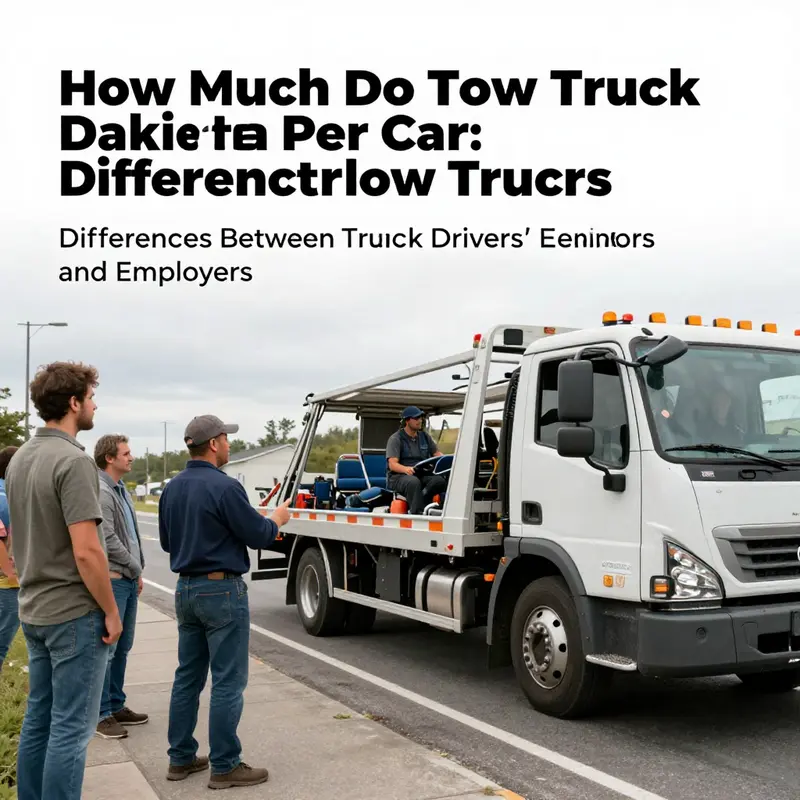
When people ask, “How much do tow truck drivers make per car?” the instinct is to imagine a simple price tag attached to each vehicle that’s hooked and hauled. But the reality of tow work is more like a mosaic than a sticker. Earnings don’t hinge on a single, uniform per-car rate. They hinge on how a driver is paid—by the hour, by the day, or by the job—and on a tangle of other variables that shift from one city block to the next. The result is a landscape where a tow can pay handsomely in one situation and barely cover the fuel in another. This isn’t just a trivia fact about compensation; it’s a lens into the way the entire industry is structured, how risk is distributed, and why a single number cannot capture the true economics of towing.
For many who imagine a straightforward per-car payout, the first surprise is that independent operators and company-employed drivers live in two different financial ecosystems. Independent operators typically earn between $50 and $250 per tow. That range suggests the potential for high-per-tow earnings, especially on complex or urgent jobs. Yet those numbers mask the reality that take-home pay must cover a long list of overheads: fuel for many miles, maintenance and depreciation of the tow truck, insurance both for the vehicle and for liability, licensing fees, and the ongoing costs of staying compliant with local regulations. After taxes and benefits—things like retirement contributions or healthcare if they are not provided by an employer—the profit can shrink significantly. In other words, a $200 tow is not the same as a $200 profit once all expenses are accounted for. The more trips a driver can bundle in a shift, the more the economics improve, but consistency becomes the hard part in a business that swings with demand, weather, and road conditions.
On the other side of the ledger are drivers who work for an employer and draw an hourly wage. In the United States, the national average hovers around $15.51 per hour in many regions, with substantial regional variation. In Canada, wages tend to tilt higher in some provinces, for example around $17.85 per hour in British Columbia, and even higher for specialized roles—drivers with certain licenses or certifications can reach toward $39.50 per hour in some cases. Alberta also tracks higher than the national Canadian average, with observations around $16.01 per hour for many positions, while specialized classifications can push pay higher. Australia presents a markedly different picture, where the hourly pace often sits in the upper thirties in urban and regional hubs. In North Melbourne, Victoria, and across Queensland, rough averages land around $37.50 to $37.53 per hour, with the strongest markets—like Mackay—exceeding $44 per hour. These figures reflect not only the value crews bring during emergencies but also the structure of labor markets, cost of living, and the way fleets organize shifts and training.
One of the more striking truths is that there is no universal per-car rate. Some companies may set a flat towing fee, commonly in the neighborhood of $100 to $200 per tow, depending on factors such as the vehicle type, location, distance, and the time of day. Others prefer the predictability of hourly wages, shift rates, or a hybrid scheme that blends a base wage with bonuses for high-demand windows or rapid response times. Independent operators can, in practice, charge customers directly and keep whatever remains after expenses, which can yield higher gross figures per job but introduces a spectrum of business risks—customer billing, insurance, equipment upgrades, and the need to manage a tax burden without the cushion of employee benefits. The arithmetic behind these choices matters: if a tow requires specialized equipment, extra miles, or a risky extraction from a difficult scene, the per-car price must reflect those added costs. Only in a few scenarios would the math line up neatly across all jobs, which is why simple “per car” estimates can be misleading.
Consider the way pay scales interact with region, license requirements, and employer type. In Canada, for instance, the presence of a Class 3 driver’s license can unlock higher hourly pay in Alberta, illustrating how certifications translate into measurable value in the wage structure. The Australian market underscores how demand density—urban versus regional—can lift pay per hour, with Mackay and other regional centers offering rates that eclipse base expectations in some other areas. In the United States, the balance often tilts toward hourly compensation, but experienced independent operators who build strong networks and provide reliable, 24/7 service can negotiate per-tow fees that reflect the real-time value of their availability and skill in challenging conditions. All of this means that a coming-tow in a high-demand urban corridor may feel like a windfall if priced as a single job, whereas the same tow in a less congested region might appear as routine work with modest margins.
The per-car question also intersects with the practical realities of what it takes to stay afloat as either an independent operator or an employee. For independents, the daily ledger includes fuel, maintenance, insurance, license renewals, and the inevitable depreciation of the tow vehicle and any auxiliary gear. Taxes and benefits—often managed personally—further narrow gross earnings. The upside is flexibility: the ability to dictate one’s own schedule, to take on high-margin jobs, and to set rates in response to local competition and the urgency of service. The downside is exposure to market swings and the absence of a predictable paycheck during slow periods. It is not unusual for seasoned independents to structure their business around multiple revenue streams—breakdown towing, long-distance towing, lockout and roadside assistance, and even vehicle recovery in hazardous environments—so that income is buffered against the ebb and flow of demand.
Employed drivers, by contrast, often enjoy a steadier financial footing. The predictable wage simplifies planning and reduces personal liability for the costs that weigh on independents. Yet it also caps the upside. A driver who tows across a fixed schedule in a mid-sized city may find that the per-car boundaries implied by a flat hourly rate do not capture the full value of hard work, rapid response, or the marginal risk of mounting a difficult, time-consuming tow. When you see regional hourly averages in the mid-$30s in Australia or the high-teens in Canada, you’re looking at compensation that factors in time, schedule reliability, and the employer’s overhead—costs like fleet maintenance and insurance that would otherwise fall on a private operator. These realities help explain why a single “per car” price never fully describes a tow driver’s earning potential across the globe.
The broader narrative here connects to how customers are charged and how the market prices risk. Some firms publish flat-rate tow fees to attract customers who want a straightforward quote, yet these fees must cover the full spectrum of job demands. If the tow involves a vehicle in a difficult location, a longer haul, or a night-time operation, the flat rate may quickly become insufficient unless the business model anticipates such contingencies with higher base charges or supplemental fees. Others may promise low hourly rates to secure contracts but use volume and quick turnover to maintain revenue, betting on the idea that the total hours worked will accumulate into a stable paycheck. In both cases, the question of “per car” value becomes a proxy for a more complex calculation of time, distance, risk, and resource use.
For readers weighing a career path in towing or looking to understand their own earnings better, a practical takeaway is to view pay through the lens of value created and costs borne. A driver’s income is not simply the price of moving a car from one place to another; it is the product of how efficiently the job is done, how well the business manages risk, and how effectively the operator negotiates with clients and employers. This perspective helps demystify the often confusing headlines about wage figures and explains why some people in the same trade can report very different levels of financial success. If you want a succinct snapshot that anchors these ideas in real-world numbers, you can explore a concise overview here: How Much Do Tow Truck Drivers Make.
The dialogue about pay would be incomplete without acknowledging the practical realities of daily work. Tow drivers frequently operate under pressure: tight deadlines, variable weather, and unpredictable traffic. The demand cycle—peaking during holidays, after accidents, or when storms threaten—creates windows where per-tow compensation may spike, especially for independent operators who can capitalize on surge pricing and fewer regulatory constraints. Conversely, off-peak hours or regions with less demand can compress earnings, particularly for those relying on a fixed wage without performance-based incentives. In the end, the most accurate way to understand a tow driver’s earnings is to look at the ecosystem of compensation rather than a single price per car. The per-car figure, when it appears in casual conversation, is a shorthand for a broader set of financial decisions—how jobs are priced, what costs must be covered, and how much of the market risk a driver is willing to shoulder.
For readers seeking a broader, data-backed portrait of the salary landscape, Indeed and Glassdoor offer job postings and rates that reflect local conditions, company sizes, and the varying scopes of responsibility across regions. These resources can illuminate how two drivers in the same city with comparable licenses might end up with different annual earnings depending on their employment status, fleet affiliations, and the mix of tow types they handle. As with many trades, the best way to interpret pay in towing is to start with the basics—hourly wages, per-tow rates, and commission structures—but then layer in regional cost of living, licensing requirements, insurance obligations, and the degree of autonomy each path affords. The results are nuanced, dynamic, and highly dependent on where you work and how you structure your business or your career path.
External perspective can help ground this discussion. For a broader, nationwide snapshot of salaries and career trajectories in towing, you may consult industry aggregates and wage reports such as the one found on Indeed: https://www.indeed.com/career/tow-truck-driver/salaries. While individual experiences will vary, the pattern is clear: earnings scale with responsibility, location, and the commitment to managing a business or a steady employment relationship that aligns with one’s risk tolerance and life priorities.
Tow by Tow: Decoding Per-Car Earnings in a Shifting Tow Truck Market
When people ask how much tow truck drivers make per car, they are really asking about a deeper story. Tow work is not a uniform, per-car stipend that shows up the same way in every shop and every city. Instead, earnings hinge on a blend of pay structures, market demand, local cost of living, licensing and specialization, and whether a driver operates as an employee or as an independent contractor. The most important takeaway is that there is no single fixed rate per car towed. Some firms pay by the hour or by the shift; others set flat fees per tow; and independent operators bill customers directly while shouldering all overhead. Reading the market means moving beyond a single number and learning how the different pieces fit together in a given region and a given work arrangement.
In both North America and parts of the Commonwealth, the data point to a common reality: per-car pay is not locked in, but the broader pay landscape offers useful guardrails. In the United States, the national average hourly wage for tow truck drivers hovers around the mid-teens. A rounded figure is often cited as about $15.51 per hour, with regional variation that tracks cost of living, demand, and local competition. This baseline is tempered by the fact that many drivers do not stairstep their income purely on hours. Instead, a substantial portion of earnings can come from individual jobs, on-call shifts, and overtime opportunities, particularly in high-demand urban corridors or during adverse weather when call volumes spike. That nuance matters, because a driver who simply bills hourly may experience steadier pay, while a driver who bills per tow could see wide swings in take-home income depending on tow volume and job complexity.
Cross-border comparisons reveal a more complex map. In British Columbia, Canada, the picture shifts upward. The regional average sits around $17.85 per hour, and postings reveal a wider range—some roles paying closer to $22 per hour, others reaching $39.50. Alberta follows a similar arc, with overall averages near $16 per hour, but specialized roles that require certifications like a Class 3 driver’s license can command higher rates, sometimes approaching $45 per hour. These Canadian numbers reflect both market demand and the premium often attached to additional qualifications that unlock advanced towing tasks, roadside assistance, or heavy-duty recovery work. The same principle applies in Australia, where variations can be stark even within a single metro area. In Queensland, the average hourly wage sits around $37.53, with top earners in cities like Mackay pushing beyond $44 per hour. In rural or regional markets, the spread can tilt lower, but in busy metropolitan pockets such as North Melbourne, Victoria, the base rate remains robust—about $37.51 per hour for truck drivers in those locales—indicative of tight labor markets and the premium attached to urgent, weekend, and night-time service.
What these numbers illuminate is not simply a salary figure, but the structure of compensation. For many tow operators, the business model shapes how attractive per-car pay can be. Some firms publish a flat tow fee that might range from $100 to $200 per incident, a flat price that is designed to cover the operator’s costs and labor over the course of a shift. Others rely on hourly wages with shift differentials, which can smooth income during off-peak hours while still offering a predictable minimum. Independents walk a different tightrope entirely. They set customer-facing charges and then report income based on hours worked and jobs completed, but they must also subtract the heavy overhead that attaches to running a mobile service—fuel burn, vehicle maintenance, insurance, tire wear, licensing, and the inevitable downtime between calls.
The per-tow income, when it emerges from a field that blends these models, can range widely. A tow job could bring in as little as fifty dollars for a short, straightforward pull, or as much as two hundred fifty dollars for a long haul, complex, or heavy-duty recovery. Those are gross figures, and the end-of-day take-home for an independent operator can look significantly different after expenses. The variability is especially pronounced when you factor in regional demand shocks—weather events that flood the lanes, holidays when people travel, or 24/7 urban centers where call volume never quite subsides. In such environments, a driver who is time- and location-flexible can accumulate more jobs in a single shift, pushing per-car earnings higher on some days with a burst of activity, while quiet spells can compress revenue on others.
The mathematics of per-car earnings becomes clearer if you consider a few practical scenarios. Suppose a company-employed driver earns an hourly wage and rounds to about $18 per hour in a busy city. If that driver works a 40-hour week, pre-tax earnings before any shift differentials or overtime would approach $720. Compare that to an independent operator who quotes customers an average of $150 per tow, balances fuel and maintenance costs, and completes roughly five to six tows in a long night. After expenses, the take-home for that night might resemble a modest multiple of a daily wage, yet with the potential for outsized gains on high-demand evenings. While the per-car model promises attractive upside on busy nights, it also obliges the operator to manage a wider array of fixed costs and the uncertainty of calls.
What makes the market readable is the way location, licensing, and employer type intersect. In metropolitan corridors where rain, snow, or ice are common, tow incidents rise and the value of prompt response climbs. Here, per-tow fees can creep upward, and hourly wages can be supplemented by call-out premiums. In regions with robust fleets and fierce competition, per-tow rates might be tempered by the need to stay competitive, while in markets with fewer providers, those fees can rise because demand outstrips supply. Licensing and specialization also shift the math. In Alberta, for instance, a Class 3 license can unlock higher-paying duties; in other jurisdictions, certifications in heavy-duty or specialized recovery work can command premium wages or favorable per-job terms. The lesson is practical: the more a driver can add value through skill, reliability, and speed, the more favorable the earnings potential—whether the contract is hourly, per-tow, or a hybrid.
How do you interpret real-world data when you are evaluating a job or planning a career? Start with the baseline: what is the typical pay structure at the employer you are considering, and how does that structure align with your preferred work style? If you value predictability, an hourly wage with a guaranteed shift can provide a steady income, especially in markets with high call volume but also high competition among drivers. If you prefer autonomy and can tolerate fluctuations, a per-tow or per-job arrangement—perhaps as an independent operator—offers the possibility of outsized earnings on busy nights. In either case, you should account for overhead and expenses as a driver in charge of your own operation. Fuel costs, insurance, maintenance, and the wear and tear on equipment can erode gross earnings quickly if not managed with discipline.
The chapter’s data also underscore a practical approach to benchmarking. Use real-world salary insights from job postings and salary aggregators to gauge the local market. A widely cited source for U.S. salary data, for example, points to an average around $15.51 per hour, yet individual postings can show a broad range depending on the company, the market, and the level of experience expected. In Canada and Australia, the numbers reveal a similar pattern: higher wages in regions with higher living costs and intense service demand, with substantial variation based on whether the job calls for specialized towing skills or heavy-duty recovery. This variability should shape expectations and negotiation conversations. If you are an aspiring driver, focus on building a skill set that increases per-job value—certifications, experience with multiple tow modalities, and reliability in challenging conditions. If you operate your own business, cultivate a pricing strategy that reflects downtime, travel, and risk exposure while remaining transparent to customers who are weighing options.
For readers seeking a snapshot across markets and a sense of how the trade operates in real labor terms, data resources offer a road map. While per-car earnings can be elusive to define universally, the combination of hourly wages, per-tow fees, and the overhead that a driver bears when independent creates a meaningful spectrum of earnings possibilities. Real-time platforms and job listings can help a driver calibrate expectations and plan a career path that aligns with regional demand. If you’re curious to explore current postings and reported salaries, one widely used resource provides extensive salary data for tow-truck work in the United States and beyond. This is a practical tool for benchmarking against your region’s cost of living and competitive landscape. For broader context on pay structures and how to evaluate job postings, see How Much Do Tow Truck Drivers Make, which aggregates insights across markets and job formats to inform your expectations.
To tie the discussion back to the core question—per car—this chapter suggests a nuanced answer. There is no universal per-car rate because the business models in tow work are not uniform. In some places, drivers earn by the hour, in others by the job, and in others by a hybrid that blends both. The most reliable way to gauge what you will earn per car is to understand the market you operate in, the employer’s pay structure, and your own capacity to handle the overhead if you choose the independent path. As demand shifts with weather, time of day, and urban density, the per-car figure becomes a moving target. Yet the value of the data lies in its ability to guide decisions: where to work, what skills to invest in, and how to price your services or negotiate with an employer so that the per-car earnings align with your living costs and professional goals.
Internal link reference: For a deeper dive into pay scales and how they translate into real-world earnings, see How Much Do Tow Truck Drivers Make. How Much Do Tow Truck Drivers Make.
External resource: For a broad snapshot of U.S. pay and how postings reflect market realities, consult Indeed’s Tow Truck Driver Salary data: https://www.indeed.com/career/tow-truck-driver/salaries
Final thoughts
Tow truck drivers play a crucial role in vehicle recovery and roadside assistance, yet their earnings vary significantly based on multiple factors. Understanding how much they make per car necessitates a consideration of compensation methods such as hourly pay versus job-based payment, as well as geographic disparities across regions. Factors like driver experience and the choice between independent versus company employment significantly shape their income. As the towing industry evolves, keeping abreast of current trends and accessing reliable data will remain essential for everyone—from everyday drivers to property managers and auto repair shops.