
Tow truck drivers play a crucial role in maintaining the flow of traffic and assisting drivers in distress. However, the complexity of operating these vehicles raises an important question: do tow truck drivers need a Commercial Driver’s License (CDL)? With regulations governed by both federal and state laws, it’s vital for aspiring tow truck drivers, auto repair shops, property managers, and everyday commuters to grasp the licensing requirements that apply. This article explores federal regulations, examines state-specific rules, and discusses the implications of these regulations on employment opportunities within the towing industry. Each chapter will unveil critical insights that can help stakeholders navigate the landscape of tow truck operation effectively.
The CDL Threshold on the Hook: How Tow Trucks Define Licensing Rules Across the U.S.
The question of whether tow truck drivers need a CDL is rarely answered with a simple yes or no. In practice, the answer hinges on a careful reading of weight, use, and the kind of work the operator does. Across the United States, licensing is structured around the Gross Vehicle Weight Rating (GVWR) of the towing vehicle and the way the vehicle is used on public roads. When a tow truck has a GVWR of 26,001 pounds or more, the federal standard generally requires a Commercial Driver’s License. This threshold is not a random line drawn by regulators; it exists because heavier vehicles demand greater training, stricter safety protocols, and more rigorous medical requirements due to the increased potential for harm in a highway crash. Yet the story does not end there. The weight of the towed vehicle, how the tow rig is configured, and the commercial nature of the operation can all push a driver into CDL territory even if the tow truck’s own GVWR sits close to the threshold. And beyond federal law, each state can layer in its own rules—sometimes tightening the net enough to require a CDL for certain types of tow trucks even when the federal line isn’t crossed. This layered landscape means that the licensing question is not a fixed verdict but a practical negotiation between a vehicle’s weight, its configuration, and the jurisdiction in which it operates. Keeping pace with these realities is essential for anyone who wants to make sense of licensing in the towing industry.
The federal framework is built around a straightforward premise: the vehicle you drive, and how you use it, determine the license class and endorsements you need. If the tow truck itself has a GVWR of 26,001 pounds or more, you generally need a CDL to operate it on public roads. The owner of a heavy-duty wrecking or rollback truck may find that the vehicle easily crosses this line, simply by virtue of its structure, hydraulics, and grapple system. But the risk calculus behind the threshold also recognizes the complexity of towing operations. A truck that pulls a trailer or carries a heavy towed load may face additional licensing requirements because the combined weight can create dynamics on the road that are beyond ordinary driving. In other words, weight is the anchor, but the wave it creates—tow configuration, load weight, and whether the operation is commercial—determines the full licensing picture. The system is designed to ensure that anyone operating a machine capable of moving heavy loads on busy highways has received the proper training, medical clearance, and testing to protect themselves and the traveling public.
Endorsements are where the licensing landscape becomes more tailored to the precise responsibilities a driver will assume. The S endorsement, sometimes described as Special Equipment, recognizes that a tow truck with a winch, a deck, or other specialized recovery apparatus introduces hazards that ordinary passenger vehicles do not present. An operator with an S endorsement demonstrates familiarity with how those devices behave under load, how to secure a vehicle safely for towing, and how to respond to equipment failures while on the move. When a tow setup involves a trailer that pushes the total weight beyond a certain limit, a driver might also encounter the B or C classifications, depending on whether the operation is a single vehicle or a more complex combination. The B endorsement typically relates to heavy single vehicles, while the C endorsement covers certain combinations that, while not meeting the most stringent class A criteria, still fall under significant CDL oversight. The T endorsement—Double/Triple Trailers—comes into play in configurations that involve multiple trailers, where coupling, braking, and weight distribution become even more critical. And when the job touches hazardous materials or the transport of large groups of people, additional endorsements (such as HazMat or Passenger) can be triggered. The net effect is a licensing matrix that rewards drivers who bring not just a strong wheelhand, but a disciplined understanding of risk, cargo securement, and the physics of heavy vehicle operations. In practice, this means almost every heavy tow truck operator will be dealing with a mix of CDL classes and endorsements to match the realities of their daily routes and the kinds of calls they answer.
The broader regulatory environment does not stop at the federal line. The Licensing Landscape is shaped by state authorities who administer driver licensing, medical qualification standards, and the precise endorsement requirements tied to local traffic patterns and industry needs. Some states impose CDL requirements for tow trucks that are under the federal GVWR threshold when those trucks are used in commercial operations or cross state lines. Other states may maintain stricter rules for specific tow configurations, such as specialized recovery units or heavy-tow equipment that is often deployed in urban centers with tight lanes and frequent roadside incidents. The interplay between federal and state rules means that a tow operator cannot assume that federal guidelines alone tell the whole story. The DMV’s guidelines and the state motor vehicle codes provide the road map for what must be in place before a driver can legally operate a given rig in a given jurisdiction. For fleet managers, this layered framework translates into practical consequences: planning fleet purchases with the most common configurations in mind, investing in training that covers both general CDL skills and the specialized end-uses of tow equipment, and coordinating driver credentials with the locations where business will be conducted. For the individual operator, it means thinking ahead about career mobility, potential cross-state work, and the steps needed to upgrade from a standard driver’s license to a full CDL with the appropriate endorsements. In a field where timing can mean the difference between a successful recovery and a stalled scene, the licensing decision carries as much weight as the tow hook itself.
The practical implications for tow professionals are as real as the weight ratings on a plate. A company that operates heavy wreckers and rovers tends to prioritize CDL-qualified drivers, not solely to comply with law but to align with insurance expectations, customer confidence, and the realities of dispatch logistics. Heavy-duty operations frequently involve higher risks, longer distances between calls, and more complex load securement, all of which benefit from the additional training and testing that a CDL and its endorsements signify. Conversely, smaller operators who primarily deal with light-to-medium-duty tows may be able to operate under non-CDL credentials, provided the GVWR remains below the federal threshold and the operations do not trigger state-level requirements. Yet as fleets grow, or as the customer base expands into interstate or cross-border work, the practical necessity of a CDL becomes self-evident. This is not only about compliance and insurance jargon; it is about the ability to safely, reliably, and legally move vehicles and equipment across road networks that demand discipline and predictability from every driver who sits behind the wheel.
For those who want a clearer, action-oriented view of how licensing translates into everyday practice, there is a practical resource that maps the typical licensing pathway for tow truck work. The CDL Tow Truck Guide outlines the steps many drivers take to earn the necessary Class A, B, or C licenses and the endorsements that commonly arise in this line of work. It acts as a bridge between the regulatory language and the concrete steps a driver must complete to earn the right to operate a heavy wrecker, a rollback, or a deck-lit recovery unit. By presenting the typical progression—permit, knowledge test, medical certification, road test, and endorsement acquisition—the guide helps drivers articulate a plan aligned with their current vehicle configurations and future career goals. This kind of focused guidance is especially valuable in a field where a single change in equipment, or a shift to an interstate business model, can materially alter licensing requirements. See the CDL Tow Truck Guide for a practical, destination-oriented view of how to navigate the licensing landscape. https://winchestertowtruck.com/cdl-tow-truck-guide/
The federal yardstick for CDL requirements, and the way states sometimes bend it, finds its formal articulation in the FMCSA’s regulations. The official framework, accessible through the FMCSA Regulations page, lays out the conditions under which a CDL is required, the endorsements that may be necessary for specialized equipment and configurations, and the circumstances in which additional rules apply for hazardous materials or passenger transport. For drivers and fleet operators, this is a critical reference that anchors compliance decisions to a set of verifiable standards. As you consider the licensing path for a heavy tow truck, keep in mind that what begins with a weight threshold often expands to repeatable, testable competencies across a spectrum of operations. The precise requirements can vary from one jurisdiction to another, but the core principle remains consistent: a license is more than a credential; it is the gatekeeper to the safe, professional handling of heavy loads on public roads. You can review the governing rules directly through official resources when planning a purchase, a training schedule, or a driver upgrade. For official guidance, see FMCSA Regulations: https://www.fmcsa.dot.gov/regulations
Tow Truck CDL Realities: Navigating State-Specific Rules, Weight Thresholds, and Endorsements Across the U.S.
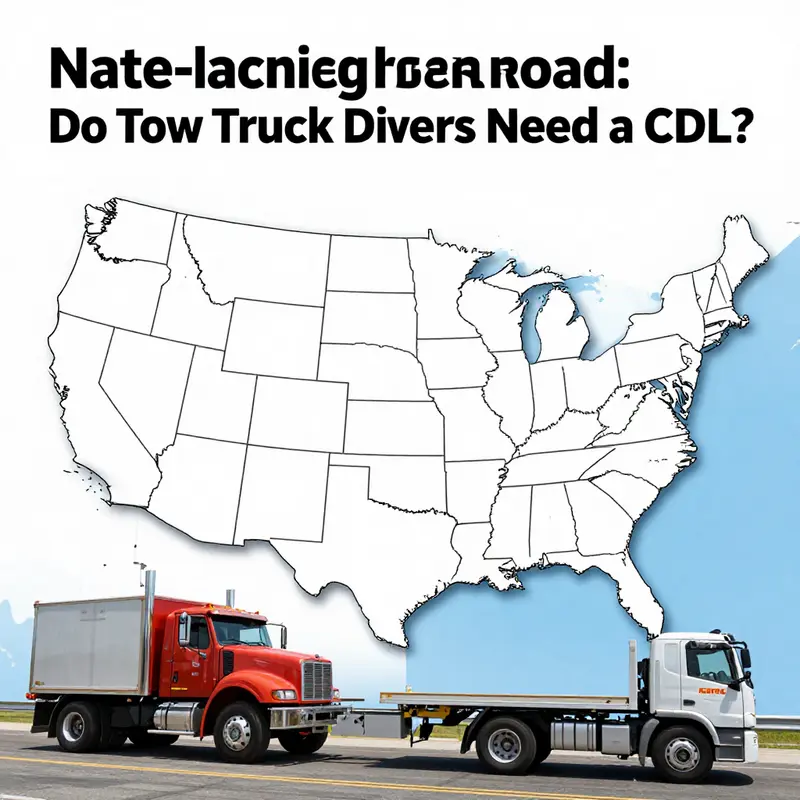
The question of whether tow truck drivers need a commercial driver license is not a simple yes or no. It hinges on a web of rules that blend federal baselines with state level refinements. For anyone operating heavy tow equipment, understanding this framework is essential not only for legal compliance but also for safety, insurance, and professional credibility. On the surface, the federal standard sets a clear threshold for many drivers, but state regulators frequently add twists that can catch even experienced operators off guard. The result is a landscape where the same truck, the same job, can require different credentials depending on where the work is performed, whether the operator drives across state lines, and how the vehicle is categorized in terms of weight and purpose. That complexity is precisely what makes the topic worth exploring in depth, especially for fleets that move between markets or for individuals considering entry into towing as a career. The core of the matter is weight and endorsement. Federal law, administered by the Federal Motor Carrier Safety Administration, establishes a baseline expectation for commercial licenses tied to vehicle weight and function. In practical terms, operators of vehicles over 26,000 pounds gross vehicle weight rating, GVWR, typically need a CDL. This baseline aligns with common heavy duty tow trucks, particularly those used in long haul recovery, heavy wreck removal, or fleet assistance that involves transporting other vehicles. Yet weight is not the whole story. When the vehicle is involved in towing operations, many states require additional endorsements or even a separate licensing category that signals specialized training in towing or recovery. The presence of these state level rules means a tow operator who works in one state may meet the federal bar, while in another state the same operation may demand a towing endorsement, a different class of CDL, or both. The practical upshot is that a tow truck driver who plans to operate across state lines should treat CDL requirements as a moving target and verify specific rules for each jurisdiction before beginning work or renewing credentials. The most reliable starting point is federal guidance plus a careful review of state DMV requirements, with particular attention to weight thresholds, endorsements, and any conditional prerequisites such as instructor led training or certification. The FMCSA site provides the federal backbone and is the go-to resource for understanding interstate operations. But the real test lies at the state level, where regulators may layer on rules that address the unique demands of local towing markets, public safety concerns, and the operational realities of regional recovery work. For a practical, road-tested roadmap that aligns with these realities, many operators consult state DMV pages, engage with professional associations that offer standardized training, and reference the state level endorsements that appear on CDL licenses. A robust approach blends compliance with practical know how, ensuring that a tow operator can perform necessary tasks while meeting all regulatory expectations. The goal is not to accumulate bureaucratic hurdles, but to create a predictable framework that keeps drivers safe, helps protect the public, and supports a reliable towing service that can be trusted in times of need. In this context, the chapter that follows zooms in on state specifics, explaining how different regulatory cultures shape CDL needs for tow truck drivers. The aim is to illuminate what to expect in various jurisdictions, highlight common pitfalls, and outline a coherent path from initial qualification to ongoing compliance. It is also worth noting that there are official avenues for confirmation and update, and those channels are essential given how quickly rules can change. The federal baseline remains constant in many respects, but state level endorsements can shift with emerging safety data, evolving vehicle designs, and the economic realities of local towing markets. For operators who want a concise synthesis of the essential points, the interplay between GVWR thresholds, endorsements, and the balance of federal and state authority provides a reliable framework to plan licensing, training, and ongoing education. Tow operators who invest in upfront due diligence often find that their regulatory burden translates into smoother operations. They experience fewer last minute license hurdles, clearer driver responsibilities, and a more straightforward path for onboarding new team members. That proactive posture supports stronger compliance culture and, importantly, safer roadways. When reflecting on the practical implications for a towing business, several threads pull together. First, weight matters, but it is not the only determinant of CDL necessity. A tow truck that exceeds the federal threshold will typically require a CDL under interstate rules, but states may require a similar or stricter standard for intrastate work or for specific types of tow operations. This means fleets should map every vehicle in service to its GVWR and confirm how that mapping interacts with local rules. Second, endorsements such as a T endorsement or other state specific credentials often accompany the CDL. In many places a generic CDL is insufficient for towing work; a specialized endorsement signals the driver has completed approved coursework or testing that attests to competence in handling towing operations, recovery procedures, safety protocols, and equipment usage. This is not a cosmetic addition. It represents a recognized qualification that can affect liability, insurance premiums, and the licensing process itself. Third, the training question cannot be overstated. Several regulatory ecosystems reward or require formal training programs. National bodies, including associations like the National Tow Networking or internationally focused training programs, offer curricula that many states recognize toward endorsement eligibility. Participation in such programs can reduce the time and cost of meeting state requirements while elevating the driver’s operational confidence and safety orientation. It is common for states to require or at least encourage a combination of written testing, knowledge of revised regulations, and practical demonstrations that prove a driver’s proficiency with a range of towing equipment, safety devices, and incident management procedures. The tangible benefit is not merely regulatory compliance; it is improved safety outcomes for drivers and the public, fewer preventable incidents, and a more resilient service capability in emergencies. For readers who want a consolidated guide to practical steps, a structured, readable resource exists in the form of a CDL tow truck guide. It distills the core requirements, outlines the typical steps to qualify for state endorsements, and links to training providers that are recognized in many jurisdictions. The guide emphasizes the importance of confirming specific state rules before applying for or renewing a CDL, a point that cannot be overstated given the patchwork nature of regulations across the country. A careful reader will also recognize that state rules can change, and timing matters. Some jurisdictions adjust weight thresholds, modify endorsement criteria, or revise testing standards in response to new safety data or technological changes in tow equipment. An operator who stays current maintains better compliance posture, avoids costly rework, and minimizes the risk of fines or licensing suspensions. The practical path begins with a precise accounting of vehicle specifications. For each tow truck in a fleet, operators should confirm GVWR and ensure that the vehicle’s use aligns with the licensing framework envisioned by local rules. If there is any ambiguity about whether a particular vehicle falls under a CDL requirement or whether a specific endorsement is needed, a proactive consultation with the state DMV is prudent. Many DMVs provide quick reference guides, but they also offer official assistance channels for more nuanced questions. It is also wise to engage with industry associations that can translate complex regulatory language into accessible, actionable guidance. These organizations frequently publish state by state summaries and host seminars or webinars that address up-to-date requirements and practical compliance tactics. In addition to understanding the licensing dimensions, operators must consider the day to day implications of state diversity. A tow operator who crosses state lines with a standard service call must be prepared to adapt to the licensing expectations of the destination state. This means ensuring that drivers assigned to interstate work possess the requisite credentials for all anticipated markets, or arranging for cross training and credentialing as needed. The aim is not to limit business opportunity but to remove regulatory friction that could interrupt service during critical times. Acknowledging the variability across states, it becomes clear that the person behind the wheel cannot rely on a single, universal license for all tow truck operations. Instead, the competent operator treats CDL compliance as a dynamic, ongoing program. This involves maintaining current endorsements, renewing them as required, completing annual or periodic training updates, and documenting credentials in a way that supports both audits and day to day dispatch. The benefits of this disciplined approach ripple outward. Insurance underwriters often prefer carriers with demonstrated compliance and ongoing professional development. Clients seeking reliable, certified towing services may favor crews with verified credentials that align with local rules. In sum, the landscape for CDL requirements in the towing world is not about chasing a one size fits all credential but about building a flexible, compliant practice that respects federal safeguards while honoring state perspectives. The rule of thumb is to start with the federal threshold, then verify state specifics for every jurisdiction where work will occur, and finally pursue the appropriate endorsements and training that those jurisdictions require. To readers who want a resource anchored in practical experience, the CDL tow truck guide offers a structured overview, illustrating how to interpret GVWR, endorsements, testing, and local variations in a way that translates into real world readiness. When in doubt, lean on the DMV, check official state publications, and consider enrolling in recognized training programs that many states accept as qualification for endorsements. The end game is not simply compliance for compliance sake; it is about building safer, more capable towing operations that function with clarity in a regulatory environment that can be complex and occasionally shifting. For those who want a consolidated, hands on reference, the CDL tow truck guide provides a digestible roadmap that centers safety, legal compliance, and practical competence in everyday towing scenarios. As with any field governed by regulations that touch public safety, the best path is proactive learning and constant verification. A driver who keeps current with regulatory developments, maintains a complete and up to date set of credentials, and approaches each job with a clear understanding of the licensing framework will find that the work of towing can be performed with greater confidence, fewer disruptions, and a stronger sense of professional purpose. The broader takeaway is that CDL requirements for tow truck drivers are not fixed by a single standard. Instead, they arise from a conversation between federal baselines and state level adaptations that reflect local needs and risks. By paying attention to weight thresholds, endorsements, and the training pathways that each jurisdiction accepts, operators can navigate the system in a way that supports both safety and service reliability. To further explore practical steps and to see how a typical operator can approach these requirements, you can consult the CDL tow truck guide and apply its guidance to your own licensing plan. CDL tow truck guide This resource offers a grounded, field oriented perspective on how to assess GVWR, determine the necessary endorsements, and arrange training that matches each state’s expectations. In addition to state verification, it is wise to consult federal resources as well. The FMCSA maintains a broad framework that governs interstate commerce, with testing, licensing and compliance standards that form the backbone of CDL requirements across state lines. For those who want to verify the most current federal guidelines while also attending to state level specifics, the FMCSA site provides authoritative guidance that complements state DMV pages. Access to these resources supports a balanced and thorough approach, ensuring that tow professionals remain compliant while delivering essential services to communities in times of need. In a field where readiness translates into safety and efficiency, doing the work to understand state specificities is far from a bureaucratic exercise. It is a practical investment in professional credibility and in the ability to respond decisively when every minute counts. If you are seeking to translate this understanding into action, begin by mapping each vehicle in your fleet against the weight thresholds that apply in your primary markets, then chart the endorsements that will be required in those states. Build a training plan that addresses those endorsements, and coordinate with your state DMV to confirm testing and documentation requirements. Finally, stay connected to the broader professional community that provides ongoing education and updates about changes in rules. The journey toward compliant towing practice is ongoing, but with careful planning, it becomes a straightforward part of running a responsible, capable, and trusted service. For further federal reference on these topics, visit the FMCSA official site: https://www.fmcsa.dot.gov/
Weight Limits, Certification, and the Road: How CDL Rules Shape Tow Truck Careers
Tow truck work sits at the crossroads of roadside assistance and highway-scale responsibility. Whether a CDL is required depends on weight, vehicle configuration, and jurisdiction. Federally, many interpretations hinge on 26,000 pounds or more in combined weight, but towing introduces twists: the weight of the towed vehicle or a trailer can push a heavy wrecker into CDL territory. States may add endorsements or exceptions, so cross-border work can change licensing needs. Class A, B, and C licenses map to different configurations, with Class A covering many heavy towing scenarios. CDL training emphasizes inspections, cargo securement, air brakes, and practical recovery skills. The costs and time to obtain a CDL can be barriers, influencing who enters the field and how fleets structure training. Employers often value CDL readiness for higher pay, steadier hours, and eligibility for overtime. Since rules evolve, ongoing education and annual medical and knowledge renewals remain important. For tow operators evaluating CDL paths, consult state DMV rules and FMCSA guidance to plan a compliant, safe career.
Final thoughts
The question of whether tow truck drivers need a CDL is more than a simple matter of licensing; it encapsulates broader themes of regulatory compliance and job opportunities in the towing industry. Federal regulations provide a baseline, while state-specific rules can impose additional requirements that candidates must navigate. Understanding these nuances not only aids aspiring drivers in pursuing their career paths but also equips auto repair shops, property managers, and everyday drivers with critical knowledge for making informed decisions. As the towing landscape continues to evolve, staying updated on these regulations is imperative for all stakeholders involved.