
Knowing what your truck can tow is essential for everyday drivers, commuters, property managers, and service professionals. Towing beyond a vehicle’s limits isn’t just inconvenient—it’s dangerous and can void warranties or break the law. This guide walks through how to read and apply manufacturer towing ratings and terms, how drivetrain, engine power, and hitch choices affect real-world capacity, and the safety, legal, and operational practices that keep drivers and property managers compliant and safe. Chapter 1 explains manufacturer ratings and the core vocabulary you need to interpret a truck’s limits. Chapter 2 applies those ratings to mechanical factors—engine, transmission, axle ratio, and hitch classes—and shows how to convert those into real towing scenarios. Chapter 3 closes with practical safety checks, regulatory considerations, and operational best practices you can use today to verify loads, use calculators, and choose the right trailer classification.
Reading the Numbers: Mastering Manufacturer Towing Ratings and the Language of Tow Capacity
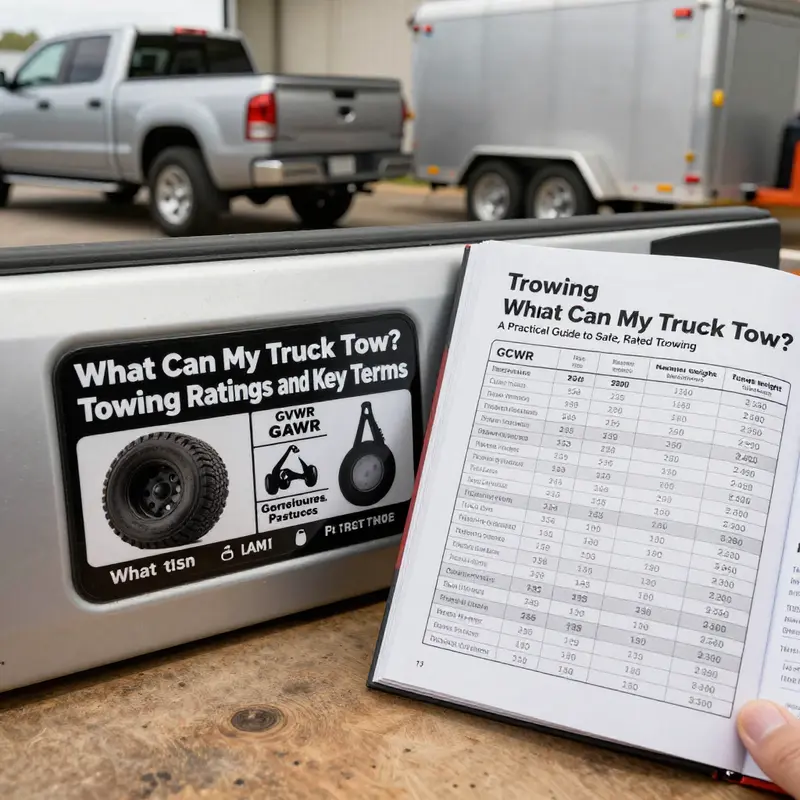
Reading the Numbers is not just about knowing a single figure. It is about understanding how a truck’s built-in limits interact with a trailer’s weight and the way a system is loaded, pulled, and controlled on the road. When you ask, what can my truck tow, you are really asking how the labels on the door sticker, the owner’s manual, and the trailer’s own plate translate into safe, predictable performance. Towing capacity comes from a family of ratings that work together, not from a single number you can treat as an absolute ceiling. This chapter unpacks the core terms manufacturers use and explains how they relate to real-world use, so you can read your truck’s capacity with confidence and avoid chasing a false maximum that could compromise safety, legality, or your budget. It begins with the essential definitions, then shows how the different pieces fit together in practice, and finally ties those ideas to practical steps you can take before you hitch up.
The most fundamental terms are GVWR, GCWR, and GAWR, each a boundary that keeps the vehicle within safe limits. GVWR, or gross vehicle weight rating, is the maximum weight the truck can weigh when it is fully loaded with passengers, cargo, and everything it carries inside, plus any hitch-related load that remains on the vehicle itself. It is essentially a ceiling for the truck’s own mass. GAWR, the gross axle weight rating, is the maximum weight that each axle can safely carry. These two numbers together shape how much payload you can carry inside the cab and bed, and how much tongue weight you can place on the hitch without overstressing the rear axle or the chassis. GCWR, the gross combined weight rating, is the cap on the combined weight of the towing vehicle, the trailer, and everything on or in both. It recognizes that even if the vehicle’s own mass stays within GVWR, adding a trailer and its contents increases the total weight the powertrain, transmission, brakes, suspension, and cooling system must manage. If any part of that system is overwhelmed, the risk is not merely reduced performance; it is compromised steering, braking, and tire stability. When you plan any tow, you must check all three: how heavy the truck itself is (GVWR-related payload), how much trailer weight you intend to pull, and how the two together sit against GCWR.
A key companion to these ratings is tongue weight, often described as pin weight in the trailer context. Tongue weight is the downward force the trailer exerts on the hitch, and it plays a crucial role in steering stability, braking efficiency, and overall balance. A typical rule of thumb is that tongue weight should be in the neighborhood of 10 to 15 percent of the trailer’s loaded weight. Too little tongue weight can make the trailer wander or swing, while too much tongue weight can push the rear suspension past its limits and reduce the truck’s ability to steer and brake effectively. The exact figure your vehicle can accommodate depends on the hitch, the frame, and the rear axle’s GAWR, but the guiding principle remains constant: tongue weight is a share of the total trailer weight, and it reduces the amount of payload and payload-related capacity you can safely carry inside the truck. In other words, every extra pound you load onto a trailer is a pound you remove from the truck’s available payload and, depending on how that weight is distributed, possibly from the tongue’s permissible load as well. When you add weight in the bed or cabin, you are directly removing capacity from the towing equation, potentially pushing GCWR into the danger zone and forcing a recalibration of how much you can tow safely.
To connect these ideas to the actual hardware that makes towing possible, the drivetrain and engine power matter just as they do for performance. A strong engine and a well-minned transmission will deliver the torque and gearing needed to move a loaded trailer uphill, but they do not license you to exceed the ratings. The drivetrain configuration—whether rear-wheel or four-wheel drive—affects traction and, in some cases, the way weight is distributed when you are accelerating, braking, or negotiating curves. Transmission cooling, torque converter behavior, and the presence of towing modes or hill-descent controls can influence how long a vehicle can sustain highway-grade towing without overheating or losing efficiency. Even the way the hitch is integrated into the chassis and the choice of hitch type—receiver, weight-distribution, or other specialized arrangements—changes how allowable weight translates to real-world performance. A heavier tongue weight and a broader, more stable sway profile require a different balance of power, braking, and steering input than a lighter load. The takeaway is simple: your engine’s raw horsepower is not the sole gatekeeper of towing capacity; how the weight is managed across the entire system, from hitch ball to the tires, matters just as much.
Hitch configuration and the equipment that accompanies it occupy a critical middle ground between rating labels and road reality. The hitch class (I through V, for example) defines the maximum trailer weight the hitch can bear, but there is more to it than the label suggests. The receiver’s class and its rated tongue weight cohere with the trailer’s weight profile to determine what you can safely connect. A weight-distribution hitch, for instance, redistributes trailer tongue load across the vehicle’s axles to improve stability and handling; it does so by altering how the trailer’s weight presses on the hitch and, by extension, on the rear axle. A sway-control feature helps dampen side-to-side oscillations that can emerge as speed increases or crosswinds pick up. All of these systems are designed to keep the combined mass within the margins defined by GCWR and GVWR, but they demand proper setup and precise balancing. It is not unusual for a vehicle to be mechanically capable of moving a certain trailer weight on paper, yet require a different level of hitch and load management in practice to do so safely and legally. The practical implication is clear: never assume a rating is purely about the number on the door sticker. It is a system limit that must be realized through careful loading, compatible hitching, and deliberate driving.
In consideration of safety and the law, several prudent practices emerge. Before you hitch anything, perform a thorough pre-trip check that covers tires, brakes, lights, and couplings. Ensure the trailer’s brakes communication with the tow vehicle, especially if your trailer has electric brakes or a controller. If you tow with a large trailer frequently or over long distances, you may need proportional braking or a dedicated brake controller to maintain balanced deceleration. Braking is not merely a function of vehicle power; it is an orchestration that relies on accurate tongue weight, trailer braking capability, and the weight being properly distributed across the trailer axles. These checks are complemented by a careful appraisal of load distribution. Load is not simply “more weight equals more power.” It is a specific arrangement where weight is spread across the axles to harmonize with the tow vehicle’s suspension, steering, and braking dynamics. If the load sits too far forward or too far back, the handling changes dramatically, and you will sense it in steering effort and braking response. The trailer’s own weight and its distribution should be planned with the same diligence as you would apply to loading inside the cab.
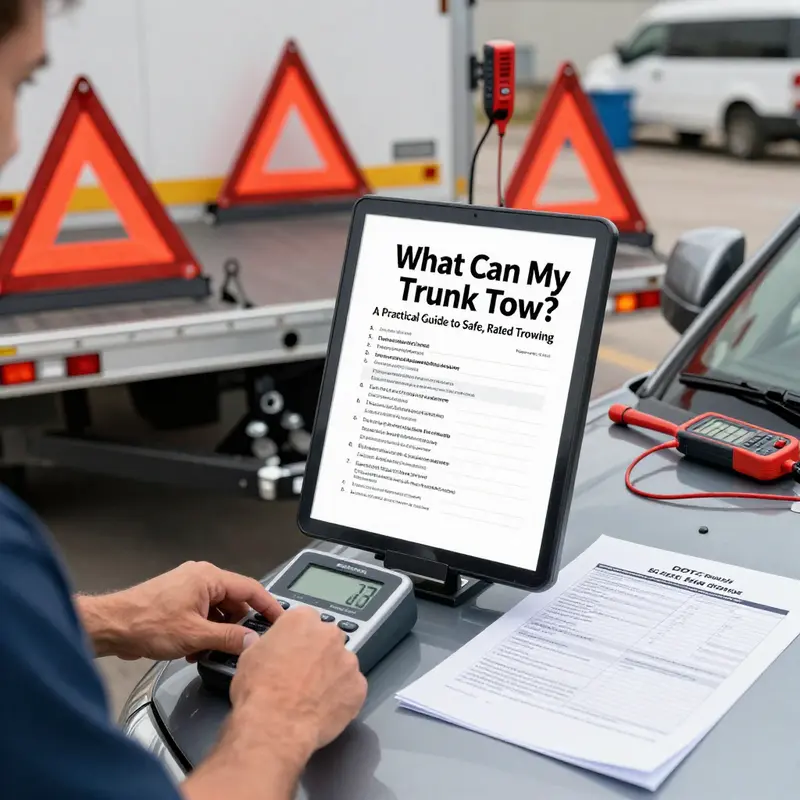
Looking at the practical steps to translate rating theory into reality, weight calculators and scale measurements are more than conveniences; they are essential tools. A weight calculator helps you estimate how much the vehicle can handle given a certain trailer load, payload, and tongue weight. But calculators are only as good as the numbers you feed them. To be precise, you should verify the actual curb weight of your vehicle, the weight of passengers and cargo you carry regularly, and the pinned weight of the trailer when it is loaded to its typical capacity. If possible, you should weigh the vehicle on a scale with and without the trailer attached. This direct measurement tells you where you stand with respect to GVWR and GCWR at that moment. It can reveal that what seems like a modest trailer load on paper actually pushes the vehicle toward or beyond a rating when you include fluids, passengers, and gear. In many instances, a simple adjustment—reducing payload, redistributing trailer load, or switching to a weight-distribution hitch—can bring actual performance in line with what the ratings indicate. A precise approach to loading becomes a safety discipline, not a negotiation with the numbers.
Another practical dimension is trailer classification and understanding the tag on your trailer. Trailers come with weights and dimensions that determine whether they fall under a category that your truck’s ratings can accommodate. The classification informs whether you need certain braking systems, whether a particular hitch is appropriate, and whether you must observe separate speed or license requirements. The classifications also shape how insurers view the tow setup and what they consider a safe conveyance on public roads. This is not a bureaucratic aside; it is a live constraint on safety, compliance, and the ability to recover quickly if something goes wrong on the highway. In short, the labels on the trailer—together with the truck’s own labels—set a boundary within which you must operate to keep everything aligned with law, warranty, and safe practice.
With these principles in view, you can approach every towing decision with a disciplined framework. Start with the numbers: note GVWR, GAWR, and GCWR on the door jamb sticker and in the owner’s manual, then correlate them with the trailer’s gross weight and its tongue weight. Bring your payload into the calculation and account for that payload before you finalize your tow plan. If your trailer’s gross weight approaches or exceeds the safe range for the combination you plan to tow, reduce the trailer’s loaded weight or switch to a setup with a more appropriate hitch or a heavier-duty vehicle. Remember that the worst-case scenario is not a single heavy load but the combination of maximum trailer weight, full payload, and dynamic road conditions such as grades and crosswinds. The numbers exist precisely to tell you when that scenario crosses from acceptable risk to unacceptable risk, so use them as your baseline for every trip.
To bring a practical thread back to a personal testing ground, consider the following mental model when planning a tow. If you add 1,000 pounds of trailer weight, you may reduce the available payload by roughly that amount, while you will also alter tongue weight and the distribution of weight across the rear axle. If you add passengers and cargo inside the truck, you further reduce the payload that can be safely used for towing. If you load the trailer heavier, you increase the chance of exceeding tongue weight targets, which in turn can alter braking response, steering behavior, and overall vehicle stability. These relationships are not necessarily intuitive; they require a conscious check against the manufacturer’s ratings and a careful assessment of real-world driving conditions, from steep hills to long, straight stretches where wind and road surface may influence handling. The guiding principle is to treat every tow as a holistic system challenge rather than a single number exercise. The ratings exist to guide safe choices, but the only way to translate them into reliable performance is through disciplined loading, careful hitching, and deliberate driving.
For readers who want a quick, practical cue that ties the theory back to everyday planning, consider this approach: you can loosely think of towing capacity as a cap on the trailer’s weight that can be supported at a given payload, adjusted for tongue weight and the hitch system, all within the GCWR envelope. You can map that cap against the actual trailer you intend to tow, then assess whether the combination will remain within safe margins during acceleration, turning, and braking. If the trailer weights are at or just below that cap, you should still factor in dynamic conditions—air resistance, road grade, and wind—because these forces can push the system toward a margin you cannot safely exceed. If you find the numbers barely hold, that is a sign to downsize the trailer payload, switch to a lighter trailer, or increase the towing vehicle’s capability with a more suitable setup. The ultimate aim is not to extract maximum theoretical capacity but to ensure the connection between truck, trailer, and road remains coherent under all expected driving conditions.
As you contemplate your own configuration, a simple, practical reminder anchors the process. Use the internal linkage below to explore how those numbers translate into a real-world decision: how much can my truck tow. The linked resource provides a compact, actionable perspective on aligning the numbers with the scenario you face on a particular day. It is a reminder that the numbers are a roadmap rather than a decree, guiding you toward safe, predictable performance rather than an exercise in chasing a theoretical ceiling. In that spirit, keep the task of towing grounded in measurement, balance, and prudent judgment. The chapter on safety practices and legal considerations that follows will build on these foundations, ensuring that every tow you undertake is not only within technical limits but also compliant with the rules that govern the road and the responsibilities of moving people and gear from one place to another with predictable, controlled motion. The road is demanding, and the equipment is robust, but the harmony of a well-planned tow rests on reading the numbers accurately, respecting the relationships between payload, tongue weight, trailer mass, and vehicle capability, and always driving with the discipline that safe towing demands.
Tow Limits Unlocked: How Engine, Drivetrain, and Hitch Shape What Your Truck Can Tow
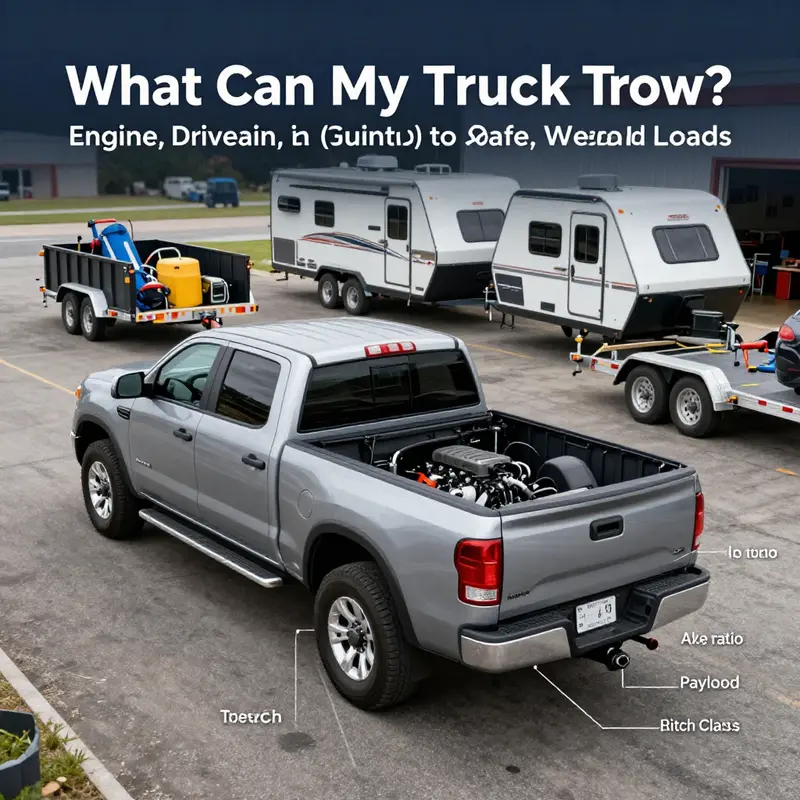
Towing capacity is more than a single number on a sticker. It’s the result of a careful balance among power, propulsion, and the hardware that ties a truck to a trailer. When you ask, “What can my truck tow?” the answer rests on three intertwined factors: the engine’s ability to deliver steady, controllable power; the drivetrain’s capacity to transfer that power to the wheels without overheating or lag; and the hitch system’s capability to anchor the trailer to the frame without compromising control or safety. Read together, these elements define not just a maximum weight, but a practical, safe operating envelope that lets you plan trips, avoid overstressing components, and keep the road from turning into a test of endurance for your vehicle and the people inside it. An engine with abundant horsepower is valuable, but the real edge comes from torque—the twisting force that gets a heavy load moving from a standstill and keeps it moving up grades. Diesel engines are often favored in towing scenarios because they develop strong low-end torque. That torque acts like a shove at the start and a sustained push on hills, making it easier to haul heavy loads without revving the engine into the red. In gasoline engines, torque is still essential, but the peak often occurs at higher RPMs. The practical implication is straightforward: two trucks with similar horsepower ratings can exhibit very different towing behaviors once you add weight, grade, and wind resistance into the mix. The engine’s power band—the range of engine speeds where torque is available—needs to align with the trailer’s load profile and the typical terrain you encounter. If you’re mostly traversing long grades, a motor well-tuned for high-torque delivery at modest engine speeds will often outstrip a larger engine that makes peak power only at higher RPMs. That relationship between torque, horsepower, and gearing shapes how heavy a trailer you can move comfortably without pushing the engine to a level that invites overheating or excessive fuel use. It also informs how you should gear the rest of the system for reliability. The drivetrain is more than a collection of parts; it is a heat-management and energy-transfer system that must cope with the sustained demands of towing. The transmission’s ability to handle high torque and maintain stable heat levels matters as soon as you leave the driveway with a trailer behind you. A robust, well-cooled transmission isn’t just a luxury; it’s a necessity for long pulls up out of ravines or up switchbacks where the engine and transmission are taxed for extended periods. Transmission design—whether traditional automatic, modern eight- or ten-speed units, or a dual-clutch setup—affects how quickly power is delivered, how efficiently it is used, and how long the drivetrain can sustain high-torque operation before heat becomes a limiting factor. The drivetrain includes more than the transmission: the torque converter’s efficiency, the differential’s strength, and the drive axles’ robustness all determine how well power is transmitted to the wheels under load. A heavy-duty cooling system, reinforced differentials, and upgraded axles can shift the practical towing ceiling upward. When a manufacturer designs a truck for heavier towing, you will often see these pieces upgraded or reinforced to accommodate greater torque output and higher heat generation. The result is a system that remains stable under load, maintains consistent performance, and resists the fatigue that comes from repeated towing sessions on hot days or steep grades. The hitch is the interface, and it must be matched to the vehicle and the trailer to preserve control and safety. The hitch’s weight rating—the maximum gross trailer weight (GTW) it can safely pull—and its tongue weight rating—the weight the trailer tongue places on the hitch—must be considered together with the trailer’s own specifications. A mismatch can invite instability, including sway, reduced steering feel, and potential detachment of the trailer from the vehicle. The ball size must align with the trailer’s coupler, and the hitch mounting system must be able to handle the static and dynamic forces generated during towing. This is not mere formality. A properly rated hitch distributes forces across the vehicle’s frame and mounting points so that the connection does not become a weak point that things like road irregularities or sudden maneuvers can exploit. Even the frame itself matters. If the hitch is bolted to a frame that isn’t designed to carry extra load or isn’t reinforced to handle the added stress, the entire towing equation can fail when it matters most. The reality is that a high-tower or a trailer with heavy tongue weight will stress the chassis, suspension, and even brake components in ways that don’t occur during normal driving. In other words, the hitch is the tangible link between your truck and the trailer, and its strength, compatibility, and correct installation determine whether the rest of the system can perform as intended. For that reason, many owners find it worthwhile to verify that the drivetrain and hitch upgrades are appropriate for the specific loads they intend to haul. It’s not enough to chase the largest GTW rating on the window sticker, because the module of power, transmission cooling, axle geometry, and hitch compatibility together shape the actual safe towing capacity you will use on a regular basis. If you want a clear, practical path to understanding your truck’s limits, consider how these three elements work in concert. The engine must deliver power smoothly across the RPM band without forcing the transmission to hunt for gears or overwork itself. The drivetrain must sustain heat and torque without breaking a sweat, especially on long climbs or repeated start-stop cycles. The hitch must survive the dynamic forces of the trailer, keeping it attached and aligned with minimal sway. When these conditions are met, the truck’s towing capacity becomes less a single line on a sheet and more a dependable operating envelope you can rely on for planning trips and estimating what you can safely tow. To get a sense of your vehicle’s practical ceiling, you can consult available resources that translate raw specifications into usable guidance, and use weight calculators and trailer classifications to avoid overloading any component. For a practical read on your vehicle’s ceiling, see How Much Can My Truck Tow. In addition to the internal checks, it’s essential to anchor your planning in rules and guidelines that promote safety and legality. Official safety resources outline federal and local requirements for hitches, weight distribution, and safe towing practices, helping you interpret ratings like GCWR and GVWR and how tongue weight relates to payload and GTW. Staying within these guidelines protects your vehicle, your cargo, and the people on board, especially on routes with grade changes and variable weather conditions. The towing conversation does not stop at the vehicle; it also extends to how you assess trailers, their brakes, and their classification. A trailer with its own braking system changes the dynamics and the load you can carry safely. Heavier trailers with electric brakes, for example, distribute a portion of the load back to the tow vehicle through the brake controller, altering how you should approach speed, stopping distance, and uphill climbs. The aim is not just to see a higher number on the chart but to experience a consistent, controllable towing experience that keeps you in command and reduces the risk of sway or jackknife under challenging conditions. As you plan, bring together the engine’s torque capabilities, the durability and cooling of the drivetrain, and the hitch’s strength into a cohesive picture. This picture will tell you whether you are approaching the practical towing boundary or whether you have margin to spare for slightly longer trips or heavier loads. And when you are in doubt, start with conservative assumptions, verify with manufacturer specifications, and test in controlled conditions to confirm that the entire system behaves as expected. The careful reader will also recognize the value of comparing multiple configurations within the same truck family. A vehicle with a slightly smaller engine but a more robust cooling package and an upgraded transmission can, in real-world use, outperform a larger engine in a lighter configuration when towing over extended periods. Similarly, a well-matched suspension and frame reinforcement can give you steadiness and control that a rawly capable engine cannot alone provide. In short, the three factors—engine, drivetrain, and hitch—do not operate in isolation. They are parts of a single towing ecosystem that determines what you can safely move, how efficiently you can do it, and how predictably you can respond when the road twists or changes conditions. If you’re curious about how your specific model stacks up, you can explore practical checks and planning steps, including weight distribution considerations and trailer classifications, to verify that your setup remains within safe limits. For a broader view on official guidelines and weight standards that govern hitches and safe towing practices, you can consult the U.S. Department of Transportation resources cited in this chapter. External resource: https://www.transportation.gov
null
null
Final thoughts
A truck’s published ratings provide the roadmap, but applying them requires matching numbers to reality. Start at the sticker and the owner’s manual: GCWR, GVWR, and GAWR set the legal and mechanical limits. Translate those numbers into usable towing capacity by subtracting payload, factoring tongue weight (typically 10–15% of trailer gross weight), and accounting for passengers, cargo, and aftermarket additions. Then evaluate drivetrain and power: engine torque, transmission cooling, axle ratio, and braking systems determine whether the truck can haul a given load safely—choose the correct hitch class and use weight-distributing systems when needed. Finally, follow safety and legal best practices: verify trailer classification and registration, measure tongue and gross trailer weights, confirm braking and lighting, and use weight calculators and certified scales. For everyday drivers, dealerships, repair shops, and property managers responsible for loading or renting trailers, a methodical approach reduces risk, improves fuel economy, and keeps you compliant. Keep records, inspect equipment, and when in doubt, reduce the load or consult the manufacturer. Ready to elevate your ride? Summit Fairings delivers premium, custom-fit fairings that blend style and durability. Whether you’re chasing speed or turning heads, we’ve got your bike covered. Don’t wait—transform your machine today. Click, customize, and ride with confidence. Your perfect fairing is just a few clicks away. Act now! We are one of the leading motorcycle fairing export sites, with over 3,000 styles across almost all motorcycle models. Buy from summitfairings.com, and pay 10-40% less than the prices on other sites. If you have any questions, we promise we will have your answer within six hours.