
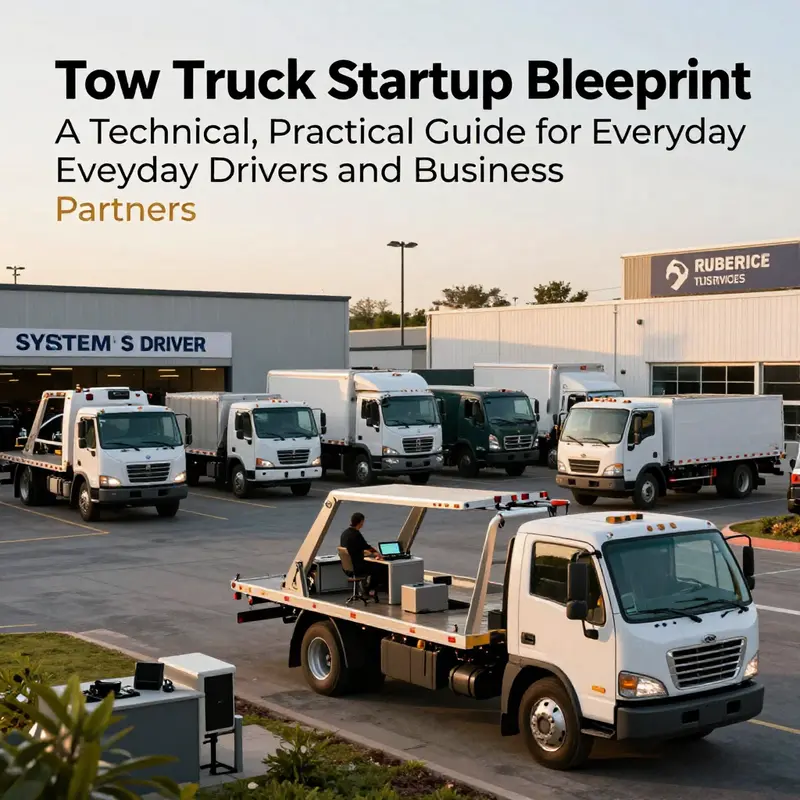
Starting a tow truck company creates a local lifeline for everyday drivers, residents, and commuters, as well as truck owners, auto repair shops, dealerships, and property managers. A credible tow operation reduces downtime after breakdowns, accelerates incident response, and supports fleet maintenance for commercial partners. The opportunity sits at the intersection of service reliability, regulatory compliance, and disciplined operations. Turn the vision into a scalable business by aligning three core areas. Licensing, Regulations, and Legal Requirements set the baseline: licensing, insurance, operator qualifications, storage-yard zoning, and in some cases interstate DOT compliance. Without solid regulatory footing, a service cannot operate or compete. Capital, Equipment, and Operational Setup translate plans into capacity: decisions about fleet size, wrecker types (flatbeds, wheel-lifts, or integrated trucks), dispatch infrastructure, and 24/7 coverage. Marketing, Revenue Strategies, and Competition Analysis convert capability into demand: building relationships with repair shops, insurers, and municipal contracts; pricing discipline; and data-driven performance metrics. Across the chapters, the focus remains clear: how to build a tow truck company that serves everyday drivers and business partners with safety, speed, and accountability.
The Legal Foundation: Licensing and Compliance as the First Mile in Launching a Tow Truck Company
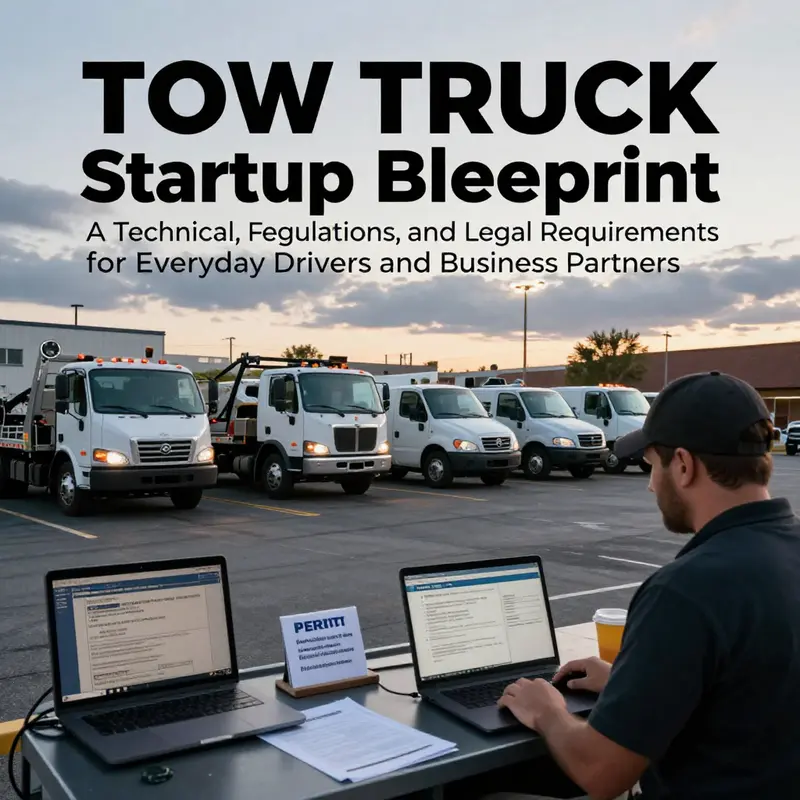
A tow-truck business does more than move stalled cars and clear congested streets. It operates at the intersection of public safety, commerce, and municipal policy. That convergence makes licensing and legal compliance not merely a box to check but the very foundation of a durable operation. The road to launch begins long before the first wheel turns toward a dispatch call. It starts with a clear map of the regulatory terrain, a disciplined approach to documentation, and a willingness to align a growing enterprise with the rules that govern the movement of people and property.
The first and most crucial decision centers on how to structure the business. The choice between forming an LLC or a corporation carries consequences for liability, taxes, and ownership. This decision informs the application for licenses, the type of insurance to carry, and the way records are kept. In many jurisdictions, establishing a formal entity is a prerequisite for obtaining a towing permit or operating a tow truck commercially. A clean corporate structure also signals to customers, law enforcement, and insurers that the enterprise takes its responsibilities seriously and intends to operate with professional standards. While regulatory bodies seldom require a specific business form, they frequently require that the entity exists, is properly registered, and is in good standing before issuing any license. The path from idea to operation, therefore, begins with architecture: choosing the entity, registering with the state, and securing a federal Employer Identification Number (EIN) if needed. The goal is not merely permission to tow but a credible, verifiable business that can be insured, monitored, and audited when necessary.
Beyond the business entity, the licensing landscape in most places requires a constellation of permits and registrations. A tow-truck company often must obtain a dedicated license to operate as a towing service, especially when the business is involved in the removal of disabled, illegally parked, or abandoned vehicles. Some jurisdictions require a separate Tow Truck Company license, while others tie towing permissions to a broader motor-vehicle service license. The exact terminology changes from one locale to the next, but the underlying principle remains the same: when a firm moves vehicles, it must demonstrate competence, reliability, and adherence to local codes of practice. Those codes govern everything from how and when a tow can be performed to how drivers are trained, how tow yards are laid out, how vehicles are stored, and how records are kept for accountability.
In addition to a towing-specific license, most locales mandate routine business licenses that allow a shop to operate, collect payments, and hire staff. These are not optional frills but prerequisites that enable a lawful business checking account, payroll, and tax compliance. The practice of opening a bank account and handling payments is itself a license to operate in the sense that it creates a paper trail officials can review if needed. Because a tow-truck company is inherently logistical and mobile, it also frequently faces inspections, vehicle-safety reviews, and equipment checks. These inspections ensure that a fleet of trucks, including flatbeds and wheel-lift units, meets safety standards and that any specialized equipment—winches, lighting, communication devices—are functioning properly. Inspections can occur at the point of licensing and at ongoing intervals, reinforcing the idea that licensing is not a one-time hurdle but a continuous governance process.
A critical layer, especially for multi-vehicle fleets, is the requirement for background checks and driver qualifications. Operators of tow trucks can be entrusted with access to vehicles, owners’ property, and potentially sensitive information such as police and insurance data. Many jurisdictions require background checks for drivers and staff, and some impose more stringent standards for operators who perform high-risk recoveries or transport valuables. The purpose is twofold: to protect the public and to shield the business from liability that might arise from negligent hiring or negligent operation. The enforcement of these rules, in practice, means building an employment screening process that aligns with local labor laws, keeps detailed records, and ensures that every driver meets the minimum qualifications—often including a clean driving record, a valid Commercial Driver’s License (CDL) for heavy-duty work, and periodic safety training. This compliance spine extends to the hiring process, ongoing training, and the retention of records that can be reviewed by authorities if questions arise about an incident or complaint.
In many regions, federal DOT regulations come into play if the business operates across state lines or engages in interstate transportation of vehicles. The scope of federal oversight can include hours-of-service logs, vehicle maintenance requirements, and other safety measures designed to safeguard the traveling public. Even if a company operates primarily within a single state, planning for potential interstate work can influence how compliance systems are built from the start. It is prudent to understand the federal dimension and to ensure that state policies do not conflict with or duplicate federal standards. A well-planned licensing strategy anticipates these possibilities and builds a framework that remains agile as the business grows.
Local land use and zoning considerations for towing yards deserve careful attention. A tow yard is not simply a parking lot; it is a storage facility that has to comply with municipal land-use ordinances, security requirements, and environmental rules. This is especially important for businesses that anticipate large fleets or plan to store vehicles overnight. Zoning reviews, safety setbacks, fencing standards, lighting requirements, and waste disposal provisions are all typical elements of the licensing process that can affect the viability of a new operation. Without proper zoning approvals, a legitimate license may be suspended, even if other regulatory elements are in place. The implication is clear: comprehensive licensing includes site approval, not just vehicle and driver qualifications.
Because rules differ so widely among jurisdictions, it is essential to begin with a concrete research phase. Entrepreneurs should identify the exact agencies that issue towing permits and business licenses within their city and state, and if possible, obtain a clarifying checklist or guidance document. Many jurisdictions offer an official start point—sometimes a department focused on consumer protection, workers’ rights, or transportation safety—that provides an application checklist, fee schedules, required documentation, and operational standards. The value of these resources is not merely procedural. They illuminate the expectations that govern professional towing, such as the timing of service calls, the manner in which to conduct recoveries, and the standards for customer service that authorities want to see reflected in licensed operators.
For those launching in a large, regulated market—like major metropolitan areas—the licensing process often includes an explicit checklist that itemizes every credential a business must hold. It may list documents such as the business registration certificate, articles of incorporation or organization, an EIN, proof of insurance, a plan for the storage yard, driver records, and any required certifications for operators. It may also specify insurance minimums, including general liability and on-hook cargo coverage, and might require an outline of risk-management practices. The recurring message across jurisdictions is: do not improvise. A strong compliance posture reduces the risk of fines, suspensions, or disruptions to operations that can erode credibility with customers and insurers.
An important practical tactic is engaging with the local department that handles consumer protection and roadside services. In many cities, a department such as the Department of Consumer and Worker Protection (DCWP) or an equivalent agency maintains a Tow Truck Company License Application Checklist or a similar guidance document. This resource not only lists the steps and fees but also often clarifies expectations for customer service standards, record-keeping, and data privacy. The takeaway is straightforward: the licensing journey is not a single form; it is a process that embeds compliance into the daily rhythm of the business. Building such a rhythm from the outset makes it easier to scale and to maintain legitimacy as the fleet grows and as regulatory requirements evolve.
The content of these licensing requirements is not static. Municipalities update rules to reflect changes in technology, market dynamics, and public safety priorities. For example, electronic billing, GPS-based dispatch records, or specific training modules may become standard expectations over time. An ongoing compliance strategy thus includes regular reviews of regulatory updates and membership in relevant industry associations that monitor policy shifts. In this sense, licensing is both a practical procedure and an ongoing discipline. It is the steady practice of aligning a growing operation with the laws that govern how and when towing occurs, how vehicles are recovered, and how customers experience the service.
As you chart the licensing path, it helps to picture the process as a single, cohesive system rather than a scattered set of forms. Start by assembling a competent legal and administrative team—whether in-house or via trusted consultants—who can interpret the local requirements and manage the submission calendar. Then work backward from the license approval date to the documents you need today. Create folders for each regulatory layer: incorporation documents, state or provincial business registrations, local licenses, driver records, insurance certificates, yard zoning approvals, and equipment certifications. With every document, ask a simple question: could a regulator reasonably review this in an audit? If the answer is yes, you have captured the evidence that underpins a transparent, defensible licensing package. That discipline forms the backbone of a company that can weather regulatory scrutiny, respond quickly to compliance inquiries, and maintain customer and insurer confidence over time.
In the spirit of practical guidance often shared by seasoned operators, consider how to embed compliance into the company’s daily routines. Establish a compliance calendar with renewal dates, license expirations, inspection windows, and training anniversaries. Build standard operating procedures that explicitly reference licensing requirements and the steps staff must take to stay compliant. Use checklists and digital records that are easy to audit and easy to update as laws change. In addition, think about the dispatch and documentation workflow. When a tow is performed, capture the details that regulators expect: the origin of the call, the right of removal, the method used, the chain-of-custody for the vehicle, and the disposal or storage arrangements. The more your records mirror the expectations of licensing authorities, the less friction you will encounter if compliance is ever questioned.
The chapter concludes with a reminder that licensing and regulatory compliance are not mere obstacles but opportunities. A robust compliance posture enhances credibility with customers, insurance underwriters, and law enforcement. It signals that the business has invested in safety, reliability, and accountability. It also positions the company to pursue partnerships with insurers and municipal contracts that favor licensed operators with clear processes and strong risk management. If you are curious about how to balance entrepreneurship with governance, you can explore how-to-own-a-tow-truck-company, a resource that outlines the governance and operational discipline that underpins a successful legal framework for a towing business. how to own a tow-truck company.
The licensing journey does not end at receipt of the first permit. It is a living system that your leadership will update as the business expands, as technologies change, and as regulations evolve. The most resilient tow-truck enterprises treat licensing as a core strategic asset rather than a one-time hurdle. They recognize that every piece of paperwork is a promise to customers and to public authorities that service will be delivered fairly, safely, and predictably. With this mindset, the license is not a gate to be survived but a framework that enables safe growth, consistent service levels, and steady access to the markets that define success in towing. To anchor the conversation in practical realities, the external landscape remains dynamic, and the path to compliance will require ongoing vigilance and timely action. For a comprehensive perspective on regulatory resources in a major market, see the Tow Truck Company License Application Checklist provided by the NYC Department of Consumer and Worker Protection, which offers model guidance for operators in large urban centers. https://www1.nyc.gov/site/dcp/business/tow-truck-company-licenses.page
Laying the Groundwork: Capital, Equipment, and the Operational Framework for a Tow Truck Company
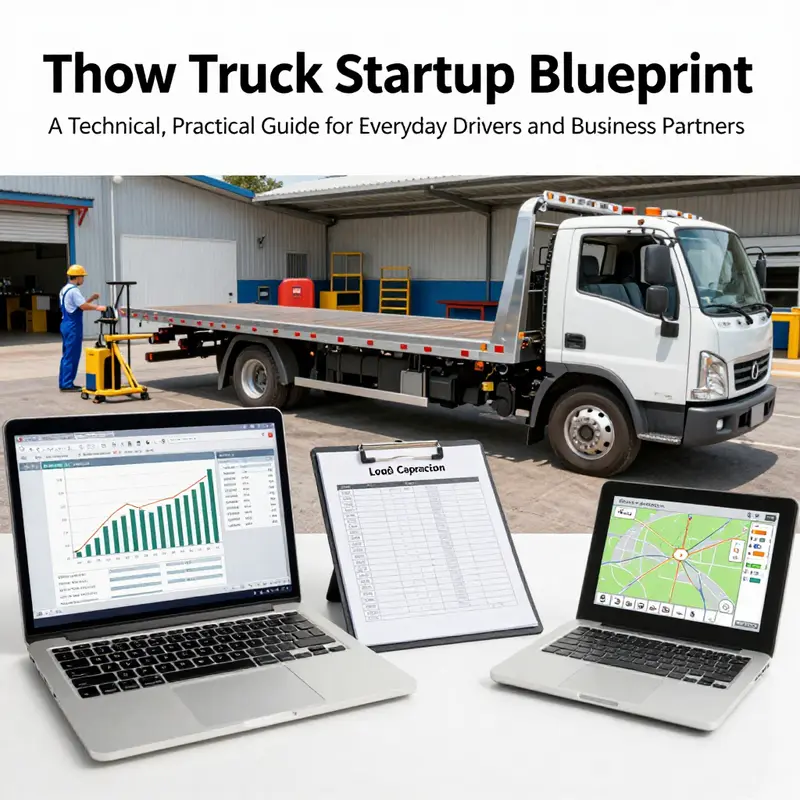
Starting a tow truck company begins long before your first call comes through the dispatch line. It begins with a clear vision of what you want the business to do, paired with a practical map of the capital, gear, and processes required to turn that vision into a reliable service. The core of that map rests on three interlocking pillars: capital investment, equipment selection, and a disciplined operational framework. Each pillar supports the others; neglect one, and the others cannot stand. A realistic view of capital sets expectations from the outset. Most new ventures in this field start with a capital range that can stretch from roughly fifty thousand dollars to well over a hundred fifty thousand dollars, depending on how ambitious the initial footprint will be. This figure covers not just the purchase or lease of one or more tow trucks but also insurance premiums, licensing fees, business registration costs, and the working capital needed to cover the first months of fixed and variable expenses. Add to that the dispatch system, robust communications devices, uniforms, and foundational marketing materials, and you begin to see why the early budget matters as much as the choice of trucks. The numbers may sound daunting, but they are a scaffold that keeps the business grounded. The most critical asset in this setup is the vehicle itself. The choice of truck type—flatbed, wrecker, or hook-and-chain—depends on the services you intend to provide. Flatbeds offer versatility and safety for vehicles with undercarriage damage, while wheel-lifts and hook-and-chain configurations may be more economical for lighter, more routine recoveries. For fleets targeting a broader range of scenarios, a thoughtful mix of equipment often yields the best balance between capability and cost. Regardless of the model, reliability and fuel efficiency become talking points with every purchase decision. The equipment you select is not just about moving cars; it is about moving a business forward. That means investing in fail-safe systems that can withstand the daily grind of urban streets and rural highways alike. Beyond the tow truck itself lies a toolkit of essential gear: winches with proven braking reliability, hydraulic lifts, and tire inflation kits, all supported by a durable stock of chains, straps, safety vests, cones, and portable lights. These are the tools that allow you to respond quickly and safely, reduce the risk of damage to the vehicles you recover, and keep your crew aligned with safety standards. The capital story also includes risk management. Insurance costs can be substantial in this field due to the high-risk nature of towing and roadside work. Expect annual insurance costs to run in the range of several thousand dollars per truck, often between four thousand and eight thousand dollars depending on coverage, jurisdiction, and the specific vehicle type. It is not unusual to budget more for a fleet, especially if you plan to hire operators or open a storage yard. A comprehensive policy should cover liability, auto liability, cargo or on-hook coverage for the vehicles being towed, garage keepers for stored vehicles, and general business liability. With the right coverage in place, you help protect your balance sheet and your reputation. When you add workers’ compensation for employees and possibly umbrella or inland marine coverage for tools and equipment, the protection becomes broader but the cost reflects that breadth. Licensing and licensing fees also shape the upfront expenditure. The regulatory landscape varies by jurisdiction, but most areas require a business license, a tow-specific operator permit, and, for operations that cross state lines, a Department of Transportation number. In places like large municipalities, special permissions or permits may be necessary for specific tasks such as immobilization or heavy-duty towing. The city’s zoning for a storage yard is another critical factor. Without the right permits, even the best service won’t get off the ground. Reading the regulatory tea leaves early, and aligning your plan with local rules, saves delays and fines later. As your business grows, the operational backbone needs to be reliable and scalable. A dispatch and scheduling system becomes the nervous system of the company. A modern setup integrates with GPS to provide real-time location data and route optimization. The latest generation of dispatch software can perform load-matching, allowing a single trip to address multiple nearby jobs when destinations cluster. This can dramatically reduce fuel costs, improve response times, and improve the bottom line. A 24/7 call center or a robust on-call dispatcher team ensures you can take calls at any hour and keep a promise to customers who need help in the most stressful moments. The human element cannot be overlooked. Hiring qualified tow operators, dispatch staff, mechanics, and administrative personnel creates a stable core team. In many cases, the job will require CDL credentials for heavier-duty vehicles, so building a team with the right licenses and safety mind-set is essential. A reliable team also helps you build relationships with key local players: law enforcement, insurance companies, repair shops, and municipal contracts. These relationships provide stable revenue streams and opportunities for volume work that keeps a fleet busy through the month. The branding and customer experience around this operation matter as much as the mechanics. A professional website with a straightforward service booking flow, a visible commitment to safety and reliability, and a consistent appearance on the road all contribute to trust. Vehicle wraps, signs, and uniform branding create a recognizable presence that helps shops and insurance adjusters think of you first when they need help. Marketing is less about flashy ads and more about credibility and accessibility. The core of client acquisition often hinges on relationships: with auto repair shops that refer customers needing towing, with insurance providers that cover roadside assistance or accident recovery, and with local law enforcement for impound and scene management services. You will want to clearly articulate your service capabilities, your geographic coverage, your response times, and your pricing structure. Pricing must balance competitiveness with the true cost of operations, including insurance, maintenance, fuel, personnel, and compliance costs. A sustainable pricing model tracks the cost of fuel, maintenance, and insurance and forecasts revenue across different scenarios: emergency towing after accidents, routine roadside assistance, vehicle storage, and impound services. It also considers the need for premium services in certain markets or at peak hours. A disciplined financial plan helps you navigate seasonal fluctuations and unpredictable demand. It is useful to model a few revenue streams: emergency towing, accident recovery, roadside assistance, and impound storage. Each stream carries its own cost structure, but together they can provide a shield against lean periods. Your pricing should be flexible enough to reflect regional costs, time of day, and urgency, while remaining fair to customers and profitable for the business. You will also want to implement bookkeeping and tax compliance workflows that fit the industry. Industry software that tracks revenue by job type, monitors fuel costs, and flags maintenance needs can be a powerful ally. This kind of data-driven approach informs decisions about fleet expansion, insurance levels, and staffing. The regulatory and market environment is not static; it evolves with technology and policy. Trends such as GPS-based route optimization, telematics for vehicle health data, and mobile payment options for quicker billing are reshaping how a tow company operates. Some operators are forming partnerships with rideshare networks to provide accident coverage or roadside assistance, expanding opportunities beyond traditional private-tow tasks. Staying informed through trade associations or industry publications helps you anticipate regulatory changes, such as emissions standards or municipal towing reforms, and to adjust your model before changes become costly. This is not merely caution; it is a proactive stance to maintain profitability in a shifting landscape. There will be societal and geopolitical considerations that influence demand and costs. Economic downturns can drive repossession activity and increase demand for certain services, while rising urban parking enforcement can broaden the market for impound and enforcement-related work. Conversely, fuel price volatility and supply chain disruptions affect operating costs and timing. Strategic partnerships with local law enforcement, municipal agencies, and insurance providers can create predictable revenue flows, but they also require adherence to strict safety and compliance standards. The most resilient operators design processes that endure through regulatory updates and market cycles. They build a culture of safety, invest in ongoing operator training, and maintain equipment to high standards so that every vehicle in the fleet operates reliably. The compliance dimension is not optional; it is the boundary that keeps the business legitimate and insured to operate. Updates in safety guidelines, pre-operational checks, and regular inspections must be woven into the standard operating procedure. Operators should document maintenance, scheduling, and inspections so that audits and license renewals proceed smoothly. Even small lapses can lead to fines or suspension of the license, which would jeopardize growth plans. In this sense, the groundwork you lay now becomes the scaffold for expansion later. For those who want a practical, formal road map on ownership and the mechanics of starting a tow-truck operation, a well-regarded resource from the Small Business Administration offers a structured example: How to Own a Tow-Truck Company. This guide helps translate the lessons above into a concrete plan for formation, licensing, financing, and first-year execution. The guide is available at Winchester Tow Truck’s website. As you move from concept to reality, it is helpful to keep a single, compelling question in focus: what kind of service do you want to deliver, and how will your capital, equipment, and people support that promise every time a customer calls? The answer to that question will shape the details—what trucks you buy, how you staff, what you insure, and how you price and market your work. In the end, the chapters of your business plan come together as a coherent story of readiness, reliability, and resilience. By investing thoughtfully in capital, selecting equipment with an eye toward safety and versatility, and building an operational framework that can be trusted any hour of the day, you position your tow truck company not just to survive but to grow. The journey from a few hundred feet of open road to a thriving fleet is paved with careful budgeting, disciplined procurement, and a culture that treats safety and service as non-negotiables. It is not merely about moving vehicles; it is about moving a business forward with clarity, accountability, and momentum. For the aspirant who understands this, the road ahead is less a risk and more a responsible pathway to sustainable success. And with every completed tow, every satisfied customer, and every regulated mile driven, your foundation becomes stronger, your brand more trusted, and your operation more capable of weathering tomorrow’s challenges.
Frontier Logistics: Marketing, Revenue Strategies, and Competitive Positioning for a Tow Truck Startup
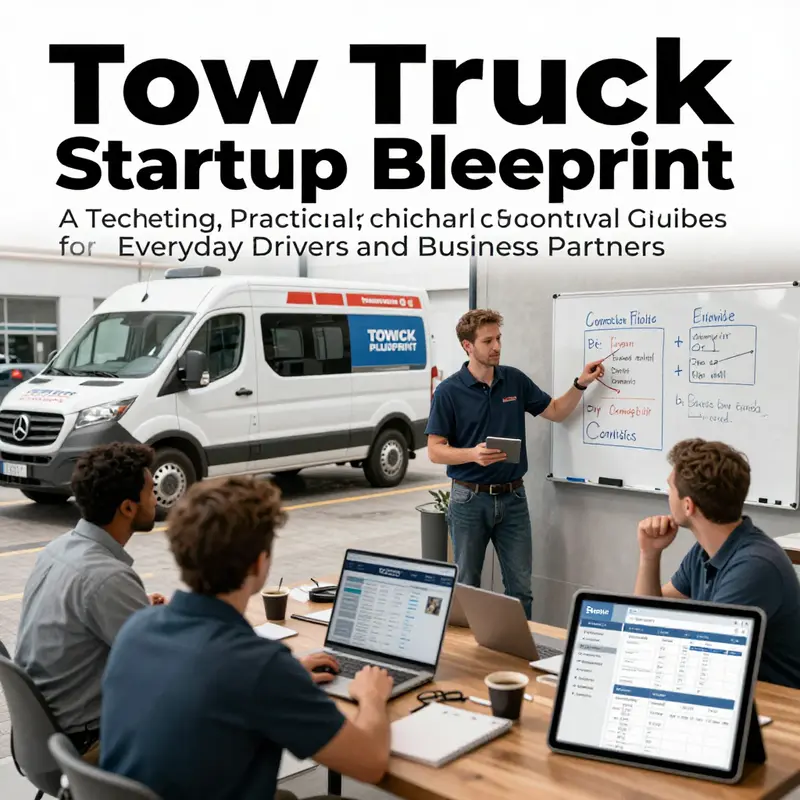
A tow truck startup arrives at the crossroads where service needs meet operational discipline. Marketing is not a mere prefix to a launch; it is the compass that orients every decision from fleet composition to dispatch protocols. Revenue strategy is more than a price list; it is the architecture that turns a handful of urgent calls into a sustainable flow of business across seasons, weather, and shifts in local demand. And competitive positioning is the lens through which a young company interprets market signals, anticipates bottlenecks, and identifies underserved corners of the service area. The chapter that follows treats marketing, revenue design, and competition as an integrated system rather than three separate gears. The road ahead is practical, measurable, and grounded in the realities of a market that rewards reliability, speed, and transparent value.
First, framing the market starts with a precise map of service area and customer types. A tow company does not win by trying to be all things to all people. Instead, it wins by being present where the demand concentrates and by speaking the language of the primary clients. Private motorists who find themselves stranded need a dispatch that feels dependable the moment they call. Auto repair shops rely on a consistent partner who can handle both routine tow jobs and complex recoveries. Insurance providers and roadside assistance networks look for fleets with predictable response times, documented safety practices, and seamless billing. Law enforcement and municipal contracts demand reliability around compliance, chain of custody for stored vehicles, and robust reporting. As a result, the initial marketing framework should articulate who the target customers are, which neighborhoods deserve the fastest entry, and how the service differentiates itself in those spaces.
A core differentiator that resonates across customer segments is the promise of availability. In tow service markets, 24/7 coverage is often the baseline, yet it is the execution behind that promise that builds trust. Speed matters, but so does consistency. A company can claim rapid response times, yet if the first call yields a late arrival or a miscommunication about pricing, trust erodes. Therefore transparent pricing becomes a cornerstone of the brand. Customers want to know the base charge, the per mile rate, and how after hours or emergencies are billed. When those elements are stated clearly on a clean website and reinforced by dispatcher scripts and field practices, the brand earns credit for honesty before the first mile is towed. This is where certified technicians, upholding professional standards, contribute not just to safety but to the legitimacy of the business in the eyes of clients who demand accountability.
An effective online presence multiplies these assurances. A credible website serves as the first touchpoint for most customers. It should feature a straightforward service booking portal, transparent pricing snippets, and a simple way to request ETA updates. A mobile-friendly interface matters because many users initiate a tow while mobile. The site should also host practical content that answers common questions and demonstrates authority in the field. Search engine optimization becomes essential here. Local SEO helps the company appear in search results when people look for towing services in the immediate vicinity. Content that explains how the dispatch process works, what information to prepare on arrival, and the typical steps after a tow can improve both trust and conversion.
Beyond the website, active engagement on social media reinforces the brand as approachable and dependable. A presence on platforms such as Facebook and Instagram provides a channel for real time updates, service highlights, and customer testimonials. Social profiles should reflect the same tone as the website: concise, helpful, and transparent. Engagement is not a one way street; it invites reviews, questions, and feedback that the business can address publicly. Responding promptly to reviews, whether positive or negative, signals that the company values its customers and is willing to learn. In tandem with social activity, targeted digital advertising can be calibrated for local impact. Google Ads can drive timely demand for urgent tows, while location-based social ads can reach drivers in the neighborhoods most likely to generate calls during peak hours. The objective is not merely exposure but a measurable impact on did they call or did they book.
A practical marketing discipline for a tow startup is to codify differentiators into consistent messaging. The voice of the brand should emphasize speed, reliability, and clear pricing, but it should also highlight aspects of service that matter most in a tow context. For example, a fleet that can dispatch with real time ETA updates, offers transparent billing, and maintains a clean safety record stands out in a crowded field. The messaging should translate into tangible elements on the ground: the uniforms and vehicle wraps that project a professional image, the dispatch desk that can confirm a start time within minutes, and the field crews who present themselves with the same level of courtesy and discipline regardless of the hour. Each interaction—from a customer call to a post-service follow up—contributes to a cohesive brand story that customers remember and share.
Partnerships form a reliable backbone for new entrants into the market. Building relationships with local auto repair shops, gas stations, and car dealerships can yield steady referrals. These partnerships work best when there is a formal mechanism for collaboration—a simple referral agreement or a preferred vendor arrangement that ensures the partner receives timely updates and predictable invoicing. Equally important are relationships with insurance providers and roadside assistance networks. These entities value consistent performance, and they can offer volume through contracts that smooth revenue fluctuations. To cultivate partnerships, the startup should present data that demonstrates past performance indicators: average response time, on time arrival rate, and a track record of safe, compliant recoveries. The more the company can quantify reliability, the more credible its partnership proposals become.
Packaging revenue around multiple service lines is a practical pathway to resilience. Tow services can expand through a structured set of ancillary offerings that complement the core towing capability. Lockout assistance, jump starts, fuel delivery, and vehicle storage are not merely add ons; they are extensions of the same operational footprint. The pricing model should reflect the complexity and resource use of each service. A tiered structure can distinguish between basic tow services, long distance recoveries, and specialized recoveries that require heavier equipment or additional personnel. A transparent price ladder helps customers compare options without nerve jangling surprises. For fleets and frequent users, a subscription or membership model can deliver predictable costs for both sides. A monthly or yearly plan can include a discounted rate for routine calls, priority dispatch windows, and a dedicated account manager. This approach can stabilize revenue, especially for a company operating in markets with seasonal demand or variable weather patterns.
Another avenue for revenue stability lies in pursuing contracts with fleets and municipal bodies. For a tow startup, this means more than signing a single agreement; it requires a service level agreement that defines response times, reporting obligations, storage procedures, and billing cycles. Municipal contracts often demand compliance with regulatory standards, robust insurance, and clear reporting formats. The company can differentiate itself by offering advanced dispatch capabilities, such as GPS tracking for every unit, automated ETA communication to the client, and integrated billing that reduces friction at the payment stage. The longer the contract, the greater the incentive to invest in technology and processes that sustain performance over time. This is not merely about securing a large job; it is about building a stable stream of demand that supports hiring, maintenance, and future fleet expansion.
From a pricing perspective, the market rewards clarity and fairness. A base call charge paired with per mile rates and surge pricing for after hours creates a pricing ecosystem that reflects both effort and opportunity cost. The startup should avoid a confusing mix of hidden fees or inconsistent surcharges. Instead, it should publish a clear price framework and train dispatchers to explain any deviations in plain terms. The concept of dynamic pricing can be applied ethically by aligning incremental costs with legitimate service variables such as distance, time of day, and the complexity of the recovery. When customers trust the pricing, they are more likely to accept the quoted cost and recommend the service to others. Routine invoicing, timely electronic payments, and straightforward dispute resolution contribute to this trust and reduce revenue leakage.
Technology underpins both efficiency and customer trust. A modern tow operation relies on a dispatch system that optimizes routes, reduces fuel use, and shortens response times. Real time GPS tracking for customers creates visibility and reduces anxiety during an incident. A mobile payment capability for customers who want to settle on scene makes the process seamless and reduces the chance of delayed payment. The platform can also deliver analytics that inform daily staffing decisions, enabling the company to allocate resources to peak hours and high demand zones. The discipline to collect and analyze data is what separates a growing startup from a small, reactive operator. By translating data into action, the business can continuously improve service levels, sustain profitability, and outpace competitors who rely on reactive, ad hoc practices.
Marketing, revenue, and competition analysis do not exist in isolation. They feed into every operational decision—from the composition of the fleet to the layout of the dispatch floor. For example, if data shows that a particular area experiences frequent breakdowns near the downtown corridor, the company can deploy additional units closer to that zone and adjust marketing messages to speak directly to drivers and local repair shops there. If a partner shop reports frequent bottlenecks in the intake process, the startup can collaborate on a smoother intake protocol that benefits both the shop and the tow operator. The guiding principle is that every decision should be traceable to a business outcome—faster calls completed, higher on time delivery, lower cost per tow, increased customer satisfaction, or stronger partner relationships. This integrated approach makes marketing more than a storefront display; it becomes a driver of operational discipline and profitability.
To illustrate the practical trajectory, consider the path from awareness to loyalty. Awareness is built through a steady drumbeat of online presence, credible content, and visible branding on service vehicles. Lead generation converts awareness into inquiries through a clear value proposition and a simple path to booking. After the first service, a follow up can invite feedback, request reviews, and close the loop on service delivery. The ongoing relationship with a customer becomes a repository of data that informs what to offer next—perhaps a bundled storage option for frequent recoveries or a seasonal maintenance reminder offered as a value add. The more seamless and transparent the customer experience, the more likely a client is to choose the same provider again and to recommend it to others. In a market where a few seconds of delay or a small pricing ambiguity can tilt loyalty, the ability to deliver consistent, high value experiences becomes the strongest competitive differentiator.
The literature and industry data that inform this approach emphasize a practical reality: the market rewards operators who combine strong branding with disciplined financial management. A well marketed service will attract a steady flow of calls, but it is the revenue architecture that sustains growth through the year. A company that diversifies its revenue streams and binds them to clear operational capabilities is better positioned to weather downturns, maintain fleet reliability, and invest in improved technology. As seen in government and industry resources, the small business landscape in the transportation and service sector benefits from a balanced mix of marketing, pricing discipline, and strategic partnerships. The U.S. Bureau of Labor Statistics and related industry data remind practitioners that small ventures in this space thrive when they align marketing effectiveness with rigorous cost control and performance metrics. This balance is not a luxury; it is the foundational habit of a resilient tow startup. To dive deeper into the practical aspects of building a sustainable business, you can explore the detailed guidance on owning a tow truck company through practical resources such as how-to-own-a-tow-truck-company. The integration of marketing, revenue strategy, and competitive insight is the engine that powers an enduring operation.
In sum, marketing for a tow truck startup should be purposeful, not passive. Revenue models should be diversified yet coherent, reflecting the realities of both demand patterns and operating costs. Competition analysis should move beyond scorecards to a watchful examination of gaps and opportunities that can be filled with credibility, speed, and fair pricing. Together, these elements create a business that not only survives the first year but continues to grow through the next. The road ahead demands disciplined execution, continual learning, and a willingness to adapt to changes in technology, regulation, and market sentiment. When marketing messages, revenue design, and competitive positioning align, a tow startup can transform from a hopeful venture into a trusted community partner with predictable demand and sustainable profits.
External resource: https://www.bls.gov/
Final thoughts
Launching a tow truck company is a balancing act between compliance, capital discipline, and customer-centric service. When licensing and regulatory readiness is established, a thoughtfully chosen fleet and dispatch setup unlock reliable operations. Marketing and revenue strategy then translate service capability into recurring contracts and steady cash flow, while ongoing risk management keeps risks in check. For Everyday Drivers, Residents & Commuters, Truck Owners, Auto Repair Shops & Dealerships, and Property Managers, the value proposition is simple: fast, safe, and responsible recovery and roadside help when it matters most. The three pillars—Regulatory readiness, Practical fleet and ops setup, and Market-driven growth—work in concert to create a tow truck company that can scale with community needs. Ready to elevate your ride? Summit Fairings delivers premium, custom-fit fairings that blend style and durability. Whether you’re chasing speed or turning heads, we’ve got your bike covered. Don’t wait—transform your machine today. Click, customize, and ride with confidence. Your perfect fairing is just a few clicks away. Act now! About Company: We are one of the leading motorcycle fairing export sites, with over 3,000 styles across almost all motorcycle models. Buy from summitfairings.com, and pay 10-40% less than the prices on other sites. If you have any questions, we promise we will have your answer within six hours.