
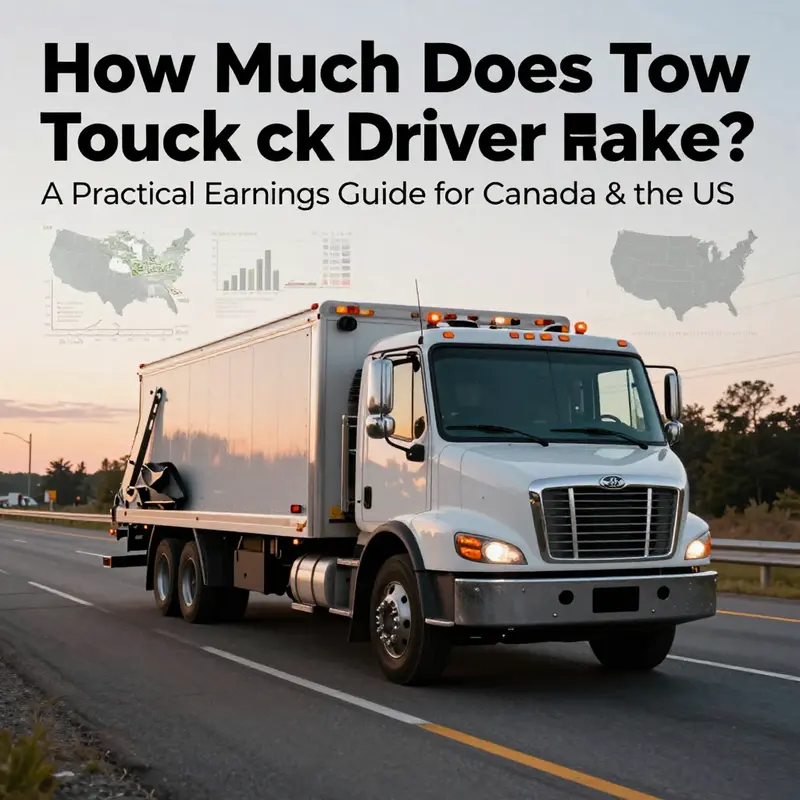
Tow truck drivers keep roads moving, but the paycheck attached to that role varies as widely as the terrain they cover. For everyday drivers who rely on on-demand rescue, residents planning household budgets, truck owners weighing fleet economics, auto repair shops coordinating roadside support, and property managers overseeing service levels, understanding earnings is more than curiosity—it’s a planning tool. This guide translates the latest Canada–US pay landscape into a clear framework: a broad economic overview, regional pay dynamics, and the concrete impact of experience, certification, and job type on take-home income. Each chapter builds toward a practical picture of what tow truck work pays in different contexts, how drivers can advance, and how businesses can align compensation with capability and demand.
Tow Truck Driver Earnings Across North America: A Thorough Economic Snapshot of Pay, Paths, and Places
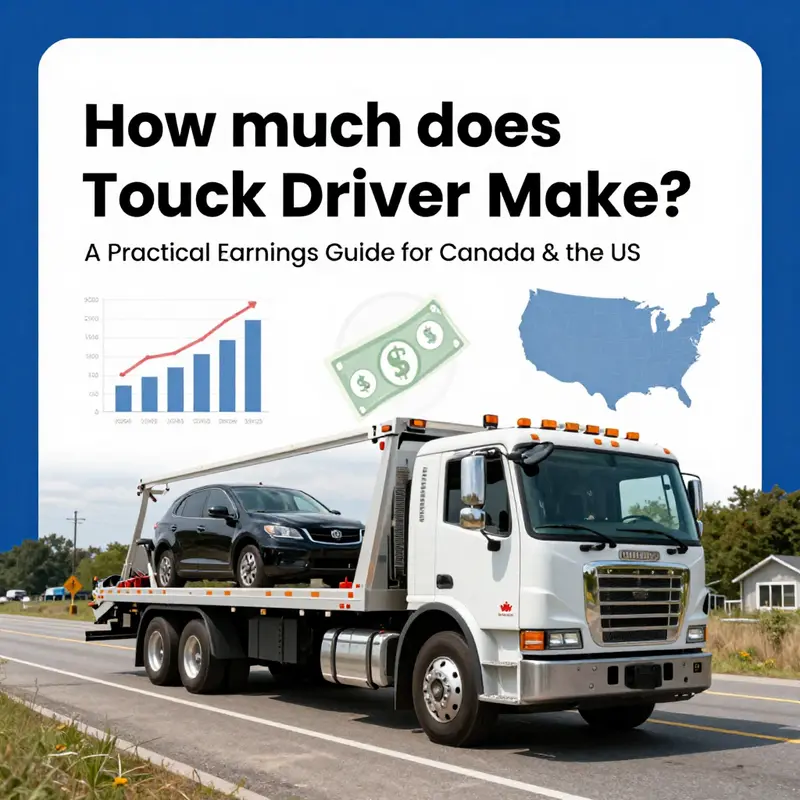
Pay for tow truck drivers is a study in contrasts. It shifts with the weather of the economy, the pressure of demand, the cost of living, and the specific needs of the places where a driver works. It is not simply a single number but a spectrum that reveals why someone can make a comfortable living in one city and struggle to keep up in another. The chapter that follows you through this terrain, weaving together data from Canada and the United States, is less a list of salaries and more a map of the forces that shape what a tow truck driver earns. It explains why the same job title can come with markedly different pay depending on whether a driver is stationed in a bustling metro, a resource-driven frontier town, or a cross-border corridor where fleets compete for urgent on-call work. It also explains how earnings evolve as a driver gains experience, earns licensing upgrades, or takes on specialized equipment and responsibilities. This is not a sales pitch for any career path; it is a careful synthesis of real-world compensation patterns, the practical realities facing drivers, and the longer arc of market dynamics that keep pay in motion.
Across North America, the most reliable way to think about tow truck pay is to start with three linked dimensions: location, experience, and employer. Location matters because pay often tracks the local cost of living and the density of demand for towing services. Experience matters because with more time on the road comes a greater capacity to handle complex recoveries, manage incident scenes, and operate heavy equipment that commands a premium. Employer matters because some fleets are larger, more specialized, or offer more comprehensive benefits and overtime opportunities than others. When you combine these dimensions, you begin to see a pattern: top-paying regions, dynamic shifts tied to shifts and on-call requirements, and the practical realities of pay that can look different on a per-hour basis versus a monthly paycheck or a per-call stipend.
In Canada, the national landscape is shaped by urban hubs, provincial economies, and the structure of the towing industry. The data consistently show that the average entry barrier—whether you commence as a light-duty tow operator or a flatbed technician—will anchor around a base hourly rate that hovers in the mid-to-high teens. Recent compilations place the Canadian average in the neighborhood of about 17.75 to 17.85 per hour, depending on the source and the year of data collection. This baseline matters because it forms the floor from which regional differentials rise or fall. In this context, the city-level variations illuminate how pay can surge when the job demands more specialized equipment, longer response times, or more intense on-call cycles.
Richmond, British Columbia, stands as a clear emblem of regional variance within Canada. A driver working in Richmond can expect an average that climbs to roughly 24.06 per hour, a figure that sits about 36 percent above the national average. This isn’t simply about cost of living; it’s about demand density, the willingness of customers to pay for rapid response, and the fierce competition among local fleets to win emergency service contracts. Richmond and surrounding Vancouver-area markets underscore a broader pattern: proximity to a major metropolitan economy, high incident volumes, and a robust private towing sector tend to lift base wages and create a premium for experienced operators who can handle complex roadside recoveries, accident scenes, and time-critical calls.
To get a broader sense of the Canadian map, consider Vancouver as a benchmark, with multiple nearby cities showing similar base pay levels around the mid-to-upper teens. Victoria and North Vancouver show comparable figures, reflecting the tight market that comes with coastal urban centers where traffic density and incident frequency are consistently high. Yet regional pockets defy this generalization. In private fleets that report more aggressive pay practices, such as Four Star Towing in some markets, drivers have reported averages in the neighborhood of 27.25 per hour—roughly 14 percent above the national average. This jump is not merely a statistic; it translates into more predictable overtime opportunities, better benefits, and a greater stabilizing effect on take-home pay when seasonal or on-call volumes spike during holidays, boating season, or winter travel rushes.
Beyond the hourly baseline, many Canadian operators broaden total compensation through a suite of additional elements. Health insurance, retirement plans, and performance bonuses frequently accompany larger fleets and emergency-response outfits. Overtime pay—often a critical component for drivers who arrive at the scene of a breakdown, a collision, or a heavy roadside incident—can meaningfully raise monthly earnings. A driver who signs on for extended on-call shifts, weekend rotations, or night hours may see noticeable increments in take-home pay, especially when paired with training that expands the scope of work to include heavier tow trucks, winching, or recovery in challenging terrains. In Vancouver’s market, where the cost of living pressure is high and the demand for rapid response remains constant, these compensatory elements frequently align with the broader economic context: a relatively stable job market and a willingness among employers to offer competitive benefit packages to attract skilled operators.
The Canadian market does not exist in a vacuum, however, and recent 2026 data add a nuanced layer to the picture. The average hourly wage in Canada remains in the high teens, but the dispersion around that mean makes a huge difference in a driver’s actual monthly earnings. While Richmond may anchor a high-end pay tier, other urban centers—Vancouver itself, Victoria, and North Vancouver—show close variations that arise from the mix of employers, from small independent operators to larger fleets that command broader service contracts and dedicated on-call resources. Private companies with structured pay scales and formal benefits often yield more robust compensation compared with smaller outfits that may compensate with a higher hourly rate but fewer long-term or predictable benefits.
This is where the chapter’s cross-border perspective becomes especially revealing. Across the border in the United States, the pay narrative shifts in both precision and scale. The U.S. average hour rate for tow truck drivers sits higher in relative terms—roughly in the range of 21.15 per hour on average. Weekly earnings in the United States, when translated into standard workweeks, average around 1,736 dollars, with top earners climbing toward 3,500 dollars per week in high-demand markets or with extensive overtime and premium shift differentials. The most lucrative markets include metropolitan centers and areas where the demand for rapid response is intense, such as Washington, DC; Phoenix, Arizona; and Salt Lake City, Utah. In these places, the intersection of dense traffic, a broad network of towing providers, and a high volume of callouts can sustain a wage structure that pushes hourly rates higher, especially when drivers accrue substantial overtime, work on holidays, or participate in unionized settings where negotiated contracts guarantee higher pay and more comprehensive benefits.
Of course, the U.S. data are not a single story either. The national average hides significant variation by state, county, and even city. A driver working in a large metro area often finds the rate is reinforced by a combination of higher base pay and a robust schedule of on-call shifts. For new entrants, the starting pay might be closer to the bottom end of the spectrum, but with time and demonstrated reliability, opportunities to move into heavy-duty or flatbed positions, or to operate in specialized fleets, can lift earnings considerably. In many U.S. markets, token pay for the first year expands as drivers accumulate experience and gain access to more complex tasks, including winching on uneven terrain, truck-to-truck recoveries, and exclusive contracts that require particular licenses or certifications.
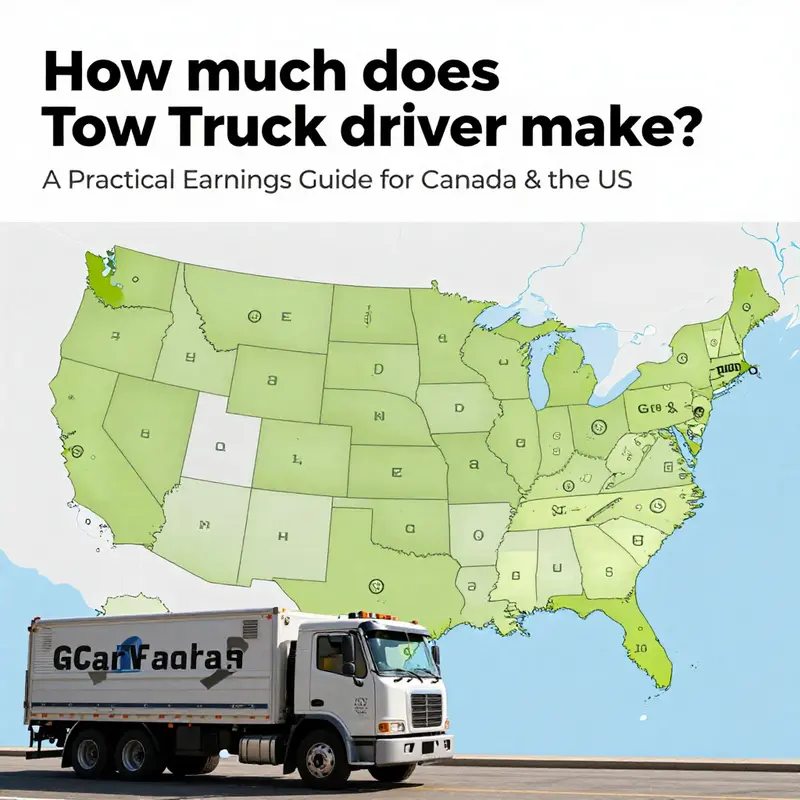
The comparison between Canada and the United States, then, is not simply a question of who pays more. It’s about where in a country or region the work happens and what the work entails. The Canadian narrative is strongly shaped by markets like Fort McMurray, Alberta, where Class 3 tow truck drivers command notable premiums. In Fort McMurray, for instance, Class 3 towing roles have been reported in the range of 40 to 45 per hour. That level of pay reflects the rugged working conditions, the remote nature of some assignments, and the specialized licensing required to operate heavy or multi-axle towing equipment in demanding environments. Alberta has other high-paying pockets too, including 39 per hour in Calgary, where a combination of heavy-duty towing demand and the presence of large industrial and mining operations sustains elevated pay scales. These figures illustrate how a driver’s earnings can hinge on the underlying industry mix in a region: resource extraction, heavy transport infrastructure, and 24/7 emergency services drive higher pay for those who can fulfill the specialized demands of the job.
Meanwhile, in Nova Scotia and other eastern provinces, the average tends to show a different rhythm. Dartmouth might report an average near 15.70 per hour, while nearby Halifax finds pay levels more competitive, in the vicinity of 27.39 per hour. The divergence within relatively close geographies highlights a broader truth: the market for tow services is highly local. Local price sensitivity, the prevalence of private fleets, municipal contracts, and the density of roadside incidents shape how much drivers earn day-to-day. The Canadian map thus presents a mosaic of pay that is both steady in its overall stability and dynamic in its city-to-city variation. The United States, by contrast, tends to present a broader range with greater dispersion in the mid-range bands, but with robust top-end opportunities in major markets that mirror or exceed Canada’s highest regional pay in certain contexts.
All of this points toward a practical takeaway for anyone considering a career in towing: the entry-level hourly rate is a starting point, not a fixed ceiling. The path to higher earnings is typically built on a mix of on-the-job experience, certified credentials, and the ability to handle heavier equipment and more complex recoveries. In Canada, a driver who earns a Class 3 license and operates heavy or flatbed tow trucks can gain access to premium work, especially in markets where road incidents, weather events, and large industrial operations converge. In the United States, the opportunity to push earnings upward tends to come with specialization, union representation, and a willingness to work higher-demand shifts or to participate in fleets with broader service-level contracts that reward performance and reliability with higher pay and better benefits.
The figure of monthly income can also be analyzed through a practical lens. In Canada, several postings for Vancouver-area roles reported monthly compensation in the range of around 4,000 to 8,000 Canadian dollars. When translated into hourly terms, this monthly range corresponds to roughly 20 to 40 dollars per hour, depending on the number of hours worked and the structure of overtime, which can be a more significant component in emergency-response schedules. The same logic applies to U.S. markets, where a weekly pay structure can generate high weekly totals when overtime and premium shifts are included. In both countries, the economics of towing is frequently a composite of base pay, overtime, bonuses, and benefits that collectively determine the most meaningful measure of earnings for a given driver.
For readers following the latest numbers, the landscape is best understood as a living map rather than a fixed chart. Real-time job postings and salary reports from reputable boards show that the pay landscape shifts with seasonal demand, regulatory changes, and the evolution of the industry. It is wise to consult current postings and to factor in regional cost-of-living differences when evaluating earnings. As you calibrate your expectations, remember that the best pay is often tied to a combination of experience, certification, and the willingness to take on more specialized or demanding assignments. This means the most lucrative opportunities typically lie not in a single city, but in the cities and regions where heavy-demand incidents align with fleets that offer attractive compensation structures, professional development opportunities, and stable work schedules.
To explore the current numbers in a more concrete way, you can refer to real-time salary data across Canada. The data compiled for Canada and the United States show clear patterns, but the precise pay rate a driver sees will depend on the specific job postings, company policies, and local market conditions. For those who want a practical handle on the latest figures and city-specific comparisons, a credible source tracks salaries across multiple employers and documents how pay shifts over time. This kind of data is especially useful for new entrants evaluating whether to pursue additional licenses or to specialize in heavier equipment, where the pay differential can be substantial. Readers who want to see how one city stacks up against another can use a few benchmark numbers: the Richmond, BC rate around 24.06 per hour, the Fort McMurray Class 3 premium around 40–45 per hour, and the U.S. top markets around 25–30 per hour depending on the city and the company. These numbers are not merely curiosities; they are a practical map for planning a career, negotiating pay, and choosing an employer whose compensation philosophy aligns with a driver’s skills and career goals.
In short, tow truck driver earnings are a product of place, proficiency, and the packages offered by employers. The strongest pay stories emerge where a driver can combine heavy equipment operation, accident scene management, and reliable on-call performance with a fleet that values skill, safety, and continuity of service. The chapter’s takeaway is not a hard rule but a framework: earnings rise with regional demand for emergency and heavy-duty towing, with the steepest rises typically seen in resource-rich or high-cost urban centers that run around the clock and where the workforce remains in high demand. The system rewards expertise and reliability, and it rewards the willingness to step into demanding assignments and tight time windows. If you take the time to build the right credentials, accumulate experience, and seek out the employers who offer not just wages but a path to skills development, the pay scales can reflect the value you bring to the road rescue ecosystem. The broader lesson is that a tow truck driver’s compensation is a measure of market needs as much as it is a measure of personal capability.
For readers seeking a concise reference point during the journey of evaluating a towing career, consider the following: the highest paying pockets in Canada tend to cluster around Fort McMurray and Richmond, where specialized licenses and heavy equipment are common; the broader Canadian market remains stable in the high-teens to mid-20s per hour with meaningful variance by city and employer; in the United States, the pay landscape tends to offer higher ceilings in large metros with significant overtime and benefits, though regional costs of living and union presence can shape the actual take-home amount. The general principle remains: salary data are a guide, not a decree. Actual earnings will depend on the combination of locale, experience, and the particular employer’s compensation structure. If you are weighing a career in towing, you should ask about base pay, overtime rates, on-call compensation, benefits, licensing requirements, and opportunities for advancement within the company. Each of these pieces matters because they alter the total compensation picture and influence long-term financial stability and career satisfaction. For a practical sense of current numbers, you can consult real-time salary data from respected sources and compare the patterns across provinces and states. And for a quick, internal sense of how pay looks within this industry, you can read more on common questions about earnings at the internal resource linked here: How much do tow truck drivers make?. This context helps set expectations and informs decisions about training, licensing, and the career path that best aligns with personal goals and financial needs.
Finally, it is useful to reference external data to ground your expectations. For real-time data on Canada-specific tow truck driver salaries, consult the salary pages and employer reviews found on reputable job boards. A current snapshot from Indeed Canada shows job postings and profiles reflecting regional pay variations, company differences, and how overtime and on-call work contribute to total earnings. See the external resource for the latest numbers and city-by-city comparisons: https://ca.indeed.com/career/tow-truck-driver/salaries
null
null
Tow Truck Driver Earnings: How Experience, Certification, and Job Type Shape Pay
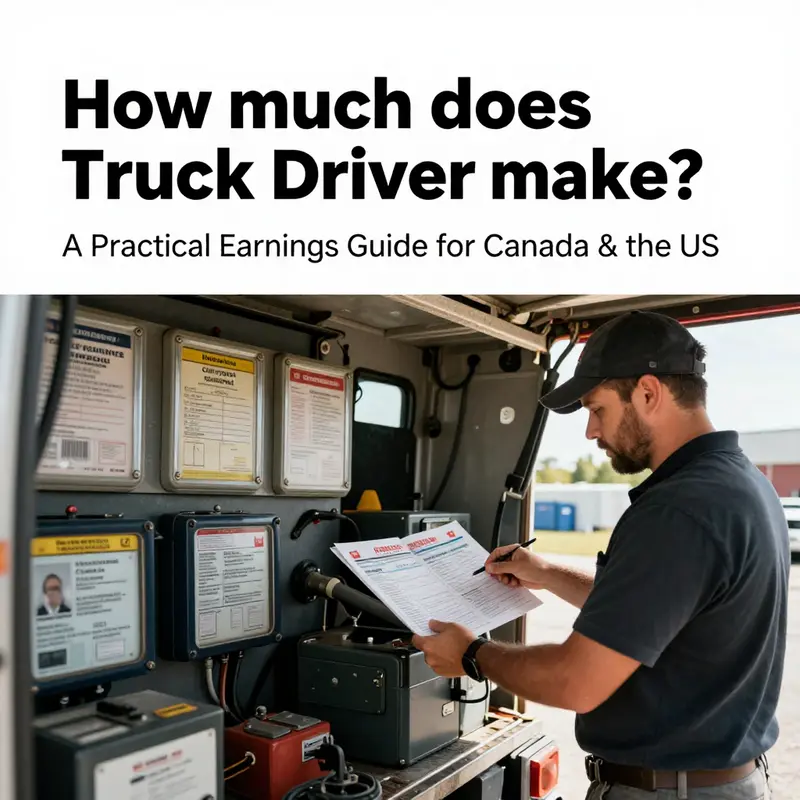
Wages for tow truck drivers follow a geography- and skill-driven ladder. In the United States, pay typically sits in the low to mid-twenties per hour, with higher rates in major metro areas and when overtime or emergency calls are common. In Canada, wages vary more by province and city; some markets cluster around the minimums while others offer significant premiums for heavy-duty tows or remote work. Certifications and licenses matter: credentials such as heavy-vehicle operation and specialized recovery training can open access to higher-paying jobs and to fleets that command higher billing rates. The type of work matters too: urban dispatch roles can deliver steady hours, while long-haul or remote recoveries often pay a premium through overtime and on-call bonuses. Experience generally translates into better assignments and safer operation, which in turn supports higher earnings. The practical takeaway is that to raise earnings, focus on gaining reliable experience, pursuing relevant credentials, and targeting roles that combine high demand with challenging, higher-risk tows.
Final thoughts
Across Canada and the United States, tow truck driver earnings hinge on location, licenses, and the type of tow work. Regions with high demand or specialized service—Fort McMurray, Richmond, and major urban centers in the US—tend to offer the strongest pay, while rural markets can be more variable. Growth typically follows gaining hands-on experience, securing advanced licenses (such as Class 3), and choosing work that matches equipment capability (flatbed, heavy recovery, mixed fleets). For everyday drivers and property managers, this means recognizing the value tied to reliable, on-call availability and understanding wage dynamics when negotiating service level agreements or selecting fleet partners. Auto shops and dealership fleets should align compensation with the complexity of the tasks they outsource, while truck owners planning a small operation should build in maintenance, insurance, and shift rotations to sustain earnings. The core message is that pay is a function of risk, skill, and demand, not a fixed hourly rate. Ready to elevate your ride? Summit Fairings delivers premium, custom-fit fairings that blend style and durability. Whether you’re chasing speed or turning heads, we’ve got your bike covered. Don’t wait—transform your machine today. Click, customize, and ride with confidence. Your perfect fairing is just a few clicks away. Act now!
About Summit Fairings: We are one of the leading motorcycle fairing export sites, with over 3,000 styles across almost all motorcycle models. Buy from summitfairings.com, and pay 10-40% less than the prices on other sites. If you have any questions, we promise we will have your answer within six hours.