
Roadside incidents disrupt plans in an instant, and tow truck drivers are the critical link between disruption and safe resolution. For Everyday Drivers, Residents & Commuters, Truck Owners, Auto Repair Shops & Dealerships, and Property Managers, tipping a tow truck driver can feel like a nuanced decision shaped by etiquette, money, and policy. The truth is more straightforward than it first appears: tipping is customary in many parts of the service world, and for tow operators who often work in strenuous, high‑risk conditions, gratuities can supplement income and reflect recognition for skill, safety, and efficiency. While not every call ends with a tip, understanding when tipping is appropriate—and how much to give—helps you navigate roadside service with greater clarity and fairness. This piece distills practical guidance from norms, economic realities, calculation rules, company cues, and scenario‑based ranges so you can apply consistent, fair tipping practices across diverse situations. You’ll find actionable frameworks that apply whether you’re stranded on a city street, coordinating a fleet tow for your business, or helping a property resident get back on the road. Across five chapters, we connect the dots between social etiquette, driver income, precise tipping math, organizational policies, and real‑world ranges, so the decision to tip becomes an informed, consistent action rather than guesswork. The audience‑facing chapters aren’t abstract theory—they’re anchored in common roadside realities: a quick jump‑start on a busy morning, a difficult recovery from uneven terrain, or a long transport that tests driver endurance. By the end, you’ll know when to tip, how much, and why your gesture matters—across personal travel, commercial fleets, and property management operations—while respecting the driver’s skill and the service context. The fifth chapter, in particular, translates these ideas into practical ranges you can apply right away, regardless of whether you’re stopping by a local repair shop, coordinating a tow for a tenant, or supporting a roadside service partner during peak hours.
Tow Truck Etiquette Unpacked: Decoding When to Tip and What Your Gesture Signals
The moment a tow truck pulls up is rarely a moment of simple expense. It is a moment of tension, a pause in a stressful event, and a decision point about how to respond to a service encounter that is both practical and human. The core question—should I tip a tow truck driver?—sits at the intersection of gratitude, fairness, and policy. The answer is not a single verdict but a calibrated judgment that depends on the context of the call, the driver’s conduct, and the norms of the local service culture. In practice, this means listening not only to your wallet but also to the cues you see and hear from the driver and the company. Tipping, in the towing world, is neither universal nor universally rejected. It sits in a gray area that shifts with place, situation, and the nature of the job.
To understand the landscape, it helps to distinguish how tow services are typically compensated from how tips operate in other service industries. In many fields—restaurants, hospitality, personal care—tips are a routine part of income and are expected as a sign of satisfaction. In towing, however, compensation structures vary more widely. Some drivers are paid fixed rates or hourly wages, while others, particularly independent operators or small fleets, may face tighter margins that can make tips a meaningful supplement. This divergence is part of why the tipping question feels unsettled to many people. Some guidance emphasizes that tipping is optional, while other voices point to circumstances in which a tip can acknowledge exceptional effort. The nuance matters. It helps to imagine tipping not as a requirement but as a signal of appreciation for service that goes beyond the ordinary.
A useful way to frame the discussion is to consider three layers: policy, performance, and circumstance. Policy refers to company rules or local norms that may bar or encourage tipping. Some towing companies clearly state policies about tips, while others leave the practice to the discretion of the driver or the customer. In the absence of a formal stance, drivers themselves may have strong opinions about tips, depending on their business model and the expectations of their customers. Performance captures how the driver carries out the job: the driver’s professionalism, efficiency, safety practices, and willingness to assist beyond the basic tow. Circumstance looks at the specific situation—weather, access challenges, the complexity of recoveries, and the emotional or logistical strain of a roadside incident. It is in the interplay of these layers that tipping decisions gain texture.
From a practical standpoint, there is no universal rule that applies in every scenario. Some reputable guidance notes tipping is not customary or expected in most tow-service interactions because the compensation is structured to cover labor, fuel, and equipment. This point reflects the broader industry reality: towing is a service with its own economics, and not every driver or company relies on gratuities to stay afloat. Yet, there are compelling reasons to consider tipping in select cases. When a driver goes above and beyond under duress—during an emergency, in severe weather, or when they go out of their way to retrieve a car from a difficult location or to aid with related issues like retrieving spare keys or coordinating a quick connection to a mechanic—the gesture can feel proportionate to the extra effort. In such moments, a small tip can communicate gratitude in a way that a thank you alone might not.
In many discussions, the range of an appropriate tip is framed in flexible terms. If the job is straightforward and completed without complication, a tip is not expected. If the job is more demanding, or if the driver provides additional assistance beyond towing—help with securing the vehicle, guidance on safe parking, or coordinating with other services—a tip becomes more reasonable. The commonly cited figures in informal guidance suggest that for modest service, a tip in the range of five to ten dollars may be appropriate if the driver has been helpful, courteous, and efficient. For more demanding tasks, or when the incident is particularly stressful, a higher amount can be warranted. Some guidelines even suggest tipping a share of the total tow fee, in the spirit of a percentage-based gesture, though this is less universally recommended in towing than in restaurants. The important takeaway is to read the room: gauge the complexity of the job, the driver’s demeanor, and the visible effort, then decide.
If you’re unsure whether tipping is expected, look for cues. A driver may mention tipping in passing, or a company may publish a policy that is visible on signs or digital interfaces at the dispatch window. If no cues are present and you’re uncertain, it is prudent to treat tipping as optional. In such moments, a simple gesture—such as a modest cash tip or a note of appreciation—can still convey respect for the driver’s work without creating discomfort or awkwardness. And if you want a quick rule of thumb, a modest gesture of ten dollars, or a small percentage of the tow fee if you feel the service justified that level of recognition, often lands in a reasonable middle ground. Even a small tip can be meaningful when the driver has faced challenging circumstances or has offered extra help beyond the basic service. These considerations reflect the broader etiquette that governs service work in crisis contexts, where the driver’s safety, efficiency, and readiness to assist can influence your sense of relief and trust in the process.
From a policy perspective, a practical step is to check with the company or the driver when in doubt. Some operators discourage accepting tips altogether, while others are more flexible. If you suspect that tipping might violate a policy or cross a professional boundary, it is wise to acknowledge the driver’s service with a clear, respectful expression of appreciation and, if appropriate, a public or private positive review that helps the driver build their reputation. The act of giving a tip should never feel like a pressure or a coercive obligation. It should emerge from a place of genuine recognition for service performed under difficult conditions. Because the specifics can vary widely—from municipal to private companies, from urban centers to rural areas—the onus is on the customer to do a quick check when possible and to behave with courtesy and discernment in the moment.
For readers seeking a concise decision framework, one practical approach is to consider three questions: Was the service professional and timely? Did the driver go beyond basic requirements to assist with additional concerns or safety? Is tipping allowed or customary in the local context? Answering these questions in the moment can guide whether a tip is appropriate and, if so, how much. It’s also useful to remember that tipping is just one form of appreciation. A respectful vote of thanks, a quick note to the company, or leaving positive feedback can all reinforce good service, especially when tipping isn’t customary or permitted. If you want a quick reference to formal guidance, you can consult resources that discuss tipping norms in the tow-truck sector, such as the guidance offered on credible service etiquette platforms. And for those who want a deeper dive into the topic, a broader discussion of tipping practices across the service industry can provide helpful context.
If you’d like a straightforward takeaway anchored in a practical decision rule, consider this: tipping is optional, but when the driver’s performance demonstrates exceptional care, a small gesture of appreciation is reasonable and kind. When the situation is routine and the driver has been professional without extraordinary effort, that same gesture may be unnecessary. In crisis moments, a thoughtful tip can acknowledge the extra miles traveled and the personal stress managed by the driver. In all cases, it’s prudent to respect company policies and local norms, and to approach the moment with courtesy and clarity. For a quick reference to a concise decision framework, see Should I tip a tow truck driver? on the linked resource. Should I tip a tow truck driver?.
External note: the broader discourse on tipping etiquette across the service sector provides useful context, including reporting on trends and best practices. To explore a broader perspective, you may consult coverage from established outlets that assess tipping norms in various contexts, including the towing niche. For a well-documented comparison of current etiquette, see the external article from The New York Times: https://www.nytimes.com/2024/06/18/business/tow-truck-tipping-etiquette.html. This outside perspective helps situate the tow-truck tipping question within the evolving expectations of customers and workers alike. As you navigate this topic, remember that the most important elements are respect for the driver, adherence to policy, and a thoughtful reflection on the value of the service provided.
Tow Truck Etiquette and the Cash Equation: The Economic Role of Tips in Tow Driver Income
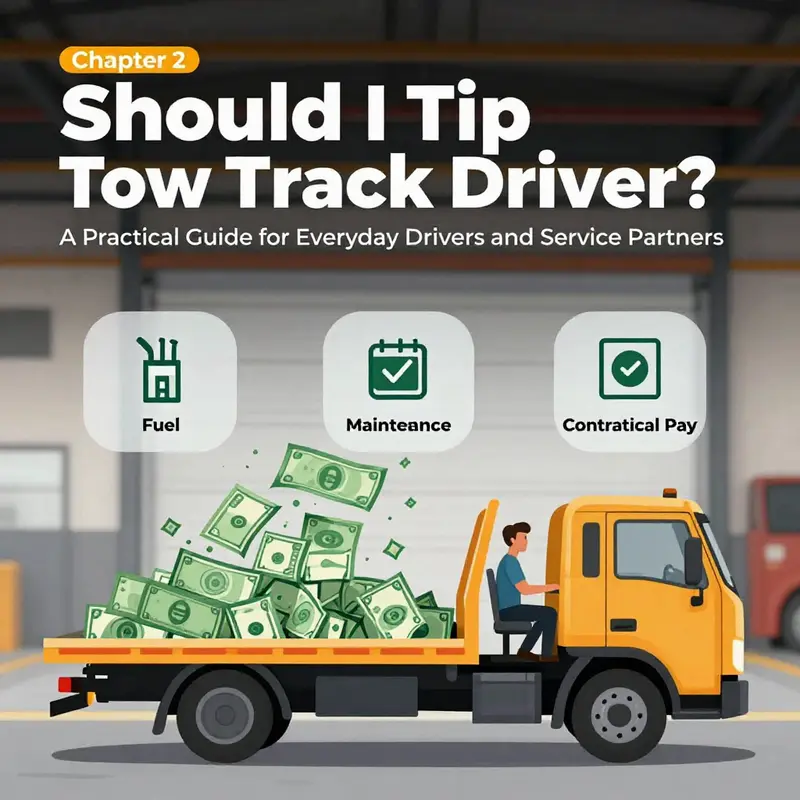
When a tow truck pulls into the glow of a streetlamp or the glow of an emergency, the scene feels transactional and urgent all at once. The driver must quickly assess a vehicle that may be damaged, a roadside surface that is slick, and traffic that never seems to pause. In that high-stakes pressure, a tip can feel like a small, human acknowledgment of the stress and skill involved. Yet the economics behind tipping a tow truck driver are not as straightforward as they are for other service industries. Understanding the practice requires looking at how tow work is priced, how drivers are paid, and how genuine gratitude can be expressed without turning a routine call into a wage debate. The broad pattern in the United States is pragmatic: the money a tow driver earns primarily comes from the service fee charged for the tow, rather than from tips. Many companies either discourage tipping or do not factor it into their pricing models. This matters because it frames tipping not as a wage supplement but as an optional gesture that varies by circumstance, region, and the driver’s effort. The Bureau of Labor Statistics provides the baseline reality: the typical income for heavy and tractor-trailer truck drivers falls in a wide range, with annual earnings often cited around $50,000 to $60,000, depending on location, experience, and employer. In bustling urban corridors or on busy interstates, earnings can rise with demand and longer hours. In other words, a driver’s paycheck reflects a combination of base pay, fees, and the volume of calls, while tips, when offered, do not constitute a predictable or essential portion of income. For readers who want to see the official figures, the detailed wage data from the Bureau of Labor Statistics is a reliable reference point. It’s important to acknowledge that tipping is not universal in towing, even if it is a familiar practice in other service contexts. Some drivers may receive a tip if the service is delivered with extra care or if the recovery presents unusual challenges. Others may decline tips if their employer has explicit policies or if the customer’s charge already accounts for the service complexity. In many cases, a tip is more common among independent operators than those working for large, standardized fleets. The variability itself is telling: tipping exists at the edge of the industry’s income model, shaped by local norms, personal preferences, and the size of the job. The ambiguity about tipping can feel uncomfortable, especially when a driver has spent significant effort on a difficult roadside scenario. Consider a tow that involves extracting a vehicle from a ditch, navigating limited access lanes, or aligning a vehicle onto a low-clearance ramp. In such cases, a larger tip can communicate appreciation for a job that required advanced skill, careful maneuvering, and calm decision-making under pressure. Conversely, if the tow was straightforward and the price reflects standard work, a modest token may feel appropriate. A common guideline often cited in consumer-facing conversations is tipping between 15% and 20% of the total tow fee. If the tow costs $150, a $30 tip is within the range of what many customers consider generous and appropriate. If the job proved unusually complex—say, a recovery from a ditch, a tricky three-point turn in a narrow space, or a nighttime call on a high-speed highway—consider tipping toward the higher end. Even when the job is routine, a tip can be a meaningful gesture for a driver who has spent time waiting with a stalled vehicle, accommodating special instructions, or staying courteous through a tense situation. If you’re uncertain whether tipping is expected, you can look for verbal cues from the driver or signage from the company. Some firms embed tipping guidance in their pricing or in their customer communications, but many do not. When in doubt, a small tip in cash—roughly $10 to $20—can suffice to convey gratitude without implying a formal wage obligation. It’s also worth noting that tips are not a universal expectation outside of consumer service experiences. In everyday professional contexts, a tip is seldom expected or appropriate, which makes the roadside scenario a unique mix of practicality and courtesy. For those who prefer to understand the broader etiquette, a practical resource from a reputable news publication discusses tipping etiquette in the towing niche and can help set expectations for what is customary in different regions and situations. If you’re unsure, a simple, direct approach is to ask or to follow the driver’s cues at the end of service. The emphasis should be on respect for the person who arrived under pressure and performed the job with safety and professionalism in mind. For readers seeking a concise articulation of whether tipping is appropriate, see this practical guide: Should I tip a tow truck driver? It’s a focused discussion that translates these general ideas into a concrete decision in real-world moments. Should I tip a tow truck driver?
The question of tipping in towing also invites reflection on the industry’s broader wage structure. From a policy and worker-wellbeing perspective, tipping should not be treated as a substitute for fair wages or predictable income. The labor statistics provide context: most drivers rely primarily on service fees, and tips are not a steady component of earnings. This distinction matters for customers who want to support drivers fairly without inadvertently altering the wage framework that governs a company’s operations. When a customer tips, it should not be interpreted as an expectation that the driver will shoulder the financial risk alone; instead, it should be understood as a voluntary acknowledgment of exceptional service and the demanding nature of roadside work. It is also helpful to recognize regional variations. In high-demand areas—near major urban centers, along busy corridors, or during winter months—drivers may face longer on-call windows, more wear and tear on equipment, and higher fuel and maintenance costs. In those contexts, a tip can be a meaningful way to acknowledge the extra effort required to ensure safe, reliable service. Yet in other places where competition among tow services is stiffer and base charges are lower, drivers may not expect tips, and gratuities may be rare. The key is to align expectations with public norms in your region and with the specific circumstances of the call. The tension between tips and wages is a reminder that the tipping question is inherently situational rather than universal. If you want to understand the wage framework behind towing more deeply, the U.S. Bureau of Labor Statistics’ wage data is an authoritative starting point. It shows that income in this field is primarily wage-based and fee-based, with tipping occupying a smaller, variable role. The data underscore why customers should not rely on tipping to subsidize a driver’s income, but also why a well-timed tip can feel like a genuine sign of appreciation, especially for difficult or dangerous recoveries. Finally, it is worth noting that tipping culture in towing is not uniform with other service sectors. While restaurants and hotels often normalize tipping as a regular adjunct to service, towing presents a more complicated economic picture. The industry’s pricing structures, the prevalence of independent operators, and the variability in call types all contribute to a tipping landscape that rewards discretion and judgment as much as generosity. For readers who want a broader context on service industry tipping norms beyond towing, the New York Times has explored the etiquette surrounding tips in related service domains, which can illuminate why tipping is widely accepted in some contexts but more conditional in others. If you’re still unsure about the right move in a given situation, remember that tipping is ultimately a personal gesture of thanks, not a contractual obligation. It is a way to acknowledge a driver’s skill, endurance, and the often strenuous conditions under which roadside help is delivered. And as with any service interaction, a respectful, transparent conversation about expectations can go a long way. To further explore the official wage framework for this line of work, you can consult the Bureau of Labor Statistics’ occupational wages data. External resource: https://www.bls.gov/oes/current/oes537041.htm
Tow Truck Etiquette on the Move: The Calculus of a Respectful Tip
When you find yourself stranded by the roadside, a tow truck arrives as a steady presence in a moment of chaos. The driver you meet is more than a vehicle mover; they are a professional who combines mechanical skill, safety awareness, and problem-solving under pressure. In that context, tipping is not a universal rule but a meaningful gesture of appreciation for work that is physically demanding, technically precise, and often performed in challenging conditions. The tipping conversation in the towing world intersects with broader service norms, personal finances, and the unpredictable rhythms of road emergencies. For many drivers—especially those who operate independently or own small fleets—tips help bridge gaps left by irregular demand, long hours, and the costs of fuel, maintenance, and insurance. The core idea is simple: tipping recognizes value beyond the raw price of a tow, honoring care taken with your vehicle and respect shown for the driver’s time and safety responsibilities on the line.
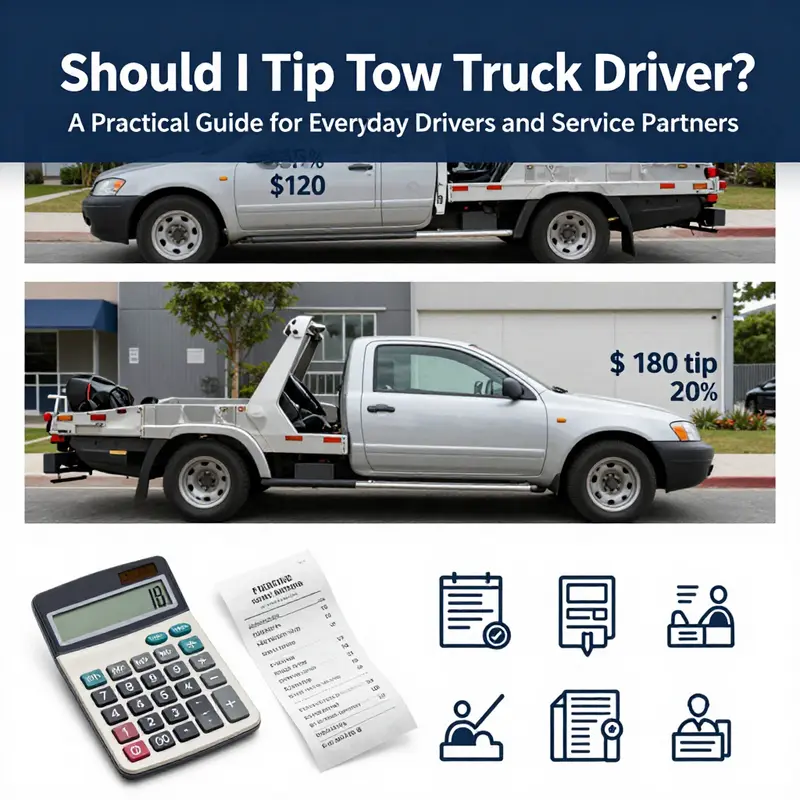
To frame tipping clearly, consider the typical scene at the curb. A tow may be quoted as a fee with mileage, a flat rate, or a combination of both, depending on your location and the nature of the service. In practice, gratuity often follows a comfortable range of roughly 10% to 20% of the total towing fee. A straightforward example helps anchor expectations: if the tow costs $150, a tip of $15 to $30 lands in the common zone. The math is straightforward, but the judgment behind it matters just as much. When the job is routine, a tip toward the lower end of the range can be entirely appropriate. When the driver demonstrates skill under pressure—securing a vehicle in gusty winds, maneuvering through tight spaces, or coordinating a complex recovery—a tip at the higher end, or even above, the standard range, can be a thoughtful acknowledgment of that effort. If the service was quick and efficient, a modest tip may feel right; if the job required additional steps, such as pulling a vehicle from a ditch or navigating hazardous terrain, a larger gratuity becomes a natural reflection of the extra work involved.
The bigger question—how much to tip, and when to tip at all—depends on several practical factors. The weather, the distance traveled, and whether a vehicle needed special recoveries all influence the sense of value a driver provides. For example, a long-distance tow that travels across several miles in rain or snow, or a recovery from a ditch that requires careful rigging, may justify tipping at the upper end of the spectrum. By contrast, a quick roadside tow on a clear day, with straightforward loading, might warrant a smaller tip, or perhaps none if you feel the job didn’t require extraordinary effort. It’s essential to calibrate your response to the actual service quality. If a driver communicates clearly, arrives promptly, uses professional equipment, and handles your vehicle with care, those positive cues should inform your tipping choice. If, however, the service is marred by delays, rough handling, or poor communication, tipping is not obligatory and may be reduced or omitted in proportion to the quality of service. In some cases, company policies may discourage tipping or specify that tipping is not expected; in those scenarios, respect for policy should guide your decision.
If you’re uncertain whether tipping is expected, you can look for cues at the scene or listen for the driver’s cues. Some companies place guidelines on their invoices or at the outlet, while others rely on verbal cues. A practical approach is to start with a modest contribution and adjust based on the job’s demands and the driver’s demeanor. A cash tip in the range of $10 to $20 can be a polite, low-friction gesture when you aren’t sure of the policy or the job’s complexity. For readers who want a quick primer that distills the etiquette and arithmetic behind gratuities in this field, see Should I tip a tow truck driver?. This concise resource provides a snapshot of typical percentages, exceptions, and context cues to guide decision-making in real time.
A practical, walk-away calculation framework can help you translate a roadside scene into a fair gratuity. Step 1 is to determine the total towing fee, which we’ll denote as C. Step 2 is to choose a tip percentage P within the familiar range: 10% to 20% for standard service, higher than 20% for exceptional effort, and 0% for subpar outcomes. Step 3 is to compute Tip = C × P. For instance, with C = $150 and P = 15%, the tip would be about $22.50, commonly rounded to $22 or $23. Step 4 invites a judgment call: increase the tip for difficult conditions or exemplary handling, or reduce it if the service falls short of expectations. Step 5 is to check whether tipping is included in pricing or discouraged by policy, and then comply with that guidance. Used this way, the framework provides clarity in a moment of stress and allows you to reward real value without turning a roadside incident into a moral obligation.
Beyond the numbers, tipping reflects a broader social contract around roadside assistance. It signals appreciation for the driver’s craftsmanship, sense of safety, and the discipline required to manage a vehicle and its cargo under pressure. For independent operators, the income stream from tips can meaningfully influence the financial stability of their business. A tip communicated with courtesy not only improves a driver’s day but also reinforces a standard of care for future customers. In turn, drivers who encounter consistent, respectful tipping that aligns with service quality are more likely to maintain high standards of professionalism, invest in better equipment, and communicate clearly about what can be reasonably expected during an tow. All of this contributes to a healthier service economy on the road.
If you want to anchor your approach in practical norms, keep these core ideas in mind: tip in proportion to the service value, consider the job’s difficulty and risk, and respect company policies about tipping. The landscape varies by region and by company culture, but the guiding principle remains constant: show gratitude where the driver has earned it, and exercise discretion when performance does not meet expectations. In addition to tipping, you can reinforce positive experiences with a kind word, a quick online review, or a succinct note to the company praising the driver’s skill and conduct. These gestures sustain a culture of accountability and appreciation that benefits everyone touched by the tow process.
For readers who want a broader context, the linked guidance and external coverage can be helpful references. The linked resource provides a concise framework tailored to tow-truck service, while external reporting offers a wider lens on tipping etiquette in service industries, including how norms shift across settings and regions. The practical takeaway is straightforward: tipping is a flexible tool for recognizing value, not a rigid rule. Use it to acknowledge professionalism, courage, and the careful execution of a difficult job, and always align your choice with safety, policy, and your own financial comfort.
External resource: https://www.nytimes.com/2024/06/18/business/tow-truck-tipping-etiquette.html
Tow Etiquette on the Road: Reading Cues, Company Policies, and the Quiet Value of Gratitude
When a tow truck rolls up on the scene, the situation is never simple. A vehicle is stranded, often in less-than-ideal conditions, and the driver arrives with tools and expertise you may not fully appreciate until you’re standing at the roadside. The physical demands are real: wresting a heavy machine into position, securing a compromised vehicle, and navigating uneven terrain or tight angles. The driver is performing a service that blends technical skill with practical decisiveness, and the question of whether to tip tends to arrive as a moral aftertaste rather than a straightforward rule. To understand tipping in this realm, you need to read the cues of the moment, check the policies of the company involved, and weigh the small gestures you’re comfortable offering against the broader norms of the service industry and the realities of tow work.
In practice, tipping for tow work sits in a murky middle ground. Unlike a restaurant or ride-share experience, where tipping is a familiar script and expected performance is measured by the waitstaff or driver’s responsiveness, roadside assistance unfolds under different pressures. The driver’s compensation often flows through the company and, in many cases, is regulated by policy and contract with insurers or roadside organizations. Because of that structure, tipping is not standard in the towing world. Many reputable towing companies publish policies that either discourage tips or state plainly that tipping is not necessary. This is not a matter of stinginess or a lack of appreciation; it reflects how the industry is designed to function financially, with wages set by the employer rather than by customer generosity in the moment. In other words, the absence of an expected tip does not mean the service wasn’t valuable, and it certainly does not imply a lack of gratitude on your part.
That said, the human element matters. There are moments when a tow truck driver goes beyond the call of duty—when a driver stays late to secure a vehicle in treacherous weather, when they calmly coordinate with family members while keeping you informed, or when they navigate a particularly challenging recovery with professional poise. In those moments, a small token of appreciation can be a meaningful acknowledgment of extra effort. The contrast here is important: tipping is about recognizing exceptional service, not about granting license to disregard standard practices. If your encounter includes unusually demanding work—recovering a vehicle from a ditch, maneuvering in a narrow alley, or explaining complex procedures to you with patience and clarity—a modest cash gesture can feel appropriate and welcome, provided it aligns with the company’s policy.
Policy is the backbone of any tipping decision. A clear starting point is to look for company guidance before you reach for cash. Many towing operators—even those that operate within broader networks or insurance-backed programs—provide explicit statements about tipping in their service terms or on their websites. When policy exists, it often emphasizes that tipping is not expected and, in some cases, may be discouraged to avoid conflicts of interest or cash-handling complications. This stance aligns with the practices of large roadside assistance providers that publish tipping guidance, suggesting that drivers are compensated through wages and do not rely on gratuities from customers. It’s not merely a matter of etiquette; it’s about ensuring that the service remains professional and free from pressure or appearance of impropriety. If you can locate a clear policy from the company or the insurer involved, that document should guide your actions more reliably than any generalized impulse.
The practical takeaway is simple: check policy first. If the policy states tipping is not expected or discouraged, you should refrain from offering cash at the scene. If the policy is silent, or if you’re dealing with a smaller, independent operator where you repeatedly see a driver, a discreet, modest gesture may be appropriate in exceptional circumstances. In those situations, a cash tip in the range of five to ten dollars can serve as a token of appreciation for genuine extra effort, without creating awkwardness or pressure. The emphasis remains on discretion and respect for the driver’s boundaries and the company’s rules. Avoid public displays or attempts to document the gesture on video, which can put the driver in an uncomfortable position or inadvertently violate company policies about cash handling.
If you’re unsure whether tipping is expected, rely on cues rather than assumptions. A clear verbal cue or a visible policy sign can settle the question quickly. Some drivers or dispatchers may indicate that tips aren’t customary or welcome, while others may leave room for a personal gesture. In the absence of guidance, opting for a small, cash-based acknowledgment—carefully offered and received without fanfare—can convey gratitude without pressuring the driver or complicating their accounting. The form of payment matters too; cash remains the most universally accepted method, reducing tax or reconciliation concerns for the driver. In contrast, attempting to add a tip to an invoice or paying with a card on the spot can create administrative headaches for the driver and the company alike.
To gain a broader sense of how tipping is viewed within the industry, consider the larger service-context norms while keeping the specifics of towing in mind. In many fields, a tip is viewed as a reward for excellence or a way to ease a hardship. The road rescue environment complicates that frame, because the driver’s role intersects with formal standards and insurance processes. When a tow is arranged through an insurer or a roadside program, the financial transaction is typically settled through those channels, and the customer’s extra payment is neither expected nor appropriate. Even when a driver saves time or mitigates a difficult roadside situation, the policy framework often remains the controlling factor. The result is a landscape where etiquette and policy mingle: etiquette says you might show gratitude, policy often says you shouldn’t, and your best move is to follow the rules while allowing your own moral compass to guide you.
One practical way to navigate this terrain is to consult external references that summarize industry norms without overpromising on the exact tipping culture in every market. For readers seeking guidance beyond local custom, a trusted resource notes that tipping is not expected, and in many cases, it is not allowed. This framing helps set expectations and protects both customers and drivers from awkward pressure. If you work in a region where independents operate or if you encounter a driver who is clearly taking on substantial extra responsibility, you can use the same framework to decide whether a gesture feels appropriate. Remember that the value of a tip is not measured by the amount alone; it is measured by the timeliness, professionalism, and genuine appreciation you feel after the service.
To ground this discussion in practical language you can apply in a roadside moment, consider a simple scenario. Suppose the tow costs around $150. If a policy allows tipping for exceptional service, a tip of 15 to 20 percent could be appropriate, translating to about $22.50 to $30 for a standard, straightforward pull. If the job involved unusual difficulty or if the driver spent extra time helping you arrange alternate transportation, you might lean toward the higher end of that range. But because many companies discourage tipping, a more conservative approach is wise. In a moment of relief after a difficult recovery, a small cash gesture of $5 to $10 can signal gratitude without crossing policy boundaries. And if tipping isn’t allowed at all, your meaningful appreciation can take the form of a clean thank-you note, a quick positive review, or a recommendation to others—actions that preserve the professional integrity of the interaction while still acknowledging a job well done.
A final note on etiquette adds a layer of dignity to every roadside encounter. Treat the driver with respect, give them space to do their work, and respect the boundaries that the company has established for tipping. If you decide to offer a tip, do so privately and discreetly, ensuring the gesture does not become a public display or a scene that could embarrass the driver or violate company rules. In turn, trust that a professional tow operator will handle your property with caution and care, maintaining a calm, methodical approach even in the most stressful circumstances. The goal is a humane, efficient resolution, not a performance of gratitude in a crowded or public space.
For readers who want to explore more on the subject and see how reputable organizations frame tipping in roadside assistance, there is value in reading broader guidance. The discussion may not map perfectly onto every service call, but it offers a framework you can apply across different scenarios. If you’d like to dig deeper, you can consult industry-expert perspectives and policy summaries that address when tipping is discouraged and when it might be appropriate. As you weigh the options, remember that your intention matters most: you are acknowledging the driver’s professional effort and the sometimes taxing conditions under which they work. A thoughtful, restrained approach respects both the service you received and the policies that govern the work itself. And that balance—gratitude without pressure—is at the heart of civil, humane roadside conduct.
In summary, tipping a tow truck driver is not a universal expectation, and in many organized settings it is discouraged or disallowed. The best practice is to check company policy, read the cues from the moment, and act in a way that honors both the driver’s professionalism and the rules in place. If you choose to tip, keep it small and discreet, preferably in cash, and consider additional forms of appreciation if tipping isn’t appropriate. By aligning your actions with policy and your own sense of fairness, you contribute to a culture of respect on the road while ensuring that the financial dynamics of tow work remain transparent and orderly. For readers seeking a concise reference on etiquette, a practical link to a focused discussion on tipping practices can be found here: tip-tow-truck-drivers-etiquette. After all, the road is a shared space, and courtesy travels as far as a tow truck stretches its reach.
External reference for broader context: https://www.nytimes.com/2024/06/18/business/tow-truck-tipping-etiquette.html
Tow Lines and Gratitude: A Practical, Road-Ready Guide to Tipping Tow Truck Drivers
When a tow arrives, the highway can feel like a narrow stage where one person carries the heavy lifting, the weight of a stressful moment, and the plan to get you moving again. In that stance between problem and solution, tipping becomes more than a gesture of politeness. It’s a tangible acknowledgment of the driver’s effort, skill, and the physically demanding nature of their work. Tipping is not a universal rule etched into some industry statute, but it is a meaningful cultural cue in the service professions that keeps the human element intact when wheels are on the line and the clock is ticking. If you’re wondering whether you should tip a tow truck driver, the short answer is yes, in most cases a thoughtful tip is both appropriate and appreciated. The longer answer rests on a few practical considerations: the quality of service, the complexity of the job, and the local customs that shape how generosity is received on the roadside.
There is no single standard that fits every tow truck operation. Some drivers arrive swiftly, handle a vehicle with care, communicate clearly about what will happen next, and offer extra assistance beyond simply pulling a car onto a bed and securing it. Other drivers may have faced a long wait before you were helped, or they may have navigated a tricky recovery in confined spaces, with traffic behind them or in poor weather. In those moments, a tip functions as a direct sign of appreciation for the extra effort. A practical rule of thumb that crops up in many communities is to tip within ranges that reflect service level. For a standard, straightforward tow, a modest tip of five to ten dollars is often seen as fair. It acknowledges the core service without overestimating a routine job, and it leaves room for larger gestures when the day or the task warrants them.
When the service is clearly above and beyond—think after-hours emergencies, a difficult vehicle recovery, or a driver who took time to explain the steps, check the vehicle for safety concerns, or offer additional help such as coordinating with a shop or arranging a ride for you—there is room to show extra appreciation. In those instances, twenty to thirty dollars can be a meaningful amount. If you’re dealing with a long-distance tow, or a complex operation that required careful handling and professional judgment, a tip that stands out—often calculated as a percentage of the total tow fee, typically around ten to fifteen percent—can be a fair way to align your gesture with the scale of the work. The exact amount will depend on the job’s difficulty and the driver’s demeanor, but the principle remains straightforward: higher effort, higher tip. For example, if a tow costs about one hundred fifty dollars, a twenty to thirty dollar tip is not excessive when the service is efficient and the driver’s professionalism shines.
In real life, these numbers are guides, not rigid formulas. Jobs can range from a quick roadside pull to a recovery from a ditch, from coordinating with on-scene safety to assisting with paperwork or directing you to nearby resources. In practice, you might find yourself tipping toward the lower end for a routine tow that arrives promptly, ends smoothly, and leaves you feeling informed and safe. You might tip toward the higher end if the driver stayed with you longer than expected to ensure your vehicle was securely loaded, or if weather or traffic made the situation more stressful, yet the driver maintained composure and clear communication. The important thread is to let the service you receive guide your generosity. If you’re unsure whether tipping is expected at a particular company, a quick cue can come from local norms, visibility of tipping signage, or the driver’s own cues during the interaction. Some companies include tipping in the pricing structure, while most do not. When in doubt, a modest gesture—say, ten to twenty dollars—conveys appreciation without risking embarrassment or awkwardness.
A practical way to approach tipping is to weigh the service against a few clear criteria: arrival time, professionalism, handling of the vehicle, and the driver’s willingness to provide information and reassurance. If the driver arrived on schedule, explained what would happen next, and ensured the vehicle was loaded and secured with care, that combination of reliability and attentiveness justifies a tip. If the situation involved a bit more pressure—such as a late-night breakdown, a tight space, or a recovery that required extra maneuvering—the tipping range shifts upward. In those moments, the extra effort is not merely about moving metal; it’s about managing risk, maintaining safety, and reducing your anxiety as the scene unfolds. The act of tipping, then, becomes a reciprocal sign of trust: you recognize the driver’s competence, and the driver is empowered to continue delivering high-quality service to other motorists who find themselves in distress.
The etiquette around tipping also has a humane dimension. The roadside is a fast-paced, often thankless environment where drivers may work long hours and face unpredictable conditions. A tip, even when the service is solid but not extraordinary, communicates respect for the labor involved and acknowledges the emotional burden of being the first responder to someone’s crisis. It’s a moment of human connection that supports the broader ecosystem of roadside assistance. If you’ve ever felt overwhelmed or shaken by a breakdown, a kind word and a modest tip from a stranger can make a tangible difference in how you remember the experience. In this light, tipping becomes part of the moral economy of the road—a small but meaningful investment in the people who keep everyone moving when wheels fail and the clock keeps ticking.
What if there is no visible tipping guidance from the service provider, or if you are in a region where tipping norms are less defined? In those situations, you can still proceed with thoughtfulness. A modest amount in the ten to twenty dollar range is typically well received, paired with a sincere verbal expression of thanks. Verbal appreciation matters just as much as the money you hand over. A driver who takes the time to explain the process, confirm that your car is secure, and offer practical advice—such as where to get a tow or how to arrange follow-up service—creates a sense of certainty during a stressful moment. When you combine that communication with a tangible gesture, you reinforce a respectful exchange that benefits both you and the driver.
Legal considerations are rarely the primary driver of tipping decisions, but it helps to know the boundaries. Tipping remains, for the most part, a personal choice rather than a legal obligation. In some locales, there may be regulations around gratuities in certain commercial contexts, especially where tipping could be construed as an inducement. In practice, tow truck drivers and their employers frequently rely on tips to supplement income, especially for independent operators who shoulder the costs of fuel, maintenance, and parking in a service economy that routinely adjusts to market realities. The aim is to tip in a way that reflects satisfaction with the service and your willingness to acknowledge the driver’s hard work, rather than to meet any external quota or rule.
If you want a quick mental checklist to keep in mind on the scene, consider the following frame: Was the arrival timely? Did the driver communicate clearly and treat your vehicle with care? Was the recovery or tow handled with skill and safety in mind? If the answer to these questions is yes, a tip in the standard or higher range is appropriate. If your impression of the service is mixed, a smaller tip can still be meaningful, paired with a polite note about what could be improved. And if the service was truly outstanding—if the driver went beyond the call of duty or provided critical guidance in a way that reduced your stress—do not hesitate to give a more generous amount.
For further reflection on roadside etiquette and tipping practices, you can explore broader guidance from established organizations on how customers navigate these moments. In addition, consider the value of language and tone when offering thanks. A simple, respectful explanation of why you are tipping and how the driver’s actions helped you can transform a routine transaction into a positive, memorable interaction. If you’d like to read more about general etiquette and tipping practices in related roadside contexts, you may find useful context in related discussions and articles.
For broader guidance on roadside assistance etiquette and tipping practices, industry resources such as the American Automobile Association (AAA) provide official materials on customer service and roadside support etiquette. Website: https://www.aaa.com
If you’d like, I can tailor these guidelines to a specific region or state, convert the ranges into a quick reference checklist for mobile use, or pull additional sources to compare regional tipping norms. For now, the practical message stays simple: tipping a tow truck driver is a thoughtful response to skilled, essential work. A tip, when paired with clear communication and courtesy, helps ensure drivers feel valued and motivated to continue providing service that keeps people safe and vehicles moving forward. To reinforce this idea in a real-world way, consider how a single act of generosity might shape future encounters on the road, where every journey begins with a problem and ends with a solution. For a concise, region-informed reference to tipping norms and etiquette, you can visit the following resource linked within this chapter: Should I tip a tow truck driver?
External resource for further reading: https://www.nytimes.com/2024/06/18/business/tow-truck-tipping-etiquette.html
Final thoughts
Tipping tow truck drivers is a nuanced but accessible practice when you anchor your decision in clear norms, awareness of economic realities, and the specifics of the service provided. For everyday trips, a modest tip acknowledges timely arrival, careful handling of your vehicle, and effective communication. In more demanding situations—recoveries from ditch or mud, navigating tight spaces, or long transports—the tip should reflect the additional risk, skill, and time required. Company cues and policies matter; when a firm prices tipping into the bill, adjust expectations accordingly, but don’t assume tipping isn’t welcome if policies are silent. Across audiences—Everyday Drivers, Residents & Commuters, Truck Owners, Auto Repair Shops & Dealerships, and Property Managers—the same principles apply with scale: tip fairly, proportionally to the effort and complexity, and in a way that supports dependable service. If in doubt, err on the side of generosity for exceptional work, and stay mindful of safety and professionalism. Ultimately, tipping is a practical signal of appreciation for a difficult, essential job and a way to reinforce high standards in roadside service. Ready to elevate your ride? Summit Fairings delivers premium, custom-fit fairings that blend style and durability. Whether you’re chasing speed or turning heads, we’ve got your bike covered. Don’t wait—transform your machine today. Click, customize, and ride with confidence. Your perfect fairing is just a few clicks away. Act now! We are one of the leading motorcycle fairing export sites, with over 3,000 styles across almost all motorcycle models. Buy from summitfairings.com, and pay 10-40% less than the prices on other sites.