
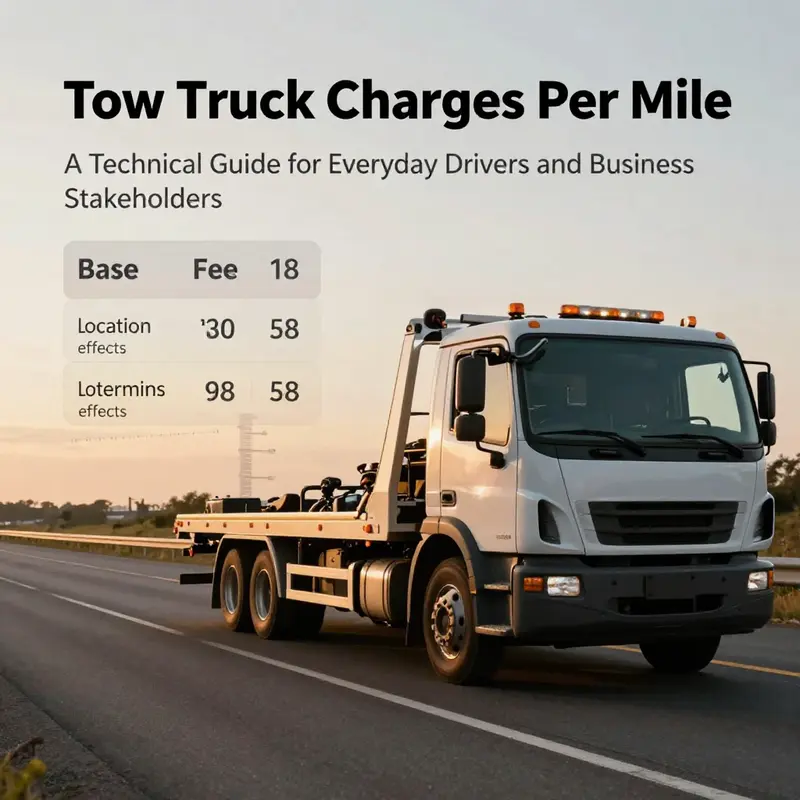
Tow costs can surprise everyday drivers, residents, commuters, truck owners, auto repair shops, dealerships, and property managers alike. Even when the moment is stressful, a clear view of how charges accrue per mile can soften the blow. Across the industry, the price per mile isn’t the only factor; most quotes combine a base fee, a per-mile rate, and various surcharges that can swing the final bill depending on location, timing, and distance. The central question remains: how much does a tow truck charge per mile? By linking pricing structures to real-world scenarios, a practical framework emerges for readers who rely on towing—whether for a single vehicle during a commute, a fleet of trucks, or services for a property portfolio. The five chapters guide you from the anatomy of base fees and per-mile rates, through the influence of urban versus rural pricing, to after-hours and emergency surcharges, long-distance pricing, and finally how to obtain and interpret quotes to avoid surprises. With this structured approach, everyday drivers and business decisions become more transparent, enabling better planning, budgeting, and vendor comparisons when reliability on the road matters.
Tow Pricing Demystified: How Base Fees, Per-Mile Rates, and Timing Shape Your Tow Bill
When a car breaks down or is stalled on a busy road, the question about cost almost always comes next. How much does a tow truck charge per mile? The simple answer is not so simple. Pricing structures differ by location, company policy, vehicle type, and the specifics of the situation. Yet within that ambiguity, certain patterns hold, and those patterns can help you read the bill before it arrives. A practical way to think about it is to separate the total into a base fee and a per-mile charge, while watching for added fees that creep in with timing, vehicle type, and service specifics. Understanding these elements together makes the total feel less like a mystery and more like a predictable range, even when the exact number depends on the moment you call for help.
The base fee, sometimes called a dispatch or hook-up fee, is the minimum charge you pay to get a tow truck on the scene. In most U.S. states, that base fee sits roughly between $50 and $150. It is not just a fee for coming to you; it covers a bundle of upfront costs: the labor to dispatch and coordinate, the fuel consumed in the initial response, and the overhead of running a mobile operation. Some companies roll the first few miles into this base fee—often the first 5 to 10 miles—while others separate them, charging the base fee plus mileage anew right away. Either arrangement exists in the market, and both are legal in their respective regions, so the important thing is to confirm what is included when you’re given a quote.
Next comes the per-mile rate. This is where the math of distance takes center stage. For many providers, the per-mile charge falls somewhere in the range of $2 to $6 per mile. On paper, that spread might look modest, but the total climbs quickly with distance. And in practice, the per-mile rate is frequently higher in dense urban centers or during peak demand times, such as late-night hours, weekends, or holidays. It is not unusual to encounter tiered pricing, where the first chunk of miles carries one rate and subsequent miles carry a higher rate. For example, the pricing structure might look like $3 per mile for the first 10 miles and $4 or more for each mile after that. When you add in the base fee, even a relatively short tow can become a substantial sum if the distance is enough, or if the timing triggers after-hours surcharges.
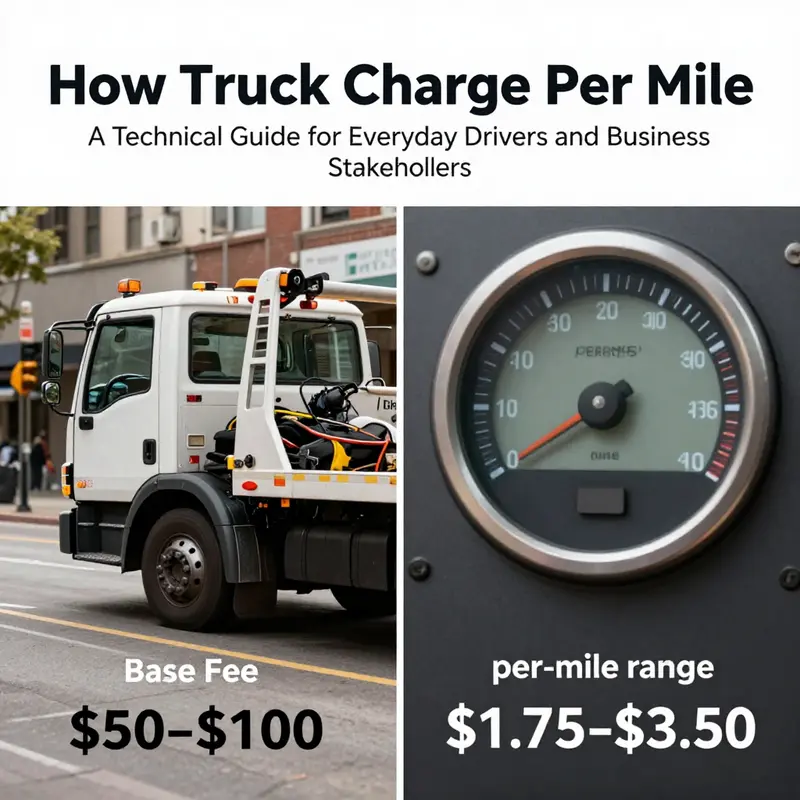
The numbers you read in pricing guides often reflect broad averages rather than a fixed price you will see on a specific call. A comprehensive snapshot from various industry sources shows a realistic spectrum. In many everyday scenarios, a base fee lands around $50 to $100, with the per-mile component ranging from roughly $1.75 to $3.50 per mile for standard tows. Yet these figures are baseline expectations. Real-world bills frequently exceed this range when the tow involves longer distances, specialty equipment, or complicated recoveries. Some urban or high-demand situations push per-mile rates higher, and emergency or after-hours service can nearly double the standard rate in some providers’ pricing models. The practical effect is a simple rule: the more you tow, the more the miles accumulate, and the more the service window (night versus day) matters to the final figure.
A useful way to anchor expectations is to consider a longer tow. If you need to move a vehicle a short distance within the same neighborhood, you might stay near the lower end of the base fee and the lower end of the per-mile range. A longer transfer—say a cross-town tows of several miles—will migrate toward the higher end of the per-mile range, and possibly beyond if an after-hours dispatcher is needed. It is entirely possible to see a ten-mile tow priced in the neighborhood of $125 to $175 when all base, mileage, and ancillary charges are tallied. That level of total reflects not just miles traveled, but the combination of response time, the equipment used, and any service add-ons that the provider deems necessary for the job. It is therefore not unusual to find that the per-mile figure on the ticket does not tell the whole story without the context of base fees and any premium services.
A parallel way to think about pricing is to consider the overall value proposition of towing. The base fee covers the immediacy of service—the presence of a driver and vehicle to reach you as quickly as possible, the administrative work that happens behind the scenes, and the fuel consumed during the initial response. The per-mile rate then translates the distance into value—the longer the distance, the more wear and tear on equipment, more time for the operator to complete the job, and more fuel used. In many markets, this pairing is a balancing act that keeps the service financially viable for the towing company while still providing a fair price for customers who are already dealing with a stressful situation.
To complicate matters further, the type of tow and the condition of the vehicle can shift the price. Flatbed towing, which is common for high-value or front-wheel-drive cars, typically incurs higher costs than a standard wheel-lift setup due to the equipment and labor involved. Off-road recoveries, winching through rough terrain, or scenarios requiring special recovery gear can introduce additional line items. Weather can also play a role: rain, snow, or ice can slow operations and necessitate more cautious handling, sometimes translating to higher labor costs or longer on-site times. These service complexities remind us that the mileage alone rarely captures the entire bill; the context matters as much as the distance.
If you are trying to forecast a tow’s price in advance, several practical steps help. First, call local providers and request a written estimate that itemizes base charges, per-mile rates, and any potential surcharges for after-hours service or specialty equipment. A transparent quote that reveals the base fee, mileage rate, distance, and any ancillary costs will protect you from surprise additions once the job is completed. Second, ask whether the first few miles are included in the base fee or billed separately as mileage. Third, clarify whether the price covers the unloading and any required on-site work, or if those elements will incur additional fees. It is also wise to ask whether a tiered mileage structure exists for longer distances and whether there are minimum charges for certain types of service. Getting this clarity before service can prevent sticker shock at the end of a stressful event.
In the broader landscape of towing information, the numbers can still feel abstract until you experience them in practice. One helpful anchor is to compare typical regional patterns with national averages. The combination of base fee plus per-mile charges generally follows a recognizable logic: a reasonable dispatch fee that accounts for rapid mobilization and operational overhead, plus a distance-based charge that scales with how far the truck must travel to reach or transport you. When you factor in time-based fees for delays or hold times, and specialty fees for certain vehicle types or towing methods, the total becomes a reflection of many moving parts, not a single line item. This is why, before you commit to service, you should obtain a detailed, written breakdown of every component of the bill and confirm any terms that could affect the total.
For readers seeking a concise reference as you compare quotes, you can consult the resource that specifically discusses the full spectrum of tow costs and what you need to know. The discussion there reinforces the core idea: while the per-mile rate may appear modest, the total can accumulate quickly with distance, time, and service level. The practical takeaway is to treat the quote as a bundle that includes not just miles but the signal of how a company prices its response, its equipment, and its service window. In other words, the per-mile element is essential, but the base fee and the timing provisions often carry a heavy bite. If you want to see a quick explainer that aligns with this chapter’s framing, check out how-much-is-a-tow-truck, which summarizes the footprint of base charges and mileage in straightforward terms.
As you prepare to engage a tow service, consider this balanced approach: seek a firm that offers transparent pricing with a clear breakdown, acknowledge the likelihood of regional variation, and plan for potential surcharges that reflect after-hours needs or heavy equipment requirements. The goal is not a single perfect number but a defensible range you can rely on when the unexpected happens. By framing the charge as a base fee plus mileage, with attention to timing and service specifications, you gain the ability to estimate more accurately and, crucially, to question any line item that seems out of proportion. If a quote feels opaque, ask for a reset—request a line-by-line explanation and a new estimate that reflects all plausible scenarios, including the possibility of longer-distance tows or premium service.
In sum, tow pricing is an ecosystem rather than a single price tag. The base fee, the per-mile rate, and the context of the job—the vehicle type, the time of service, weather, and the recovery method—all contribute to the final figure. The most reliable way to navigate this landscape is a proactive conversation with the provider: insist on a written estimate, seek clarity about what is included in the base fee, confirm the per-mile rate and any tiered pricing, and ask about additional charges for after-hours or special equipment. When you approach the process with this mindset, you reduce stress and gain confidence that the number you pay fairly reflects the service you receive.
External resource: https://www.aaa.com/automotive/towing-costs/
Internal reference for quick context: how-much-is-a-tow-truck
Tow by the Mile: How Location and Urban Versus Rural Pricing Shape Tow Costs
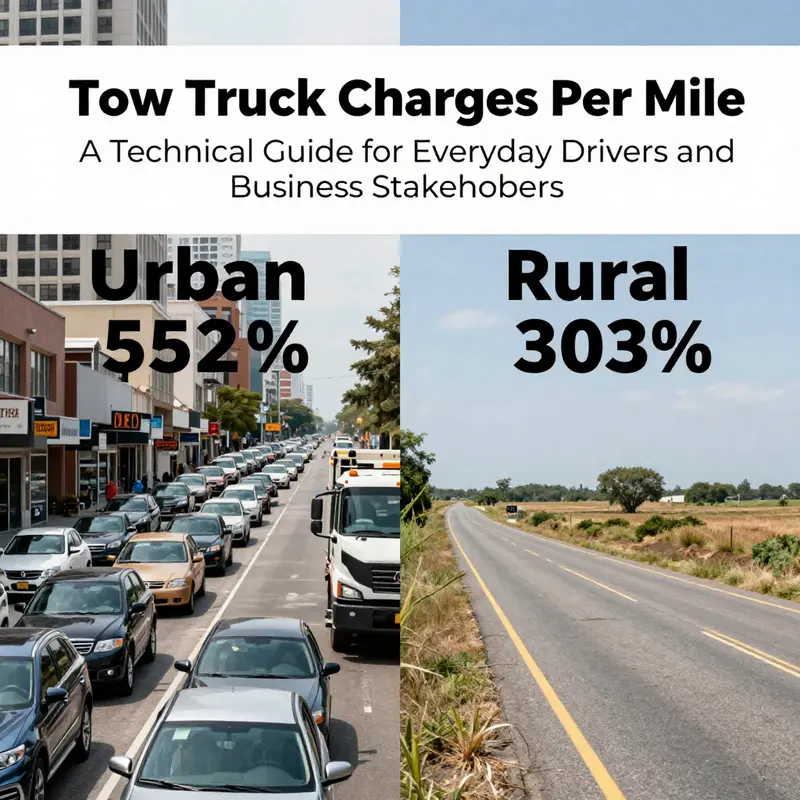
Tow costs are rarely a single fixed figure. They hinge on geography, the nature of the vehicle, the time of service, and the mechanics of dispatch just as much as the distance the tow truck must travel. When a call comes in, the price math begins with more than the miles that separate you from the tow yard; it starts with the irritation of being stranded and the operational realities of moving a vehicle through streets that can be congested, uneven, or hazardous. Most professional tow operations attach two core components to the price: a base service fee and a per-mile charge. The base fee covers dispatch, on-site assessment, and getting the tow rig ready for transport. The per-mile charge reflects the actual movement of the vehicle, but it isn’t always linear. In some pricing schemes, longer distances trigger tiered rates, where the first several miles are priced differently than the remainder. In addition, the clock and the meter can start ticking for after-hours or emergency service, producing surcharges that can significantly shift the total. These factors together create a price landscape that is surprisingly dynamic, even before you add taxes, tolls, or any optional services the tow company might provide.\n\nFrom a practical standpoint, the numbers commonly cited by industry observers place the base fee in a broad band, often around 50 to 100 dollars in many markets. Yet the exact base can be higher in busy metro areas or when the tow requires specialized equipment, such as heavy-duty rigs designed for large trucks or for hauling vehicles with no usable drivetrain. The per-mile rate tends to follow a general range of roughly 1.75 to 3.50 dollars per mile, but that range hides real-world variation. Some operators in high-demand zones set the per-mile price closer to the upper end, especially for long hauls or when time pressure is a factor. And in emergency lighting of night shifts, weekends, or holidays, surcharges can appear, potentially doubling the standard per-mile rate in some specific circumstances. The result is that a single tow can look modest on paper if distance is short, yet swell dramatically when the distance grows, the time window shifts, or the vehicle’s type creates additional handling requirements.\n\nLocation is the single most powerful amplifier in this pricing matrix. Urban and suburban markets contend with higher operating costs, including insurance, licensing, parking, and labor markets that command premium wages. The density of vehicles and the tempo of road traffic also feed into costs that aren’t as pronounced in rural settings. In major metropolitan centers like New York City or Los Angeles, tow services frequently report per-mile rates in the range of roughly 2.50 to 5.00 dollars, reflecting both the complexity of navigating tight streets and the demand cycle that can spike at almost any hour. In these environments, even a relatively short tow can feel expensive because the dispatch logistics, traffic patterns, and the need to secure routes and on-site safety measures add layers to the job that aren’t as present in elsewhere. By contrast, in smaller towns or rural regions, the same service may fall within a more economical window, with per-mile charges commonly seen around 1.00 to 2.50 dollars. The same base fee may apply, but the distance and the operational realities of rural towing—less intense traffic, shorter trips through open lanes, and a smaller pool of work—translate into a lighter price tag overall.\n\nLocal regulations and market competition further tilt the price scale. In states where pricing disclosures are tightly regulated or where consumer-protection rules require clear line-item invoicing, tow providers may display less pricing ambiguity. In places with robust competition, the price may compress, but not necessarily predictably, because operators differentiate themselves through service guarantees, response times, or add-on options. Where regulation is looser, prices can diverge more widely, and there may be differences in how fees are presented or described on the bill. The macro effect is that two adjacent towns can offer very different total costs for a tow of the same distance, driven not only by mileage and base fees but by how the local market negotiates the balance between speed, safety, and service availability.\n\nFor consumers seeking a clearer sense of the overall cost, there is value in the data that aggregates typical scenarios. A widely cited benchmark from industry analysis notes that a standard 10-mile tow frequently lands in the 125 to 175-dollar range when base fees and mileage charges are combined. That band illustrates how quickly the total can escalate with modest increases in distance, a late-hour dispatch, or the presence of any additional charges for things like emergency response, road conditions, or vehicle complexity. The per-mile element is a meaningful portion of that total, but it is the base fee and the ancillary factors that often determine whether the bill lands in the lower or upper part of the range. The lesson is simple: the per-mile figure by itself is not the whole story. The total price is the sum of base charges, miles, and the situational overlays created by time, location, and transport requirements.\n\nGiven this reality, the prudent path for a consumer is to actively seek transparency before you commit. Request a detailed, written estimate that itemizes the base service fee, the per-mile rate, and every potential add-on or surcharge—after-hours premiums, holiday surcharges, tolls, fuel surcharges, and any minimum charge that might apply if the tow is short or if the vehicle cannot be reached quickly. If you anticipate a longer distance or a nonlinear route, ask whether the mileage price changes after a certain threshold and whether there is a different rate for heavy or specialty equipment. It helps to have a few scenarios in mind. For example, what would a 5-mile tow cost if it’s an after-hours call in a densely trafficked city? What about a 15-mile haul in a rural county with light traffic? In some markets, you can obtain a ballpark quote for a common scenario that includes both the base and the mileage charges, giving you a yardstick to compare against actual invoices when the tow arrives. This approach reduces the risk of sticker shock and makes it easier to understand the justification for any variation you see across providers.\n\nFor readers who want a quick touchstone about per-mile dynamics and to see the topic discussed in a more direct way, there is a concise reference point that addresses the mile-based component explicitly. You can explore the detailed discussion here: how much do tow trucks charge per mile. This resource distills the mile-by-mile component and situates it within the broader pricing framework of base fees and time-based factors, helping to anchor your expectations when you call for service.\n\nBeyond the quantitative, there is a qualitative layer worth noting. The vehicle type being towed matters. A light car, a small SUV, a van, or a heavy-duty truck each imposes different handling and equipment requirements on the tow provider. The more demanding the maneuver—specialized rigging, extra winching, multiple personnel, or a longer recovery time—the more likely the price will reflect those added demands. If a vehicle is immobilized in a difficult position, or if the trip includes road obstacles such as steep grades, tight turns, or confined spaces, you can expect the dispatcher to note additional labor time and equipment usage. In such cases, the price will reflect not only the distance but the degree of complexity involved in safely moving the vehicle without causing further damage.\n\nAs you prepare for roadside contingencies, remember that the most important goal is clarity. A transparent quote allows you to weigh the value of the prompt dispatch, the reliability of the driver, and the safety measures the tow operator brings to the scene. It also gives you a yardstick to compare two or three local providers side by side, rather than choosing solely on the lowest headline price. In a market with mixed pricing practices, the difference between a fair, transparent quote and a hidden charge often comes down to the level of detail and the willingness of the provider to spell out every applicable fee up front. That level of clarity pays off especially when the miles add up and the call comes after hours, because at that point, a few dollars in base or per-mile charges can quickly compound into a substantial total.\n\nFor readers seeking a credible, authoritative resource on towing practices and regional variations, the U.S. Department of Transportation provides guidance that helps explain not only pricing structures but also consumer rights and typical regional differences in towing services. You can consult the official resource here: https://www.nhtsa.gov/vehicle-towing-and-transportation.\n
Tow Truck Pricing Decoded: Per-Mile Costs, After-Hours Surcharges, and the Hidden Factors Behind Tow Bills
Tow pricing is rarely a single, simple number. It is a tapestry woven from distance, vehicle type, the time of day, and the pace at which demand swells around you. To understand what you’re really paying for when a tow truck arrives, it helps to look beyond the headline per‑mile rate and see how the different pieces of the bill fit together. Most buyers think in terms of distance, but the base hookup, the time of day, the urgency of service, storage needs, and the equipment used all play critical roles. In practice, the typical ride from curbside to destination begins with a base fee designed to cover dispatch and the labor to attach the vehicle, followed by a mileage charge that scales with the distance—not just a flat line, but a structure that can shift with the market. The result is a price that can feel modest on short stretches and surprisingly steep on longer tows, especially when other charges creep in.
The base hookup fee is the starting line. It is the charge that sees a tow company send a truck to you, arrive on scene, and physically connect your vehicle to the tow rig. This flat fee is rarely optional; it is intended to cover the labor involved in dispatch and the critical, hands-on work of hooking up a car or light truck so it can be moved safely. The typical range for this initial charge sits around seventy‑five to one hundred fifty dollars, with many providers clustering in the one‑hundred‑dollar neighborhood. There are exceptions, of course. Heavy‑duty operations with flatbeds, rotators, or specialized equipment may start higher, and moving particularly large or heavy vehicles can push the hookup price further up. When a reader asks, “What’s the hookup fee?” the answer is almost always: it depends on the fleet, the vehicle, and the equipment required to secure a safe connection. If you want a precise number before committing, ask for a written estimate that shows the base hookup alongside the anticipated mileage, so you can see what portion covers labor and what portion is tied to distance.
The mileage portion is the workhorse in the pricing model. It’s the amount charged for each mile towed after the hookup. Across markets, per‑mile rates typically fall within a broad band, often around ten to twenty‑five dollars per mile, depending on the vehicle type and local market conditions. For a small car, the mileage component commonly lands toward the lower end of that range, while SUVs and larger vehicles ride closer to the higher end. The per‑mile figure is not a fixed, universal rate; it can shift with the distance, the road you’re on, and the market’s cost of doing business. In some regions, long hauls or multi‑state tows can introduce tiered pricing, where the rate scales up after a certain distance or under heavy demand. The precise miles to be towed are usually estimated at the time of dispatch, but a final invoice may show a slight variance if the route differs from the plan or if detours occur.
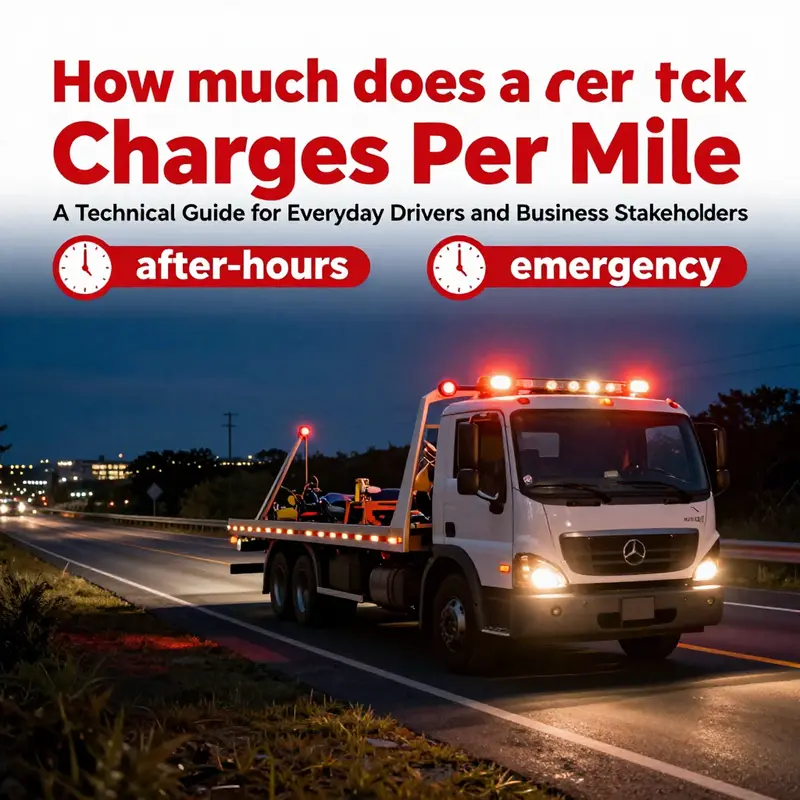
Time responsiveness enters the picture through after‑hours surcharges. When you need a tow outside standard business hours—late evenings, nights, weekends, or holidays—the price often carries a premium. The after‑hours surcharge typically ranges from roughly fifty to one hundred fifty dollars, though some markets and situations push higher. The reason is straightforward: fewer staff, nonstandard shifts, and the urgency customers feel when stranded after dark or during a holiday. In particularly dense markets or during crises, these charges can climb further, and some providers apply a percentage premium on top of the base and mileage costs. Even though you might see a single figure quoted in a marketing piece, the final bill more often reflects this time-based uptick, which is why customers who plan for contingencies can avoid sticker shock by asking for a clear, itemized quote that isolates the after‑hours portion.
Emergency response can layer another surcharge onto the bill. When a tow is deemed urgent—such as the vehicle being in a hazardous location or the need for rapid deployment—the provider may apply an emergency or priority surcharge. The typical range skews modest in many markets, with emergency components commonly around fifty to one hundred dollars. On top of the base hookup and mileage, this fee acknowledges the expedited service, the potential for rapid deployment, and the logistics that accompany high‑priority requests. In high‑demand periods, such as after a major storm or during a citywide incident, emergency surcharges can rise, and total costs can outpace expectations. The ethical practice here, as with all pricing, is transparency: a quote that itemizes the base, the mileage, and the emergency premium helps customers understand where the money is going and decide whether the service is worth the price in that moment.
Beyond these core components lie a handful of other charges that vary by provider and circumstance. Some shops tack on a dispatch fee if they haven’t already included it in the base hookup, while others bill for storage if a vehicle ends up at a lot for safekeeping. Special equipment fees may apply if your vehicle requires a flatbed or a rotator, or if a company needs to use power winches, extra straps, or specific safety gear to secure the load. Fuel surcharges can pop up in periods of volatility in fuel prices, and taxes are a reminder that the final number often reflects more than the service itself. Because these extra lines are easy to overlook, the best practice is to request a comprehensive, written estimate before service and to insist on an itemized invoice after the job. Those practices turn a mysterious total into a transparent accounting of the work performed and the costs associated with each stage of the tow.
Prices are not uniform from one town to the next, and even within the same city you can encounter a wide spread between providers. Region, fleet type, vehicle size, time of day, and the required equipment shape the final bill. Urban markets with higher costs of living and tighter labor markets tend to show higher base fees and per‑mile rates than rural markets. A small-town tow may hover around the lower end of the spectrum, while a complex, multi‑stop or cross‑state tow can push the price into a higher range. Consumers should be aware that the per‑mile rate often represents the most variable portion of the invoice. This isn’t necessarily bad news—it just reflects the real economics of moving a vehicle over distance, especially when longer runs demand more fuel, more wear on equipment, and greater staffing coordination. The key is to secure quotes that include the same terms across providers so you can compare apples to apples rather than chasing seemingly lower upfront numbers that later reveal themselves to be missing essential fees.
The conversation about pricing gets more nuanced when you consider peak demand and what some markets describe as surge pricing. While there is no universal nationwide peak‑pricing standard, many operators rely on time‑of‑day surcharges or demand‑driven adjustments. When storms hit, or when a city experiences a spike in incidents, tow services may raise the hourly or per‑mile rate to balance supply and demand. The practical takeaway for customers is simple: expect higher price lines during bad weather, after major incidents, or in holiday windows, and seek to understand how much of that is a scheduled after‑hours surcharge versus a temporary surge rate. Since pricing is highly localized, a brief phone call or a quick online quote that itemizes the different components can save you from sticker shock and help you budget more accurately for an unexpected breakdown.
To guard against surprises, the policy that serves most people best is straightforward and proactive. Always request a written estimate that breaks out the base hookup, mileage, after‑hours or emergency surcharges, and any potential storage or equipment fees. After the service, demand an itemized invoice that mirrors the estimate, with a clear tally for each line item. Regulators in many states require price disclosures in certain situations, and consumer groups regularly emphasize price transparency as a cornerstone of fair service. If you want a baseline for planning, you can use general benchmarks—base around seventy‑five to one hundred fifty dollars, then add roughly ten to twenty‑five dollars per mile, with after‑hours and emergency surcharges added where appropriate. But the precise tab will always swing with your locale, the vehicle’s characteristics, and the time you call.
If you’re seeking a practical reference point or a way to anticipate costs in your area, there are local resources and industry guides that can help with regional estimates. For a broader framework and to compare your options, consult a trusted pricing guide or a consumer‑oriented resource that outlines typical charges by region. For a more concrete, locally relevant comparison, you can consult one of the following internal resources that discuss the pricing landscape and provide a framework for estimating a tow cost in advance: tow-truck-costs-pricing. This guide helps you understand the key components and how they interact, so you can approach a tow with confidence rather than curiosity alone. In addition, broader public guidance on pricing transparency offers context for what to expect from providers across the country and how to spot unusually opaque bills. For readers seeking a broader perspective on industry standards and consumer protections, the National Auto Writers Association provides commentary and data that illuminate how costs stack up in different markets. See https://www.nawa.org/ for more context on how pricing can vary by region and service scenario.
In the end, the question “How much does a tow truck charge per mile?” yields a layered answer. You’ll encounter a base hookup fee, a per‑mile rate that scales with distance, and time‑sensitive surcharges that reflect the realities of after‑hours service and emergency response. Add in any storage or equipment charges, and you have a bill that, while it can be unpredictable in total, becomes predictable in structure if you ask for the right information up front. The most prudent approach is a clear, written estimate that itemizes each piece of the charge and a post‑service invoice that confirms what you were told at dispatch. When you arm yourself with this information, you can compare providers with greater precision, protect yourself from unexpected fees, and make informed choices that balance speed, safety, and value—even in the most stressful roadside moments.
For readers who want to keep a tighter handle on costs, a brief preemptive step can be as simple as calling ahead with a few questions: What is the base hookup fee? What is the per‑mile rate for my vehicle type? Are there after‑hours or emergency surcharges, and how are they calculated? Is there a minimum charge or storage fee if the vehicle is kept overnight? Does the quote include taxes? If you receive these specifics in writing, you’ll have a durable baseline that serves you well whether you’re stranded near home or far from familiar services. The ability to plan, compare, and question turns a potentially alarming bill into a manageable one that reflects the actual work performed and the realities of moving a vehicle from point A to point B in today’s market.
Distance, Dollars, and Tow Trucks: Understanding Mileage-Based Pricing and Long-Distance Realities
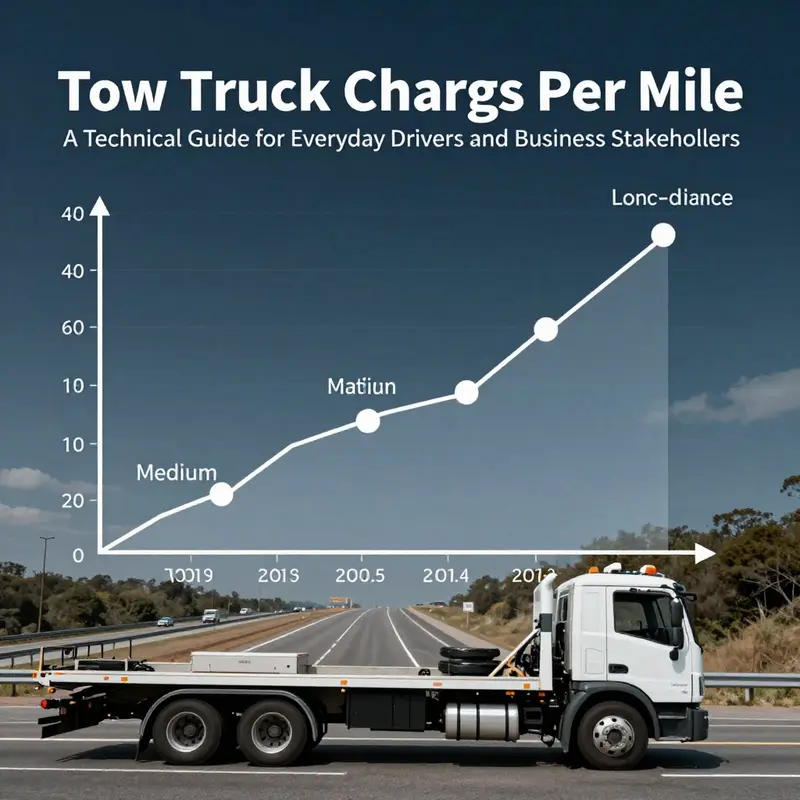
When your vehicle breaks down or is repossessed by gravity into a ditch of bad timing, the math behind the tow bill is rarely comforting. Yet understanding how tow trucks charge by the mile can save you from sticker shock and help you decide which option to pick when every minute feels like a toll booth of decision paralysis. Across the country, towing costs are not standardized. They hinge on distance, the vehicle being towed, the time of service, and the geographic patchwork of urban, suburban, and rural environments. At the core, most outfits lean on two fundamental pricing structures: a base fee combined with a per-mile rate, or a flat per-mile charge that acts like a straightforward mileage tax. The simplest way to picture it is to imagine a small adventure with a predictable end: a base fee that covers the dispatch and readiness, plus a distance-driven component that scales with how far the tow travels from point A to point B. The exact numbers vary, but the logic remains steady. A common frame of reference in many communities sees a base service fee of roughly fifty to a hundred dollars, followed by a per-mile rate that tends to sit between one and three fifty per mile. In practical terms, you can think of it as Total Cost = Base Fee + (Per Mile × Miles). This structure keeps the provider’s fixed costs separated from the variable cost of distance, which is especially important when you consider the many hidden factors that can bend those miles into a higher total at the end of the day.
To make this concrete, consider a typical scenario where a tow company charges a base of $50 and a per-mile rate of $1.75. If you end up with a final bill of $71, the arithmetic points to twelve miles of distance: $71 − $50 = $21, and $21 ÷ $1.75 = 12. It is a clean arithmetic story, and it helps demystify what otherwise can feel like a mystery ride to the shop. Of course, real life rarely sticks to tidy arithmetic. Some outfits deploy tiered pricing, where the first segment of miles costs one amount and subsequent segments cost more or less, depending on the distance bracket. A consumer who sees a tiered plan might encounter a setup like: $75 for the first 10 miles, $100 for 10–25 miles, and $150 for 25–50 miles. The effect is to make long-distance tows more predictable in principle, but the total can still escalate quickly as distance grows. In rural stretches where shops or impound lots are miles away, the same distance can become markedly more expensive than an urban tow simply because longer trips require more fuel, wear, and sometimes more specialized equipment.
Distance is not the only star in this show. Time of service can shine or dull the light on the final tally. After-hours towing, weekends, and holidays commonly carry surcharge premiums. Some companies apply a higher per-mile rate during these windows, while others tack on a separate after-hours call-out fee. A few shops even blend both strategies—an elevated base fee for after-hours service plus a higher mileage rate—to reflect the tougher logistics and the fewer hands available. Storage costs lurk in the background as well. If your vehicle ends up in an impound lot, there can be daily storage charges that accumulate until you retrieve it, adding another layer to the overall cost. A long journey can become a two-step process: the tow to a repair facility and then the cost of keeping the vehicle until a release or payment clears. The cumulative effect can be surprising if you haven’t asked for a full breakdown up front.
The vehicle type matters, too. Heavier or more complex vehicles demand heavier equipment, longer or multiple tow trucks, or specialized rigs. A heavy-duty tow for a commercial truck, an SUV with a heavy payload, or a specialty trailer can carry per-mile rates that outpace standard passenger-car tows. In such cases, the per-mile component becomes a lever that is pulled harder by the extra labor and gear required. It isn’t simply about distance; it’s about the problem you inherit at the end of the weekend when you discover that the machine used to haul you away wasn’t a compact sedan scenario but a more demanding operation. This is where the pricing conversation should begin with a clear request for a detailed estimate before any tow starts. You want the base fee, the mile rate, the distance brackets (if any), and the list of potential surcharges. You also want to know whether the distance is calculated along the actual tow route or a straight-line estimate, and whether any time-based charges apply beyond the stated rates.
One practical approach to building your own understanding is to imagine the tow as a journey with predictable waypoints. The first waypoint is dispatch time and readiness, a fixed investment that signals the presence of a crew willing to respond within a defined window. The second waypoint marks the distance, the miles that physically separate the starting point from the destination. The third waypoint captures the additional layers—stops, detours for traffic or road closures, and perhaps a choice between a direct tow and a more circuitous route that keeps costs down or under the cap of a planned budget. The fourth waypoint is the end of the journey, where the bill closes with any storage or after-hours adjustments included. It is a lot to track in the heat of a roadside moment, which is why having a written estimate, or at least a detailed quote, is so valuable. If a tow provider balks at providing this upfront transparency, that is a red flag worth heeding.
For readers who want a quick compass to keep in mind, remember the trio of variables: distance, time, and vehicle type. The distance is the meter that moves the needle most directly, but time of service can push the price higher in ways that aren’t immediately obvious. A late-night dispatch or a crisis during a busy holiday weekend can transform what might have been a routine hundred-dollar tow into a higher, more urgent bill. And as with any service that involves heavy equipment and trained personnel, there is a premium built into the complexity of the job. These factors, combined, explain why two tows that travel similar miles can end up with noticeably different totals.
If you want to see how these ideas fit into a real-world context, you can explore a detailed breakdown of per-mile charges and pricing structures in this resource on how mileage pricing tends to be configured for tow operations. The link offers a closer look at how a base fee interacts with a per-mile rate and how tiered pricing can alter expectations across different distances. how-much-does-tow-trucks-charge-per-mile.
Beyond the arithmetic and the mechanics, it helps to keep a few practical steps in mind when you face a tow. First, ask for a written estimate before the tow begins. The estimate should spell out the base fee, the per-mile rate, any distance brackets, and all surcharges that could apply—be they for after-hours service, storage, fuel, or equipment needs for heavy vehicles. Second, verify how miles are calculated. Some companies use the actual miles along the route, others use a straight-line estimate or a contracted distance that might not reflect detours. Third, inquire about potential additional fees that could apply if the tow involves extra stops or multiple destinations. Fourth, ask about whether you can reduce costs by choosing a direct tow if that option is feasible, or whether you can arrange for the vehicle to be towed during a less busy time window to avoid peak-hour surcharges. These questions aren’t about nickel-and-diming; they’re about clarity, predictability, and the ability to plan your obligations in advance. When you’re stranded, clarity is a lifeline.
The broader context of national pricing benchmarks is useful too. The numbers can swing widely by region, with urban centers often bearing higher base fees and per-mile rates reflecting denser traffic, higher labor costs, and more complex dispatch logistics. National data from professional associations and industry surveys can provide a backdrop against which local quotes sit. For those who want a wider, cross-regional perspective, the National Auto Writers Association aggregates data that helps frame what to expect in many markets today. External reference: https://www.nawa.org/.
In short, the cost of a tow per mile isn’t a single fixed rate. It is a composite of a few variables that shift with geography, time, vehicle type, and the specific service model a company uses. The most reliable approach remains simple: request a written estimate, know the base and distance components, ask about any surcharges, and confirm how miles will be calculated before you commit. In the end, understanding these elements equips you to compare quotes more effectively, plan for the unexpected, and avoid being surprised when the bill arrives at your door. The more you know about the pricing logic, the more you can steer toward a fair and transparent arrangement when you need a tow the most.
Reading the Tow Bill: Getting Accurate Per-Mile Quotes and Decoding Fee Breakdowns
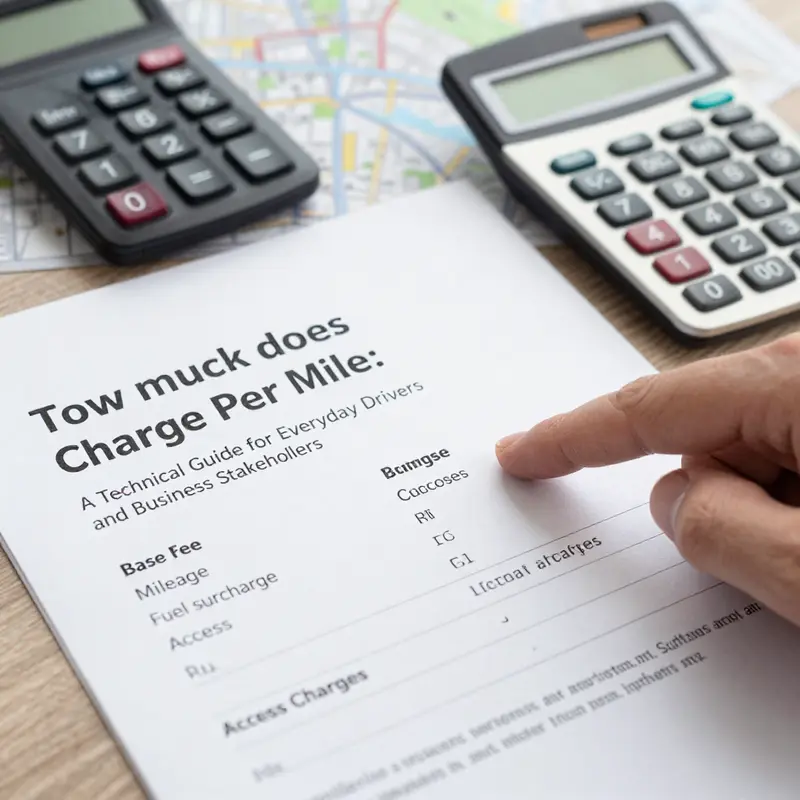
Understanding the price you see on a tow bill starts with knowing the parts that make it up. Tow companies rarely charge a single flat figure per mile; instead, they combine a base or hookup fee with a per-mile rate and a set of possible extras. If you learn to request and interpret a clear quote before service begins, you keep control of the final cost and avoid surprise charges when you pick up your vehicle.
Most towing calls begin with a base fee. This fee covers the truck dispatch, the hookup, and the initial labor to secure your vehicle. It is often shown on invoices as “base,” “hook-up,” or “dispatch” and usually ranges from about $50 to $100. Once the tow starts rolling, a per-mile rate is applied to the distance from the pickup to the drop-off point. Common per-mile rates fall between about $1.75 and $3.50 per mile in many areas, though you will find geographic and situational variation. Combining those two figures gives a basic estimate, but the total can change quickly when additional variables come into play.
A clear example helps. Imagine a bill of $71 with a $50 base fee and a rate of $1.75 per mile. Subtract the base fee to find the mileage portion, then divide by the per-mile rate: ($71 minus $50) divided by $1.75 equals 12 miles. That simple arithmetic shows how a few numbers on a bill translate into a measured distance and cost. Asking for that same arithmetic when you call for a tow gives you a precise expectation of cost before you agree to service.
Per-mile rates are not uniform across the country. Urban areas with higher operating costs often charge more per mile than rural regions. Heavy traffic and slow travel times can increase labor and fuel expenses, which factors into higher fees. The type of tow matters too: flatbed hauls, heavy-duty tows for trucks or buses, and specialty equipment for oversized vehicles usually carry higher per-mile rates because they require different trucks and more crew time. In many places, companies use tiered pricing that raises the per-mile charge beyond a certain distance, reflecting the higher cost of long hauls and the need to return the truck to base.
Time of day and the urgency of the call also influence price. After-hours, late-night, holiday, and emergency response calls typically add a surcharge. In some cases, that surcharge can double the regular per-mile rate or add a flat premium. This is why a quote taken in business hours might be vastly different from the price you see if the tow happens at 2 a.m. Always specify when the service will occur and ask whether the quoted rate applies to those hours.
To obtain a reliable quote, start with a few specific questions. Request the base fee and the per-mile rate in dollars. Ask whether the company uses tiered pricing for longer distances and whether there are surcharges for after-hours calls, weekends, or holidays. Confirm whether the quoted mileage is measured from the company’s lot or their truck’s current location. Some companies calculate distance from their nearest driver, while others use a fixed lot location; that difference can add unexpected miles to the bill if it’s not clarified.
Ask about additional charges common to towing invoices. Winch fees appear when a vehicle must be pulled from ditches, curbs, or tight spots. Hook and unlock fees apply when the driver must remove obstructions or access keys, and storage fees can start the moment your vehicle reaches the impound lot. If your vehicle is considered a special case — oversized, heavy, or requiring extra equipment — ask for the specific price adjustments. Requesting a written breakdown, either by text or email, helps you compare offers and creates a record you can use if you need to dispute a charge.
When you ask for a quote, provide accurate details. Tell the dispatcher your vehicle’s size, the exact pickup and drop-off addresses, whether the vehicle is operable, and any obstacles the driver might face. The more precise your description, the more precise the quote will be. If the provider asks for a location pin or a photo of the scene, share it. These small steps reduce the risk of a surprise fee and improve the accuracy of the estimate.
Comparing quotes from multiple providers is practical and effective. If you are not in immediate danger and waiting is safe, call two or three local companies and compare the numbers. Ask each one to break down the base fee, per-mile rate, and any additional charges. If one provider lists a lower per-mile rate but a much higher base fee or a large after-hours surcharge, the cheaper per-mile number might not win. Total cost for your expected distance matters most. Remember, a reputable company will provide clear answers and will not pressure you into agreeing to a tow without explaining the fees.
Be prepared for the idea that the cheapest option is not always the best. A very low per-mile rate could mean the company uses older equipment, has inadequate insurance, or tacks on hidden fees. Conversely, a higher rate can reflect better equipment, faster response time, or more comprehensive insurance coverage. Consider value as well as price: whether the truck can handle your vehicle safely, whether the staff are professional, and whether the company has clear policies for disputes and damaged property.
When you receive the actual invoice, compare it to the quote. Check that the base fee and per-mile rate match what you were told. Verify that the mileage matches the distance you expected and that any surcharges were disclosed when you accepted the service. If there’s a discrepancy, ask for an explanation. A transparent company will re-run the calculation and show you how the total was reached. If the explanation is unsatisfactory, document the call and consider filing a complaint with local consumer protection agencies.
If your vehicle was towed by an impound or law enforcement directive, the pricing structure might differ. Many municipalities set fixed tow and storage rates for impounded vehicles. In those situations, the bill may include fees required by local ordinance, and you may have separate charges from the impound lot for release and storage. Ask the towing operator or impound lot for the local ordinance number or a written explanation of municipal charges, so you can verify whether fees were applied correctly.
Technology has made it easier to estimate and verify tow costs. Many companies publish rates online or offer instant text quotes. GPS distance measurements can be shared to confirm mileage. Use these tools when available, but keep a screenshot or saved message of any quote you receive. That documentation is useful if you need to contest the bill later.
Understanding insurance and roadside assistance coverage also matters. Some insurance policies or membership programs cover towing up to a certain dollar amount or mileage limit. If you have coverage, tell the tow company before they begin service so they can bill the insurer or membership provider directly. Confirm whether your coverage will pay the entire invoice or only a portion and whether you will be responsible for any difference at the time of service.
In stressful moments, keep these three actions in mind: ask for a full breakdown, confirm hours and distance assumptions, and document the quote. Those steps prevent most surprises. If you want a quick baseline before calling for service, use a simple formula: total expected cost = base fee + (per-mile rate × distance) + any disclosed surcharges. Plug in the numbers you were given to check whether the final invoice aligns with the estimate.
For more detailed background on typical tow calculations and the factors that influence them, consult expert guides that explain how local market conditions, equipment needs, and regulatory rules shape towing fees. A helpful reference that expands on these points is the National Automobile Dealers Association’s guide on towing costs and what affects them. That resource can clarify municipal differences and common industry practices so you know what to expect when you call for a tow.
If you want to learn more about typical per-mile ranges and how tow companies list their rates publicly, see this internal resource on how much tow trucks charge per mile. It explains common pricing models and what to watch for when you compare providers.
Being informed about fees and asking the right questions gives you clarity at the roadside. Start every call by requesting a simple, written quote, and then use the math above to verify the final bill. That approach protects your wallet and helps you choose a provider who is fair, transparent, and capable of doing the job safely.
External reference: https://www.nada.org/insights/understanding-towing-costs-what-affects-them
Internal link: how much do tow trucks charge per mile
Final thoughts
Understanding tow pricing requires seeing how base fees, per-mile rates, timing, and distance interact in real-world scenarios. For everyday drivers and businesses—whether you’re managing a single vehicle, a fleet, or property-related services—the key is to anticipate all factors that affect the final bill, request itemized quotes, ask about after-hours surcharges, and compare apples-to-apples across providers. With a clear framework for base fees, distance-based pricing, and regional variations, you’ll be better prepared to budget, negotiate, and avoid surprise charges when a tow becomes necessary.