
Knowing how much tow trucks cost per mile helps drivers, commuters, truck owners, repair shops, and property managers budget accurately and avoid surprise bills. Tow pricing typically combines a base fee and a per-mile charge, but the final number depends on several technical and situational variables. The chapters that follow unpack those variables: the first chapter explains the key factors that drive per-mile costs; the second breaks down common pricing models and core components so you can decode quotes; the third details typical additional fees and scenarios that change the final bill. Together they provide a practical, technical yet accessible guide to estimating and managing towing expenses.
Miles, Fees, and the Toll of Towing: The Hidden Math Behind Tow Truck Pricing Per Mile
When a vehicle breaks down or is left stranded, the first question most drivers ask is simply this: how much will it cost per mile to get it to safety? The short answer is never a single number. Tow truck pricing is a careful orchestration of base fees, per-mile charges, and a suite of optional add-ons that can push the final bill in surprising directions. To understand the real cost per mile, you must follow the money from the dispatch center to the street and beyond. The journey from a phone call to a clear invoice is influenced by distance, the kind of vehicle being towed, the time of day, and the precise conditions of the job, from terrain to accessibility. In many cases, the most common pricing model resembles a base fee to dispatch the truck, plus a per-mile rate for the distance the tow vehicle actually travels with your car in tow. If you’ve ever wondered why two tow jobs of roughly the same distance yield notably different totals, the answer lies in the small, often overlooked elements that accumulate along the way. The base fee might be modest, but the way the miles accumulate—along with the hidden charges—can make a big difference in the final tally. The typical range for towing per mile sits around a broad spectrum. Some operators price at about $1.50 to $3.00 per mile when you factor in the vehicle’s weight, distance, and the equipment required to move it safely. The most common configuration, however, combines a base or minimum dispatch fee with a separate per-mile charge. A dispatch fee often lands in the neighborhood of $50 to $100, serving as the administrative and mobilization cost that covers the time spent answering the call, dispatching the crew, and getting the rig rolling. On top of that, the actual tow distance is billed at roughly $1.75 to $2.50 per mile in many markets, though those numbers can tilt upward in crowded urban centers or for longer hauls. In some markets, operators quote a higher per-mile rate to account for urban congestion, parking challenges, or the extra wear and tear on heavy-duty equipment. The net effect is simple in theory: the farther you go, the more you pay, but the exact math depends on a mosaic of factors that reflect how tow work is actually done on the ground. The distance-driven pricing structure is not just a matter of multiplying miles by a rate; it is about capturing the realities of towing work. A tow that covers only a few miles may feel straightforward, but when the distance stretches to the mid-range, or into long-haul territory, the rate per mile often shifts, and the base fee becomes a more proportionate share of the total. For instance, a short tow of around five miles might total roughly $75 to $150, depending on the base fee and the per-mile rate selected by the provider. That range acknowledges the cost of mobilization and the time allocated to preparation, hook-up, winching, and the actual travel. It also recognizes the fact that shorter tows are often in more congested or demanding environments, where the crew must navigate tighter spaces, restricted access, and sometimes time constraints that require quicker dispatch and prioritization. When the journey stretches to fifty miles or more, the math shifts again. A typical long tow can push the total beyond $300, especially in markets where the per-mile price leans toward the higher end or where surcharges come into play. Even with a base fee of $100 and a per-mile rate of $2.50, the math alone yields $225 for fifty miles. Add fuel surcharges, remote location fees, or after-hours premiums, and it is easy to cross the $300 threshold. These examples reflect the interplay between distance, equipment requirements, and the practical realities of maintaining a fleet that can handle a broad spectrum of vehicle types and towing scenarios. The type and weight of the vehicle being towed is another crucial determinant of cost per mile. Vehicles range from compact cars to full-size pickups, SUVs, and commercial vans. Heavy or unusual loads require heavier-duty tow rigs, more specialized equipment, and often additional personnel or time to complete the job safely. A wheel-lift or flatbed rig used for standard passenger cars has a different cost structure than a heavy-duty tow truck designed to move larger trucks, vans, or buses. When the target is a heavier vehicle, the base fee may rise to cover the additional labor, equipment wear, and fuel use associated with securing and transporting the load. The per-mile rate can also adjust upward to reflect the heavier strain on the towing equipment, higher fuel consumption, and the longer time required to perform the move. The result is a pricing scenario where a heavier tow not only costs more per mile but may also carry a higher starting point, creating a compounding effect that becomes noticeable even on moderate distances. Time of day and location inject further complexity into the cost-per-mile equation. Towing in the wee hours of the night, during a snowstorm, or in a bustling urban core can carry a premium. Late-night calls disrupt normal scheduling, squeeze the available labor pool, and can require dispatchers to re-prioritize or re-route resources to ensure a fast response. Remote or rural locations introduce still more variables. Travel times increase, access may be limited, and the risk of extended downtime for the crew grows. In such cases, a premium for the extra travel, longer wait times, and the potential need for standby or multi-stop arrangements can be added to the total, often as separate line items. It’s essential to understand that these premiums are not arbitrary. They reflect the real costs towing companies face when demand outpaces supply or when special conditions complicate a straightforward hook-up and tow. In addition to the core base fee and per-mile charges, several ancillary fees commonly appear on tow invoices. Fuel surcharges are a familiar example. They can be a small percentage or a fixed amount that fluctuates with the price of fuel and the distance traveled. Emergency roadside assistance charges may be added to cover tempo spent assisting with things like jump-starts, tire changes, or unlocking a vehicle when a driver is stranded. Storage fees can apply if a vehicle remains at a tow yard for a period after delivery, waiting for the owner to arrange pickup, or if the vehicle cannot be released until a payment is completed. Then there are tolls, environmental or disposal costs, and sometimes equipment usage fees for specialized operations such as winching through rough terrain or in extremely tight spaces. The variety of potential add-ons means that even a quote with a straightforward base fee and per-mile rate can escalate once the full scope of the job is known. This is why most reputable tow operators insist on providing a detailed, upfront estimate that breaks down the line items. A transparent quote will typically list the base dispatch fee, the per-mile rate, and any surcharges or optional services that may apply. It also helps customers anticipate how changes in the situation could alter the final cost. When you are negotiating or comparing quotes, you should look for a clear section that translates into real dollars: base fee, distance-cost, and each surcharge or addition. The importance of a detailed quote cannot be overstated. It reduces the risk of surprises when the tow is completed and the bill comes due. A well-documented quote gives customers the confidence to make an informed decision about which provider to choose, especially when two or more options are available within a reasonable driving distance. Beyond the numbers, the decision about which tow service to hire often rests on a broader evaluation of service reliability, dispatch efficiency, and the provider’s ability to handle your specific vehicle type. A compact car and a mid-size SUV may both fall into the “light-duty” category, but the difference in approach to securing and moving them is not trivial. For heavier vehicles, the provider’s equipment lineup, crew composition, and experience with special circumstances—such as vehicles with unusual damage, all-wheel-drive systems, or non-standard hitch configurations—can influence both the perceived value and the final price. The practical takeaway for drivers is simple: treat tow costs as a composite, not a single figure. Start with the base fee and the per-mile charge as your framework, then account for the added charges that could apply to your situation. When possible, obtain a detailed quote before service and request a clear explanation of any line item that seems unclear. If you receive a quote that lists only a lump sum, ask for a breakdown. It will help you compare against other bids and will empower you to decide whether a particular provider’s pricing structure aligns with your budget and your expectations for service quality. The value of upfront transparency is not merely about budgeting; it also relates to accountability. In many ways, pricing per mile is a proxy for the broader economics of mobile, on-demand service. The dispatch center must account for fuel costs, vehicle wear, insurance, staff time, and the logistical realities of moving a vehicle from one location to another under a wide range of conditions. These factors are invisible to the casual observer but are vital to the math behind every mile billed. As you plan for future incidents or plan to recover a vehicle from a distant location, you can begin to form a mental model of what drives those numbers. The more you understand the basic components—base fees, per-mile rates, and the common surcharges—the better you will be at budgeting and at recognizing when a quote reflects a fair representation of the work involved. It’s also worth noting that most operators maintain a flexible pricing approach that can adjust to market conditions and regional differences. Urban markets with dense traffic, higher labor costs, and tighter access will naturally push up both the base fee and the per-mile rate, while rural markets, with longer travel distances but lower operating costs, may present a different balance. This doesn’t mean one market is universally better than another; it means the pricing is a function of supply and demand, service speed expectations, and the logistical realities of getting a tow rig to you when you need it. If you want to explore this further, you can start by looking at the broader landscape of tow-truck pricing and the way companies structure their quotes to make sense in their operating environments. For a concise overview of costs and pricing structures, you can visit a dedicated resource that focuses on the breakdown of these charges and the logic behind them. tow-truck costs and pricing. This reference helps illuminate how the base fee and per-mile charges interact with surcharges and how a well-presented quote can demystify the total. In practice, the policy for obtaining quotes and the emphasis on upfront transparency are often as important as the numbers themselves. A good operator will encourage you to ask questions, to confirm whether a long-distance tow includes fuel surcharges or whether there will be additional charges for out-of-area travel, or for specialized equipment such as wheel-lifts or flatbeds. They may also discuss possible time-based adjustments, such as discounts for non-emergency, non-peak-hour dispatches, or for membership programs that guarantee faster response times during certain windows. The mental model then becomes less about chasing a single “per mile” figure and more about understanding the full pricing ecosystem. When you are evaluating the cost per mile, you are evaluating a system designed to balance mobility, safety, and reliability. It is a system that must account for the real costs of operating a fleet of tow trucks, maintaining them in a state of readiness, and sending help when people need it most. That is why the question of “how much per mile?” is rarely a stand-alone inquiry; it’s a doorway into the broader economics of emergency services on the road. The more you learn, the better prepared you will be to navigate the quote process and to advocate for a fair and transparent price when you need to call for a tow. The math may feel opaque at first glance, but with a clear breakdown and a little foresight, you can approach the situation with confidence, knowing you understand the factors that shape the final number and how to compare like with like across providers. As you move through these chapters, you’ll see how the narrative threads together: distance-driven pricing, vehicle type and weight, and the varying pressures of time and location all converge to determine the final bill. In the end, the price per mile is a reflection of the complexity involved in moving a vehicle safely from curb to destination, of the costs that keep a fleet ready to respond, and of the practical realities of serving people in moments of need. For the reader seeking practical tools, remember that a careful quote, a clear line-item breakdown, and an awareness of regional nuances will equip you to understand, compare, and plan for the true cost of towing per mile with accuracy and confidence. For those who wish to explore beyond the immediate price and into the broader context of mobility and transportation technology, there is value in seeing how related fields—such as diesel efficiency and the evolving landscape of heavy-duty towing—shape the economics of on-demand vehicle recovery. A resource that offers broader context on modern diesel technology and efficiency provides insight into the kinds of equipment and powertrains that underpin these services in real-world operations. https://www.motortrend.com/cars/diesel-trucks-efficiency/.
Breaking Down the Bill: How Tow Truck Pricing Models Shape Cost Per Mile
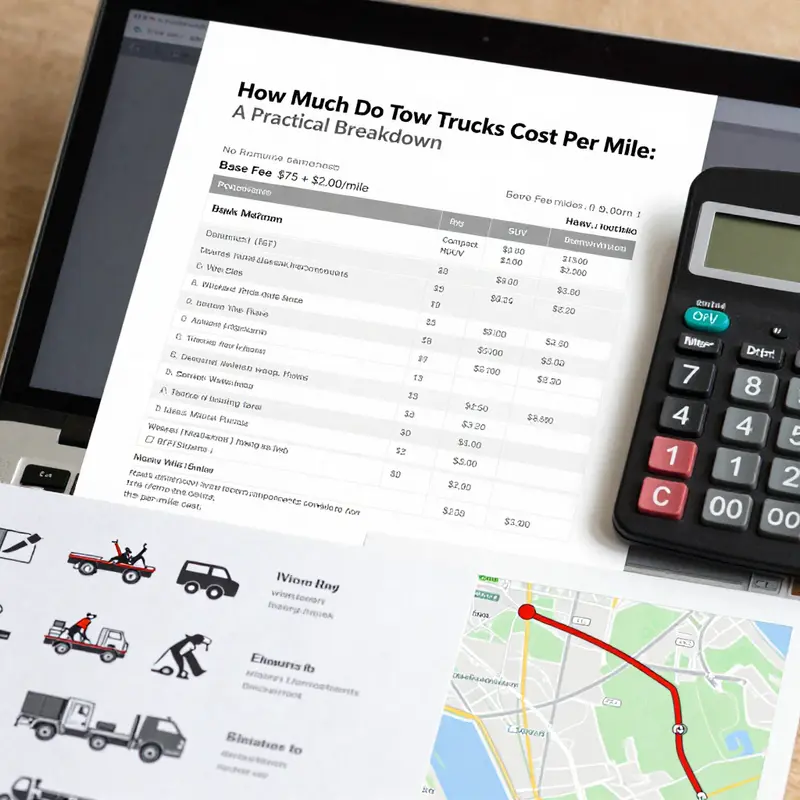
Understanding the building blocks of a towing bill helps you predict costs and avoid surprises. Tow truck charges are rarely a single flat fee. Instead, they combine a set of pricing models and cost components that together determine your final price per mile. At the heart of most bills is the simple math of a base or hook-up charge plus a per-mile rate, but that straightforward formula hides many adjustments and add-ons. Read on to learn how those elements interact, why rates vary, and what to ask for when you need a tow.
Towing companies most often use a two-part model: a base fee to respond and prepare the vehicle, followed by a per-mile charge for the distance hauled. The base fee covers arrival, labor to secure the vehicle, and the basic operating cost of deploying a truck. Typical base fees range from about $50 to $100. The per-mile rate then multiplies with the distance. A common per-mile range is $1.50 to $3.00, though that span changes with vehicle size, location, and time. Multiply the two parts and you get a predictable, linear cost that increases with distance. For short hauls the base fee represents a larger share of the total. For long hauls, mileage dominates.
Beyond the base-plus-mile structure, companies use several alternative or hybrid pricing schemes that affect the effective cost per mile. One is tiered distance pricing. Rather than a single per-mile rate, firms define brackets—0–10 miles, 11–25 miles, 26–50 miles, and so on—with each bracket priced differently. These brackets reflect how costs shift with distance. The first few miles often include heavy fixed costs: dispatch, hooking, paperwork. Later miles are priced closer to true operating cost, often lower per mile. That means a 5-mile tow may cost more per mile than a 100-mile tow. The tiered approach encourages transparency about where the extra costs live, but it also makes comparing providers harder unless you see the bracket definitions.
Another model is flat-rate or fixed-price towing, frequently used for specific services like local repossessions or scheduled long-distance moves. A fixed price can be helpful when distance and handling needs are known in advance. However, fixed quotes should explicitly account for all contingencies, including tolls, fuel surcharges, and access issues. If a provider offers an estimate instead of a fixed quote, ask what circumstances trigger additional charges.
The type and weight of the vehicle being towed is an immediate and often decisive cost driver. Light passenger cars are the baseline, towed with standard equipment and modest fuel use. Heavy vehicles—full-size SUVs, large trucks, commercial vans, and buses—require heavier-duty trucks, stronger winches, and different hookups. Those larger rigs take more fuel and time to handle. They may also require two-person crews. Some tows demand specialty equipment like flatbed rollbacks, wheel-lifts, or integrated wreckers. Each piece of gear adds to the hourly operating cost and is reflected in the per-mile rate or in added equipment fees. Expect a higher per-mile cost when a vehicle exceeds standard dimensions or weight.
Time of day and day of week also matter. Late-night calls, weekend pickups, and holiday hauls typically carry after-hours or emergency surcharges. These fees account for staffing premiums and the reduced availability of nearby shops for drop-off. If your car breaks down at 2 a.m., you will likely pay more than for the same tow at midday. In dense urban centers, congestion and parking constraints slow service and raise operating costs. Urban tows can be pricier per mile because trucks move slower, require more maneuvering, or face parking enforcement complications. Conversely, rural areas can produce higher bills when companies must travel far to reach you. Long dispatch distances increase total mileage and therefore total cost.
Service type changes the equation as well. A straightforward hook-and-haul is simple: the operator hooks the vehicle and tows it to a yard or repair shop. A winch-recovery or accident recovery is more complex. These services include securing a vehicle from off-road positions, righting a rollover, or clearing debris. They call for winches, stabilizing gear, and often additional personnel. Recovery work may carry a minimum-hour charge or a special recovery fee. Roadside assistance like jump starts, tire changes, lockouts, and fuel delivery tends to be cheaper than a tow. Some companies bundle roadside help into membership programs and give discounted per-mile rates for members.
Fuel and operating costs underpin the per-mile charge. While the customer-facing number is simple, the company’s per-mile calculation reflects diesel or gas prices, maintenance, insurance, and depreciation. Higher fuel prices raise per-mile rates quickly. Additionally, seasonal shifts in fuel costs or insurance premiums can push rates up across the board. When operators add a fuel surcharge, it appears separately on your bill as a small percentage or flat fee, often tied to national fuel price indices.
Regarding travel distance, a short local tow of five to ten miles commonly lands between $75 and $150. That range reflects the base fee plus mileage and occasional lock fees or towing yard intake charges. For longer distances—say over 50 miles—costs climb and can easily exceed $300, with per-mile numbers often dropping as distance grows. Long-distance tows require more planning and may cross tolls, state lines, or special jurisdictions. Each of these adds to the total. If the route crosses bridges or toll roads, expect those tolls to be passed on to you.
Storage and impound fees should not be overlooked. If a vehicle is towed to a lot and remains there overnight, the company or impound lot usually charges a daily storage fee. Storage can quickly add up if recovery is delayed. Storage is often set at a daily rate and can be assessed by the towing company or by a municipal impound lot. When a car is towed for parking violations or after an accident, retrieval can incur administrative fees, release paperwork charges, and additional hold fees. Those fees sit outside the per-mile calculation but inflate the amount you pay.
Insurance and roadside assistance coverage can soften the impact of per-mile rates. Some auto insurance policies include towing coverage with a set mileage cap. Membership programs from automobile associations often provide free or discounted tows up to a stated distance. When coverage applies, you may only pay a reduced balance or nothing at the moment of service, subject to the policy terms. It is essential to know whether the towing company will bill your insurer directly or expect you to pay and seek reimbursement. Clear communication prevents billing disputes.
Transparency is the customer’s best tool. A reliable company will provide a detailed, itemized estimate. It should list the base fee, per-mile rate, estimated mileage, and any likely additional charges, such as winch or recovery fees, after-hours premiums, equipment surcharges, tolls, and storage costs. Ask whether quoted per-mile rates include dispatch travel to reach your car. Some providers bill you for the distance from their location to yours before the tow even starts. That practice can surprise consumers who only consider the hauling distance. Request a written estimate and a clear description of cancellation or waiting-time charges.
Compare quotes to see which factors matter most. When you get several estimates, compare apples to apples. Confirm that each quote uses the same mileage definition, includes or excludes fuel surcharges and tolls, and specifies possible recovery fees. If one firm appears cheaper per mile but charges a high base fee or strong recovery surcharges, its total may not be the best value. Likewise, a higher per-mile rate might make sense if the company dispatches from closer proximity or has a faster estimated time of arrival.
Negotiation is possible but limited. If you can be flexible on pickup times or can wait for a scheduled tow rather than emergency dispatch, ask whether the company offers lower weekday or daytime rates. Memberships and pre-negotiated service agreements with fleets and repair shops can yield discounts. When dealing with private towing after an accident or breakdown, politely request a firm, written total before agreeing. For non-emergency moves, ask for a flat-rate quote and insist on clarity about what would trigger extra charges.
Regulatory and local rules can affect how components are priced. Municipalities often regulate towing practices after accidents and for impounds. Price caps, mandated notice periods, or required signage can influence what a company charges and how they present fees. Some places require tow yards to publish fees or to offer a reduced release fee under specific conditions. If your situation involves a municipal tow, find out what local rules apply. Those rules sometimes produce lower-than-average rates or protect consumers against excessive storage fees.
Small details change the final number. Difficulty accessing a vehicle, narrow driveways, steep inclines, or obstructed parking spots all require extra time and labor. Expect a complex retrieval to add to your bill. Vehicles with damaged steering, locked wheels, or aftermarket modifications may need additional gear. Always tell the dispatcher about visible damage so they can send the right truck.
When assessing cost per mile, consider the effective rate, not just the advertised one. The effective per-mile price equals the total bill divided by total miles towed. For a 10-mile tow with a $75 base fee and $2 per mile, the effective rate is ($75 + $20) / 10 = $9.50 per mile. For a 100-mile tow with the same $75 base and $2 per mile, the effective rate is ($75 + $200) / 100 = $2.75 per mile. This simple math explains why short hauls can feel comparatively expensive.
Technology and efficiency also influence pricing trends. Modern dispatching systems, GPS route planning, and more fuel-efficient tow trucks reduce operating costs. Companies with optimized routing and a larger fleet may offer better per-mile rates because they minimize empty-truck travel. Conversely, smaller operations with limited trucks or outdated routing often pass higher dispatch distances onto customers.
Finally, know the language on the bill. Common line items include: base fee (hook-up), mileage charge, service call fee, wait-time charge, winch or recovery fee, fuel surcharge, and storage or impound fees. Each has a separate rationale. Asking for each item to be explained prevents confusion when a higher-than-expected total appears. You have the right to decline non-essential services. If a tow truck suggests extra work you did not authorize, request a clear reason and a written change order before work proceeds.
A single external resource provides a deeper overview of national towing cost structures and common fees. For a broad, practical guide to towing costs and typical fee examples, see Understanding Car Towing Costs: https://www.aaacar.com/towing-costs/.
If you want a quick internal reference on typical per-mile charges and local practices, this page on how much tow trucks charge per mile gives more localized context and examples: how much tow trucks charge per mile.
Understanding the components and models behind tow truck pricing turns uncertainty into control. When you can read a quote, identify likely add-ons, and compute the effective per-mile rate, you are in a position to make better choices. Ask questions, get estimates in writing, and consider roadside memberships if you expect repeated assistance. Doing so reduces surprises and keeps costs reasonable, whether you face a short local haul or a long-distance recovery.
Beyond the Base Fee: Navigating Surcharges, Distance, and Local Markets in Tow Truck Costs Per Mile
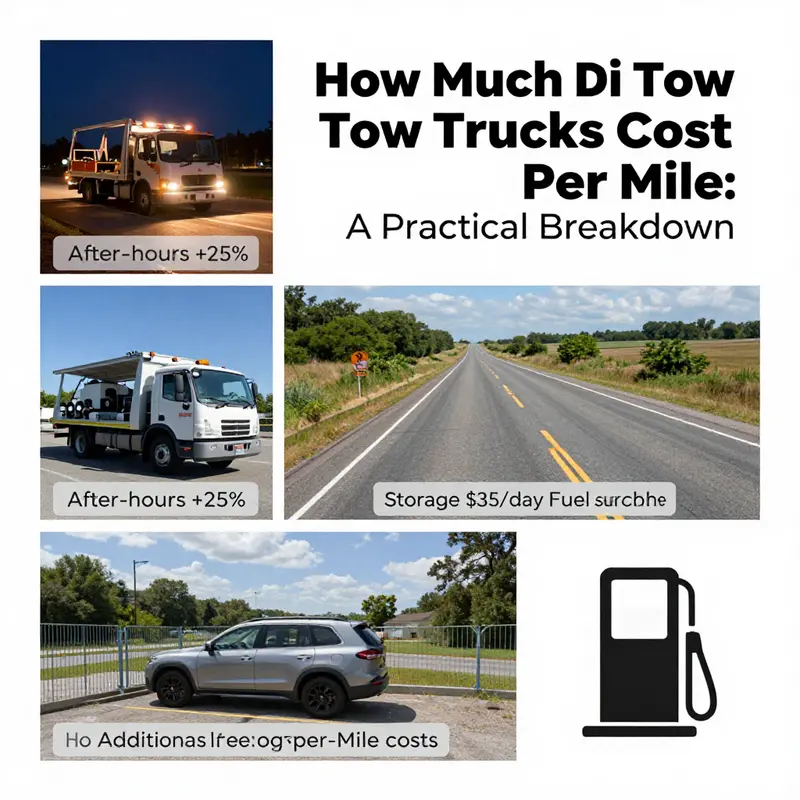
When people consider how much tow trucks cost per mile, they often fixate on a single number. Yet the real price tag behind a tow is a layered calculation that blends a base dispatch fee, a per mile charge, and a spectrum of additional costs that can swing the final bill in surprising directions. The most common structure starts with a base fee to call a tow truck, followed by a mileage rate that varies from place to place and from service to service. In practice, this means that two tows that travel the same number of miles can end up with very different totals depending on where you are, what you’re towing, and when the service is performed. The variability reflects market conditions, logistics, and the particular needs of the driver and the vehicle under tow. To anyone budgeting for a tow, the takeaway is simple: anticipate more than the mile rate and prepare for a few line items that appear only under certain circumstances.
Discerning what drives the price begins with the baseline figures. A typical base dispatch fee often lands somewhere between fifty and one hundred dollars, a charge designed to cover the time spent mobilizing a truck, dispatch overhead, and the initial on-site assessment. This base fee is the floor you pay just to have the tow truck dispatched. The mileage portion then adds on top of that foundation. Per mile charges commonly range from around one and a half dollars to three dollars per mile in many markets, especially for standard tows with light or midweight vehicles. But the actual mileage rate—what you’ll see on the bill after the base fee—can swing wider. Urban areas with higher operating costs and more congested traffic often push the per mile rate higher, while rural areas with fewer nearby providers may either be cheaper per mile or leverage long travel times to justify steeper fees once the trip begins.
A broader view of the landscape shows another important distinction: the type of tow. The price per mile is not a fixed universal number; it shifts with the kind of towing equipment the job requires. A basic wheel lift tow for a compact car is usually cheaper tows than a flatbed or a heavy duty tow that might be used for a pickup with a lifted suspension or a commercial van. Heavier vehicles demand heavier equipment, which translates into higher wear and tear on the tow truck, greater fuel usage, and more complex handling. The result is a higher per mile rate and, in some cases, a higher base fee as well. The practical upshot is that a heavier vehicle can push the cost per mile well above the average, even if the distance remains the same.
The context of the move matters just as much as the weight of the vehicle. Time of day and local geography exert visible influence on pricing. Emergency or after hours service, often defined as after eight in the evening or during overnight hours, frequently carries a surcharge or an elevated hourly rate. The rationale is straightforward: fewer drivers are available and the travel may be longer due to detours, layout constraints, or limited access to a willing tow crew. In remote or rural locations, a tow may involve longer travel distances to reach a vehicle, more complex access issues, or the need for specialized equipment to navigate difficult terrain. Each of these factors pushes the total higher, independent of the simple miles traveled.
Short tows give a concrete sense of how these elements accumulate. A basic tow covering five to ten miles commonly results in a total near the seventy-five to one hundred twenty-five dollar range, depending on the base fee and the precise mileage rate chosen by the provider. A ten mile tow might look straightforward, yet the final cost can be higher if the vehicle demands flatbed service or if a remote pickup adds travel time to the equation. The per mile component after the initial distance often falls somewhere in a broad band, for example roughly two dollars and fifty cents to seven dollars per mile, depending again on vehicle type, location, and service specifics. The point is not to promise a single number but to emphasize that small changes in conditions can produce outsized shifts in the final invoice.
When the distance stretches beyond the familiar city blocks into longer hauls, the totals rise accordingly. For longer tows—those surpassing roughly a hundred miles—the overall cost often lands in a broader band, typically three hundred to six hundred dollars or more. That range reflects not just the added miles but also whether the operator must deploy heavier equipment, secure the vehicle, and potentially coordinate with storage or hand-off at the destination. The long-haul scenario also increases the likelihood of surcharges taking a bite out of the final bill. A longer drive introduces more opportunities for fees to accumulate, from fuel surcharges to time-based charges and even after hours or remote location considerations.
The portfolio of additional charges is where the real price diversification lies. Some costs appear as a straightforward add-on to cover specific operational realities, while others are contextual and time-bound. Heavy vehicles naturally require more intensive equipment; a truck or a large van may incur a higher base or per mile rate because the tow must be accomplished by a heavier rig with more powerful hydraulics and a longer wheelbase. Flatbed towings, frequently chosen to protect high-value or front-wheel-drive vehicles, often carry a premium. The equipment needs are different, the crew’s skill set is more specialized, and the service time can be longer, all of which contribute to a higher final ticket. The same logic applies to high-value or specialty vehicles where a careful approach matters; drivers may charge a premium for that extra level of handling to minimize risk to the car and to themselves.
Then there are the situational charges. After-hours service is a common surcharge that can significantly alter the posted per mile rate or the overall base. An emergency tow, performed during a holiday, weekend, or late at night, carries a premium that compensates for reduced availability and the challenge of coordinating a safe lift under less-than-ideal lighting or weather. Remote locations add another layer of complexity. If the pickup address is in an area with limited access or difficult terrain, the tow operator may pass along a geographic access surcharge to reflect the additional travel time and the risk of the maneuver. These charges are not arbitrary; they are rooted in the realities of field work where planning, safety, and timely arrival intertwine with the costs of fuel, wear, and labor.
Beyond the direct towing work, several ancillary charges commonly appear on invoices. Fuel surcharges are a familiar example. They track fluctuations in fuel prices and are applied to offset the higher cost of operating the tow truck’s engine and equipment over the course of the job. Storage fees can also apply if the vehicle remains on the tow yard for an extended period before pickup or transport to a repair facility. These storage windows might begin after a set grace period and accrue daily, creating an additional, sometimes substantial, line item. Towing in certain jurisdictions may trigger licensing or permit fees if the vehicle is moved through controlled zones or if peace-of-mike conditions require special permissions for the lift and transport. While not universal, these charges illustrate how a single tow can morph into a bundle of related costs rather than a single mile multiplied by a fixed rate.
With these dynamics in mind, the most practical approach is to request a detailed quote before any service begins. A good quote breaks down each component: the base dispatch fee, the per mile rate for the actual distance towed, any charges for flatbeds or heavy-duty service, and all potential surcharges that may apply given the vehicle type, location, and timing. This upfront clarity is essential for budgeting and for avoiding surprises once the tow is complete. It also gives customers a framework to compare competing providers. If you know a tow truck price can vary as much as the day and place, you can ask pointed questions about minimum charges, how the mileage is calculated for partial miles, whether the rate includes or excludes fuel surcharges, and what conditions trigger after-hours pricing.
From a consumer’s standpoint, one effective way to anchor your expectations is to think in terms of line items and to map the journey of a tow from pickup to drop-off. The base dispatch fee is the ignition; it starts the clock. The mileage fee tracks the road time; it is the engine that drives the bill upward as the vehicle moves. The heavier the vehicle, the more resources the tow requires, the higher the expense for the miles traveled. If the vehicle must be hauled on a flatbed, the team uses more equipment, more time, and more labor; the result is a higher overall cost. If the job occurs after hours, on a holiday, or in a remote location, expect those line items to push the total beyond the base and the mileage alone. The more you understand how these elements interact, the more confidently you can plan for the total and the more effectively you can negotiate or compare estimates.
In addition to understanding the mechanics of pricing, there is real value in knowing how to interpret a tow invoice. A well-structured bill will show the base fee, followed by the distance traveled, then the per mile charge for each segment if the trip involved multiple legs or dynamic routing. It should itemize any equipment-specific charges such as flatbed service or specialized towing gear, along with any after-hours or emergency surcharges. Storage and fuel surcharges, if applicable, appear as discrete line items with dates or time frames. If something looks odd, don’t hesitate to ask the provider for a quick walkthrough of how the charges were calculated. Clear communication before, during, and after the tow saves time, reduces the chance of misinterpretation, and keeps the financial side of the experience from overshadowing the logistical and safety benefits of roadside assistance.
For readers who want to explore the pricing framework in a more formal, structured way, a concise, accessible overview of how these costs are typically assembled can be found in the dedicated pricing section on the site. It not only recapitulates the base fee and per mile structure but also contextualizes how local market conditions shape the final amount. This resource can serve as a practical reference as you plan for incident response and as you compare offers from different providers. To locate that overview, you can follow this link: tow truck costs and pricing. The page aggregates the common components—base dispatch fees, mileage rates, and the usual add-ons—so you can align your expectations with the realities of your locale and vehicle type. As always, remember that the numbers you see in the real world are a reflection of both the job’s particulars and the provider’s policies, so a personalized quote remains the most reliable guide.
Beyond the practicalities of price breakdown and invoice literacy, there is also a broader consumer takeaway about how much tow trucks cost per mile. The core message is that the rate you pay is rarely a single, static figure. It is a composite result driven by vehicle weight, service type, distance, time, and place. Urban centers with dense provider networks may present tight competition that can tamp down some costs, but the premium for faster response and extended service hours can offset any savings. Rural regions may lean toward higher mileage charges because the travel time to reach customers is longer and the pool of available drivers is smaller. In effect, distance matters not only for the miles but for the context around those miles—the road, the hour, the weather, and the vehicle’s demands.
If one thing stands out from the varied pricing stories, it is this: estimates are only as good as the information that informs them. A quoted price that omits base fees, per mile charges, and potential surcharges is not a complete forecast. The most responsible approach is to seek a comprehensive estimate that enumerates all likely line items and to clarify any ambiguous terms before the tow begins. Asking pointed questions about whether the mileage rate is charged in partial miles, whether there is a minimum charge, how after-hours work is priced, and what the storage policy is can prevent cost surprises when the tow is finished. In practice, this translates into a straightforward habit: when you call a tow service, request a written estimate that discloses all components, confirm the unit of distance used for mileage calculation, and ask for the expected completion window so you can plan for the next steps, whether that means a ride to a repair shop or a ride home from the scene.
For readers who want a wider lens on the topic, including how other regions approach pricing and what the typical ranges look like in different markets, there is a broader context to draw from in the documented industry patterns described earlier. The essential point is that variability is not accidental; it is a function of market dynamics, vehicle needs, and the practical realities of roadside work. By arming yourself with the knowledge of base fees, mileage rates, and the probable surcharges, you gain the ability to navigate the system with greater confidence and to budget more accurately for the unexpected moments that come with vehicle trouble. The bottom line remains: knowing the structure behind the miles makes the numbers easier to manage. External guidance and a careful, itemized quote together form a reliable compass for anyone facing the costs of tow service, whether for a routine tow or a longer haul across town or across state lines. For broader context on average costs and policy considerations, a well-regarded industry reference offers additional insight: https://www.aaa.com/.
Final thoughts
Estimating how much tow trucks cost per mile requires combining a clear understanding of the core rate structure with the situational factors that push the number higher or lower. Typical per-mile averages range from about $1.50 to $3.00, but the practical customer experience is shaped by the base dispatch fee, tow type, vehicle weight, time and location, distance, and additional surcharges such as fuel, after-hours, and storage. For everyday drivers and commuters, the best defenses against surprise charges are: get a written quote with a breakdown, confirm the tow type and destination, and ask about likely additional fees. Truck owners, repair shops and dealerships should maintain relationships with reliable towing providers, negotiate fleet or account rates, and factor heavy-vehicle or specialty equipment surcharges into job estimates. Property managers benefit from pre-negotiated contracts and clear signage that directs tow operators to approved lots to avoid unauthorized tows and fees. Final takeaway: use the base-fee-plus-per-mile model as a starting point, then layer in the technical variables—vehicle class, distance, access difficulty, and timing—to arrive at an accurate budget. Ready to elevate your ride? Summit Fairings delivers premium, custom-fit fairings that blend style and durability. Whether you’re chasing speed or turning heads, we’ve got your bike covered. Don’t wait—transform your machine today. Click, customize, and ride with confidence. Your perfect fairing is just a few clicks away. Act now! About the company: We are one of the leading motorcycle fairing export sites, with over 3,000 styles across almost all motorcycle models. Buy from summitfairings.com, and pay 10-40% less than the prices on other sites. If you have any questions, we promise we will have your answer within six hours.