
Navigating tipping for tow truck services can feel confusing. While many drivers expect a fair gratuity for the service they provide, tipping norms vary by location, company policy, and the complexity of the job. For everyday drivers, residents, commuters, truck owners, auto repair shops, dealerships, and property managers, a clear, data-driven framework helps set expectations, support good customer service, and ensure crews feel valued without overpaying. This guide consolidates economic guidelines, service scenarios, and practical tipping calculations into five chapters that connect to the core question: How much to tip tow truck driver? You’ll find ranges, conditions, and real-world examples that you can apply when arranging roadside assistance, scheduling a tow, or managing fleets. We’ll also cover regional variations, professionalism cues, and best practices to help you respond consistently across situations—from routine to high-stakes recoveries. Each chapter builds on the prior by translating policy and culture into actionable tips you can use in the field, the shop, or on the property. By the end, you’ll have a holistic understanding of tipping that respects service value while supporting fair, transparent practice.
Economic Guidelines and Tipping Ranges for Tow Truck Drivers: Navigating Gratitude on the Road
A tow can arrive at one of life’s most chaotic moments: a roadside stall, a stalled engine, and the clock ticking toward a solution. In those moments, the act of tipping—though small in the moment—cuses a signal that carries more meaning than the amount might imply. It is not a universal requirement, yet it is a cultural cue that rewards good service and steady professionalism. The practical question many readers ask is not whether to tip, but how much to tip, and under what circumstances. The answer, in broad terms, rests on a simple truth: tipping is a discretionary way to acknowledge the value your driver provides, especially when the service goes beyond a routine job. The core guideline you’ll encounter in resources across the industry is a range, not a rigid rule. Typically, tipping falls somewhere in the ballpark of ten to twenty percent of the total tow fee. If the entire service costs a hundred dollars, a tip in the range of ten to twenty dollars is common. When the service is more involved, or when the driver shoulders additional burdens, that amount scales upward toward the higher end of the range.
The practical math behind these figures is straightforward but context-sensitive. Tow fees themselves vary widely depending on distance, time of day, whether the tow is local or long-distance, and any special equipment or services required. A short tow from a parking lot may justify a smaller tip, while a complex recovery on a bad road, in severe weather, or at odd hours may warrant more generous recognition. For example, a tow that costs roughly one hundred fifty dollars could reasonably merit a fifteen to thirty dollar tip, with the higher end reserved for exceptional service or particularly stressful circumstances. This is where the line between courtesy and necessity blurs: a driver who remains calm, communicates clearly, and provides practical help—perhaps offering guidance on next steps, answering questions, or coordinating with the dispatch—deserves consideration for a more substantial gratuity.
The literature and professional guidance acknowledge that tipping is not always expected, and not every company or contract will leave room for a gratuity. In some cases, a tow may be included as part of an insurance claim, a police-related action, or a service that has a fixed price with no explicit allowance for tips. Some firms may incorporate a “customer service” or “professionalism” fee into the invoicing, effectively capturing the value of respectful conduct and reliable service without requiring an additional gesture from the customer. Because policies differ so widely, the prudent course is to check any written policy or ask about tipping before the service is rendered—though in the heat of the moment that’s not always practical. Regardless of policy, the underlying ethic remains stable: tipping is a voluntary expression of gratitude for service that goes beyond the ordinary.
From the perspective of the customer who wants a reasonable strategy, one useful approach is to assess the service on a few concrete dimensions. First, consider whether the driver arrived promptly, explained the process in understandable terms, and kept you informed as the situation evolved. Second, evaluate the level of assistance beyond merely securing the vehicle. Did the driver jump-start your car, unlock doors, help you secure your belongings, or provide reliable roadside guidance? Each of these actions can justify a higher tip, particularly when they reduce your stress or prevent further complications. Third, reflect on the conditions in which the service occurred. Winds, rain, darkness, a busy highway shoulder, or a difficult terrain can transform a routine tow into a demanding ordeal. In those moments, a higher tip acknowledges the extra effort and the safety risk the driver assumed on your behalf.
The distribution of tipping norms across regions is another factor worth noting. Local customs, cost of living, and typical service charges shape what is considered appropriate. In some areas, a broader tip is more readily expected, while in others, drivers may be mindful of a client’s tight budget. The broader message remains consistent: tipping, when offered, should be proportional to the value you perceive in the service, not a reflexive obligation. If the situation felt rushed or impersonal, it may prompt a more modest tip or, in some cases, no tip at all. Conversely, if the driver demonstrated patience, professionalism, and a willingness to walk you through the options—especially in a high-stress roadside moment—splurging a bit more could be both fair and meaningful. The aim is to match the gratitude to the experience you received, balancing generosity with personal budget constraints.
As with many service interactions, communication matters. If you’re paying by card, you may wonder whether you can tip electronically. Some companies permit tipping through the payment method, while others prefer cash tipping for its immediacy and simplicity. If you have to decline a suggested gratuity due to company policy or personal preference, do so politely and with a brief explanation. It’s worth noting that in some situations, drivers themselves may be bound by company guidelines that discourage or limit tipping; in such cases, a verbal expression of thanks and a respectful acknowledgment of the service can carry as much goodwill as a tip. If you’re unsure about the expectations in your locale or among particular service providers, a quick reference can help: a concise guide to tipping etiquette for tow truck drivers exists in several consumer-focused resources, and you can consult a brief, practical overview like the one found at tip-tow-truck-driver. This resource provides a straightforward starting point for deciding how to show appreciation without overcomplicating a difficult moment.
In practice, the tipping decision often comes down to the driver’s conduct and the quality of the service, rather than the sticker price of the tow itself. A driver who stays patient, explains options clearly, and handles the situation with courtesy is more deserving of recognition than one who rushes through the job or disappears without follow-up guidance. Remember that timing matters as well. A tip given promptly after the service not only reinforces the positive behavior you observed but also ensures the driver receives the gratitude while the interaction is still fresh in memory. It also respects the realities of a driver’s day, which can involve a sequence of calls, dispatches, and tight deadlines.
To close the loop on expectations and practicalities, consider this broader frame: tipping is discretionary, context-driven, and culturally nuanced. It rewards effort, safety, and reliability, but it does not carry the same weight in every situation. If the service was merely routine, and the driver performed as expected without any extra help, a modest tip in the lower portion of the standard range may be appropriate. If the driver went above and beyond, a more generous gesture aligns with the gratitude you feel for a stressful moment handled well. Above all, strive for consistency with your personal budget and values, and if in doubt, a brief, respectful note of appreciation can accompany any gratuity or act of kindness. For readers seeking a quick, concrete reference, you can explore the tip guidance at the linked resource tip-tow-truck-driver.
For those who want to see how broader economic discussions frame these micro-decisions, a recent external analysis highlights the discretionary nature of tipping in service industries and emphasizes that tipping should reflect the value delivered rather than a fixed formula. This perspective underlines the principle that tipping is a way for customers to express satisfaction and encourage courteous, capable handling of challenging situations, rather than a rigid obligation tied to a service category. In the end, tipping a tow truck driver is less about a precise percentage and more about recognizing dependable service, especially when you’re facing a stressful roadside moment and your momentum is momentarily at a standstill.
External resource for broader context: https://www.npr.org/2024/08/19/1267578248/tow-truck-tipping-etiquette
Tow Truck Tipping Demystified: When Gratitude Is Expected, When It’s Optional, and How to Decide
A tow at night, in rain, or after a stalled moment on a busy highway puts you in a position where every decision feels a little heavier. The question of tipping lands squarely in that moment—part practical, part social courtesy, and part personal judgment. The core idea is straightforward: tipping is a way to acknowledge the effort, skill, and care a tow truck driver brings to a stressful situation. But the reality is nuanced. The typical starting point many people know is a percentage of the towing fee, with 15% to 20% often floated as a generous target. If the service costs $100, a tip in the range of $15 to $20 aligns with common wisdom. Yet tipping is not universally expected. Some companies include gratuity in the bill, or they publish policies that discourage tipping. In those cases, a tip is optional rather than demanded. The driver’s performance, too, matters. When a routine tow is carried out smoothly with little extra effort, the tipping expectation can drop, while a difficult recovery or exceptional customer service can push tipping higher toward the upper end of the spectrum.
Beyond the math, tipping is a signal. It communicates appreciation for work done well under conditions that can be physically demanding and emotionally taxing. A driver may need to juggle conflicting tasks—safely securing a vehicle, coordinating with you alongside other responders, and keeping traffic disruption to a minimum. That mix of safety orientation, technical skill, and courtesy often justifies a more generous gesture. In practice, this means drivers who navigate tricky recoveries, manage vehicles in awkward positions, or troubleshoot on the fly deserve recognition. The tipping decision, then, rests on a blend of service quality, effort, and the unique demands of the moment.
To understand when tipping makes sense, it helps to think in terms of outcomes rather than rigid rules. Consider the complexity of the job: a simple pull from a parking lot is different from a recovery in stormy weather, at night, or on a slippery roadside shoulder. Weather, lighting, and traffic add layers of risk. If the driver stayed with you to explain options, answered questions clearly, and offered guidance about what comes next, these are indicators that the service went beyond the bare minimum. In such cases, a higher tip is not just reasonable; it’s a direct reward for the value delivered in a high-stress situation. The idea is to align your gratuity with the effort and the impact on your safety and peace of mind.
From a practical standpoint, the most common tipping ranges acknowledge both value and feasibility. If you opt to tip, $5 to $10 covers straightforward, routine assistance, especially when the tow is quick and the driver provides standard service. A tip around $10 to $15 is reasonable when the driver goes a step further—perhaps by staying with you to ensure you’re connected, helping you access a vehicle that’s difficult to reach, or offering practical guidance about the next steps. A tip near $20 or more is appropriate for exceptional service, such as a challenging recovery that required extra setup, significant maneuvering, or a driver who went out of their way to reduce your stress or risk. These ranges are consistent with general roadside service etiquette and reflect guidance from consumer tip sources that frame tipping as discretionary but appreciated, rather than mandatory.
Deciding how much to tip involves weighing several factors. First, consider the job’s complexity and risk. If the incident involved dangerous conditions, obstructive traffic, or difficult terrain, the driver’s extra effort warrants larger consideration. Second, assess the level of assistance provided beyond the basic tow. Did the driver secure the vehicle, help you access the interior, or stay on-site to ensure you were safe during the process and while you arranged alternatives? Third, factor in time and after-hours service. Late-night calls, holiday hours, or extended wait times can justify a higher tip when the driver’s availability disrupted personal plans but delivered dependable service. Finally, reflect on the driver’s demeanor. A calm, courteous, and communicative approach can transform a stressful moment and enhance your overall experience, making the tip not only fair but genuinely earned.
Company policy also shapes tipping behavior. Some outfits discourage tipping, others encourage it, and a few offer formal channels for gratuity or feedback. If you’re unsure about tipping etiquette, asking the dispatcher or reviewing the company’s policy before the tow arrives can prevent awkward moments. Tipping cash directly to the driver remains the most common method because it preserves spontaneity and immediacy. That said, a polite thank-you and a positive review can supplement cash tips when circumstances make tipping impractical. The underlying principle remains simple: acknowledge service that helps you regain mobility and security, while respecting policy and local norms. In essence, you’re not paying for the basics of a tow; you’re recognizing the extra care that goes beyond what’s expected.
To make this decision easier in the moment, many people use a straightforward framework. Start with the base service fee and assess whether the outcome met, exceeded, or fell short of expectations. For routine service that meets basic expectations, a modest tip or none at all may be appropriate. When the driver demonstrates extra effort, add a modest increment, such as five dollars, to reflect that added value. If the situation required specialized maneuvers, extended time, or after-hours work, adjust toward the higher end of the spectrum. In a typical scenario, a $10 to $15 tip is a reliable middle ground for ordinary tasks, with $20 reserved for truly exceptional service. This approach keeps tipping fair, predictable, and aligned with the practical realities of roadside assistance. It also honors the reality that drivers are balancing technical work with unpredictable conditions, time pressures, and public safety responsibilities.
The realities of cash on hand and personal preference matter, too. Some drivers accept tips via other methods or through employer processes, and some people prefer to lean on a thoughtful note or a positive online review when cash isn’t convenient. A brief, sincere expression of gratitude can carry substantial weight in a moment that often feels rushed or tense. If tipping isn’t possible, do what you can to acknowledge the service—clear communication, polite thanks, and a quick review can still contribute to a culture of accountability and recognition for drivers who perform well under pressure.
Because tipping practices can vary by locale and company, many readers appreciate quick, location-aware guidance. For a concise decision guide tailored to your area, see the following resource:
The tipping question in the tow context sits at the junction of practicality and courtesy. It’s a modest financial gesture that can reinforce a culture of professionalism and safety among drivers who repeatedly face risk, fatigue, and uncertainty on the road. The appropriate tip is not a rigid price tag but a reflection of service quality, risk, and the human moment you share with the driver. If the job was done well and the driver helped you feel safer and more informed, a timely tip communicates appreciation in a way words often cannot. If the service was merely adequate or the driver did not address your needs beyond the basics, a modest tip or no tip at all is reasonable, provided you remain respectful and clear about your expectations for future service. The overall guideline—tip when warranted, not as a ritual—remains the most reliable compass in a landscape where costs, company policies, and personal circumstances intersect.
For broader context on tipping etiquette, see the external resource that outlines common practices across roadside services. This helps situate the tow-tipping conversation within a wider framework of consumer behavior and professional courtesy: https://www.thespruce.com/tip-tow-truck-driver-4139769
Tipping Tow Truck Drivers: Navigating Service Type, Distance, and Complexity
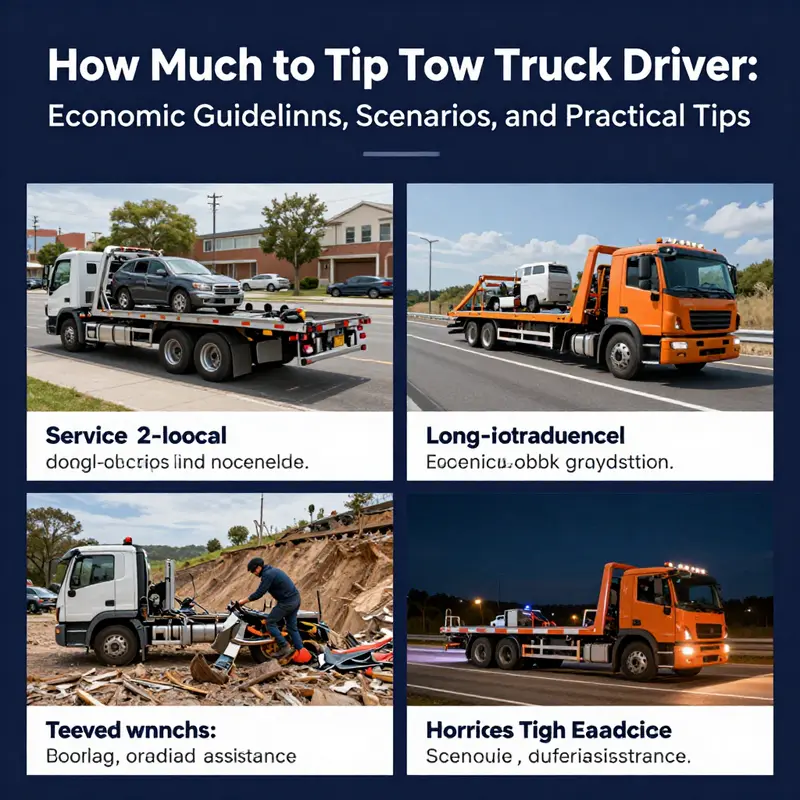
Tipping a tow truck driver sits at the intersection of practicality and courtesy. The right amount depends on the work performed, the miles logged, and the conditions under which the driver operated. Rather than a fixed ritual, tipping is a reflection of how the service met your needs, whether the driver showed professionalism, steadiness under pressure, and a willingness to go beyond the basics. The industry consensus across reputable guidance is that tipping is discretionary, not mandatory, and that it should reflect value rather than a blanket rule. A common baseline is to consider 15 to 20 percent of the towing fee as a starting point. If the fee is $100, a $15 to $20 gratuity aligns with traditional expectations in many parts of the country. Yet the context matters. A standard tow from a parking lot may warrant little or no tip, particularly if the company includes gratuity in the bill or if the service was routine. Conversely, when a driver navigates a challenging situation—heavy traffic, bad weather, a complex recovery, or a difficult decision in a high-stress moment—the tipping conversation shifts toward recognizing effort and skill. In practice, the gesture becomes a tangible acknowledgment of the driver’s endurance and know-how in the moment of need.
Beyond the math of a percentage, the service type and the complexity of the job should steer your generosity. A straightforward local tow, such as a jump start or a short haul to a nearby shop, often justifies a modest tip in the range of $10 to $20 if the driver was helpful and courteous. The same amount may feel appropriate if the driver offered extra patient explanations, ensured your car was secure, and completed the task with minimal hassle. For longer hauls, the time and fuel involved increase the cost to the consumer, and the tipping instinct can rise accordingly. A long-distance tow, especially one that spans city or state lines, can justify a larger gratuity—think $20 to $50—as a gesture of appreciation for the extended service. In certain cases, where a driver has spent substantial time arranging logistics, coordinating with dispatchers, or dealing with procedural uncertainties, a tip on the higher end becomes a clear reflection of the extra attention paid to you as a customer. The aim is to match the effort you observed with a comparable appreciation that reinforces good service for future incidents.
Winching and recovery add another layer of complexity and risk. If a tow truck has to winch a vehicle out of a ditch, snowbank, mud, or another precarious position, the driver’s exposure to danger and the specialized skill involved merit a correspondingly robust tip. A guideline of $25 to $50 is often suggested, though in extremely difficult recoveries—where multiple personnel, extra hours, or heavy equipment are required—people choose to tip even more. The same logic applies to roadside assistance tasks that require special equipment or unique problem solving, such as unlocking a car when you’re locked out or clearing a tire from a tight spot; if the service was effective and the driver demonstrated ingenuity, a tip on the higher side of the standard range is reasonable. The goal is to reflect the extra risk and the precision demanded by the task, not to punish a routine outcome.
Specialized vehicles and careful handling also influence tipping. Towing a luxury car or a low-clearance sports car demands greater precision and attention to framing and protection. In these scenarios, a tip in the range of $25 to $50 acknowledges the extra care and the potential risk to the vehicle’s finish. The driver’s demeanor—clear communication, steady reassurance, and a clean, organized process—contributes to your comfort during a moment of stress and can justify a larger tip when the day’s circumstances were tougher than expected. It is not uncommon for drivers to encounter delicate tasks that require meticulous attention to avoid marks, scrapes, or misalignment. In such cases, the tip is not merely compensation for time but recognition of skill that safeguards your vehicle’s value.
Policy and practicality intersect with tipping more often than people realize. Some towing companies adopt no-tipping policies or include gratuity in the billed amount. Others encourage tips but do not require them. Before you offer cash, it’s prudent to check with the dispatcher or the company’s policies. A quick question can save you awkwardness later and ensures that you’re respecting the provider’s rules. If the driver already took the extra step to help you with non-towing tasks—calling your insurance, coordinating with a roadside assistance service, or ensuring your vehicle remained safe and accessible while you waited—your tipping amount should reflect that added effort. On the other hand, if the service simply met your expectations without any extra help or guidance, a smaller tip or even no tip can be appropriate, especially if budget constraints are a concern. In such moments, you are deciding between a gesture of appreciation and a practical acknowledgment of the service’s adequacy, with the choice shaped by what you experienced and what you can reasonably give.
From a broader perspective, tipping remains a personal decision shaped by your budget, the local culture, and the company’s practices. It’s not uncommon for drivers to appreciate a gesture that confirms you recognize their craft rather than a demanded payment. If you feel gratitude but your funds are tight, a modest tip accompanied by a courteous compliment can convey appreciation just as effectively as a larger sum. And if you’re unsure about the proper amount, it’s reasonable to err on the side of generosity rather than withhold. The key is to be respectful, specific, and honest about what you found valuable—the driver’s skill in handling a difficult situation, their readiness to explain options, and their professionalism in stressful circumstances. A few words of acknowledgment often amplify the impact of a monetary gesture and leave a lasting impression that encourages safer and more considerate service in the future.
In practical terms, you can make the tipping process straightforward. Have a small amount ready in cash or a quick option for card tips if the driver accepts them. Many people find it easier to tip along the ride rather than after, when the current situation has cooled and the memory of the service remains fresh. If you choose to include a note or compliment to accompany the tip, a short statement of appreciation can reinforce positive behavior and set a constructive tone for future interactions. For drivers who go above and beyond, the tip is not only a reward but also a signal that customer service matters in an industry where the core service—getting your vehicle to safety or to a repair shop—depends on trust and reliability. For extra context on the etiquette that guides tipping across roadside services, see this concise guide to tipping tow drivers. It highlights how the tip aligns with effort, distance, and complexity while keeping the discussion grounded in everyday scenarios. tip-tow-truck-driver
Ultimately, the act of tipping a tow truck driver is a personal assessment grounded in context. The price you pay for the tow, the distance traveled, and the complexity of the job establish the framework for your generosity. The guidelines we outlined—baseline 15 to 20 percent, with adjustments for local or long-distance work, winching, and special handling—provide a flexible map rather than a rigid rule. If a driver’s conduct reflects diligence, patience, and initiative, lifting the tip by a notch or two can be a straightforward acknowledgment of their professionalism. If the experience was serviceable but not memorable, a modest tip is fair. And if you faced a chaotic environment, the driver’s calm, organized approach deserves visible appreciation. In these moments, tipping becomes less about a number and more about honoring the service’s quality, the risk and effort involved, and the mutual respect that makes roadside assistance a more humane experience.
External context can help calibrate your choice. Reputable guides from consumer-focused outlets emphasize that tipping is discretionary and situational, with estimated ranges that align with the examples above. These resources remind readers to consider local customs and the company’s policies as the baseline for any tip. As you navigate the moment, keep in mind that tipping is a gesture—one that communicates gratitude and recognition for skill and care under pressure. It is not a legal obligation, and it should never be leveraged as a bargaining chip or a requirement to receive service. For a broader perspective, you can review external resources that discuss tipping etiquette within roadside assistance and related services. See The Spruce for a detailed discussion on tipping tow truck drivers: https://www.thespruce.com/tip-tow-truck-driver-4139769.
Beyond the Bill: Navigating Regional, Cultural, and Company Policy Variations in Tipping Tow Truck Drivers
When a tow arrives, the scene is rarely calm. A stalled car can block a lane, a flashing light disrupts traffic, and time feels tight. In that moment, a simple gesture can acknowledge the effort of the person who helps you regain control of the situation. Tipping a tow truck driver is not universally required, but it remains a meaningful option that changes with where you are, who you hire, and what kind of service you receive. The practical rule most often cited in guidance circles is that gratuity sits on a spectrum rather than a fixed number. In many parts of the United States, a tip corresponding to a portion of the total towing fee—roughly 15 to 20 percent—is a common starting point. If the bill is $100, a tip of $15 to $20 is widely viewed as generous and appropriate, especially when the driver has gone beyond the basics of the assignment. But this is only a general guideline, and there are key variables that can tilt the decision toward more or less generosity.
First, consider the service itself. Tow trucking is a mechanically demanding job that often involves rolling with the punches—extra minutes in bad weather, navigating a tight recovery, or dealing with a difficult roadside environment. If the driver completes a routine tow from a parking lot with minimal effort, tipping may be simply optional or even unnecessary if the company has included gratuity in the fee. On the other hand, when the driver handles a complex recovery, negotiates a tricky access point, or assists during an emergency where every move counts, many customers feel a larger tip is a fair acknowledgment of the skill, patience, and risk involved. In such cases, a range of five to twenty dollars is commonly cited as an appropriate gesture, with the higher end reserved for performances that feel especially service-oriented.
Location matters, too. Regional norms and cost of living influence tipping expectations. Urban centers with fast-paced service cultures and higher living costs—think major metropolitan areas—tend to cultivate more frequent tipping or larger tips, simply because the social cues are stronger and customers may perceive a greater value in the service. In contrast, rural communities or smaller towns may see tipping as less common, and some drivers may even be discouraged from accepting tips to maintain professional boundaries or company policies. These differences aren’t arbitrary; they reflect local customs, customer expectations, and how towing services are priced in different markets. It’s worth noting that some areas with higher charges or higher expectations for prompt, courteous service may encourage tipping as a norm, even if it isn’t mandated by policy.
Company policy is another crucial layer. Some towing companies include a gratuity in the overall bill, which reduces the expectation of a separate tip at the scene. Others may have explicit guidelines against accepting tips to prevent conflicts of interest or to preserve a sense of fairness across customers and employees. If you’re unsure, a quick phone check or a glance at the driver’s receipt can save awkward moments on the curb. Even when tipping isn’t required, the driver who goes the extra mile—saving time, offering clear guidance about what to do next, or providing a warm, professional bedside manner—deserves recognition. A brief thank-you and a modest tip can reinforce the value of good service without pressuring drivers into a higher standard than the job requires.
Cultural attitudes toward tipping shape expectations in important ways. In the United States, tipping is deeply embedded in service culture, including tow services. In contrast, many other countries—Japan and Germany among them—view tipping as unusual or even inappropriate, and some service providers may not expect it at all. Even within a country, cultural microclimates exist. An urban American consumer might be more inclined to tip as a routine courtesy, while a customer in a different setting might opt to tip only when the service feels exceptional. Being mindful of local norms helps avoid misreading the situation—what feels like a routine gesture in one place could feel out of place in another.
What does a practical tipping choice look like in real life? For many customers, a tip in the range of five to twenty dollars is a simple, respectful way to acknowledge helpful, timely, and courteous service. If the tow is straightforward, a smaller amount—perhaps five dollars—may suffice, especially if the driver wears a uniform with clear company branding and provides basic safety checks with a steady, professional demeanor. When the service meets or exceeds expectations—say the driver explains the options clearly, handles a challenging maneuver, or offers practical advice about the next steps—lean toward the higher end of the range. If the total tow charge feels steep or if the driver has performed a service that saves you from a more serious problem, a larger tip can be a meaningful expression of gratitude. Cash is often preferred for on-site tips, but some companies accept cards or digital payments. If you’re unsure, a quick, respectful inquiry at the end of the interaction is perfectly appropriate.
To keep the conversation grounded in reliable guidance, many readers turn to established sources that discuss tipping etiquette more broadly. Our own framework aligns with the idea that tipping is discretionary yet appreciated when service is solid and considerate. If you want to explore the topic further with a concise guide that sits outside the immediate towing context, it can be helpful to consult a focused resource on tipping etiquette for service professionals. For a concise primer on tipping etiquette related to tow-truck drivers, you can reference our internal guide on tip-tow-truck-driver. tip-tow-truck-driver
As you weigh your options, consider the broader picture: tipping should reflect the overall experience rather than serving as a ceiling for service quality. A good rule of thumb is to focus on what the driver did well and how safely they performed under pressure. If time constraints, weather, or hazardous conditions tested their resolve, a thoughtful gratuity signals appreciation for professionalism under strain. If the interaction was unremarkable and the company policy is explicit about gratuities, you may choose to forgo a tip altogether. The key is to respond to the service you received, not to a personal expectation or a borrowed norm.
Finally, when you plan to tip, plan ahead. If you expect a tow and want to be prepared, having cash readily available can be helpful, particularly in roadside situations where payment is rendered on scene. If you’re paying by card, you can ask about the accepted methods without making the moment awkward. And if you aren’t sure how much to tip, a quick calculation using the typical 15–20 percent guideline for the total towing fee can provide a reasonable baseline. Remember that tipping is a personal gesture, not a contractual obligation, and its primary value lies in recognizing effort, safety, and service quality.
The broader takeaway is simple: there is no universal number that fits every situation. Tipping varies with regional customs, company policies, and the specifics of the service delivered. A small, well-timed tip—ranging from five to twenty dollars, adjusted by context—can be a meaningful acknowledgment of a job well done. Use your judgment based on the circumstances, and if in doubt, consult local norms or the company’s guidelines. For many people, the gesture is less about the amount and more about the acknowledgement of someone who helped you regain control when you needed it most. And for readers seeking practical pointers, the idea of tipping as a discretionary act tied to service quality remains a steady compass.
External resources can offer additional clarity on tipping practices beyond the tow-truck context. For authoritative guidance on tipping practices related to towing services in the U.S., refer to the FTC tipping article: https://www.consumer.ftc.gov/articles/0198-tipping
Gratuity on the Road: Practical Tipping Calculations, Scenarios, and Best Practices for Tow Truck Drivers
When a tow truck arrives, the moment you receive help can feel like a small lifeline, a pause between frustration and forward motion. The topic of tipping a tow truck driver often sits in that liminal space between courtesy and policy, neither universally required nor entirely optional. The service itself varies widely—from a routine pull out of a parking lot to a long-distance haul through rough weather or a complex recovery in difficult terrain. In many places, tipping is discretionary and context-driven; in others, a company might already include gratuity in the bill or set a fixed service fee. The practical question then becomes not a rigid rule but a thoughtful calculation rooted in the work performed, the time invested, and the surrounding conditions. This is not about enforcing manners as a social drill but about acknowledging effort, reliability, and the value of a job done well under pressure. The guidance you’ll find in reputable sources emphasizes discretion: tipping is appreciated when the service goes beyond the standard, and it’s less expected when the service is straightforward and efficiently completed. If you want a concise primer, you’ll encounter the familiar 15% to 20% benchmark for towing services, with adjustments up or down based on the specifics of the encounter. As with many roadside situations, a single rule doesn’t fit all, and practical judgment matters as much as any numeric rubric.
The first axis to consider is the service level. A standard tow from a parking lot, performed smoothly and with polite communication, warrants a modest gesture—something in the neighborhood of a few dollars or a small percentage of the fee. If the tow is brief and the driver completes the job quickly, a tip in the single-digit range may be appropriate. But when the driver does more than expected, the math shifts. The driver who handles a long-distance tow, an after-hours call, or a recovery that requires careful technique, extra equipment, or a difficult retrieval in challenging conditions deserves closer attention. In those scenarios, tipping toward the higher end of the range is reasonable, and sometimes it’s the most tangible sign of appreciation a customer can offer a person who faced exposure to the elements, time away from family, and the demanding duty of keeping a vehicle safe and secure for transport.
A practical framework helps translate that sentiment into numbers without turning tipping into a guessing game. A standard tow, defined as a routine pull under ten miles with courteous service, can be acknowledged with a tip of about $5 to $10 if you felt your driver’s conduct was courteous and efficient. For longer hauls, say over twenty miles, the job consumes more time, fuel, and wear on the driver’s vehicle and equipment, so a tip around $15 to $25 begins to reflect the added effort. When the situation is more urgent—after-hours, night or weekend service, or holidays—consider stepping up to $20 to $30, recognizing the inconvenience of working outside regular hours and the potential risk or complexity of the call. If the retrieval is particularly demanding—cars stuck in mud or snow, off-road recoveries, or tricky extractions—the driver’s skill and perseverance merit a generous gesture, typically $25 to $50 in recognition of a difficult job well done.
To illustrate how these figures translate in real life, imagine you’re stranded in a snowstorm at 10 PM. The tow truck arrives within 30 minutes, extracts your car from a ditch without further damage, and drives it eighteen miles to your garage. The weather is hostile, the clock is unkind, and the constraints are real. In such a case, a tip of $30 is both fair and appreciated. It communicates gratitude for the driver’s readiness to work late, the care taken during the maneuver, and the willingness to shoulder the extra exposure that a harsh environment imposes. Thoughts like these tend to linger with drivers much longer than the memory of a smooth, uneventful tow, because they recognize both the physical demands and the emotional toll of roadside emergencies.
Another layer to keep in mind is how tipping interacts with company practices and local norms. Some firms publish a policy that includes gratuity as part of the service charge, which should be clearly indicated on the invoice. In such cases, tipping again would amount to double-paying for a service that has already been compensated. If you see a line item labeled “service fee” or “gratuity” on the bill and you didn’t explicitly consent to that charge, you may want to clarify before leaving any extra cash. Likewise, if the service felt routine and the driver conducted themselves professionally but without notable extra effort, you might opt for a smaller gesture or even none at all. The small decisions—whether to tip, how much, and when to offer cash—can ripple through your own financial planning and a driver’s earnings, especially in regions where tipping customs vary widely. Across the United States, tipping tends to be more common, but even there it is shaped by the nuances of time, distance, weather, and the job’s difficulty. In Canada and many parts of Europe, service charges and gratuities are more commonly integrated into the final price, reducing the expectation that individuals will hand cash at the scene. Keeping this context in mind helps you avoid over-tipping in some areas and under-recognizing in others, and it reinforces the principle that generosity should reflect the actual service delivered.
How do you actually translate a feeling of appreciation into a fair tip when the numbers aren’t a simple percentage of the bill? The solution lies in straightforward, transparent calculations that can be explained in a line or two to the driver if you have the time and inclination. Start with the towing fee. If the fee is posted at the outset, use that as your baseline. Then consider the service’s features: distance, time, after-hours scheduling, any assistance with loading, the level of hazard or difficulty, and the driver’s demeanor—courtesy, clear communication, patience, and willingness to answer questions. A calm explanation in plain language is often better received than a opaque percentage that might feel mechanical. For instance, with a standard tow of twenty miles or less, the lower end of the tipping range could apply, while a longer haul or a more involved extraction would justify the upper end of the scale. When in doubt, err toward a modest, respectful tip rather than a large amount that could seem transactional. And always consider whether a cash tip is feasible; cash is often preferred because it’s immediate and avoids processing delays, although some drivers may accept cards or mobile forms if cash isn’t convenient for you.
An important caveat is the impact of customer dissatisfaction. If the service was substandard—driver unprofessional, unsafe, or negligent—tipping is not expected and can even feel inappropriate. In such cases, documenting concerns and contacting the company’s customer service can be a more constructive route than offering an after-the-fact gratuity. Your response in those moments matters not just as a personal boundary but as feedback that can influence how a company trains and supports its drivers in the future.
For readers who want a concise reference that aligns with broader industry guidance, a general rule remains: tipping is discretionary but appreciated when earned through exceptional effort. If you’re seeking a quick, external resource that surveys towing gratuity norms and expectations, you can explore industry guidance and consumer tips to compare what feels right in your region. And if you’d like to dig deeper into practical etiquette and typical expectations, there is a dedicated discussion that captures the spirit of these considerations in a straightforward format. In the same spirit of practical advice, you might also review related guidance on how to approach other roadside assistance scenarios with fairness and tact.
In the end, tipping a tow truck driver is less about a rigid formula and more about a measured sign of gratitude that respects the complexity of the service. It’s about recognizing the extra mile—the late hour, the tough weather, the risk, and the skill required to secure your vehicle and get you back on the road. It’s a gesture that stays with the driver long after the tow is finished, serving as a quiet reaffirmation that people notice effort and value reliable help when they need it most. If you want a quick spark-note version to reference next time, a practical approach is to pre-consider a tip range based on the factors described here and adjust in the moment in response to the service you receive. And when you’re ready to explore a quick, authoritative overview, you can consult the relevant guide on tipping tow truck drivers for a concise refresher and the latest industry perspectives. For further reading on tipping etiquette and policies, see the linked resource below, which provides a broader context for how gratuities are viewed in similar on-demand service scenarios.
External resource: For a broader look at tipping expectations, you can consult a comprehensive consumer guide that discusses tipping norms across services, including towing, to place your decision in a wider context. https://www.thespruce.com/tip-tow-truck-driver-4139769
Final thoughts
Across tow services, tipping etiquette blends value, fairness, and local practice. The standard range of 15%–20% of the towing fee remains a solid baseline for routine tows, while higher tips are appropriate when the driver goes beyond expectations—such as complex recoveries, adverse conditions, or exceptional service. Always consider company policies and local customs before tipping, and tailor your gratuity to the service level delivered. For property managers and fleet operators, a clear tipping policy can streamline decisions for staff and ensure consistent expectations across situations. Remember to document any tips in a way that aligns with accounting practices and vendor agreements. Ready to elevate your ride? Summit Fairings delivers premium, custom-fit fairings that blend style and durability. Whether you’re chasing speed or turning heads, we’ve got your bike covered. Don’t wait—transform your machine today. Click, customize, and ride with confidence. Your perfect fairing is just a few clicks away. Act now!