
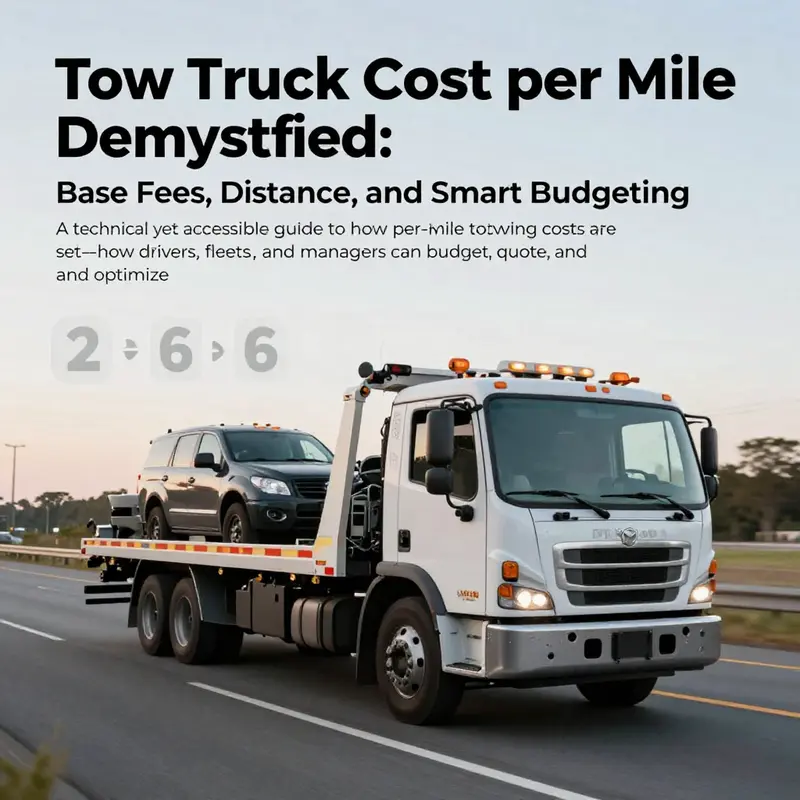
Understanding how tow truck costs accumulate on a per-mile basis matters for everyday drivers, residents, commuters, truck owners, auto repair shops and dealerships, and property managers. Tow services blend a base fee with a variable per-mile charge, and many disruptions—like weight, equipment needs, and service type—shape the final bill. Location, time of day, and market demand add additional layers of complexity that can push rates up or down. The result is a moving target that rewards preparation and inquiry. This article dissects the economics, the operational realities, and practical budgeting steps to help readers anticipate costs, compare quotes, and negotiate fair terms. Each chapter builds toward a holistic understanding: Chapter 1 examines the economic drivers behind base fees, per-mile rates, and distance; Chapter 2 delves into how weight, equipment, and service type influence pricing; Chapter 3 explores geographic and market variations; Chapter 4 outlines budgeting, quoting, and cost-optimization strategies. With these insights, readers can approach towing with clarity and confidence.
Tow by the Mile: The Hidden Economics Behind Tow Truck Pricing
Pricing for a tow is not a single number. It is a composition of fixed and variable elements tuned to distance vehicle profile and the costs of field service. When people ask how much a tow costs per mile they often overlook the base fee that dispatches the truck and brings it to the scene. That base fee covers mobilization the time to reach the vehicle paperwork and equipment readiness. Once the truck is on site the per mile charge begins to accumulate and the total price grows with every mile traveled. Understanding this structure helps customers anticipate the true cost rather than being surprised by the final bill.
Base fee ranges typically from 50 to 100 dollars according to market conditions. Some companies set a base around 75 dollars which feels like a middle ground for many customers. The base is why a short tow still costs something even if the distance is minimal. It is also why a quote that neglects to mention the base fee often misleads. The base fee is not arbitrary it reflects staffing costs insurance vehicle wear and tear and the need to cover emergency dispatch twenty four hours a day. In many markets the base fee anchors the value of the service and ensures the provider can respond promptly when a crisis arrives.
Per mile rates usually range from 1.50 to 3.00 per mile after the base. In practice you will often see 1.75 per mile for shorter urban tows up to 20 miles and higher rates as distance grows or routes pass through congested urban corridors. The per mile cost covers fuel maintenance the time of the driver and the use of specialized rigs necessary to handle a range of vehicles. Heavier vehicles such as trucks SUVs or cargo vans require larger tow rigs and more safety protocols which can push the per mile rate up by roughly 25 to 50 percent compared with standard sedans.
Distance is the primary driver of total cost. A short tow of 5 or 10 miles might be modest once the base is included but a longer haul of 50 miles or more can drive the bill well past 300 dollars. The math is straightforward yet real world in practice. Longer distances demand more fuel more operator time potential sleep shifts for drivers on long runs and sometimes more complicated routing to reach a repair facility or relocation point.
Vehicle type and weight matter. A heavy vehicle demands bigger equipment and more handling care. Heavy loads can increase the per mile charge by a quarter to half compared with passing a smaller car. The result is a steeper overall bill on the same number of miles when towing a pickup or SUV rather than a compact car. Some companies also add a charge for hook and roll maneuvers or extra pickups particularly in emergency tows.
Location and time of day also shape the price. Urban areas carry higher operating costs and demand and rates can rise during peak hours late at night weekends or holidays. A tow at 2 am in a busy city might include a premium for the inconvenience and the risk management involved in late night response. Rural areas often involve longer distances which already raise the price due to distance; the same fixed costs must be spread across longer miles.
Additional fees can appear. These include emergency service surcharges multiple vehicle pickups or if the job requires specialized equipment such as flatbed rigs wheel lifts or extra manpower. It is important for customers to ask for a detailed quote before service begins and to request a breakdown of all fees that could appear. Consumers should also confirm whether any tolls or fuel surcharges will be added on top of the per mile price.
Estimating costs in advance is possible with simple math. A typical quote is base plus per mile times distance plus any extras. For example a 10 mile tow with a base of 75 dollars and a rate of 1.75 dollars per mile would total about 75 plus 17.50 equals 92.50 before extras. A longer 50 mile tow with the same base and rate would be 75 plus 87.50 equals 162.50. If the vehicle is a heavy SUV the per mile might jump to around 2.25 or 2.50 pushing the same 50 miles toward 209 to 264. In some markets those estimates can be even higher due to urban pricing. Always check for an itemized quote that lists base fee per mile rate and any surcharges. If the tow involves waiting time or repeated calls to coordinate those costs can add up quickly. The key is to know what is included and what can be added later.
To avoid surprises customers can take a few practical steps. first ask for a written estimate that includes the base fee per mile distance and a clear list of possible extras. second compare published ranges against the actual quote and consider how far you are from repair shops or impound lots. third consider whether a tiered pricing model applies in your area where the per mile rate increases after certain mile thresholds. fourth maintain a short list of preferred providers and request quotes in advance when planning trips or moving vehicles between locations. fifth clarify whether tolls fuel surcharges or holiday surcharges will be billed separately. While these steps require a little upfront work they pay off when the final bill reflects the actual effort and cost rather than guesswork.
Engaging with the numbers helps demystify the process. The reason pricing can feel opaque is that towing is a service delivered under pressure often at irregular hours and in varying traffic conditions. The base fee is a fixed cost that keeps the wheels turning regardless of miles. The per mile price captures the incremental cost of moving a vehicle through real space and time. The interaction of distance with vehicle weight creates the total equation that customers must navigate. If you operate a fleet or manage a roadside assistance program building a standard pricing framework with transparent line items can simplify the customer experience and reduce disputes.
A practical takeaway for readers is this when you need a tow you are paying for the service to mobilize move and secure your vehicle under less than ideal circumstances. The mile is a meaningful unit because it ties the cost to the actual travel that occurs. Yet the mile alone does not tell the whole story the base fee and the vehicle type can tilt the balance. By seeking quotes that break out each element you can compare apples to apples rather than chasing glittering but vague promises. If a company offers a low base but an exorbitant per mile rate or a high emergency surcharge the total can be unpredictable. Conversely a higher base with reasonable per mile pricing can deliver predictable costs particularly on short tows where the base dominates the total. You should view the final number as a function of distance weight and service level rather than a single line item.
One final note connects the local realities to a broader market picture. Prices vary with region and season and the willingness of drivers to travel longer distances or to handle unusual vehicle configurations can shift the math. For readers seeking a practical benchmark consider using a simple calculator that multiplies distance by the per mile rate and adds the base fee and any known surcharges. A well designed calculator can also incorporate tiered pricing small differences by mile and the chance of additional charges for emergencies or multiple pickups. The core insight is that a transparent quote is worth more than a low sticker price that hides fees in the fine print. With awareness and preparation you can navigate the tow pricing landscape with confidence and avoid the sticker shock that too commonly accompanies roadside trouble.
To connect with the ongoing topic of how much the service costs per mile and how to evaluate it some readers may want a quick benchmark on a familiar scenario. Imagine a tow that travels a modest distance on a typical weekday afternoon. The base sits around 75 dollars. The per mile price hovers near 1.75 dollars. The total for a ten mile towed distance ends up just under 100 dollars. Move up to a mid range distance of thirty miles and the total climbs toward roughly 150 plus or minus a bit depending on the exact rate. The same framework applies when heavier vehicles or urban routes are involved. The point is not to memorize exact numbers but to grasp the structure so that you can interpret any quote you receive recognize when it is fair and ask questions before the work begins. This understanding helps you compare offers across providers and select a plan that meets your needs while ensuring you are not paying for more service than necessary.
In sum the cost per mile is a meaningful but not solitary indicator of tow pricing. The base fee anchors the charge while the per mile rate scales with distance and vehicle weight. Location and time of day magnify or diminish the price and extra charges can tip the balance. The best practice is to request a detailed quote from any provider and to compare a few options using the same assumptions about distance and vehicle type. With that approach you can estimate with confidence and arrive at a fair agreement that reflects both the effort and the value of restoring mobility in difficult moments. For reference and broader context you can consult the industry guide on towing costs.
For a practical frame of reference see the Tow Truck Costs & Pricing page. External reference: AAA Towing Cost Guide.
Tow Cost by the Mile: How Weight, Equipment, and Service Type Shape Per-Mile Pricing
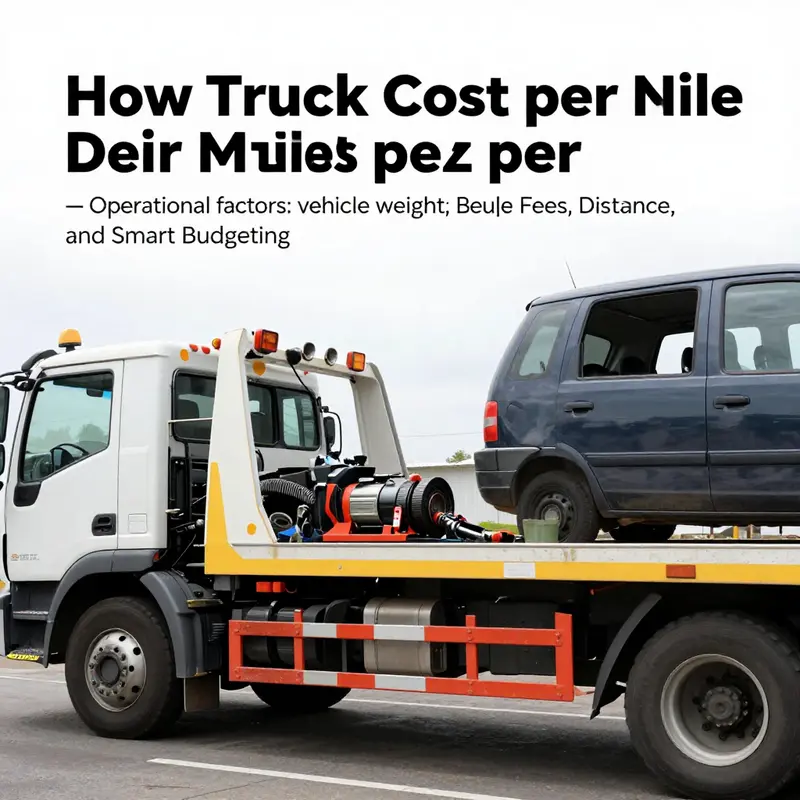
Every tow begins with a number, but the real story is told mile by mile. The price you see quoted for a tow is rarely driven solely by distance. Instead, it is assembled from a handful of operational decisions that change the cost profile as the vehicle is moved from one spot to another. In practical terms, the per-mile cost is a moving target shaped by weight, gear, and service type, just as the total bill blends a base fee with the miles traveled. Understanding how these factors interact helps you compare quotes more accurately and ask the right questions before a tow ever starts. The normalization of price across different tow jobs occurs when you recognize that a base fee and a per-mile rate are not isolated numbers, but part of a pricing machine that responds to the specifics of the job at hand.
Most towing companies structure their pricing around a base fee plus a per-mile charge. This is a pattern that customers often see reflected in estimates and invoices. The base fee typically lands somewhere in a modest range—usually between $50 and $100—covering the basic mobilization, dispatch, and initial handling. The per-mile rate then compounds as the vehicle travels. Across the industry, per-mile charges commonly fall in a broad range from about $1.50 to $3.00 per mile, depending on the factors already at play. A widely cited example in industry chatter is a base fee around $75 paired with a per-mile rate near $1.75; in that scenario, each mile after the first contributes a predictable increment to the bill. These figures are useful as rough benchmarks, but real quotes can drift based on local cost structures and the specifics of the job. A short tow might stay close to the base fee, while a long, meandering haul can push total costs well over several hundred dollars.
Distance traveled is the most obvious driver of cost per mile, but the distance alone does not tell the whole story. Short tows—those five miles or so—often come in at a price that resembles the base fee, particularly in lower-demand times and places. When the vehicle has to cover greater distances, the per-mile portion becomes the dominant factor. A 50-mile tow does more than just add miles; it demands more fuel, more operator time, and potentially more wear and tear on the equipment. The cumulative effect is a total that can exceed three hundred dollars or more for long-haul moves, depending on the weight category and service type. The sensitivity to distance is why getting an upfront estimate that includes both the base and the mileage charges is essential before the tow begins.
The weight of the vehicle entering the tow box is a powerful, sometimes underappreciated, determinant of cost. Heavier vehicles—trucks, SUVs with substantial curb weight, or commercial vans—require more robust towing equipment, greater energy, and specialized handling. The heavier the load, the more strain placed on winches, cables, and extendable arms. Heavier weights also lift the risk profile of the operation; mechanics and operators must plan for secure lashing, precise balance, and careful movement to avoid damage to either the towed vehicle or the tow rig itself. These realities translate into higher per-mile charges, as the invested capital and risk exposure rise. In practical terms, a tow that involves a large, heavy vehicle not only costs more per mile, but often necessitates a longer minimum engagement, as the crew ensures safety and proper alignment of each step in the recovery and transport process.
Equipment and specialty capabilities are another layer that thickens the pricing cake. The fleet that carries a vehicle from scene to facility is built around a spectrum of capabilities, from standard tow trucks to advanced, purpose-built units. The most conspicuous premium comes from rotator tow trucks, which feature a 360-degree rotating boom that can reach, reposition, and stabilize vehicles in tight or precarious locations. That capability—crucial for complex recoveries such as rollovers or overturned vehicles—drives up both purchase and maintenance costs. The higher upfront investment in a rotator translates into higher hourly or per-mile costs, even when the distance traveled remains modest. Other specialized equipment—heavy-duty winches, wheel-lift systems, and low-clearance platforms—also influence pricing. These tools enable safer, more controlled movements of high-value or hard-to-access vehicles, but they come with higher depreciation and maintenance obligations that operators recover through higher rates.
Service type is the third major axis that shapes per-mile pricing. The choice between a flatbed, a standard tow, or a low-profile, high-capacity platform reflects a balance of vehicle protection, precision, and cost. Flatbed tow trucks, in particular, tend to be more expensive than standard tow setups. They provide superior protection for sensitive or high-value vehicles, ensure safer loading on low-clearance cars, and offer a broader range of loading angles, which can be critical in tight spaces, on uneven ground, or in urban environments with overhead constraints. The premium for flatbeds comes not only from the equipment itself but also from the operator training and the more meticulous handling required to keep the vehicle on a flat, stable deck during transport. When a vehicle must be kept pristine or cannot risk a single scratch, the added cost often justifies itself in the service description of the quote. Conversely, for straightforward moves of non-delicate vehicles, a standard tow may be perfectly adequate and cheaper, even as it still advances toward the same destination. Service type, in short, is a service-level decision that directly influences the per-mile rate as operators align gear to the risk, need for protection, and customer expectations.
Operational and logistical realities add further nuance to the price picture. The most dramatic corner cases occur in complex recoveries, where multiple pieces of equipment must operate in concert, sometimes with personnel coordinating a sequence of actions to recover a vehicle safely. Such recoveries demand additional time, specialized skill, and sometimes a broader crew, which increases the cost from the outset and can extend the total timeline of the job. Even when distance is the primary price driver, the nature of the incident matters: an overturn, a vehicle trapped in mud, or a wreck on a steep incline invokes a higher level of planning and more elaborate rigging. Training and staffing contribute to the cost as well. Tow operators invest in ongoing training to stay current with safety protocols, equipment maintenance, and evolving recovery techniques. The price per mile thus includes a portion that funds this expertise, ensuring that the crew can perform the job with the necessary precision and safety.
Geography leaves its mark as well. Rural areas may impose higher total costs if the tow truck must travel longer distances to reach a yard, impound lot, or service facility, compounding the mileage fee. Urban environments, while often closer to service centers, bring traffic delays and higher labor costs, which can push per-mile charges upward and also introduce time-based elements to the quote. A late-night or weekend dispatch adds another layer of cost, reflecting the premium paid to secure immediate availability outside standard business hours. All these geographic and temporal variables feed into the final per-mile figure, making the same mile look different depending on the location and time.
For customers, the practical result is simple: always seek a complete estimate before the tow begins. A transparent quote should list the base fee, the per-mile rate, and any additional charges that could apply—hook-and-roll fees, multiple pickups, emergency surcharges, or fees for specialized equipment. This upfront clarity prevents surprises and makes it easier to compare competing bids as side-by-side assessments rather than reactive responses to a late-model bill. When possible, request a breakdown that shows how the final number is built, including line items for vehicle weight category, equipment type, and service level. If a company can point to a standard framework for pricing—one that separates core mileage from add-ons and reflects the weight and equipment demands of the job—you gain a better sense of value and accountability. If you want a deeper look at how pricing structures are framed in industry practice, you can explore the detailed guide on tow-truck-costs-pricing.
In the broader landscape of tow services, the per-mile cost is a reflection of how the road arrives at the destination, not merely the distance traveled. It is the culmination of equipment choices, the heft of the vehicle, and the complexity of the service delivered. The key is to approach a tow with expectations aligned to the specifics of the job: weight, gear, and technique matter as much as miles. When you view pricing through that lens, you move from a single number to a richer understanding of what you are paying for—the safety, efficiency, and expertise that make a tow possible in the first place. For most readers, this framing makes it easier to assess quotes, negotiate where appropriate, and choose a solution that balances cost with the safeguards and outcomes you value most. External factors—such as time of day, location, and the nature of the incident—will continue to influence the bottom line, but with a clear up-front estimate, you can anticipate the total and avoid unwelcome surprises when the bill lands.
External resource: https://en.wikipedia.org/wiki/Tow_truck
Geography, Urban Density, and Timing—How Location and Timing Shape Tow Truck Costs Per Mile
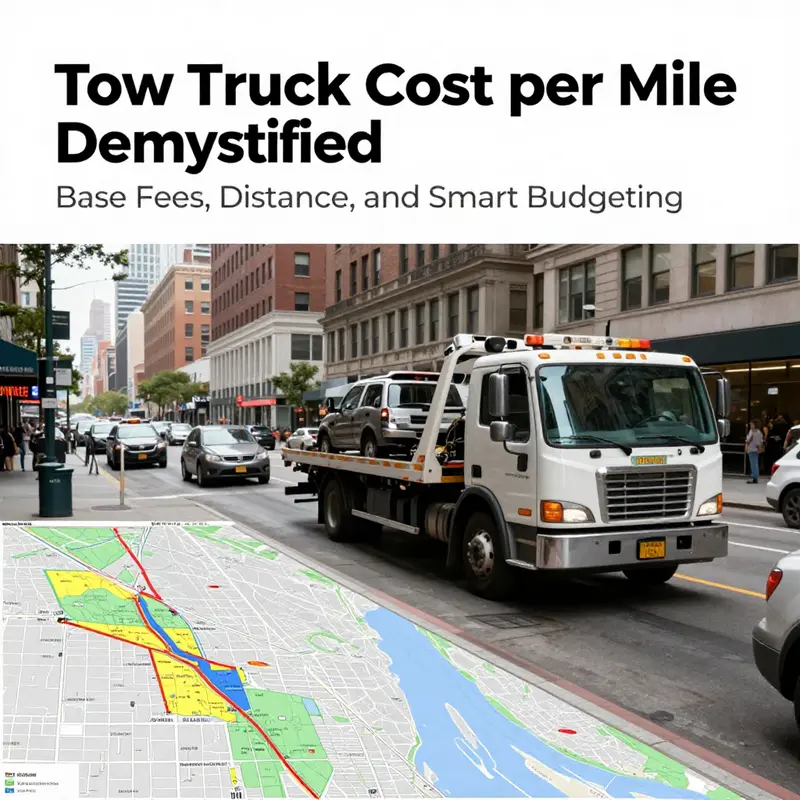
Tow truck pricing is often introduced with a simple equation: base fee plus a per-mile rate. Yet when you move from a single rural road to a city street or a late-night weekend call, the equation grows layers. The per-mile cost that a driver quotes you is not a fixed number carved in stone; it is a dynamic figure that reflects the geography, the market, and the moment you need help. In this chapter we explore how location, urban density, and timing interact to elevate or soften the price per mile, and why the same tow in two different places can feel almost like two different services. By understanding these patterns, you can better anticipate what to expect on your bill and what to ask for when you request a quote. For a quick reference to the broader pricing structure, you can consult How much does tow trucks cost? which summarises the recurring components that influence the per-mile figure across contexts.https://winchestertowtruck.com/how-much-does-tow-trucks-cost/ The goal here is not to memorize a single number but to grasp the forces behind the numbers, so you can evaluate estimates with clarity, minimize surprises, and choose the option that balances cost with reliability.
Geography is the first and most obvious moderator of cost. In rural or sparsely populated regions, overheads are lower: fewer calls, less traffic, smaller crews, and often cheaper insurance. The base fee in these areas tends to sit toward the lower end, and per-mile rates can range roughly from $1.50 to $3. In contrast, urban areas are expensive markets. The density of demand is higher, driving up labor costs, fuel usage per mile, maintenance, and insurance to cover more risk in congested lanes and pedestrian-heavy zones. In large United States cities such as New York and Los Angeles, the per-mile price for a standard tow commonly lands in the $3 to $5 band, and this does not include the initial call-out or any after-hours surcharges. Those additional fees can be significant, and they compound the unit cost for each mile you are towed.
Location matters beyond city versus country. The local competitive landscape, regulatory environment, and even the typical vehicle mix in an area can tilt pricing. A region with a high concentration of commercial fleets, de-icing service requirements, or specialty towing for heavy vehicles will push up the per-mile cost because the equipment and crew licensing costs are higher, and the service level expectations are greater. In some markets, winter weather, holiday traffic, or rescue operations can convert normal response times into premium services with elevated rates. In effect, geography interacts with supply and demand in a way that makes a mile in one town feel markedly different from a mile in another, even if both trips cover similar distances.
The vehicle type and the weight of the load also shape the per-mile figure in meaningful ways. A standard sedan towed with a light-duty tow truck is billed differently from a heavy SUV, a pickup, or a commercial van. Heavier vehicles require larger tow trucks, more specialized gear, or multiple operators, all of which increase the variable cost per mile. That is especially true in urban contexts where the equipment needs to be transported or repositioned through traffic and tight spaces. When a vehicle is on the heavier end, the operator may incur higher fuel consumption, greater tire wear on the tow vehicle, and more time spent securing the load, all of which shift the per-mile price upward.
Distance is not merely the miles in your route; it is the total work involved at each mile. The most significant factor is the length of the journey, but the dynamics of that distance vary with geography and timing. Short tows stay relatively affordable, even in busy markets, because the time and resource commitment are smaller. A five-mile tow in a rural setting might be comfortably around the lower end of the per-mile spectrum, plus the base fee. A fifty-mile haul, especially in an urban market, can exceed three hundred dollars once you factor in the call-out, potential after-hours service, and any required return trips to the shop or depot. For longer distances, the concept of a “deadhead” or empty return leg becomes relevant. In many cases, if the tow truck must travel back to its base empty, the operator will add a backhaul fee or incorporate that mileage into the overall quote. The result is a pricing reality in which longer trips and return trips can accumulate costs more quickly than a straight-line calculation might suggest.
Timing adds another layer of volatility to the per-mile calculation. Towing is, in many markets, a 24/7 service, yet the price for off-peak or after-hours labor is consistently higher. Late-night calls, weekend requests, or holiday emergencies often come with a premium to compensate for the inconvenience and risk of working outside regular hours. In practice, this means that a tow that occurs after midnight or on a busy holiday can push the per-mile rate upward by a noticeable margin, and sometimes the overall charge compounds quickly if the total miles are substantial. The cost impact of timing is especially pronounced in urban areas; the same mile driven at 2 a.m. might be priced higher than the same mile driven at 2 p.m. because the operator must allocate resources to keep the crew available and secure the scene in a potentially riskier environment.
Another dimension to consider is the initial call-out and the potential for additional fees that can distort the advertised per-mile figure. In many regions, the base fee covers the logistics of dispatch, the on-site arrival, and the basic setup to secure a vehicle. However, several common add-ons can significantly alter the final bill: after-hours surcharges, hook-and-roll service, multiple pickups, or if the tow involves a multi-vehicle scenario or a complicated recovery. These line items are not miles counted but are essential components of the total price. In urban markets, where the cost of living and operating a business is higher, it is not unusual to see the base fee climb toward the upper end of the typical range, with per-mile charges also shifting upward to reflect the greater overhead.
What does all this mean when you are standing on the roadside with a caller ID that promises help in an hour or less? It means that a single figure you see in an advertisement or on a quote is only part of the story. A responsible approach to understanding tow costs per mile is to treat the quote as an estimate that should be itemized. A detailed quote should separate the base fee, the per-mile rate, and any potential surcharges tied to time of day, vehicle type, or service complexity. It should also spell out any additional charges for return trips, after-market services, or multi-vehicle recoveries. Asking for an itemized estimate before service begins is not merely prudent; it can save a traveler from a surprise when a long distance or out-of-hours tow is unavoidable. In regions where regulators or consumer guidance exist, it can also help you compare apples to apples across different providers, an important step in a landscape where prices can vary dramatically from one town to the next.
For readers who want a quick anchor point while weighing regional differences, consider this: urban centers tend to demonstrate the higher end of the per-mile spectrum, while rural areas tend to stay on the lower end. Nevertheless, long distances, return trips, or heavy-duty requirements will raise the total cost regardless of location. A common pattern is a base fee in the range of $50 to $100, plus a per-mile cost that ranges broadly from about $1.50 to $5 depending on the conditions just described. The practical effect is that a brief local tow in a small town might sit near the lower end of the spectrum, perhaps under $100 in total, while a long-distance tow from a city to a distant region could exceed several hundred dollars even before considering fees for extras. Because the total is the sum of fixed and variable components, the exact cost is a blend of the trip’s distance, the vehicle’s weight, the market’s dynamics, and the timing of the service.
In digging into regional pricing trends and regulations, industry sources and consumer guides emphasize the value of transparency. A reputable provider will offer an itemized quote and will be willing to explain each line item. They will explain why a given mile costs a certain amount, how much of that is due to fuel and labor, and what factors could push the number higher or lower. This level of clarity is essential not only for budgeting but also for ongoing service relationships, especially if you rely on a tow service routinely in your region. If you are curious about how a general pricing framework translates in your area, you can explore the broader pricing discussion available through industry resources and consumer outlets. As a practical rule, you should also consider asking about whether the rate includes any insurance coverage or if you should expect additional fees in the event of an accident, a hazardous scene, or a need for specialized recovery equipment. These questions help ensure that your understanding of per-mile costs aligns with the real-world scenario reflected in your quote.
Finally, the geographic and market variations discussed here connect directly to the broader purpose of this chapter in the context of the overall article. The goal is not to memorize a single per-mile price but to recognize how context shapes cost and to use that awareness to negotiate effectively and to select a service that offers reliability alongside fair pricing. If you encounter a quote that feels opaque, ask for an itemized breakout and a clear explanation of any premiums tied to time of day or service type. In many cases, a well-communicated quote will reveal that the apparent price per mile is just the headline figure, with the total ticket depending on the mileage, the vehicle’s weight, and the timing of the service. By anchoring your expectations to the realities of geography, vehicle dynamics, and timing, you can approach tow situations with a steadier expectation and a stronger hand in discussions with service providers. For readers who want a concise gateway to the price structure, consider reviewing How much does tow trucks cost? for a snapshot of the recurring variables that mingle to form the per-mile figure across markets and occasions.https://winchestertowtruck.com/how-much-does-tow-trucks-cost/
As you plan for emergencies or day-to-day needs, remember that the most meaningful savings often come from clarity before a service call. A clear, itemized quote earned before the tow begins not only clarifies the per-mile rate but also highlights any optional services you might actually want or need. It gives you leverage to compare competing offers while understanding what you are paying for. In high-demand urban markets, this practice becomes especially important because small differences in base fees or surcharges can accumulate into substantial totals over a long haul. In rural areas, where the per-mile base may be lower but the distance greater, the importance of transparent pricing remains: you want to know whether the backhaul costs or return-mileage are included in the headline rate, or if they will appear as a separate charge. The ultimate aim is to translate the miles into a fair, transparent bill that reflects the actual resources expended by the tow operator while ensuring you receive the service you need when you need it most.
External reference for broader context: for more detailed guidance on regional pricing trends and regulatory differences, see the American Automobile Association’s guidance on towing and emergency services at https://www.aaa.com/automotive/towing-and-emergency-services
Chapter 4: Decoding the Per-Mile Toll of Tow Trucks — Budgeting, Quoting, and Avoiding Hidden Fees
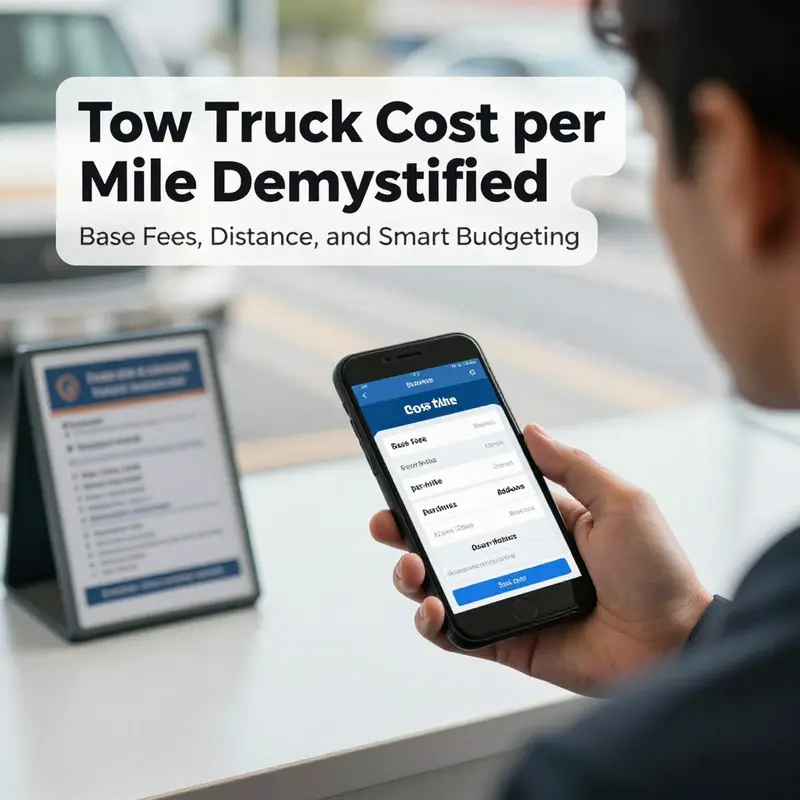
When a vehicle breaks down or fails to move, the first worry is safety and getting help quickly. The second worry, often just as pressing, is the number that arrives on the invoice. Tow truck pricing hinges on a simple yet slippery formula: a base fee plus a per-mile charge, with the numbers fluctuating by region, vehicle weight, and time of day. Understanding this structure is not a luxury; it is a practical toolkit for budgeting under stress, securing accurate quotes, and steering clear of surprising add-ons. In many markets the typical base fee sits in the range of fifty to a hundred dollars. The per-mile charge then falls between roughly one and a half and three dollars. The math is straightforward in principle: cost equals base fee plus (distance times per-mile rate). A common, easy-to-remember example might be a $75 base fee with a $2.00 per-mile rate. That yields $75 for a short tow of a few miles, and a far heftier bill as the miles add up. Yet even this simple frame hides the real complexity of real-world towing, where distance is not the sole driver and where a handful of fees can tilt the final balance by tens or hundreds of dollars.
Distance remains the dominant variable. Short tows might appear affordable on the surface, but the base fee often makes them less of a bargain than a longer haul, where the per-mile rate spreads over more miles and the fixed component becomes a smaller fraction of the total. When the miles grow, the per-mile component dominates, yet other charges can come into play. Vehicle type matters as well. A compact car towed on a basic wheel-lift set may incur a different per-mile rate than a heavy truck or a high-value SUV that requires specialized equipment, like heavy-duty tow rigs, slide-back tow beds, or wheel-lift systems. The heavier the vehicle, the more labor, fuel, and equipment are involved, and the higher the likely per-mile cost. The physical weight and dimensions of a vehicle influence not only the base fee—since the dispatch and hookup process can be more time-consuming—but also the operational complexity of the tow itself. These are not merely theoretical concerns; many drivers and fleet operators price their services to cover the incremental costs of heavier payloads and the additional wear on equipment.
Time of day and day of the week can compound the base and mileage numbers. Urban areas, with higher labor costs, insurance, and overhead, frequently see higher base fees. Late-night, weekend, or holiday tows are often billed at premium rates, sometimes expressed as multipliers such as 1.5x or 2x the standard rate. If a tow is needed during a storm, after an accident, or in a congested metropolitan corridor, the premium can push the overall cost well beyond what a daytime, weekday tow would command. These surcharges reflect the supply-and-demand dynamics that underpin roadside assistance economics. It’s not unusual to encounter a scenario where the same distance costs two or three times more depending on when the call is placed and where the vehicle is located.
Beyond the base and the per-mile rate, several other charges can alter the final price. Some companies levy a fuel surcharge, a line item that can vary with fuel prices more than with vehicle distance. There may be after-hours or holiday premiums, long-haul or extended-distance fees, and storage fees if the vehicle ends up impounded or held for release. In some cases the destination matters too: shipping a car to a dealership or an out-of-town repair facility can trigger additional handling fees or a guaranteed minimum tow distance. These elements are not universal, but they are common enough that consumers should expect to see them disclosed in a detailed estimate. The key is transparency: a trustworthy tow provider should articulate every component of the charge before the work begins, and a written quote should spell out the base fee, the per-mile rate, the estimated mileage, and any extras that might apply.
From a budgeting perspective, the practical implication is straightforward: even a relatively modest short tow can accumulate a sizable bill if the base fee is high or if a variety of surcharges apply. Conversely, a longer tow can end up costing less per mile if a company offers a favorable long-haul rate or caps the per-mile charge after a certain distance. This is where the value of a clear quote comes into play. A precise written estimate that itemizes base fees, mileage, and potential extras gives consumers a reliable basis for comparison across providers. It also serves as a guardrail against price creep in an emergency situation where options may seem limited and time is of the essence.
To translate these concepts into practice, consider the steps a prudent consumer can take to navigate toward a fair price. First, request a detailed quote before committing to service. A good quote will itemize the base fee, the per-mile rate, and the estimated miles, along with any anticipated surcharges. Second, ask about every possible additional charge that could apply in your exact scenario. Fuel surcharges, after-hours premiums, long-haul or extended-distance fees, and storage costs are common culprits that can blow up the final price if left unchecked. Third, confirm what’s included in the service. Does the quote cover the tow only, or does it include delivery to a parking location, a shop, or an impound yard? If you need the vehicle delivered to a particular shop that is out of standard service area, ask whether that incurs extra handling or mileage charges.
For consumers who want a quick, digestible overview of pricing without wading through dense waivers, a concise reference can be found in the straightforward guidance on tow pricing. The idea is to compare like with like: a quote that shows a base fee and a per-mile charge for the same estimated distance will reveal the true cost difference between providers. This is especially important when the call comes through a roadside assistance program or an insurance policy that promises coverage up to a limit. Insurance plans can be a lifeline, but they often cap reimbursement and may require you to pay the upfront bill before seeking reimbursement. Knowing your policy terms before a tow can prevent an uncomfortable surprise at the payment counter.
When it comes to actual decision-making under pressure, consumer-friendly resources can provide a backbone for action. If you want a compact, reader-friendly summary that highlights the core pricing structure and offers practical budgeting tips, consider reviewing material that breaks down base fees and mileage in a transparent, no-nonsense way. In addition to price awareness, it helps to know where to turn for reliable data on national patterns and regional variations. The balance between domestic guidance and local pricing means you should both understand the national framework and verify how it plays out in your city, county, or state. The presence of a credible, widely used reference can illuminate the typical costs you’re likely to encounter and can help you calibrate expectations when you phone for quotes.
As you evaluate potential providers, you may encounter a familiar dilemma: how to weigh speed of response against long-term cost. In emergencies, the fastest available help is often worth a premium. Yet speed can be a poor proxy for value if it comes with steep surcharges and opaque pricing. A robust strategy blends practical speed with transparent costs. Build a small roster of pre-vetted, licensed providers who publish clear pricing or offer written estimates up front. This not only reduces the pressure of choosing in a crisis but also creates a dependable baseline for comparison when you are planning ahead for a dangerous winter drive, a remote-off-road excursion, or a long highway trip.
For readers who want a compact entry point into the topic, a quick, consumer-oriented overview can be found in the accessible resource It summarizes how base fees and per-mile rates function, and why quotes matter. It is helpful to see the principle stated plainly: the base fee covers the dispatch, hookup, and initial labor; the per-mile charge covers transport. Heavier vehicles incur higher costs due to equipment requirements, while time of day and location modulate the overall price through surcharges and base-rate adjustments. The bottom line is that pricing is a two-part puzzle that becomes more predictable when you ask the right questions up front and compare several quotes.
If you are curious about a concise, practical explainer that aligns with your budgeting goals, you can explore a dedicated resource that distills these ideas into a digestible format. This resource uses plain language to outline the components of tow pricing and provides a clear example: a base fee plus mileage, with the total calculated as base fee plus (distance × per-mile rate). The message is consistent with the broader guidance: transparency in pricing is the safest path to avoiding surprises and to making informed decisions when roadside trouble arrives.
As you prepare to manage the costs of tow services, remember that the per-mile figure is a useful lens for comparison, but it is not the only lens. A lower per-mile rate may be offset by a higher base fee or more frequent surcharges, while a higher per-mile rate could be paired with a very small base fee and minimal add-ons. The logic is simple, but the price tag can be complex because real-world towing intersects with regional economics, fleet practices, and the specifics of a given situation. Keeping this frame in mind helps you approach each call with clarity and reduces the chance of paying more than necessary for a needed tow.
To reinforce these ideas and provide a practical anchor, here is a quick reference within this narrative: if you need to convey this concept to someone else, you can point them toward the straightforward explanation that describes base fees, per-mile charges, and potential extras. For a deeper dive and to review an example in context, you can consult the detailed chapter on pricing that discusses how a $75 base fee and a $2.00 per-mile rate translate into total costs for varying mileages. This approach keeps the math anchored in real-world scenarios and helps you translate the numbers into a budget that you can trust when the next breakdown happens. If you’d like to see a concise, consumer-friendly overview, click here for a clear summary: How Much Is a Tow Truck?.
In the larger arc of consumer budgeting and quoting, the next steps revolve around actively managing information and expectations. Gather multiple written estimates, verify the scope of what’s included, and understand any potential hidden charges. Keep a note of your insurance policy’s towing benefits so you can decide whether it makes sense to use direct billing or to reimburse after the fact. When you are equipped with a transparent quote and a clear sense of the potential extras, you’re in a better position to compare apples to apples rather than chasing the lowest upfront price that may carry hidden costs later. The goal is not just to pay less now but to avoid paying more later for services that were not actually required or properly disclosed at the outset.
External resource for broader context: https://www.aaa.com/automotive/towing/
Final thoughts
Understanding the factors that shape tow truck cost per mile equips everyday drivers, fleet operators, and property managers to anticipate charges, compare estimates, and negotiate fair terms. Start with a clear grasp of the base fee and the expected per-mile range, then factor in vehicle weight, required equipment, and service type. Don’t overlook location, timing, and possible surcharges, and always request a detailed quote with a line-item breakdown. By combining this knowledge with proactive quoting and provider comparison, you can minimize surprises and choose a towing solution that aligns with your needs and budget.