
Tipping a tow truck driver is a nuanced decision shaped by location, service scope, and local customs. In many parts of the United States, standard towing fees already cover the service, so tipping is not expected. Yet when a driver goes above and beyond—such as executing a difficult recovery, offering extra assistance, or delivering excellent customer care—a modest tip can be a meaningful expression of gratitude. This guide consolidates insights for Everyday Drivers, Residents & Commuters, Truck Owners, Auto Repair Shops & Dealerships, and Property Managers. It presents how norms vary geographically, when tips are appropriate, typical ranges, and how company policies influence behavior. Each chapter builds toward a practical framework for respectful, effective tipping that respects both the worker’s effort and the customer’s situation.
Tow, Tip, and Timing: Norms, Factors, and Geography Shaping Tow Truck Gratuities
A tow can arrive in a moment of stress, when your wheels are cold and the road ahead feels long. In those moments, a driver’s calm professionalism can become a quiet anchor amid the chaos. The question that follows, often unspoken, is this: do I tip the tow truck driver? The answer is nuanced. Tipping is not a universal obligation, and in many cases it isn’t expected at all. Yet a generous gesture can reflect gratitude for service that goes beyond the standard pull of a vehicle onto a flatbed, or the patient guidance offered while you navigate a confusing roadside moment. To understand the terrain more clearly, it helps to look at the practice through three lenses: the level of service, local customs, and the geographic patchwork of the United States.
First, the service delivered by tow operators varies widely. A routine tow—pulling a car from a stalled location to a shop or home—often comes with a straightforward fee. In many markets, the base price already covers the core task and there is no expectation of tipping. However, when a driver goes the extra mile—when they assist with tricky recoveries, help you get a jump start, or offer on-the-spot safety advice, or even lend a battery or tool to complete the job—the dynamic changes. In those moments, tipping becomes a clear, voluntary signal of appreciation. The commonly cited range for a meaningful tip, when the service is above and beyond the basic tow, is roughly between $10 and $20. The idea behind this range is simple: the driver’s extra effort has saved you time, reduced risk, and reduced stress, sometimes under conditions that are cold, awkward, or dangerous.
But the calculus gets more intricate when you bring in percentages. In many discussions and surveys, a tip in the range of 15% to 20% of the total towing fee is often presented as appropriate if the driver performed well, handled the car with care, and went beyond the minimum duties. This percentage-based approach aligns with broader tipping norms in other service industries, where the value added by the worker is measured against the overall bill. It’s important to note, though, that if the service was minimal—simply towing the vehicle without extra hands-on help—a smaller tip, or even no tip, can be perfectly acceptable. The underlying principle remains the same: tip is a token of gratitude, not a mandatory surcharge.
Geography is the other crucial variable. The United States is not a single tipping culture but a patchwork of local norms shaped by cost of living, competition among providers, and the frequency with which people rely on tow services. In dense urban centers with high living costs—think major metropolitan corridors—drivers may expect a more generous tip, reflecting the higher expenses operators bear and the greater demand on their time. In cities with elevated wage scales and cost structures, the margin for discretionary tipping expands accordingly. By contrast, in rural areas or regions where tow services are less common, tipping can feel less standardized and more optional. The variability is not random; it maps onto the economics of operation, the ubiquity of independent operators versus large fleets, and the degree to which customers rely on emergency assistance.
An important caveat accompanies these general patterns. Many tow companies, especially larger ones, maintain policies about accepting tips. Some explicitly discourage tips to maintain uniform pricing or to avoid awkward exchanges where drivers might feel pressured. Others encourage customers to leave feedback instead of cash tips. The prudent approach is to check the company’s policy at the outset, if possible, or simply convey your thanks verbally when tipping isn’t appropriate. If you’re dealing with an independent operator or a small local firm, tipping can be more customary, yet even then it remains voluntary. Understanding these policies protects both you and the driver from unintended misunderstandings, and it preserves trust when the situation is already tense.
Beyond the broad rules are the practical cues that help you decide when and how much to tip. The most reliable guide is the driver’s behavior: their professionalism, their handling of your vehicle, and the extent of their help beyond the tow itself. If a driver arrives promptly, communicates clearly about what they will do, secures the vehicle carefully, and provides meaningful assistance—such as jump-starting, maneuvering your car onto a trailer with care, or offering roadside information that helps you avoid further trouble—these are the moments that justify a tip. Conversely, if the service is purely mechanical: a straight pull, no extra inspection, no safety guidance, and no problem-solving beyond the tow—then tipping remains optional, a polite thank-you rather than an obligation.
The format of the tip also matters. Cash is still the most universally accepted method, especially for a roadside service call where a credit card imprint or an in-app tip may not be convenient. If the driver’s company supports digital tipping, that method is fine too, provided you are paying for the service and the tip at the same time. The essential point is that the tip should feel like a spontaneous expression of appreciation tied to the driver’s added value, not a forced add-on to a pre-set price.
There is also a social dimension to tipping that deserves attention. A respectful, discreet gesture can reinforce a culture of service where drivers feel valued for the extra effort they invest after hours, in less-than-ideal weather, or in complex recovery scenarios. This is especially true for drivers who handle hazardous or physically demanding tasks, or who stay patient and calm while you coordinate with insurance, arrange a ride, or await a shop appointment. The tip becomes a tangible acknowledgment of that effort, not a bargaining chip or a bribe. It signals that you recognize the risk, responsibility, and skill involved in moving a vehicle safely under challenging conditions.
To keep the discussion grounded, imagine two common scenarios. In the first, a driver arrives on a dark, icy shoulder. They stabilize the scene, secure the vehicle, and perform a careful winch-out from a snowbank. They also check in with you about next steps, advise you on the best route to a shop, and ensure all safety lights and hazards are clearly managed. In that case, a tip in the range of 15% to 20% of the total fee would be reasonable, or a flat $15 to $25 if the price is modest and the service was particularly strenuous. In the second scenario, a simple tow from a broken-down car to a nearby shop, with no additional help beyond the tow itself, the gesture might be a modest $5 to $10 or nothing at all, depending on your financial situation and your perception of value. The key is to calibrate your response to the value delivered, not to a prescribed amount.
For readers who want to place tipping in a broader context, an authoritative perspective notes that tipping norms can be shaped by local customs and by the availability of competing services. This means that even within the same city, the tipping expectation may shift from one neighborhood to another, influenced by how drivers perceive demand and how customers respond to service levels. It also underscores the importance of practical checks: knowing whether you are dealing with a private operator, a small family business, or a large corporate fleet can tilt the tipping decision toward a more generous gesture with independent operators who rely more directly on customer appreciation for word-of-mouth and ongoing referrals. If you’re unsure, expressing gratitude verbally is never out of place, and it preserves goodwill regardless of the outcome.
For readers seeking a concise rule of thumb that you can carry into a storm or a flat tire, think of tipping as a recognition of effort and care, not a tariff. If the driver’s help extends beyond the letter of the contract—if they go out of their way to explain the process, ensure your safety, or ease the stress of a difficult situation—consider a tip that mirrors the value you perceived. If the service was routine, a smaller token or no tip is acceptable, though a polite expression of thanks can still be meaningful. And if the driver or the company discourages tips, honoring that policy and simply thanking them for their help remains a respectful alternative. The goal is clear: connect your gratuity to the level of service and the context of the outreach.
For broader context on tipping etiquette, see the discussion on tipping practices in the towing and roadside space here: tip-tow-truck-driver.
When you step back from the numbers and the local customs, tipping becomes less about a fixed formula and more about a moment of acknowledgment. It is a language that travelers use to say, without interrupting the flow of the moment, that someone made a tense situation safer, calmer, or more manageable. And while it is not required, it remains a meaningful courtesy in a landscape where time, safety, and service quality intersect on a roadside shoulder. If you want to explore the psychology of tipping in this context further, you can consult additional guidance from consumer-oriented resources that examine how people allocate gratuities across services and circumstances. Such resources remind readers that the core idea is appreciation—an expression that can be communicated in many forms, but most clearly through a respectful tip when the service deserves it and the situation allows.
External reference: https://www.consumerreports.org/towing-and-roadside-service/tips-on-towing-and-roadsideservice/
Do I Tip the Tow Truck Driver — Chapter 2: Navigating When Tipping Isn’t Required and When It Truly Helps
When your car stalls on a dark shoulder or a storm leaves you stranded, the immediate concerns are practical: safety, getting moving again, and the cost of the service. In that moment, a question many people hesitate to voice becomes suddenly important: do I tip the tow truck driver? The answer isn’t a hard rule. It rests on context—where you are, what kind of tow is involved, and what the driver actually does to ease a stressful situation. If you’re reading this chapter, you likely want to handle the moment with fairness and respect, not with uncertainty or guilt. To navigate this moment with calm, it helps to follow a simple frame: tipping is discretionary, and the decision to tip should reflect the level of service and the policies that govern the particular dispatch. A straightforward way to think about it is to consider whether the service felt routine or whether the driver went beyond what was expected, staying steady on the right side of courtesy without creating awkwardness or pressure. In many parts of the United States, standard towing charges already cover the basics, and tipping is not routinely expected for a straightforward recovery. Some companies even include a service charge or explicitly discourage tipping in their policies. If the job is paid through insurance, a roadside assistance program, or a warranty, the policy often provides the framework for whether tipping is appropriate. In these moments, following the policy and local norms is respectful, and when in doubt, asking politely at the outset can prevent missteps. If the driver or dispatcher makes a clear request not to tip, honoring that request is the simplest path, even if you personally feel inclined to show appreciation. A practical approach is to treat the situation with the same thoughtfulness you’d bring to other service moments: acknowledge the effort, be mindful of safety, and make a decision that aligns with policy and local custom. The decision framework becomes more nuanced when the service is not merely routine. Consider the difference between a tow that unfolds smoothly and one that demands extra effort, skill, or time. A routine tow involves the vehicle being loaded and transported without incident, with the driver obeying standard procedures and taking reasonable care of your car. In that scenario, tipping is often optional. If a driver handles the situation efficiently, communicates clearly, and leaves you with a sense of reassurance, a small gesture—whether cash or a card tip if permitted—can still feel appropriate. However, if the driver spots hazards and steers you toward safer options, guides you through a complex recovery, or spends substantial time coordinating with a shop or ride-share services so you don’t have to endure the waiting alone, these are the moments when a tip becomes more than a courtesy. It’s not just about the money; it’s the acknowledgment of effort, risk, and the emotional labor of handling a stressful moment with professionalism. In the same breath, consider regional norms and company policies. The United States and Canada share a tipping culture that accepts generosity for good service but does not require it for routine tasks. In the United Kingdom and much of Europe, tipping may be less customary for basic roadside work, and some services include a mandatory service charge, so it pays to verify. If you happen to be in a region with different expectations, a quick check with the dispatcher or a glance at the receipt or service agreement can save confusion and ensure you align with local etiquette. The boundaries of tipping become clearer when you separate what the driver did from what the company policy prohibits. A driver who risks their own safety to keep you safe—pulling your vehicle from a ditch, navigating icy roads, or coordinating a complicated extraction—has earned the chance to be recognized for extraordinary effort. On the other hand, if the job is completed with standard efficiency, by-the-book procedures, and no extra risk is involved, the expectation for a tip shrinks. It’s never a bad idea to express gratitude in words, to acknowledge the driver’s professionalism, and to share that sentiment with the company through a review or a direct note of thanks. Tipping should never feel like a demand; it’s a voluntary gesture that comes from a place of appreciation for service that genuinely reduces your anxiety and improves your outcome. When you decide to tip, a practical range emerges: for a short, straightforward tow, a modest amount—often a few dollars up to twenty—can feel appropriate depending on distance, effort, and attitude. For longer or more demanding work, consider tipping in the range of 10 to 20 percent of the tow cost, or higher if the job involved significant extra time, risk, or specialized equipment. In particularly challenging situations—recoveries from dangerous conditions, night-time operations, or weather that adds danger and length to the process—a tip in the higher end of that spectrum, or even beyond it, may be warranted. If multiple drivers or teams are involved, the customary practice is to tip the lead or primary driver, unless local norms suggest otherwise. A common mistake is to base the tip solely on the amount charged; instead, weigh the driver’s behavior, the complexity of the scene, and the level of safety and care demonstrated. If a service fee or a strict “no tipping” policy is in place, the prudent course is to respect that stance. You can still show appreciation through a warm thank you, a positive online review, or a personal note to the company that highlights the driver’s professionalism and reliability. In this space, it helps to have a simple decision guide in mind: did the driver go beyond standard expectations, or was the service routine and efficient? Was there a formal policy that discourages tipping? These quick checks keep you honest with yourself and with the norms that govern the service. Practical tips for tipping logistics also matter. Cash remains a popular option because it’s immediate and personal; presenting the tip with a brief, sincere line like “Thank you for getting me safely to the shop today” can feel meaningful. If the company accepts tips via card, you can add it there, but if you’re unsure, cash is always a reliable fallback. When offering a tip, be discreet and respectful, and avoid any sense of performing for the driver or creating a scene. If tipping is declined, accept the decision with grace, and consider channeling your appreciation through a positive review or a note to the company that praises the driver’s conduct and the service quality. The conversation around tipping also intersects with regional and policy considerations. In North America, tipping tends to be discretionary but appreciated when warranted by extra effort or risk. In other parts of the world, tipping culture can be subtler or governed more strictly by service charges, so it’s wise to verify local norms and the provider’s policy before assuming a tip is appropriate. When in doubt, ask a quick, respectful question at the start or end of the service to confirm whether tipping is acceptable and whether there is a preferred method. As you reflect on a tow, you may also find value in alternatives to tipping. A well-placed compliment, a positive online review, or a referral to friends and family can reinforce good service without monetary exchange. If you travel frequently through certain providers, expressing gratitude in this way can encourage consistency in the future, a small but meaningful signal to the company that the driver’s work is noticed and valued. To help you remember the core idea, keep a triad in mind: if the driver goes above and beyond, consider a tip; if the service is routine, a nod of thanks suffices; and always respect any policy that prohibits tipping. For a quick sense of how this plays out in real life, you can consult a concise guide on tipping etiquette that distills these points into practical recommendations. See the resource on tipping etiquette for tow-truck drivers for a clear summary of when and how to tip. tow-truck tipping etiquette. If you want a broader perspective that anchors these practices in widely accepted standards, you can also review the American Automobile Association’s guidance on towing tips and etiquette. External resources can provide helpful context without dictating your personal decision in the moment. AAA towing tips & etiquette. The key is to balance kindness with policy and practicality, ensuring that your response respects the moment, supports good service, and reflects local customs. In the end, tipping remains a personal choice shaped by the specifics of the job and the norms of the place you’re in, not a universal obligation. The best approach is to be prepared with a small amount of cash, a clear sense of whether the service felt above the call of duty, and a respectful attitude that recognizes both the driver’s skill and the strain of the moment. A thoughtful tip, when appropriate, reinforces the idea that competent, compassionate roadside assistance deserves acknowledgment—and that you are grateful for the distance you’ve just traveled from breakdown to resolution.
Tip Etiquette on the Road: Typical Ranges and Exceptional Scenarios for Tow Truck Drivers
When a tow comes to your aid, the scene is rarely simple. A car trouble moment can feel powerless, yet the people who arrive to help—the tow operator, the dispatcher, and sometimes the bystanders who offer a hand—carry a load of responsibility. Tipping is not universally required, and it isn’t a guarantee of good service, but it can be a meaningful expression of gratitude when the job is done well under difficult conditions. A polite thank you, a clear explanation of what will happen next, and a modest tip if you can manage it are all part of a practical etiquette that respects the driver’s time, skill, and risk. In the rush of a roadside call, a small gesture can feel like a human acknowledgment amid the stress of traffic, weather, and the pressure to secure your vehicle and your safety. The core idea is simple: tipping is voluntary, and the amount should reflect the service and the context, not a rigid rule that applies in every situation.
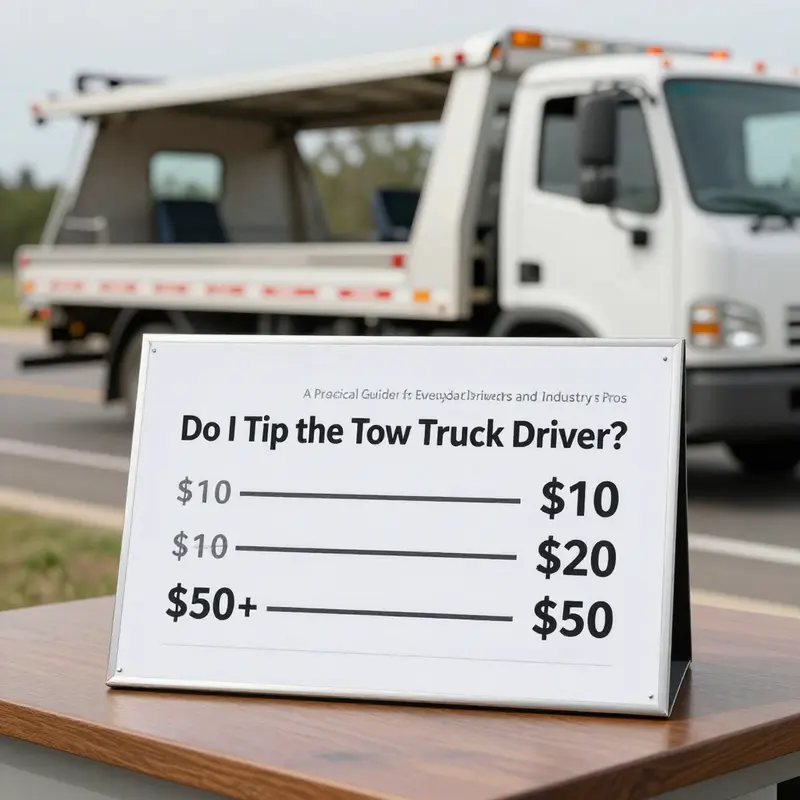
Typical tipping ranges for tow truck work sit along a spectrum, and the choices you make depend on distance, difficulty, and the driver’s effort. For most routine jobs—the short tow from a parking lot, a roadside assist that gets you moving again with minimal fuss—a tip in the range of ten to twenty dollars is a polite, reasonable gesture. It signals appreciation without implying you expect perfection for a standard service. When the job stretches beyond the ordinary—longer hauls, towing through heavy weather, or lifts that require careful maneuvering over uneven terrain—a larger tip becomes more appropriate. In those cases, a fifty-dollar contingency is not out of the question if the driver handled the task with professionalism, safety, and efficiency. In between, a tip of twenty-five to fifty dollars can acknowledge extra effort without overextending your budget. The range is not a hard rule, but it provides a practical framework for sharing your gratitude when the service level advances beyond the basics. You may also see people offering higher amounts—fifty dollars or more—when the recovery is exceptionally challenging, such as recovering a vehicle from a ditch, a snowbank, or after a complex accident. These situations demand extra time, risk management, and often more than one crew member juggling safety concerns, which justifies a stronger show of appreciation.
Beyond the numbers, several factors influence the decision to tip and how much to give. Distance is front and center: a long-distance tow that spans highways or rough terrain can justify a larger tip than a short pull from a lot. Difficulty matters as well. A driver who negotiates a vehicle from a ditch, frees it from mud, or negotiates tight spots with precision earns more credit for the skill and patience involved. Time of day also plays a role. Emergencies in the middle of the night or on a holiday weekend often require the driver to forego rest and adapt to your urgent needs. In those moments, a modest increase to reflect the extra time and potential risk may feel appropriate. The driver’s demeanor—their clarity, courtesy, and willingness to explain the process—also shapes your tipping choice. A professional who communicates what is going to happen, who keeps you informed through a sometimes chaotic situation, and who treats your property with care earns a more generous tip as a recognition of their attitude as well as their competence.
Another important factor is the policy the service operates under. Some towing companies include gratuity in the service fee or have strict policies against accepting tips. Others leave tipping entirely up to the customer, while independent operators may rely more on gratuities. In places where tipping is accepted, the act itself remains a personal gesture rather than an obligation. If you are unsure about a company’s policy, a quick, respectful question at the outset can save awkward moments after the job is done. If tipping is disallowed by policy, you can still show gratitude in non-monetary ways: a sincere thanks, a quick note to the company praising the driver, or a positive online review. These subtle yet powerful signals help the driver’s reputation and support the craft without crossing boundaries set by the employer.
The way you present a tip matters as much as the amount. Cash is the simplest and most universally accepted method, especially for roadside assistance where card processing may be limited or charged with higher fees. If you must use a card, check whether the company allows tipping on the credit or debit transaction; some do, some don’t. A discreet gesture—handing the tip directly to the driver with a brief acknowledgment that their work is appreciated—also preserves professionalism in a setting where bystanders might be watching and the driver is balancing safety with efficiency. If you cannot tip due to financial constraints or company policy, a warm thank you, a brief note of appreciation, or a public positive review can still carry weight. In all cases, avoid pressuring the driver to accept more than you’re comfortable giving, and respect their boundaries if they politely decline a tip.
The social dynamics of tipping can differ depending on whether you’re dealing with a private tow operator or a large towing company. Independent operators may rely more on tips to supplement income, particularly on lengthy or technically demanding recoveries. In contrast, drivers for larger fleets might work within stricter corporate guidelines that discourage or prohibit tipping. Regardless of the setting, your tipping decision should reflect your own assessment of the service and your personal capacity to show appreciation. The key is to balance fairness with realism, recognizing that the driver’s goal is to restore safety and mobility quickly and with care. If you witness a driver going above and beyond—arriving quickly, coordinating multiple steps to secure a safe outcome, and offering practical safety advice or documentation help—that is a clear cue to consider a larger gratuity. A higher tip in such moments is not just a monetary gesture; it is a recognition of the driver’s extra responsibility and the extra effort required in a challenging environment.
As you reflect on what to give, consider how you can communicate your appreciation in a way that aligns with your circumstances. A brief, specific compliment about the driver’s professionalism or the clarity of their instructions can reinforce the value of their work, even when you’re unable to offer a large tip. You might also consider leaving a positive review for the company or driver, which can have lasting benefits beyond the moment of service. After all, a well-documented account of reliable, courteous roadside assistance can guide future customers and sustain the reputation of the driver who earned your trust. If you’re curious about practical guidance that distills these considerations into a concise framework, you can explore the dedicated overview on tipping tow truck drivers, which offers similar ranges and scenarios and is worth a quick read: Do-U-Tip-Tow-Truck-Drivers.
In the larger landscape of roadside assistance, tipping sits at the intersection of appreciation, fairness, and policy. The act is not a simple transaction but a social gesture that communicates gratitude for specialized skill performed under stress. The driver’s expertise—how they assess risk, how they prioritize safety, how they handle your vehicle with care—has real value. While the fee for the tow covers the transport, the extra effort and professional conduct is what tipping seeks to acknowledge. When you do tip, the amount should feel appropriate to the effort involved, the time required, and the conditions faced. If the service is routine and unremarkable, a modest tip may feel fitting; if the driver shoulders a risky recovery, coordinates with dispatch, or stays with you through a tense moment, a more substantial tip becomes a deserved recognition of their performance.
For readers seeking a broader framing of tipping etiquette that applies to many service contexts, the following external resource offers practical guidance that complements the discussion here. It emphasizes courtesy, consideration of circumstances, and the value of clear communication when deciding how to tip. External resource: The Spruce tipping etiquette article. https://www.thespruce.com/tow-truck-tipping-etiquette-4167382
Tow Policy, Private Touch, and Tip Etiquette: Chapter 4 on Company Rules and Private vs. Commercial Tow Operators
When we hear the word tipping, it often conjures images of restaurants or baristas. Yet the act of tipping a tow truck driver sits at the intersection of policy, practicality, and personal judgment. Chapter 4 examines a question many drivers and stranded motorists wrestle with: do I tip the tow truck driver when the service is complete? The answer isn’t a simple yes or no. It hinges on who does the work, under what terms, and what the local norms dictate. The path from a tow call to a settled bill is paved not just with the vehicle’s recovery, but with a few unspoken rules about expectations, compensation, and respect. In this chapter, we move beyond generic advice and into the heart of how company policies shape the tipping conversation, and how the choice between private and commercial operators changes the meaning of a token gesture.
A central factor is policy. Many commercial towing firms operate under structured fee schedules and contracts with insurers, roadside assistance programs, or large fleets. In these arrangements, the driver’s compensation often comes from the company’s fee, not from a direct tip. The job is scheduled, standardized, and billed as part of a predetermined plan. In such contexts, tipping is neither expected nor encouraged by many companies. Drivers may be paid a set wage or a commission that is not designed to rely on tips from customers. For a motorist, this means tipping is not a failure of gratitude but a potential complication—one that could conflict with company policy or even be discouraged by the dispatcher or management. A quiet nod of appreciation or a positive survey rating can convey thanks without stepping into a policy grey area. The practical implication is simple: if you’re dealing with a large, commercial operator, you should check the policy first. The dispatch team or the company’s policy page is often the best source for guidance, and this preemptive check helps avoid awkward moments at the roadside.
The distinction between private and commercial operations adds another layer of nuance. In private towings—where an individual hires a tow truck directly, often through a local operator—the dynamics are different. These operations tend to be more flexible and personalized. The driver’s ability to adjust pricing, timing, and the level of service can be directly tied to the customer’s expectations. In many cases, a tip is welcomed in private work as a straightforward acknowledgment of courtesy for prompt service, careful handling, or difficult recoveries. The tip, when offered, often reflects the quality and effort of the service, not a formal requirement. In this setting, a customer might consider tipping as a meaningful reward for clear communication, rapid arrival, or professionalism during a recoveries that required finesse and problem-solving. The guideline that emerges here is simple: if the private operator is transparent about tipping and the service met or exceeded expectations, a tip is a reasonable token of appreciation.
The results of practical research echo this distinction. Where private operators are involved, tipping can amount to a modest but tangible expression of gratitude. A common range—often cited in consumer guidance—falls around 10 to 15 percent of the total service cost or a flat sum for smaller jobs. The important caveat is that this should reflect performance and effort. A difficult recovery from a ditch, a snowbank, or a multi-vehicle accident may justify a higher gesture. Conversely, if a private operator discourages tips, or if the service was routine and the company policy is silent or negative on tipping, the prudent move is to decline tipping and express thanks verbally. The landscape, then, is not a universal rule but a patchwork of practices shaped by operator type and policy.
This patchwork becomes particularly visible when considering the context of local customs. Tipping norms vary by region, and even among neighboring communities, the expectations can differ. Some regions have a tradition of showing appreciation for prompt, courteous help with a small cash gift; others treat towing as a paid service with no room for gratuities. The guiding principle remains consistent: tipping should be voluntary and aligned with the quality of service, not a perverse incentive or a reaction to pressure from an operator. In places where tipping is uncommon or explicitly discouraged by policy, a thoughtful expression of gratitude—such as a clear compliment, a positive online review, or a recommendation to friends—can be just as valuable as a monetary tip.
A practical way to navigate this landscape is proactive communication. If you’re stranded and a tow is on the way, ask the dispatcher or the driver about tipping policy before any money changes hands. A simple, respectful question — Are tips welcome with your company policy? — can avert uncomfortable situations and set clear expectations. If tipping is allowed, you can tailor your gesture to the service quality. A driver who arrives quickly in severe weather, communicates clearly about options, and handles a challenging recover with care may justify a higher tip than a routine tow. When service is mixed—with delays, communication gaps, or repeated back-and-forth—your tipping decision might reflect a weighted judgment, balancing the positive aspects with the areas needing improvement.
The chapter’s core tension centers on the relationship between policy, the type of operator, and the tipping gesture. For the policy-minded reader, the takeaway is not to fear tipping or to adopt a rigid “never tip” stance. Instead, there is value in recognizing when a tip is truly appropriate and when it would be better to refrain. The policy may be explicit, or it may be implicit in the company’s handling of payments and customer relations. If a large insurer or roadside assistance contract covers the tow, the driver’s pay structure is usually designed to remove tipping from the equation. If the tow is arranged directly through a private operator, the tipping choice rests more firmly in the hands of the customer and the driver alike. It is a reminder that goodwill can still be expressed in non-financial ways, especially when the policy or the situation makes a tip awkward or impractical.
To bridge theory with practice, consider the following scenario. A motorist calls for a private tow after a minor fender-bender. The operator arrives promptly, explains options clearly, and takes extra steps to secure the vehicle on the flatbed without incident. The recoveries are smooth, and the driver is courteous, patient, and informative about potential follow-up tasks. In this case, a tip in the 10–15 percent range of the total service cost may be appropriate, provided the driver explicitly welcomes tips and the total cost supports such a gesture. If the driver instead discourages tipping, the same gratitude can be expressed through a positive review, a recommendation to neighbors, or a personal note to the company. The point is not to force generosity where it isn’t welcome, but to acknowledge a job well done when the circumstances merit it.
For readers seeking a quick reference to etiquette, a concise guide is available online. See tip-tow-truck-drivers-etiquette for a straightforward snapshot of how many drivers and companies view tipping in different contexts. This resource can help calibrate expectations and reinforce respectful behavior in moments of stress. tip-tow-truck-drivers-etiquette
Beyond the immediate decision to tip, the broader lesson concerns how to navigate the friction between policy and person. Company rules exist to standardize service, protect workers, and uphold reputations. They can prevent gratuities from becoming a financial quagmire for drivers or a source of unequal treatment among customers. At the same time, policy should not erase the human element of service—the attentiveness, the readiness to assist, the extra mile that a driver may go to ensure safety and reliability during a stressful incident. The tipping decision, then, becomes a measure of how well the service aligns with your values: fairness, respect for the driver’s professionalism, and a reasonable interpretation of local norms.
As this chapter threads together policy, private versus commercial dynamics, and tipping ethics, it invites readers to pause before pulling out cash or a card. The ultimate aim is a respectful, considerate approach that honors the work of tow truck drivers while honoring the rules of the company and the expectations of the local culture. If you are unsure, ask. If you are clear, act with intention. A small thank-you note, a well-placed compliment, or a measured tip can be a meaningful closing gesture after a difficult moment on the road. But the gesture should always be voluntary, appropriate to the situation, and in line with the service you received.
External resource: For broader guidance on towing tips from a well-known industry source, see https://www.aaa.com/automotive/towing-tips/.
Do I Tip the Tow Truck Driver? Navigating Etiquette, Policy, and Practical Gratitude on the Road
When a vehicle breaks down or is involved in a run of bad luck on a dimly lit shoulder, the arrival of a tow truck can feel like a line drawn between crisis and relief. The driver steps out with a steady, professional demeanor, a reflection of years spent balancing safety, efficiency, and customer presence in often chaotic moments. In that moment, a question frequently surfaces in the paused silence: do I tip the tow truck driver? The simplest answer is that tipping is not universally required, but it is widely understood as a courteous option when the service meets or exceeds expectations. The nuance lies in context. In the United States, tipping practices in roadside assistance are shaped by location, the policy of the company, and the specific tasks performed. A quick glance at trusted guidance from driving and towing authorities frames tipping as a voluntary gesture that acknowledges quality workmanship, not as a mandatory fee thatundercuts the service contract.
The broader etiquette of tipping in service industries has long rested on a shared culture: you pay for the service rendered, and you reward excellence, effort, or extra steps taken beyond the baseline. For tow services, this translates into recognizing punctual arrival, careful handling of the vehicle, thorough problem assessment, clear communication, and a calm, safety-conscious approach to the recovery or towing operation. If the driver arrives promptly during a stressful incident, explains what they’re doing and why, and minimizes further risk to you, your passengers, and the vehicle, a tip can feel like an earned thank-you rather than an obligation. On the other hand, if the service is routine, efficient, and handled with professional indifference or under conditions that compromise quality, the absence of a tip is a reasonable response—though even then, a verbal expression of gratitude is welcome.
A practical way to frame tipping is to anchor it to a baseline cost and a standard gesture. Many drivers and agencies acknowledge that tipping is not demanded, but a gratuity in the range of ten to twenty dollars is commonly viewed as a polite acknowledgement for courteous, competent assistance in ordinary circumstances. If the service is rapid, respectful, and uncomplicated, a modest tip or even a sincere word of thanks can be perfectly appropriate. The situation changes when the service veers into the exceptional or labor-intensive category. If the driver recovers a vehicle from a ditch, navigates tricky terrain, handles a complex winch operation, or works through challenging weather, it is reasonable to consider a larger tip to reflect the extra effort and time involved. In some instances, a tip may exceed twenty dollars or move into a higher range—especially when the job required specialized skill, extended on-site time, or significant safety risk.
There is also a practical policy layer to this question. Companies, both large and small, vary in how they address tipping. Some operators build gratuity into their pricing or prohibit tips to avoid the appearance of price inflation or favoritism. Others, particularly independent operators or small fleets, may welcome a tip as direct compensation for the driver’s time and risk. The prudent approach is to ask about tipping policies when you call or book service, or at the very least check on-site if it’s appropriate. A few moments of clarity can prevent awkward moments later and can help you tailor your gesture to what’s allowed and appreciated. In tandem with policy considerations, keep in mind that verbal gratitude is universally appropriate. A simple thank-you, delivered with sincerity, can reinforce rapport and leave a positive impression long after the tow is completed. In professional roadside contexts, clear and respectful communication enhances the experience for both parties, aligning with best practices in service etiquette.
A practical framework for deciding whether to tip—and how much—emerges when you weigh several factors. First, assess the complexity and duration of the service. A routine tow from a flat roadside position, accomplished efficiently and safely, may warrant a modest token or none at all, depending on local norms and company policy. A long recovery, a vehicle in a precarious position, or a high-risk operation in poor weather or at night clearly shifts the calculus toward a larger gratuity. Second, consider the driver’s conduct. Was the driver punctual, professional, and communicative? Did they explain recommended steps, answer questions clearly, and handle the vehicle with care? Were there additional tasks performed outside the standard scope—such as stabilizing the scene, coordinating with traffic management, or facilitating a smoother handover to a repair facility? Each favorable action strengthens the case for a tip and helps translate service quality into tangible appreciation.
An important balancing act is to weigh local expectations and company guidelines against your personal experience. The same city might reflect divergent practices from one company to another, or across independent operators versus big fleets. If in doubt, you can politely ask: “Is tipping customary for this service, and does your company accept tips?” If the answer is yes, a tip becomes a straightforward expression of thanks; if no, you can still convey appreciation through words and a brief note. In all cases, avoid tipping through the dispatcher or attempting to sneak gratuity into the service charge if policy prohibits it. Direct, discreet tipping to the driver when appropriate is typically the cleanest approach.
Delivery of the tip itself should be practical and unobtrusive. Cash is often appreciated because it places the gratuity directly in the driver’s hands, immediately recognizing the effort. If cash isn’t convenient, ask whether tipping on a card or via an app is accepted. Some drivers can process a tip electronically, while others prefer cash. In all scenarios, present the tip at the closing moment of the interaction, after the driver has completed the service and confirmed that you’re satisfied with the outcome. A brief note of appreciation can accompany the tip or stand in for a tip when cash or credit is unavailable. A few well-chosen words can go a long way: “Thank you for getting me out safely and for the clear explanations along the way.” Such expressions help build positive rapport and leave a lasting impression beyond the immediate service.
Beyond monetary gestures, non-monetary gratitude remains an important component of roadside etiquette. A sincere thank-you, a brief written note to the company, or a recommendation to others who may need assistance can be valuable. Roadside encounters are high-stress moments for many drivers, and clear, respectful communication helps to reduce tension and clarify expectations for future interactions. When the moment has passed, a short note or positive review can reinforce the driver’s professional standing and remind the service provider that their work, often done under pressure, is recognized and valued. This form of acknowledgment complements any gratuity you give and contributes to a culture of professional respect in the towing and roadside assistance community.
Guidance from broader service etiquette sources emphasizes that tipping is a way to acknowledge the quality of service and the effort involved, rather than a ritual to be performed without thought. In the towing context, this means letting the service experience inform your choice rather than applying a blanket rule. If a driver arrives quickly, communicates clearly, demonstrates careful handling, and completes the job with safety in mind, a larger gratuity may be deserved. If, conversely, the service falls short of expectations due to delays, miscommunication, or careless handling, you are within your rights to withhold a tip and address the situation with the company through feedback channels. The core principle remains simple: tipping is voluntary, and it should reflect the actual service quality you experienced.
To place this guidance within a broader, trusted frame, consider resources from national guidelines on towing and roadside etiquette. These sources advocate respect, clarity, and a customer-centered approach to service interactions. They also remind readers that local customs and company policies should guide tipping decisions. For readers who want to explore a concise primer on etiquette related to tipping tow-truck drivers, there is a practical resource that outlines expectations and appropriate conduct tip-tow-truck-drivers-etiquette. The combination of practical numbers, situational judgment, and respectful communication helps turn a potentially awkward moment into a positive interaction that supports both the driver and the customer. While the mechanics of a tow are technical, the human element—courtesy, gratitude, and fair recognition of effort—remains central to how we navigate these everyday emergencies.
As a closing reflection, the question of tipping a tow truck driver is less about a universal rule and more about a thoughtful response to a service delivered under often challenging conditions. It is about reading the room, understanding the policy landscape, and offering recognition that matches the driver’s performance and the job’s demands. In keeping with best practices for service interactions, you should aim for a balance: a factual assessment of the service, a courteous request about tipping policies if unsure, and an act of gratitude that fits the situation. The result is not only a fair gesture but also a reinforcement of professional standards in roadside assistance. If you want to extend your understanding beyond the moment of service, the broader discussion in established guidelines and practical tips is a helpful companion on future roadside experiences. And when in doubt, a sincere thank-you and a respectful inquiry about tipping policy will usually set the right tone for the interaction and any potential future encounters on the road.
External resource for broader context: https://www.aaa.com/
Final thoughts
Tipping tow truck drivers is a nuanced choice, not a universal rule. When service is straightforward and policies are clear, tipping is usually optional and typically modest. Exceptional effort—such as complex recoveries, extended wait times, or enhanced safety measures—deserves thoughtful recognition, often in the $10–$20 range, with higher amounts (e.g., $50+) reserved for truly extraordinary circumstances. Always check local norms and, when possible, company policies before tipping. A courteous expression of thanks can accompany any tip, and clear communication helps avoid misinterpretation.
CTA: Ready to elevate your ride? Summit Fairings delivers premium, custom-fit fairings that blend style and durability. Whether you’re chasing speed or turning heads, we’ve got your bike covered. Don’t wait—transform your machine today. Click, customize, and ride with confidence. Your perfect fairing is just a few clicks away. Act now!
About Summit Fairings: We are one of the leading motorcycle fairing export sites, with over 3,000 styles across almost all motorcycle models. Buy from summitfairings.com, and pay 10-40% less than the prices on other sites. If you have any questions, we promise we will have your answer within six hours.