
Tow trucks vary from compact wreckers to heavy-duty carriers, and the licensing needed to operate them hinges on weight, use, and safety responsibilities. For everyday drivers who rely on tow services, residents coordinating roadside assistance, truck owners managing fleets, auto repair shops and dealerships overseeing recovery operations, and property managers coordinating vehicle removals, understanding CDL requirements is essential. The Federal Motor Carrier Safety Administration (FMCSA) outlines how weight, vehicle configuration, and cargo affect CDL class and endorsements. Misinterpreting these rules can expose operators to regulatory risk, insurance gaps, and safety concerns. This guide ties the topic together across three focused chapters: first, the weight thresholds that determine CDL Class A, Class B, and Class C needs; second, endorsements such as the critical ‘T’ endorsement and the exemptions that can apply to smaller tow trucks; and third, the regulatory sources, compliance steps, and practical implications for tow operators. By connecting the dots between vehicle weight, licensing, endorsements, and real-world practice, readers will gain a clear, actionable framework for lawful, safe, and efficient towing operations.
Tow Truck CDL Essentials: Decoding Class A, Class B, and Weight Thresholds
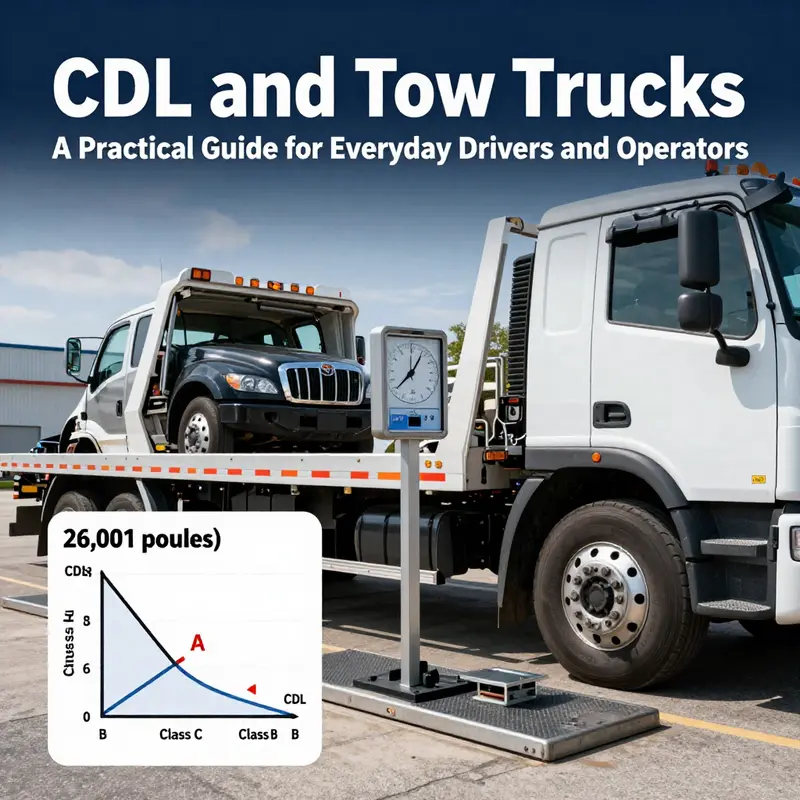
When a tow truck pulls into a scene, people often wonder whether the driver must carry a commercial license. The short answer is usually yes, but the exact requirement hinges on weight, configuration, and what is being towed. The logic is built around safety and accountability: heavier vehicles combined with heavier towed units create a line where standard noncommercial licenses no longer suffice. To understand how this works in practice, it helps to start with a clear frame of reference: the weight ratings that govern every large road vehicle, and the way those ratings translate into different CDL classes and endorsements. The federal standard, adopted with state refinements, centers on the gross vehicle weight rating of the tow truck and the gross combined weight rating when towing. In that framework, two numbers matter most: the GVWR of the tow truck itself and the GCWR of the combination if you are pulling a second vehicle. When either threshold crosses 26,001 pounds, the door to a CDL typically opens, and the appropriate class is determined by how the vehicle and its load fit together. This is not mere paperwork; it is about handling a vehicle that may weigh more than a small car, that can require longer stopping distances, stronger control inputs, and precise maneuvering in demanding conditions. The outcome is that many tow operators operate under a Class A or Class B CDL, with the option of Class C in narrower circumstances. Even this simplified taxonomy belies the nuance involved, because the exact class you need depends on the details of your tow setup. A tow truck that itself weighs more than 26,001 pounds but tows a light vehicle may fall under a Class B framework, whereas a combination that includes a heavy towed unit may push you into Class A territory. For many operators, the distinction between Class A and Class B hinges on how the vehicle is configured and what the towed unit weighs, particularly if it exceeds 10,000 pounds. In practical terms, a heavy wrecker that offers long-reach recovery capabilities or a vehicle recovery rig with substantial towed weights will push a driver toward Class A because the combination weight crosses the threshold. A lesser but still heavy tow truck that is used primarily to tow standard passenger cars or light trucks can be governed by Class B, especially when the tow vehicle itself weighs beyond the threshold but the towed vehicle remains under the heavier limit. The rules also introduce Class C, which is triggered when the combined load is under 26,001 pounds but the towed vehicle presents hazards such as carrying hazardous materials or a passenger count that exceeds fifteen, including the driver. In those scenarios, the presence of hazmat or a large passenger load can unlock additional endorsements or special qualifications. It is a reminder that the CDL system is designed not only to measure weight but to ensure the operator has the right training to handle specialized responsibilities. While weight is the core determinant, the presence of hazardous materials or a large number of passengers calls for a broader set of skills and a different regulatory pathway. In practice, many smaller tow trucks used by municipal fleets or local recovery outfits might technically fall under noncommercial driving if the vehicle and its operation remain within lighter weight ranges and the operator holds a standard driver’s license. Yet the vast majority of professional tow operations involve trucks and loads that push into CDL territory because of the size, weight, and potential risks on busy roads and highways. The complexity of this landscape is not just about a single number on a spec sheet; it is about how those numbers translate into safe operations, driver competence, and compliance with a framework that is designed to reduce risk for the driver, the towed vehicle, other road users, and the operator’s own business. If you are pursuing a tow truck career or expanding a fleet, you will want to internalize a few practical implications. First, the type of CDL required is not a one-size-fits-all answer. The same tow truck can require different licensing depending on whether it operates as a single heavy vehicle or as a combination vehicle that tows another large unit. Second, the endorsement that matters most for a tow truck is the T endorsement. This additional credential is what explicitly authorizes the operation of a tow truck. The process to obtain it typically involves knowledge testing, practical driving evaluation, and meeting medical and background requirements. In some states, the endorsement is integrated into the CDL itself, while in others it might be added as a separate credential following a specific testing sequence. Third, while the core weight thresholds provide a baseline for CDL necessity, states have room to tailor rules to their roads and enforcement priorities. That flexibility means a driver must verify local requirements with the state department of motor vehicles or equivalent agency. The FMCSA sets the federal framework, but state variations do exist, sometimes altering thresholds or adding nuances for noncommercial use of certain equipment. The official FMCSA guidelines serve as an authoritative starting point, but a driver or fleet manager must translate those guidelines into state practice through the DMV. To make this more concrete, imagine a tow truck that weighs 28,500 pounds and is pulling a vehicle weighing 9,500 pounds. In this configuration, the GCWR would place the combination above 26,001 pounds, and because the towed weight exceeds 10,000 pounds, Class A would typically be triggered. If the same tow truck weighed 28,500 pounds but was towing a vehicle weighing 8,000 pounds, the key factor becomes the GCWR. If the combination is still severe enough to surpass the 26,001 pounds barrier, Class A would likely apply; otherwise, Class B could be the correct classification for the heavy tow truck without a heavy towed unit. Conversely, if the tow truck weighs under 26,001 pounds and tows a vehicle that weighs under 10,000 pounds, Class B or potentially Class C could come into play depending on whether any hazmat or large passenger count is involved. Understanding these relationships requires careful attention to your vehicle’s GVWR, the GCWR, and the weight of the towed unit. It also means recognizing that the tow truck’s primary function—recovery, winching, flatbed transport, or service calls—can influence the weight distribution and, consequently, the licensing prescription. The practical takeaway for someone contemplating operating a tow truck is that you should begin with a precise inventory of your fleet’s weight ratings and towing configurations. If you own or operate a single, heavy wrecker and you expect to routinely tow vehicles well into the heavy category, you should anticipate pursuing a Class A or Class B CDL. If your operation is more modest in scale, with lighter tows and smaller recovery vehicles, Class B may suffice, but you still need to confirm whether any towed unit for your typical work would push you into Class A territory. An essential step in this calculation is the T endorsement, which is specifically designed to authorize tow truck operation. The endorsement is not automatically granted with a standard CDL; it requires either an integrated CDL package or a separate endorsement process in many states. Training for the T endorsement is designed to cover vehicle control, braking limitations, safety considerations when winching near traffic, and the nuances of towing with heavy equipment in potentially hazardous or constrained environments. Beyond the weight and endorsement math, there are practical implications around training, insurance, compliance, and continuing education. CDL holders are generally expected to stay current with regulatory changes, medical requirements, and testing standards. fleet managers and operators benefit from maintaining a documented process for verifying each driver’s license class, endorsements, medical cards, and any state-specific requirements. This is not simply a legal box to check; it is an operational discipline that contributes to safer roads, more predictable service delivery, and better risk management for the company. For individuals who are considering stepping into tow truck work, the CDL path often begins with a candid assessment of the vehicle profiles you expect to encounter. If your early work will include heavy recoveries, vehicle removals from accident scenes, or the transport of larger towed units, the case for a Class A or Class B CDL strengthens quickly. If you anticipate primarily responding with lighter tows, you may start with a Class B, but you should still be mindful of scenarios that could push you into Class A territory, such as a heavier towed load or a different configuration later in your career. As with many licensing questions, preparation matters. Gather the relevant vehicle specifications for your typical fleet, map the weight thresholds against your state’s DMV rules, and plan the path to the appropriate CDL and endorsements. If you need a concise, practical roadmap to the licensing steps and what to study for a tow truck role, you can consult the CDL Tow Truck Guide. It distills the licensing pathway into a driver-centric sequence that aligns with the weight and configuration realities of tow operations. The path is not just about passing a test; it is about building a solid foundation in safe operation, load management, braking distances, and the professional responsibilities that accompany carrying a heavy payload on public roadways. In addition to the licensing considerations, it is prudent to consult the official FMCSA framework as you plan. The FMCSA website provides comprehensive guidelines on CDL requirements, including weight thresholds, endorsements, and the interplay between federal standards and state adaptations. This information helps bridge the gap between what you read in summaries and what you will encounter in your state’s DMV office. If you want a direct, authoritative resource for understanding the broader regulatory landscape, refer to the FMCSA portal. For those who prefer a structured, stepwise approach to licensing, the CDL Tow Truck Guide can be a practical companion on your journey, guiding you from eligibility to testing and beyond. In sum, the question of CDL necessity for tow truck operation is best answered through a combination of weight-based analysis, understanding the T endorsement, and recognizing that state variation exists. The safe, compliant operator is one who treats licensing not as a hurdle but as a core component of professional practice. By aligning vehicle weight profiles with the correct CDL class and endorsement, crews can perform essential recovery work with confidence, minimize regulatory risk, and contribute to a safer road environment. As you advance, keep the regulatory compass in view, check your state DMV for precise rules, and leverage official resources to stay current. External guidelines from the FMCSA offer a foundational reference, while practical, state-specific steps can be found through the resources referenced earlier. For an actionable, fleet-centered overview that complements this discussion, see the CDL Tow Truck Guide, which helps translate weight thresholds into real-world licensing steps. If you want a quick link to the broader regulatory framework, you can consult FMCSA’s CDL guidelines. CDL Tow Truck Guide is a useful starter, and the FMCSA site at https://www.fmcsa.dot.gov/ provides the overarching standards that shape every state’s approach to tow truck licensing.
Weight, Warnings, and Wheels: Navigating CDL Requirements for Tow Trucks and the T-Endorsement Landscape
Tow truck CDL questions hinge on weight. The key metric is the GVWR of the tow vehicle and any trailer or towed load. If the combined weight exceeds 26,001 pounds, CDL requirements generally apply for most on-road operations. If the tow vehicle itself weighs more than 26,001 pounds, many jurisdictions require a CDL even when towing a lighter load. A separate consideration is the T endorsement, which covers towing heavy trailers and is often needed when the operation involves large trailers or heavy recovery gear.
Class A, Class B, and Class C CDL designations distinguish how much weight you are authorized to haul and how your responsibilities expand. Class A is typically required when the combined weight of the tow truck and the towed vehicle exceeds 26,001 pounds and the trailer rating exceeds 10,000 pounds. Class B generally applies when the tow vehicle GVWR exceeds 26,001 pounds, even if the towed load is lighter. Class C comes into play for weight under 26,001 pounds but with hazardous materials or more than 15 passengers. In practice, many tow operators rarely sit in Class C unless edge cases arise.
The T endorsement is tightly connected to the idea of towing trailers with significant GVWR. It signals that you are authorized to operate heavy trailers and is earned through a knowledge test and skills evaluation specific to towing with trailers. For tow operations, the presence of a heavy trailer or a heavy towing configuration can necessitate the T endorsement even if a basic CDL class might seem sufficient.
In practical terms, if you operate for pay or as part of a commercial recovery service, the CDL path is often unavoidable. If your work is purely private and not for compensation, some states may provide exemptions, but these are not universal and can be narrow in scope. Interstate transport and commercial towing carry different expectations than private, casual relocations, and many states require intrastate compliance as well.
What to do next: confirm the GVWR on the tow truck’s plate and the GVWR of any trailers you intend to tow, review your typical job scope, and contact your state DMV or licensing authority to understand intrastate versus interstate requirements. If you want a concise overview of endorsements for tow work, consult the CDL tow truck guidance and your state’s resources. For official guidance, visit the FMCSA site at https://www.fmcsa.dot.gov/
Weight, Law, and the Tow: Navigating CDL Requirements for Tow Operators
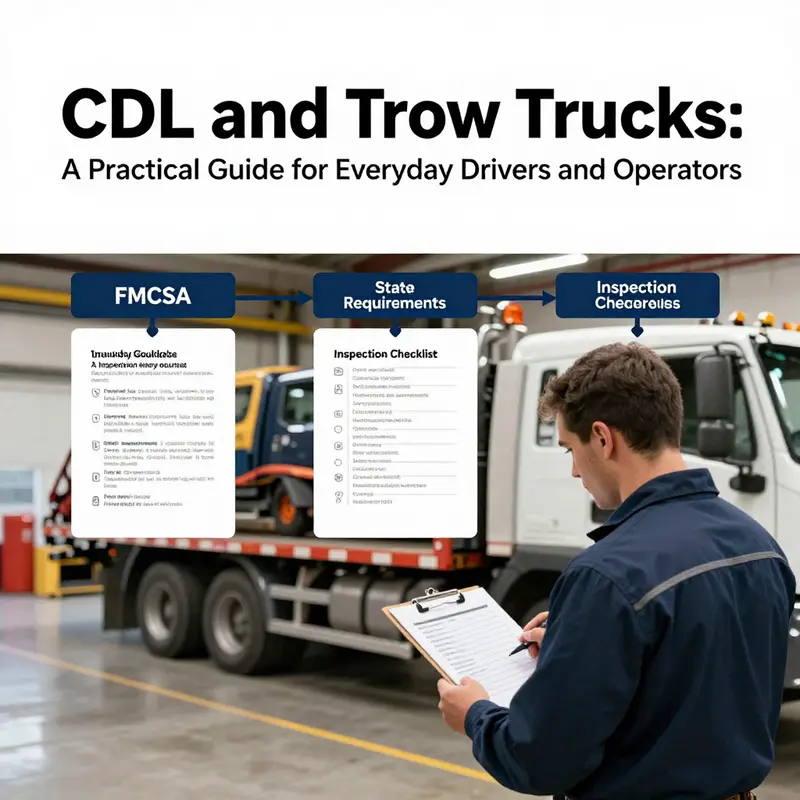
In the world of roadside recovery and fleet dispatch, the question of whether a tow-truck driver needs a Commercial Driver’s License (CDL) sits at the intersection of safety, regulation, and practical business strategy. For many operators, the answer is straightforward: yes, a CDL is required in most circumstances. But the details matter because the threshold is not just about the size of the truck; it’s about the combined weight of the tow vehicle, its load, and the specific roles and duties the operator performs on public roads. Understanding this regulatory landscape means recognizing how federal guidance from the Federal Motor Carrier Safety Administration (FMCSA) translates into state rules, company policies, and the daily reality of moving clocks and customers from point A to point B in a manner that remains safe, legal, and financially viable.
At the core of CDL requirements is the concept of weight thresholds. The FMCSA sets a clear line: when the gross vehicle weight rating (GVWR) of the combination—meaning the tow truck plus the towed vehicle—exceeds 26,001 pounds, the driver must possess a valid CDL. This rule is not a vague guideline; it is a safety standard designed to ensure that operators entrusted with heavy, potentially dangerous recoveries have the training, medical clearance, and testing necessary to manage risk on busy roadways. The “26,001 pounds or more” benchmark frames a spectrum of reality on the ground. On one end lie smaller, non-commercial towing setups that might operate under standard driver licenses or permits, typically in private, non-commercial contexts. On the opposite end sit large, heavy wreckers and service trucks that routinely handle heavy loads, hazardous situations, and complex equipment, all of which push the driver into a higher tier of credentialing.
The classification of the CDL itself is tied directly to how the vehicle and its load are treated. A CDL Class A becomes the requirement when the combined weight crosses that critical barrier. This means a tow truck that itself is heavy and frequently tows another heavy vehicle, pushing the total into the realm where a Class A license is necessary. If the tow truck’s own GVWR is over 26,001 pounds, even when the towed vehicle is lighter, Class B becomes the threshold. In many fleets, this scenario is common for larger wrecker trucks, where the primary weight concern is the tow truck’s own mass rather than the load it carries. Then there is Class C, which can come into play when the total weight remains under the 26,001-pound cap, but the operation involves a towed vehicle that carries hazardous materials or has more than 15 passengers including the driver. The presence of hazmat or a larger passenger-carrying load triggers additional training and endorsement requirements before a driver can legally operate in commercial settings.
Beyond the main CDL classes, many tow operators pursue what is known as the “T” endorsement. This endorsement is specifically designed to authorize the operation of tow trucks. It is not a universal addition that automatically accompanies any CDL; rather, it is a specialized endorsement that recognizes the unique safety and skill set required to tow and recover vehicles, manage on-scene hazards, and operate heavy-duty equipment such as wheel-lift systems, integrated winches, and hydraulic recovery tools. The combination of a CDL with the T endorsement represents the standard credential package for those who work in professional towing, recovery, and roadside assistance at scale. It is a signal to clients and insurers that the operator meets the higher standards of certification necessary for tows that leave the highway, as well as those that involve complex loading and unloading procedures under variable daylight, weather, and traffic conditions.
The regulatory landscape, however, is not a single page in a rulebook but a living framework that interacts with state regulations and the specifics of a given operation. While the FMCSA sets the federal baseline, states retain the authority to tailor licensing requirements, hours-of-service rules, medical qualifications, and even the particular endorsements that a tow-truck driver must carry. Some states push the envelope further, requiring a CDL for commercial towing operations even when the weight falls below the federal threshold. This means a tow operator cannot assume blanket compliance simply by meeting federal guidelines; a careful, jurisdiction-by-jurisdiction review is essential to ensure that every deployment, every dispatch, and every on-site recovery aligns with the law.
On a practical level, the choice to pursue a CDL is as much about market access as it is about compliance. For larger fleets and professional towing services, the CDL path expands the pool of available work. It enables participation in highway recoveries, intercity towing contracts, and municipal or commercial fleet support that demands a higher standard of driver qualification. It also signals a commitment to safety and accountability, which can translate into stronger relationships with insurers and clients who prioritize vetted, compliant operators. The cost of that choice, of course, is real. Preparing for and obtaining a CDL involves a combination of written examinations, skills testing, and medical certification. It often requires time away from the day-to-day business to study, practice, and schedule testing, as well as an ongoing investment in medical evaluations and periodic renewals. While some individual operators may find a non-CDL path feasible for small-volume, private-use towing, the breadth of opportunities—and the corresponding acceptance in professional markets—tends to favor CDL holders in most commercial contexts.
In the wake of this regulatory framework, the practical implications for a tow operator become clearer when we consider real-world scenarios. A recovery business that routinely tows large, heavy vehicles from the highway—think tractor-trailers, buses, or other heavy equipment—will typically exceed the 26,001-pound threshold in most recovery operations. In such cases, a CDL with the appropriate class is not just advantageous; it is required to legally operate on public roadways. The same logic applies when the tow truck itself weighs more than 26,001 pounds, even if the towed vehicle is lighter. Fleet managers who oversee heavy-duty tow trucks therefore plan for CDL compliance as a foundational element of their staffing, dispatch, and risk-management strategies. The T endorsement becomes a standard piece of a technician’s certification, ensuring that the operator understands not only how to attach a vehicle correctly but also how to execute safe recoveries, manage on-scene traffic, and handle hydraulic equipment with precision.
But the regulatory picture is not solely about credentials. It is equally about ongoing compliance and the practicalities of operation. For CDL holders, the road is structured by hours-of-service rules, medical certification requirements, and periodic renewals. The daily routine may involve keeping detailed logs, maintaining vehicle inspection reports, and ensuring that both the tow truck and the equipment it carries meet safety standards. In the aftermath of incidents, that discipline becomes a core part of the service promise: fewer on-road mishaps, more predictable response times, and sharper credibility with customers who expect professional, regulated service. For smaller operators who skip the CDL route, a careful calculation is needed. They must confirm the lack of a CDL does not expose them to illegal operation, avoid weight limits that would trigger licensing, and be prepared to defend the decision to clients who rely on regulatory compliance as a baseline for service quality.
The decision-making calculus, then, rests on three interwoven strands: the vehicle’s physical weight and capacity, the planned scope of operations, and the state-specific licensing environment. When a tow-truck operator weighs whether to pursue a CDL, they are weighing the potential for larger, steadier work against the costs of training, testing, and ongoing compliance. The weight thresholds also influence equipment choices. Heavier machines with more capable lifting gear, heavier winches, and robust safety systems naturally correlate with higher licensing requirements. The equipment becomes a lever for greater citation in safety audits but also an opportunity to demonstrate professional competence in demanding circumstances. In other words, the gear you choose and the scope of your operation can push you toward or away from CDL requirements, and those choices ripple through expenses, scheduling, insurance, and market competitiveness.
Within this landscape, there is room for nuance. The presence of specialized equipment—hydraulic lifts, heavy-duty winches, or integrated recovery systems—can influence how the FMCSA and state regulators classify a given vehicle. The extra capability comes with heightened risk, and the regulatory bodies respond by requiring higher levels of training and certification. It is not merely a matter of “how heavy is it?” but also “how complex are the recovery operations you perform?” A tow truck that is modest in size but is still used for high-risk recoveries may trigger stricter oversight or endorsements than a similarly sized vehicle used in routine, low-risk towing. Operators should recognize that their on-the-ground work dictates the level of credentialing required, not just the weight alone.
For those considering whether to pursue a CDL path, the practical steps are well-trodden but not trivial. Begin with the state’s requirements for CDL eligibility and the specific classes and endorsements. Prepare for the knowledge and skills tests that reflect real-world driving, vehicle inspection, and safe-coupling procedures. Schedule the medical examination and stay on top of any periodic recertification, as wellness is a non-negotiable part of operating a commercial vehicle and essential to maintaining eligibility for the license. The financial and logistical elements—test fees, training time, and the cost of keeping up with medical cards—must be planned into business budgets. Yet the payoff can be meaningful: access to larger markets, enhanced credibility with customers and insurers, and the ability to recruit skilled drivers who are prepared for the complexities of heavy recovery work.
A thoughtful operator will also consider how licensing aligns with the broader business model. If a client base is built around municipal contracts, fleet maintenance partnerships, or emergency-response readiness, CDL-compliant operations may be the minimum bar for inclusion. Conversely, if the business is designed around small-volume, private-tow services in low-traffic areas with occasional heavy-tow scenarios, a non-CDL approach might be feasible, provided weight limits and local rules are strictly observed. In every case, the operator should keep current with state variations, because a rule that applies in one jurisdiction may not in another. The best practice is to view licensing as a fluid, location-specific component of compliance that is as important as vehicle maintenance or driver training.
Among the most valuable resources for operators navigating this terrain is accessible, official guidance that translates complex federal rules into practical steps. For those who want a structured, step-by-step path toward CDL readiness for tow operations, there is a dedicated resource that walks through the process of becoming a CDL-equipped tow-truck professional. Engaging with such guidance can help bridge the gap between regulatory theory and daily operation. It provides a clear framework for evaluating whether your current fleet fits the federal threshold and how to align your staffing and training with the required endorsements. If you’re already moving toward a CDL path, this kind of resource can serve as a practical companion, outlining the permissions you’ll need and offering a realistic timeline for achieving credential readiness while maintaining service levels for your customers.
Ultimately, the decision about whether a CDL is necessary—and which class and endorsements are appropriate—must be grounded in the realities of the operation. The weight thresholds offer a straightforward starting point, but the story extends beyond the scale of the equipment. It encompasses the complexity of on-scene recovery, the risk profile of the work, the expectations of clients, and the regulatory posture of the state in which you operate. For tow operators who want to sustain growth, ensure safety, and maintain access to a broad market, pursuing CDL status with the appropriate class and endorsements is often the most prudent course. For those who operate at a smaller scale or in jurisdictions with permissive exemptions, a careful, compliant approach without a CDL may still be possible. In every case, staying informed through official channels, aligning training with the realities of heavy-duty recovery, and recognizing how equipment and operations influence licensing will yield a more predictable, safer, and more professional towing practice.
For operators seeking a practical starting point, the following path can be a helpful reference: assess the combined GVWR of your typical tow-truck-and-load configurations; identify whether your work regularly crosses the 26,001-pound threshold; determine if your equipment and operation might trigger a Class A, Class B, or Class C scenario; and factor in state-specific rules that could push licensing requirements even further. If you determine that a CDL is the right fit, begin with the Class and endorsement strategy most aligned with your typical recoveries and dispatch patterns. Prepare for the required knowledge and skills examinations, secure medical clearance, and plan for ongoing verification of credentials. And if you are still uncertain about the licensing path, consulting with regulatory authorities or a compliance specialist can help illuminate the most practical route for your business while safeguarding safety and legality on every tow.
To a reader who is weighing the decision against the backdrop of a busy service schedule, the guidance may feel technical but the logic is straightforward. The heavier and more complex your operation, the more the licensing regime rewards you with better training, clearer standards, and broader opportunities. The lighter, simpler your typical tows, the more room there is to explore non-CDL options in some jurisdictions. Either way, the driving force remains consistent: safety, accountability, and the ability to deliver dependable service to customers, day in and day out. For operators who want a concise, user-friendly framework on this topic, a focused resource detailing the CDL considerations for tow trucks can be a helpful companion on the journey toward compliant, professional towing operations. You can explore that targeted guidance here: CDL tow-truck guide.
Authoritative guidance on CDL requirements for tow trucks continues to be published and refined by the FMCSA. For the most up-to-date federal standards and explanations of endorsements, medications, and testing requirements, refer to the FMCSA’s official site. Their guidelines provide a solid foundation for understanding how weight thresholds, vehicle configurations, and on-road responsibilities intersect with licensing and safety responsibilities on the road: https://www.fmcsa.dot.gov/
Final thoughts
Understanding CDL requirements for tow trucks hinges on weight, use, and the need for appropriate endorsements. By aligning Class A/B/C thresholds with the specific tow vehicle and its load, securing the correct endorsements (notably the ‘T’ endorsement where required), and grounding operations in established regulatory sources, tow operators and their partners—whether drivers, shop staff, or property managers—can reduce risk, improve safety, and maintain compliant, reliable service. Always verify state-specific rules and keep training up to date to reflect evolving standards and local enforcement priorities.