
For drivers, homeowners, fleet managers, auto shops, and property managers, a tow truck can be a crucial link between a breakdown, an accident, or a relocation and a safe, timely resolution. Renting a tow truck offers flexibility beyond traditional tow-in servicing, enabling local recoveries, project vehicle relocation, or equipment transport without committing to a full-time asset. This guide breaks down how you can access tow truck rentals, what equipment you’ll encounter, who provides on-demand solutions, and how international sourcing can fit larger-scale operations. Each chapter builds toward a practical framework you can apply whether you’re stranded on the roadside, coordinating a fleet, or running a repair shop that needs scalable recovery capacity. We start by outlining availability and typical use-cases, then dive into equipment types and rental options, followed by a tour of providers and on-demand platforms, and finally look at cross-border sourcing and commercial considerations for larger operations. Together, these sections illuminate how renting a tow truck can be a cost-effective, reliable option for everyday drivers, residents and commuters, truck owners, auto repair shops and dealerships, and property managers alike. Emphasis is placed on real-world decision points, from local U-Haul-style rentals to app-based on-demand services and, for business buyers, international procurement channels that scale with demand.
Tow on Demand: Navigating Availability, Use-Cases, and the Practical Path to Renting Tow Trucks
Renting a tow truck is no longer a niche option reserved for large fleets or emergency responders. In many regions, a robust ecosystem of rental services, automotive support providers, and on-demand platforms has emerged to meet a wide range of needs. The shift reflects a pragmatic approach to transportation and recovery work: you can access specialized equipment when you need it, without the overhead of owning and maintaining a full tow fleet. This chapter follows that arc, tracing how availability has expanded, what use-cases now justify rental, and how businesses and individuals navigate the process from first inquiry to the final bill. It is not a sales pitch for any one solution, but a practical map for anyone who might suddenly need a tow truck, whether for a roadside bump in the night or a scheduled project that requires moving heavy or delicate loads with care. The core reality is straightforward: when you understand what you need, where to find it, and how the terms work, rental tow trucks become a reliable, flexible resource rather than a last resort.
Availability sits at the intersection of geography, device type, and service model. In urban and suburban areas, a spectrum of options tends to cluster around larger service centers and specialized equipment rental networks. These players stock a range of configurations, from compact wheel-lift units suitable for light-duty recovery to flatbeds capable of handling heavier loads and more sensitive equipment. The key factor is the configuration that best fits the task: a flatbed can secure and transport a damaged vehicle without tying it down in a risky manner, while a wheel-lift or rollback unit might be perfectly adequate for short moves or local recoveries where speed matters more than size. Beyond the physical rig, the method of access matters just as much. Some rental providers lean into traditional storefronts and local branches, while others operate through modern digital platforms that let a customer book a truck within minutes, specify pickup time windows, and track the service vehicle in real time. The latter is increasingly common, and it mirrors trends in other on-demand transportation and logistics services where instant booking and visibility on ETA are part of the standard experience.
If you are evaluating availability in your area, you will likely encounter three broad pathways. One is a conventional equipment rental company that keeps a fleet of towed and transport-ready units. These organizations often offer short-term rates, hourly minimums, and optional add-ons such as wheel-straps, chains, or load-limiter devices. A second pathway comes from automotive service providers who extend their core expertise to rental customers. They can be especially helpful when you need a tow truck equipped for a roadside scenario, since they understand vehicle compatibility, safety checks, and the nuances of securing a wide range of loads. A third avenue is a digital platform that aggregates service providers, enabling you to request a tow truck with a few taps on a smartphone or computer. In this model, availability hinges on the real-time status of drivers and trucks, but the payoff is speed and convenience. The growing presence of on-demand platforms reflects a broader shift toward flexible capacity in the transportation sector, where the question is no longer only “can you tow?” but also “when and how quickly can you tow, and at what cost?”
The practical upshot is that whether you are handling a personal emergency, managing a fleet operation, or coordinating event logistics, a tow truck rental can be tuned to your exact timeline and workload. The immediacy of access matters in emergencies. When a vehicle breaks down on a busy highway, or a roadside obstruction requires rapid clearance, the ability to initiate a booking and receive a near-immediate response can be the difference between a dangerous delay and a smooth, contained recovery. In these moments, 24/7 dispatch capabilities and rapid mobilization aren’t luxuries; they are essential components of effective roadside assistance. For commercial operators, the advantage extends beyond speed. Rental arrangements can be scaled to align with fluctuating demand, from peak seasons in logistics to project-based surges in construction and mining support. For events and exhibitions, the capacity to stage a precise, time-bound vehicle transport plan—ensuring that cars, displays, or promotional vehicles arrive intact and on schedule—adds a layer of reliability that is hard to achieve with ad-hoc arrangements.
One facet of availability that often goes underappreciated is the diversity of equipment configurations tied to rental services. A modern tow-truck rental can range from compact, light-duty units that excel at quick, localized towing to heavy-duty flatbeds designed to move heavy machinery or damaged vehicles with the utmost care. This spectrum matters not just for capacity but for safety. Attempting to move a long trailer or a non-standard load with an undersized rig risks damage to the vehicle and payload, as well as potential injury to people nearby. By selecting the appropriate configuration, customers reduce risk and improve the likelihood of a successful operation on the first try. In practice, this means asking questions about load weight, wheelbase, hitch type, and the method by which the vehicle will be secured during transport. A responsible rental partner will guide you through these considerations, offering recommendations that reflect both the physical realities of your load and the local road conditions you expect to encounter.
Yet availability is never purely a function of trucks and equipment. The economics of rental play a significant role in shaping decisions. Rates can be structured in several ways: hourly, daily, or per-mile, with various minimums and additional charges for after-hours service, travel to your location, or complex calls that require special equipment. For someone needing a single-hour recovery on a rural road, a higher per-hour rate might be acceptable for the speed and assurance it provides. For a fleet with ongoing needs, a longer-term rental or even a lease arrangement can offer predictable budgeting and enhanced reliability of service, sometimes including maintenance support, tires, and routine inspections as part of the package. It is helpful to compare these pricing models not just at the point of booking but across a few potential providers to understand where the value lies for your specific scenario. If you want a frame of reference for cost factors and pricing ranges, there is a resource that discusses typical price drivers and how they influence the final bill. That resource delves into the bases for cost—equipment type, duration, distance, and added services—and can offer a practical baseline as you plan.
In addition to cost, insurance and liability boundaries deserve careful attention. A rented tow truck is a tool that must be operated within the bounds of insurance coverage, licensing, and safety protocols. Bookings typically require acknowledgment of who will be driving, confirmation of the driver’s qualifications, and an understanding of insurance requirements that protect both you and the rental provider. If you are a business, you may be able to bundle general liability and equipment coverage into your rental contract. If you are an individual, read the terms closely to know what incidents are covered, what deductibles apply, and what happens if the load shifts or the vehicle sustains damage during transport. These details matter, because the idea of a quick fix can quickly become expensive if limits are breached or if a dispute arises after a tow. The best practice is to establish a clear line of communication with the provider before the move begins. Confirm your plan, the expected load profile, the route, and any access constraints at the pickup and delivery locations. A transparent agreement is a map that guides the operation and reduces uncertainty for both parties.
The chapter’s scope also touches on the scale at which rentals can operate. For those seeking a one-off solution, a single rental can meet the need with minimal long-term commitment. For more sustained usage, particularly in logistics or recovery services, a more robust arrangement makes sense. Some operators look to international procurement for larger fleets, especially when a business needs to maintain capacity for multiple concurrent recoveries or complex transport tasks. In a global supply context, there is a pathway to source flatbed tow trucks directly from manufacturers who serve commercial buyers. This option tends to emphasize durability, after-sales support, and price competitiveness at scale. It is a reminder that renting can also be part of a broader strategy that includes owning a core fleet and supplementing it with rented units to handle peak loads or specialized tasks. The broader point is that there are multiple routes to obtain the right tools for the job, and each route can be aligned with risk, cost, and logistical requirements.
For individuals and small operations alike, the practical takeaway is that renting a tow truck offers flexibility, speed, and the chance to access specialized equipment without a long-term commitment. The field has matured enough that you can expect reliable service, transparent pricing, and straightforward booking processes in most metropolitan areas. The experience typically begins with a simple inquiry: what kind of load do you need to move, when do you need it, and where will the pickup and drop-off occur? From there, a dialogue with the rental provider or platform clarifies the vehicle type, adds any needed accessories, and confirms the call-out specifics. The result is a coordinated effort in which a trained operator arrives with the appropriate rig, brings the right safety gear, and executes the move with an emphasis on security and efficiency. This modern approach to towing—where the provider and user collaborate to tailor the service to the exact scenario—embodies the spirit of rental as a flexible, responsive utility rather than a rigid, one-size-fits-all service.
As you navigate the process, you will likely encounter a few recurring questions: What kind of load is involved, and what is its weight? What are the access constraints at the pickup and drop-off sites—height, width, or restricted roads? Do you need special equipment for loading, such as wheel straps or tie-downs? Is there a need for 24/7 dispatch or after-hours support? And most importantly, what budget and timing constraints must be honored? The answers to these questions will guide you toward the most suitable configuration and the most favorable rental terms. A careful, upfront assessment reduces the chance of last-minute changes that could derail a plan or inflate costs. In many respects, the path to a successful tow-truck rental mirrors the approach to any project that depends on external capacity: define the task precisely, select the right tool for the job, confirm the conditions under which the tool will be used, and establish a clear, accountable plan for execution.
When larger-scale considerations come into play, the conversation often shifts toward capacity planning and partner alignment. A business with recurring, high-volume needs may choose to cultivate relationships with reliable rental partners or platforms that can deliver a steady stream of equipment on demand. In such cases, the relationship becomes a strategic asset, ensuring that the right truck is available at the right time across multiple sites. Even within a rental, there is room for optimization. The selection of a trailer type, the weight distribution, the method of securing a load, and the choice of whether to lean on a flatbed or a wheel-lift can influence not only safety but also the speed and ease of the operation. These decisions ripple through the process, affecting crew preparation, route planning, and the coordination with any additional equipment or personnel involved in the move.
For those pondering the broader supply side, a note about industrial procurement adds depth. In large-scale operations, there is evidence that the market can support direct sourcing from manufacturers, especially for flatbed configurations intended for heavy or specialized loads. This path supports scale and quality control, with advantages in after-sales support and long-term durability. It is not a universal solution, but it is a viable option for entities that require durable, repeatable capacity across a wide range of recovery and transport tasks. The underlying theme remains consistent: the more you understand your load profile, the easier it becomes to choose an approach—rental or otherwise—that minimizes risk while maximizing reliability.
A final reflection centers on the evolving landscape of on-demand mobility. The rise of smartphone-enabled booking, real-time tracking, and rapid dispatch signals a shift in how people think about capacity. Tow trucks are no longer just the fall-back choice when a vehicle is stranded; they are a flexible tool in a broader toolkit for moving, recovering, and delivering with precision. The availability spectrum, coupled with transparent pricing and clear safety guarantees, makes renting a tow truck a practical solution for many scenarios that would have required more improvisation in the past. If the story of modern towing has a plot, it is about accessibility meeting accountability: platforms and providers are increasingly obligated to deliver both rapid response and dependable service, with the customer fully informed about costs and expectations.
For readers who want to explore practical pricing and how it might apply to their situation, a widely cited guide outlines the factors that influence tow-truck costs, including equipment type, duration, and distance. It offers a framework to compare options and anticipate typical charges, helping avoid surprise fees on the bill. You can consult that resource to gain a baseline understanding while you weigh your own needs against local availability. Additionally, to get a sense of the current landscape for on-demand towing services and to see a real-world example of how a rental platform communicates with users, consider exploring the external resource that showcases a popular on-demand tow application—an example of how modern interfaces support rapid, transparent bookings and real-time vehicle tracking. This combination of practical pricing insight and user-friendly technology helps demystify what can feel like a complex decision when a vehicle is disabled or when a heavy load must be moved on tight timelines.
Ultimately, renting a tow truck is about turning a potentially disruptive moment into a manageable, efficient operation. It is about selecting the right equipment, understanding the cost structure, ensuring safety and compliance, and leveraging technology to coordinate the move. It is also about recognizing when scale matters—when an event, fleet, or industrial project benefits from a temporary extension of capacity rather than internal expansion. In those moments, renting a tow truck is not a fallback; it is a strategic tool that enables smoother operations, safer handling of loads, and timely outcomes in which people and goods arrive where they need to be, on time and intact.
Internal reference for cost context: how-much-is-a-tow-truck
External resource: https://apps.apple.com/us/app/autotransporter-app/id1574308691
Tow on Demand: A Thorough Guide to Renting Tow Trucks and Picking the Right Gear for Any Job
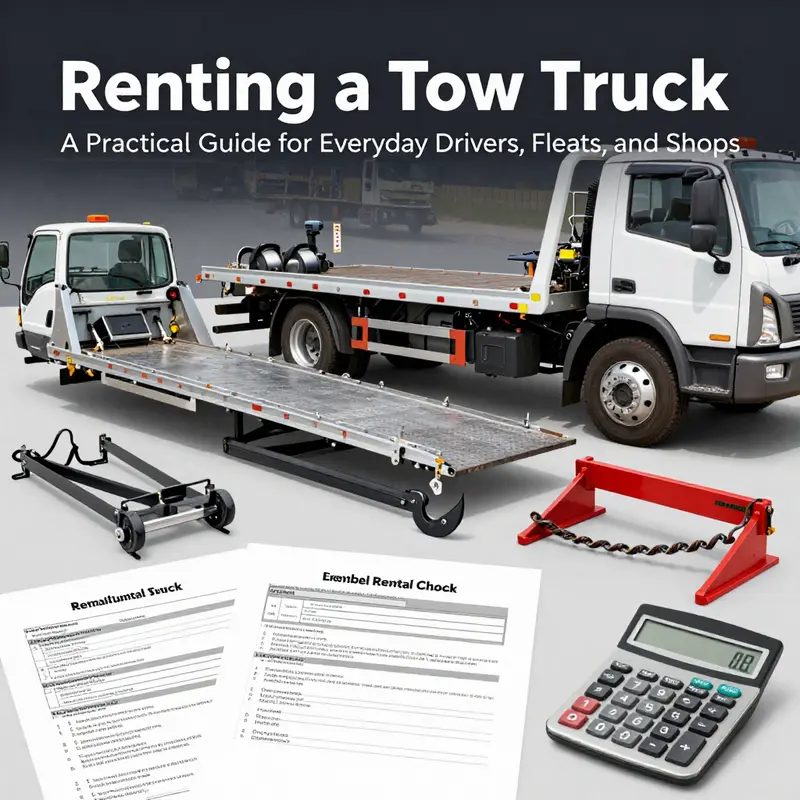
Renting a tow truck isn’t just a niche option for fleets and professionals. It’s a pragmatic path for individuals and businesses that need controlled, temporary access to heavy equipment without committing to ownership. The core idea is simple: the job dictates the gear. Your vehicle type, the distance involved, the urgency, and the level of risk you’re willing to accept all steer the choice. In practice, that means a spectrum of equipment types, each with distinct strengths and caveats. The aim of this chapter is to unfold that spectrum in a seamless narrative, showing how to assess needs, navigate licensing and insurance, and coordinate a rental process that keeps your operation efficient and safe. As you read, consider how the considerations translate to the specific task at hand—whether you’re rescuing a disabled car on a rural road, moving a project vehicle from one site to another, or relocating multiple vehicles across a region for a fleet operation. The path from need to solution is paved with clarity about equipment types, capacity, and practical ground rules that govern on-site execution.
Equipment types available for rent form the backbone of this decision. Flatbed tow trucks present a platform that remains flat and sturdy, allowing vehicles to be loaded and secured on a level surface. This design minimizes the risk of additional damage to damaged cars and is often favored when the vehicle cannot be driven or when it’s essential to protect delicate components during transport. A flatbed’s versatility shines in scenarios involving a range of vehicle sizes or profiles, but it does require careful loading, steady ramps, and a controlled loading environment. In tight spaces, maneuverability can be a challenge, which pushes operators to choose alternative configurations when space is constrained.
Wheel-lift tow trucks, sometimes called boom or A-frame systems, hinge on a hydraulic arm that lifts a vehicle by its wheels. This approach is particularly effective for towing cars that can still be driven but have minor damage, or when tires or bearings make direct-drive attempts impractical. The wheel-lift design tends to offer quicker on-site operation than a full flatbed in many urban or suburban scenarios, allowing rapid recovery and transport. Yet, this method carries its own set of sensitivities. If the lift is not positioned correctly, there is a greater risk of wheel or undercarriage damage, especially with unfamiliar vehicle geometries. The key with wheel-lift is to balance speed with meticulous hitching, securing, and wheel positioning to minimize risk.
Integrated tow trucks blend characteristics of flatbeds and wheel-lift units to handle a broader array of vehicle profiles. On a single job, an integrated configuration can adapt to different needs—whether it’s a vehicle that must be loaded or one that can be rolled onto a platform with a lift. The flexibility of integrated systems is appealing for operators who encounter varied tow demands, such as roadside rescues that switch from light-duty to heavier removal. Because they pack more capability into one unit, integrated tow trucks can be more expensive to rent and typically require more operator training. Still, for operations that regularly face mixed tasks, an integrated setup can reduce the number of trips and equipment swaps, ultimately saving time and reducing wear on multiple machines.
Auto transporters, or car haulers, are specialized trailers designed for moving several vehicles over longer distances. They excel at bulk transfers, dealer relocations, or fleet movements that require efficiency and consistency across many hauls. Long-distance transport demands attention to licensing, securement, and compliance with weight distribution across axles. Auto transporters aren’t typically employed for emergency towing, where quick response and compact maneuverability matter most. Rather, they serve scenarios where a coordinated, high-volume move is the objective, often supported by multiple crew members and a well-planned route. Each type of equipment—whether single-vehicle or multi-vehicle—carries its own profile of advantages, constraints, and operational considerations.
Beyond the hardware, rental considerations and requirements shape the feasibility and safety of any tow operation. The first question is compatibility: can the rental tow truck safely handle the weight, dimensions, and balance of the vehicle you intend to tow? This means checking the vehicle’s weight, axle configuration, wheelbase, and overall dimensions, then matching those figures to the truck’s rated capacity and rigging limits. Even seemingly simple tasks become more complex when you factor in load distribution, trailer brakes, and the specific hitching system available on the rental unit. Towing capacity is not a single figure; it’s a multi-parameter guardrail that protects the vehicle, the equipment, and the people involved in the process.
Licensing and training can be pivotal, especially for larger or more complex equipment. Some rental providers require operators to hold a valid commercial driver’s license (CDL) or proof of specialized training for certain configurations. Even when a CDL isn’t mandatory, some rental agencies insist that the operator has completed a basic training on hitching, loading, and securing loads to minimize on-site hazards. The practical implication is clear: the best outcomes arise when the person behind the controls understands the equipment’s limits, the dynamics of loading, and the safety envelope around ballast, tying, and stabilization. If you’re renting for a single job, you’ll want to confirm whether the operator can bring the necessary expertise or whether you’ll need to arrange training through the rental provider or an independent program.
Duration matters, too. Short-term needs might center on a single relocation or an emergency response, while longer-term engagements could involve ongoing project support. Rental terms vary by provider and by equipment type. Short-term leases can range from hours to a few days, while longer-term arrangements might stretch across weeks or months. For ongoing operations, some buyers explore fleet-hire arrangements that bundle maintenance, support, and scheduled check-ins. The economics of a rental long enough to justify the investment must account for downtime, the time required to load and unload, and the potential value of having a unit on site rather than renting by the mile or hour.
Insurance and liability are not afterthoughts. A rental agreement typically delineates who bears the risk for collision, bodily injury, and equipment damage. Some deals include basic coverage, while others require supplementary insurance or rider policies. It’s essential to understand how insurance applies in different scenarios: during loading, during transport on public roads, and during on-site operations when hitching and securing loads. Maintenance and support are equally critical. A reputable rental provider will outline who handles routine maintenance, how quickly a breakdown on site is serviced, and what contingency measures are available if the equipment fails at a critical moment. Clarifying these details in advance prevents delays and protects your project timeline.
Safety, of course, remains paramount. The towing operation hinges on correct hitching, securement, and ballast. Operators should follow standard procedures for strap and chain use, lighting and reflectors, brake and signal compliance, and the management of traffic around the work area. Training and safety protocols should cover not only the mechanical steps of loading but also situational awareness—recognizing when conditions like slope, surface traction, or weather render a routine tactic unsafe and requiring an alternate approach. A thoughtful rental plan acknowledges these realities and builds in redundancy, such as spare tie-downs, extra lighting, and a quick-access kit for on-site troubleshooting.
The path to choosing a provider blends convenience with due diligence. Today, many rental options leverage digital platforms that streamline the booking process. Mobile apps or online portals enable you to compare equipment types, verify availability, and schedule pickup with a few taps. While price matters, it should not be the sole criterion. Availability of the right equipment, uptime, proven maintenance practices, and the quality of on-call support can be decisive when the clock is ticking. The decision is framed by the job: does the rental match the vehicle’s payload and the trip’s distance? Is the operator trained for the chosen configuration? Will the insurance cover both the vehicle and the tow rig under the expected operating conditions? Answering these questions requires gathering details about the vehicle, the route, the required security measures, and the expected duration of use.
A practical way to picture this decision-making is to walk through a realistic scenario. Imagine you have a medium-sized passenger car with a transmission issue that makes it undrivable. You need to transport it to a nearby shop or a safer location for evaluation. The most straightforward option is often a wheellift or flatbed configuration, chosen based on whether the car can be driven for short distances or must be unloaded entirely at the destination. If the car’s wheelbase and weight fit within a mid-range capacity, a wheel-lift unit might offer a swift solution, provided the operator is skilled at precise wheel positioning and secure tie-downs. If the car requires careful handling due to body damage or if it needs to be loaded in a way that minimizes contact with sensitive components, a flatbed becomes the safer, more controlled choice. If the job involves coordinating a convoy of several vehicles, or if the fleet requires hauling multiple units to different sites, an auto transporter offers an efficient platform for bulk movement, albeit with higher sitting costs and more stringent licensing and licensing-related compliance.
Foundational to any rental, then, is the practical checklist. Confirm the exact model type and its rated capacity, and verify hitch compatibility, wheelbase, and braking systems. Ensure the kit includes essential safety gear—tie-downs, straps, chains, and appropriate lights. Clarify driver licensing requirements for your jurisdiction and the equipment type you’re renting. Review return conditions and fuel policies to avoid penalties. Secure written confirmations of rates, duration, and any penalties for late returns or equipment damage. The value of a clear, written agreement becomes evident the moment a vehicle is improperly loaded, or a rental unit fails under pressure; a straightforward contract minimizes ambiguity and keeps the focus on the task at hand.
In selecting among rental options, there is also a conversational dimension. Providers differ not only in equipment types but in their service philosophies. Some emphasize rapid on-site response for emergencies, while others prioritize fleet flexibility and training support. The best partner is the one that aligns with your operational ethos—whether that means a service-level commitment for urgent roadside work, or a predictable supply chain for scheduled relocations. The choice is not merely about the daily rate; it’s about uptime, the ease of reloading, the reliability of the equipment, and the clarity of the terms around maintenance and on-site assistance. When you touch on these aspects, you begin to see the rental landscape not as a chaotic market but as an ecosystem designed to fit a spectrum of real-world tasks. If you’re curious about how certain operations handle specialized rescue tasks and integrate tow assets into broader incident management, you can explore related work on airport emergency rescue operations which offers a perspective on the precision, timing, and coordination required in high-stakes towing scenarios. airport emergency rescue operations.
From a practical standpoint, the decision to rent also comes down to what you can realistically manage on-site. A critical factor is routine maintenance and the availability of on-demand support. Some rental agreements include maintenance windows, remote diagnostics, and quick-response assistance. This support can be a game changer in remote or high-demand environments where a breakdown can delay a critical project. The same applies to training: even if you own or operate a fleet, short refresher sessions on hitching, load securement, and stabilization can significantly reduce risk. It’s one thing to have the equipment; it’s another to know how to deploy it safely and efficiently under real-world pressures.
Convenience isn’t merely about booking speed. It’s about the entire experience: how you identify the right unit, how you arrange for pickup and return, how maintenance issues are handled, and how insurance is navigated. The modern rental landscape often enables you to browse inventory, compare capacities, and secure a unit in minutes. But the human element remains essential. Clear communication about the job’s scope, the terrain, the expected load, and the duration helps the provider tailor the offering, potentially reducing risk and cost. In planning a rental, you may also consider whether a single job can be completed with a single unit or if a staged approach with backup equipment is prudent. The aim is to minimize disruption and ensure the vehicle and cargo reach the destination safely and on time.
The practical takeaway is straightforward: understand your payload, choose the right configuration for the load and conditions, verify licensing and training, and insist on clear insurance and maintenance terms. Then, approach the rental as a pre-planned strategy rather than an afterthought, especially when the stakes are high or the route is uncertain. The right choice balances the immediate needs with longer-term reliability and safety, transforming a rental into a reliable asset rather than a one-off convenience. As you explore options, remember that a well-chosen rental can serve as a bridge to a more permanent solution, or a flexible component of a broader response plan that includes safety protocols, trained staff, and a readiness mindset. The objective is simple: ensure you have the right equipment, at the right time, with the right support, for every tow you undertake.
In closing, the rental pathway offers a spectrum of solutions—from compact, fast-response wheel-lift options to robust flatbeds and integrated units capable of handling a range of profiles. Each choice carries a unique balance of payload capacity, maneuverability, and cost. The best approach is to quantify the task against the equipment’s capabilities, confirm the operator’s training, and secure terms that cover insurance and maintenance. This disciplined approach makes tow-truck rental not just a stopgap but a strategic tool that expands your operational reach while preserving safety, efficiency, and control over outcomes. If you’d like, I can tailor a structured checklist you can use when evaluating rental options, or compile a side-by-side comparison of typical capacities, costs, and use cases for each tow-truck type to help you compare options quickly. To complement your planning, consider exploring external resources for broader context on complex towing operations: https://apps.apple.com/us/app/autotransporter-app/id1574308691.
Tow Trucks on Demand: Navigating Rentals, Providers, and On-Demand Choices
Tow trucks exist in a space between everyday vehicle rentals and specialized industrial equipment. If you’ve ever needed to move a project vehicle, recover a disabled car, or transport heavy gear, you’ve likely asked yourself whether you can rent a tow truck rather than hiring a full towing service. The short answer is yes, but with some caveats. Tow trucks are not as widely available for rent as passenger cars, and the options that do exist sit at the intersection of equipment rental, fleet management, and on-demand roadside services. Understanding these options in a clear, practical way helps you choose the path that fits your timing, budget, and risk tolerance, whether you’re coordinating a local move, staging a vehicle for a project, or running a small operation that depends on reliable recoveries and transport.
The core distinction you’ll encounter is this: traditional car rental channels typically do not stock tow trucks. The vehicles that can perform towing are heavier, require specialized equipment, and operate under different insurance and licensing frameworks than passenger cars. That reality pushes most people toward three broad pathways. One is specialized equipment rental companies that maintain a fleet of heavy-duty and recovery vehicles. Two is on-demand towing and recovery services, which may be delivered through roadside-assistance networks or app-based marketplaces that connect you with a nearby tow operator. Three is longer-term purchase or leasing through commercial fleet providers or used-truck dealers, aimed at businesses that need ongoing capacity rather than a one-off rental. Each pathway has its own rhythms, benefits, and constraints, and the best choice comes down to your timing, location, and the specifics of the job at hand.
To appreciate how these options work in practice, it helps to picture the kinds of tow trucks that are most commonly rented or hired for short-term work. Flatbed tow trucks, with their long, level bed that can slide under a vehicle to lift it without dragging, are ideal for recovering or transporting cars with damaged undercarriages or all-wheel-drive systems. Wheel-lift units, which grip a wheel or wheels and lift the vehicle while the other end remains on the ground, are often quicker for roadside recoveries and routine transport of light or midweight loads. In certain projects—such as moving a derelict unit between sites or relocating office equipment on a trailer—drivers may also need integrated trucks with winches, stabilizers, and ancillary recovery gear. The choice is driven by what you’re moving, where you’re moving it, and what surface you’ll encounter along the way. Availability, of course, hinges on location, time of day, and local fleets, but the essential picture is simple: you’re weighing capability against practicality and cost.
Within the landscape of providers, two broad categories dominate the market for short-term use. The first consists of specialized equipment rental firms. These are the organizations that keep a fleet of heavy-duty vehicles, towing gear, and recovery assets ready for rent by the hour, day, or week. They are particularly well suited for projects that require predictable equipment and careful scheduling, such as asset transportation for a move, a temporary fleet upgrade for a mechanical shop, or a one-off recovery operation after a breakdown on-site. Availability tends to vary by location, and a customer may find the most reliable option by searching for commercial or heavy-duty equipment rental in their region, then confirming inventory for the exact tow truck configuration needed. In practice, you’ll often engage with a national or regional fleet provider with a commercial service division, while also considering smaller local firms that may have closer proximity and flexible terms for short engagements.
The second category is the on-demand spectrum. Towing is a practical service that responds to urgency, and so it translates well into on-demand models. Roadside assistance memberships—whether bundled with insurance, vehicle warranties, or standalone plans—typically cover towing as a core benefit, but they function most effectively when you need a quick response to an emergency. For planned needs, on-demand platforms connect you with nearby tow operators who can be dispatched to your location in minutes. Some apps position themselves as marketplaces that match the user with an available operator, streamlining booking, pricing, and even the dispatch process through a single interface. In parallel, there are app-based services explicitly dedicated to transporting vehicles or equipment, allowing a user to specify the pick-up and drop-off details and then track the operator’s progress. These on-demand solutions are particularly valuable when time is of the essence, when you’re unsure of local inventory, or when a short-term project requires rapid deployment rather than logistics planning.
As with any service that combines transportation and liability, licensing and insurance loom large in the decision. An immediate consideration is whether the provider is properly licensed to operate a tow or recover vehicle in your jurisdiction and whether the coverage extends to the specific job. Liability limits, cargo coverage, and the qualifications of the operator all influence risk and cost. It’s not unusual to see differences in what is included by a rental provider versus an on-demand operator; some platforms may offer basic liability coverage while advising customers to obtain supplemental protection, especially for high-value or delicate loads. Another practical matter is whether the vehicle you’re moving or recovering is compatible with the equipment on hand. A flatbed can handle most cars without dragging, but a wheel-lift unit may be limited by a stiff road interface, and it won’t suit every vehicle type or weight class. The truck’s bed length, winching capacity, and hitch type all factor into whether a particular unit can accommodate your task without compromising safety or structural integrity.
Cost is always a driver, and tow-truck rental pricing can be less transparent than passenger-car rates. Rates are typically calculated by duration—hourly, daily, or weekly—plus any mileage, loading or destination fees, and the premium charged for urgent, after-hours, or high-demand windows. There may also be charges for equipment attachments, such as wheel-lift adapters or additional stabilizing gear, and for fuel or delivery. In short, you pay for the vehicle’s capability and the operator’s availability. Because the market for tow-truck rentals is more fragmented than passenger-car rentals, it pays to compare a few options and to clarify what is included in your quoted price. When you call a local provider or a national fleet partner, ask for a written estimate that itemizes the base rate, any per-mile charges, surcharges for after-hours service, and the expected total for the window you’ll need.
For emergencies, speed often matters more than the most economical option. On-demand services have the advantage of rapid response, sometimes delivering a driver to your site within minutes. If you’re stranded with a disabled vehicle or blocked by a roadway issue, this speed is an essential part of risk management. For shorter-term, planned needs—such as transporting a vehicle during a move or moving a broken-down car from one shop to another—a local equipment rental company can offer scheduled access to a tow truck and the assurance of a known pickup time. In these contexts, you’ll find the most success by framing your request around three simple questions: What is the vehicle type and weight you need to move? How close is the truck to your location, and when do you need it? What level of insurance and liability coverage do you require for the job? Answering these questions clearly helps both sides avoid miscommunications and ensures the right machine is on site.
Navigating the balance between immediate need and long-term value often leads people to a blended approach. If you anticipate recurring needs—perhaps you’re running a small operation that occasionally requires vehicle relocation or recovery—you may consider a more durable arrangement such as leasing a used tow truck or engaging with a fleet partner that can supply the right equipment on a predictable schedule. Leasing or financing a used tow truck can be a practical route for businesses that want to preserve capital while maintaining control over capacity. In such cases, the decision hinges on a careful assessment of maintenance costs, anticipated uptime, and the long-term resale value of the unit. It’s important to work with a credible supplier who provides maintenance plans, clear terms, and a transparent depreciation schedule. A long-term lease can offer stability and the ability to scale your capacity with modest monthly payments, while also enabling you to upgrade when your requirements evolve.
Even as you weigh these choices, practicalities like licensing, insurance, and vehicle compatibility should guide the selection process. It’s prudent to verify that the provider’s license covers the services offered and that their insurance arrangement aligns with the scope of your operation. Confirm that the towing unit you intend to hire can handle your specific vehicle’s dimensions and weight. If you’re unsure, request details on the truck’s payload capacity, bed length, and wheel-lift limits, and ask for a demonstration or a recent service report. It’s also worth discussing who operates the vehicle and how maintenance and safety checks are conducted. A well-maintained tow truck reduces the risk of on-site breakdowns or accidents and contributes to a smoother, more predictable workflow.
As you navigate the decision, one practical tip is to treat the rental or on-demand agreement as a service agreement as well as a vehicle-usage agreement. Clarify what happens if the tow truck arrives late, if weather or road conditions affect the job, or if the original plan changes. In a tight window, it’s easy to misjudge the scope of the task and end up with a higher bill or a unit that isn’t suited to the job. A written, itemized agreement helps prevent scope creep and ensures both parties are aligned on expectations, responsibilities, and risk allocation. When you’re ready to explore cost and availability in your area, consider reviewing the resource on tow-truck pricing and related cost considerations, which provides a practical lens on how these charges are typically structured and what drivers know to watch for when budgeting a tow operation.
To further illuminate the choice, you can explore a cost-focused reference point that examines typical expenses and helpful budgeting strategies for tow trucks. This resource can help you compare what you might pay if you decide to rent a tow truck for a short term versus what you might invest when pursuing a longer-term leasing or purchasing option. In addition, for those who value rapid access and app-based convenience, a modern on-demand marketplace may offer an interface that not only matches you with a nearby operator but also provides real-time updates on pricing, ETA, and job status. The fusion of mobility, reliability, and price transparency is transforming how people approach towing tasks, particularly in situations where time is a critical factor and the job is not a simple one-off transport but a repeatable component of a workflow.
If you’re curious about the price dynamics and practicalities of tow-truck ownership versus rental, you’ll find that the landscape is evolving toward more flexible access while maintaining strict standards around licensing, insurance, and safety. This balance reflects the essential role tow trucks play in vehicle recovery, logistics, and emergency response, where reliable access to the right equipment can make the difference between a delayed repair and a timely, well-executed operation. For readers who want to dive into cost specifics, there is a concise guide that breaks down typical price ranges, providing a practical frame of reference as you weigh a short-term rental against longer-term solutions. While the exact numbers vary by region, the underlying pattern remains consistent: the more specialized the equipment and the tighter the service window, the higher the upfront cost and the more critical it becomes to secure clear terms up front.
In this framing, a practical approach emerges. For immediate emergencies, lean toward an on-demand platform or roadside service with rapid dispatch. For a planned, short-term project—such as moving a vehicle from one site to another within a single day—consider a local equipment rental firm that can guarantee a specific truck type and a scheduled pickup. For ongoing operational needs, participating in a leasing or purchase arrangement for a used tow truck can yield long-term value, especially when paired with a maintenance program and clear service-level expectations. Above all, verify credentials and terms before committing. The safest, most reliable path blends quick access with predictable costs and a transparent scope of work, ensuring you’re not paying for more truck than you need or for services you won’t use.
To connect these ideas to practical steps you can take today, consider the following: start by identifying the kind of tow truck you’ll need—flatbed or wheel-lift—and the approximate weight range and dimensions of the vehicles you’ll move. Next, call a few local equipment rental firms and ask about available inventory, current rates, and any minimum-hour or minimum-day requirements. Request an itemized quote that includes truck type, hourly or daily rate, mileage, delivery if needed, and any mandatory insurance coverage. If a quick, urgent need is anticipated, explore on-demand options through roadside services or marketplace apps, focusing on response time guarantees, coverage, and what is included in the price. In cases where you foresee regular demand, investigate leasing or financing options, asking for terms, maintenance commitments, and total cost of ownership over the anticipated period. And along the way, remember to review the internal reference on cost considerations to better anchor your budgeting and expectations as you compare quotes. how-much-is-a-tow-truck
As you advance from planning to execution, you’ll also encounter external resources that can expand your toolkit for decision-making. For example, a recent on-demand platform focused on autotransporter-style transport offers a modern workflow for booking and tracking, which can be especially helpful if you’re coordinating multiple deliveries or recoveries across a region. While specific platform names aren’t the focus here, the pattern of rapid access, transparent pricing, and real-time dispatch is representative of the current market dynamics. When you need a readily accessible reference beyond your local options, this kind of external resource can be a useful supplement to your local searches and quotes. External resource: https://apps.apple.com/us/app/rent-autotransporter-app/id1674298728
Renting a Tow Truck Across Borders: Commercial Realities, Compliance, and Practical Wisdom
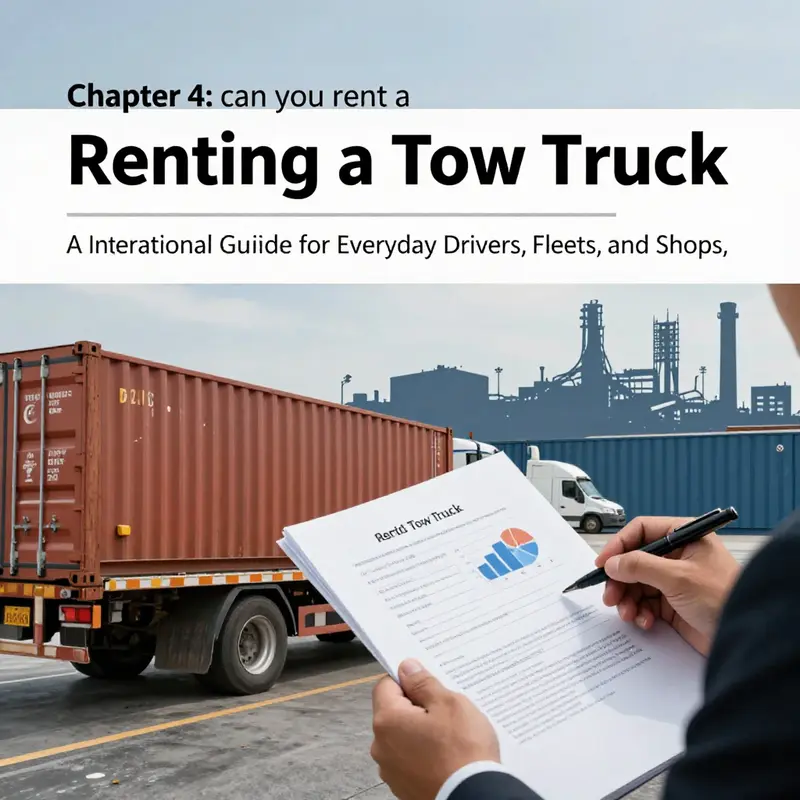
Renting a tow truck across borders has moved from a novelty to a practical component of modern logistics and emergency response. For fleets that swing between locations, events that demand temporary capacity, or roadside services that must scale up quickly, renting a tow vehicle can deliver the needed capability without tying up capital in a permanent asset. The appeal is clear: you can access a modern recovery machine, with a range of towing configurations, when and where you need it. The reality, however, extends beyond mere availability. It hinges on how access is organized, what costs are factored in, and how well a supplier can align with your regulatory, safety, and service expectations. The shift toward digital marketplaces and on demand booking has accelerated this model, enabling faster turnarounds and more flexible terms. In practice, the decision to rent versus own depends on the scale of need, the volatility of demand, and the ability to manage risk across a multi jurisdiction operation. Costs can be compelling in the short term, but the long view requires a careful appraisal of maintenance, downtime, and guarantees that the equipment will perform when the clock starts ticking.
When organizations weigh rental options, they begin by recognizing that a tow truck is not a single, simple machine. It is a platform that combines a chassis with a recovery setup, often a flatbed or wheel-lift configuration, a winch for recovery operations, and a set of safety features designed to handle heavy loads in variable environments. Rental terms may bundle insurance, routine maintenance, and sometimes operator training. The economics of this arrangement shift with the level of demand. For fleets with irregular recovery needs or seasonal spikes, renting can be substantially more favorable than owning a fleet that sits idle for long stretches. The flexibility to scale up during peak periods, while avoiding depreciation and storage costs, is a cornerstone of the financial logic behind rental models. That said, the savings are not automatic. A careful total cost of ownership analysis should weigh not only the daily or hourly rental rate, but also the hidden costs associated with downtime, fuel efficiency, and the liability that accompanies any vehicle used in public space or on commercial sites.
A second axis of consideration centers on regulatory and compliance realities that differ across regions. Tow trucks, as specialized commercial vehicles, are subject to a mix of safety standards, emissions requirements, lighting and signaling rules, and inspection regimes that can vary widely from one country to another. When a business contemplates cross border rental, it must assess whether a given model meets the destination jurisdiction’s roadworthiness standards, whether the rental company can provide appropriate warranties, and whether after sales support is accessible in the operating region. The consequences of misalignment here are not theoretical. In some markets, importing a model that skirts local requirements can lead to unexpected inspection holds, redelivery delays, or higher recurring maintenance costs to bring the equipment into compliance. The nuance matters because a vehicle that is technically able to perform in one market might require extensive modification to operate legally elsewhere. This is a reminder that international sourcing of tow trucks is as much about regulatory due diligence as it is about the mechanical capabilities of the vehicle. The practical upshot is that due diligence should extend beyond the immediate rental agreement to the broader regulatory ecosystem in which the equipment will operate, including warranties, service networks, and the availability of spare parts and qualified technicians.
On the commercial side, a rental agreement for a tow truck typically bundles insurance and maintenance. Insurance is not merely a formality; it protects against liability arising from on road incidents, loading and unloading operations, and potential damage to the vehicle being towed. Maintenance inclusion provides a predictable budget and reduces the risk that an otherwise reliable asset becomes a source of unexpected downtime. When those elements are bundled, the renter gains stability in planning, which is especially valuable in emergency response or event logistics where reliability translates directly into capability. Yet the rental price must be weighed against the total cost landscape, including potential downtime during transitions between jobs, the fuel economy of the unit, and any stipulations about who operates the vehicle. Liability provisions, driver qualifications, and the scope of who may operate the rental unit can materially affect risk exposure and costs. In addition, the choice of a flatbed versus a wheel-lift or other configurations has operational implications: flatbeds are often favored for secure loading and for handling a broad range of vehicle sizes, but they may come with higher upfront rental costs or different maintenance profiles. These decisions should align with the typical recovery scenarios a business faces, whether urban parking lot recoveries, rural road incidents, or event transport logistics.
The international sourcing dimension adds another layer of complexity. When a company looks beyond its domestic market for rental fleets, it encounters a spectrum of availability, price, and service quality. Import regulations, vehicle certification standards, warranty coverage, and post sales support all become material factors. Different markets enforce divergent technical specifications, such as engine emissions, lighting configurations, brake systems, and winch capacities. A model that passes muster in one jurisdiction may fail to meet another region’s roadworthiness criteria. The risk of acquiring an older or less supported model tends to rise when importing from regions with weaker service networks or longer lead times for spare parts. This is one reason why due diligence is essential: it helps prevent a situation where a business has ready access to a rental vehicle, but cannot rely on service technicians, parts, or even appropriate signage to operate legally and safely. In such contexts, the value of a rental partner with robust cross border capabilities—clear documentation, consistent safety records, and local support—cannot be overstated.
The practical reality is that technology and logistics now enable rapid, on demand access to towing capacity across many regions, but the risks remain real. A modern, well maintained tow truck is a powerful tool when used correctly, but it requires trained operators, proper maintenance, and a safety oriented mindset. The needle moves with the operator’s readiness: a well selected, well maintained unit can dramatically reduce turnaround time, improve safety, and lower the likelihood of secondary incidents during recovery operations. Conversely, a unit that arrives late, or with a compromised winch or substandard lighting, can create downstream problems that ripple through schedules and budgets. This tension—between speed and reliability, between cost and compliance—defines the commercial calculus behind tow truck rentals in international contexts.
To illustrate the practicalities, consider the emphasis on reliability and the role of training. A real world incident highlighted in regional reporting shows a flatbed tow truck successfully using a winch to extract a vehicle from a structure after an accident. The outcome demonstrates the potential efficiency when equipment is properly maintained, and the operator is well trained. It also underscores the importance of vetted rental arrangements that include qualified personnel when necessary, and equipment that is inspected and ready for operation. Such cases remind renters that reliability is not just about the machine’s capabilities but also about the support and governance surrounding the rental arrangement. For businesses planning cross border operations, that means negotiating terms that guarantee timely maintenance, clear escalation paths for repairs, and assurance that equipment will meet the critical safety standards required for the task at hand. In short, the value of rental lies not only in the promise of speed and flexibility but also in the strength of the service ecosystem around the machine itself.
In the end, the decision to rent a tow truck across borders hinges on how well a business can align its operational needs with the realities of the supply chain and regulatory environment. A robust rental framework should reduce capital exposure while ensuring access to dependable equipment, adequate insurance, and a supportable maintenance plan. It should also acknowledge the variability of demand and the geographic reach of service networks, especially for operations that span multiple markets or operate in regions with complex regulatory landscapes. The practical takeaway is straightforward: rent where and when you need capacity, but insist on clarity around compliance, maintenance, and service continuity. With that foundation, a company can deploy temporary towing power confidently, knowing that the arrangement stands up to the legal, operational, and financial demands of international work.
For organizations considering the economics of renting versus owning, cost transparency matters. A quick benchmark can help frame the decision: rentals may include insurance and basic maintenance, but the true cost of ownership must account for downtime, depreciation, fuel, and the risk profile of the operation. A modern recovery platform, aligned with the right regulatory posture and a network of trained operators and technicians, can deliver a reliable ramp to scale when demand spikes. In the cost dynamic, it is also wise to examine the potential for incremental fees—late returns, out of area dispatches, or specialized equipment options—that could tilt the balance toward ownership in some scenarios. Conversely, in markets where demand is unpredictable or where the value of capital preservation is high, rental can be the superior strategic choice. The careful business case weighs both sides of the ledger, balancing flexibility and resilience against the certainty of fixed costs and maintenance obligations.
A practical, tangible step in evaluating options is to consider a direct cost comparison that takes into account both the visible rental rate and the hidden costs associated with downtime and liability. For instance, when contemplating how much a tow truck costs to rent versus purchasing, the decision framework should include a reference point that clarifies the relative economics over a defined period and across anticipated workloads. The body of evidence suggests that renting remains appealing for unpredictable workloads and short term needs, while owning can be advantageous when demand is steady and predictable enough to justify asset depreciation and the ongoing maintenance it entails. To inform this decision, you can explore practical cost references that compare rental terms, rates, and inclusions. How much is a tow truck?
In sum, renting a tow truck in an international context is feasible and often strategically sound when approached with disciplined due diligence. The commercial logic favors rental for flexibility, risk management, and scale responsiveness, while the regulatory landscape demands careful alignment with local standards and service support. The most effective rental arrangements couple transparent pricing with robust insurance, reliable maintenance, and the assurance of qualified operation when necessary. They also recognize the reality that cross border procurement introduces a layer of complexity that can be mitigated with a partner who has a proven track record in international service, compliance, and parts availability. This holistic approach to renting a tow truck—one that blends cost awareness, regulatory prudence, and operational readiness—provides a practical roadmap for organizations seeking temporary towing power without overcommitting capital or compromising safety.
External resource: https://apps.apple.com/us/app/rent-autotransporter/id1578926517
Final thoughts
Renting a tow truck can be a pragmatic bridge between temporary needs and long-term asset ownership. Across availability landscapes, you’ll encounter in-town rental options, mobile apps offering on-demand access, and a spectrum of equipment—from light-duty wheel-lift units to heavier flatbeds. For businesses, fleets, and professional shops, the decision is as much about total cost of ownership and service reliability as it is about the specific recovery or relocation task. By understanding the availability models (local rental, on-demand platforms, and commercial-scale sourcing), evaluating equipment types, and vetting providers—both domestic and international—you can tailor a tow-truck solution to your exact scenario. Ready to take the next step? Ready to elevate your ride? Summit Fairings delivers premium, custom-fit fairings that blend style and durability. Whether you’re chasing speed or turning heads, we’ve got your bike covered. Don’t wait—transform your machine today. Click, customize, and ride with confidence. Your perfect fairing is just a few clicks away. Act now! We are one of the leading motorcycle fairing export sites, with over 3,000 styles across almost all motorcycle models. Buy from summitfairings.com, and pay 10-40% less than the prices on other sites. If you have any questions, we promise we will have your answer within six hours.