
Tow trucks support stranded drivers, recover disabled vehicles, and keep traffic moving. Yet the question of whether you can operate one on a regular, non-commercial license is more nuanced than it appears. Licensing and vehicle weight rules vary by state, and the line between a personal vehicle and a commercial service is defined not by the word ‘tow’ but by weight, usage, and road rules. Everyday drivers, residents and commuters who sometimes assist a damaged car, truck owners who run a small tow operation, auto repair shops that offer roadside assistance, dealerships that maintain their own tow fleet, and property managers coordinating on-site vehicle recovery all need clarity on what license is required. This guide distills the core factors into four practical chapters, linking legal concepts to real-world scenarios: starting with the types of tow vehicles and why they matter, moving through weight thresholds and CDL classifications, then examining endorsements, permits, and DMV processes, and finally addressing safety, compliance, and day-to-day decisions. By the end you’ll know what to check with your local DMV, how to plan for compliant operation, and where to seek reliable endorsements or exemptions when they apply. For definitive rules in your location, consult your local DMV resources; example guidance is available from the New York DMV tow-truck endorsement page.
Tow Truck Licensing Demystified: When a Regular License Isn’t Enough
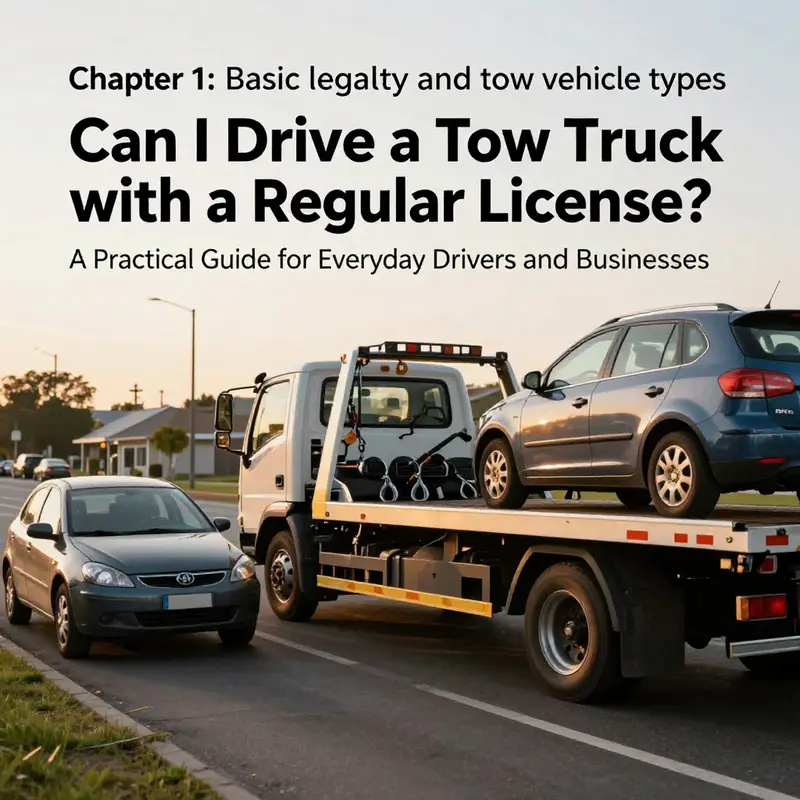
People often ask a simple question when they see a tow truck pulling a disabled car: can I legally operate that tow truck with my regular, non-commercial driver’s license? The answer is anything but simple, because the legality hinges on more than a poster on a DMV wall. It hinges on what you intend to move, how much it weighs, and where you plan to work. In the United States, you will generally find that driving a tow truck for hire with only a standard license is not allowed. The line between personal driving and commercial operation is drawn by weight thresholds, end endorsements, and the specific rules of the state or city where you tow. This chapter unpacks that landscape, connecting the basics of legality to the practical realities you will face on the job, so you can map a lawful path from your current license to the right credential for the work you want to do. A useful guide on the broader CDL framework is available via a dedicated resource that breaks down the different tow-truck scenarios and the endorsements that accompany them; for those who want a deeper dive, it points to a practical CDL tow-truck guide that clarifies how to navigate the licensing maze. CDL tow-truck guide. Even with this general map, the most reliable information comes from your state’s DMV or licensing authority, because the exact rules shift with the vehicle’s weight and with the scope of your operation.
A helpful way to frame the issue starts with the vehicle itself. Tow trucks are not a single category; they range from small light-duty wreckers to heavy flatbeds and specialized recovery units. The key driver of licensing requirements is the vehicle’s Gross Vehicle Weight Rating, or GVWR, and whether the operation is for compensation. In many states, a standard, non-commercial license may cover basic car driving, but once you intend to tow as a business or for profit, that baseline license no longer suffices. In practice, weight thresholds become a practical proxy for what credential you need. For example, small tow trucks under about 6,000 pounds GVWR often trigger a specialized endorsement on top of a regular license, sometimes labeled as a Tow Truck or W endorsement in various jurisdictions. Medium to heavy tow trucks, roughly 6,000 to 26,000 pounds GVWR, typically require a higher class of license, and heavy-duty units, over 26,000 pounds GVWR or operations that involve trailering, tend to demand a Commercial Driver’s License with specific endorsements. The exact thresholds vary state by state, and there are edge cases where the operation type—such as roadside assistance versus commercial towing for hire—changes the licensing calculus entirely.
Even within these broad categories, the rules can feel nuanced, and that is by design. A city environment often adds layers of licensing that go beyond the state framework. Consider New York City as an illustrative example: even in a major city, a regular driver’s license alone won’t grant you the right to tow for hire. NYC requires a Tow Truck Driver license issued by the Department of Consumer and Worker Protection, with prerequisites that demonstrate you are more than just a capable driver. The typical prerequisites include being at least 18, holding a valid New York State driver’s license, and securing a specialized Tow Truck Operator endorsement. The process usually involves background checks and drug screenings, reflecting the higher trust and safety standards cities insist upon for commercial towing. This NYC example underscores a universal point: regardless of the size of the vehicle or the comfort you have with a wheel and a winch, the job is regulated and the license you need depends on both weight and jurisdiction.
To understand how this translates to day-to-day work, it helps to map the vehicle types and their corresponding licensing realities. Small tow trucks, often described as light-duty units, are frequently paired with a Class C license and a Tow Truck endorsement or its equivalent. This combination aims to ensure the operator can handle basic roadside recovery tasks while adhering to specialized safety procedures. The reasons for this extra layer are practical: even modest wreckers carry winches, cables, and stabilizing gear; misjudging a scene or a vehicle’s weight can create dangerous consequences for the operator and for bystanders. As the GVWR rises toward the mid-range, many states shift the requirement to a Class B license, reflecting the increased stopping distance, more complex braking systems, and the potential for carrying heavier loads. When you cross the 26,000-pound barrier, the math becomes even clearer: a Class A license, designed for the heaviest jobs, generally becomes the baseline, especially if you’re operating with trailers or a combination of vehicle and equipment.
The landscape gets more intricate when you consider specialized equipment. A flatbed, a wheel-lift, or an articulated recovery unit may each demand additional endorsements or certifications beyond the basic class. Some jurisdictions require ongoing training or equipment-specific certifications for operators who work with high-tension winches, hydraulic systems, or complex safety protocols on crowded urban streets. The idea is not to create a trap for aspiring tow operators, but to ensure that those who are physically operating heavy gear on public roadways are prepared to do so without endangering themselves or others. The practical consequence is clear: even if your tow rig’s GVWR sits in a lower category, you might still need a broader set of credentials if your work involves compensation, corporate fleets, or municipal contracts.
Beyond the bare license class and endorsements, several other qualifications commonly accompany the licensing process. A clean driving record is a baseline expectation; serious violations can disqualify an applicant or trigger extended waiting periods and more scrutiny. Many jurisdictions require background checks and drug screening as part of licensing for tow operators, especially in city or municipal contexts where public safety and accountability are heightened. Medical requirements, similar to those for commercial drivers, may apply if you’re pursuing a CDL, reflecting the physical demands and long hours frequently associated with towing work. In some places, there is a separate Tow Truck Operator Certification that goes beyond the license itself, serving as a credential that confirms the operator understands safety protocols, traffic control at incident scenes, and proper equipment handling. For those who plan to stay in this field, the commitment to ongoing training matters almost as much as the initial licensing step. Refresher courses, safety leadership, and equipment-specific instruction can all become part of maintaining the right to work in tow operations.
All of these pieces come together to shape a practical plan for anyone who wants to move from a standard license toward the specialized credential that matches the work they intend to do. The first step is realism: identify the exact vehicle you plan to operate and confirm its GVWR. A quick check with your state’s DMV or licensing authority is essential. Next, determine whether your intended role is roadside assistance, private property recovery, or commercial towing with customers. If you aim to tow for hire, the odds are strong that your current license will not be enough without an endorsement or a higher class of license. Then, locate the precise requirements—endorsement names, test prerequisites, medical and background checks, and any city-specific licensing steps. Some jurisdictions blend state and city rules, so you may need to satisfy both. A practical approach is to start with the state and then verify any municipality where you expect to operate. If your plans include a major city with a specialized licensing process, be prepared for a multistep application, exams, and time devoted to proving your readiness for scene safety and traffic management.
For those who want a consolidated gateway to the licensing framework, a credible starting point is to explore the CDLTowTruck guide, which threads together class, endorsement, and practical operator requirements across common scenarios. This resource is not a substitute for local rules, but it helps orient you before you dive into jurisdiction-specific requirements. Embedding the path toward the right credential can save you from investing time and money into a license path that won’t actually authorize the work you want to perform. The core idea is to align your license with the vehicle’s weight, the operator’s responsibilities, and the environment in which you will work. If you’re unsure how these pieces map in your state, you can begin by obtaining some foundational clarity on the weight thresholds and endorsements that typically apply. Then, you can build a concrete plan that includes the exact steps for your location.
If you are comfortable with the general rules and you want to verify a particular scenario, consider a practical example from a major city context. The city’s licensing barrier serves as a reminder that high volume or high-risk settings tend to demand more rigorous proof of competency, not less. That said, in many states you can still operate to a degree with a standard license if you stay under specific GVWR thresholds and keep your work within non-commercial or limited-scope categories. The safest route is to assume you will need some form of commercial credential as soon as compensation enters the picture. Remember that the numbers—GVWR, weight thresholds, and endorsements—do not exist in isolation; they interact with your intended work, the vehicle’s configuration, and the jurisdiction’s safety expectations.
To keep the discussion anchored, always confirm the regulatory framework before applying for a license path. Check your state DMV and the relevant city licensing authority if you plan to operate in an urban environment. The most reliable confirmation will come from official sources, which provide the exact class names, endorsement titles, medical requirements, and testing procedures. When you’re ready to begin the journey, the CDL tow-truck guide linked earlier can serve as a launching point for understanding the kinds of endorsements that appear across states and the general expectations for trained operators who manage heavier equipment on public roads. It is a high-stakes but highly navigable process once you anchor your plan in your vehicle’s GVWR and your jurisdiction’s rules. Finally, it is worth noting that the licensing landscape can shift with new regulations, so periodic reviews of the official DMV pages are a wise habit for anyone who intends to tow for a living.
External resource for further verification: NYC’s Tow Truck Driver Licenses page provides detailed municipal requirements and process steps that illustrate how city rules intersect with state frameworks. https://www.nyc.gov/site/dcp/tow-truck-driver-licenses.page
Beyond the License: Weighing Weight, Towing, and CDL Rules for Tow Trucks
The question can i drive a tow truck with a regular license invites a broader, weight‑driven conversation about what licenses actually cover. The short answer is: it depends. The real gatekeeper is not the label on your license but the vehicle’s weight in all its forms and the way you intend to use the vehicle on public roads. This is where the federal framework and state implementations intersect. The Federal Motor Carrier Safety Administration (FMCSA) defines two weight concepts that matter for licensing: the Gross Vehicle Weight Rating (GVWR), which is the vehicle’s own maximum loaded weight, and the Gross Combined Weight Rating (GCWR), which is the total weight of the tow vehicle plus whatever it is allowed to tow. The difference between these numbers and the way they are applied determines whether a Class A or Class B CDL is required, or whether a regular, non‑commercial license may suffice for a given towing task. The distinction matters not only to avoid penalties but to ensure that you can operate a heavy towing rig safely and legally in the environments you encounter—urban streets, highways, and the often unpredictable realities of a tow job after hours or in congested settings. In practice, many readers find it helpful to anchor their understanding in two simple thresholds: 26,000 pounds and the 10,000‑pound cut‑off for towed mass. Those numbers are not arbitrary; they reflect a long‑standing balance between the need for professional training and the realities of heavier on‑road operations. When a tow truck’s own GVWR exceeds 26,000 pounds, the default assumption is that you are in CDL territory if you are operating the truck in a setting where weight and towing combine to create more demanding driving conditions. The twist comes when you add a trailer or a towed vehicle. If you are towing something that weighs more than 10,000 pounds, the combination can push you into Class A territory, especially if the GCWR crosses the 26,000‑pound threshold. Conversely, a lighter system—where the tow vehicle itself is heavy but the towed load remains under 10,000 pounds—often falls into the Class B lane, provided the operation is not commercial in nature or carried out in a way that triggers additional regulatory concerns. This framework creates a spectrum, not a single line, and the exact lane you land in can shift with a different trailer, a different load, or a different mission profile for the vehicle. The practical upshot is clear: the numbers you see on the door placard, the owner’s manual, and the trailer’s specs are not ornamental. They guide licensing, training, insurance, and the level of oversight you must meet to stay compliant while you work.
The weight math, while precise on paper, must be translated into your day‑to‑day decision making. Consider a heavy tow truck designed to carry multiple vehicles or a heavy wreck‑recovery unit. If its GVWR is already over the threshold and it regularly operates with a towed mass that, in combination with the truck, exceeds the weight limits for non‑CDL operation, then a Class A CDL is not just advisable—it is often required for legal operation on public roads. The same thought process applies to lighter equipment: a smaller rollback with a GVWR just under the 26,000‑pound mark and a light towed load may be driven with a standard license, assuming the use does not fall under a commercial arrangement. The core principle is consistent: the vehicle’s weight and the weight of what you are pulling together define the licensing requirement.
State rules add texture to this framework. The same truck can trigger different requirements depending on whether the operation is private, non‑commercial, or commercial and whether the vehicle is used strictly for personal towing or for a service that charges customers. The New York example in your research notes—where a car carrier with a GVWR above 26,000 pounds typically requires at least a Class B license when the towed mass stays under 10,000 pounds—illustrates how a specific configuration can land in one licensing lane while a similar one might land in another. The obvious takeaway is that regulations are not universal across all states, and local DMV guidance should be your final reference point for a given vehicle and job. This is why many drivers in the field develop a habit of confirming the exact requirements with the local DMV before they assume anything about licensing. Misinterpretations can be costly, not just in fines but in the risk of operating a vehicle that is not properly certified for the job.
Even when a state permits operation of a lighter, non‑CDL tow arrangement, professional operators often opt for a CDL path anyway. Employers and insurers frequently favor, or even require, the CDL because it signals formal training, knowledge of safety protocols, and accountability when towing loads that present real safety risks on busy roads. The job is not simply about being able to drive; it is about understanding how to manage a vehicle’s dynamics under load, how to secure loads safely, and how to respond to the uncertainties that can arise when moving heavy, sometimes compromised, vehicles. In practice, that professional standard translates into better outcomes for customers and a more secure career path for drivers who choose to pursue the corresponding credentials early, rather than waiting for a regulatory nudge.
To bring this back to the daily realities of choosing and using equipment, the calculation of whether you need a CDL is best done with a calm, methodical approach. Start by locating the GVWR on the vehicle’s placard and in the owner’s manual. Next, determine the GCWR and, if relevant, the weight of the towed load you anticipate. If the combination routinely exceeds 26,000 pounds and the towed mass exceeds 10,000 pounds, plan for a Class A CDL. If the vehicle’s GVWR is above the threshold but you are towing a load under 10,000 pounds, a Class B CDL is typically the path, provided the use remains non‑commercial or the operation aligns with the state’s exceptions. If the numbers still feel murky, a quick conversation with the state DMV or an authoritative fleet supervisor will pierce through the confusion and keep you from overestimating or underestimating the licensing you should carry. In the practical sense, the highest level of caution is wise: license up to the maximum potential weight you might legally encounter, and maintain the equipment and training to match that license level.
The broader emphasis, then, is not simply about ticking boxes or avoiding penalties. It is about safety, responsibility, and the realities of shared road space. Tow operations place drivers and the public in a shared, high‑risk environment: heavy vehicles, dynamic loads, unpredictable weights, and the human factor of fatigue and split‑second decisions. The more you align licensing with the true demands of your equipment and job, the more resilient you become to regulatory changes and market shifts. Preparation matters, and the license that fits the weight profile you operate is a fundamental element of that preparation. This is not a matter of preference but a matter of law and safety, a framework that helps prevent missteps that could endanger drivers and bystanders alike.
For those who want a concise, practical path through the details, there exists a resource that translates the weight concepts into the everyday language of trucks, trailers, and endorsements. A CDL tow truck guide is designed to spell out when Class A or Class B becomes necessary, how endorsements interact with the job, and what the typical training expectations are for different tow configurations. If you are planning a purchase, a career transition, or a move into a sanctioned towing operation, consulting such a guide can help you map your licensing to your equipment and your work. CDL tow truck guide
In summary, the answer to can i drive a tow truck with a regular license is not a flat yes or no. It hinges on the GVWR of the tow vehicle, the weight of the towed load, and the intended use. The thresholds of 26,000 pounds and 10,000 pounds for the towed mass serve as the practical dividing line between non‑CDL and CDL categories. State differences matter, so the precise rule should come from your local DMV. Even if a state allows a lighter, non‑commercial operation under a standard license, plan for CDL readiness if your work could evolve toward heavier loads, more complex towing situations, or commercial service. The goal is not to complicate your path but to ensure you and the public stay safe when heavy equipment moves through busy streets. When in doubt, treat the weight definitions as your north star, and treat licensing as the key that unlocks the road you intend to travel.
For authoritative definitions and weight classifications, see the FMCSA resource on vehicle weight. https://www.fmcsa.dot.gov/regulations/eligibility/vehicle-weight
Tow Trucks and the License Question: How Endorsements, Permits, and DMV Rules Shape What You Can Drive
Determining whether a regular, non-commercial license is enough to operate a tow truck depends on weight, usage, and state regulations.
In many states, the gross vehicle weight rating (GVWR) of the tow truck and the weight of vehicles being towed determine whether a CDL or endorsements are required.
For lighter towing, a standard license may suffice, while heavier setups often trigger CDL requirements and endorsements such as the T endorsement for tow trucks.
State DMV offices provide the most accurate guidance for your situation, and many resources outline the steps, tests, and fees involved.
Remember that federal guidance reinforces that there is no universal tow-truck license; rules vary by state given weight thresholds and cargo considerations. Always verify with your local DMV to confirm the exact licensing path for your equipment and planned operations.
Beyond a Regular License: Understanding the Weight Threshold, the CDL Path, and Safer Towing on New York Roads
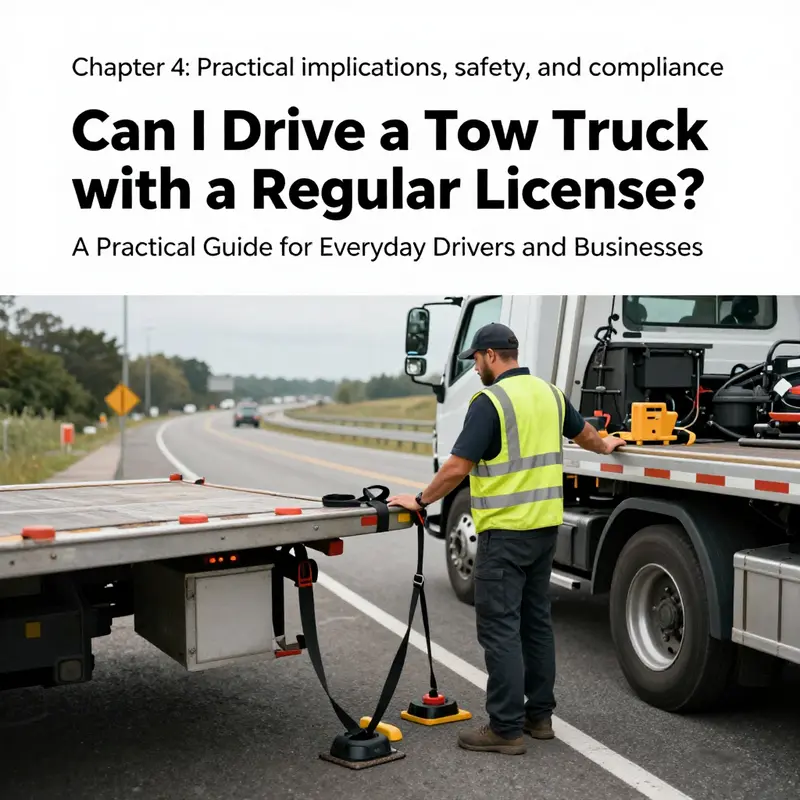
The question of whether a tow truck can be driven with a regular driver’s license is more layered than it first appears. It hinges on the vehicle’s weight, how the vehicle is used, and the specific rules that apply where you operate. In states like New York, the governing line is drawn at a Gross Vehicle Weight Rating (GVWR) of 26,000 pounds. When a tow truck or its primary tow equipment—such as a car carrier or flatbed—meets or exceeds that threshold, a regular license isn’t enough. The operator must hold at least a Class B commercial driver’s license (CDL). This isn’t a mere technicality; it reflects the safety responsibilities that come with managing a heavier, less forgiving vehicle on public roads, where turning, braking, and weight distribution all behave differently than with a standard passenger car.
The practical reality is that many tow trucks used in everyday operations are built around the core job of moving other vehicles. A flatbed designed to haul multiple cars or a car carrier designed to tow a trailer full of vehicles often has a GVWR well above 26,000 pounds. In those cases, the law doesn’t just require more driving knowledge; it demands formal training, testing, and certification that align with the risks involved in handling a larger, heavier machine. The requirement exists to ensure that operators can perform precise maneuvers, execute safe lane changes, and manage the vehicle’s weight distribution under varying road and weather conditions. The system aims to minimize liability for the driver, the towing company, and the general public across urban streets and rural lanes alike.
Not every heavy tow vehicle falls under the same rule, however. There are nuances tied to how the vehicle is used. If the tow truck is employed to transport vehicles that are themselves part of the load, the weight calculus can shift. Some configurations may push the GVWR over the threshold even if the truck’s empty weight is lower. In such cases, the same CDL requirement applies because the operation becomes, in effect, a commercial transportation task with greater risk exposure. Because state regulations differ, you must check with your local DMV authority for definitive guidance based on the exact vehicle you intend to operate, its weight rating, and the nature of its towing duties. For those in New York, the official clarity comes from the state’s DMV resources, which spell out when a tow-truck endorsement is needed and how to obtain it.
From a safety perspective, the CDL requirement is not just about legality. It is tied to the competence needed to respond to incidents on busy roadways. Heavier tow trucks have longer stopping distances and more inertia to overcome when turning or braking. They can exert significant force on other vehicles in the event of a sudden maneuver or mechanical failure. Training that covers serious topics—from vehicle inspections and pre-trip checks to emergency procedures and federal airport or highway regulations—helps prevent accidents and reduces the likelihood of costly insurance claims. The endorsement process ensures that drivers understand the specific risks of towing operations, including braking dynamics, weight distribution, securement of loads, and proper signaling to other road users.
For anyone contemplating a career in towing within New York or similar jurisdictions, the roadmap is straightforward in concept but demanding in practice. The path begins with understanding whether your planned equipment requires a special endorsement. If the weight or use cases place you inside the CDL domain, you’ll need to pursue licensing specific to commercial towing operations. The DMV typically requires both a written examination and a skills or road-test component. The written portion covers topics such as vehicle inspection, safe driving practices, emergency procedures, and the regulatory framework governing commercial vehicles. The skills portion assesses practical abilities—from performing inspections and proper coupling to executing controlled evasive maneuvers and safe on-site positioning during scene work. It’s a comprehensive assessment designed to confirm you can perform under pressure while maintaining public safety.
One practical way to approach this is to treat the process as a specialty track within the broader CDL framework. The tow-truck endorsement is usually tied to the vehicle type rather than a generic “CDL.” You must be licensed for the exact vehicle category you intend to operate, which means your training and testing align with the kind of tow equipment you will drive. This is why simply possessing a general CDL isn’t sufficient for many towing jobs. The endorsement is specific; it is the bridge between your license and the precise responsibilities of moving heavy, unpredictable loads without compromising safety or compliance. For drivers who want a clearer sense of the journey, a focused guide on how the licensing works and what to study can be invaluable. A good place to start is a targeted overview that explains the steps, the study materials, and the practical expectations of the tow-truck endorsement process.
The decision matrix also includes a practical cost and time assessment. Pursuing a CDL, especially with an endorsement for towing, involves exam fees, potential training programs, and the time needed to prepare for both the written and road tests. The long-term benefits, however, extend beyond simply meeting legal requirements. A CDL with a tow-truck endorsement often translates into broader employment opportunities, higher earning potential, and the ability to handle a wider range of job sites, including highway incidents, multivehicle crashes, or remote locations where skilled tow operators are in high demand. In many markets, the ability to work larger, heavier tow vehicles can differentiate a contractor in a crowded field, reducing downtime and expanding client capabilities.
If you’re starting from scratch, a prudent approach is to identify the licensing path that aligns with your local rules and the particular equipment you expect to operate. The process typically begins with confirming the exact GVWR and the intended use with your employer or training provider, followed by enrolling in the appropriate training program that culminates in the written and skills tests. Once you pass, you receive the tow-truck endorsement on your CDL, which then allows you to operate the vehicle legally and with the appropriate level of professional responsibility. It’s also worth noting that endorsements are not universal across all states; if you cross state lines, you must observe each jurisdiction’s specific requirements, which may differ in terms of weight thresholds or endorsement categories. This is why proactive verification with the DMV and a solid understanding of your itinerary—local streets, state highways, or interstate routes—are essential steps in planning your career in tow operations.
For readers seeking a concise orientation to the licensing path while keeping the larger safety framework in view, consider a targeted overview that outlines the steps, the tests involved, and the practical expectations of the endorsement process. This helps demystify the journey and highlights what to study, what to expect on test day, and why the weight threshold matters so much in the first place. It also clarifies how the endorsement is linked to the actual equipment you will be allowed to operate, ensuring you never misinterpret a license as permission to drive a heavier vehicle than your certification permits. The aim is not merely compliance; it is safer roads, more predictable operations, and better outcomes for everyone who shares the road with tow trucks.
As you weigh your options, remember that the discussion around driving a tow truck with a regular license is not a theoretical debate. It is a practical framework designed to protect drivers, passengers, pedestrians, and the vehicles being moved. Rules are in place to prevent situations where undertrained operators attempt complex maneuvers that exceed their experience and confidence. The difference between a vehicle that qualifies under a regular license and one that requires a CDL with a tow endorsement can be a matter of inches in stopping distance, a miscalculated sway, or a weight shift during a corner that could cause a rollover. These are not abstract risks; they are daily realities for towing professionals who must respond to traffic conditions, emergency scenes, and unpredictable loads with discipline and precision. The license, endorsements, and training are the tools that translate knowledge into safe practice on crowded streets and highways.
For readers who want a direct, utilitarian pointer as they navigate this topic, the most important message is clear: verify the vehicle’s GVWR and the intended use, understand whether a tow-truck endorsement is required in your state, and pursue the formal training and testing that culminates in a CDL with the appropriate endorsement. If you are moving toward a career in towing, treat the endorsement as a professional milestone—one that expands your capabilities and reinforces your commitment to safety and compliance. In the midst of this, you’ll find that the journey is not just about passing tests; it is about cultivating the judgment, discipline, and operational expertise that keep roads safer for everyone.
To explore concrete training pathways and to see how the licensing path fits into day-to-day tow operations, you can consult a focused outline that breaks down the steps into actionable phases. This resource emphasizes the linkage between the vehicle’s specifications, the required license class, and the practical steps to secure the endorsement in your jurisdiction. It also highlights the importance of ongoing professional development—from pre-trip inspections to emergency response planning—so that you stay current with evolving regulations and industry best practices. The end goal is a seamless integration of license, vehicle, and operation that supports efficient, safe, and compliant towing work.
Internal link for further guidance: CDL tow-truck guide
As you read this, keep in mind that the licensing landscape is continually refined as safety research and enforcement priorities evolve. The core principle remains constant: if the GVWR of your tow vehicle exceeds the 26,000-pound threshold, a regular license isn’t enough. You need official authorization that confirms you can handle the heavier mass, the longer stopping distances, and the more complex maneuvers required for heavy towing. This framework may feel strict, but it exists to ensure that when a tow truck is called to a roadside incident or a highway blockage, the operator can perform under pressure with a clear understanding of the vehicle’s limits and the safety protocols needed to protect everyone on the road. The result is not merely compliance; it is responsible practice that upholds public safety and professional standards within the tow-truck industry.
External resource: https://dmv.ny.gov/permits/tow-truck-endorsement
Final thoughts
Licensing for tow-truck operation is a function of vehicle type, weight, and local regulations rather than a one-size-fits-all label. For everyday drivers, small fleets, auto shops, dealerships, and property managers, light-duty towing may be permissible under a regular license, but heavier carriers or scenarios involving transporting other vehicles often trigger CDL requirements. Start by identifying your tow vehicle’s GVWR, confirm whether your planned use crosses CDL thresholds, and obtain any necessary endorsements or permits. Maintain rigorous safety practices, including pre-trip checks, proper load securement, and up-to-date CDL or endorsement training where required. When in doubt, consult your state’s DMV resources or official guidance, such as the New York DMV tow-truck endorsement page, to confirm current thresholds and processes in your jurisdiction. A proactive, informed approach helps you operate legally, safely, and with confidence.