
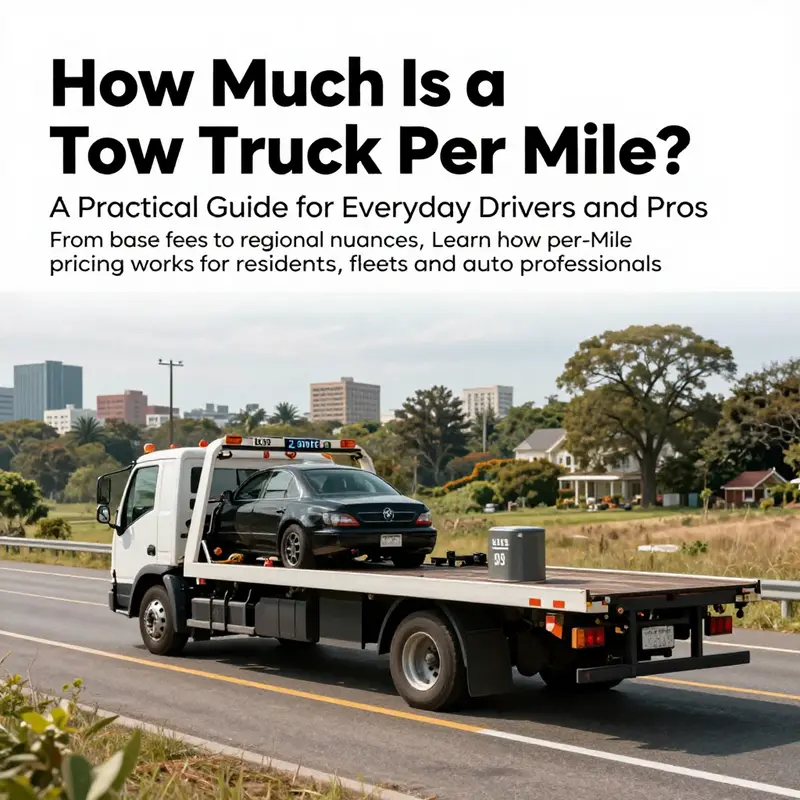
Tow costs can surprise drivers when emergencies strike or a vehicle is stranded far from a shop. Understanding what drives the price per mile is essential for everyday drivers, residents and commuters, truck owners, auto repair shops and dealerships coordinating service, and property managers who rely on reliable recovery partners. Most tow operations structure charges with a base dispatch and hookup fee, then add a variable per-mile component that accrues as the tow progresses. The per-mile rate is not uniform; it shifts with vehicle weight, time of day, location, and operational method. In practice, this means a five-mile tow could be modest, while longer hauls to distant facilities can push costs well beyond intuitive expectations. This article unpacks the pricing landscape into four chapters to help readers estimate, compare, and negotiate tow costs with confidence.
- Chapter 1 provides a realistic overview of price ranges and base fees so you know what to expect.
- Chapter 2 highlights the factors that drive per-mile pricing, including weight, timing, and geography.
- Chapter 3 examines towing methods and dispatch practices that affect predictability.
- Chapter 4 covers regional variations and practical tips for negotiations and planning.
With these lenses, everyday drivers and professionals can approach tow costs systematically rather than reactively.
null
null
null
null
Tow by the Mile: How Towing Methods, Dispatch Practices, and Cost Predictability Shape the Price
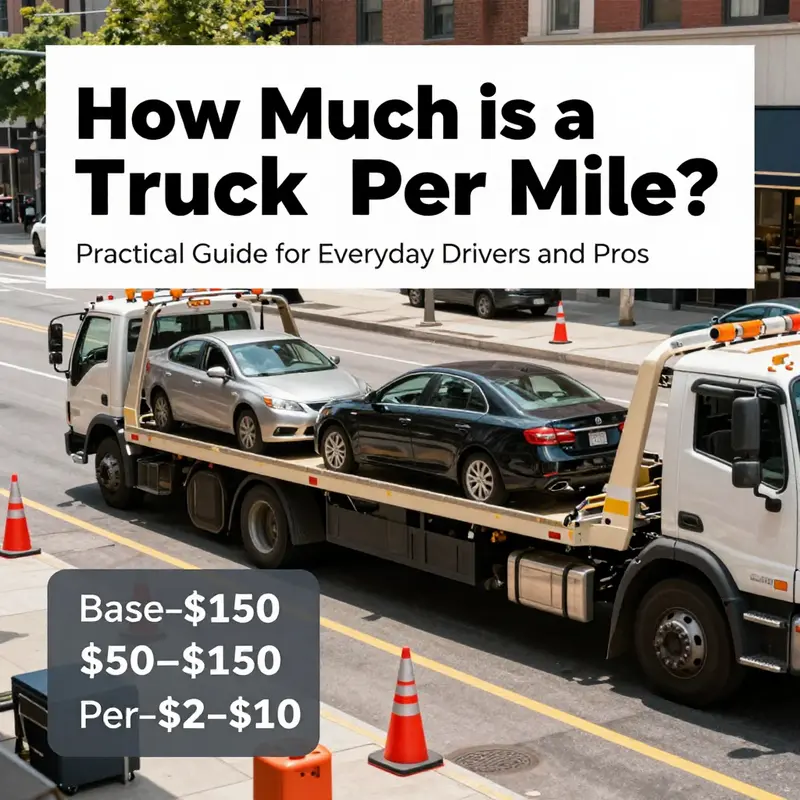
When you ask, how much is a tow truck per mile, you’re really asking for a snapshot of a much bigger landscape. Price is not a single, fixed line but a moving equation that blends equipment, fuel, labor, risk, and the pace of an event that rarely pauses for a spreadsheet. The simplest way to frame it is to start with the familiar: most standard vehicle tows carry a base fee plus a per-mile charge. In practice, that per-mile cost can range from roughly two to ten dollars, depending on a constellation of factors. Add the base dispatch and hookup fee, which commonly sits somewhere between fifty and one hundred fifty dollars, and the total for a short hop can land in the mid to upper triple digits. A five-mile tow might come in around seventy-five to a hundred twenty-five dollars, while a longer stretch—say fifty miles—could push beyond three hundred dollars, especially if the vehicle is heavier, like an SUV or a pickup, or if the service is requested during peak hours or in a sparsely populated area where options are fewer. The math behind these numbers is rarely a straight line; it’s more like a map that reveals which routes your costs will travel along as you go.
Crucially, the per-mile figure is not uniform across all tows. Vehicle type and weight set the tone for fuel use and the wear and tear on specialized equipment. Heavier or more awkward loads demand more horsepower, more fuel, and sometimes additional devices to ensure safe transport. This is why a routine sedan towing rate can differ significantly from a larger truck, a heavy equipment carrier, or a vehicle with a low clearance or unique drivetrain. The time of day adds another layer. After-hours towing, weekend calls, and emergency recoveries tend to come with a premium that reflects the pressure of responding quickly in less forgiving conditions. In urban cores, higher base fees and concentrated demand can push per-mile charges up, while rural routes may stretch distances longer than the nearest repair facility, inflating the per-mile component even when the base fee remains predictable. In other words, the same distance can land you in very different total costs depending on when and where you need help.
One practical way to think about it is to imagine a baseline plan that many people encounter: a standard wheel-lift or “hook and roll” approach correlates with a relatively lower starting cost and a clearly defined per-mile addition. In this method, the vehicle is hooked and rolled onto a carrier or a lift truck, then towed. For operations that rely on this approach, the pricing can be more predictable because the equipment and the process are standardized. But even within the same method, the per-mile number can drift based on factors like distance to a repair facility, the presence of traffic controls, or the need to navigate tight urban corridors. If you want to gauge the overall price picture quickly, the keys are to understand both the base fee and how the per-mile rate changes with the specifics of your situation. If you’re preparing for a tow and want a clearer sense of the scales involved, it’s worth looking at a comprehensive breakdown that ties together dispatch realities with the tangible costs of moving a vehicle from point A to point B. For a broader look at the overall pricing landscape, you can explore information on the topic at How Much Is a Tow Truck?.
Beyond the basic math, the chapter you’re reading now digs into four interconnected realities that shape per-mile costs: the towing method chosen, the dispatch practices that govern response and routing, and the ways both sides of the transaction—customer and provider—think about cost predictability. The towing method you see on the street is not a mere tactical preference; it is a driver of long-term cost efficiency and risk management. Wheel-lift, flatbed, rotator, and integrated tow trucks each carry different implications for fuel consumption, maintenance needs, insurance considerations, and the skill set required of operators. A wheel-lift truck, for example, tends to be quicker to deploy for many urban incidents, which can help constrain labor costs and reduce idle time. But flatbed towing preserves the vehicle in transit and may reduce the downstream costs associated with damage risk, particularly for low-clearance or all-wheel-drive vehicles. Rotator trucks, equipped with a 360-degree capable crane, unlock the ability to handle rollover or complex recovery scenarios, but they come with higher purchase prices, greater maintenance needs, and more specialized operator training. Integrated tow trucks, with a combined lifting mechanism and built-in tool storage, offer efficiency in high-demand, roadside-response contexts, yet their higher upfront and upkeep costs can recast the per-mile economics if utilization isn’t high enough to amortize the investment.
To understand these dynamics in practice, it helps to connect the method to the cost driver. Wheel-lift systems, which lift a vehicle’s wheels off the ground while the rest remain on the carrier, are typically less expensive to operate per mission, and they work well on standard vehicles where wheel contact is available. Versatility is their strength, especially in busy street environments where traffic control is feasible and space is tight. Flatbeds, by contrast, place the entire vehicle on a bed that rides on hydraulics. This method is widely favored when vehicle protection is a priority—think cars with delicate frames, low clearance, or all-wheel-drive configurations that resist wheel contact. The cost structure here includes the weight of the bed and the crane-like machinery needed to load and unload, as well as the fuel and labor required to maneuver a heavier platform. Rotator tow trucks, with their swiveling arms and embedded complexity, enable operations that standard trucks simply cannot handle. They can recover overturned or blocked vehicles, extract from ditches, and navigate tricky angles with precision. The trade-off is clear: the capability is valuable, but the price tag—both in purchase and in ongoing maintenance—will push per-mile costs higher, especially when you factor in the specialized technicians required to operate them safely and effectively.
Integrated tow trucks add another layer of choice for dispatchers and customers alike. They combine lifting capability, on-board equipment, and often a compact on-board workspace for tools, which can speed up the process in congested markets. The upside is clear: faster scene management, reduced need to shuttle equipment, and potentially lower on-scene time. The down side is a tighter fit between the vehicle’s cost structure and utilization, which means per-mile costs can climb if the fleet does not operate at a high enough tempo to justify the capital outlay. And while these distinctions may seem technical, they translate into real-world price movements. A city with a high volume of light, quick turnarounds—recovery after minor incidents, simple tows, short distances—will tend to skew the per-mile price toward the lower end for standard methods. A region with gnarly terrain, complex recoveries, and longer tows tends to push per-mile costs higher, not just because the miles add up, but because the risk and the operational complexity demand higher maintenance, specialized personnel, and more robust equipment.
Dispatch practices complete the triangle by shaping how quickly a tow arrives, which equipment is dispatched, and how efficiently the mission is executed. In the best-performing fleets, dispatchers match the right vehicle to the job by considering location, traffic patterns, vehicle type, and load weight. A central dispatch system using real-time GPS and mobile connectivity can dramatically reduce idle time and the miles traveled without a load, or what, in the trade, is called deadheading. When a crash occurs on a busy expressway, for instance, the closest appropriately equipped unit is prioritized, and the route is optimized to minimize fuel burn and time. Dispatch accuracy feeds directly into cost predictability. If a company can reliably estimate not just the miles but the on-scene and off-site tasks, the customer benefits from greater clarity and fewer bill surprises. In a mature operation, dispatch integrates with data analytics to anticipate demand by location and time, smoothing out peaks and reducing overtime costs that would otherwise ripple into the per-mile figure.
One practical outcome of refined dispatch practices is a sharper, more dependable estimate of the total job cost before the tow begins. The industry-wide goal is to shed uncertainty wherever possible. This is where the cost predictability piece comes into focus. Predictability is not about eliminating price variation; it’s about reducing the surprises that often accompany towing events. Several strategic moves help achieve that goal. Standardizing the fleet around a core set of equipment, for instance, reduces maintenance complexity and makes it easier to forecast replacement cycles, fuel usage, and per-mile efficiency. Regular, preventive maintenance on all trucks keeps mechanical reliability high and minimizes the risk of unexpected downtime that could inflate costs at the worst possible moment. Smart routing and data-driven dispatching can reduce empty miles, while clear service-area definitions and response-time targets help align customer expectations with operational realities. None of these steps guarantees a fixed per-mile rate, but together they create a price ecosystem that customers can understand and providers can sustain.
To translate these concepts into a more tangible frame, consider how a tow company would approach an average call. The dispatcher weighs the location of the breakdown, the vehicle type to be towed, and the road conditions. If the vehicle is a standard sedan on stable pavement, a wheel-lift unit might be the fastest and most cost-efficient choice. If the destination is a repair shop miles away through heavy traffic, a flatbed could minimize risk of damage to the vehicle and thus justify its higher base and per-mile costs. If the job involves a rollover or a vehicle in water or a ditch, a rotator may be needed—the most capable option, but the most expensive to deploy and operate. If the fleet has integrated units and a high demand for rapid response in a dense urban corridor, dispatch will lean on those assets to reduce on-scene time, thereby avoiding unnecessary labor costs and ensuring a tighter, more predictable bill for the customer. All this requires a robust coordination between the customer’s needs, the available fleet, and the real-time conditions that govern every mile traveled. In this sense, the per-mile cost is as much a function of operational discipline as it is of the hardware on the road.
A practical note for readers navigating a tow situation: always seek a detailed estimate before the tow begins. A responsible provider will explain whether a flat-rate solution is available for the entire job or whether a transparent per-mile rate applies after a base fee. In many cases, consumers are surprised by the variability between quotes received from different providers, especially when some estimates omit potential add-ons such as after-hours surcharges, winching fees, or access charges for remote locations. The pro tip remains valid: ask for a detailed, itemized estimate that breaks down the base fee, the per-mile charge, and any ancillary costs. When you receive such an estimate, you can compare apples to apples and get a clearer sense of the likely total. For readers seeking a deeper dive into the pricing landscape, there is a broader resource available online that surveys pricing across providers and scenarios, which can help anchor expectations ahead of time. As you reflect on your own situation, consider how the elements described here—towing method, dispatch efficiency, and cost predictability—shape the final price you pay.
The discussion above does not pretend to collapse the entire market into a single number. Instead, it illuminates why one tow might cost less per mile than another, even if the distance is identical. It also underscores the value of transparent practices—both in how providers present charges and in how customers ask questions. The ultimate takeaway is not a magic formula but a framework: the per-mile cost is a negotiation among vehicle type and weight, chosen towing method, dispatch strategy, and the ability of the service provider to manage resources efficiently. In other words, the mile-by-mile price reflects not just the distance but the entire road the truck must travel—physically, logistically, and financially.
For readers who want to see how all these threads connect in real life, consider reviewing a sample of standard pricing elements and how they arrive at a final bill. The base dispatch or hookup fee, the per-mile rate, and any after-hours or special-service surcharges all contribute to the final total. The best-informed consumer knows to request a written estimate that includes all components and to understand what could cause deviations from the initial quote. A well-run operation uses standardized equipment, disciplined maintenance, and smart dispatch to keep costs consistent and predictable across a range of scenarios. The result is a market where the per-mile cost remains variable, but the factors driving that variability are clear and manageable rather than opaque. And that clarity is essential for both customers seeking fair pricing and operators striving to maintain sustainable, high-quality service in a challenging line of work.
Internal link reference: For additional context on overall pricing and to explore the broader pricing landscape, you can read more here: How Much Is a Tow Truck? (internal resource).
External resource: For an independent comparator and current pricing benchmarks, see the AAA Towing Cost Calculator, which offers location-specific estimates and a framework to interpret the factors affecting cost: https://www.aaa.com/autorepair/towing-cost-calculator/.
Tow Per Mile Across Regions: How Local Prices Shift, How to Haggle, and What Pro Tips Save You Money
Tow pricing is rarely a single fixed number you can memorize. It is a moving target shaped by where you are, when you need help, what your vehicle weighs, and how far the tow truck must travel to get you to a safe place. In this chapter we move beyond a single rate and into the regional realities that drive per-mile costs, the negotiations that can soften the total, and the practical steps you can take to protect yourself in an emergency. The goal is not to chase the cheapest option at any cost, but to understand the economics behind the quote and to use that understanding to navigate a stressful situation with clarity and confidence.
In large urban centers, the math behind a tow is distinctly steeper, not just because the miles are longer but because the inputs driving those miles are more expensive. Base fees in major cities tend to sit toward the upper end of the spectrum—often in the $75 to $150 range—before any mile is charged. Once the hook is in place, the per-mile rate in these environments can run anywhere from roughly $3.50 to $6.00 in many cases. The higher end reflects a combination of heavier urban labor costs, congestion, fuel burn, and the need for specialized equipment that can operate within crowded streets and tight spaces. A five-mile tow in this context might still end up in the neighborhood of $75 to $125 in total, but the per-mile component is much more predictable than the base fee is, since the distance is short and the urban detours are already accounted for in that initial charge.
Contrast that with rural or small-town regions, where the same five miles of distance can look quite different on the invoice. In these areas, the per-mile charge can dip to the $1.50 to $3.00 range, and sometimes even lower in markets with low competition and longer travel distances to repair facilities. The base fee in rural settings tends to sit in a similar range as urban areas, but because the costs of doing business—labor, insurance, maintenance, and equipment depreciation—are spread over fewer jobs, the per-mile portion can be appreciably cheaper. The total for a longer tow, say fifty miles, will reflect those regional dynamics in a way that makes rural pricing look leaner on a per-mile basis, while still requiring a substantial cumulative payment because the distance is greater.
The vehicle itself matters almost as much as the journey. Weight and size dictate what kind of tow setup a company must deploy. A compact car can often be handled with a light tow truck or a wheel-lift setup, modest fuel use, and quicker hook-and-go service. An SUV, a pickup, or a larger vehicle demands heavier equipment, possibly a heavier-duty tow truck, and a longer hookup process. The equipment and manpower required add to the base fee and can push the per-mile rate higher if the distance is long or the terrain is challenging. Material weight and distribution can also influence the approach to loading and securing the vehicle. In some cases, a heavy vehicle may necessitate a different rig entirely, with implications for both time and cost that customers should anticipate when the tow is being planned.
Time of day and demand patterns contribute another layer of variability. Emergency or after-hours tows—late at night, on weekends, during holidays—often come with premium rates. That premium reflects not only the inconvenience to the operator but also the scarcity of available crews during those hours. In peak periods, such as after a major storm or in dense urban centers during rush hour, the price can rise further as drivers compete for the first available lane to pick up a stranded vehicle. It may be tempting to assume you can postpone a tow until business hours, but doing so can increase risk and potential costs if the vehicle is in a hazardous location or becoming a traffic obstruction. Many drivers discover that a quick, local call early in the disruption will yield a better overall price, even if it means a small delay—because the distance to the nearest reliable facility becomes smaller and the likelihood of a congestion surcharge diminishes.
Location also plays a pivotal role, with urban and suburban markets typically presenting higher base fees but shorter driving distances to repair shops or impound lots, while rural markets tend to charge more per mile due to longer travel to facilities. When you’re in a remote area, a tow may involve longer travel times and the use of specialized equipment that can drive up both the fixed and variable portions of the bill. In some states, regulators have recognized these regional differences and have implemented caps or disclosure requirements to protect consumers. Understanding the local framework is essential, especially if you’re stranded in an unfamiliar area where price signals can be opaque.
Most pricing models you encounter will combine a base fee with a per-mile charge, though there are variants to watch for. The classic hook-and-roll approach involves a fixed fee to attach and secure the vehicle, then a set rate per mile for the distance traveled. This structure can offer more predictability than tiered pricing that mixes labor, time, and distance in a single, opaque number. Either way, the clear takeaway is that distance matters, but it isn’t the sole determinant of the final figure. The cost of doing business in a given region, the vehicle type, and the specifics of the tow all intertwine to shape the final invoice.
To put the regional reality in perspective, consider the practical implications of a short tow versus a long one. A five-mile tow in a bustling city may come with a higher per-mile cost than the same five miles in a rural setting, but the total may still be lower in the city if the base fee covers a larger part of the trip’s overhead. Conversely, a fifty-mile tow in a rural area, while cheaper per mile, can accumulate to a larger sum than a shorter urban tow simply because the distance is longer. Customers who understand this dynamic are better prepared to interpret quotes and to spot terms that could surprise them later.
Another layer to be mindful of is the potential for additional charges beyond the base and per-mile rates. Many providers add fuel surcharges, winching fees, after-hours fees, or a minimum service charge if the vehicle is immobile. Some quotes include a “dispatch” or “hook-up” fee that is billed once, regardless of the distance, which can be easy to overlook in the heat of the moment. A detailed, written estimate that itemizes each charge is a powerful tool for preventing sticker shock when the tow arrives. This is where an upfront, transparent quote is not just helpful but essential to avoid the kind of surprise that can turn a stressful situation into a financial headache.
In terms of guidance and consumer protection, local laws can provide a framework to help you compare apples to apples. A few states regulate towing fees or require explicit pricing disclosures, which can significantly influence how much a tow will cost. In these regions, operators are often mandated to present a clear estimate before the tow begins and to keep the customer informed about any deviations from the quoted price. This regulatory backdrop helps create a baseline of accountability that benefits drivers, especially in emergency situations when time is of the essence.
Practical negotiation and planning tips follow naturally from this landscape. First, whenever possible, reach out to multiple providers to obtain several quotes. Even in emergencies, calling a couple of nearby responders and asking for an upfront estimate can yield meaningful savings or at least a clearer sense of what a fair price should look like for the specific distance and vehicle weight. Second, request a flat rate for a specific distance, particularly for short to mid-range tows. A flat rate can be a shield against sudden escalations that occur when the meter is running for miles that you’re not actively traveling. It also helps you compare options more clearly when time is critical. Third, insist on an itemized breakdown. A quote that lists the base fee, per-mile charge, any surcharges, and the anticipated total provides a transparent view of where your money is going. If the provider won’t break down the components, it’s a signal to move on to another option.
Another practical lever is to consider your proximity to a repair facility, an impound lot, or a trusted shop within a known network. If you’re near a location that routinely provides service to drivers in your area, a preferred or recommended provider may offer a more favorable rate or a more predictable quote. In some regions, membership programs or roadside assistance plans can secure reduced rates or waived dispatch fees, particularly for shorter tows. Even without a membership, asking politely if there is a preferred rate for nearby miles can yield a more favorable quote as providers strive to win repeat business in their home markets. And in all cases, do not hesitate to compare the direct price to the value of the service—consider the equipment, the operator’s training, and whether the tow will occur under safe conditions that minimize risk to your vehicle and other road users.
For readers seeking a baseline reference, a practical starting point is to consult a pricing guide that aggregates regional data and explains how the numbers move in different markets. Such a resource can help you interpret a quote in context and decide whether a given price feels fair for the distance, the vehicle, and the time of day. The goal is not to extract every possible dime from a tow but to secure a reasonable price that reflects the local market while ensuring you receive competent service, prompt response, and proper vehicle handling.
In all these considerations, remember that the most reliable path to favorable pricing is preparation. If you know you’ll be in a region with limited towing options—perhaps a rural highway or a remote stretch near a mountain town—don’t wait until you’re stranded to start gathering information. A quick pre-emptive scan of local providers, a note of typical base fees, and a sense of the prevailing per-mile rates can save you both money and time when you actually need assistance. If you want a practical baseline to guide your conversations, you can consult the pricing page for a straightforward overview and industry norms; it serves as a reference point for what to expect in your region and how to compare quotes from different providers. tow-truck-costs-pricing
As you navigate the regional terrain of tow pricing, keep in mind that the ultimate value of a tow lies not only in the price tag but also in the reliability and safety of the operation. A lower per-mile rate may come with longer wait times, limited coverage, or weaker equipment. Conversely, a higher quote could reflect a faster response, well-maintained trucks, and professional handling that minimizes the risk of additional damage. The decision, then, is not simply about chasing the cheapest number but about balancing cost with confidence in the service you will receive at a vulnerable moment. If you’re unsure how to weigh these factors, start with a written estimate that breaks down every component. Then, compare the total against the needs of your situation: your location, the distance, the weight and condition of your vehicle, the time of day, and the potential hazards on the route to the destination.
For readers who want to explore broader guidance beyond regional pricing, a trusted external resource provides state-by-state insights and practical tips for navigating tow services safely and affordably. It offers a comprehensive lens on consumer protections, pricing disclosures, and common pitfalls to avoid when speed and safety are on the line. External resource: AAA’s Towing Fees & Rates page provides additional context and up-to-date guidance for consumers facing towing decisions across different jurisdictions. AAA’s Towing Fees & Rates
Final thoughts
Understanding tow costs through a four-chapter lens equips you to estimate, compare, and negotiate with confidence. Start with a clear estimate, request a written quote that itemizes the base dispatch/hook-up fee and the per-mile rate, and ask about any minimums or after-hours surcharges. For fleets and property managers, building relationships with providers who offer predictable pricing models—such as fixed-mileage blocks or capped totals—reduces uncertainty during emergencies. Always verify licensing, insurance, and storage fees, and keep a short list of back-up providers in your area.
In practice, the per-mile component reflects more than distance. Vehicle weight, equipment needs, time of day, and location all color the final bill. By applying the four-chapter framework—price ranges, pricing drivers, towing methods, and regional differences—you can compare quotes like a professional and make informed decisions when a tow is needed. Ready to elevate your ride? Summit Fairings delivers premium, custom-fit fairings that blend style and durability. Whether you’re chasing speed or turning heads, we’ve got your bike covered. Don’t wait—transform your machine today. Click, customize, and ride with confidence. Your perfect fairing is just a few clicks away. Act now!
We are one of the leading motorcycle fairing export sites, with over 3,000 styles across almost all motorcycle models. Buy from summitfairings.com, and pay 10-40% less than the prices on other sites. If you have any questions, we promise we will have your answer within six hours.