
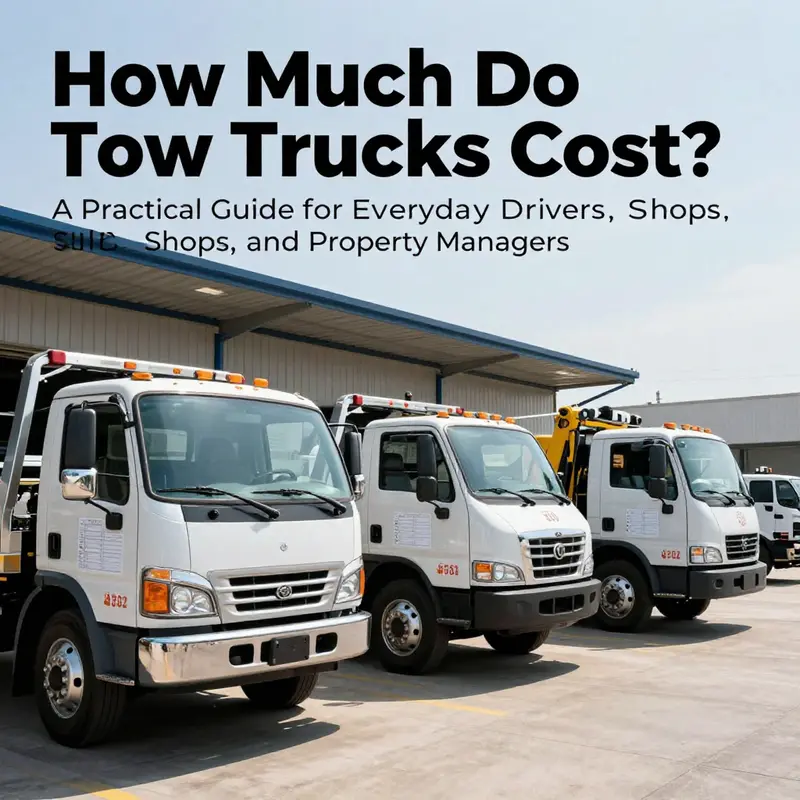
Tow trucks come in a spectrum of sizes and capabilities, and their price tags reflect that diversity. Light-duty models priced around $12,800–$39,800 serve personal cars and small SUVs, while medium-duty rigs in the $40,000–$70,000 range tackle larger vans and pickups. Heavy-duty machines—especially rotators and advanced flatbeds—filter into six-figure territory. Yet the sticker price is only part of the story: reliable operation depends on winches, wheel lifts, safety gear, and compatible communications and fleet software. For property managers coordinating on-site towing needs, auto shops managing fleets, and individual buyers financing a single tow-capable vehicle, understanding total cost of ownership (purchase price plus maintenance, fuel, insurance, downtime) provides a clearer budgeting framework. The four chapters that follow unpack price ranges, typical use cases, and the hidden expenses that accumulate in real-world ownership. Together they illuminate not just what you pay today, but what you’ll pay tomorrow as your towing needs evolve.
Tow Truck Costs Unveiled: A Deep Dive into Light-Duty Models, Price Ranges, and What They Really Buy You
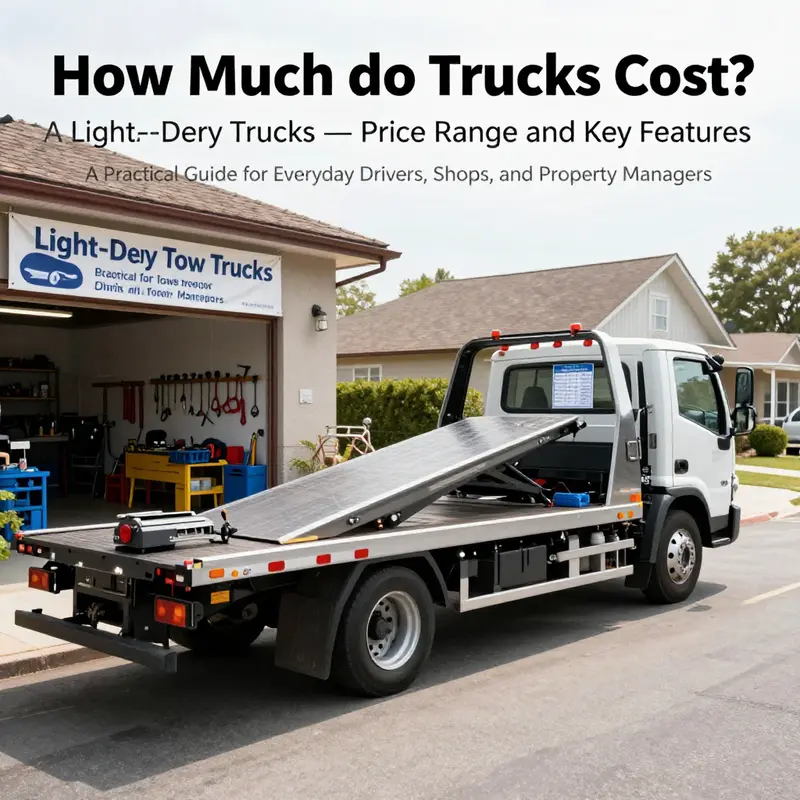
Light-duty tow trucks sit at the intersection of practicality and urban necessity. When a driver experiences a roadside mishap, or a car needs relocation from a crowded downtown lot, these compact rescue vehicles spring into action with a blend of versatility and maneuverability that larger rigs simply cannot offer. They are designed to operate in tight spaces, park where space is scarce, and protect the vehicle being towed as it leaves the scene. In a broad sense, light-duty tow trucks are the practical backbone of everyday recovery and roadside assistance. Their design priorities—safety, precision, and efficiency—mirror the demands of city streets and suburban streetscapes where ground clearance is limited and the margin for error is small.
At the core of light-duty models is a careful balance between lifting technology and protective touch. Wheel-lift technology, for example, allows a vehicle to be lifted by its wheels, keeping the chassis and undercarriage clear of contact with the road. This minimizes the risk of damage during loading and reduces the chance of costly scrapes to paint or underbody components. Hydraulic lift arms provide smooth, controlled lifting with precise adjustments, which matters not just for speed but for the safety of the vehicle being towed. The emphasis on soft straps and non-slip padding works in tandem with these lifting systems to cushion the vehicle and guard delicate finishes from scratches or abrasions. Together, these features create a towing process that is as gentle as possible on customer vehicles, while still being robust enough to handle everyday incidents.
The compact design of light-duty tow trucks is not an afterthought. It is a deliberate choice to keep these vehicles nimble in urban environments—narrow streets, congested parking structures, and bustling service areas demand a vehicle that can maneuver with ease without sacrificing capability. In practice, that means a light-duty wrecker or rollback can access spots that larger units cannot, while still delivering reliable lifting power for common passenger cars and small SUVs. The goal is efficiency in operation as much as resilience in the shop. Because these trucks typically rely on simpler mechanical systems relative to heavier rotators or heavy-duty boom trucks, maintenance tends to be lower in cost and downtime is reduced. That simplification is not a detour from capability; it is a tailored solution for the day-to-day needs of roadside responders and small-fleet operators.
Pricing for light-duty tow trucks reflects this balance of capability and practicality. New light-duty models generally fall in a broad range, and the numbers can shift with engine power, lifting capacity, and the inclusion of specialized features. In current market terms, new light-duty tow trucks typically range from roughly eleven and a half thousand dollars up to about twenty-eight thousand dollars. This spread acknowledges that some buyers want a basic, highly reliable entry-level unit, while others may opt for higher-end configurations with stronger engines, larger payloads, or enhanced electronic systems for fleet management and safety. For buyers who need a more robust package yet remain in the light-duty category, it is not unusual to see pricing drift toward the upper end of this spectrum if the truck includes an upgraded powertrain or a more sophisticated flatbed or rollback system.
Concrete examples from the market illustrate how those numbers translate into real options. A common configuration within the lower to mid-range is a light-duty unit built around a three- to five-ton capacity, often aligned with an Isuzu-based platform. Such trucks can be found in the approximate range of eleven thousand five hundred to thirteen thousand five hundred dollars, depending on whether the setup emphasizes a compact wheel-lift with a smaller bed or leans toward a basic flatbed arrangement with a standard winch. On the other hand, there are four-ton rollback flatbed variants that bring larger bed lengths and heavier strap systems to the table, delivering more comprehensive vehicle handling. Those configurations typically fall in the eighteen thousand five hundred to twenty-six thousand five hundred dollar zone, again contingent on the exact lift mechanism, the bed tilting tech, and any optional safety or digital features installed as part of the package.
Engine power also plays a role in the pricing narrative. Some manufacturers offer light-duty units with engines that push toward higher horsepower to improve startup performance, boost torque for heavier vehicles, or provide a larger buffer for rough-road conditions. In certain cases, you might encounter engines advertised with up to triple-digit horsepower figures. Pricing in these instances sits toward the higher end of the light-duty spectrum, reflecting not only the more powerful core but also the potential for smoother operation under load and longer service life in demanding service cycles. It is worth noting that higher power in a light-duty frame sometimes comes with a trade-off in fuel efficiency or weight, so buyers weigh these factors against the needs of their service area and the typical towing profile they encounter.
Another layer of price consideration comes from the true breadth of what counts as light duty. While the core category captures 2- to 4-ton classes, the lines blur as manufacturers add features that push a unit into a near-mid-range category, or as a vehicle shifts to a heavier line that still sits under the general heavy-duty umbrella. Some offerings market themselves as light-duty while incorporating a more rugged chassis, larger wheelbases, or more extensive hydraulic systems. In practice, this blurring is a reminder that a buyer should not rely solely on a nominal tonnage figure when assessing value. The overall payload, the range of motion for the bed, the speed of deployment, and the reliability of the winch and lift system all contribute meaningfully to the end-user experience and the total cost of ownership.
The market also features a notable variety in brand and specification, even within the light-duty tier. A portion of the pricing landscape is shaped by basic models that start at around eight thousand eight hundred dollars for entry-level offerings from certain manufacturers. These are typically the most affordable options and are often positioned as practical first choices for small fleets or independent operators who need a dependable workhorse without advanced frills. They may come with more modest engines, lighter lifting gear, and simpler bed configurations. This highlights an important reality for buyers: the lowest sticker price is not always the best fit if it means skipping features that improve long-term reliability or reduce maintenance costs.
Beyond the base purchase price, there are several recurring costs and considerations that influence total ownership expense for light-duty tow trucks. Essential equipment such as winches, wheel lifts, towing dollies, and straps are not optional if you want a complete, ready-to-deploy vehicle. Safety gear, cones, vests, and flares support compliance with local regulations and the safety of operators at incidents. Communication systems, including lighting packages, sirens, and GPS-based tracking, can be critical for coordination during service calls. Fleet management software is another layer that some operators invest in to optimize deployment, maintenance scheduling, and fuel efficiency across a small fleet. Then there is fuel consumption, which, on larger healing-based operations, can add up quickly and influence the long-term cost of ownership. Even though light-duty models are more fuel-efficient than their larger counterparts, the cumulative impact of daily driving and frequent short trips can still matter.
Given this landscape, buyers aiming to maximize value should consider a few guiding questions. How often will the truck operate in dense urban areas versus suburban or rural routes? What is the typical vehicle mix to be towed, and does it include compact cars, SUVs, or light commercial vans? How much emphasis is placed on safety features, paint protection during transport, and the ability to mount and demount quickly? These questions help determine whether a basic light-duty setup suffices or if a few premium features—such as a longer bed, a more capable winch, or a higher-rated hydraulic system—are worth the incremental cost. In making this assessment, it is also helpful to consult a broad pricing overview to understand how the current market frames value across brands, configurations, and geographies. For a broader pricing perspective, see the internal guide on tow-truck costs and pricing.
Manufacturers sometimes provide pricing guidance directly through official product pages or distributor listings, with some basic models priced aggressively to establish market presence. For example, basic light-duty breakdown lorries can begin at relatively modest figures, reflecting a focus on core functionality over premium frills. Understanding the price degradations between new versus used units is also important. Used light-duty tow trucks typically present a narrower spread, often ranging from about fifteen thousand dollars up to twenty-five thousand dollars, depending on age, mileage, maintenance history, and equipment condition. This lower-cost path can be extremely appealing for startups or independent operators who need to acquire a dependable asset quickly but do not require the latest enhancements in lift technology or electronic systems.
In the end, light-duty tow trucks remain a practical entry point into the broader towing and recovery market. They offer a scalable path into professional roadside assistance and fleet operations, with a price envelope that accommodates both cautious entry and upgraded configurations. The value proposition rests not only in lifting capacity but in the integration of protective, vehicle-safe technologies that minimize damage to the vehicles being towed, along with the agility to operate effectively in urban or congested landscapes. While the sticker price is important, the long arc of maintenance costs, reliability, and the ability to deploy rapidly in everyday service calls often determine the true return on investment for a light-duty addition to a fleet.
For readers who want to explore pricing in more depth or compare specific configurations, the topic is often supplemented by market listings, manufacturer pages, and supplier platforms. These sources provide real-time variations in price, reflect current exchange rates, and illustrate how feature packages can swing total cost. Real-time pricing and detailed specifications are commonly available from verified suppliers, including listings that show a spectrum from basic to highly equipped models. While the numbers cited here provide a robust framework, individual quotes will reflect the exact specifications, regional taxes, shipping, and any import duties that may apply. When evaluating options, it is useful to pair price with the practicalities of daily operation: how quickly a unit can be mobilized, how reliably it can load and secure a vehicle, and how well it integrates with a fleet’s maintenance and safety protocols.
In sum, light-duty tow trucks offer a versatile, cost-conscious entry into the world of professional towing and recovery. They combine lift technology, protective clamping, and compact form to deliver capable performance in cities and towns alike. Price ranges reflect the spectrum from basic entry models to more feature-rich configurations, with used units providing an attractive alternative for budget-conscious buyers. The decision rests on aligning the vehicle’s capabilities with the operator’s typical workload, ensuring that the chosen setup delivers dependable performance without overspending on features that do not add tangible value to daily operations. For those seeking a concise snapshot and quick comparisons, a broader pricing overview can be found via the internal resource on tow-truck costs and pricing, which consolidates market signals and typical configurations in a single, accessible guide. And for readers seeking external context or real-time market data, industry suppliers and manufacturers provide additional detail, with pricing often tied to the exact bed type, lift system, and engine choice. External resource: https://www.alibaba.com/product-detail/Factory-Price-Rescue-Tow-Flatbed-Wrecker-Truck_1600561252612.html
Beyond the Sticker Price: Understanding Medium-Duty Tow Trucks—Price Ranges, Configurations, and Real-World Uses
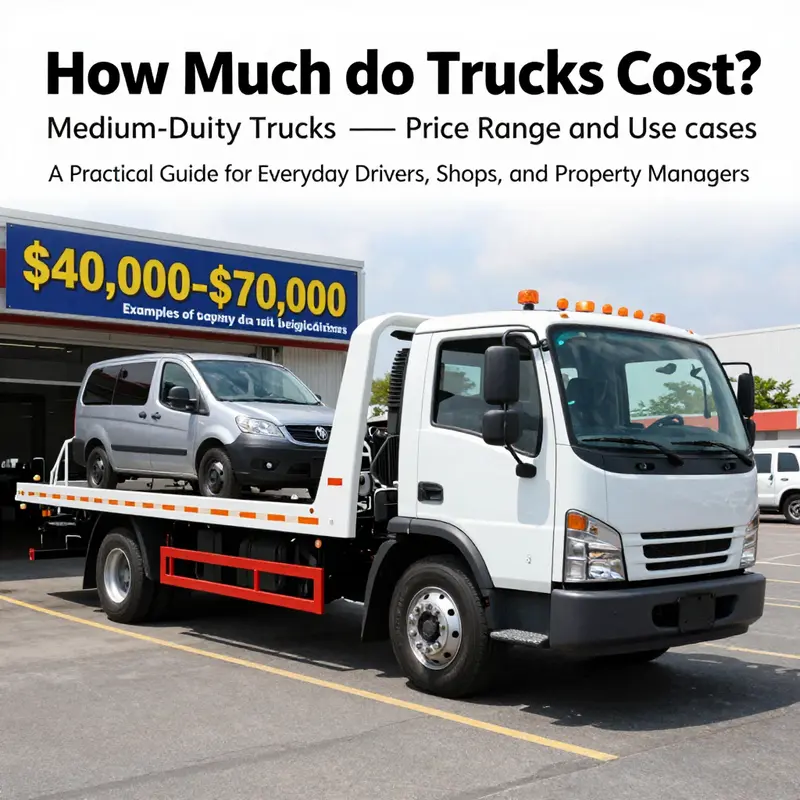
Medium-duty tow trucks occupy a critical middle ground in the world of roadside recovery and fleet logistics. They are built to haul mid-size vehicles and light commercial units while remaining nimble enough to maneuver through crowded streets and tight job sites. That balance matters not only in how a unit performs on a given call but in how a business budgets for equipment, schedules maintenance, and plans growth. When operators size up a fleet, the question isn’t simply “What is the price?” but “What configuration delivers the most reliable service for the types of jobs we most often encounter, at a cost that fits our monthly cash flow?” The answer sits at the intersection of configuration options, market pricing, and practical use cases that define a medium-duty truck’s true value over its lifespan. For anyone evaluating cost, this chapter threads those considerations into a coherent picture, tying price to purpose without losing sight of the realities that drive every tow operation on the street.
Price ranges for medium-duty tow trucks reflect a spectrum shaped by age, configuration, and equipment. In today’s market, used medium-duty units can be found in a wide band—from a few thousand dollars for older, basic platforms to roughly twenty-five thousand dollars for comparatively fresh, well-maintained examples with solid ancillary gear. The spread is large because condition, mileage, and installed components—such as hydraulic systems, lifting booms, and winches—greatly influence value. New medium-duty trucks, by contrast, tend to land around the low forties to the mid-forties for standard configurations that emphasize reliability and efficiency. When buyers push beyond a baseline to accommodate higher load capacities, upgraded drivetrains, or enhanced safety features, the upfront price can climb, occasionally entering the upper forties or beyond. Among newer offerings, there is also a segment described as specialized configurations, including higher-capacity setups and add-ons that tailor a unit for particular tasks. In those cases, price bands broaden further, with ranges commonly cited from the mid-teens to the high fifties for certain builds, depending on customization and supplier.
To understand why the numbers look the way they do, it helps to map them to practical capabilities. Most medium-duty platforms deliver lifting capacities in the 11- to 20-ton range, a window that comfortably covers most passenger cars, SUVs, light trucks, and small commercial vehicles. The bed configuration matters, too. Flatbeds with tilting beds are favored when protecting wheel alignment is important or when loading AWD or low-clearance vehicles, since ground contact is reduced or eliminated during loading. Rollbacks, meanwhile, excel in quick, flexible recoveries and are often favored in urban settings where speed and ease of loading translate into higher daily job throughput. A wrecker-style medium-duty configuration occupies a niche that blends lifting power with forward reach for more complex recoveries, though it is less common in the mid-range and tends to sit at a premium level compared with the more ubiquitous flatbed and rollback setups. Drive configurations tend to favor 4×2 layouts for urban operations, trading some off-road capability for better fuel efficiency and tighter turning, which is crucial when maneuvering around parked cars, tight curbs, and incident scenes.
Price, however, is only part of the equation. The configuration you choose—flatbed, rollback, or wrecker—carries consequences for maintenance, durability, and operating costs. A tilting flatbed, for example, can carry heavier payloads while safeguarding the vehicle under transport, but the bed mechanism itself adds complexity and requires regular lubrication and inspection. A high-quality winch is essential for controlled, reliable recoveries, especially on slippery surfaces or uneven terrain. Wheel-lift systems reduce tire and rim damage and can increase throughput on a given shift, but they demand meticulous maintenance and calibration to prevent misalignment or slippage. Each feature added to a medium-duty truck tightens the circle of costs around purchase, insurance, fuel, and parts; yet in return it often yields measurable savings in labor time, customer satisfaction, and vehicle safety—benefits that compound over the life of the fleet.
The practical use cases for medium-duty tow trucks illuminate why operators choose one configuration over another. In urban environments, the compact size and tight turning radii of medium-duty units enable efficient calls for accident recovery, curbside vehicle retrieval, and even on-site vehicle repositioning within service yards. For repossession agencies and finance companies, these trucks offer the balance of speed and control necessary to secure vehicles without the downtime associated with heavier equipment. When service fleets rely on a steady cadence of vehicle transport—moving delivery vans, small work trucks, and utility vehicles between depots and customers—the reliability and cost predictability of medium-duty platforms become a strategic asset. The flatbed’s wheel-free transport is particularly valuable for AWD or low-clearance vehicles that demand careful handling; a rollback’s rapid deployment and loading ease help maximize daily job counts; and where heavy lifting and precise positioning are required, a well-chosen wrecker configuration provides capability without stepping into the heavy-duty class.
In weighing these options, buyers must consider total cost of ownership alongside the sticker price. Insurance premiums for medium-duty trucks reflect not just the value of the platform but the potential risk associated with the loads, the distance traveled during calls, and the environmental conditions encountered on typical job sites. Fuel economy, while not the sole determinant of operating cost, gains importance because urban routes often involve frequent stop-and-go traffic, which can erode the fuel efficiency advantages of 4×2 configurations. Tire wear becomes a recurring expense, especially in urban quarters where curb proximity and road debris demand robust tires. The hydraulic systems—the lifeblood of lifting and loading—require periodic maintenance, oil changes, and occasional resealing. A truck’s maintenance plan should address wear parts, such as bed components, winch cables, and hydraulic hoses, to avoid downtime during peak demand.
Beyond the mechanicals, the administrative overhead also matters. Fleet managers frequently evaluate maintenance schedules, telematics, and safety protocols. Safety gear like cones, vests, and flares, along with compliance equipment and load indicators, add to the ongoing cost but protect crew members and reassure clients about disciplined operational standards. Communication systems—lights, sirens, GPS tracking, and dispatch software—contribute to a professional image and faster response times, but these systems carry monthly or yearly subscription costs. The “right” balance, for many operators, hinges on matching the anticipated workload to a configuration that minimizes unnecessary features while maximizing reliability and turnaround speed. A conservative approach—starting with a solid used platform or a modest new unit and layering in accessories as the business grows—often yields the best overall return, particularly for small-to-mid-sized fleets. If a business anticipates growth in peak seasons or a shift toward more complex recoveries, planning for an upgrade path at the outset can prevent early obsolescence and protect against operational bottlenecks.
When a fleet manager maps costs against job types, the decision to buy new or used becomes more transparent. Used medium-duty trucks offer appealing entry points for budget-conscious buyers who perform due diligence: a clean service history, reasonable mileage, and a recent upgrade list can transform a bargain into a dependable tool. Yet the risk of hidden wear—especially in hydraulic systems and bed assemblies—means a rigorous pre-purchase inspection is essential. New units deliver warranty protection, the latest safety and efficiency features, and more predictable maintenance costs in the early years, but they require a larger upfront investment. For many operators, a blended approach makes sense: a newer chassis paired with refurbished or lightly used bed components or a mid-range equipment package can deliver a strong performance profile while preserving cash reserves.
Financing strategies also shape the price reality. Leasing and favorable loan terms can align with service contracts, seasonal demand, and revenue cycles. Tax depreciation and incentive structures in different regions can improve the annualized cost of ownership, turning a higher upfront price into a manageable ongoing expense. In practice, fleet owners who forecast a three- to five-year horizon often choose models that minimize downtime and maximize uptime, acknowledging that reliability and serviceability drive more value over the life of the truck than a marginally lower initial price. The math, once completed, shows a clear message: medium-duty tow trucks are less about chasing the absolute lowest cost and more about selecting a configuration that stabilizes service availability, accelerates job completion, and protects client assets.
For anyone seeking a practical benchmark, it helps to connect with current market listings and supplier catalogs. Real-time pricing and availability vary with region, currency, and demand, but the core pattern remains consistent: the base price for a standard medium-duty platform sits in the low-to-mid forties for a new unit, with significant upside potential for specialized configurations or upgraded features. Used units offer a lighter price floor but with commensurate risk, while a well-chosen mix of used and newer components can optimize both reliability and cost. The essential takeaway is that a thoughtful approach to configuration, maintenance planning, and lifecycle budgeting empowers operators to turn a medium-duty tow truck from a simple asset into a dependable engine of service delivery. For a concise overview of current market prices and the factors that shift them, explore this broader guide on tow-truck costs and pricing: tow-truck costs and pricing.
External price references:
- External resource for price context: https://www.alibaba.com/product-detail/Factory-Price-Rescue-Tow-Flatbed-Wrecker-Truck_1600561252612.html
Heavy-Duty Tow Trucks at a Price of Precision: Rotators, Flatbeds, and the Economics of Specialized Recovery
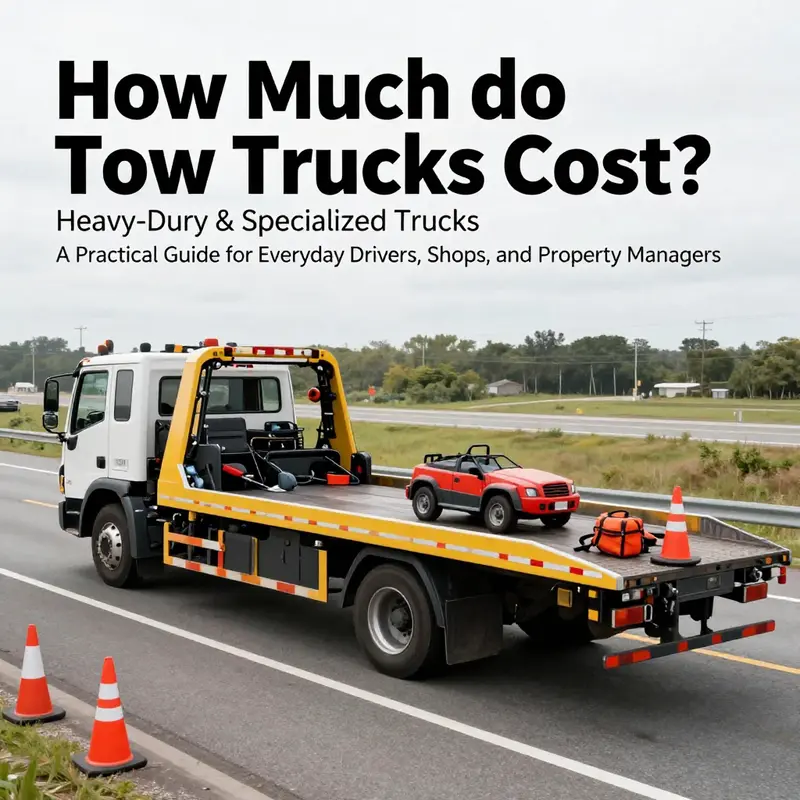
When fleets weigh the decision to add a heavy-duty rotator or a flatbed to their lineup, they are really weighing capability against cost, reliability against complexity, and the immediate needs of their operation against the long arc of maintenance and resale value. The price of these machines isn’t a single number but a landscape shaped by what the truck must do, how far it has to reach, and how extensively it will be customized to fit a particular workflow. In the broad market for heavy-duty tow trucks, rotators and flatbeds sit at opposite ends of the engineering spectrum, each with its own logic of value. Understanding those logics helps a buyer navigate the line between a tool that moves vehicles safely and a tool that costs more than it should without delivering proportionate gains in capability. As a starting point, rotator tow trucks—the most advanced category—offer 360-degree rotation and towering lifting capacity, enabling complex recoveries on the highway, in industrial sites, and in challenging terrain. Flatbeds, by contrast, emphasize controlled, wheel-free transport that protects both the towed vehicle and the carrier, a priority when handling all-wheel-drive machines, low-clearance cars, and valuable assets that require minimal ground contact during transit. The pricing you’ll encounter reflects those core purposes and the choices made to achieve them, from chassis configuration to the sophistication of the hydraulic and control systems. The numbers, while eye-catching, tell only part of the story of how a heavy-duty tow fleet ends up paying for the precision those machines deliver every shift.
Taking stock of rotators first, the most advanced models are built around a rotating boom that can pivot a vehicle from any angle and lift it with a stability that eases recovery work in congested or precarious environments. A rotator’s price range typically sits in the vicinity of fifty-three thousand dollars to well over one hundred thousand dollars per unit, depending on the lift capacity, the geometry of the chassis, and the sophistication of the hydraulic system. An example in the recent market snapshot—an entry within a 14–16-ton lifting envelope—hovered around the mid fifty-thousands, illustrating how even a mid-range heavy-duty rotator can start from a price that surprises casual shoppers. Yet as capacity and agility increase, so too does the price, with premium rotator configurations eclipsing six figures when they bring in features designed for legitimate highway-scale recovery and extreme terrain work. The cost drivers here are explicit: the engine power and the chassis layout (common combinations include four-by-two, six-by-four, or eight-by-four), the maximum lifting force and reach, the rotation system itself, and the control interface that operators rely on when the stakes are highest. A 360-degree rotation isn’t just a party trick; it is a lifeline for recovering overturned or obstructed vehicles, and that capability is inherently expensive to engineer and maintain.
Beyond the core mechanical package, the price of rotators reflects the degree of refinement buyers expect. Advanced hydraulics, precise load balancing mechanisms, and safety interlocks all add layers of cost, as does adherence to emissions standards and global regulatory expectations. The more a model is tailored to a fleet’s specific environment—an operation with long highway stretches, mountainous routes, or offshore accessibility—the more likely it is to feature a bespoke hydraulic topology or a specially engineered boom geometry. Customization is a legitimate driver of cost, but it comes with real value: a unit that better fits the operator’s typical recoveries reduces cycle time, increases safety, and limits the wear and tear that can escalate maintenance expenses over the machine’s life. This is why rotator pricing, while anchored in a broad band, can diverge dramatically from one fleet to the next.
Flatbeds, or rollback trucks as they are often called, present an opposing but equally valid model of value. They prioritize the controlled, wheels-off transport of a vehicle onto a tilting bed, which minimizes damage during loading and transit. The price band for reliable heavy-duty flatbeds generally falls between forty thousand and ninety thousand dollars, with the lower end covering robust but simpler configurations and the higher end representing units designed for substantial payloads and long service life. In practice, an 8×4 flatbed with a 30–50 ton capacity represents a no-nonsense workflow: it can cradle large vehicles, secure them with efficient wheel-lift and tie-down arrangements, and move them with a level of stability that reduces the chance of contact or abrasion during transit. The cost of a flatbed is largely anchored in the quality of the hydraulic tilting bed, the strength and durability of the chassis, the capacity of the winch system, and the breadth of safety features that keep operators and bystanders out of harm’s way during the loading process. A higher price tag here often buys thicker steel, greater payload, and more sophisticated safety interlocks, all of which contribute to longer life in high-demand recovery operations.
As with any investment in specialized equipment, the sticker price for rotators and flatbeds is only part of the financial equation. There is a suite of ongoing costs that can influence total ownership and operational budgets. For every unit, the initial purchase price must be weighed against the cost of winches, straps, wheel lifts, and towing dollies that ensure the machine can perform a wide range of jobs safely. Safety equipment—cones, vests, flares, and other personal protective gear—adds another line item, while communications gear such as sirens, lighting, and GPS tracking supports effective routing and incident management. Fleet management software and telematics can be essential for planning maintenance, scheduling service intervals, and analyzing utilization to maximize uptime. Fuel consumption grows with heavier models and more capable powertrains, an especially material concern for rotators that must travel to distant scenes with heavy loads. In short, owning a heavy-duty tow vehicle is as much about the daily operating costs as it is about the upfront price.
Regional and supply-channel differences further complicate the price picture. Buyers in one region might see a different mix of options, warranties, and service networks than buyers in another, and variations in supplier terms can tilt the final number by a meaningful margin. Market data from recent years shows a broad spectrum: rotators tend to cluster in a price window that begins in the mid-fifty-thousands and climbs steeply with capability, while flatbeds hover in a parallel but distinct range that often starts lower and extends into the upper end of the spectrum when heavily specified. The presence of global marketplaces and cross-border sourcing adds another layer—shipping costs, import duties, and local regulatory compliance can inflate the all-in cost by ten to twenty percent, depending on the origin and destination of the unit. While that range is not a universal rule, it captures a reality many fleets face when they consider importing equipment or purchasing from distant suppliers.
One practical takeaway for prospective buyers is that a rotator’s cost ceiling is often higher than a flatbed’s for a given lifting capacity, but a high-end flatbed with top-tier safety features and a large payload can run as high as a rotator in some configurations. The higher the capacity, the more pronounced the price gap tends to be, because the hardware, hydraulics, and structural reinforcements required to manage extreme loads demand investment. At the same time, the decision to purchase a rotator versus a flatbed rests on the nature of the typical recoveries the fleet faces. A corridor with frequent complex recoveries—vehicles overturned on highways, buses in ditches, or trucks in tight industrial spaces—will often justify the rotator’s premium. A fleet that most commonly handles routine towing with the occasional large load and a focus on safe transport of valuable vehicles may find a well-specified flatbed to be the smarter investment. In either case, the choice hinges on aligning the machine’s capabilities with the job mix, the labor skill set of the operators, and the throughput targets of the service.
To ground these considerations in practical numbers, the market presents a snapshot where rotators commonly range from the mid-fifty-thousand-dollar mark to over one hundred thousand dollars for premium configurations, with ceiling prices climbing higher still for very specialized units. Flatbeds, meanwhile, typically occupy a broad band from around forty thousand to ninety thousand dollars, with the upper reaches reserved for higher-capacity units and those built for extended, heavy-duty service. A concrete example that illustrates the upper end of demand is a heavy-duty rotator with extreme lifting capacity and a fully integrated control system, priced above one hundred thousand dollars. The same market that yields these numbers also shows that a robust, well-built flatbed can approach the same price point when engineered for demanding environments, high-mileage use, and maximum payload. It is this spectrum—where capability, reliability, and service support intersect—that explains why a single line item in a budget can cascade into many related costs, from maintenance plans to upgraded diagnostics and extended warranties.
For readers seeking a concise, accessible overview of these pricing dynamics, a broader guide to tow-truck costs and pricing aggregates the typical ranges and the factors that push prices up or down. tow-truck costs and pricing provides a useful frame, illustrating how light-duty, medium-duty, and heavy-duty configurations sit on a continuum governed by capacity, technology, and intended use. This chapter, however, concentrates on the heavy-duty end of the spectrum—the rotators and flatbeds that represent the most advanced tooling in the field. In discussing these machines, it is essential to emphasize that the numbers reflect not only the hardware but the ecosystem around it: the training of operators who can exploit the machine’s capabilities, the service networks that can keep it on the road, and the logistics of moving such specialized equipment from factory floor to roadside incident.
Finally, a nod to the broader market context adds some realism to the budgeting conversation. The heavy-duty category’s pricing curves are shaped by supply and demand, but also by the cadence of product introductions and the degree of customization fleets demand. A unit that integrates advanced safety systems, remote diagnostics, and brand-new control interfaces will inevitably command a premium, but those features can translate into significant reductions in downtime and faster recovery times, thereby delivering cost savings over the equipment’s life. Conversely, a stripped-down unit with minimal options may offer an initial savings but could incur higher maintenance costs and lower resale value in a few years as technology improves and operator expectations evolve. The balancing act is clear: perform the right level of investment to achieve dependable uptime and safe, efficient recoveries, while avoiding overcommitment to options that do not unlock tangible returns in daily operations.
External reference for further details: https://www.alibaba.com/product-detail/SINOTRUK-HOWO-Rotator-Tow-Truck-NEW-EURO_1600470978787.html?src=google&src=google&albRef=…
Tow Truck Pricing Demystified: The Real Cost Beyond the Sticker Price
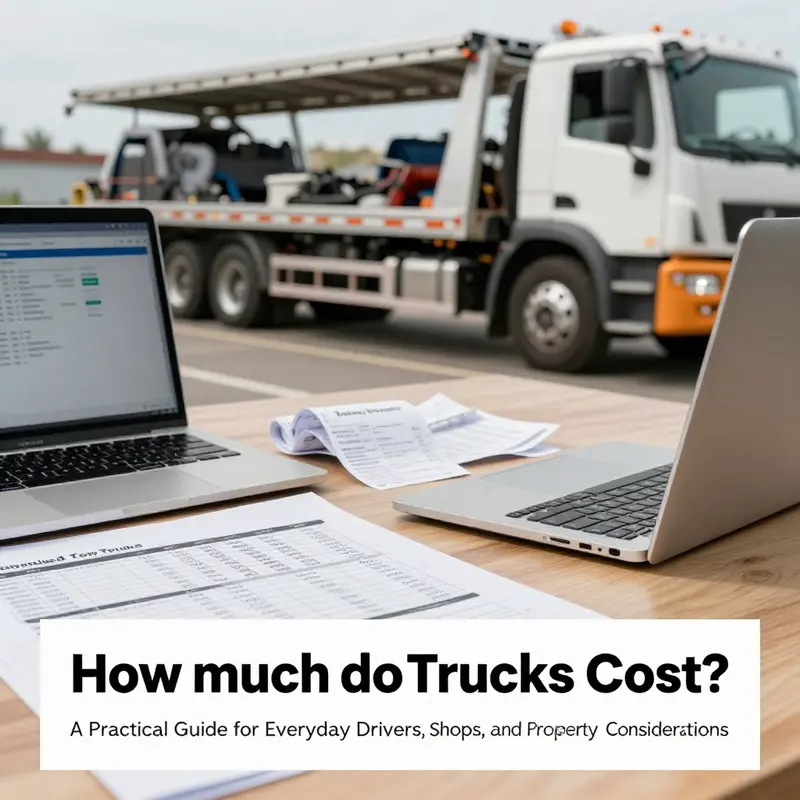
Understanding how much tow trucks cost requires more than noting a sticker price. The initial price tag is only the doorway to a larger financial landscape that unfolds over years of operation. A practical way to frame this is to think in terms of categories that align with the vehicle’s intended use, then broaden the lens to the total cost of ownership. When you start with that approach, the differences between a light-duty unit and a heavy-duty recovery platform make sense not as a single price point, but as a spectrum of capabilities, efficiencies, and ongoing obligations that shape the long-term economics of a towing operation. For anyone evaluating options, a good starting point is a baseline question: what will this truck do day in and day out, and how often will it be used in demanding conditions? With that in mind, the price you see on a showroom floor or a catalog page becomes only one facet of a much larger equation. If you want a quick baseline, think of a tow truck’s cost in layers: the upfront purchase price, the essential equipment that enables safe and compliant operation, and the ongoing costs that accumulate with use and time.
Light-duty tow trucks, typically intended for personal vehicles, small SUVs, or compact cars, sit at the lower end of the spectrum. The sticker price for these units often falls in the range of roughly $12,800 to $39,800. Those figures reflect vehicles built to handle everyday towing tasks, with features like hydraulic tilting beds and winches designed for frequent, routine use. The scale and complexity of equipment on these machines stay modest, which helps keep both the initial investment and routine maintenance comparatively affordable. Yet even within this category, subtle differences in bed design, winch capacity, and payload handling can nudge the price up or down. For buyers who want a reliable, straightforward tool for regular, light-duty jobs, those figures provide a reasonable starting point. From there, the conversation shifts toward how much capacity, reliability, and speed matter for the specific service area and customer mix. If you’re curious about the baseline dynamics of pricing and features in this space, a practical touchpoint is to explore a general overview such as the article on how much a tow truck can cost, which translates well to real-world budgeting decisions. how much is a tow truck.
As the payload requirements rise—from compact cars to larger passenger vehicles and light commercial vans—the typical price band widens into the mid-range territory. Medium-duty tow trucks, often configured to handle heavier loads and more demanding road conditions, usually land in a price corridor from about $40,000 up to $70,000. These machines deliver more robust chassis, higher winch capacities, and sometimes the comfort and efficiency features that help operators manage longer shifts with fewer interruptions. A common way to describe this tier is to envision a rollback or flatbed in a configuration that can accommodate many common service vehicles without venturing into truly specialized territory. The cost sensitivity here tends to hinge on the exact capacity, bed type, and the sophistication of auxiliary systems, including enhanced safety equipment and more versatile wheel-lift or dollies. While the mid-range attracts operators who need greater versatility without paying for the most extreme configurations, it’s important to remember that even within this band, the chosen specifications can push the purchase price toward the higher end of the spectrum. For context and further reflection on general pricing trends, consider how the industry frames the balance between upfront cost and long-term value when selecting a mid-range tow solution.
Beyond light and medium duties lies the realm of heavy-duty and specialized tow trucks. This is where the market signal shifts more dramatically, because the vehicle must perform in demanding recovery scenarios, handle large vehicles, and support emergency responses. The most advanced forms, such as rotator tow trucks with 360-degree rotating booms and substantial lifting capabilities, can command prices in the range of roughly $150,000 to $300,000 or more. The appeal of rotators lies in their ability to access overturned or stubbornly stuck vehicles and to operate with a level of precision that outstrips more conventional tow setups. Those capabilities come with a premium not only in the initial price but also in maintenance, insurance, and downtime risk—factors that compound when a fleet needs to be ready for highway incidents, multi-vehicle recoveries, or remote locations. In this tier, the decision is often driven by the strategic role the truck plays within a larger emergency response or heavy-lift operation. The higher price reflects the specialized engineering, control systems, hydraulic architecture, and reliability required for critical tasks that cannot tolerate compromise.
Even at the high end of the market, new flatbed tow trucks with tilting beds occupy an important niche. These units are prized for their safer transport capabilities, especially for all-wheel-drive, low-clearance, or high-value vehicles that must be moved with minimal ground contact. The cost of these machines sits at the upper end of the medium-duty range and can exceed $70,000 depending on the exact specifications, materials, and added safety features. They offer a straightforward loading process, reduce the risk of damage during transport, and are compatible with a broad range of towing accessories. For operators weighing the trade-offs between traditional tow setups and flatbeds, the decision often hinges on the nature of the local vehicle mix, the typical lengths of transport runs, and the level of care they want to extend to client vehicles. The economic calculus must weigh the higher upfront investment against potential reductions in vehicle damage, liability exposure, and insurance premiums associated with safer transport practices.
No discussion of cost would be complete without addressing the ancillary and ongoing expenses that orbit every tow truck purchase. The purchase price is rarely the whole story. Essential equipment—winches, towing straps, wheel lifts, dollies, axle pads, and a suite of safety items such as cones, vests, and flares—adds to the upfront cost and, more importantly, to the daily readiness and compliance of the operation. Communication and navigation systems, ranging from basic radio gear to more sophisticated GPS tracking and dispatch software, become operational necessities. Fleet management tools, maintenance software, and fuel management systems can all contribute to the efficiency and reliability of the service, but they also represent recurring costs that need to be planned for in both short-term budgets and long-range financial forecasts. In many jurisdictions, this equipment is not merely optional; it is a regulatory and safety requirement that supports professional, law-abiding operation. The practical takeaway is that the total cost of ownership (TCO) rises with every layer of capability, safety, and efficiency added to the vehicle. It is not enough to choose a truck that can move a car from point A to point B; one must ensure that the truck can do so safely, compliantly, and consistently across the expected workload.
Beyond equipment, the operating costs that accrue over time shape the true financial footprint of a tow fleet. Maintenance and repairs on heavy-duty vehicles tend to be more frequent and costly due to the demanding nature of the work. Fuel consumption scales with size and usage; larger trucks burn more fuel, particularly on long tows or in congested urban environments where idling and stop-and-go driving are common. Insurance premiums naturally reflect the elevated risk of towing work, especially in high-traffic corridors or during nighttime operations. Licensing, registration, and potential regulatory fees add ongoing annual or periodic expenses that fleets must budget for alongside depreciation. Tax considerations, such as depreciation methods and eligibility for incentives or deductions, can also influence the financial picture in tangible ways. These are not mere afterthoughts; they are integral to strategic budgeting and decision-making, especially for small operators contemplating whether to purchase outright, finance, or lease a vehicle.
With the big picture in view, prospective buyers are well served by a disciplined budgeting approach that guards against sticker-price myopia. Start with a clear usage forecast: how many tows per week, what average weight, what travel distances, and what service level. Use that to shape the tier of equipment most appropriate for your operation, then solicit multiple quotes that break down the cost into upfront price, optional add-ons, and recurring charges. Ask for a maintenance history on similar units and request a collision repair or downtime estimate to quantify risk. A well-structured plan will typically include a depreciation schedule, an estimate of annual maintenance costs, and a cautious projection of fuel consumption under typical operating conditions. Financing and leasing terms should be compared not only by monthly payments but also by total interest, residual values, and the impact on cash flow. In this stage, the wisest decisions often emerge from scenario planning: what if demand spikes, what if a tow requires extended time on a highway scene, or what if a major equipment upgrade becomes necessary within three to five years? These questions help ensure that the chosen vehicle aligns with both current needs and future growth. For readers seeking a concise primer on the broader market and the policy environment that shapes these costs, a solid reference point is the general pricing framework discussed in industry overviews, which complement the practical budgeting work described here. The broader narrative reminds us that the financial equation is not static; it evolves with operational experience, maintenance realities, and the changing demands of the business environment.
If you are evaluating a purchase in this space, keep front and center the distinction between price and value. A lower initial price might seem attractive, but if it comes with higher maintenance costs, shorter expected lifespan, or greater downtime, the long-term cost of ownership can easily exceed that of a higher-priced, better-supported unit. Conversely, a slightly higher upfront investment in a well-equipped, properly maintained vehicle can yield meaningful savings in reliability, safety, and customer satisfaction over time. The choice depends on the business model, service commitments, and risk tolerance of the operator. For readers who want a practical, real-world starting point to gauge pricing and contrast options, the ongoing conversation around total cost of ownership remains central. It is not merely a single arithmetic exercise; it is an ongoing discipline that supports sustainable growth, prudent risk management, and a dependable service for customers who depend on tow truck support in moments of disruption. For further reading on pricing dynamics and to explore a practical baseline, see the discussion linked earlier about the cost landscape of tow trucks, which serves as a reference point for this deeper dive into ownership and expenses.
External resource: https://www.alibaba.com/product-detail/Factory-Price-Rescue-Tow-Flatbed-Wrecker-Truck_1600561252612.html
Final thoughts
Understanding tow truck costs requires more than reading a sticker price. By separating light-, medium-, and heavy-duty options, recognizing the value of features (winches, tilting beds, wheel-lifts), and accounting for ongoing ownership costs (fuel, maintenance, insurance, downtime), buyers can align purchases with real-world needs. For everyday drivers and commuters, a well-chosen light- or medium-duty unit can deliver reliable service without over-investment. For auto shops, fleets, and property managers, the total cost of ownership often justifies a higher upfront investment when it reduces downtime and repair risk. As your towing needs evolve, the right balance of capability and lifecycle cost becomes the key to sustained reliability and fiscal control.