
Roadside breakdowns and tow services place everyday drivers, residents, commuters, truck owners, repair shops, and property managers in high-stakes moments where help arrives from a specialist on the road. Tipping tow truck drivers sits at the intersection of service quality, professional etiquette, and company policy, and it varies by call type, region, and the specifics of the invoice you receive. While a gratuity is not universally required, many customers offer a tip as a sign of appreciation for responsiveness, safety-conscious handling of a vehicle, and the extra effort often required in challenging conditions—such as poor weather, nighttime calls, or urgent assistance. This article synthesizes practical guidelines from industry norms and reputable reporting to help you navigate tipping with confidence. Across five chapters, we’ll explore etiquette and expectations, how service quality and situational factors influence gratuities, clear considerations around invoicing and service charges, regional and cultural differences, and safer, practical alternatives for recognizing good service. The target audience includes Everyday Drivers, Residents & Commuters, Truck Owners, Auto Repair Shops & Dealerships, and Property Managers who coordinate, influence, or experience tow services. By the end, you’ll have a cohesive framework for deciding whether to tip, how much to give, and how to handle policy nuances without compromising safety or transparency. Each chapter builds on the previous sections to deliver a holistic view of tipping tow truck drivers in real-world scenarios.
Tow Truck Etiquette: Reading the Road Between Service, Policy, and Gratitude
The moment you realize you’re stranded, the road feels narrower and the options seem to shrink to one practical fix: get moving again. In those tense minutes, a tow truck crew arrives, often under less-than-ideal conditions—late at night, in bad weather, or during a rush hour backlog. It’s in these moments that social expectations around tipping become not just a personal choice but a small signal about how we value help given under pressure. Tipping tow truck drivers is not a universal rule carved in stone across every company or every region, yet it remains a meaningful way to acknowledge the effort, professionalism, and stamina drivers bring to situations that are already stressful for everyone involved. The broader question—do you tip tow truck drivers?—opens up a bigger conversation about service quality, policy constraints, and the practical realities of roadside assistance.
Service in the field rarely follows the neat lines of a fixed menu. Tow truck operators are often working quickly to secure a vehicle, ensure everyone’s safety, and maintain open lines of communication with dispatchers, insurance adjusters, and vehicle owners who may be dealing with a surge of emotions. In this context, tipping becomes a way to reward a driver’s willingness to go beyond the bare duties. If a driver stays a little longer to help with a jump-start in wet weather, or helps you coordinate with your insurer to expedite a claim, those are the moments that tip the scales from a routine tow to a notably considerate service. On the other hand, when the service is simply doing what’s expected—loading the vehicle, delivering it to the chosen destination, and handling paperwork efficiently—many people feel that a tip should reflect the standard of service without feeling mandatory.
There is no single, ironclad protocol that governs tipping for tow services across all companies or all regions. This lack of a rigid standard can feel disorienting, especially when you’re trying to balance courtesy with practicality. The most consistent advice across reputable consumer guides is to weigh tipping against the quality of service received. If the driver arrives promptly, communicates clearly about the process, handles the vehicle with care, and offers extra assistance that reduces your burden, a tip seems appropriate and well earned. If the driver performs only the core tasks without additional help, tipping remains discretionary, and many people choose to withhold a gratuity or give a modest tip as a courtesy rather than an obligation.
A practical rule of thumb that you’ll encounter in consumer guidance is to consider tipping within a range tied to the total tow cost. A commonly accepted approach is to tip roughly 10% to 15% of the tow fee, with the understanding that higher service levels might justify tipping closer to 20% in exceptional circumstances. To put it in concrete terms: if the tow costs $150, a tip of $15 to $22.50 would be within the standard range for solid service, while $25 to $30 would be a more generous gesture for notable extra effort. The nuance, of course, is that you’re not obligated to hit the high end; you’re signaling appreciation for the level of service you perceived in a moment of need. In some cases, particularly when the service was routine, many people opt for a smaller tip or none at all, while others may choose a larger tip if a driver goes above and beyond—such as guiding you through a tricky setback in an icy lot, or providing practical advice about your vehicle’s immediate needs.
An important caveat in the tipping conversation is to watch for a service charge or tip built into the invoice. Some tow companies include a mandatory service charge, while others clearly state that tipping is optional and at the discretion of the customer. It’s always wise to skim the receipt before deciding to add a separate gratuity. If a service charge is already included, a tip beyond that amount can feel like double-paying from the customer’s perspective, and in those cases many people choose to decline an additional tip to avoid redundancy. If you’re unsure about a particular company’s policy, asking the driver directly or taking a quick look at the invoice or the company’s own website can save you from miscommunication later.
The broader etiquette also recognizes that tipping is, above all, a voluntary gesture. The act should reflect your genuine assessment of the interaction rather than a pressure-filled expectation. Some drivers may not accept tips at all due to company policy or payroll practices, and that doesn’t reflect poorly on your experience—it’s simply a policy boundary that you’ll encounter in different service contexts. For those times when a driver has extended courtesy, offered local knowledge beyond the basics, or provided help that reduced your anxiety in a difficult moment, a tip can feel like a small but meaningful thank-you for human effort under stress. This is where the nuance of tipping becomes important: it’s less about the exact amount and more about recognizing and affirming the person who made a difficult moment a little more manageable.
To make the decision a bit more concrete, think of the total service as a package: the professional arrival, the safety emphasis, the careful handling of your vehicle, and any extra support they provide. If you’re able to measure service quality, you can extend a tip that aligns with your perception of value. If a driver not only tows the vehicle but also helps you arrange a ride or assists you in contacting your insurer with clear, calm guidance, those acts justify a tip at the higher end of the range. Conversely, if the service is purely procedural and lacks additional assistance, you may decide that a smaller tip is appropriate or to decline tipping altogether. In the end, the choice rests with you, guided by your sense of fairness, the level of effort you observed, and the specific policies of the company involved.
For those who want to explore more about typical costs and tipping practices, the practical question often comes down to a better understanding of pricing. How much is a tow truck? is a question that many find themselves asking, especially when the moment calls for a quick decision about whether to tip, and how much. If you’re curious about typical charges or want a sense of the overall financial frame for this service, you can consult resources that discuss common tow pricing and tipping norms. How much is a tow truck? This internal reference helps anchor the tipping decision in the context of what the service costs and what a reasonable gratuity might look like under different circumstances.
As you consider tipping, it’s also worth acknowledging the human side of the equation. Tow truck drivers often work long hours, face demanding conditions, and must manage unpredictable situations with a calm demeanor. A tip isn’t just financial recognition; it’s a social signal that you value the service provider as a person who contributes to your safety and well-being during a moment of vulnerability. That recognition can go a long way toward reinforcing a culture of respectful, professional roadside assistance. It’s reasonable to hope that drivers feel supported by the public they serve, even as employers balance policies and wage structures. The conversation about tipping reflects a broader reality: service industries are built not solely on fixed prices but on relationships, trust, and the shared acknowledgment that some jobs demand a lot of emotional and physical labor for the benefit of strangers.
In this light, the tipping question becomes less about a rigid protocol and more about a mutual understanding. If you’re satisfied with the service, a tip is a tangible way to say so. If you’re neutral or unsure, you can opt to refrain without guilt, recognizing that some companies explicitly dissuade tips or embed gratuities in the price. If you’ve ever faced a situation where a driver saved you time, resolved a stressful moment, or offered quick, practical advice that helped you avoid more complications, you know the impact of that gesture extends beyond the monetary value. It’s about validating the driver’s role in restoring some sense of normalcy when everything else is uncertain.
To close the loop with readers who want a broader sense of norms across different households and communities, it’s helpful to consider the broader media and consumer guidance that shapes these expectations. The New York Times, among others, has documented tipping trajectories and expectations in roadside assistance, underscoring that while tipping isn’t universally mandated, it remains a widely accepted practice in many parts of the country. The practical takeaway is simple: assess the service you received, check relevant company policies, and decide whether a gratuity feels appropriate in the moment. When in doubt, asking the driver about policy can clear up confusion and ensure you aren’t inadvertently tipping against policy—or leaving money on the table when the service truly exceeded expectations.
As you navigate this decision, remember that tipping is one of those small acts of social reciprocity that travels with the broader culture of helpfulness on the road. It signals not just gratitude for one interaction, but trust in a system that aims to return you safely to your destination. If you want to anchor your decision in further reading and broader practice, consider the guidance offered by consumer organizations and reputable outlets that have studied tipping etiquette and industry standards. And if you ever want to understand the pricing framework behind tow services more deeply, the article that frames typical costs and expectations can be a reliable starting point for context. For a broader perspective on tipping practices, see Consumer Reports’ overview: Consumer Reports: Should You Tip a Tow Truck Driver?.
null
null
When a Tow Reaches Beyond the Mechanics: Navigating Invoices, Respect, and the Unspoken Etiquette of Tipping
A tow arrives at a moment when everything feels off-kilter. The vehicle is stranded, the clock is ticking, and emotions ride as high as the urgency in the driver’s voice. In those moments, a question rises quickly, almost as if it were another warning light on the dashboard: should I tip? The answer is not a simple yes or no, but a nuanced stance shaped by expectations, regional norms, the nature of the service, and the clarity of the billing that follows. In the United States, tipping tow truck drivers is not a universal rule. Unlike restaurants or hair salons, where tipping has become a social habit, towing services are typically framed as a business transaction with pre-established fees. The price you see on the invoice is intended to cover the work, the travel, and any necessary equipment for the call. The driver’s role, though essential, sits in a different category from service industries where gratuities are part of the compensation structure. Yet many people still consider tipping a meaningful way to acknowledge the extra effort a driver may have invested under tough conditions, and that willingness to go the extra mile often becomes the deciding factor in whether a tip feels deserved.
To understand when tipping makes sense, it helps to look at how the transaction is organized. Most towing companies rely on transparent pricing models, with base fees, mileage charges, and any additional service charges itemized in the invoice. This clarity matters because it anchors expectations. If the numbers on the bill already reflect a comprehensive charge, a gratuity may seem unnecessary. If, however, the driver has extended the service—perhaps navigating a remote location, dealing with traffic, rain, or an immobilized vehicle in a tight quarter—then a discretionary tip can feel like a direct acknowledgment of that extra effort. In some instances, a tip is not merely appreciated; it is requested by the driver or implied by the service culture within a company. That is why many customers pause before tipping, and take a moment to understand whether any service charge has already been included on the receipt.
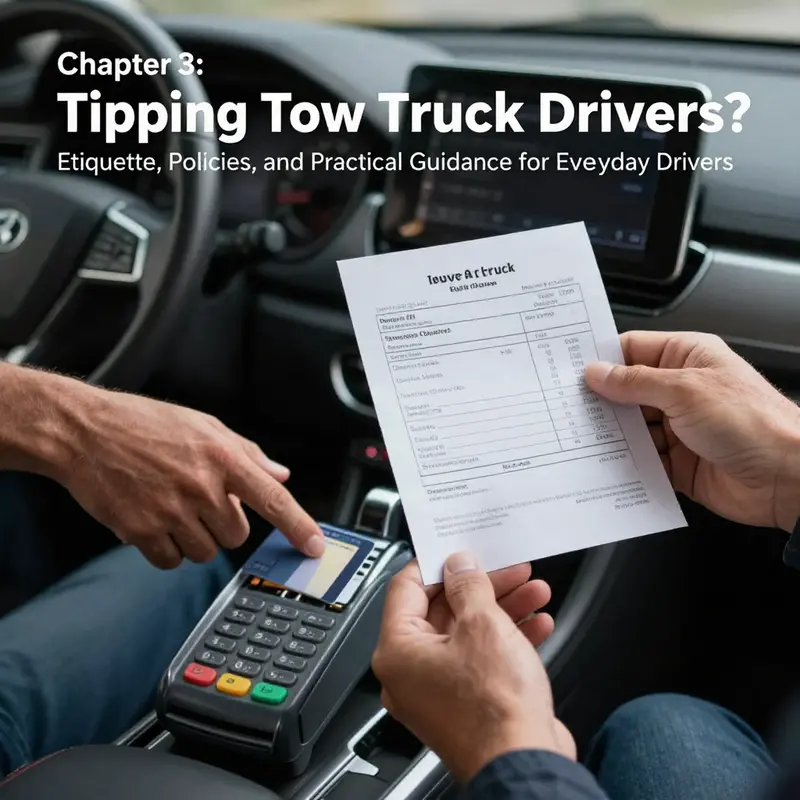
The practical path to clarity starts before the tow even begins. A good practice is to check the invoice as soon as the work is completed. If the company has already included a service charge or gratuity, that should be clearly stated on the receipt. A reputable operator will publish a transparent fee schedule and provide a detailed breakdown—base fee, mileage, vehicle type, and any special services such as winching, long-distance transport, or heavy equipment usage. If any line item seems unclear or excessive, you have the right to question it. Disputes or requests for an itemized explanation are not confrontations; they are part of ensuring fair treatment and understanding what you’re paying for.
Discretion remains the guiding principle for tipping. If you choose to tip, the magnitude is usually guided by the value you place on the service and the conditions under which it was performed. A common guideline some people find useful is a tip in the range of 10% to 20% of the tow fee, but not all experts agree that percentage applies in every circumstance. For instance, a short tow with a straightforward pickup might warrant a smaller tip, while a long-distance tow in freezing weather with difficult access or a difficult recovery job often justifies a more generous gratuity. If the tow costs $150, a tip of $15 to $30 could be reasonable under challenging conditions or when the driver has demonstrated exceptional professionalism or extraordinary effort.
Yet this guidance is not a universal directive. In some situations, tipping remains purely optional and may even be discouraged by the company. Some towing businesses worry that tipping could complicate payroll or internal accounting, or create uneven expectations across staff. In such cases, customers who want to show appreciation can still do so in non-monetary ways: a heartfelt thank-you, a quick online review that highlights the driver’s competence, or sharing a positive story about how the service helped them through a stressful moment. These gestures can be powerful motivators for workers who are often under pressure to manage safety, speed, and accuracy in hazardous environments.
What, then, should a consumer do to navigate this nuanced space with confidence? First, ask directly and politely about tipping expectations before the service begins or immediately after the job is done. A simple inquiry such as, “Is tipping expected here, or should I rely on the invoice total?” can save confusion and prevent awkwardness. If the company lists a service charge on the invoice, acknowledge it. If not, feel free to offer a gratuity if you were pleased with the outcome. When you offer a tip, consider the impact it has on the driver’s morale and your own sense of fairness. A tip that aligns with the level of service can be a tangible recognition of the driver’s skill, especially when weather is poor, roads are slick, or a vehicle is hard to reach.
The ethics of tipping also intersect with consumer rights and fair business practices. It’s important to verify that the towing company is properly licensed and operates under clear, published rates. A reputable outfit will provide a straightforward invoice that itemizes charges and explains any additional fees for heavy equipment, extensive labor, or long-distance transport. If a charge seems unreasonable or unclear, you not only have the right but the responsibility to seek clarification and, if necessary, dispute the charge. This pursuit of transparency is not antagonistic; it is part of ensuring that the transaction reflects fair value for the service received.
To deepen the understanding of what determines the base price and the possible extras, consider what goes into a tow. The base fee is not simply a flat number; it must cover the driver’s time, fuel, the use of equipment, and the overhead of responding to the call. Mileage charges accumulate with distance, and the vehicle type can influence the cost of recovery and transport. If the job involves specialized tools, heavy-duty equipment, or a long-distance haul, the ledger can reflect those additional costs. In such contexts, tipping becomes a personal choice anchored in a clear view of the service quality and the complexities of the job. The driver who manages a challenging recoveries, performs detailed assessments in adverse conditions, or negotiates through hazardous traffic deserves acknowledgment, and tipping can be one way to convey that appreciation—provided it’s appropriate within the company’s policy.
There are moments when tipping may feel less appropriate, even if the service was polite and professional. In emergencies, for instance, the priority is safety, speed, and compliance with road rules. The driver’s ability to stabilize a dangerous situation, stabilize a vehicle, and secure the scene can be invaluable, but the tipping decision should still reflect the billing structure and organizational policy. In emergencies, a tip is not a moral obligation; it is a voluntary gesture. If the invoice already reflects all charges and the company discourages tipping, it is wise to respect that stance, while recognizing the driver’s effort in other meaningful ways, such as offering a clear compliment or recommending the company to others in need.
The broader dialogue about tipping in towing services is not merely about etiquette. It touches on trust, transparency, and accountability in an essential but often overlooked part of road safety infrastructure. When a tow is necessary, people are vulnerable—they might be stranded, stressed, and worried about time, finances, and getting back on the road. A professional approach to pricing, with visible charges and reasonable expectations, helps restore composure and informs a decision about whether to tip. The best practice is to look for providers who publish their rates, publish their policy on gratuities, and maintain open channels for questions about billing. In a world where the numbers on a receipt can feel as opaque as a foggy windshield, transparency is the most reliable form of reassurance.
For readers who want a concrete reference point on cost expectations before choosing a tow, it can be helpful to explore general cost considerations online. If you want to understand typical costs before a tow, see How Much Is a Tow Truck?. This resource can offer context, not as a guarantee of what a local provider will charge, but as a baseline for what components you should expect to see itemized on a bill. It is also prudent to verify any local regulations that govern pricing and service charges, since state or municipal rules can influence what is included in the posted rates and how gratuities are treated from a policy standpoint. In recent discussions about tipping practices, a respected national publication highlights the tension between customer generosity and business practices, reminding readers to consider both the human element of service and the structural framework of fees and charges. For those seeking a broader perspective on consumer rights and tipping etiquette, the article serves as a useful counterweight to common assumptions about how and when to tip.
In the end, there is no universal rule carved in stone that dictates tipping tow truck drivers. The most prudent approach is to align your actions with the invoice, the company’s stated policy, and the specific circumstances of the service. If you choose to tip, let it be a reflection of the value you received and the effort the driver invested under pressure. If you don’t, or if the company discourages tipping, you can still express appreciation through clear feedback, timely payments, and a recommendation when possible. The goal is a fair, transparent, and respectful interaction that honors both the customer’s needs and the driver’s expertise. And when both sides understand the framework—what the bill covers, what the policy says about gratuities, and what the community expects—a tow becomes less an unplanned disruption and more a coordinated effort to restore safety and mobility as quickly and calmly as possible. The dialogue between customer, company policy, and driver remains essential, shaping not only the experience of a single tow but the evolving norms around tipping in a field that many of us hope we will never need to rely on again, yet appreciate when it is handled with clarity and care.
External reference: For a broader discussion of tipping etiquette and industry standards, see The New York Times article on tipping tow truck drivers. https://www.nytimes.com/2023/04/18/your-money/tipping-tow-truck-drivers.html
Tow Calls and Tip Etiquette: Navigating How, When, and Why to Acknowledge a Tow Truck Driver
On a highway shoulder, in a flash of headlights and the whine of a diesel engine, a tow truck pulls into the scene to restore some sense of order to a day that suddenly spiraled into delay. The moment feels procedural for the operator, but it can feel deeply personal for the driver and the stranded motorist. Tipping in this context is not a universal rite of passage, nor is it a simple yes-or-no decision. It sits at the intersection of service quality, regional culture, company policy, and the unpredictable nature of roadside emergencies. The driver’s work is strenuous, often performed under pressure, and the gesture you choose can convey recognition for competence, calm under pressure, and the willingness to acknowledge a job that keeps people moving when time and mobility become fragile. In the United States, tipping tow truck drivers is not a standard expectation in the same way it is in hospitality or dining. The base tow fee typically covers the driver’s labor and vehicle use, and many customers treat the billing as the primary compensation. Yet the social script surrounding tipping remains alive in pockets of practice, especially when the service shines—when the driver arrives promptly, communicates clearly, and handles a challenging situation with professionalism. The question then becomes less about a universal rule and more about a thoughtful response aligned with the quality of service you received, your financial comfort in the moment, and the norms you observe in your region. If the driver has navigated a tight squeeze, secured a precarious load, or taken extra steps to get you back on the road in bad weather, a gratuity can feel like a natural acknowledgment for effort that goes beyond the basics. The general range most people reference is roughly 10% to 20% of the tow fee, adjusted for the level of service and the satisfaction you associate with the encounter. For a tow that costs $150, a tip of $15 to $30 suggests that your appreciation aligns with the effort observed. But guidelines are flexible, and the real determinant is the driver’s impact on your situation. In extreme conditions—say, a snowstorm or a thunderstorm, or a scenario where the driver stayed with you while you waited for a ride—leaning toward the higher end of the range can be a meaningful gesture. If the service is straightforward and the price is higher due to distance or complexity, a modest tip may still feel appropriate, but the decision should be grounded in your assessment of value and fairness rather than anticipation of a tip becoming a standard expectation. It is crucial to be mindful of company policies before offering gratuities. Some tow companies explicitly discourage tipping to maintain wage transparency and fairness among employees, or to ensure that compensation remains consistent across the workforce. In such cases, a tip might not only be discouraged but could create awkward situations for the driver or even the company. This reality doesn’t negate kindness, but it does require tact: asking the driver if tipping is welcome or checking the invoice for a service charge can prevent missteps and ensure you respect the business’s policy. If you decide to tip, there are practical considerations that help ensure your generosity is received in the way you intend. Cash remains the simplest, most direct method, particularly when a card reader isn’t readily available or when the driver prefers cash for immediate receipt. A discreet, respectful offer can also avoid awkward social friction. If you need to use a card, confirm whether the company permits tipping through its payment system, and accept that some drivers may not be able to accept tips via electronic means due to policy or payroll structures. When tipping isn’t on the table, there are still meaningful ways to express appreciation. A simple, genuine thank you can go a long way, as can leaving a positive review for the driver or through the company’s customer service channels. These acts of goodwill support the driver’s professional reputation and can contribute to broader recognition of high-quality roadside assistance. The regional and cultural textures of tipping are part of a larger national conversation about service work and wage structures. In more expensive urban centers, particularly in portions of California and around major metropolitan areas, a small gratuity may be more readily expected when the driver demonstrates promptness, courtesy, and problem-solving acumen. In other regions, where costs of living are lower and where tipping culture for personal services is less entrenched, a tip remains entirely discretionary and context-dependent. The tension between individual generosity and corporate policy is a recurring theme in the industry. Some employers advocate for a wage-based model that doesn’t rely on customer tips, citing fairness and wage stability for all drivers. Others recognize that tips can reflect the value a customer places on specific acts—like staying with a vehicle until it’s safely towed, or offering practical advice for the next steps after the tow. In this landscape, the best approach is to assess the situation on its own terms, act with courtesy, and align your gesture with both the quality of service and the policy boundaries you encounter. For those who want to ground their decision in practical considerations, a few simple checks can help: Was the driver prompt, clear, and courteous? Did they provide practical help beyond the bare minimum, such as advising you on next steps, helping you secure belongings, or easing the stress of the moment? Was the weather harsh, did they maintain safety standards, and did the fee reflect fair value for the service delivered? These questions translate into a straightforward approach: tip when service stands out, adjust the amount to the circumstances, and always respect company guidelines. Some readers may wonder how tipping tow truck drivers fits into the broader economy of service labor. Data from the U.S. Bureau of Labor Statistics on service-industry wages and tipping trends show that regional variation is real and meaningful. While the headline practice in some places remains minimal, the underlying current is that gratuity is an optional acknowledgment rather than a formal remuneration method. This nuance matters because it helps prevent an implicit subsidy from customers to drivers in jurisdictions where wages are expected to carry the full weight of compensation. The effect is that tipping behaves more like a signal of appreciation than a guaranteed supplement to pay. In practice, many drivers appreciate the kindness of a cash gesture, while others may be bound by policy or simply prefer not to accept tips. If you decide to tip, doing so with mindfulness and clarity is essential. A tip given with respect, proportional to the service delivered, and aligned with the company’s stated policies is the best path. If you’re unsure about tipping norms in a given region, a quick, respectful question can resolve the matter: “Do you accept tips?” or “What does your company policy say about gratuities?” The driver’s answer will guide your next step and prevent any uncomfortable miscommunications. Ultimately, the heart of the matter is simple: tippingTow truck drivers is not a universal requirement, but a genuine opportunity to acknowledge exceptional service when it occurs. It is a gesture that should feel voluntary, appropriate to the situation, and respectful of the policies that govern the business. The driver who treats a roadside crisis with calm competence and clear communication deserves recognition that matches the effort they’ve invested. If you want a practical starting point, consider a modest gratuity that reflects both the service’s quality and your own comfort, leaning toward the higher end of the 10%–15% spectrum for routine, solid performance and toward the upper end of the range if the situation demanded extra work or posed elevated risk. For readers who want to explore the topic further, there is a broader discussion of tipping norms across regions and industries in reputable coverage, which can provide helpful context for making your own decisions in future roadside moments. For a broader context on tipping norms across regions and industries, see this external article: https://www.nytimes.com/2023/04/18/your-money/tipping-tow-truck-drivers.html. And for those curious about the base cost structure behind towing services and how it relates to decisions about gratuities, you can explore a detailed discussion here: how much is a tow truck.
Tipping Tow Trucks: A Nuanced Look at Gratitude, Standards, and Safety on the Road
When your car sticks the place you least want it to, a tow truck arrives as a lifeline. The driver assesses the situation with practiced calm, secures the vehicle, and navigates the narrow lanes of a highway shoulder or a crowded lot. In those moments, the question of tipping can feel almost as stressful as the breakdown itself. The truth is more complex than a simple yes or no. Tipping tow truck drivers is a topic that sparks debate across the industry and among motorists, partly because the service model is different from other fields where tipping has become a norm. In many situations, tipping is not mandated, expected, or even encouraged. Yet when a driver goes above and beyond—evading dangerous conditions, providing extra hands-on help, or clarifying the process with patience—gratitude can feel like a natural reflex. The practical reality, though, is shaped by how tow services price their work, how they’re paid, and what kind of policy the company maintains for gratuities.
A foundational point is that most professional tow operations are built on a pricing structure that aims to compensate technicians fairly through an agreed-upon fee for service. Several leading bodies in the field emphasize that the customer’s responsibility is to understand the scope of work and the stated charges, not to supplement the workforce’s wages with a tip. An explicit guideline often cited in industry discussions is to focus on transparent pricing and service quality rather than tipping as a lever for choosing one driver over another. This shifts the emphasis from quick reflex kindness to informed decision-making that benefits everyone involved. If you’re unsure whether a tip is expected, the simplest route is to ask the driver directly or to review the company’s published policy. In the same breath, a receipt should reveal whether a “service charge” or “gratuity” has already been included in the invoice, which helps avoid double-paying—a practical check that protects both the customer and the provider.
The arithmetic of tipping—commonly presented as a range between 10% and 20% of the tow fee—appears straightforward at first glance. But the application of that range is where nuances matter. A tow that costs 150 dollars might seem to warrant a tip of 15 to 30 dollars, yet the right amount can depend on several factors. Was the driver punctual, courteous, and clear about the fees? Did they handle tricky detours, weather, or roadside hazards with composure and safety? Were they available to answer questions about the process and to help with ancillary tasks like jump-starting a car or ensuring a secure transport arrangement? In situations where the driver has provided above-and-beyond service, tipping in the higher end of the range—or even a modest tip in addition to a service charge that may already exist—can be a meaningful sign of appraisal. But those cases must be measured against the actual price quote and the company’s policy, because what might feel like excellent service to a motorist could be perceived differently by a driver who is balancing workload and company rules.
There is also a broader ethical and practical concern about tipping as a signal of influence. When gratuities become a factor in how priority is allocated, the potential for unequal treatment arises. Some drivers may feel pressured to prioritize customers who tip more, while others may worry that a non-tipping customer could end up waiting longer, even if the service request is the same. In many professional settings, that dynamic is precisely what tipping is meant to avoid—an emphasis on fairness, service quality, and safety rather than extraneous incentives. From a legal and moral standpoint, the industry guidance tends to caution against allowing gratuities to distort judgment or to undermine equitable access to help, especially in unpredictable emergencies where every minute matters.
For readers who want to ground their decisions in sound policy, it helps to look at the broader framework that governs towing services. The American Towing Association and other industry organizations advocate that service should be performed under clear contractual terms and transparent pricing, with customers focusing on the credibility of the provider, the safety measures in place, and the quality of the work performed. The emphasis is explicitly on achieving a trustworthy service experience—accurate estimates, reliable dispatch, properly documented transport, and adherence to safety standards—rather than on tipping as a tool to secure better treatment. In that light, the driver’s skill, the company’s licensing and insurance status, and the car’s safe handling during transport become the clearer benchmarks of value.
If you feel unsure about tipping, consider how you express appreciation instead. Feedback on public platforms can play a meaningful role in rewarding good work. Honest reviews help other customers make informed choices, while reinforcing positive behaviors among service providers. Some tow companies also offer loyalty programs or referral incentives as legitimate avenues to acknowledge consistent performance. These channels channel gratitude constructively without compromising fairness or safety. In this sense, the most reliable form of gratitude aligns with transparency and accountability: choosing a reputable company, understanding the fee structure, and communicating clearly about expectations from the outset. A driver who sees that a customer understands the pricing and values safe handling is more likely to deliver consistent, high-quality service—precisely the outcome those in the field want to encourage.
The importance of safety cannot be overstated in this discussion. Tow operations operate under some of the most demanding conditions a road user can encounter: roadside dangers, shifting traffic patterns, weather hazards, and the logistical intricacies of securing a vehicle for transport. In those moments, the driver’s judgment—whether to adjust a winch operation, how to secure the vehicle, or how to navigate around a hazard—may be influenced by pressure, fatigue, or competing priorities. Legitimate concerns arise when gratuities could be mistakenly read as a lever for pressing for faster service or for different prioritization. The discipline, therefore, is to anchor appreciation in recognition of skill and dedication to safety, not in a payment that could distort the objective of fair service. Choosing a company with verified licenses, strong insurance, and a track record of minimal losses and professional conduct, as supported by regulatory and industry data, remains a prudent approach for any motorist.
The practical takeaway for most drivers and passengers is straightforward. Prioritize reliable, transparent service over the impulse to compensate for any perceived shortcoming or for the hope of expedited attention. If a tip is given, it should reflect genuine satisfaction with specific aspects of the service, not a transactional expectation. When in doubt, consult the invoice and the company policy, ask questions early in the process, and consider the broader ways to reward good service beyond the moment of delivery. For those curious about the cost side of the equation, a useful starting point is to consider what the overall tow might entail and how charges are laid out. If you want to frame your understanding around a concrete example, explore the financial scope at this resource: How much is a tow truck?.
This approach also dovetails with the evolving expectations of customers in a service industry that is increasingly professional and regulated. When a towing company presents a clear estimate, outlines the required steps, and demonstrates a commitment to safety through qualified technicians and properly equipped vehicles, the focus on tipping naturally shifts toward judging the service by its merits rather than by gratuity. The driver’s conduct—polite communication, transparency about fees, efficient and careful handling of the vehicle, and diligent attention to securing a safe transport—becomes the most reliable barometer of value. In the long run, this standard helps preserve the integrity of the service, protects drivers from potential conflicts, and supports a fair marketplace where customers can expect consistency and accountability.
In framing a final stance, it helps to keep the core question simple: tipping tow truck drivers is not a universal requirement, and in many contexts it is not expected. The more robust practice is to evaluate service quality, rely on transparent pricing, and use official channels to express appreciation. If tipping feels appropriate, it should be a considered, discretionary gesture that reflects clear, specific acts of helpfulness or extraordinary effort. When a tip is not given, a deliberate choice to leave a detailed positive review or to participate in a loyalty or referral program can serve as a powerful, policy-aligned alternative. In this way, gratitude contributes to a system that rewards professionalism and safety, rather than creating ambiguity about access to service or perceived preferential treatment. The overarching message is not about whether to tip in any single instance, but about choosing, in each encounter, a path that honors both the customer’s rights and the driver’s professional responsibilities.
External resource for further context: https://www.nytimes.com/2023/04/18/your-money/tipping-tow-truck-drivers.html
Final thoughts
Tipping tow truck drivers is a nuanced decision rooted in service value, policy clarity, and regional norms. A practical approach blends etiquette with transparency: verify any service charges on the invoice, consider the level of assistance, and tailor the gift to the situation within your budget. When in doubt, a modest tip paired with a brief note of thanks, or choosing a company-approved form of appreciation, can reinforce a positive service outcome without compromising safety or compliance. By applying the five guiding factors from this guide—etiquette, service quality, invoicing, regional norms, and practical alternatives—you can navigate roadside help with confidence, fairness, and respect for the drivers who keep roads safer and more manageable for everyone.